Posts Tagged ‘fair trial’

Video statement of ‘troublemaker’ Nabeel Rajab who is on trial today

January 20, 2015

Today, 20 January, a verdict is expected in the trial of Nabeel Rajab, an internationally recognized human rights defender in Bahrain. President of the Bahrain Center for Human Rights (BCHR), Deputy Secretary General of the International Federation for Human Rights (FIDH), and a member of Human Rights Watch’s Advisory Board, Rajab is charged with insulting public institutions via Twitter. A huge number of NGOs (see below) strongly condemn the politically motivated prosecution of Nabeel Rajab and call on the Government of Bahrain to drop all charges against the peaceful human rights defender. The video statement was prepared by True Heroes Films (THF).

On 1 October 2014, Rajab was arrested after hours of interrogation regarding one of his tweets. Rajab had just returned to Bahrain from a months-long advocacy tour, which included appearances at the 27th Session of the UN Human Rights Council in Geneva and the European Parliament in Brussels, as well as meetings with foreign ministries throughout Europe. Charged with insulting public institutions under article 216 of Bahrain’s penal code, Rajab was granted bail on 2 November 2014, but was banned from leaving the country.

[Rajab is one of many Bahrainis who have been victimized by the government’s intensified campaign to silence dissent: On 28 December, Sheikh Ali Salman, General-Secretary of Bahrain’s largest opposition party Al-Wefaq, was arrested for his political and human rights activism. Earlier in December, human rights defender Zainab al-Khawaja was sentenced to four years in prison for insulting the king and ripping up his picture, while her sister Maryam al-Khawaja, Director of Advocacy of the Gulf Center for Human Rights, was sentenced to one year in prison for allegedly assaulting a police officer during her arrest in August 2014. – https://thoolen.wordpress.com/2014/09/12/bahrain-travails-of-a-family-of-human-rights-defenders/

Signatories:

Arabic Network for Human Rights Information
Association for Civil Rights
Bahrain Center for Human Rights
Bytes for All
Cairo Institute for Human Rights Studies
Canadian Journalists for Free Expression
Cartoonists Rights Network International
Center for Media Freedom and Responsibility 
Centre for Independent Journalism – Malaysia
Electronic Frontier Foundation
Freedom Forum
Freedom House
Globe International Center
Independent Journalism Center – Moldova
International Press Institute 
Maharat Foundation
Media, Entertainment and Arts Alliance
Media Watch
National Union of Somali Journalists
Pakistan Press Foundation
Palestinian Center for Development and Media Freedoms – MADA
PEN American Center
PEN International
World Association of Community Radio Broadcasters – AMARC
Activists Organisation For Development And Human Rights
American for Democracy and Human rights in Bahrain (ADHRB)
Africa Freedom Of Information Centre
Albadeel Center For Studies And Research
Alliance For Tunisia’s Women
Aman Network For Rehabilitation & Defending Human Rights
Bahrain 19
Bahrain Press Association
Bahrain Salam For Human Rights
Bahrain Institute for Rights and Democracy (BIRD)
Bahrain Youth Society for Human Rights (BYSHR)
Chokri Belaid Foundation To Combat Violence
European-Bahraini Organisation for Human Rights (EBOHR)
European Saudi Organisation For Human Rights
Gulf Center For Human Rights (GCHR)
Initiative For Freedom Of Expression – Turkey
International Centre For Supporting Rights And Freedom
Jordanian Commission For Culture And Democracy
Khiam Rehabilitation Center For Victims Of Torture
Kuwait Human Right Institute
Kuwait Human Right Society
Lawyers Rights Watch Canada (LRWC)
MENA Monitoring Group
Nidal Tagheer Organisation For Defending Rights (Yemen)
No Peace Without Justice (NPWJ – Italy)
Nonviolent Radical Party, Transnational And Transparty (NRPTT – Italy)
Réseau Avocats Sans Frontières
Shia Right Watch
Sudanese Development Imitative
Syrian Nonviolence Movement
Tunisian Association For The Rehabilitation Of Prisoners
Tunisian Centre For Transitional Justice
Tunisian National Council For Liberties
UN Ponte Per (Italy) 

The Plight of China’s Human Rights Lawyers Worsened

January 19, 2015

Under the title “The Plight of China’s Rights LawyersFrances Eve, in Chinafile of 16 January 2015, has made an excellent compilation of the travails of the Chinese human rights lawyers in 2014. It was one of the worst years for civil society and human rights defenders in particular.

Pu Zhiqiang, center, pictured in 2011 talking with the media while he was serving as artist Ai Weiwei’s lawyer – Peter Parks/AFP/Getty Images

At least 9 lawyers either are currently facing criminal charges or began serving prison sentences in 2014: Ding JiaxiPu ZhiqiangQu ZhenhongTang JinglingXia LinXu ZhiyongYu WenshengChang Boyang and Ji Laisong (the last 2 now released). The unprecedented scale of criminal prosecution against rights lawyers sharply contradicts the goal of “governing the country by law,” which was proclaimed at October’s Fourth Plenum meeting. Here the whole piece for those interested:

“As the year came to a close, at least seven prominent Chinese human rights lawyers rang in the New Year from a jail cell. Under President Xi Jinping, 2014 was one of the worst years in recent memory for China’s embattled civil society. Bookending the year were the cases of two prominent legal advocates: in January, Xu Zhiyong was sentenced to four years imprisonment for his moderate criticism of government policy and leading the “New Citizens’ Movement,” a group advocating for political reforms in China. Outspoken free speech lawyer Pu Zhiqiang, who turns 50 tomorrow, has spent the past six months in detention as authorities continue to build a case against him.

The past year has been distinctly bad for a band of crusading lawyers, who for the past decade or so, since their movement first emerged, have described their mission asweiquan, “safeguarding rights.” According to several Chinese rights lawyers, more members of their ranks—which have grown from just a handful to over 200—are currently in detention than at any time since 2003, when lawyers involved in this kind of work first began to face criminal detention.

Among the first to be arrested was Gao Zhisheng, a feisty and outspoken defender of everyone, from factory workers and peasants to journalists and underground Christian and Falun Gong practitioners, who was sentenced to three years in 2006 on the politically motived charge of “inciting subversion of state power.” Suspending his sentence, authorities instead held Gao several times in detention incommunicado—where he was brutally tortured—until 2011, when judges ordered Gao to be sent to prison for “violating” his parole. Gao, who was released into a form of house arrest in August 2014, was a prominent case, yet imprisoning lawyers was still unusual at the time. Since then, rights lawyers who have taken on cases involving politically “sensitive” issues have increasingly faced threats, harassment, administrative punishments, the revocation of their law licenses, and, as in a few widely publicized cases, disappearance and eventorture.

But since President Xi Jinping came to power, the government’s war on rights lawyers has escalated. At least nine prominent lawyers either are currently facing criminal charges or began serving prison sentences in 2014: lawyers Ding JiaxiPu ZhiqiangQu ZhenhongTang JinglingXia LinXu Zhiyong, and Yu Wensheng, as well as Chang Boyang and Ji Laisong who were both released on bail awaiting trial after months in detention. The unprecedented scale of criminal prosecution against rights lawyers sharply contradicts the goal of “governing the country by law,” which was proclaimed at October’s Fourth Plenum meeting, a gathering of senior Chinese Communist Party leaders.

A student leader in the 1989 pro-democracy movement, Pu Zhiqing had gone on to represent several high profile free-speech cases, including an anti-defamation ruling in favor of the magazine China Reform in 2004 and a much heralded defence of the authors of a widely read exposé of rural corruption. More recently, he defended activist artist Ai Weiwei and petitioner Tang Hui—who was sent to a re-education through labor (RTL) camp for petitioning for stronger punishment for her daughter’s rapists—in a case which garnered widespread public sympathy. State media evenfeatured Pu in reports on RTL, an unusual platform for a government critic. But now Pu has been detained on charges of “creating a disturbance” and “illegally obtaining personal information” after attending a seminar in May discussing the June Fourth Massacre. Police later tacked on additional charges of “inciting ethnic hatred” and “inciting separatism,” reportedly over a blog post Pu had written criticising the government’s version of the Kunming knife attack in March 2014. Lawyer Qu Zhenhong, who initially served as Pu’s lawyer, was arrested in June in connection with his case.

Tang Jingling, arrested after taking part in a commemorative “June Fourth Meditation” last summer, was a lawyer who defended victims of government land grabs, counterfeit medicine, and village corruption until authorities refused to renew his law license in 2006. He then became a “citizen representative,” continuing to give legal assistance, and later a member of a non-violent civil disobedience movement that works on labor rights, the hukou system, and equal education. At the end of the year, Guangzhou police transferred Tang’s case to the local prosecutor, an indication that he may be indicted and tried soon. If convicted, Tang faces a lengthy prison sentence for “inciting subversion of state power.” Meanwhile, his wife has faced harassment forspeaking out on his case.

In November, authorities arrested two lawyers, Yu Wensheng and Xia Lin, after they were hired by families to represent activists detained for expressing support for the protests in Hong Kong. Yu faces a charge of “creating a disturbance” and Xia, a former member of Pu Zhiqiang’s legal team and partner at Pu’s Huayi Law Firm, is accused of committing fraud. Those imprisoned last year include the lawyer Ding Jiaxi, who is serving a 42-month sentence after demanding government transparency and anti-corruption measures with the New Citizens’ Movement, alongside Xu Zhiyong, whose advocacy and election to his district’s People’s Congress made him another former darling of the Chinese press. Xu missed the birth of his daughter while he awaited his January trial.

While incarcerated, these lawyers have all been granted only limited access to their attorneys. The PRC Law on Lawyers (2007) authorizes lawyers to meet with their clients starting on the very day when they are put under detention, as does China’s Criminal Procedure Law. But, according to lawyers and family members of detainees, such provisions are rarely respected on the ground and often overridden by local administrative or Party orders, especially in political cases.

Family members of the jailed lawyers have reason to fear, since rights lawyers are no strangers to torture in detention and police brutality. Tang Jingling told his lawyer he was assaulted at Guangzhou No. 1 Detention Center, and in an open letter to Xi Jinping Pu Zhiqiang’s wife decried the “inhumane mental and physical torment” her husband has been subjected to at the Beijing No. 1 Detention Center. In Heilongjiang province in March, four lawyers were taken into custody and severely beaten after they requested to meet with their clients; according to their family members, the four suffered 24 broken ribs among them. Gao Zhisheng suffered such ill-treatment in prison that he lost almost all his teeth and remains very frail.

China’s leaders are far from governing the country under a system based on the rule of law. Instead, they are paying lip service to the idea in order to give legitimacy to the Communist Party’s rule while building a legal system that serves their political interests. This includes manipulating the criminal justice system to silence dissent and rein in human rights lawyers who push for judicial independence, fair trials, and protection of their clients’ legal rights. Chinese law bars a convicted lawyer from practising law for good. This is at the heart of what makes the currently growing trend of criminalizing rights lawyers particularly troubling.

Allowing lawyers and the judiciary to carry out their work without political interference is a key indicator of a country’s success in promoting rule of law. In November, China’s nominal legislative body, the National People’s Congress, posted online for “public consultation” several amendments to the country’s Criminal Code. Among these draft amendments is Article 35, which would revise the Criminal Law on the disruption of court proceedings by giving authorities overly broad powers to interpret speech in court as insulting, threatening, or disruptive and includes the vague provision prohibiting “anything else that seriously disrupts court proceedings.” The effect of these changes would be to criminalize lawyers’ speech during trials if they challenge the court, punishable by up to three years in prison. More than 500 rights lawyers across China have signed an open letter to the NPC, demanding they drop this amendment as it runs “counter to the direction of judicial reform.”

China’s embattled rights lawyers, however, have refused to be coerced into submission. On the contrary, they are increasingly challenging authorities for failing to practice the respect for the law that they preach. More young lawyers are joining the movement. Trained professionals, they strongly believe that all suspects should be afforded a fair and public trial, and they see no reason why ruling élites should be above the law. Many are paying a heavy price, but see it as a part of the struggle for a “better future.” Facing the charges against him, Pu Zhiqiang is fully aware of what awaits him. As he said to his lawyer from jail: “If we lose, I probably can’t be a lawyer after I get out, so what can I be?”

The Plight of China’s Rights Lawyers | ChinaFile.

What Human Rights Day means in Bahrain and how the EU made it worse

December 11, 2014

On 9 December, on the eve of Human Rights Day, Zainab Al-Khawaja was sentenced to 4 years and 4 months in two separate court hearings in Bahrain. Front Line, Human Rights First and others have reported extensively on this courageous human rights defenders [see also: https://thoolen.wordpress.com/tag/zainab-al-khawaja/] .

She was sentenced to 16 months’ imprisonment for “sabotaging properties belonging to the Ministry of Interior” and “insulting a public official” to three months’ imprisonment and fined 3,000 Bahraini Dinar (approx. 6,400 Euro) for “tearing up a photograph of the King”.

Frontline NEWlogos-1 condensed version - cropped also shockingly reports that on the same day as her sentencing, the European Union presented a human rights award to Bahrain’s National Institution for Human Rights and the Ombudsman of the Ministry of the Interior! Although this concerns a relatively unknown regional award (the Chaillot Prize is presented annually by the Delegation of the European Union in Riyadh http://www.ambafrance-bh.org/Press-release-Delegation-of-the.) the state press has been making the best of it [http://www.gulf-daily-news.com/NewsDetails.aspx?storyid=391213] and it is hard to see this as in line with the EU policy on Human Rights Defenders.

Martin Ennals Award Jury expresses its concern about Loun Sovath, Martin Ennals Award Laureate 2012

November 22, 2014

On 24 November 2014 the Jury of the Martin Ennals Award for Human Rights Defenders (MEA) published a letter expressing concern by all 10 NGOs on the Jury about the charges against its 2012 Laureate. Here is the text:

new MEA_logo with text The Martin Ennals Award Jury (Listed Below) is extremely concerned about the flawed and protracted judicial proceedings being used to threaten renowned human rights defender (HRD) Venerable Loun Sovath. He is scheduled to face trial on November 25, 2014. Venerable Sovath is internationally known as the “multimedia monk,” and his efforts to voice the human rights abuses suffered by land communities and HRDs in Cambodia have been recognized globally. The charges brought against Venerable Sovath are groundless and must be dropped immediately. 

Venerable Sovath was awarded the 2012 Martin Ennals Award for Human Rights Defenders. The award was created in 1993 to honor and protect individuals who demonstrate exceptional courage in defending and promoting human rights.

Despite international recognition Venerable Sovath has continually been targeted by religious and legal authorities in Cambodia. He has been subjected on numerous occasions to threats of imprisonment, verbal abuse, death threats, and defrocking, among others.

As part of a wave of arrests, trials, and convictions of social activists and peaceful demonstrators, this case is the renewal of an old case in which Venerable Sovath was charged with incitement to commit a felony [1] for allegedly inciting and leading demonstrations by victims of land conflicts against government authorities in Chi Kreng, Siem Reap, and Boeung Kak lake, Phnom Penh. The trial is now scheduled for November 25, 2014. If convicted, Venerable Sovath faces up to two years in prison and a fine of US$1,000, equivalent to over 4,000,000 Cambodian Riels.

….. The vagueness of the charges and lack of clarity surrounding the legal process raise significant concerns. The Martin Ennals Award Jury calls on the Government of Cambodia to ensure any legal processes are handled in accordance with the principles of the rule of law.

Martin Ennals Award Jury:

– Amnesty International,

– Human Rights Watch,

– Human Rights First,

– Int’l Federation for Human Rights (FIDH),

– World Organisation Against Torture (OMCT),

– Front Line Defenders,

– International Commission of Jurists,

– EWDE Germany,

– International Service for Human Rights,

– HURIDOCS.

[1] Cambodia Criminal Code, Article 495 (imposing criminal liability for “Incitement to commit a felony or to disturb social security…”).

see also: https://thoolen.wordpress.com/2014/11/05/cambodian-mea-laureate-2012-luon-sovath-charged-with-incitement/


Pinar Selek case in Turkey: the Supreme Court overturns life sentence against Pınar Selek

July 9, 2014

With a bit of delay, here is the good news that the Turkish Supreme Court – on 11 June – overturned the life sentence issued which was issued against sociologist Pınar Selek on January 24, 2014. The case will have to be re-tried before a lower court for the fifth time. On June 11, 2014, the Criminal Chamber No. 9 of the Supreme Court decided to overturn the decision of a lower court to sentence to life imprisonment Ms. Pınar Selek, an academic known for her commitment towards the rights of vulnerable communities in Turkey. The court argued that Istanbul Special Heavy Criminal Court No. 12 had violated procedural rules, by revoking its own decision of acquittal while the case had already been transferred for review to a higher court.  Read the rest of this entry »

Cambodia: Human rights defenders of garment workers released with suspended sentences

June 4, 2014

The 23 defendants, including four human rights defenders, charged in Cambodia were released on 30 May, 2014. Their release comes after the Court which had convicted the defendants but suspended their sentences that ranged from six months to four and half years imprisonment together with heavy fines. They were arrested in early January during a lethal clampdown by security forces charged with bringing an end to mass protests by garment workers and pro-opposition party supporters. Local and international groups have welcomed the release of the 23. However, they express their disappointment regarding the initial convictions and subsequent sentences. The trial was also heavily criticised for lacking due process.

via Civil Rights Defenders – Cambodia: Human rights defenders released with suspended sentences.

https://thoolen.wordpress.com/2014/01/08/week-of-action-against-crackdown-on-cambodian-garment-workers-10-january/

China sentences four more human rights defenders for demonstrating

April 24, 2014

The same day it was announced that Cao Shunli had been selected as one of the Final Nominees for the MEA 2014, Front Line reports the sentencing of 4 other human rights defenders in China. On 18 April 2014, human rights defenders Messrs Ding Jiaxi and Zhao Changqing were sentenced to 3.5 years and 2.5 years’ imprisonment respectively, while Messrs Li Wei and Zhang Baocheng were both given prison sentences of 2 years. The four human rights defenders were convicted of “illegal assembly” over their role in small-scale demonstrations associated with the New Citizens Movement. Read the rest of this entry »

Sad anniversary in Bahrain today: Abdulhadi Al-Khawaja arrested 3 years ago

April 9, 2014

30 human rights organizations express their serious concern for the health and well-being of imprisoned Bahraini human rights defender Abdulhadi Al-Khawaja. Mr. Al-Khawaja was arrested three years ago today, on 9 April 2011, and continues to require medical attention for injuries sustained during his arrest and subsequent torture.

Former president and co-founder of the Bahrain Centre for Human Rights (BCHR), Mr. Al-Khawaja was sentenced to life in prison in June 2011 by a military court as part of a group of human rights activists and political leaders known as the Bahrain 13. The NGO state their belief that Mr. Al-Khawaja is being unjustly persecuted for his legitimate human rights activity.[In its September 2012 decision, the United Nations Working Group on Arbitrary Detention concluded that Mr. al-Khawaja’s arrest was due to his exercise of the fundamental rights to freedom of expression, peaceful assembly, and association. [According to the Working Group, the charges against Mr. al-Khawaja—including membership in a terrorist organization— were “vague” and “raise doubts as to the actual purpose of detention.” The Working Group also concluded that throughout Mr. Al-Khawaja’s arrest, detention, and trial, “the Government violated numerous international norms to the right to fair trial.”]
[The Bahrain Independent Commission of Inquiry (BICI) further concluded that Mr. Al-Khawaja was subjected to torture and inhumane treatment during his arrest and detention. Mr. Al-Khawaja was severely beaten, resulting in a broken jaw, and later spent two months in solitary confinement where he was subjected to physical, psychological and sexual torture. A full testimony from Mr. Al-Khawaja regarding his torture can be found here.]

BAHRAIN: Third Anniversary of Arrest: Calls for the Release of Abdulhadi Al-Khawaja – FIDH.

Two Human Rights Defenders in Uzbekistan Sentenced to more than 8 Years

March 15, 2014

On 6 March 2014, in Tashkent the trial of two members of the Mazlum Human Rights Center took place: Fakhriddin Tillaev and Nuriddin Jumaniyazov. They were charged under Art. 135 of the Criminal Code (“trafficking in persons”). The prosecutor asked for 12 years of imprisonment. The court sentenced both the human rights advocates to 10 years and 8 months of imprisonment and applied the amnesty act passed by the Senate of Uzbekistan. The final term of punishment was thus still 8 years and 3 months of imprisonment.
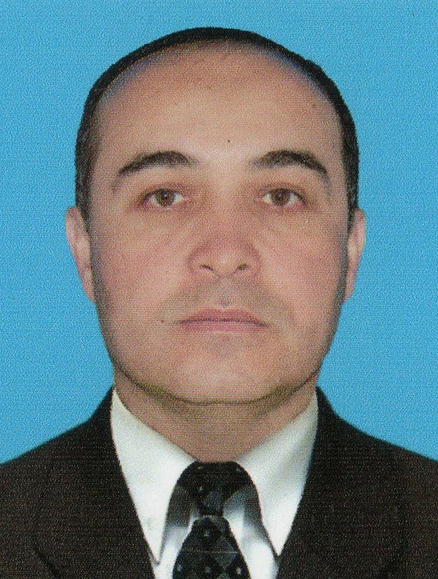
Fakhriddin Tillaev

Neil Hicks replies to criticism in Al-Monitor on Egypt’s post Morsi human rights situation

February 12, 2014

Howe complex the situation in post-Morsi Egypt is can be illustrated by the letter sent to Al-Monitor by Neil Hicks, one of the most experienced international human rights workers to be found today. As a member of the independent US-based Working Group on Egypt he responds to Wael Nawara’s criticism of the this Working Group’s recommendations on US policy toward Egypt, published on 4 February. Neil Hicks – who works for Human Rights First – in his reply of 7 February neatly outlines the views from an international human rights perspective, under the title: “The US Working Group is right on Egypt”:One of the most perplexing aspects of the months of instability in Egypt that have followed the removal of President Mohammed Morsi from office on July 3, 2013, is the number of prominent Egyptian liberals who have shown themselves to have a somewhat selective commitment to liberal principles, Read the rest of this entry »