Posts Tagged ‘EU’

No more double speak for Peña Nieto’s Mexico

November 21, 2014

On 21 November 2014 Ben Leather (Advocacy and Communications Manager at the International Service for Human Rights, who was previously Advocacy Coordinator for Peace Brigades International’s Mexico Project) published an extensive and fascinating piece on Mexico’s double talk when it comes to human rights defenders: “No more doble-cara: it’s time for Peña Nieto to practise what he preaches”.

(In Mexico, 43 students remain missing. How is this possible in a country known for its UN human rights advocacy? Demotix/Hugo Ortuño – Some rights reserved)

The key notion of the article in Open Democracy is summarized in the phrase: “How can Mexico lead the way internationally, when it cannot protect the basic rights of its own people?“. A contradiction laid bare also by Alejandra Ancheita’s Martin Ennals Award for Human Rights Defenders in October this year [https://thoolen.wordpress.com/2014/10/07/breaking-news-alejandra-ancheita-is-the-2014-mea-laureate/].

“On September 26, I delivered the final NGO statement to the United Nations Human Rights Council’s 27th session, celebrating some of the key resolutions passed after weeks of diplomatic arm-wrestling. As in previous experiences advocating at the UN since swapping Mexico City for Geneva, I observed Mexico’s firm commitment to strengthening international human rights norms through its diplomats’ constructive initiatives.

Yet that very same night, I also learned that Mexican police forces were suspected of disappearing 43 student protesters from Ayotzinapa college, after murdering six others at the scene. A month later, those students remain missing, while the role of Mexican officials in human rights violations is becoming increasingly apparent.

These contrasts are a microcosm of Mexico’s perverse doble-cara, or two-facedness, which has exasperated its civil society for decades. They demonstrate the schizophrenia of a reputed international human rights promoter that is also proven to repress, torture, disappear and kill at home. How can Mexico lead the way internationally, when it cannot protect the basic rights of its own people?

This contradiction was underscored when Alejandra Ancheita, Director of the Mexican human rights group ProDESC, won the acclaimed Martin Ennals Award and denounced the risks facing Mexican human rights defenders. Mexican journalist Lydia Cacho then visited the UN to put her own case of arbitrary detention and torture to its Human Rights Committee. She highlighted Mexico’s exemplary efforts to strengthen its own legal framework, but lamented appalling implementation. She also emphasised the role of corruption, drugs and people traffickers—in exacerbating the context of abuses.

The schizophrenia’s causes therefore, are complex. However, the cases of Ayotzinapa, Alejandra and Lydia are not only emblematic of the Mexican human rights paradox, but also of two crucial factors which prevent its cure: blanket impunity and unbridled risks for human rights defenders.

Mexico: la doble-cara of human rights

None of this, of course, is new. In the 1960s and 70s, successive Mexican presidents opened the doors to political refugees fleeing persecution in Europe and Latin America, while simultaneously disappearing, torturing andmassacring student activists, political opponents and guerrilla groups in theDirty War.

Under former president Felipe Calderón, Mexico became a member of the UN’s Human Rights Council, where it led and lobbied for resolutions on women’s, migrant and indigenous rights. It consistently promoted the protection of human rights defenders, and voted for UN action worldwide. Yet this was all happening while the Mexican State was failing to prevent systemic femicide, migrants were denouncing abuses by public security forces colluding with organised crime, and indigenous activists were condemning attacks by the army.

Calderón promulgated some excellent human rights policies, including a Constitutional Reform guaranteeing the domestic legal transcendence of international treaties. On the ground, however, the abuses multiplied: 80,000 people were killed and over 27,000 disappeared in six years of the “War on Drugs”. In many cases, there is considerable evidence that Mexican State actors were involved, but the lack of sufficient investigation leaves most perpetrators free and unidentifiable.

Under current President Peña Nieto, with his emphasis on structural economic reforms and on international investment, Mexico’s progressive reputation at the UN and the Organization of American States has consolidated. Time magazine’s controversial front page this February was emblematic of the international community’s willingness to overlook Mexico’s human rights abuses in return for business opportunities. However, the disappearance of 43 students in Ayotzinapa, along with the attempted cover-up of 22 civilians killed by Mexican soldiers in the town of Tlatlaya this June, mean that—like the mass graves in Guerrero State—Mexico’s human rights reality is being exposed.

Impunity: green light for human rights abusers

In December 2011, I participated in Peace Brigades International’s meetings with Guerrero Governor Angel Aguirre and federal authorities to demand accountability for the killing of two students from Ayotzinapa shot by police at a protest, with others arbitrarily detained and tortured. Aguirre promised justice, while Mexico’s Human Rights Commission deemed authorities at all levels guilty of abuses. Nevertheless, the local Attorney only imprisoned a handful of local policemen, who were soon released.

Exacerbating the large number of crimes in Mexico is the fact that 98% of them remain unsolved. The impunity of 2011 joined a longer list of unsolved violations and, echoing in a weak international response, sent a message that resonated with grave implications this September: in Mexico, you can murder and abuse activists without consequence.

The relevance of widespread impunity becomes even clearer when one realises that Aguirre last governed Guerrero when the 1998 El Charco Massacre saw the army open fire on indigenous community activists, killing 11. His predecessor had stood down following another massacre of activists, just as Aguirre did this October. Nobody was punished for either crime. Meanwhile Peña Nieto himself has been criticised for the excessive use of force, torture and sexual abuse by police officers against protesters in San Salvador Atenco, when he was governor of the state of Mexico. Impunity prevails.

Silencing those who dare to speak out

Alejandra Ancheita has faced defamation, threats and attacks for her work. Yet this is par for the course in Mexico, with at least 25 human rights defenders killed and 29 disappeared in the first 18 months of Peña Nieto’s government, which began—in December 2012—with the arbitrary detentions and excessive use of force by Mexico City police against those protesting alleged electoral fraud. The UN Office of the High Commissioner for Human Rights has documented that activists face threats, attacks, criminalisation, harassment and killings for their work, with aggressions carried out by a range of state, non-state and unidentified actors. Members of the ruling party have proposed a lawto jail protesting teachers.

In 2012, Mexican activists successfully lobbied for the passage of the Law for the Protection of Human Rights Defenders and Journalists, which reflects civil society input and international best practise. Yet the law’s implementation has been consistently undermined by administrative flaws, a lack of resources and—crucially, as identified by NGOs on the ground—an absence of political will at all levels. Government officials have not implemented the preventative organ promised by law, staff constantly rotate, and some activists complain that the same police forces attacking them are sent to protect them.  

A shared schizophrenia

It is not only Mexico’s doublespeak that compromises global human rights protection. If the international public is appalled by abuses in Mexico, then it is time their political and diplomatic representatives began to condition aid, trade and political support on the evidence of real change on the ground. While the EU and the US have established human rights dialogues with their Mexican counterparts, activists complain that these serve only to legitimise, rather than impact, the free trade agreements with what the EU calls its “strategic partner”.

Meanwhile in Mexico, Peña Nieto must use Ayotzinapa as a catalyst to ensure his federal officials are clean, competent and accountable, and that they use their power to investigate and punish local level officials suspected of human rights violations. Ongoing abuses undermine not only the valuable efforts of Mexico’s diplomats, but the international system itself.

Resolutions and laws are not enough: those with leverage must demand implementation and otherwise attach a real political cost. By protecting human rights defenders and ensuring justice, Mexico can take steps towards safeguarding not only human rights on the ground, but the integrity of the entire human rights system.”

No more doble-cara: it’s time for Peña Nieto to practise what he preaches | openDemocracy.

Important Report: “Keeping Defenders Safe: A Call to Donor Action”

November 8, 2014

I am sharing with you an important new report on the protection and security of human rights defenders entitled, “Keeping Defenders Safe: A Call to Donor Action”. The report was released this summer but did not get the attention it deserves. The report reviews existing responses to the security challenges that human rights defenders face, with a focus on the grant-makers who support work aimed at strengthening HRD protection and security. The author, Borislav Petranov, conducted more than 150 interviews with defenders and related stakeholders around the world, seeking to capture the viewpoints of activists on the ground.  Monette Zard prepared it for publication. The report’s conclusions suggest changes in focus and approach with recommendations that donors can implement individually as well as collectively to enhance the protection and security of HRDs. While it is not a roadmap or comprehensive analysis of protection mechanisms, it does recommend considered reflection on current policies and practices in the field:  Read the rest of this entry »

True Heroes Films in Geneva: what it did in 2014 until now

November 3, 2014

In mid 2013 True Heroes Films (THF) moved to Geneva to set up its office there. Now the NGO has produced its first newsletter for 2014 showing a remarkable range of activities for HRDs, NGOs and others:

True Heroes Films – Latest News.

https://thoolen.wordpress.com/2014/03/07/true-heroes-films-starts-office-in-geneva-on-monday-10-march/

Two national level human rights awards (Uganda and West Papua)

July 4, 2014

Although I try to be as complete as possible on international human rights awards (see http://www.trueheroesfilms.org/thedigest/), there is a plethora of interesting awards at the national level of which follow here two examples: 

1. Uganda: The annual “European Union Human Rights Defenders Award” is given by the EU Member States, Norway and the EU Delegation in Uganda to recognise the achievements of Human Rights Defenders in Uganda. In 2014 the award (which could be named more clearly) is shared among:

  • Ms. Gladys Canogura, Executive Director of Kitgum Women Peace Initiative.
  • Ms. Christine AlaloC, Head Uganda Police Child and Family Protection Unit.
  • Mr. Mohammed Ndifuna, Chief Executive Officer Human Rights Network Uganda.

Dr. Simone Knapp, Head of the Austrian Development Cooperation in Uganda and host of the 2014 Ceremony stated the following: “Human rights defenders and civil society organisations are indispensable partners for governments, the European Union and equally the United Nations in highlighting violations of human rights and analysing their causes. The internet and social media tools have enabled sharing of information and concerns even more effectively. They are the ones that work in the field every day and experience first-hand what the great challenges are to the realisation of all human rights. At the same time, human rights defenders, the same as journalists, face increasing harassment, inhibition and even violence as a consequence of their commitment to human rights. We must better protect human rights defenders and promote their work. Civil Society can help us develop policies and instruments for tackling these challenges.”  

http://www.norway.go.ug/News_and_events/pressrelease/Winners-of-the-2014-EU-Human-Rights-Defenders-Award/#.U7b5tyjKzZQ

2. West Papua: Two New Zealanders have been awarded the 2014 John Rumbiak Human Rights Defenders Award for their work pushing for improved human rights in Indonesia’s Papua region. The West Papua Advocacy Team says the Green Party’s Catherine Delahunty has challenged the New Zealand governments community policing project in Papua and sought to provide a platform for Papuan rights advocates in the New Zealand Parliament. The Advocacy Team says the second recipient, activist Maire Leadbeater, has worked tirelessly to inform New Zealand about the human rights crisis in West Papua. Ms Delahunty says she is honoured to be considered.”There are many people working all around the world and the Pacific to support the campaign for human rights and independence in West Papua. Im one of the small players, have got the privilege of working in Parliament with the Green Party fully supporting my work. So yes, it’s an incredible honour, I was most surprised to receive it and very, very humbled.” John Rumbiak had worked in Papua for many years, raising concerns on human rights issues.

via NZers win West Papua advocacy award | Radio New Zealand News.

Human Rights Defenders in Hungary: not yet ‘foreign agents’ but getting close

June 13, 2014

The Observatory for the Protection of Human Rights Defenders, an FIDH-OMCT joint programme, expressed its concern that the Hungarian government is alarmingly shrinking the space of civil society by hindering their access to funding, conducting unexpected inspections and blacklisting prominent human rights organizations. The Observatory – not by accident – did so on 12 June 2014, the day the Hungarian Government was meeting representatives from a group of donor Governments including Norway.OMCT-LOGOlogo FIDH_seul

Read the rest of this entry »

Retaliation against Iranian Human Rights Defender for meeting with Ashton

June 12, 2014

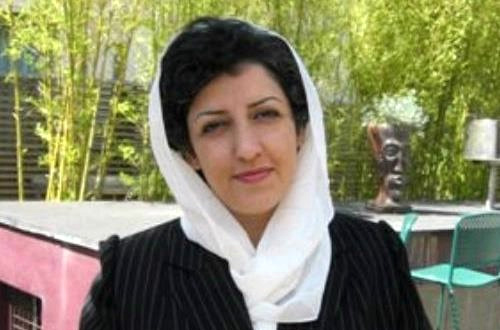
Reprisals are not limited to human rights defenders cooperating with the UN. Narges Mohammadi, a prominent human rights defender in Iran, told the NGO ‘International Campaign for Human Rights in Iran’ that new charges have been brought against her stemming from her March 8, 2014 meeting with the EU foreign policy chief Catherine Ashton. Mohammadi was charged with “propaganda against the state” and “collusion against national security” for her meeting with Ashton at the Austrian Embassy in Tehran. She was released on $10,000 bail. [Mohammadi was one of several women activists who accepted an invitation to meet the EU foreign policy head during her March visit to Tehran. The meeting took Iranian officials by surprise and unleashed a flurry of criticism by conservatives who described the meeting as “foreign interference in Iranian domestic affairs” and labeled the Iranian participants as foreign collaborators.]

Mohammadi stated: “I have been ‘charged’ with every single civil activity I have engaged in since my release from Zanjan Prison in August 2012, such as participating in gatherings on women’s rights, air pollution, and [Rouhani’s] Citizenship Rights Charter. I was also accused of honoring families of political prisoners at meetings, or attending a gathering with Gonabadi Dervishes in front of the Prosecutor’s Office, or giving interviews to media outside Iran. I told them there that when you fit all my civil activities into these two charges, it means that I must remain silent and still.”

Mohammadi was arrested in 2009 and charged with “assembly and collusion against national security,” “membership in the Defenders of Human Rights Center,” and “propaganda against the state.” She was first sentenced to 11 years in prison, but Branch 54 of the Tehran Appeals Court reduced her sentence to six years in prison. She was released in 2013 for medical reasons after a severe illness in Zanjan prison.

Prominent Rights Defender Faces New Charges for Her Meeting with Ashton : International Campaign for Human Rights in Iran.

EU foreign ministers confirm backing and supporting human rights defenders

May 20, 2014

Yesterday, 19 May 2014, EU foreign ministers, meeting in Brussels for the Foreign Affairs Council on Development, reaffirmed the EU’s commitment to promoting all human rights, whether civil and political, or economic, social and cultural, in all areas of its external action without exception, as part of working towards a rights-based approach to development coöperation.  “The implementation of a rights-based approach to development cooperation should be based on the universality and indivisibility of human rights and the principles of inclusion and participation in decision-making processes; non-discrimination, equality and equity; transparency and accountability. The application of these principles should be central to EU development cooperation, thereby also ensuring the empowerment of the poorest and most vulnerable, in particular of women and girls, which in turn contributes to poverty reduction efforts,” said the Council conclusions. The Council also stressed the need for continued EU support for human rights defenders, capacity-building of local civil society organisations and promoting a safe and enabling environment in both law and practice that maximizes their contribution to development. Being closer to citizens and interacting with civil society, local authorities also play a crucial role in the effective implementation of a rights-based approach.
Moreover, the Council underlined that investment and business activities in partner countries should respect human rights and adhere to the principles of corporate social and environmental responsibility and accountability.
EU foreign ministers back human rights-based approach to all development cooperation.

EU asked to press Laos on human rights in today dialogue

May 19, 2014

Interesting to note that this piece found its way into the Tourism Section of the Thai newspaper Phuket Wan [“This is the first site on the island dedicated especially to tourism, property, restaurants and nightlife, and jobs”] of 19 May 2014. “The European Union EU must make the strengthening of bilateral relations with Laos contingent upon the Lao governments ability to make tangible progress in addressing key human rights issues, FIDH and it member organisation, the Lao Movement for Human Rights, said .” The paper then summarizes the briefing paper titled ‘Laos: The government’s failure to reform and address serious human rights issues call for EU action‘, released ahead of the 5th Laos-EU Working Group on Human Rights and Governance, held in Brussels today. [Foremost issues: rampant land grabbing and restrictions on freedom of expression, assembly, association, and religion as well as a credible investigation re human rights defender Sombath Somphone.

via EU Asked to Push for Improved Human Rights in Laos – Phuket Wan

Human rights defenders participate in MP4Freedom campaign

April 2, 2014

US-based NGO Freedom House, in cooperation with the Lithuanian Parliament and Belarusian human rights defenders, launched on 26 March 2014 the MP4Freedom initiative inviting Lithuanian MPs to become “godparents” of political prisoners in Belarus. “As neighbors, Lithuanians should care about the future of the Belarusian nation,” said Petras Austrevicius, deputy speaker of the Seimas, who championed the initiative on behalf of the Lithuanian Parliament.  “The idea behind this initiative is to encourage Lithuanian MPs to engage on the issue personally by becoming ‘godparents’ of political prisoners in Belarus.”

“To make this initiative effective, Lithuanian MPs should address the Belarusian authorities and demand the release of political prisoners,” said Marina Lobava, the mother of a political prisoner Eduard Lobau. “MPs can write to the heads of detention facilities requesting information about the health of a particular political prisoner. They can also help by contacting the International Red Cross and facilitating its visits to prisons. International advocacy in the EU to keep the political prisoners issue on the foreign policy agenda towards Belarus is also necessary.”

Under this campaign, the participating Lithuanian parliamentarians, who represent the governing and opposition political parties alike, take the responsibility to follow the cases of particular political prisoners in Belarus, meet with their relatives, and speak publicly both at Lithuanian and international venues on human rights violations in Belarus. There are currently 10 political prisoners in Belarus, according to the Human Rights Center Viasna.

Freedom House, the Lithuanian Parliament and human rights defenders launch initiative to support Belarusian political prisoners | Belarus: civil society under attack | Freeales.fidh.net.

Azerbaijani lawyers and human rights defenders trained to train others

February 25, 2014

Twenty trainers from among Azerbaijani lawyers and human rights defenders have been trained to apply the European Convention on Human Rights (ECHR) and the Revised European Social Charter (RESC), with a particular focus on anti-discrimination standards, AzerTag state news agency reported. The last of three four-day training sessions for Trainers took place in Baku, Azerbaijan, on 20-23 February.

Twenty lawyers and human rights defenders were selected for training via competition to share their experiences with colleagues through a series of cascade trainings, which will start in March 2014 and continue even after the joint project of the Council of Europe and European Union is completed. The Justice Academy of the Republic of Azerbaijan is the key local partner in this project.

“This activity is one of the most important activities within the capacity building project for lawyers and human rights defenders, and I believe that the advocates and human rights defenders attending this programme have obtained essential benefit from the shared knowledge and they will put this knowledge and information into practice …” said Teymur Malik-Aslanov of the Council of Europe Office in Azerbaijan.

[This activity is a regional project implemented in Azerbaijan, Armenia, Georgia, Moldova, the Russian Federation and Ukraine.]

via CoE, EU train Azerbaijani lawyers – AzerNews.