Posts Tagged ‘EU’

European Parliament pledges to tackle transnational repression against human rights defenders

November 15, 2025

On 14 November 2025, Scilla Alecci of the International Consortium of Investigative Journalists, Inc. (ICIJ) wrote about a parliamentary report which identified China and other authoritarian regimes as harassing and attacking dissidents abroad, echoing findings from ICIJ’s China Targets.

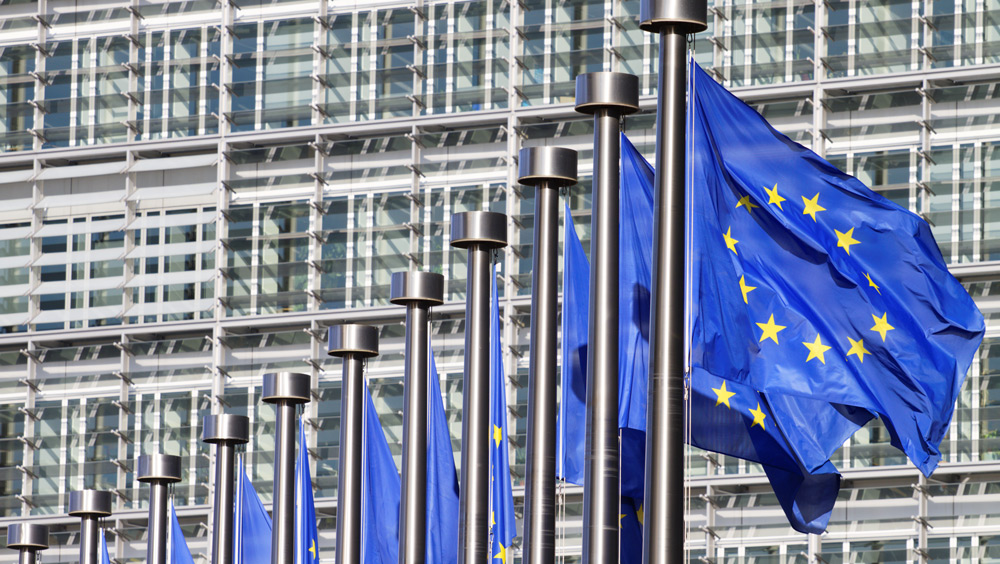
European Parliament in Brussels, Belgium.

The European Parliament has adopted a resolution urging member states to confront efforts by authoritarian regimes to coerce, control or silence political opponents and dissidents living in Europe. “Human rights defenders are a key pillar of democracy and the rule of law, and they are insufficiently protected,” a statement from the parliament said.

The resolution, adopted with a majority of 512 votes (to 76 against and 52 abstentions), called for targeted sanctions against perpetrators, market surveillance of spyware and better coordination among European authorities to counter what lawmakers labeled “transnational repression.”

“For the first time, the European Union will call this phenomenon by its name,” rapporteur Chloe told reporters ahead of the Nov. 13 vote. [see also: https://humanrightsdefenders.blog/2024/03/19/transnational-repression-human-rights-watch-and-other-reports/]

The resolution is not legally binding but signals that European lawmakers want to take a clear position on the issue and draw attention to it, Elodie Laborie, a spokesperson for the Parliament’s Subcommittee on Human Rights, told the International Consortium of Investigative Journalists in an email.

The parliamentary report identifies China, Egypt and Russia among 10 countries whose governments are responsible for nearly 80% of known cases, which include targeted killings, abductions, harassment and the misuse of international policing tools such as Interpol’s red notice system.

It confirms findings by ICIJ’s China Targets investigation, which revealed how Beijing continues to use surveillance, hacking and threats against Chinese and Hong Kong dissidents, Uyghur and Tibetan advocates and their families to quash any criticism of the regime abroad.

See also: https://humanrightsdefenders.blog/2025/04/28/chinas-tactics-to-block-voices-of-human-rights-defenders-at-the-un-major-report/

https://www.icij.org/investigations/china-targets/european-parliament-pledges-to-tackle-transnational-repression-against-human-rights-defenders

Human Rights Watch and Amnesty International condemn Tunisia’s ‘assault on the rule of law’

November 15, 2025

On 14 November 2025, Al Jazeera (Mariamne Everett) and other media reported that international NGOs, such as Human Rights Watch and Amnesty International, have decried a sharp decline in civil liberties and a pervading “injustice” in Tunisia since President Kais Saied came to power in 2019, as authorities escalate their crackdown on the opposition, activists and foreign nongovernmental organisations.

Tunisian authorities have increasingly escalated their crackdown on human rights defenders and independent non-governmental organizations (NGOs) through arbitrary arrests, detention, asset freezes, bank restrictions and court-ordered suspensions, all under the pretext of fighting ‘suspicious’ foreign funding and shielding ‘national interests’,” Amnesty International said in a statement on Friday.

Tunisia’s crackdown on civil society has reached an unprecedented level, according to Amnesty, as six NGO workers and human rights defenders from the Tunisian Council for Refugees are “being criminally prosecuted on charges solely related to their legitimate work supporting refugees and asylum seekers”. The trial’s opening session, initially scheduled for October 16, has been adjourned to November 24.

Within the past four months, Tunisia has temporarily suspended the activities of at least 14 Tunisian and international NGOs, said Amnesty, including the Tunisian Association of Democratic Women and the World Organisation against Torture.

Human Rights Watch said in a statement on Friday that Tunis’s Court of Appeal will hear on November 17 the appeal of more than 30 people “unjustly sentenced to heavy prison terms in a politically motivated ‘Conspiracy Case’” mass trial in April.

Four of those detained are on hunger strike, including one who, according to his lawyers, was subjected to physical violence in prison on November 11.

The defendants were charged with plotting to destabilise the country under various articles of Tunisia’s Penal Code and the 2015 Counterterrorism Law. Human Rights Watch, which reviewed the judicial documents, said the charges are unfounded and lack credible evidence. The NGO has called on the court to immediately overturn the convictions and ensure the release of all those detained.

The 37 people detained include opponents of Saied, lawyers, activists and researchers. Their prison terms range from four to 66 years for “conspiracy against state security” and terrorism offences. Jawhar Ben Mbarek – cofounder of Tunisia’s main opposition alliance, the National Salvation Front – began a hunger strike on October 29 to protest his arbitrary detention. Ben Mbarek was sentenced to 18 years behind bars on charges of “conspiracy against state security” and “belonging to a terrorist group”.

Note that on 10 November the Martin Ennals Award announced that Saadia Mosbah, a leading Tunisian human rights activist and co-founder of Mnemty (‘My Dream’), was selected as a runner up. [see https://humanrightsdefenders.blog/2025/11/10/breaking-news-women-human-rights-defenders-recognised-with-the-2025-martin-ennals-award/]

https://www.aljazeera.com/amp/news/2025/11/14/rights-groups-decry-tunisias-injustice-crackdown-on-activists

https://www.ft.com/content/15a04a32-f975-4f5e-9748-874f8e26cbe5

https://www.rfi.fr/en/africa/20251130-prominent-tunisian-activist-chaima-issa-arrested-as-hundreds-protest-clampdown-on-dissent

https://thearabweekly.com/tunisia-calls-eu-parliament-rights-resolution-blatant-interference-releases-high-profile-lawyer

EU’s Annual Report on Human Rights and Democracy in the World 2024 is out

May 28, 2025
Low angle of children standing in a circle reaching out to join hands.

© UNFPA

In 2024, we have witnessed extraordinary levels of hostility towards democracy, from rampant disinformation and information manipulation by foreign actors, to the silencing of media and human rights defenders, and a strong pushback against gender equality and diversity, undoing years of progress in many countries across the globe. Today, only 29% of the world’s population live in liberal democracies. At the heart of these challenges lies peace. Peace is not simply the absence of war. It is the active cultivation of justice, the protection of the most vulnerable, the realisation of all human rights and the commitment to dialogue and reconciliation.’ 
– High Representative, Kaja Kallas 

The publication of the EU’s Annual Human Rights Report takes place in the context of multiple and cascading crises, including war on the European continent and the resurgence of conflict in many other areas of the world. These developments underscore the strong links between peace, human rights and democracy. Climate change, digital transformation, and rising inequalities add to the growing human rights challenges worldwide.

The report follows the structure of the EU’s Action Plan on Human Rights and Democracy, particularly the EU’s work on protecting and empowering individuals, building resilient, inclusive and democratic societies, promoting a global system for human rights and democracy, harnessing opportunities and addressing challenges, and ensuring that the EU delivers by working with our partners.

The EU continues to support the strengthening of inclusive, representative and accountable institutions, and promoted a collaborative approach to democracy through the Team Europe Democracy initiative. The fight against information manipulation and interference also continues to be a priority through initiatives such as EUvsDisinfo. Over the past year, the European Endowment for Democracy has kept up its work on fostering democracy and working with free media and civil society in challenging circumstances in Belarus, and Ukraine among others. The EU has carried on supporting and empowering people on the frontlines of human rights advocacy.

While the global outlook is challenging, the EU is steadfastly pursuing deeper international cooperation and stronger early warning and prevention mechanisms. Efforts to ensure accountability for violations and abuses of human rights continue to be a key priority. Together with its partners, the EU is determined to protect the multilateral human rights system and uphold the central role of human rights and democracy in fostering peace, security and sustainable development.

NGOs alarmed by draft law “TRANSPARENCY OF PUBLIC LIFE” in Hungary

May 27, 2025

Human Rights Watch, Civil Rights Defenders and many, many other NGOs are deeply alarmed by a new legislative proposal in Hungary that, if passed, would institutionalise sweeping, opaque, and politically motivated repression of independent civil society, the press, and private organisations that receive foreign support or have any kind of income that the Hungarian government feels would threaten the country’s sovereignty. 

The draft law, which is deceptively titled ‘On the Transparency of Public Life’, would give the authorities unchecked powers, allowing it to recommend the registration of organisations deemed to be ‘influencing public life’ with foreign funding in ways that ‘threaten Hungary’s sovereignty’. Because this phrasing is vague and ideologically loaded, it risks including any kind of criticism of government policy, including the promotion of human rights, press freedom, gender equality, and the rule of law. 

Potential disastrous consequences

  • No legal remedy: If the government demands an organisation register itself, the organisation in question would not be able to appeal this decision. Once listed, organisations would have no access to effective legal redress; 
  • Broad definitions: ‘Foreign support’ is defined as any financial input, no matter how small, from practically any international source (including EU institutions and dual citizens) as well as commercial revenue; 
  • Sweeping prohibitions and sanctions: Listed organisations would have to seek permission from the tax authorities to receive foreign support. Financial institutions would be required to report and block transfers, meaning NGOs would effectively be permanently monitored; 
  • Loss of domestic support: Listed organisations would lose access to Hungary’s 1% income tax donation scheme, which would prevent them from receiving support from regular Hungarian citizens; 
  • Political targeting: Leaders of registered organisations would be labelled ‘politically exposed persons’, which would expose their private financial transactions to invasive scrutiny; 
  • Severe penalties: Any violations could lead to fines of up to 25 times the amount received, suspension of the organisation’s advocacy activities, and even forced closure.

EU must speak out against proposed law

Hungary’s draft law is not about transparency: it is a calculated attempt to criminalise dissent, silence watchdogs, and entrench one-party control over the democratic public sphere and civic space. If passed, the law would violate multiple provisions of the EU Charter of Fundamental Rights and the European Convention on Human Rights, including freedom of expression and association and the right to an effective remedy. 

In an open letter to President Ursula von der Leyen and Commissioner Michael McGrath of 22 May 2025, the NGOs urge to take the following immediate steps:

  • Immediately request the Court of Justice of the European Union (CJEU) to grant interim measures in the ongoing infringement procedure on the Law on the Defence of National Sovereignty (Case C-829/24). The Sovereignty Protection Office is crucial to the new bill and therefore this is an imminent and effective way to halt the progress and impact of the bill. Cognizant of the impending danger, the European Parliament and civil society have been calling for this step since 2024. Interim measures are designed to prevent irreparable harm — in this case, the effective paralysis of civil society organisations, independent media and dissenting voices – and with this new development comprehensive interim measures should be requested immediately.
  • At the same time, call on the Hungarian government to withdraw the bill and if unsuccessful, open a new infringement procedure on new violations that are not linked to the ongoing case on the Defence of National Sovereignty.
  • With the forthcoming Article 7 hearing on Hungary on 27 May 2025 and recognising the escalation of a systematic breakdown of the rule of law, support the Council of the EU to move to a vote on Article 7(1).

This new bill represents a severe and existential threat to democratic principles, human rights and the rule of law in Hungary and in the EU as a whole. If the existing tools are not effectively deployed, we risk an unravelling of the rules on which the EU was founded and a clear step towards authoritarian practices. We call on you to stand in solidarity with Hungarian civil society and their counterparts across the region and remain available to provide additional information and support.

https://www.hrw.org/news/2025/05/23/open-letter-hungarian-bill-entitled-transparency-public-life

https://www.coe.int/nb/web/commissioner/-/commissioner-asks-hungary-s-parliament-not-to-adopt-law-that-stifles-civil-society

Leuven Centre for Global Governance Studies focuses on human rights defenders

May 1, 2025

A European project of the Leuven Centre for Global Governance Studies, presents a round-up of the latest and most innovative research on the European Union’s role in an evolving global context in a quarterly newsletter, featuring summaries of key findings and access to more in-depth discussions through EU-RENEW webinars, blogs and podcasts.

The eighth issue focuses on human rights defenders.

Human Rights Defenders (HRDs) often stand on the frontlines of global struggles—exposing injustice, seeking accountability, and working to prevent further rights violations. While the European Union has long been committed to the protection of HRDs, shrinking civic space and democratic backsliding within its own borders have exposed troubling gaps: from limited pathways for HRDs to enter or remain in the EU, to the criminalization of HRDs’ work and the rise of strategic lawsuits designed to silence them.

In its latest blog, Anna Puigderrajols Triadó examines the EU’s evolving approach to HRDs and the urgent need for stronger, more consistent protections.

Some recommendations:

Human Rights Violations Committed Against Human Rights Defenders Through the Use of Legal System: A Trend in Europe and Beyond Aikaterini-Christina Koula. Human Rights Review, 25, 2024This article explores the growing weaponization of legal systems to silence human rights defenders, particularly in Europe, developing a taxonomy of legal tactics used against HRDs

Just Pathways to Sustainability: From Environmental Human Rights Defenders to Biosphere Defenders, Claudia Ituarte-Lima et al. Environmental Policy and Law, 53(5-6), 2023

Building on the concept of Environmental Human Rights Defenders, the authors advance a new concept of ‘Biosphere Defenders’ and a ‘Defend-Biosphere Framework’ to analyse the role of these actors as agents of change in pathways towards just sustainability.

The environmental rule of law and the protection of human rights defenders: law, society, technology, and markets Elif OralInternational Environmental Agreements: Politics, Law and Economics, 24, 2024, This article considers the importance of legal regulation and state intervention for creating a safe and just space for the activities of the Environmental Human Rights Defenders.

Gender-Transformative Remedies for Women Human Rights Defenders. Aleydis Nissen Business and Human Rights Journal, 8(3), 2023. This article explores gender-transformative remediation – which should bring change to patriarchal norms and unequal power relations – for women human rights defenders who fight against corporate human rights abuses.

https://mailing.kuleuven.be/r-6064b8a35903338e724c198e434dd5c3cb5e5e10d2d00f5d

Council of the European Union decides to impose measures on more individuals and entities in Iran

April 29, 2025

The Council decided 14 April to impose restrictive measures on an additional seven individuals and two entities responsible for serious human rights violations in Iran, including for the use of the judiciary as a tool for arbitrary detention.

The European Union continues to be deeply concerned by Iran’s distressing practice to arbitrarily detain EU mono and dual nationals ..

In this context, the EU is imposing sanctions on the Shiraz Central Prison, located in Fars Province, and the First Branch of the Revolutionary Court of Shiraz. Furthermore, the EU is imposing restrictive measures on members of the judiciary, including Hedayatollah Farzadi, head of Evin prison, and Mehdi Nemati, head of the Fars Prisons Protection and Intelligence Department.

Restrictive measures now apply to a total of 232 individuals and 44 entities. They consist of an asset freeze, a travel ban to the EU, and a prohibition to make funds or economic resources available to those listed. A ban on exports to Iran of equipment, that might be used for internal repression, and of equipment for monitoring telecommunications is also in place.

The European Union expresses its support for the fundamental aspiration of the people of Iran for a future where their universal human rights and fundamental freedoms are respected, protected and fulfilled. The relevant legal acts have been published in the Official Journal of the EU.

The EU introduced in 2011 a regime consisting of restrictive measures that have been renewed annually since, and last extended until 13 of April 2026. Since 2022, the EU has drastically increased restrictive measures, adopting 11 packages of sanctions in the context of growing concerns about serious human rights abuses and violations in Iran.

Sakharov Fellowship programme for human rights defenders from non-EU countries

January 19, 2025

The European Parliament’s Sakharov Fellowship is offering up to 14 human rights defenders selected from non-EU countries the opportunity to follow an intensive two-week training in Brussels and at the Global Campus of Human Rights in Venice. 

The empowering programme for human rights defenders has been organised annually since 2016, further to an initiative taken by the Sakharov Prize Community at the 25th Anniversary Conference of the Sakharov Prize.

The Brussels programme focuses on EU policies and tools in support of human rights defenders, accessing funding, developing communications skills, and raising awareness of specific security challenges facing human rights defenders. It further includes meetings with Members of Parliament, officials of the EU institutions and Brussels-based NGOs. The Fellows will also have space for individual advocacy and networking activities.

Training at the Global Campus of Human Rights in Venice combines academic teaching on international human rights law, instruments and mechanisms, with case studies, and provides practical tools for improving the work of human rights defenders to effect change on the ground. Lecturers include prominent academics, representatives of leading human rights NGOs, Sakharov Prize laureates and other outstanding human rights practitioners.

The programme will be organised in person in Brussels and Venice.

Candidates should have a proven record in campaigning for human rights in an NGO or other organisation or in an individual capacity. They must have a high level of English, sufficient to follow and contribute to discussion groups and workshops in Brussels and Venice.

The Fellowship covers return travel from the country of origin, accommodation in Brussels and Venice and a daily living allowance.

The deadline for applications is 26 January.

Fellowship or post-graduate

Call for applications for Lorenzo Natali Prize

June 19, 2024

The Lorenzo Natali Journalism Prize, sponsored by the European Commission (EU), is inviting applications that recognise excellence in writing, radio, and broadcast journalism on the theme of development, democracy, and human rights around the world. Sewe: https://www.trueheroesfilms.org/thedigest/awards/D49ECF35-4B42-444D-B4FA-F7ACE2BF65BC

This year’s contest is focused on related issues of gender equality, human development, climate, environment and energy, digital and infrastructure, sustainable growth and jobs, youth, migration and forced displacement, peace, and governance.

The application encouraged journalists committed to defending democracy and human rights can enter a competition.

The contest has four award categories: Best Emerging Journalist, Investigative Journalism, Feature Journalism, and Special Photojournalism.

Works must have been published or broadcast between May 30, 2023, and May 24, 2024.

https://www.icirnigeria.org/lorenzo-natali-prize-2024-32nd-edition-seeks-entries/

JOINT NGO LETTER asks to suspend EU-CHINA HUMAN RIGHTS DIALOGUE 2024

June 17, 2024

On 12 June 2024, a group of important NGOs addressed the following letter to Josep Borrell, EU High Representative for Foreign Affairs:

We, the undersigned civil society organisations, are writing to reiterate our request for the European Union to suspend its human rights dialogue with China, and to consider other, more impactful measures at the EU’s disposal to address the Chinese government’s assault on human rights at home and abroad.

While appreciative of the open and frank discussion and engagement with the EEAS in preparation of each round of human rights dialogue with China, we regret that the EU continues this exercise despite its amply proven ineffectiveness over 38 rounds. While the EU raises concerns during these dialogues, it knows that the Chinese government will not acknowledge abuses, will not undertake any effort to secure accountability, and will not be persuaded to undertake any policy or legislative action to comply with China’s international human rights obligations. The EU’s reluctance to establish any measurable benchmark of progress, or even to establish clearly defined objectives beyond having a dialogue, exacerbates the ineffectiveness of this exercise.

This year’s human rights dialogue would also entail EU officials sitting down with authorities in Beijing to “engage… through dialogue and cooperation” on human rights, days after the 35th anniversary of the Tiananmen massacre.

Since Xi Jinping came to power in 2013, the Chinese government has intensified its crackdown on dissent, harassing and imprisoning human rights defenders and activists including the Swedish bookseller Gui Minhai, the Uyghur economist and Sakharov Prize laureate Ilham Tohti [7 human rights awards, see: https://www.trueheroesfilms.org/thedigest/laureates/37AE7DC4-16DB-51E9-4CF8-AB0828AEF491], the Hong-Kong barrister and human rights activist Chow Hang-tung and human rights lawyers Yu Wensheng and his wife Xu Yan, who were arrested a little over a year ago on their way to meet with the EU delegation [see: https://www.trueheroesfilms.org/thedigest/laureates/69fc7057-b583-40c3-b6fa-b8603531248e and https://humanrightsdefenders.blog/2023/07/12/new-wave-of-repression-against-human-rights-lawyers-unleashed-in-china/]. The Chinese government has committed egregious violations against Uyghur and other Turkic communities in Xinjiang/The Uyghur Region, which a report of the UN High Commissioner for Human Rights in August 2022 stated “may constitute international crimes, in particular crimes against humanity.” Beijing has also intensified its repression in Tibet, while in Hong Kong the creation of a new national security architecture at Beijing’s behest has severely restricted the rights and freedoms long enjoyed by Hong Kong’s people.

Beijing’s foreign policy has also been increasingly detrimental to human rights, both in the region and beyond. The Chinese government continues to support highly abusive governments, to challenge international efforts to secure accountability for grave abuses, and to intensify efforts to undermine the international human rights system and rewrite its norms. The Chinese government has also engaged in increasingly brazen transnational repression – abuses committed outside its borders – including in EU countries.

The EU has already suspended human rights dialogues with highly repressive countries such as Russia, Syria, Belarus, and Myanmar, among others, in light of the nature, scale and pervasiveness of their authorities’ human rights abuses and violations of international law. The Chinese government has committed serious crimes amounting to crimes against humanity. It has long been evident that the human rights dialogue is not an appropriate nor an effective tool to address them. There is no reason to expect the 39th round will prove more beneficial to the rights of people in China than the previous 38. The EU and its member states should pursue different, more effective actions to press the Chinese government to end its crimes against humanity and other serious violations – and to hold accountable those responsible for failing to do so.

We have long been suggesting alternative action, latest in this February 2023 letter. We stand ready to discuss these and other options with you any time.

Signatories:
Amnesty International
Front Line Defenders
Human Rights Watch
International Service for Human Rights
World Uyghur Congress

https://www.frontlinedefenders.org/en/statement-report/joint-public-civil-society-letter-eu-china-human-rights-dialogue-2024

and see https://www.ucanews.com/news/jailing-of-chinese-metoo-journalist-upsets-rights-groups/105431

https://www.aol.com/news/eu-urges-china-stop-human-145953152.html

https://www.reuters.com/world/china/eu-urges-china-stop-human-rights-crackdown-2024-06-17/

Call for nominations for the Daphne Caruana Galizia Prize 2024

May 16, 2024

On 4 May 2024, during World Press Freedom Day, the European Parliament launched a call for the submission of entries for the Daphne Caruana Galizia Prize 2024. The award is for all journalists who work in newspapers registered in one of the 27 member countries. The purpose of the award is to recognize outstanding work that promotes and defends the fundamental principles and values of the European Union, such as human dignity, freedom, democracy, equality, rule of law, and human rights. [see: https://www.trueheroesfilms.org/thedigest/awards/ea7f958d-a957-4495-9ab4-9550741a8a58]

An independent jury, comprising representatives of the press and civil society from EU countries and members of leading European journalists’ associations, will award the 20,000 euro  prize. The award ceremony will be around October 16, the anniversary of Daphne Caruana Galizia’s murder. Journalists have until 12 on July 31 to submit their entries.

The award aims at remembering Daphne Caruana Galizia, a Maltese journalist active against corruption, who was killed in 2017 by an explosive device planted in her car. The president of the European Parliament, Roberta Metsola, in presenting the 2024 edition, was keen to remember Daphne Caruana Galizia: “She was murdered, but her spirit endures in the work of journalists who, like her, defend truth, pluralism, and justice. This prize is for them.”