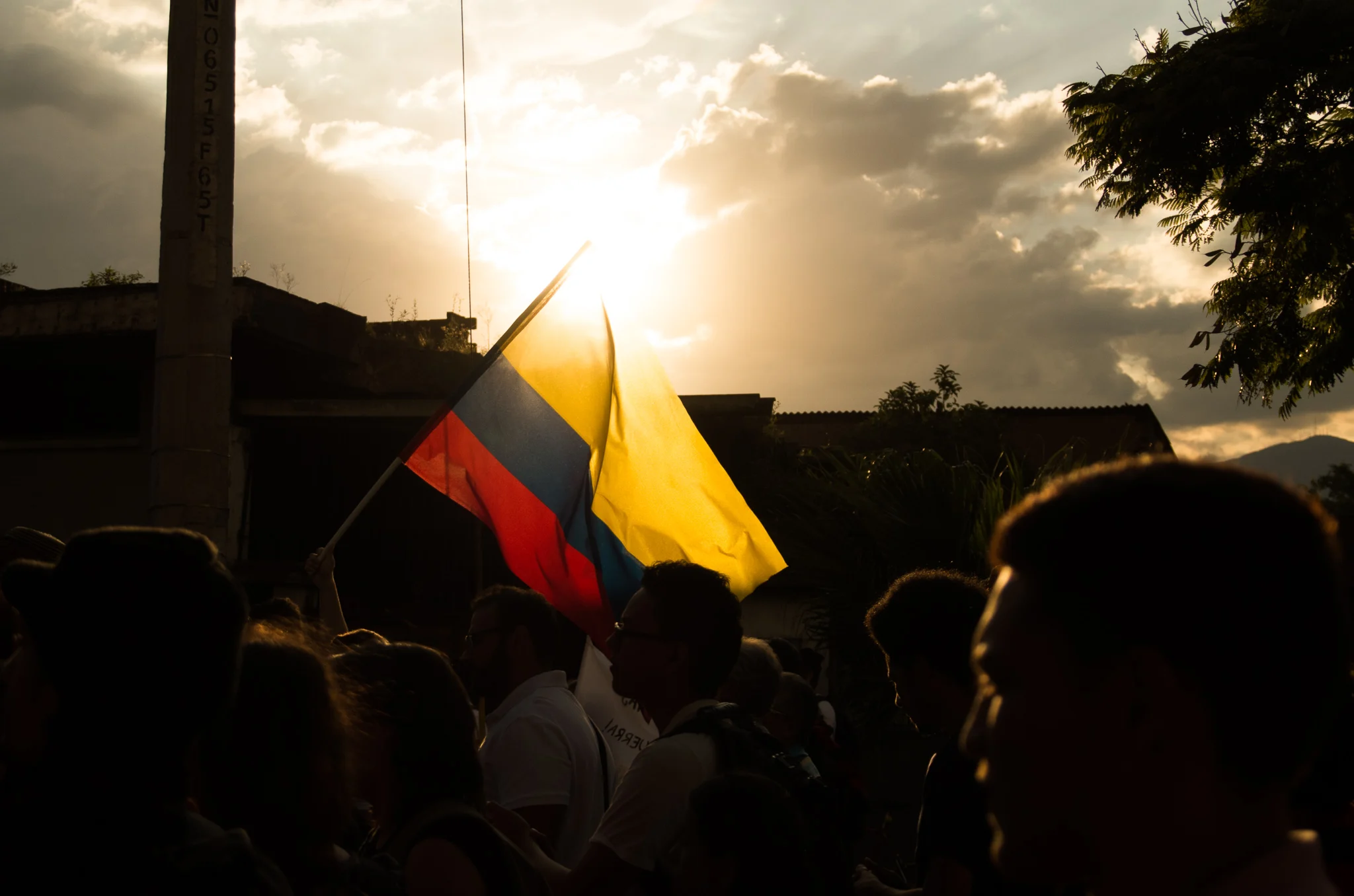
The 972 deaths recorded between 2016 and 2025 make Colombia “one of the most dangerous countries in the world” for such activists, according to the UN’s High Commissioner for Human Rights, Volker Türk.
Following the historic peace accords between the government and the Revolutionary Armed Forces of Colombia (FARC) in 2016, the report noted a gradual increase in assassinations. This was linked to the state’s inability to maintain a strong presence in areas previously controlled by the guerrilla group.
Over 70% of identified perpetrators were armed non-state actors, with the majority of cases analyzed by the report involved in drug trafficking, illegal mining, illegal logging, and human trafficking. The number of attacks and threats against human rights defenders investigated by the UN between 2022 and 2025 was 2,018, however this is thought to represent “only a fraction” of the true number due to underreporting and the lack of efficient government records of such cases.
The report recognized the work of the current Historic Pact (Pacto Histórico) government of Gustavo Petro, which has publicly recognized the gravity of the situation and worked to develop a national strategy to counter it. This included the 2022 law that established peace as a matter of state policy, recognizing the state’s responsibility to “guarantee human security” through a “territorial and intersectional approach”.
However, the UN says the state’s response has failed human rights defenders due to its fragmented nature that lacks coordination between national, departmental, and municipal authorities.
“In addition to ensuring accountability for the murders that have taken place, addressing the structural causes of this human tragedy through a comprehensive approach must be a priority for all relevant authorities in Colombia, in order to protect human rights defenders and enable them to carry out their vital work safely,” Türk said.
High levels of impunity have also persisted, with only 55 out of the 800 cases investigated between 2022 and 2025 ending in sentencing. In over half of these cases, no suspects have been identified.
Nearly a quarter of victims identified by the UN were Indigenous (23%) highlighting a disproportionate effect on this population that represents less than 5% of Colombians.
Other disproportionately affected groups include Afro-Colombians, LGBTQ+ individuals, rural community leaders and environmental protectors, as well as political leaders.
The report concluded by urging the Colombian state to take action to combat this issue, recommending institutional reforms and criminal investigations into perpetrators.
Nathalia Bonilla is an environmental human rights defender from Ecuador who works in the protection of the rights of Nature. She told ISHR about her country’s sharp policy turn in favour of extractive activities and spoke about the ‘utopia’ she and her peers would like to see in its place. ‘A revolution where you can’t dance is not my revolution,’ Nathalia said, in arguing for an ‘environmentalism for the people’.
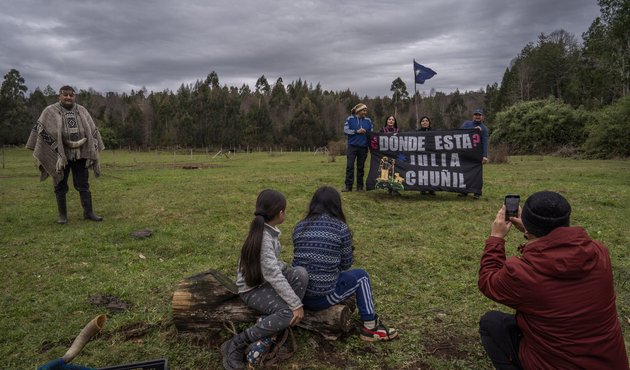
Family members and friends of Julia Chuñil display a banner that reads: “Where is Julia Chuñil?” on the land where she was last seen. Tamara Merino / Global Witness
Global Witness joins organisations around the world in condemning the arrest of Pablo San MartínChuñil, Javier Troncoso Chuñil, Jeannette Troncoso Chuñil, and BermarFlavio Bastías Bastidas, which occurred on 14 January 2026, in the Los Ríos Region, Chile.
Pablo, Javier, and Jeannette are children of Mapuche Indigenous leader and environmental defender JuliaChuñilCatricura, president of the Putreguel Indigenous Community, who has been missing since November 8, 2024, while defending 900 hectares of native forest in the commune of Máfil.
Julia’s disappearance has been internationally denounced as a forced disappearance linked to her struggle for territorial and environmental protection against the advance of large landowners and the forestry sector.
The arrest of Pablo, Javier, Jeannette, and Bermar occurs six months after the Inter-American Commission on Human Rights (IACHR) granted precautionary measures in favour of Julia Chuñil, urging the Chilean government to increase efforts to search for her and to share information about such efforts with her family. The arrest also occurred just hours before the family was scheduled to attend the admissibility hearing before the Escazú Committee to present evidence of the State’s non-compliance.
Global Witness Senior US Policy Advisor Javier Garate said: “The arrest of JuliaChuñil’schildren and relativesis to be condemned. Rather than further victimising the family, authorities shouldinsteadfocus onthe main suspectidentifiedby the family and by human rights organisations.…
“This casemust be viewed in the wider Latin Americancontext of systematic violence against environmental defenders,whereat least2,253activists have been killed andorforcibly disappeared between 2012 and 2024.
“We offer solidarity with theChuñilfamilyat this time.The arrestedfamily members should beimmediatelyreleased anda proper independent investigation carried out.”
Global Witnesshas joined organisationscalling for:
The immediate release of Pablo San Martín Chuñil, Javier Troncoso Chuñil, Jeannette Troncoso Chuñil, and Bermar Flavio Bastías Bastidas;
That the Chilean State comply with the IACHR’s and the Escazú Committee’s determinations and protect, rather than criminalise, Julia Chuñil’s relatives;
An impartial, transparent, and effective investigation into Julia Chuñil’s disappearance, focusing on the identified main suspect;
An end to the criminalisation of environmental defenders and Indigenous peoples in Chile and throughout Latin America;
That international human rights bodies monitor this case and ensure due legal process.
The criminalisation of those who defend the land and territories is a crime against humanity and against the planet.
On 15 January 2026 – the third anniversary of the enforced disappearance of Ricardo Lagunes and Antonio Díaz – UN experts demanded immediate answers about the fate and whereabouts of the two Mexican human rights defenders. “Mexican authorities must comply with the State’s international obligations, including by investigating the enforced disappearance, proactively searching for them, determining their fate and whereabouts, and holding perpetrators criminally responsible,” the experts said.
On 15 January 2023, Ricardo Lagunes, a human rights lawyer, and Antonio Díaz, an Indigenous leader, were forcibly disappeared in the state of Colima, Mexico. Their enforced disappearance occurred amid an ongoing dispute over natural resources between the Indigenous community of San Miguel de Aquila, Michoacán, and the Luxembourg-based mining company Ternium (part of the Argentine-Italian Techint Group). They were last seen after attending a community meeting to discuss collective action in response to the human rights impacts of the mining company’s operations.
“Refusing to succumb to despair after their enforced disappearance, the families of Mr Lagunes and Mr Díaz have undertaken a tireless quest for truth and justice over the past three years,” the experts said, noting that the authorities have so far not provided an effective response and that the company concerned has reportedly failed to fully cooperate with ongoing investigations and search activities.
The cases have been registered under the Committee on Enforced Disappearances’ Urgent Actions procedure and benefit from precautionary measures granted by the Inter-American Commission on Human Rights, acknowledging the serious, urgent and irreparable risk faced by the two human rights defenders.
“Enforced disappearances have a chilling effect on human rights defenders, including those advocating for land, natural resources and environment issues, as well as Indigenous leaders, and serve to silence critical voices,” the experts said, urging the Government to ensure that human rights defenders can carry out their work in a safe environment, including by strengthening the protection mechanism for human rights defenders.
In the context of resource-extraction projects, business enterprises have often reportedly sown and exacerbated community divisions, inciting violence among locals with opposing views on the projects and the use of land and natural resources. “The Government must ensure that businesses respect human rights across all their activities pursuant to the UN Guiding Principles on Business and Human Rights, including when engaging with human rights defenders and affected communities,” they said.
The experts are in touch with the Government of Mexico and the business concerned in this regard.
Nathalia Bonilla is an environmental human rights defender from Ecuador who works in the protection of the rights of Nature. She told ISHR about her country’s sharp policy turn in favour of extractive activities and spoke about the ‘utopia’ she and her peers would like to see in its place. ‘A revolution where you can’t dance is not my revolution,’ Nathalia said, in arguing for an ‘environmentalism for the people’.
Cressida Kuala lives in a small gold mining town in the Highlands Region of Porgera District in the Enga Province of Papua New Guinea. In 2011, Cressida founded the Porgera Red Wara (River) Women’s Association, and she started speaking out about issues such as environmental degradation, chemical waste, pollution, expropriation of land, and the impact on the local community.
On 5 November, 2025Camilla Pollera, Human Rights and Climate Change Program Associate at the Center for International Environmental Law published a blog post about the upcoming COP30 and the role of human rights defenders:
There is no climate justice in a climate of fear. As governments prepare to meet in Belém, Brazil for, COP30, attention turns to a country where defending nature still comes at a high cost. Deep-rooted and intertwined impunity and violence against environmental human rights defenders (EHRDs) — including Indigenous defenders, Afro-descendent communities, women, and defenders from LGBTQIA+ —persist in Brazil.
COP30 decisions must recognize the efforts of those protecting the planet, in Brazil and beyond, and ensure that they can do so safely, freely, and without fear.
Around the world, EHRDs are on the frontlines of the climate crisis — protecting land, water, communities, and their rights, often at great personal risk. Faced with an escalating climate crisis and the inaction of governments, a growing number of people are stepping up to defend their rights, the rights of future generations and the right to a clean, healthy and sustainable environment, exercising their fundamental freedoms of expression, peaceful assembly, and association, guaranteed under international human rights law.
…The violence and repression faced by defenders are intensified by intersecting forms of marginalization, especially affecting women defending the environment, who often suffer gender-based violence that rarely appears in the data, including sexual violence, harassment, and rejection within their families and communities. They are targeted not only as defenders of rights and natural resources but also as women, in all their diversity, challenging discriminatory societal norms, a combination that makes their work particularly dangerous and invisible. …The persistent violence and lack of effective guarantees for human rights protection are a stark reminder of what is at stake as COP30 comes to Belém.
The Advisory Opinion of the Inter-American Court of Human Rights on the climate emergency and human rights made it clear: States must take proactive steps to ensure the effective protection of environmental defenders — including for those such as Indigenous and women EHRDs who are most at risk of retaliation. The Court recognized EHRDs are “allies of democracy”, whose work takes on even greater importance amid the urgency and complexity of the climate emergency. It reaffirmed the right to defend human rights as an autonomous right and declared that States have a special duty of protection toward those who exercise it, and recognized the double layer of risk faced by women environmental defenders, requiring an even higher duty of care. The Court also formulated very concrete recommendations on what this means at the national level.
The Escazú Agreement and the Aarhus Convention both enshrine explicit provisions on the protection of EHRDs, setting legal and institutional frameworks to operationalize these duties. Recent work under these instruments has provided concrete guidance for States and businesses to uphold their obligations, safeguard civic space, and ensure defenders are protected and not penalized. The recent Action Plan under Escazú and the ad hoc rapid response mechanism under Aarhus are just a few examples marking concrete advances in protecting those facing threats.
At COP30, Parties can no longer ignore their human rights obligations. They have a duty to ensure that the UN Framework Convention on Climate Change (UNFCCC)—the central forum for global cooperation on climate action—and its outcomes align with legal standards. Rightsholders have been obstructed from participating and silenced the climate talks, a process that is deciding on their future. Restrictions on the rights to freedom of expression and assembly, lack of transparency in the host country agreements, persistent visa barriers and financial burdens, continue to limit access. In recent COPs, civic space has continued to shrink, with obstruction often led by the very States hosting the negotiations.
Brazil has a chance to do things differently, by making civic space at COP30 and the protection of environmental defenders a true priority. This includes guaranteeing safe conditions for the meaningful participation before, during, and after COP30 and beyond. And it also means taking steps domestically, starting with the urgent ratification of the Escazú Agreement. Brazil has a key role to play in building upon its legacy of international environmental leadership and steering negotiations at the COP towards rights-based outcomes.
COP30 indeed offers a crucial moment to enhance the protection of defenders through critical decisions expected in Belém: the Just Transition Work Programme (JTWP) and the Gender Action Plan (GAP).
As highlighted by the recent report of the UN Special Rapporteur on Human Rights Defenders, Mary Lawlor, a just transition should be grounded in the protection of those who defend rights and call out false climate solutions, from Indigenous Peoples and land defenders opposing harmful mining projects to workers’ advocates demanding fair and equitable transitions. All decisions, measures, and mechanisms designed to enable a just transition from the fossil fuel economy must protect a safe and enabling civic space, and ensure the meaningful participation of EHRDs.
..
There is no climate justice without human rights and without protecting those on the frontlines. EHRDs step in to protect what governments have neglected, and their courage exposes States’ failure to meet their climate and human rights obligations. Despite the risk, around the world, defenders continue to organize, resist, and demand climate justice, leading the way forward. In their resistance lies the chance of a just and sustainable future.
Since 1989, CIEL has used the power of law to protect the environment, promote human rights, and ensure a just and sustainable society.
With offices in Washington, DC, and Geneva, Switzerland, CIEL’s team of attorneys, policy experts, and support staff works to provide legal counsel and advocacy, policy research, and capacity building across our four program areas: Climate & Energy, Environmental Health, Fossil Economy, and People, Land & Resources.
On 5 November 2025 Amnesty international endorsed this kind of view under the title “What is COP and why is this year’s meeting in Brazil so important?”
On 13 October 2025, Nina Lakhani, climate justice reporter the Guardian, published this interview with Mary Lawlor, UN special rapporteur for human rights defenders, who presented her final annual thematic report during an interactive dialogue at the 80th session of the United Nations General Assembly’s Third Committee. The Special Rapporteur’s report focused on the contributions of human rights defenders addressing climate change and working to realise a just transition from fossil fuels, and the risks they face in carrying out this work.
Mary Lawlor, the UN special rapporteur for human rights defenders since 2020, has documented hundreds of cases where states have sought to smear and silence climate defenders engaged in peaceful protest, non-violent civil disobedience and litigation.
“Attacks against climate defenders have surged over the course of the mandate, and we now see outright repression against people who are organizing for climate action. It’s some of the states that have claimed to be the strongest supporters of human rights defenders including the UK, Germany, France and the US, that are most often repressing climate activists and where the right to protest is being denigrated and delegitimized.
“These big countries spew out the rhetoric about 1.5C, but they don’t mean it. They are playing the game to suit themselves. It’s business as usual,” Lawlor said in an interview with the Guardian.
It documents state repression including police violence and surveillance, civil litigation deployed to deliberately wear down and silence climate defenders known as Slapp (strategic lawsuits against public participation), as well as bogus criminal charges ranging from sedition, criminal defamation, terrorism and conspiracy to trespass, to public disorder and to disobedience.
One trend documented by Lawlor is the conflation of non-violent climate action with terrorism. In 2022, the French minister of interior at the time, and current minister of justice, accused the national environmental movement Les Soulèvements de la Terre of “ecoterrorism”. The government sought to close down the group, but the country’s highest administrative court eventually overturned the effort.
Lawlor is adamant that climate activists are human rights defenders. They use non-violent protest, disruptive civil disobedience and litigation to stop fossil fuel projects and pressure elected officials to take meaningful action precisely because they are trying to protect the right to food, clean water, health, life and a healthy environment.
But it’s not just fossil fuels. Human rights are now being targeted in the rush for critical minerals and new sources of non-fossil energy. The same repressive playbook is being used by governments and private companies involved in land grabs, pollution and Indigenous rights violations in pursuit of a green transition.
“Governments are repressing human rights defenders and the current trajectory is incompatible with the realization of human rights for all. It’s just a road to destruction … I think states are behaving in a criminal fashion,” Lawlor said.
“No system, no power, no government, no big company seeking profit should trump the rights of billions of people in the world. And that’s what’s happening. It’s the rich, the powerful that are creating such a disaster for humanity.”
On 16 October 2025 Amazon Watch reported that more than 130 civil society and human rights organizations from across Latin America and around the world have issued an urgent appeal for an immediate end to repression, militarization, and human rights violations by the Ecuadorian government. The statement follows weeks of violent crackdowns against Indigenous-led protests that began on September 21, when social movements mobilized to defend democracy, rights, and the environment amid controversial government reforms.
According to Ecuadorian human rights groups, the government’s response has been brutal and disproportionate: at least three people have been killed, including Indigenous leader Efraín Fuerez; over 282 people injured; 172 detained; and 15 temporarily disappeared. Reports also confirm attacks on journalists, raids without warrants, internet blackouts, and summary deportations, while military operations continue across several provinces.
The joint declaration denounces the criminalization of Indigenous and human rights defenders, who face fabricated charges of terrorism, sabotage, and illicit enrichment, along with the freezing of organizational bank accounts. The signatories condemn President Daniel Noboa’s use of racist and stigmatizing rhetoric to justify state violence and to discredit legitimate social protest.
“Defending life, land, human rights, and freedom of expression cannot be criminalized. Peace cannot be imposed by force; it is built on truth, justice, and dialogue,” the statement affirms.
The organizations also point to international alarm: on October 8, seven United Nations Special Rapporteurs expressed concern about the repression and institutional rollbacks that weaken environmental protections and Indigenous rights. Two days later, members of the European Parliament called for a public EU statement, a monitoring mission, and a review of the E.U.–Ecuador Trade Agreement under its human rights clauses.
In response to the escalating crisis, Amazon Watch has launched an international action urging President Noboa to cease all violence immediately, end the criminalization of Indigenous movements, and ensure full respect for human rights and the rule of law.
Download the statement in PDF format to view a complete list of signatories.
During October 2025, new guidelines on Environmental Protest and Civil Disobedience were released by Michel Forst, UN Special Rapporteur on Environmental Defenders under the Aarhus Convention.
The new guidelines aim to support states, civil society, environmental activists, and legal practitioners in understanding and implementing the rights guaranteed under the Aarhus Convention. The document underscores that individuals and groups have a recognised international right to engage in peaceful environmental demonstrations, even when challenging public or private actors whose practices may harm the environment.
The document outlines five guiding principles to help states ensure that peaceful environmental activism is respected, not repressed:
Address the root causes of the protest: Governments should tackle the real reasons behind environmental protests, such as inaction on environmental protection, lack of transparency, or exclusion from decision-making.
Reject criminalization of defenders: Authorities and media must stop portraying environmental activists as criminals and instead recognize their legitimate role in defending public interests.
Protect civic space: Civil disobedience must not be used as a pretext to restrict fundamental freedoms or limit peaceful public expression.
Ensure human rights–based policing: Law enforcement responses must be lawful, necessary, and proportionate — never arbitrary, excessive, or punitive.
Uphold justice and civic freedom: Courts should avoid rulings or sanctions that discourage peaceful protest or shrink civic space.
Furthermore, the guidelines recognize that some environmental defenders may resort to civil disobedience when legal channels fail, and the guidelines set out conditions under which such acts may be tolerated (e.g., proportionality, non-violence, necessity, public interest). The guidelines stress the need for states to prevent and remediate retaliatory actions against protestors, such as legal harassment, surveillance, excessive use of force, or criminalisation of protest. The text encourages states to review and reform national laws, police protocols, and judicial practices to ensure that protest rights are respected, especially for environmental defenders, and it calls for transparent mechanisms to monitor how protests are handled, report abuses, and hold responsible persons and institutions to account.
The guideline highlights that public authorities (including political figures) should refrain from using language labelling protesters as threats, “eco-terrorists,” or “foreign agents”, and media (especially public or state media) should maintain factual accuracy, avoid derogatory language, and refrain from mischaracterising environmental defenders.


 Hans Thoolen on Human Rights Defenders and their awards