Posts Tagged ‘documentation’

Yasmine Al-Mashaan, a Syrian human rights defender, on transitional justice

March 20, 2025

On 12 March 2025 the OHCHR published the feature:

Two women looking at the camera

From left:Human rights defenders Sofija Todorovic (Serbia) and Yasmin Al-Mashaan (Syria) © OHCHR/Gabriela Gorjón

“I’m the only girl of six siblings. And suddenly I lost five brothers between 2012 and 2014,” said Yasmine Al-Mashaan, a Syrian human rights defender and victim. “Before they were taken, they were around to love and protect me. I think it’s my duty to give them a little bit of their love and to fight for truth and justice for them and for everyone,” said Al-Mashaan, a former pharmaceutical assistant.

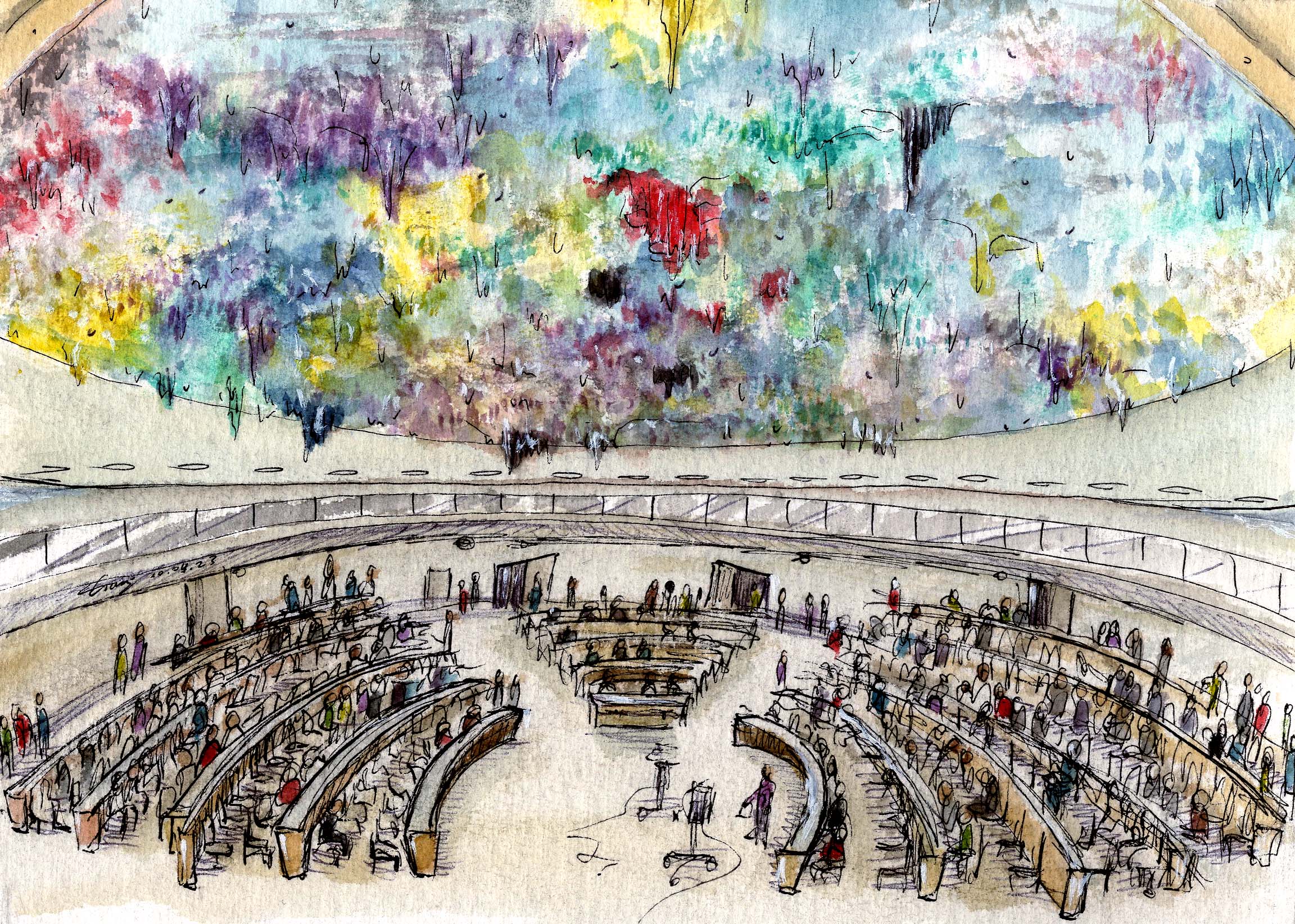
She spoke during an enhanced interactive dialogue on transitional justice at the 58th session of the Human Rights Council in Geneva, Switzerland, where UN Human Rights Chief Volker Türk presented a report on lessons learned and good practices related to transitional justice in the context of sustaining peace and sustainable development.

“In 2018, I co-founded, along with other families of forcibly disappeared persons, the Caesar Families Association, which brings together families who identified their loved ones among the victims in the photos smuggled out of Syria in 2013, known as the Caesar Photos,” Al-Mashaan said.

Her brother Oqba, one of her two disappeared brothers, was among the photos. 

Türk emphasized that transitional justice tackles the demons of the past to build a better future.

“It grapples with difficult questions about truth and memory. It looks for justice, in all its complex and myriad forms,” he said. “And it helps to repair the institutional and social fabric of fractured societies. Above all, transitional justice is about victims, dignity and healing.”

According to the Office’s report, in the aftermath of a conflict or large-scale and serious human rights violations and abuses, States have an obligation to provide truth, justice, reparation and guarantees of non-repetition. The report showcases some 36 victim-centred, inclusive, and gender-responsive transitional justice efforts led by victim associations and grass-roots organizations from dozens of countries, from Colombia to Syria, and Chad to Timor Leste.

However, Türk said, the path to peace is never easy.

“Transitional justice is often held up and slowed down by political instrumentalization, discriminatory or selective design and focus, insufficient buy-in of affected populations, and weak State institutions,” he said.

Women and youth as a driving force

Türk said that civil society, including grass-roots organizations often led by women and youth, play a crucial role in overcoming these challenges.

Sofija Todorovic, Programme Director of Youth Initiative for Human Rights in Serbia, who also participated in the dialogue, believes the role of youth organizations in transitional justice is indispensable.

“These organizations ensure that the voices and perspectives of young people are integrated into the policies and strategies shaping their future,” she said. “In many cases, their mission extends to educating youth about the history that has been deliberately concealed from them.”

Todorovic’s determination was fuelled by the realization that her country had hidden the truth from her.

“My State and the institutions within my State didn’t give me the right to truth and to make informed conclusion about the past, but rather they forced only one side of the story of the past,” she said. “And I think that that it’s unfair.”

She emphasized the need to address intergenerational trauma in transitional justice efforts.

“Only people who have space to heal can be able to build functional democracy,” she said. “We need a political climate that will resolve the trauma, not exploit it.”

Both Todorovic and Al-Mashaan’s organizations exemplify the power of women’s leadership, resilience, and strategic action in advancing transitional justice despite significant obstacles.

Justice and peace

Leyner Palacios Asprilla, a Colombian human rights defender and former Truth Commission member currently leading the Unit for Victims of the Chocó Region, participated in the dialogue via video message. The situation in his region remains so critical that he couldn’t leave the victims he works with alone.

For Palacios Asprilla, UN Human Rights in Colombia has been instrumental in navigating the challenges of consolidating peace, protecting victims, and defending human rights.

“Today, the world cannot forget our country because we have not yet crossed the finish line or overcome the obstacles to reach a point of tranquillity,” he said. “Colombia is an example to the world in its commitment to consolidating peace. But the world must not forget that this task is not yet complete.”

Türk said that in this fragmented world, transitional justice is an essential and creative problem-solving approach. It must be grasped, nurtured and used to build durable peace.

Many countries, including Nepal, Syria, and Bangladesh, have enormous opportunity to move towards justice and peace, he said.

Key takeaways

In preparing the report, UN Human Rights organized consultations with 70 women and 70 men from more than 77 countries, including representatives of national entities implementing transitional justice measures, victims’ associations and civil society organizations, regional and international human rights protection systems, and transitional justice experts and practitioners.

The report identifies seven key lessons in advancing transitional justice:

  1. Documenting human rights violations is essential for accountability and future justice.
  2. Marginalized victims must be included, ensuring their experiences are recognized.
  3. Victims’ associations play a crucial role in advocacy and justice efforts.
  4. Immediate legal, medical, and psychological support helps victims navigate trauma.
  5. International human rights mechanisms provide accountability when national justice fails.
  6. Universal jurisdiction and international courts offer alternatives when domestic options are blocked.
  7. Grassroots memory and memorialization preserve historical truth and prevent future atrocities.

see also: Transitional justice and human rights Report by UN Human Rights

https://www.ohchr.org/en/stories/2025/03/transitional-justice-confronting-past-building-future
Rwanda: Human Rights Watch’ Archives March 1993 – December 1994 digitized and public

April 4, 2024

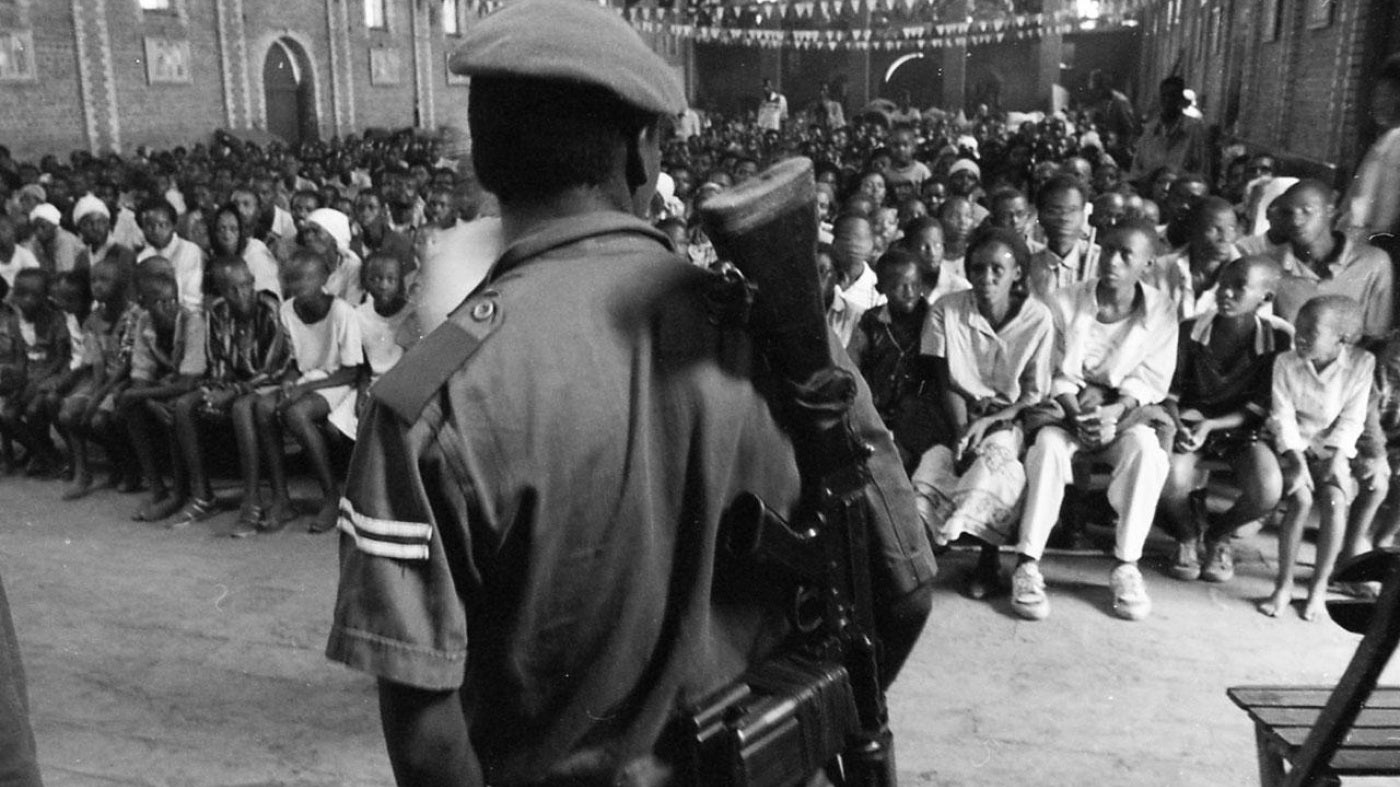
A crowd of mostly Tutsi civilians, seeking protection against Hutu militiamen, sit in the Sainte Famille Catholic church in the then-government controlled part of Kigali, listening to a member of the security services address them. Over several months, ma

On 2 April, 2024 Human Rights Watch made part of its Rwanda Archives public in digital form.

Human Rights Watch has been documenting and exposing human rights violations in Rwanda since the early 1990s. Its senior adviser in the Africa division, Alison Des Forges, one of the world’s foremost experts on Rwanda, dedicated her career to the struggle for human rights in the Great Lakes region of Africa, and to Rwanda in particular. In the period leading up to the 1994 genocide, she worked tirelessly to alert world powers to the impending crisis in Rwanda. Few would listen. By the time the genocidal forces had unleashed their sinister program and the world had awakened to the full horror that was unfolding in Rwanda, it was too late. The killings in Rwanda increased as a civil war in Burundi waged on. The violence in Burundi, also based on ethnic divisions between Hutu and Tutsi ethnic groups, lasted from 1993 until 2005.

Des Forges’s efforts did not stop when the genocide ended. She continued to painstakingly gather information on the killings, rapes, and other horrific crimes, which she compiled into what has become one of the main reference books on the Rwandan genocide: “Leave None to Tell the Story: Genocide in Rwanda”, a 500-page account of the genocide published jointly by Human Rights Watch and the International Federation of Human Rights (FIDH) in 1999. 

Des Forges testified as an expert witness in 11 trials at the United Nations International Criminal Tribunal for Rwanda (ICTR) in Arusha, Tanzania, as well as in domestic court proceedings involving Rwandan genocide suspects in several countries.

Des Forges campaigned vigorously for justice for the genocide until her tragic death in a plane crash in the US on February 12, 2009. She also documented human rights abuses by the new government of Rwanda after the genocide and advocated for accountability for all abuses, past and present.

Thirty years after the genocide, Human Rights Watch has begun the process of digitizing and making available some of Des Forges’s archives. The documents summarized below are some of those that remained in Human Rights Watch possession after Des Forges’s death and help shed light on efforts by Des Forges and others to warn about, and then attempt to stop, the genocide. These are just a selection of the many documents in the archives; others will not be published at this time for a variety of reasons. The private exchanges, letters, statements, and reports below do not purport to be a comprehensive account of the work of Human Rights Watch and others at the time, as it is likely documents are missing from the archive.

See also: https://www.trueheroesfilms.org/thedigest/awards/F42005AB-6691-4C7F-BA0D-1999D2279EA2

https://www.hrw.org/news/2024/04/02/human-rights-watch-rwanda-archives

Sudanese Human Rights Defenders risk their lives to document the war

March 13, 2024

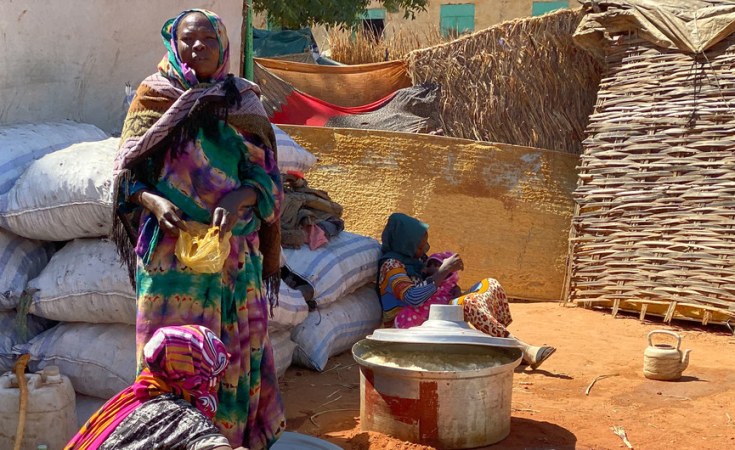
Internally displaced families gather at a temporary gathering point outside a school in El Geneina town following recent intercommunal conflict in West Darfur. Modesta Ndubi/UNHCR

Ela Yokes in The New Humanitarian (Geneva) of 11 March 2024 reports on the role of young people documenting the abuses in the war in the hope that it will contribute to justrice in the future.

Sudanese civil society groups are playing a pivotal role in documenting human rights abuses committed during 10 months of conflict, even as volunteers risk being arrested by the warring parties and are struggling with a month-long internet blackout. Youth groups, legal associations, and civilians acting in a personal capacity have all been involved in cataloguing the human rights impacts of the conflict that commenced in April 2023 and sets the army against the paramilitary Rapid Support Forces (RSF).

Documentation is a pathway to justice,” Noon Kashkoush of the Emergency Lawyers, a legal group monitoring abuses, told The New Humanitarian. She said she hopes the evidence her group has gathered will be used one day in the Sudanese justice system….

Access challenges for international aid agencies mean local mutual aid groups have shouldered the bulk of the relief effort in the most conflict-affected places. And likewise, civil society initiatives have carried the burden of human rights documentation. Despite the volatile security situation, local groups have led efforts to document sexual violence and killings, monitor ceasefire violations, track down missing persons, and report on the makeshift detention sites run by both the army and the RSF.

The findings of these civil society groups have fed into numerous human rights reports, including a detailed report last month by the UN, which charges both sides of the conflict of committing widespread abuses, some of which may amount to war crimes.

The report accuses RSF fighters of occupying residential buildings to shield themselves from army attacks, of massacring thousands of people in the Darfur region, and of committing extensive sexual abuse, including cases of rape and gang rape.

For its part, the army is accused of killing more than 100 civilians in airstrikes that were ostensibly targeting RSF positions but carried out in densely populated urban areas, or on public buildings including churches and hospitals.

The report also documents attacks on human rights defenders. It states that activists have been kidnapped and subjected to death threats and smear campaigns organised by army supporters, while several Darfuri rights monitors have been killed by the RSF.

Many groups documenting rights violations were active during the 2018-2019 Sudanese Revolution that toppled dictator Omar al-Bashir, and during the protests that followed the 2021 army-RSF coup that ended the post-Bashir democratic transition. Prior to the war, the Emergency Lawyers group was providing legal assistance to the families of pro-democracy protestors and activists who had been arbitrarily arrested, tortured, or killed by security forces.

Kashkoush said the group is now focused on war-related abuses, including the bombardment of civilian areas and the detention centres set up by the army and RSF in the capital, Khartoum, and the neighbouring cities of Omdurman and Bahri.

Kashkoush said the publication of the group’s reports and announcements have helped secure the release of hundreds of detainees – including some from the Emergency Lawyers network itself – though she described facing many difficulties.

“All of those documenting violations face the issue that movement on the ground is very challenging,” she said. “We depend a lot on open-source [information], such as video footage, and we work to verify it using witness statements.”

Another group involved in documenting abuses is the Youth Citizens Observers Network (YCON). It was established in late 2021 by volunteers wanting to shed light on violations committed against pro-democracy protesters and civil society activists. After the current conflict broke out, the network relaunched its platform under an anti-war stance, according to one of the group’s volunteers, who requested to remain anonymous to ensure their safety.

The volunteer said YCON has observers across Sudan and releases monthly reports on the impact of the war and the human rights situation. It also monitored several army-RSF truces that were violated last year. “In any given region, civilian monitors who are trained in documentation and verification methods are present on the ground and have a very wide network of connections,” said the volunteer. “Any event happening in a specific area, they would know about it.”

In cases where access to places affected by fighting has been too difficult for civil society groups, civilians already on the ground have taken it upon themselves to document what they are witnessing and publish evidence on social media.

When clashes between the RSF and the army first broke out in Khartoum, Hassan Abd al-Rauf, a local shop owner who ran a travel agency and a men’s clothing store, found himself caught in the epicentre.

Instead of escaping or complying with an RSF order that civilians should leave his neighbourhood, al-Rauf decided to stay, guard his properties, and offer assistance to others who were struggling to flee.

Walking through deserted streets, al-Rauf began recording live broadcasts on his Facebook page. His footage revealed the extent of the destruction and showed unarmed civilians who had been killed in the crossfire or targeted by snipers.

“When I started with the broadcasts, the aim was to connect people with what was happening on the ground and send photos [of the damage] back to the property owners in the area,” al-Rauf said in an interview after escaping Sudan for Qatar.

Two weeks after starting the broadcasts – which were getting hundreds of thousands of views – al-Rauf’s uploads suddenly stopped. He said he was captured by RSF fighters in the capital and held in a detention centre for 25 days.

“[The RSF] were certainly aware and it was the reason for my arrest,” al-Rauf said. “[One of my videos showed] a number of RSF vehicles after they had robbed the Bank of Khartoum and were hit by army aircraft.”

The volunteer at YCON said members of their group have faced harassment and the threat of detention from security forces as they attempt to move across different locations to document violations.

Similar threats were also described by Thouiba Hashim Galad, a member of the Missing Initiative, a local group with a platform that lets people post information about missing people. The group has a Facebook page with hundreds of thousands of followers.

“On a personal level, I receive private messages that include threats and very bad language,” Galad said. “Before the war, [the military authorities] were trying to hack our page many times,” she added.

On top of the security risks, volunteers told The New Humanitarian they are also struggling with a nationwide communication blackout that began in early February and has been blamed on the RSF.

Kashkoush of the Emergency Lawyers group said her organisation is unable to receive daily updates about human rights abuses, and instead gets a flurry of reports during the brief moments when they have an internet connection.

Kashkoush called for an international investigation into the blackout, which she described as a “constitutional violation” and a “deliberate attempt by one or both sides” to restrict access to information and thwart documentation efforts.

Documenting rights abuses has also had a psychological impact on volunteers, according to Galad of the Missing Initiative, which was founded in 2019 shortly after the RSF killed over 120 pro-democracy protesters at a Khartoum sit-in.

Galad, who currently volunteers for the initiative from outside Sudan, said the most difficult aspect of her work is delivering bad news to families when she learns that a missing person has been found dead.

During the first few weeks of the conflict, the Missing Initiative’s Facebook page was flooded with requests for information about people who had gone out to buy groceries or fuel and hadn’t returned.

Between April and August 2023, Galad said the group received over 600 reports of missing persons. She added that they stopped publishing statistics when they realised the actual number of cases was likely much greater than those reported to them.

Despite the challenges the group faces, Galad told The New Humanitarian she is determined to keep the initiative alive, especially as the conflict slips out of international focus.

“The main reason I am doing this is because I am a defender of human rights,” Galad said. “This is a continuation of the work we began after the [2019 Khartoum sit-in] massacre, on the basis that, in the future, both sides will be held accountable.”

The volunteer from YCON shared a similar view: “The fundamental motivation that allows us to continue monitoring the situation… is that this will provide accurate, recorded information for the institutions that will later work on [justice].”

Read this report on The New Humanitarian. The New Humanitarian puts quality, independent journalism at the service of the millions of people affected by humanitarian crises around the world.

Repository of United Nations recommendations on human rights in China

January 4, 2024

Illustration: Charlotte Giang Beuret for ISHR.

On 4 January 2024 ISHR published a massive, complete compilation of all recommendations issued by UN human rights bodies – including the UN Special Rapporteurs and Working Groups, the UN Treaty Bodies, and the Office of the High Commissioner for Human Rights – on the human rights situation in China since 2018. Recommendations are sorted by topic and community affected.

This repository compiles all recommendations issued by UN human rights bodies to the Government of the People’s Republic of China since 2018, the year of its third Universal Periodic Review (UPR).

This includes recommendations in: Concluding Observations issued by UN Treaty Bodies following reviews of China in 2022 (Committee on the Rights of Persons with Disabilities (CRPD)) and 2023 (Committee on Economic, Social and Cultural Rights (CESCR), Committee on the Elimination of Discrimination Against Women (CEDAW)), as well as in Decision 1 (108) on the Xinjiang Uyghur Autonomous Region (XUAR) by the Committee on the Elimination of Racial Discrimination (CERD) under its Early Warning and Urgent Action Procedure; communications and press releases by UN Special Procedures (Special Rapporteurs and Working Groups), including Opinions by the Working Group on Arbitrary Detention; press releases by the Office of the High Commissioner for Human Rights (OHCHR) as well as the OHCHR’s assessment of human rights in the XUAR.

These UN bodies are composed of independent, impartial experts, from all geographic regions.

The recommendations are categorised by key topic or community affected. Yet, this repository does not cover all topics, nor does it include all recommendations issued by the above-mentioned UN bodies.

This repository maintains the original language of the recommendation issued by a given UN body, with minor formatting changes. For the appropriate links please go to the original document.

This repository does not include recommendations to the Governments of Hong Kong and of Macao. Please click here for the repository of recommendations on Hong Kong, and here for the repository of recommendations on Macao.

The topics include very useful ones such as:

Chinese human rights defenders, lawyers and civil society organisations in mainland China

Uyghur region

Tibet

National security legal framework, judicial independence and due process

Surveillance, censorship and free expression

Reprisals, meaningful cooperation with the UN, and  unrestricted access to the country for UN experts

Transnational repression

LGBTI rights

Business and human rights, including business activities overseas

Environment and climate change

North Korean (DPRK) refugees

https://ishr.ch/latest-updates/repository-of-united-nations-recommendations-on-human-rights-in-china/

Continued harassment of Mother Nature defenders in Cambodia

June 22, 2021

The Cambodian government should immediately drop baseless conspiracy and “insulting the king” charges against four environmental activists affiliated with the Mother Nature Cambodia environmental group and release the three in pretrial detention, Human Rights Watch said today.

On June 16, 2021, the police arrested Sun Ratha, 26, Ly Chandaravuth, 22, and Seth Chhivlimeng, 25, in Phnom Penh, and Yim Leanghy, 32, in Kandal province, apparently for their documentation that raw sewage has entered the Tonle Sap River near the Royal Palace. On June 20, the court charged Ratha and Leanghy with “conspiracy” and lese majeste (“insulting the king”) under articles 453 and 437 bis of Cambodia’s penal code, and Chandaravuth with “conspiracy.” If convicted, they face between 5 and 10 years in prison, and fines of up to 10 million riels (US$2,500). The authorities also charged in absentia aSpanish national, Alejandro Gonzalez-Davidson, the founder of Mother Nature Cambodia, who had been deported in 2015. Chhivlimeng was released without charge.

The Cambodian government has stepped up its campaign to silence activists peacefully advocating to protect the environment,” said Phil Robertson, deputy Asia director. “Foreign governments, the United Nations country team, and international donors should call on the Cambodian authorities to drop their absurd charges against the environmental activists and publicly condemn any further clampdown on peaceful activism.”

An Interior Ministry spokesperson alleged that the authorities had proof that “rebellious” Mother Nature Cambodia had used foreign funding to try to topple the government, but did not make any evidence public.

This case followed earlier harassment of five Mother Nature Cambodia activists. On May 5, the Phnom Penh court convicted three environmental activists – Long Kunthea, 22, Phuon Keoraksmey, 19, and Thun Ratha, 29 – of “incitement to commit a felony or disturb social order,” articles 494 and 495 of Cambodia’s penal code. The judge sentenced them to between 18 and 20 months in prison as well as a fine of 4 million riels ($1,000) for their peaceful activism protesting the authorities’ filling-in Phnom Penh’s Boeung Tamok lake.

All three activists had been arrested in September 2020 and spent almost eight months in pretrial detention. Gonzalez-Davidson and Chea Kunthin, another activist, were also convicted in absentia and sentenced to between 18 and 20 months in prison. [see: https://humanrightsdefenders.blog/2020/09/09/cambodia-arbitrary-arrest-of-mother-nature-activists/]

Amid the Covid-19 pandemic, the Cambodian authorities have stepped up their crackdown on youth and environmental activists engaged in peaceful activism and protest. The government has often used draconian new laws to arrest and prosecute activists in an apparent attempt to silence their voices and shut down their activism.

In March 2020 and early 2021, the authorities arrested environmental activists affiliated with the Prey Lang Community Network along with a prominent environmentalist and lawyer, Ouch Leng, to stop their efforts to document illegal logging and deforestation within the Prey Lang forest.

Human Rights Watch has documented cases of nearly 70 current political prisoners, including members of the political opposition, youth and environmental activists, trade union leaders, and journalists who are awaiting trial or are serving prison sentences. Many other activists have fled Cambodia to seek refuge abroad.

Because of the higher risks of getting Covid-19 in prison, Human Rights Watch has repeatedly appealed to the Cambodian authorities to conditionally release pretrial detainees not held for violent offenses. The Office of the UN High Commissioner for Human Rights and civil society groups have often criticized the government’s routine use of pretrial detention.

“Cambodia’s highly politicized courts mean that the environmental activists charged have no chance of getting a fair trial,” Robertson said. “Only international pressure on the Cambodian government holds out the possibility of saving these activists from unjust prison sentences.”

https://www.hrw.org/news/2021/06/23/cambodia-free-environmental-activists

https://www.jurist.org/news/2021/06/cambodia-court-charges-environmental-activists-with-conspiracy-insulting-king/

https://www.fidh.org/en/issues/human-rights-defenders/cambodia-arbitrary-detention-and-judicial-harassment-of-mother-nature

https://www.amnesty.org/en/latest/news/2021/06/cambodia-assault-on-environmental-defenders-escalates-as-four-more-charged-imprisonment/ 

Women human rights defenders and climate: a treasure of references

February 5, 2020
14961626755_df9d75d853_c

On 4 February 2020 wrote in the New Security Beat an informative pieceUnsung Sheroes, Climate Action, and the Global Peace and Security Agendas“.

The December 2019 workshop on Gender, Peace and the Environment convened by the London School of Economics’ Centre for Women, Peace and Security and the University of Rosario’s Law School in Bogotá, Colombia, brought all of these interrelated perspectives together. Among other conclusions, the workshop acknowledged that indigenous women and girls are vital to more effective climate solutions, including building climate resilience in communities affected by violent conflict. However, their work is becoming increasingly fraught with danger. Criminal gangs, paramilitary groups, and private security forces from industries like mining, logging, dam construction, and agribusiness often target these indigenous environmental and human rights activists……

London School of Economic’s Keina Yoshida, one of the participants in the workshop on Gender, Peace and the Environment, reminded us of the “gender power structures, which result in violence against environmental, indigenous and women’s rights defenders such as Berta Cáceres.” Yet, as Ambassador Melanne Verveer notes in her Foreword to the Georgetown Institute for Women, Peace and Security’s report on Women and Climate Change, women are contributing to both adaptation and mitigation efforts and are creating innovative and localized solutions to build resilient communities. There is a reason for hope.

The article contains a helpful listing of relevant reports and documents on the role of women human rights defenders and climate change:

For some of my earlier posts: https://humanrightsdefenders.blog/tag/women-human-rights-defenders/


Unsung Sheroes, Climate Action, and the Global Peace and Security Agendas


New Zealand funds much-needed human rights monitoring in the Pacific

August 22, 2019

Susan Randolph – Photo: RNZ Pacific / Mackenzie Smith

New Zealand is supporting a new rollout of human rights monitoring in the Pacific. Funding of $US400,000 will allow the Human Rights Measurement Initiative (HRMI) to expand its programmes in the region. The non-profit organisation which is holding workshops in Auckland this week said it would use the money to build data sets on economic and social rights in the Pacific. Its development lead Anne-Marie Brook said it was the first time they had accepted money from a government and a clause had to be inserted into its contract with New Zealand’s Foreign Ministry to safeguard HRMI’s independence.

[see also:https://humanrightsdefenders.blog/2019/03/07/pacific-human-rights-defenders-can-do-more-to-deal-with-extractive-industries/]

Because human rights are so politically sensitive, it’s really clear that human rights needs to be measured independently of government because governments often face conflicts of interest,” she said. HRMI’s data on the Pacific is porous and often anecdotal, according to its economic and social rights lead Susan Randolph. The funding would allow more comprehensive data to be collected to help Pacific governments and civil society groups tackle human rights abuses, she said.

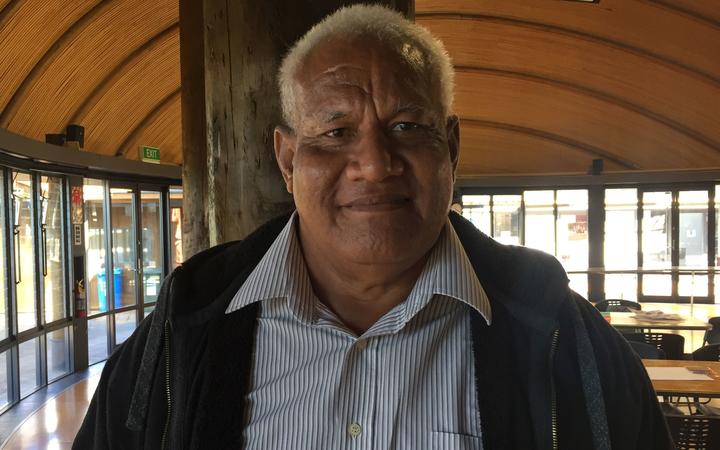
In Tuvalu, where the country’s first human rights institution was set up only late last year, the Chief Ombudsman Sa’aga Talu Teafa said they were still figuring out the best approach. “It’s very young, we call it very young. That’s why we are here to learn and to know what other institutions or what other human rights defenders are doing regarding human rights implementation,” he said.

It’s the same in Samoa, where recently the Ombudsman’s office, finding no data on violence, had to come up with its own to produce a report.

Tuvalu Chief Ombudsman, Sa'aga Talu Teafahome.

Tuvalu Chief Ombudsman, Sa’aga Talu Teafahome. Photo: RNZ Pacific / Mackenzie Smith

New Zealand Human Rights Commission’s Pasifika advisor Tuiloma Lina-Jodi Vaine Samu said the Pacific had a history of resistance to human rights monitoring because of faith-based systems. “Our religions, our faiths, our churches, are very, very important to us. But so are our traditional, cultural, ancestral beliefs as well,” she said. “At hui like this we are able to come together, fono, and talk about these issues, these mindsets, so that we can advance human rights forward.”

https://www.newsie.co.nz/news/160079-nz-funds-human-rights-monitoring-pacific.html

World Check’s ‘terrorist’ labeling exposed as biased  

January 22, 2019

In a case before a British high court World-Check, a subsidiary of Reuters, was forced to pay compensation and offer an apology to a pro-Palestine organisation which it had listed as a terrorist group on its global online database. The case may have broad ramifications for hundreds of others, both individuals and organisations, that may have been placed on World-Check’s list without their knowledge [In fact there have been several cases including that of a British mosque which also won an apology and compensation after being designated “terrorists” by the risk screening agency].

The Middle East Monitor of 21 January 2019 gives details on the case of Majed Al-Zeer, the chairman of the Palestinian Return Centre (PRC), which have both been classified as “terrorists”.

Majed Al-Zeer, the chairman of the Palestinian Return Centre (PRC)

Majed Al-Zeer (C) the chairman of the Palestinian Return Centre (PRC)

A two-year legal battle concluded with World-Check offering a public apology in open court and a legal settlement of $13,000 plus legal costs. World-Check supplies private information on potential clients for corporations, businesses and even governmental agencies, such as police and immigration. With more than 4,500 clients including 49 of the world’s 50 largest banks and 200 law enforcement and regulatory agencies, World-Check has become essential in satisfying statutory requirements towards due diligence obligations. However their failure to carry out satisfactory checks and independent verification has raised concerns over the misuse and falsification of data that can have severe consequences for victims.

Declaring his victory over World Check service today at a London press conference as “a precedent for those who are on the forefront of human rights and justice” Al-Zeer said he had been a “victim of an organised campaign waged by Israel and its spin machine of propaganda and false information.”

[The PRC has been granted consultative status with the UN Economic and Social Council. Over the past 30 years the centre has advocated for Palestinian refugees at international forums like the UN and EU. In addition to producing reports on the situation of Palestinian refugees; hosting conferences to defend their human rights, the UK organisation has been leading parliamentary delegations to refugee camps across the Middle East. Following Israel’s bombardment of Gaza in 2009 during operation “Cast Lead” in which 1,400 Palestinians were killed and thousands more were wounded, the centre organised the largest European parliamentary delegation to the besieged enclave.]

Al-Zeer’s lawyers described the victory as “shedding light into the secretive and unknown world of regulatory agencies” and the potential for their abuse. During their press conference, both expressed the urgent need to develop mechanisms for independent verification of entries that may have a “crippling effect” on people’s lives. “Such a company has a moral and ethical duty (at least from the perspective of the Media) to provide its clients with verified and real information,” said Al-Zeer, “yet, it has chosen to ignore that and stuff its database with merely politically motivated information.”….

https://www.middleeastmonitor.com/20190121-pro-palestine-group-wins-uk-high-court-battle-over-terrorist-label/

“I Defend Rights”: Shifting the Narrative about Human Rights Defenders

March 24, 2018

I Defend Rights: Shifting the Narrative about Human Rights Defenders and Civil Society Globally is a project of the Norwegian Human Rights Fund and Memria.org, in collaboration with numerous partners around the world (see the list of partners below).

It is about collecting audio accounts from human rights defenders to create a global archive of recordings of their experiences working on the front lines defending the rights of others. We will then develop multiple ways to share many of these audio recordings with much broader audiences, such as through exhibits and using social media platforms. Any defender (including you!) can participate and easily:


https://www.idefendrights.org

FIDH collected Russia’s 50 anti-democracy laws

March 18, 2018
 

Since re-election in 2012, the Russian president has overseen the creation of 50 laws designed to strangle opposition voices and raise the level of fear and self-censorship in society. FIDH with its Russian member organizations released a table of the latest 50 new anti-democracy laws since 2012. It explains the impact of each of them on the fundamental freedoms of Russian citizens, cutting down every day a little bit more the free exchanges with the outside world. It also provides some, far from exhaustive examples of the legal abuses it provokes in the every day life of citizens.

Not only the present but also the past gets filtered and controlled.

The laws and regulations range from increased surveillance and censorship powers, to laws banning “questioning the integrity of the Russian nation” – effectively banning criticism of Russia’s presence in Eastern Ukraine and the Crimea – broad laws on “extremism” that grant authorities powers to crack down on political and religious freedom, to imposing certain views on Russian history forbidding to think differently.

CHECK OUT THE TABLE OF LAWS