On Friday 11 September the 2015 Front Line Defenders Award for Human Rights Defenders at Risk was presented to imprisoned Chinese Human Rights Defender Guo Feixiong in Dublin City Hall. Irish author and playwright Sebastian Barry presented the award to Guo’s wife, Zhang Qing, and daughter, Yang Tianjiao (Sara), at the award co-presented by the Al-Jazeera Media Network. Guo has been held in Guangzhou’s Tianhe Detention Center for over 750 days, where is currently awaiting sentencing. Sebastian Barry said:“For human rights defenders the struggle is not just to implement rules and regulations and theoretical international standards. It is is about the right to raise your voice without the fear of arbitrary violence, whether by the state or others. Guo Feixiong has defended farmers illegally evicted from their land, Falun Gong practitioners persecuted for their beliefs and journalists who dared to speak out. He is a symbol of the endurance of the human spirit, of the will to survive and of the human need for the free air of ideas, to make life worth living. He is a worthy recipient of the 2015 Front Line Defenders Award.”
Guo Feixiong (pen name of Yang Maodong) is a leading figure in the movement for human rights China – a struggle fraught with danger for human rights defenders seeking civil, political, economic and social rights; accountability; transparency; and an end to corruption. After more than two years in detention, Guo Feixiong’s lawyers now report that during their most recent meeting, his memory, speech, and mental awareness all showed signs of damage.Last week, a coalition of Chinese human rights activists writing at China Change called his detention “a deliberate effort to harm Guo Feixiong and kill him slowly.”Accepting the Award on behalf of her husband, Zhang Qing said:“Guo Feixiong is a faithful idealist. Although he has experienced a wide range of political persecution by the Chinese government including, being sentenced to four prison terms, being the target of a witch hunt, and enduring countless brutal and evil tortures from the Chinese government he still holds a peaceful and pure heart. He shows enduring strength and courage to pursue rights, equality and justice peacefully. We are proud of Guo Feixiong and all the other human rights defenders and lawyers working to the same end in China”.
After the IOC awarded the winter olympics 2022 to China,Minky Worden, Human Rights Watch’s Director of Global Initiatives, had this to say on 31 July 2015:
On 10 July 2015 over 250 lawyers and support staff were detained or questioned by the police in China in one of the largest crackdowns in recent years. Many newspapers and NGOs have reported on this phenomenon. This is the situation on 29 July: Read the rest of this entry »
In case the focus on the Baku Games is seen as too partial, here a reference to a protest against China‘s bid for the 2022 Winter Olympics
Tibetan Protesters in Switzerland Disrupt Beijing’s Bid to 2022 Winter Olympics
The Tibetan Youth Association of Europe (TYAE) organized a demonstration outside the IOC hotel in Lausanne, Switzerland on 10 June, 2015. Some of the protesters outside the hotel acted a scene of Chinese human rights violations inside Tibet, while a few others managed to get inside the hotel and chant slogans such as “Free Tibet” and “No More Bloody Games”, just as the Chinese officials were making their case for Olympic bid in front of the International Olympic Committee members.
Golok Jigme, a former Tibetan political prisoner who participated in the protest said in a statement to IOC President Bach, “I stand here today as a witness of Chinese repression in Tibet. But this is not only about me. Many Tibetan human rights defenders and protestors were jailed and killed in 2008. If the Olympic Games 2022 should be awarded to China again you will be co-responsible for such atrocities. If you cannot support us, don’t treat us like toys for the sake of flattering the Chinese Communist Party. We the Tibetan people are also citizens of this world and our dignity and rights must be respected.”
On Thursday, China’s foreign ministry condemned Wednesday’s protest in Switzerland calling it, provocative:”Their behavior will not shake the resolve of the Chinese government and people to apply to hold the Winter Olympics in Beijing“.
The article cited below, by Ahmar Mustikhan in the Epoch Times of 6 June, centers on the case of two African NGOs. In the absence of any detail regarding their alleged ‘misconduct’, I cannot say anything about the substantive side but there are certainly important procedural misgivings (exceptionally speedy, no proper hearing of the NGOs) and this may have a chilling effect on NGOs and human rights defenders who want to engage with the UN.
Zhu Junqing, writing in the Shanghai Daily of 13 May 2015, is the prime example of how distorted the Chinese government’s view of the international human rights regime is. Under the title: “U.S. needs to work on own human rights record first before blaming others“, the author quite rightly points to the UN Human Rights Council findings on 11 May and the comments by UN High Commissioner for Human Rights, Zeid Ra’ad Al Hussein, which conclude that there a lot of human right problems remain unresolved in the USA (including excessive use of force by law enforcement agencies, racial, religious and sex discrimination, Guantanamo Bay detention, migrant rights, environmental issues and counterterrorism practices). Also he recalls correctly that the United States is one of the two countries in the world that have not ratified the UN Convention on the Rights of the Child, and is reluctant on other international instruments.
But then the article draws exactly the wrong conclusion. Instead of appreciating the UN’s courage to tackle a superpower, it call the USA the “ultimate human rights judge” (why??) and concludes that this “self-proclaimed human rights watchdog, needs to examine itself critically and improve its own human rights record before [!] blaming other countries for their violations”. Since “no country is perfect in its human rights record,” as Chinese Foreign Ministry Spokesperson Hua Chunying put it, “any country with human rights defects should work hard to resolve its own problems and improve its own human rights record before casting the first stone”.
China’s own extraordinary sensitivity to ‘interference’ of any level into what it considers its domestic affairs is well-known. I touched upon this ‘hot’ topic’in my own 2011 article “The international human rights movement: not perfect, but a lot better than many governments think” in the book ‘NGOs in China and Europe’(exceptionally also published in Chinese!): Yuwen Li (ed), Ashgate, 2011, pp 287-304 (ISBN: 978-1-4094-1959-4).
I tend not to refer to all cases of human rights defenders detained or sentenced. Sadly there are too many, but also they are often covered by many human rights NGOs and other media. I make an exception for two recent cases which were done by serial offenders China and Azerbaijan:
– A Chinese court sentenced 71-year old journalist, Gao Yu, to 7 years in jail, accusing her of ‘leaking’ an inner Communist Get together document to an overseas site. Many NGOs, human rights defenders and media outlets have condemned the harsh sentence, as well as several States and the EU.
Maya Wang (twitter @wang_maya), a China researcher at Human Rights Watch, published on 8 April 2105 an interesting post under the title “China’s new foreign NGO law will help silence critics“.
Some years back I participated in an interesting meeting with Chinese academics in Beijing about exactly this issue of the status of NGOs in China. The meeting resulted in a book ‘NGOs in China and Europe’(exceptionally also published in Chinese!) edited by Yuwen Li and published by Ashgate in 2011 (ISBN: 978-1-4094-1959-4). Although almost all participants agreed that the current regime for establishing associations is too cumbersome and too heavy-handed for Chinese civil society to flourish, the Government made clear that its main concern remained with what Maya calls ‘sensitive’ NGOs. Those working on issue that are even faintly related to human rights or smack of possible activism, especially when funded from abroad, are seen as a danger and should be subject tot maximum control. That seems to be born out by the draft of the long-awaited ‘Foreign NGOs Administration Law’, likely to be adopted this year and of which Human Rights Watch obtained a copy.
As Maya states, it has never been easy to run an independent organisation in China. The risks of being arbitrarily shut down or harassed are high, as shown by the arrest on 8 March of five women’s rights activists and a 24 March raid on an NGO that supports their work in Beijing. But the absence of a national law governing NGOs, coupled with differences in attitudes towards NGOs by regional leaders, have afforded some leeway for those with creative strategies. It has been common for ‘sensitive’ NGOs to register as a business to bypass the wary eyes of the state, or not register at all. And over the years, some international funding to these organisations in China has been tolerated.
Especially ‘sensitive’ NGOs have been unable to access domestic funding sources because they are not legally registered as a nonprofit and anyway those who did want to fund would receive official harassment. The new Foreign NGOs Administration Law is bound to end the funding lifeline that allowed more outspoken NGOs to operate.
The draft law is likely to significantly tighten the Government’s control over civil society says Maya: “If approved, the Ministry of Public Security (not the Ministry of Civil Affairs) will now have the power to supervise and approve registration of foreign NGOs. That ‘supervision’ can entail entering the premises of the foreign NGO at any point, questioning its staff, and copying or seizing any document, all tactics more commonly reserved for a criminal investigation. Foreign NGOs will have to submit for approval annual work plans and funding allocations, and will be prohibited from engaging in a range of peaceful activities, from raising funds or accepting donations in-country to recruiting volunteers or trying to recruit members ‘directly or indirectly.’” Violations of these prescriptions mean that an NGO’s representative in China would be liable to punishments, including a 15-day detention.
“The draft law is another step towards the Chinese Government’s ‘differentiated management’ model of NGOs, in which domestic groups working on issues approved by the state, such as charities for people with disabilities, can register easily and are considered for increased state funding and support. But those engaged on rights or lobbying are stifled. The draft explicitly prohibits activities that ‘endanger…national security, unity and solidarity’ or that ‘go against China’s social morality’. These are vague terms, but ones frequently used to silence peaceful government critics and activists.”
Twenty years after the Beijing Platform made promising pronouncements, it is sobering to hear from women human rights defenders who are under attack for their work:
Daysi Flores, JASS Honduras country director, talks about the situation in Honduras, where the imprisonment of Gladys Lanza, one of the country’s most respected feminists, marks a fresh low.
Nimalka Fernando, president of the International Movement Against All Forms of Discrimination and Racism in Sri Lanka, talks about the misogynist attacks that she has faced.
Maryam Abdulhadi al-Khawaja, co-director of the Gulf Centre for Human Rights, looks at the situation for women in Bahrain.
Khouloud Mahdhaoui, a human rights activist in Tunisia, discusses LGBT attacks in her home country.
Phumzile Mlambo Nguka, the executive director of UN Women, explains how the wave of extremism around the world has affected anyone standing up for women’s rights.
Tania Branigan, the Guardian’s China correspondent, talks about the five women who were arrested in the days before International Women’s Day in China, over their plans to highlight sexual harassment.
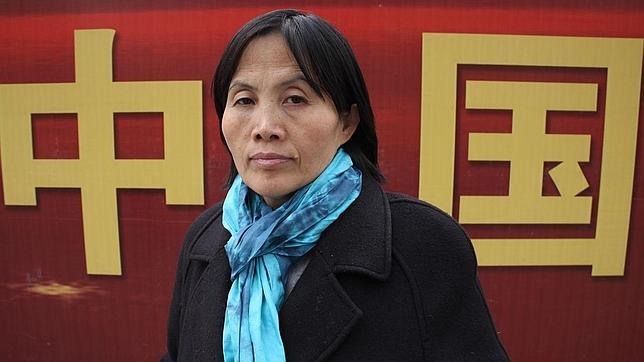
When late Chinese human rights defender Cao Shunli – as Final Nominee of he Martin Ennals Award 2014 – got a standing ovation during the ceremony in October last year, we all said, with the 10 NGOs on the Jury, that we should not forget her. On 19 March 2015 in a statement to the UN Human Rights Council that is exactly what a group of NGOs [International Service for Human Rights and supported by Human Rights Watch, CIHRS, CIVICUS, Conectas, EHARDP, Article 19, HRHF and ALRC] asked for: Ensure independent investigation into death of Cao Shunli.
China must ensure a full, independent and impartial investigation into the death of Chinese human rights defender Cao Shunli, ..If Chinese authorities are unable or unwilling to conduct such an investigation in accordance with international standards, the Human Rights Council as the world’s top human rights body must take appropriate action, the statement said.
‘One year after her tragic death, there has been no adequate investigation or accountability in relation to the death of Chinese defender Cao Shunli,’ said Michael Ineichen, Head of Human Rights Council Advocacy at ISHR. ‘If China is let of the hook for such a blatant case of reprisals against someone wanting to cooperate with UN human rights mechanisms, the Council sends a message to rights abusers that activists can be attacked with impunity.’
The statement highlighted the negative effect of impunity for cases of intimidation and reprisals, as shown by the numerous reported cases of intimidation and reprisals occurring during the 28th session of the Human Rights Council, including against South Sudanese and Bahraini defenders.
The legal and moral obligations of States to protect those who cooperate with the UN are clear, and if a State fails to conduct stop reprisals or to properly investigate allegations, the UN has a responsibility to act, the statement said.
‘We welcome recent advances on the institutional level, such as the treaty body policies that recognise States’ primary duty to ensure accountability in the case of reprisals, and the UN’s own duty of care,’ said Eleanor Openshaw, Head of Reprisals Advocacy at ISHR. ‘However, in the absence of a more systematic approach, such as through a dedicated focal point on reprisals which could coordinate investigation of and follow-up to individual cases, these steps will remain the proverbial drop in the ocean’ The statement is available as a PDF and video.


 Hans Thoolen on Human Rights Defenders and their awards