After the IOC awarded the winter olympics 2022 to China, Minky Worden, Human Rights Watch’s Director of Global Initiatives, had this to say on 31 July 2015:
share information on human rights defenders, with special focus on human rights awards and laureates
After the IOC awarded the winter olympics 2022 to China, Minky Worden, Human Rights Watch’s Director of Global Initiatives, had this to say on 31 July 2015:
On 10 July 2015 over 250 lawyers and support staff were detained or questioned by the police in China in one of the largest crackdowns in recent years. Many newspapers and NGOs have reported on this phenomenon. This is the situation on 29 July: Read the rest of this entry »
In case the focus on the Baku Games is seen as too partial, here a reference to a protest against China‘s bid for the 2022 Winter Olympics

The Tibetan Youth Association of Europe (TYAE) organized a demonstration outside the IOC hotel in Lausanne, Switzerland on 10 June, 2015. Some of the protesters outside the hotel acted a scene of Chinese human rights violations inside Tibet, while a few others managed to get inside the hotel and chant slogans such as “Free Tibet” and “No More Bloody Games”, just as the Chinese officials were making their case for Olympic bid in front of the International Olympic Committee members.
Golok Jigme, a former Tibetan political prisoner who participated in the protest said in a statement to IOC President Bach, “I stand here today as a witness of Chinese repression in Tibet. But this is not only about me. Many Tibetan human rights defenders and protestors were jailed and killed in 2008. If the Olympic Games 2022 should be awarded to China again you will be co-responsible for such atrocities. If you cannot support us, don’t treat us like toys for the sake of flattering the Chinese Communist Party. We the Tibetan people are also citizens of this world and our dignity and rights must be respected.”
On Thursday, China’s foreign ministry condemned Wednesday’s protest in Switzerland calling it, provocative:”Their behavior will not shake the resolve of the Chinese government and people to apply to hold the Winter Olympics in Beijing“.
via Tibetan Protesters in Switzerland Disrupt Beijing’s Bid to 2022 Winter Olympic.
I referred in an earlier post to the undervalued importance of the UN’s ‘NGO Committee‘ [https://thoolen.wordpress.com/2015/05/04/jean-daniel-vigny-hopes-to-improve-ngo-participation-at-the-un/]. Now there is a new case that would seem to underscore the danger of letting human rights unfriendly Governments (such as China, Pakistan, Azerbaijan, Cuba, Iran, and Russia) decide the fate of NGO status.
The article cited below, by Ahmar Mustikhan in the Epoch Times of 6 June, centers on the case of two African NGOs. In the absence of any detail regarding their alleged ‘misconduct’, I cannot say anything about the substantive side but there are certainly important procedural misgivings (exceptionally speedy, no proper hearing of the NGOs) and this may have a chilling effect on NGOs and human rights defenders who want to engage with the UN.
Zhu Junqing, writing in the Shanghai Daily of 13 May 2015, is the prime example of how distorted the Chinese government’s view of the international human rights regime is. Under the title: “U.S. needs to work on own human rights record first before blaming others“, the author quite rightly points to the UN Human Rights Council findings on 11 May and the comments by UN High Commissioner for Human Rights, Zeid Ra’ad Al Hussein, which conclude that there a lot of human right problems remain unresolved in the USA (including excessive use of force by law enforcement agencies, racial, religious and sex discrimination, Guantanamo Bay detention, migrant rights, environmental issues and counterterrorism practices). Also he recalls correctly that the United States is one of the two countries in the world that have not ratified the UN Convention on the Rights of the Child, and is reluctant on other international instruments.
But then the article draws exactly the wrong conclusion. Instead of appreciating the UN’s courage to tackle a superpower, it call the USA the “ultimate human rights judge” (why??) and concludes that this “self-proclaimed human rights watchdog, needs to examine itself critically and improve its own human rights record before [!] blaming other countries for their violations”. Since “no country is perfect in its human rights record,” as Chinese Foreign Ministry Spokesperson Hua Chunying put it, “any country with human rights defects should work hard to resolve its own problems and improve its own human rights record before casting the first stone”.
Yep, that it the solution! Nobody criticizes anybody and we are all happy. The more obvious and consistent solution does not even get mentioned: IF the USA can be criticized, WHY is China so fearful and retaliates regularly against human rights defenders? [e.g. https://thoolen.wordpress.com/2014/03/20/china-in-the-un-human-rights-council-manages-to-silence-cao-shunli-as-well-as-ngos/ ].
China’s own extraordinary sensitivity to ‘interference’ of any level into what it considers its domestic affairs is well-known. I touched upon this ‘hot’ topic’ in my own 2011 article “The international human rights movement: not perfect, but a lot better than many governments think” in the book ‘NGOs in China and Europe’ (exceptionally also published in Chinese!): Yuwen Li (ed), Ashgate, 2011, pp 287-304 (ISBN: 978-1-4094-1959-4).

– The other case is Rasul Jafarov, a human rights lawyer In Azerbaijan, who has been an outspoken critic of the government’s crackdown of media freedoms that have resulted in the arrests of prominent journalists in Azerbaijan. Despite protests, on 16 April a Baku court sentenced Jafarov to six and a half years imprisonment. [He actively participated in the ‘Sing for Democracy <https://www.ned.org/30years/rasul-jafarov-azerbaijan/> movement in the build-up to the Eurovision Song Contest in Baku in May 2012. He is the Head of the Human Rights Club <http://www.civicsolidarity.org/member/551/human-rights-club>. For more see: https://thoolen.wordpress.com/tag/rasul-jafarov/]
Maya Wang (twitter @wang_maya), a China researcher at Human Rights Watch, published on 8 April 2105 an interesting post under the title “China’s new foreign NGO law will help silence critics“.

Some years back I participated in an interesting meeting with Chinese academics in Beijing about exactly this issue of the status of NGOs in China. The meeting resulted in a book ‘NGOs in China and Europe’ (exceptionally also published in Chinese!) edited by Yuwen Li and published by Ashgate in 2011 (ISBN: 978-1-4094-1959-4). Although almost all participants agreed that the current regime for establishing associations is too cumbersome and too heavy-handed for Chinese civil society to flourish, the Government made clear that its main concern remained with what Maya calls ‘sensitive’ NGOs. Those working on issue that are even faintly related to human rights or smack of possible activism, especially when funded from abroad, are seen as a danger and should be subject tot maximum control. That seems to be born out by the draft of the long-awaited ‘Foreign NGOs Administration Law’, likely to be adopted this year and of which Human Rights Watch obtained a copy.
As Maya states, it has never been easy to run an independent organisation in China. The risks of being arbitrarily shut down or harassed are high, as shown by the arrest on 8 March of five women’s rights activists and a 24 March raid on an NGO that supports their work in Beijing. But the absence of a national law governing NGOs, coupled with differences in attitudes towards NGOs by regional leaders, have afforded some leeway for those with creative strategies. It has been common for ‘sensitive’ NGOs to register as a business to bypass the wary eyes of the state, or not register at all. And over the years, some international funding to these organisations in China has been tolerated.
Especially ‘sensitive’ NGOs have been unable to access domestic funding sources because they are not legally registered as a nonprofit and anyway those who did want to fund would receive official harassment. The new Foreign NGOs Administration Law is bound to end the funding lifeline that allowed more outspoken NGOs to operate.
The draft law is likely to significantly tighten the Government’s control over civil society says Maya: “If approved, the Ministry of Public Security (not the Ministry of Civil Affairs) will now have the power to supervise and approve registration of foreign NGOs. That ‘supervision’ can entail entering the premises of the foreign NGO at any point, questioning its staff, and copying or seizing any document, all tactics more commonly reserved for a criminal investigation. Foreign NGOs will have to submit for approval annual work plans and funding allocations, and will be prohibited from engaging in a range of peaceful activities, from raising funds or accepting donations in-country to recruiting volunteers or trying to recruit members ‘directly or indirectly.’” Violations of these prescriptions mean that an NGO’s representative in China would be liable to punishments, including a 15-day detention.
“The draft law is another step towards the Chinese Government’s ‘differentiated management’ model of NGOs, in which domestic groups working on issues approved by the state, such as charities for people with disabilities, can register easily and are considered for increased state funding and support. But those engaged on rights or lobbying are stifled. The draft explicitly prohibits activities that ‘endanger…national security, unity and solidarity’ or that ‘go against China’s social morality’. These are vague terms, but ones frequently used to silence peaceful government critics and activists.”
In the same vein is the following statement: Statement of Caribbean women, women’s organizations and other civil society organizations on the occasion of the Commission on the Status of Women (CSW) 59, Beijing + 20 – Stabroek News – Georgetown, Guyana.
see also: https://thoolen.wordpress.com/tag/women-human-rights-defenders/
When late Chinese human rights defender Cao Shunli – as Final Nominee of he Martin Ennals Award 2014 – got a standing ovation during the ceremony in October last year, we all said, with the 10 NGOs on the Jury, that we should not forget her. On 19 March 2015 in a statement to the UN Human Rights Council that is exactly what a group of NGOs [International Service for Human Rights and supported by Human Rights Watch, CIHRS, CIVICUS, Conectas, EHARDP, Article 19, HRHF and ALRC] asked for: Ensure independent investigation into death of Cao Shunli.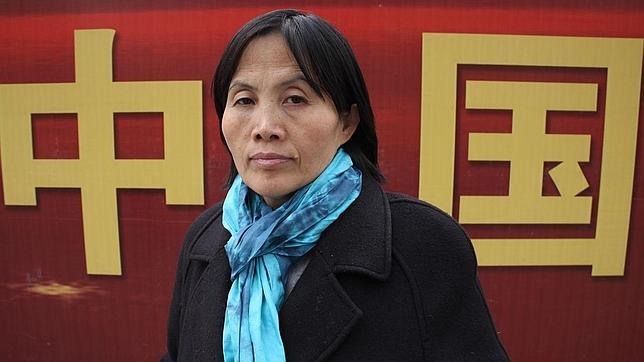
‘One year after her tragic death, there has been no adequate investigation or accountability in relation to the death of Chinese defender Cao Shunli,’ said Michael Ineichen, Head of Human Rights Council Advocacy at ISHR. ‘If China is let of the hook for such a blatant case of reprisals against someone wanting to cooperate with UN human rights mechanisms, the Council sends a message to rights abusers that activists can be attacked with impunity.’
The statement highlighted the negative effect of impunity for cases of intimidation and reprisals, as shown by the numerous reported cases of intimidation and reprisals occurring during the 28th session of the Human Rights Council, including against South Sudanese and Bahraini defenders.
The legal and moral obligations of States to protect those who cooperate with the UN are clear, and if a State fails to conduct stop reprisals or to properly investigate allegations, the UN has a responsibility to act, the statement said.
‘We welcome recent advances on the institutional level, such as the treaty body policies that recognise States’ primary duty to ensure accountability in the case of reprisals, and the UN’s own duty of care,’ said Eleanor Openshaw, Head of Reprisals Advocacy at ISHR. ‘However, in the absence of a more systematic approach, such as through a dedicated focal point on reprisals which could coordinate investigation of and follow-up to individual cases, these steps will remain the proverbial drop in the ocean’ The statement is available as a PDF and video.
for more on reprisals in this blog see: https://thoolen.wordpress.com/tag/reprisals/

Human rights defender Teng Biao, a visiting fellow at Harvard Law School, President of China Against the Death Penalty, and Co-founder of the Open Constitution Initiative, is in Ireland as the guest of Front Line Defenders. In a post of 10 March 2015, he depicts the grim situation of human rights defenders in China since President Xi took office. ‘Chinese human rights defenders are facing the most severe crackdown since the Tiananmen massacre in 1989’ he states. The hard-hitting piece [“Over 1,000 human rights activists were detained since President Xi took office“] is interesting enough to provide in full:
Ilham Tohti is a Uighur professor who set up a website to promote the rights of the muslim Uighur people. He advocated mutual understanding and reconciliation between Han Chinese and the Uighurs.
Pu Zhiqiang and Xu Zhiyong are both well known lawyers who have played a key role in abolishing the laws allowing extrajudicial detentions, in breach of China’s own constitution. Xu also founded an NGO called the Open Constitution Initiative, focusing on religious freedom and free speech. The organisation worked on the issues of forced eviction, forced abortion and ensuring transparency in local elections.
Guo Feixiong, Liu Ping, Ding Jiaxi, Zhao Changqing, all took an important part in the New Citizens Movement which has campaigned for constitutional government and for Communist Party officials to declare their assets.
Cao Shunli was arrested on her way to a human rights training in Geneva and died in custody as a result of torture, on March 14th, 2014. All the others are now in jail.
Chinese leaders are not known for tolerating dissent, but Xi Jinping is less tolerant than his predecessors. Over a thousand human rights activists have been detained since Xi took office, and Chinese human rights defenders are facing the most severe crackdown since the Tiananmen massacre in 1989. Xi’s suppression is widespread, targeting not just those at the forefront of the human rights struggle in China, but also faith groups, internet users, universities, and the media. Many members of China’s budding civil society, who have avoided politically risky issues so far, are now also being jailed.
In the past, those who crossed a red line, who stood out, took to the street, or who engaged in organised actions were the main targets of the crackdown. Now, the dragnet is much wider and is being used against anyone who demonstrates. At least 10 feminist activists were detained last week as they planned to stage a small protest against sexual harassment on public transport, which is a common occurrence in China. The government seems to be targeting all the nodes that connect civil society, picking off emerging civil society leaders, and destroying the capacity for civil resistance.
It seems that the Communist Party of China has never been stronger or more confident: China is the second largest economy in the world. China is exerting more influence on the international stage. There is no viable opposition, and the Chinese model is more effective than western democracies that have been bogged down by financial crises and intractable social problems. But as David Shambaugh pointed out in his recent article in the Wall Street Journal, “A more secure and confident government would not institute such a severe crackdown. It is a symptom of the party leadership’s deep anxiety and insecurity.”
For the Communist Party of China, “governing the country according to law” does not mean the “rule of law” as you and I understand it. It is first and foremost a tool to further control society, as the Party understands perfectly well that the rule of law, freedom of information, religious freedom, property rights, and other basic features of democratic governance would mean the demise of the Party’s rule, as Freedom House pointed out in its recent report.
Chinese civil society, fragile as it is, owes its emergence to the dedication and sacrifice of many human rights defenders. Every day, we receive information from all over the country about human rights defenders being detained, disappeared, tortured, or sentenced. But despite the perilous journey, more and more Chinese people – lawyers and journalists, farmers and bloggers, poor and rich, young and old, males and females – have stepped up to join the human rights movement, driven by their dignity, belief in freedom, and the desire to make a difference in our time of great change.
These Orwellian rulers can only do so much damage to the spirit of the people. A few are silenced but many more are inspired by a combination of international and domestic recognition, the admiration of “fellow travellers”, a sense of mission, and occasional victories in human rights cases. I speak from experience. I have been banned from teaching, fired from my job, disbarred, disappeared, detained and tortured for my human rights work since 2003, but I have never felt that I should stop. I believe it is my responsibility to fight for freedom for the next generation, for the dream that my children can live in a free and democratic country. This dream is shared by more and more Chinese people, even at this unlikely moment when the night seems the darkest.
Most Beijing watchers in the west misunderstand Beijing. Every time Beijing has a new slogan like “rule by law” or “harmonious society,” they embrace it as a sign of change, ignoring all the evil the Communist Party of China has been perpetrating. They fail to see where the real hope lies and remain fixated on the ruling class. Their selective blindness has hindered the West’s understanding of the real state of affairs in today’s China. If we human beings can learn anything from modern history, it is that it is time for the West to stop wishful thinking, to stop dancing with dictators, and to support human rights activists who are challenging the one-party dictatorship in China. History will judge the crimes committed by dictators against universal values, and it will also remember those Western governments who adopted short-sighted policies of appeasement in dealing with autocratic regimes and favouring trade over human rights.”
Over 1,000 human rights activists were detained since President Xi took office.

