Finbarr Bermingham in the South China Morning Post of 19 August 2021 tells the harrowing story of Liu Bing who narrowly escaped imminent deportation, for now.
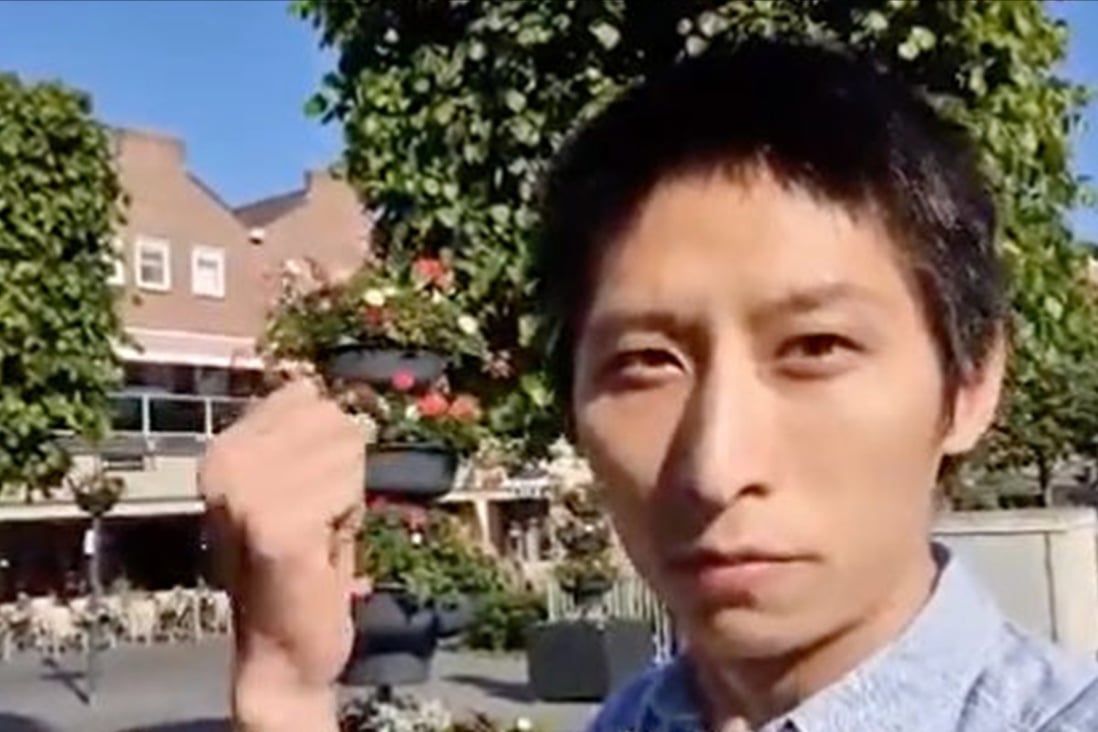
Liu Bing was active in dissident groups in China for almost a decade until he fled the country in May 2019. He was set to be deported next week. Photo: Twitter
A Chinese human rights activist facing imminent deportation from Germany to China has won a stay, after authorities granted him an appeal against a rejected application for political asylum. Liu Bing was set to be deported to China next Thursday, where he claimed that he would “definitely face long-term detention without trial” for taking part in political protests before he fled the country.
But lawyers who recently began working on his behalf secured an adjournment in his exit on Wednesday, meaning Liu will be free to leave the detention centre where he is being held in the North Rhine-Westphalia region on Tuesday, while his appeal is heard.
Reached by phone in his single room at the detention centre, where he is equipped with a refrigerator, television and cooker, Liu confirmed he took part in protests in China, including those commemorating the Tiananmen Square crackdown in 1989.
“If I am sent back to China, I will definitely face long-term detention without trial, because this kind of thing is very common in China. They don’t need the police, and I don’t need any court decision, they can treat a person at will. I will be detained,” he said.
Liu said he is in a “terrified state”, and that his “family members [in China] may not understand or support my participation in political activities”.
Liu was active in dissident groups in China for almost a decade, including the Open Constitution Institute, a protest movement calling for the rule of law in China. He fled China after being pictured taking part in a meeting with other political activists in Xiamen in May 2019.
It has been reported that other dissidents involved in the Xiamen meeting – including Ding Jiaxi, Xu Zhiyong and Dai Zhenya – were arrested in the subsequent months.
After leaving China, Liu first went to Thailand, then Serbia, before finally arriving in Germany, where he was initially held in a refugee camp in Frankfurt, before being released to begin an application for political asylum. After his application was rejected, he fled once more to the Netherlands, where he again tried to gain political asylum. However, he was arrested in June for breaching the EU’s Dublin Regulation, which states that if a person’s asylum application is rejected in one EU country, they cannot apply in another, and was sent back to Germany where he has remained in detention since.
Campaigners working with Liu have said that his lack of understanding of the German legal system and language meant he did not initially realise that an appeal was possible – nor was he aware of a process by which an asylum seeker could request the process be restarted. Both clauses have now been triggered.
“For the first case, he didn’t have a lawyer, he didn’t ask for one. He’s from China, where many people don’t have a strong concept of the legal system or the rule of law,” said a spokesperson for the International Society for Human Rights, which is working with Liu.
His case has been promoted by a number of high-profile German politicians, including MEP Reinhard Buetikofer, who took to Twitter to say: “Germany must stop deportation of Chinese activist Liu Bing.”
William Nee, research and advocacy coordinator for the Chinese Human Rights Defenders, an NGO, said it would be a “tragedy” for Liu to be deported.
“He faces an almost certain fate of immediate detention, followed by torturous interrogations and a sham trial. The German authorities must put a stop to this right now,” Nee said. A spokeswoman for the German Federal Office for Migration and Refugees said that “for privacy and data protection reasons, we do not comment on individual cases within the asylum procedure in general”.
Data from the UN High Commissioner for Refugees showed that between 2012 – when Xi Jinping became the general secretary of the Communist Party – and 2020, the number of asylum seekers from China rose by 602 per cent, from 15,362 to 107,864.
Zack Beauchamp in VOX of 28 July 2021 makes a strong but perhaps controversial plea that “In the fight for democracy’s future, Indian and American politics is more important than anything China is doing“:
Donald Trump and Narendra Modi.
One of the emerging tenets of the Biden presidency is that the United States and China are locked in ideological conflict over the fate of democracy.
In March, during his first press conference as president, he declared that “this is a battle between the utility of democracies in the 21st century and autocracies.” In April, during his first address to a joint session of Congress, he labeled this struggle “the central challenge of the age” — and that China’s Xi Jinping is “deadly earnest about becoming the most significant, consequential nation in the world.”
More recently, in last week’s CNN town hall, he warned that Xi “truly believes that the 21st century will be determined by oligarchs, [that] democracies cannot function in the 21st century. The argument is, because things are moving so rapidly, so, so rapidly that you can’t pull together a nation that is divided to get a consensus on acting quickly.”
Inasmuch as there is a Biden doctrine, the notion that the US needs to protect democracy from China’s authoritarian model is at the center of it. “Biden’s administration [is] framing the contest as a confrontation of values, with America and its democratic allies standing against the model of authoritarian repression that China seeks to impose on the rest of the world,” Yaroslav Trofimov writes in the Wall Street Journal.
Biden’s thinking captures an important insight: that the struggle over democracy’s fate will be one of the defining conflicts of the 21st century. But his analysis is crucially flawed in one respect: China is not an especially important reason why democracy is currently under threat — and centering it is not only wrong, but potentially dangerous.
In countries where democracy is at real risk of collapse or even outright defeated — places like India, Brazil, Hungary, Israel, and, yes, the United States — the real drivers of democratic collapse are domestic. Far-right parties are taking advantage of ethno-religious divides and public distrust in the political establishment to win electorally — and then twist the rules to entrench their own hold on power. Leaders of these factions, like former US President Donald Trump and Indian Prime Minister Narendra Modi, aid and abet each other’s anti-democratic politics.
More traditional authoritarian states, even powerful ones like China or Russia, have thus far played at best marginal roles in this struggle.
“Much of the recent global democratic backsliding has little to do with China,” Thomas Carothers and Frances Brown, two leading experts on democracy, write in a recent Foreign Affairs essay. “An overriding focus on countering China and Russia risks crowding out policies to address the many other factors fueling democracy’s global decline.”
This misdiagnosis has real policy stakes. Leaning into competition with China could lead the US to excuse anti-democratic behavior by important partners, like Modi or the Philippines’ Rodrigo Duterte, in a manner reminiscent of US relations with anti-communist dictators during the Cold War. Moreover, too much emphasis on competition with China could distract from the place where Biden has the most power to affect democracy’s fate — the home front, an area in which voting rights advocates increasingly see him as indefensibly complacent.
There are real problems associated with China’s rise. Its increasing military belligerence, predatory economic practices, and horrific human rights abuses in places like Xinjiang are all very serious concerns. But the fact that China is the source of many real issues doesn’t mean it’s the source of democratic erosion worldwide — and positioning it as such will do little to advance the democratic cause.
Democracies are rotting from within, not without
In his public rhetoric, Biden often argues that the US needs to prove that democracy “works” — that it can “get something done,” as he said last week — in order to outcompete the Chinese model.
While he hasn’t spelled out the nature of this competition all that precisely, the concern seems to center on Chinese policy success: that its rapid economic growth and authoritarian ability to make swift policy changes will inspire political copycats unless democracies prove that they can also deliver real benefits for their citizens.
“I believe we are in the midst of an historic and fundamental debate about the future direction of our world,” the president wrote in a March letter outlining his national security strategy. “There are those who argue that, given all the challenges we face, autocracy is the best way forward. And there are those who understand that democracy is essential to meeting all the challenges of our changing world.”
But at this point, the fear of Chinese political competition is mostly hypothetical. While the Chinese government and state media frequently tout the superiority of its political model to American-style democracy, there’s little evidence that these efforts are all that influential globally — and certainly not in the countries where democracy is most at risk.
A look back at the Soviet Union, the last major challenge to the hegemony of liberal democracy, is telling. ln ideological terms, there’s no comparison: Soviet communism was a far more powerful model than Chinese authoritarian state capitalism is today.
Xi Jinping.
Marxist ideals inspired revolutionary Communist movements and governments around the globe, successfully toppling Western-backed governments in countries ranging from Cuba to Vietnam to China itself. By contrast, there are vanishingly few foreign governments or even political parties today openly vowing to emulate modern China. While the Soviets had the Iron Curtain in Europe, modern China’s most notable client state is North Korea — perhaps the most isolated and mistrusted government on the planet.
In the countries that observers worry most about — established democratic states experiencing “backsliding” toward authoritarianism — Chinese influence is minimal at best.
In backsliding democracies, authoritarian-inclined leaders win and hold power through the electoral system for domestic reasons. Corruption scandals in India and Hungary, violent crime in the Philippines, a racist backlash against America’s first Black president: These are some of the key factors in the rise of authoritarian populists, and they weren’t created or even significantly promoted by China.
Elected authoritarians still bill themselves as defenders of democracy while in power — even after they start undermining the electoral system with tactics like extreme gerrymandering and takeovers of state election agencies. Their political appeal isn’t grounded in an overt rejection of democracy in favor of a Chinese model, but rather a claim to be taking democracy back from corrupt elites in the name of the “true” people, typically defined in ethno-nationalist terms.
The ideology driving modern democratic decline is vastly different from the sort that China promotes at home and through official state media. It represents a home-grown challenge inside the democratic world, rather than an externally stoked, Cold War-style threat.
That’s not to say China does nothing to undermine democracy outside its borders. It has, for example, exported surveillance technology and provided training in “cybersecurity” for foreign officials that amount to teaching them tools for controlling public opinion — underscoring its role as a global pioneer in using technology to repress dissent.
Yet even in this area, China’s influence can easily be overstated. Backsliding countries typically do not ban websites outright or arrest online dissidents in the way China does. Instead, they rely on spreading misinformation and other more subtle uses of state power. When they do use more traditional authoritarian tools, they often don’t need China’s help in doing so — as shown by recent reporting on Israel’s NSO Group, a company with close links to the Israeli state that sold spy software to India and Hungary (whose governments allegedly used it to surveil journalists and opposition figures).
In his recent book The Rise of Digital Repression, Carnegie Endowment scholar Steven Feldstein attempts to systematically document the use of digital tools and tactics for undermining democracy around the world. He found that while such practices were indeed becoming more widespread, this is largely due to domestic factors in authoritarian and backsliding countries rather than Chinese influence.
“China really wasn’t pushing this technology any more so than other countries were pushing advanced technology or censorship technologies,” he told me in an interview earlier this year. “What I saw — when I spoke on the ground to intelligence officials, government officials, and others — was that there were many other factors at play that were much more determinative in terms of whether they would choose to purchase a surveillance system or use it than just the fact that China was trying to market it.”
The problem with blaming China for democracy’s crisis
Biden and his team recognize that many of the challenges to democracy have domestic roots. But in casting the rise of anti-democratic populism as part of a grander ideological struggle against an authoritarian Chinese model, they conflate two distinct phenomena — and risk making some significant policy errors.
Again, an analogy to the Cold War is helpful here. One of the most grievous errors of America’s containment policy was its repeated willingness to align itself with anti-communist dictators. The perceived need to stop the expansion of Soviet influence consistently trumped America’s commitment to democracy — with horrific consequences for the people of Iran, Argentina, Indonesia, and Bangladesh (to name just a handful of examples from a very long list).
The more China is treated like the new Soviet Union — the principal ideological threat to democracy whose influence must be curtailed — the more likely the US is to repeat that mistake.
Take India, for example. In the past six months, Biden has courted Modi’s government as a potential counterweight to China. “There are few relationships in the world that are more vital than one between the U.S. and India. We are the world’s two leading democracies,” Secretary of State Antony Blinken said in a July 28 press conference in New Delhi.
“There has long been a bipartisan consensus in Washington that India is a critical ally in its attempt to check Chinese influence in Asia,” the Indian intellectual Pankaj Mishra wrote in a June Bloomberg column. “In overlooking the Modi government’s excesses, Biden probably counts on support from a US foreign policy establishment invested more in realpolitik than human rights.”
If you take the notion that democracy’s crisis is emerging from within seriously, then it follows that very best thing that Biden could do for democracy’s global future has nothing to do with China or even foreign policy. It’s arresting creeping authoritarianism at home.
Cliff Albright, co-founder of Black Voters Matter, and Rep. Hank Johnson (D-GA) are arrested during a protest to support voting rights outside of Hart Senate Office Building on Thursday, July 22, 2021.
Biden has acknowledged this at times, writing in his March letter that his global strategy “begins with the revitalization of our most fundamental advantage: our democracy.” And yet that urgency hasn’t translated into action — legislation necessary to safeguard American democracy from the GOP’s increasingly anti-democratic politics appears stalled out. Biden, for his part, has refused to publicly endorse more aggressive action to break the logjam — like abolishing the filibuster for voting rights bills.
The New York Times recently reported that “in private calls with voting rights groups and civil rights leaders, White House officials and close allies of the president have expressed confidence that it is possible to ‘out-organize voter suppression’” — an implausible claim that reflects an administration that, according to activists, has “largely accepted the Republican restrictions as baked in and is now dedicating more of its effort to juicing Democratic turnout.”
Shoring up American democracy after the recent attacks it has suffered should be the top priority of any US government concerned with democracy’s global fate. But for all of Biden’s lofty language about out-competing China and winning the future for democracy, there’s a striking lack of urgency when it comes to the perhaps the most important backsliding country — his own.
In this sense, China has very little influence over the future of democracy globally. The key battles are happening not in the South China Sea or the Taiwan Strait, but in the legislatures of New Delhi and Washington. If there really is to be a grand struggle for democracy’s survival in the 21st century, it needs to start there.
We deplore the systemic underfunding of the UN human rights system and the drive for so-called efficiency, including the cancellation of general debates in June, which are a vital part of the agenda by which NGOs can address the Council without restrictions. We call for the reinstatement of general debates at all sessions, with the option of civil society participation through video statements. We welcome the focus of the civil society space resolution on the critical role played by civil society in the COVID-19 response, and the existential threats to civil society engendered or exacerbated by the pandemic. For the resolution to fulfil its goal, States must now take action to address these threats; while we welcome the broad support indicated by a consensus text, this cannot come at the cost of initiatives that will protect and support civil society.
HUMAN RIGHTS ONLINE
We welcome a resolution on the promotion, protection and enjoyment of human rights on the Internet and its thematic focus on bridging digital divides, an issue which has become ever-important during the COVID-19 pandemic. We urge all States to implement the resolution by taking concrete measures to enhance Internet accessibility and affordability and by ceasing Internet shutdowns and other disruptions, such as website blocking and filtering and network throttling. In future iterations of the text, we encourage the core group to go further in mentioning concrete examples that could be explored by States in adopting alternative models for expanding accessibility, such as the sharing of infrastructure and community networks. We welcome the resolution on new and emerging digital technologies and human rights, which aims to promote a greater role for human rights in technical standard-setting processes for new and emerging digital technologies, and in the policies of States and businesses. While aspects of the resolution risk perpetuating “technology solutionism”, we welcome that it places a stronger focus on the human rights impacts of new and emerging digital technologies since the previous version of the resolution, such as introducing new language reiterating the importance of respecting and promoting human rights in the conception, design, use, development, further deployment and impact assessments of such technologies.
GENDER EQUALITY AND NON-DISCRIMINATION
We are concerned by the increasing number of amendments and attempts to weaken the texts. We are particularly concerned by the continued resistance of many States to previously adopted texts and States’ willful misinterpretation of key concepts related in resolutions on human rights in the context of HIV and AIDS, accelerating efforts to eliminate all forms of violence against women and girls: preventing and responding to all forms of violence against women and girls with disabilities and preventable maternal mortality and morbidity and human rights on maternal morbidities. We deplore the instrumentalising of women’s rights and sexual and reproductive health and rights. We encourage States to center the rights of people most affected and adopt strong texts on these resolutions. We welcome the resolution on menstrual hygiene management, human rights and gender equality as the first step in addressing deep-rooted stigma and discrimination. We urge all States to address the root causes for the discrimination and stigma on menstruation and its impact.
RACIAL JUSTICE AND EQUALITY
The High Commissioner’s report highlighted the long-overdue need to confront legacies of slavery, the transatlantic trade in enslaved Africans and colonialism and to seek reparatory justice. We welcome the historic consensus decision, led by the Africa Group, to adopt a resolution mandating an independent international expert mechanism to address systemic racism and promote racial justice and equality for Africans and people of African descent. The adoption of this resolution is testament to the resilience, bravery and commitment of victims, their families, their representatives and anti-racism defenders globally. We deplore efforts by some Western States, particularly former colonial powers, to weaken the text and urge them to now cooperate fully with the mechanism to dismantle systemic racism, ensure accountability and reparations for past and present gross human rights violations against Black people, end impunity for racialized State violence and address the root causes, especially the legacies of enslavement, colonialism, and the transatlantic trade in enslaved Africans.
MIGRANTS RIGHTS
Whilst we welcome the return of a resolution on human rights of migrants, we deplore the continued failure of the Council to respond meaningfully to the severity and global scale of human rights violations at international borders including connected to pushbacks. International borders are not and must not be treated as places outside of international human rights law. Migrants are not and must not be treated as people outside of international human rights law. Expressions of deep concern in interactive dialogues must be translated into action on independent monitoring and accountability.
ARMS TRANSFERS AND HUMAN RIGHTS
We welcome the resolution on the impact of arms transfers on human rights and its focus on children and youth. However, we note with concern the resistance of the Council to meaningfully focus on legal arms transfers beyond those diverted, unregulated or illicitly transferred. The Council should be concerned with all negative human rights impacts of arms transfers, without focusing only on those stemming from diversion and unregulated or illicit trade.
CLIMATE CHANGE
We are disappointed that the resolution on human rights and climate change fails to establish a new Special Rapporteur. However, we welcome the increasing cross regional support for a new mandate. It is a matter of urgent priority for the Council to establish it this year.
COUNTRY SPECIFIC SITUATIONS
ALGERIA
While special procedures, the OHCHR and multiple States have recognized the intensifying Algerian authorities’ crackdown on freedom of association and expression, the Council failed to act to protect Algerians striving to advance human rights and democracy.
BELARUS
We welcome the renewal of the mandate of the UN Special Rapporteur on Belarus. Given the ongoing human rights crisis in Belarus, the mandate complements the OHCHR Examination in ensuring continuous monitoring of the situation, and the mandate remains an accessible and safe channel for Belarusian civil society to deliver diverse and up-to-date information from within the country.
CHINA
The Council has once again failed to respond meaningfully to grave human rights violations committed by Chinese authorities. We reiterate our call on the High Commissioner and member States to take decisive action toward accountability.
COLOMBIA
We are disappointed that few States made mention of the use of excessive force against protestors in a context of serious human rights violations, including systemic racism, and urge greater resolve in support of the right to freedom of peaceful assembly in the country and globally
ETHIOPIA
The resolution on Ethiopia’s Tigray region, albeit modest in its scope and language, ensures much-needed international scrutiny and public discussions on one of Africa’s worst human rights crises. We urge the Ethiopian government to engage ahead of HRC48.
ERITREA
We welcome the extension of the mandate of the Special Rapporteur on Eritrea, as scrutiny for violations committed at home and in Tigray is vital.
NICARAGUA
We warmly welcome the joint statement delivered by Canada on behalf of 59 States, on harassment and detention of journalists, human rights defenders, and presidential pre-candidates, urging Nicaragua to engage with the international community and take meaningful steps for free and fair elections. States should closely monitor the implementation of resolution 46/2, and send a strong collective message to Nicaragua at the 48th session of the Council, as the Council should ‘urgently consider all measures within its power’ to strengthen human rights protection in the country.
PALESTINE
We welcome the Special Rapporteur’s report that “Israeli settlements are the engine of this forever occupation, and amount to a war crime,” emphasizing that settler colonialism infringes on “the right of the indigenous population […] to be free from racial and ethnic discrimination and apartheid.” We also reiterate his recommendation to the High Commissioner “to regularly update the database of businesses involved in settlements, in accordance with Human Rights Council resolution 31/36.”
THE PHILIPPINES
While acknowledging the signing of the Joint Human Rights Programme with the UN OHCHR, the Government of the Philippines fails to address the long-standing issues on law enforcement and accountability institutions, including in the context of war on drugs. We continue to urge the Council to launch the long-overdue independent and transparent investigation on the on-going human rights violations.
SYRIA
We welcome mounting recognition for the need to establish a mechanism to reveal the fate and whereabouts of the missing in Syria, including by UN member states during the interactive dialogue on Syria, and the adoption of the resolution on Syria addressing the issue of the missing and emphasizing the centrality of victim participation, building on the momentum created by the Syrian Charter for Truth and Justice.
VENEZUELA
In the context of the recent arbitrary detention of 3 defenders from NGO Fundaredes, we welcome the denunciation by several States of persistent restrictions on civil society and again for visits of Special Rapporteurs to be accepted and accelerated.
*American Civil Liberties Union, Association for Progressive Communications, Cairo Institute for Human Rights Studies, Centro de Estudios Legales y Sociales (CELS), Center for Reproductive Rights, Child Rights Connect, CIVICUS: World Alliance for Citizen Participation, Commonwealth Human Rights Initiative, Conectas Direitos Humanos, Egyptian Initiative for Personal Rights, FIDH, Franciscans International, Human Rights House Foundation, International Bar Association’s Human Rights Institute, International Commission of Jurists, International Lesbian and Gay Association, International Service for Human Rights, US Human Rights Network
On July 21, 2021, Project Syndicate 2020 published his piece called” The Fight for Open Societies Begins Again”:
Democracy is back on policymakers’ minds. US President Joe Biden plans to host a summit on the theme, and invitations to a host of events on democracy and human rights fill my inbox.
This renewed focus is not good news. Rather, it reflects the erosion of both democracy and respect for human rights in recent years.
Freedom House reports that less than 20% of the world’s population now live in what it categorizes as fully free societies, the lowest share in more than a quarter-century. Many countries are drifting steadily toward authoritarianism.
Freedom is in trouble for well-known reasons. In many countries, increasing inequality and marginalization of different groups has fueled an embrace of right-wing (and in some cases left-wing) authoritarianism.
As the world grapples with rapid technological change and economic restructuring, many are far from convinced that democracies have the edge in terms of adaptation and forward-looking policymaking. The pandemic – which many democracies mishandled – deepened these doubts.
These are difficult times for those of us who profoundly believe that the absolute, non-negotiable basis of good government is a free, democratically empowered citizenry protected equally under law.
In 1980s Eastern Europe, the problem was sclerotic, aging communist governments that could no longer deliver for their people. Today’s situation is more complicated.
I am president of the largest private philanthropy in this domain. If we are honest with ourselves, we know that our traditional models of advancing democratic values and institutions are struggling.
The Open Society Foundations (OSF) was founded in the 1980s on the assumption that there was an urgent global public demand for freedom, and that a growing number of governments around the world were embracing its rules and norms.
That allowed us (in partnership with local activists) to use a mixture of shaming and encouragement to persuade governments to adopt and respect human-rights laws and democratic procedures.
Whether our work concerned the Roma in Central and Eastern Europe, LGBTQI communities in Africa, ethnic minorities in South and East Asia, women’s rights in Latin America, or worldwide migrant and refugee protection, it seemed that we were pursuing a historic mission. And one day, that pursuit might lead to all individuals enjoying full and equal rights and opportunities.
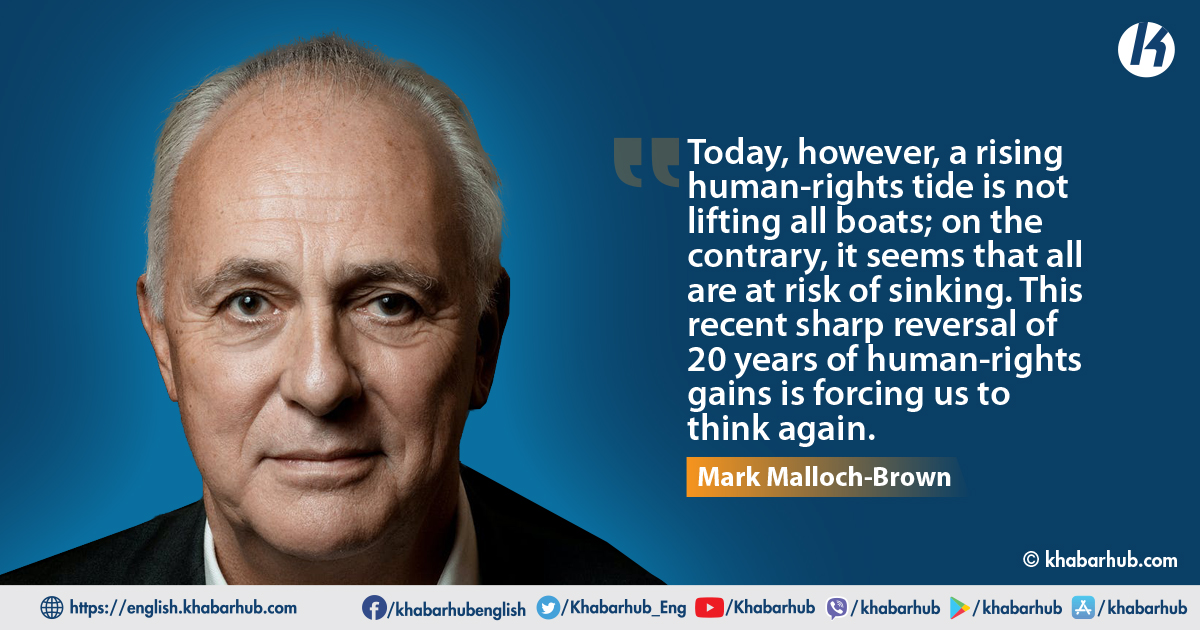
Today, however, a rising human-rights tide is not lifting all boats; on the contrary, it seems that all are at risk of sinking. This recent sharp reversal of 20 years of human-rights gains is forcing us to think again.
As a foundation chaired to this day by its founder, George Soros – a survivor of Nazism and a refugee from communism in his native Hungary – we will not move on to less challenging issues.
After all, Soros started the foundation when prospects for human-rights advances looked as difficult as they do today.
Presidents stole additional terms, official corruption surged, and agreements between states brushed aside people’s rights. Nowadays, human-rights defenders and those who support them are not welcome in much of the world.
So, the mission is non-negotiable. But we must revisit our approach. We must ask how to recover public support for democratic and human-rights norms, while also identifying more clearly the enemies of open societies and what will lead them, even grudgingly, to respect their obligations again.
In 1980s Eastern Europe, the problem was sclerotic, aging communist governments that could no longer deliver for their people. Today’s situation is more complicated.
True, a bipolar world again threatens freedom. Biden’s forthcoming Summit for Democracy is in part an effort to rally like-minded governments but also the wider world against Chinese President Xi Jinping’s authoritarianism. That may mean democracies have some uncomfortable bedfellows as pragmatism risks trumping values.
A dense web of trade, investment, education, and technology links mean China is tied to the West, and vice versa, in ways that the Soviet Union never was.
A relationship that is more economic than military gives democracies an array of options – from governmental and consumer boycotts to a more coherent international containment and engagement strategy – for pressing Xi’s regime to accept norms of good behavior at home and abroad.
Leaders on both sides will frame this contest primarily in terms of economics, but human rights can also be a big winner – or a big loser.
Soros has always called OSF’s work “political philanthropy.” What he means is that we need to engage with the wider dynamics of change and find entry points to champion our issues.
Whereas strong states were the sole or leading human-rights violators during the Cold War, today’s world is one of multidimensional human-rights menaces. Inequalities exacerbated by unregulated transnational financial and corporate power, together with dramatic shifts in individual states’ fortunes, are creating an ever more challenging landscape. The world is becoming more unequal – and angrier.
Many view the renewed attention to deep-seated institutional racism in the United States and around the world – and the recognition that marginalization based on race, gender, religion, and class is often mutually reinforcing – as exposing the limits of a human-rights agenda.
That anger is amplified (and fueled) by social-media platforms where polarization, abuse, and lies undermine trust in institutions. A technology that many saw just a few years ago as an enabler of citizens’ rights has become in many cases a tool for manipulating minds and closing societies.
The insidious copycat behavior that Donald Trump’s four-year presidency allowed and encouraged in regimes around the world accelerated a crisis of respect for the rule of law and human rights.
Presidents stole additional terms, official corruption surged, and agreements between states brushed aside people’s rights. Nowadays, human-rights defenders and those who support them are not welcome in much of the world.
Yet malign governments and globalization, with its unintended financial and corporate consequences, are only half the problem.
Many view the renewed attention to deep-seated institutional racism in the United States and around the world – and the recognition that marginalization based on race, gender, religion, and class is often mutually reinforcing – as exposing the limits of a human-rights agenda. Human-rights remedies, victims argue, have scratched the surface, not reached the roots.
Human-rights work needs to become more political: tougher and smarter in its attacks on oppressors, and clearer about being on the side of the oppressed.
We need to address the challenges people actually face, looking beyond narrow political rights to address the deeper causes of economic and social exclusion.
‘The Special Procedures and treaty bodies have repeatedly, for the last five years, raised serious concerns about the human rights situation in China,’ said Sarah M Brooks, ISHR programme director. ‘But despite these efforts, little has changed. More is needed.’
The gravity of the situation was underlined also by a joint statement delivered by Canada, on behalf of more than 40 states, earlier today. Listing a range of concerns about treatment of Uyghurs, those governments pressed China to allow ‘immediate, meaningful and unfettered’ access to the region for the High Commissioner.
The weight of evidence and the gravity of allegations of crimes against humanity against Uyghurs demands that the High Commissioner commence remote monitoring and public reporting immediately. The full statement can be accessed here.
Anadolu on 29 June 2021 reported that Mary Lawlor, theUN special rapporteur on human rights defenders, says she has countless reports about mistreatment of activists in China.
The UN’s independent expert on human rights defenders said that she feared activists in China were arbitrarily sentenced to long prison terms, house arrest and tortured and also denied access to medical treatment, their lawyers and families.
“Condemning human rights defenders…to long terms in prison for their peaceful human rights work, abusing them in custody and failing to provide them with adequate medical care…cannot continue,” Mary Lawlor, the UN special rapporteur on human rights defenders, said in a statement.
She said she had “countless reports” pointing to the mistreatment of human rights defenders in Chinese custody, which is “endemic.”
Geneva’s Chinese mission spokesman Liu Yuyin later refuted Lawlor’s criticism, accusing the UN expert of having “deliberately smeared China, spread disinformation and interfered in China’s judicial sovereignty under the pretext of human rights.”
“The individuals that Ms. Lawlor and other special procedure mandate holders mentioned have committed a series of crimes such as inciting subversion of state power and splitting the state. The facts are clear and the evidence is solid,” he added.
Lawlor said the treatment meted out to those jailed may amount to torture and other cruel and inhuman treatment, despite a plethora of recommendations from the UN mechanisms over the years, including from the Committee Against Torture.
Some defenders, such as Gao Zhisheng, have been “forcibly disappeared,” while others such as Guo Hongwei have died in prison, she said. Lawlor said she knew of at least 13 human rights defenders sentenced on “spurious charges” such as “picking quarrels” or “provoking trouble” to 10 years or more in prison for peacefully defending the rights of others. Among them is Qin Yongmin, sentenced to 35 years in prison for work that included promoting engagement with the UN, and Ilham Tohti, a “moderate scholar” serving a life sentence.
Human rights defender Chen Xi, serving 10 years in prison, has chronic enteritis, which causes dehydration and fever. In winter, he contracts severe frostbite on his hands, ears and abdomen, and in his lifetime, he has been sentenced to 23 years in prison, said the expert.
According to the Bureau minutes of 2 and 4 June 2021, the extraordinary modalities for the 47th session should be similar to the modalities applied during the 46th session.
Thematic areas of interest:
Sexual orientation and gender identity
The Independent Expert on protection against violence and discrimination based on sexual orientation and gender identity will present his report, followed by an interactive dialogue on 24 June. The report seeks to document how particular narratives on gender are being used to fuel violence and discrimination based on sexual orientation and gender identity. In the report, the Expert examines how the incorporation of comprehensive gender theory enables more accurate and appropriate consideration of dynamics of negation and stigma, and the key role of law, public policy and access to justice in promoting either continuity of injustice or social change.
The report highlights the mandate’s position in relation to current narratives and constructions through which the application of gender frameworks, especially its promise for gender equality across diverse persons, is challenged; and build on gender concepts and feminist analysis to further substantiate the mandate’s understanding of root causes and dynamics of violence and discrimination based on sexual orientation and gender identity.
This report will be presented in the context of high levels of violence against trans and gender nonconforming people and those defending their rights. Beyond this, the COVID-19 pandemic has disproportionately impacted trans and gender nonconforming people and those defending their rights worldwide, especially those most marginalised.
Systemic racism, police brutality and violence against peaceful protests in the United States and globally
The High Commissioner will present the comprehensive report of Resolution 43/1 to the Council on 12 July followed by an interactive dialogue. ISHR previously joined 171 families of victims of police violence in the United States and over 270 civil society organisations from more than 40 countries in calling on the Council to establish an independent commission of inquiry into police killings of Black men and women, as well as violent law enforcement responses to protests in the United States….
The Council should ensure the establishment of robust international accountability mechanisms which would further support and complement, not undermine, efforts to dismantle systemic racism in the United States and globally, especially in the context of police violence against Black people.
Business and human rights
June 2021 marks the tenth anniversary of the unanimous endorsement by the Council of the United Nations Guiding Principles on Business and Human Rights (UNGPs). The Guiding Principles have become one of the key frameworks for private business to carry out their responsibility to respect human rights, for States to discharge their obligations under international law in relation to business activities, and for civil society and human rights defenders to utilise the UNGPs to demand structural changes in the way companies operate internationally. Human rights need to be an essential element of how businesses design their operations. After 10 years, we have the chance to look back and into the future with a critical eye. In that regard, a ‘Roadmap for the Next Decade’ will be presented by the UN Working Group on Business and Human Rights this month. ISHR continues to work with the UN, civil society and progressive companies to protect and promote the work of human rights defenders.
In tandem with its annual report, the UN Working Group will also present in June a long-awaited guidance document on business and human rights defenders based on the UNGPs. The ‘United Nations Guidance on the role of the Guiding Principles for engaging with, safeguarding and ensuring respect for the rights of human rights defenders’ was supported and informed by ISHR and partners, and builds on the experiences gathered through the Business Network on Civic Freedoms and Human Rights Defenders, an initiative ISHR co-founded with the Business and Human Rights Resource Centre. This document will become a key instrument for civil society, businesses and States in ensuring that human rights defenders are protected and recognised as essential actors in maintaining rule of law and a functioning shared civic space.
During the 42nd session, the Council adopted a resolution which listed key trends such as the patterns of reprisals, increasing self-censorship, the use of national security arguments and counter-terrorism strategies by States as justification for blocking access to the UN. The resolution also acknowledged the specific risks to individuals in vulnerable situations or belonging to marginalised groups, and called on the UN to implement gender-responsive policies to end reprisals. The Council called on States to combat impunity and to report back to it on how they are preventing reprisals, both online and offline.
Item 5 of the Human Rights Council’s agenda provides a key opportunity for States to raise concerns about reprisals, and for governments involved in existing cases to provide an update to the Council on any investigation or action taken toward accountability to be carried out.
During the organisational meeting held on 7 June, the President of the Council stressed the importance of ensuring the safety of those participating in the Council’s work, and the obligation of States to prevent intimidation or reprisals.
ISHR recently launched a study analysing 709 reprisals cases and situations documented by the UN Secretary-General between 2010 and 2020 and looked at trends and patterns in the kinds of cases documented by the UNSG, how these cases have been followed up on over time, and whether reprisal victims consider the UN’s response effective. Among other things, the study found that nearly half the countries serving on the Council have been cited for perpetrating reprisals. The study also found that the HRC Presidency appears to have been conspicuously inactive on intimidation and reprisals, despite the overall growing numbers of cases that are reported by the UNSG – including on individuals’ or groups’ engagement with the HRC – and despite the Presidency’s legal obligation to address such violations. The study found that the HRC Presidency took publicly reported action in only 6 percent of cases or situations where individuals or organisations had engaged with the HRC. Not only is this a particularly poor record in its own right, it also compares badly with other UN actors.
In line with previous calls, ISHR expects the President of the Human Rights Council to publicly identify and denounce specific instances of reprisals by issuing formal statements, conducting press-briefings, corresponding directly with the State concerned, publicly releasing such correspondence, and insisting on undertakings from the State concerned to investigate, hold the perpetrators accountable and report back to the Council on action taken.
Other thematic reports
At this 47th session, the Council will have dedicated debates with the mandate holders and the High Commissioner, including interactive dialogues with:
The High Commissioner on State response to pandemics
The Special Rapporteur on the right to housing
The Special Rapporteur on the right of everyone to the enjoyment of the highest attainable standard of physical and mental health
The Independent Expert on human rights and international solidarity
The Special Rapporteur on the right to education
The Special Rapporteur on extreme poverty and human rights
The Special Rapporteur on extrajudicial, summary or arbitrary executions
The Special Rapporteur on the rights to freedom of peaceful assembly and of association
The Special Rapporteur on the promotion and protection of the right to freedom of opinion and expression
The Working Group on arbitrary detention on its study on drug policies
The Special Rapporteur on the right to privacy
In addition, the Council will hold dedicated debates on the rights of specific groups including:
The Special Rapporteur on the human rights of migrants
The Special Rapporteur on the human rights of internally displaced persons
The Special Adviser on Prevention of Genocide
The Working Group on discrimination against women and girls
The Special Rapporteur on violence against women, its causes and consequences
The Special Rapporteur on trafficking in persons, especially women and children
The Special Rapporteur on the independence of judges and lawyers
The Special Rapporetur on the elimination of discrimination against persons affected by leprosy and their family members
Country-specific developments
China
One year after the UN Special Procedures issued a sweeping statement calling for the international community to take ‘decisive action’ on the human rights situation in China, much more remains to be done. Calls are growing for more clear and timely reporting from the UN, including the High Commissioner for Human Rights and her Office, on the repressive policies and practices targeting Uyghurs and other Turkic Muslims. At the same time, worrying news continues about violations of cultural rights of Tibetans, while Hong Kong’s democratic institutions – and its people – have suffered a series of blows from legislative, policy and legal decision targeting pro-democracy leaders. For the first time since 1989, peaceful public demonstrations to commemorate the massacre on Tiananmen Square were prohibited.
At the 46th session of the Council, over 30 States led by Finland urged Egypt to end its repression of human rights defenders, LGBTI persons, journalists, politicians and lawyers under the guise of countering-terrorism. The joint State statement ended years of a lack of collective action at the Council on Egypt, despite the sharply deteriorating human rights situation in the country. Egypt must answers these calls, starting by releasing the thousands arbitrarily detained, protecting those in custody from torture and other ill-treatment, and ending the crackdown on peaceful activists. The UN Working Group on Arbitrary Detention has previously concluded that arbitrary detention is a systematic problem in Egypt and the Committee against Torture has concluded that torture is a systematic practice in Egypt. To date, Egypt has failed to address all the concerns expressed by States, the High Commissioner and Special Procedures, despite repeated calls on the government, including most recently by over 60 NGOs. ISHR joined over 100 NGOs from across the world in urging the Council to establish a monitoring and reporting mechanism on Egypt and will continue to do so until there is meaningful and sustained improvement in the country’s human rights situation.
Saudi Arabia
This session will mark two years since the Special Rapporteur on extrajudicial, summary or arbitrary executions presented to the Council the investigation into the unlawful death of Saudi journalist Jamal Khashoggi, and yet no meaningful steps towards accountability have been taken by the Saudi authorities. The Special Rapporteur called on Saudi Arabia to “demonstrate non-repetition by: releasing all individuals imprisoned for the peaceful expression of their opinion and belief; independently investigating all allegations of torture and lethal use of force in formal and informal places of detention; and independently investigating all allegations of enforced disappearances and making public the whereabouts of individuals disappeared”. To date, Saudi Arabia has refused to address these key concerns, which were also raised by over 40 States at the Council in March 2019, September 2019 and September 2020, further demonstrating its lack of political will to genuinely improve the human rights situation and to engage constructively with the Council. The sentencing and subsequent release of several women’s rights activists highlights the importance of the Council’s scrutiny which must be sustained in order to secure meaningful, concrete, and systematic gains. We recall that the Special Rapporteur also called on Member States to support resolutions that seek to ensure or strengthen accountability for the execution of Khashoggi. ISHR reiterates its call on the Council to establish a monitoring and reporting mechanism on the human rights situation in Saudi Arabia.
Colombia
After more than a month of strikes and street protests in Colombia, which have seen protestors killed at the hands of law enforcement officers and civilians, and human rights defenders covering the events threatened and attacked, the Council session provides States with the opportunity to take action. States must call on Colombia to respect the human rights of its people – including the right to freedom of peaceful assembly – and address the underlying causes of the protests, including violations of economic, social and cultural rights, inequality and racial discrimination. This situation of violence and non-compliance with all standards of the use of force has had a particular impact on the Afro-descendant population. Specific calls from Colombian civil society include for OHCHR to investigate and report on the protests in the country including gather statistical data on the facts that threaten the human rights of Afro-Colombian people; for the High Commissioner to visit Colombia when possible; and for Colombia to open its doors to a range of Special Rapporteurs to allow for ongoing monitoring and reporting. The High Commissioner, who has made a statement on the situation in the country, will present her annual report at the start of the session and it is hoped and expected that Colombia will feature as a country of concern. [see also: https://humanrightsdefenders.blog/2020/01/20/colombia-21-january-2020-civil-society-begins-a-much-needed-patriotic-march/]
Nicaragua
Last March, the Council renewed its resolution on the human rights situation in Nicaragua, which strengthened the High Commissioner’s office monitoring and reporting mandate, by including an interim oral update with recommendations in the context of upcoming national elections. Despite the resolution’s clear calls on the Government to repeal recently adopted laws that harshly restrict civic space, stop targeting human rights defenders and journalists, and urgently implement reforms to ensure free and credible elections, the Nicaraguan authorities have acted in the opposite direction. While UN experts ‘deplore spate of attacks and arrests of human rights defenders’, the OHCHR publicly expressed their deep concern that ‘Nicaragua’s chances of holding free and genuine elections on 7 November are diminishing as a result of measures taken by authorities against political parties, candidates and independent journalists, which further restrict the civic and democratic space’. As the High Commissioner will present her oral update on Nicaragua on 22 June, States should call on Nicaragua to urgently reverse course and implement the recommendations from resolution 46/2, in particular to guarantee the enjoyment of the rights to freedom of information, expression, association and assembly, and the right to take part in the conduct of public affairs; and to swiftly put an end to the harassment (including the judicial harassment) and detention of journalists and ex-members of the Violeta Chamorro Foundation and Confidencial media outlet.
Venezuela
Venezuela will be back on the Council’s agenda with OHCHR providing an update on the situation of human rights in the country, including in regard to UN recommendations (5 July). Recent positive developments in the country, including the nomination to the National Electoral Council of individuals supported by a broad swathe of civil society, are offset by continuing human rights and humanitarian crises. The UN’s recommendations to Venezuela are numerous, wide-ranging and largely ignored. States must use opportunities at the Council to press home the importance of those recommendations being heeded. ISHR looks forward to making a statement during the dialogue, focusing in on levels of implementation of recommendations. Given that reprisals against Venezuelan defenders have been common over recent years – with cases cited in eight of the Secretary General’s reports on cooperation with the UN since 2010 – it is essential that States speak out in support of civil society engagement and that the UN define a preventative strategy to ensure defenders’ protection.
Burundi
On 30 June 2020, the Supreme Court of Burundi set aside the ruling by the Appeals Court to uphold the 32-year sentence in Rukuki’s case and ordered a second appeal hearing, citing violations to his right to a fair trial. This second appeal hearing took place 8 months later on 24 March 2021 in Ngozi prison, where he is currently detained. According to the Burundian Code of Criminal Procedure, following the hearing the Court has 30 days to return a verdict on the case, but this verdict is still pending nearly 60 days later. This delay clearly demonstrates a lack of due process in the case of the internationally recognised human rights defender and political prisoner. In an open letter, a group of civil society organisations denounced the dysfunctioning of judicial proceedings in the country. After confirming the 32 years sentence of defender Germain Rukuki, Burundi continues its crackdown against civil society. Germain Rukuki has now spent nearly 4 years in prison. He has already waited an additional 30 days for this final verdict to be announced without any legal reason; he should not have to wait any longer. In addition to ensuring the continued work of the Commission of Inquiry on Burundi, members of the Council need to call on Burundi to demonstrate their commitment to respect the independence of the judiciary and comply fully with the fair trial obligations of Burundi under international law and announce the verdict in this case without any further delay. [see also: https://humanrightsdefenders.blog/2019/03/29/ngo-statement-condemns-new-irregularities-in-the-case-of-germain-rukuki-burundi/]
The Council will consider reports on and is expected to consider resolutions addressing a range of country situations, in some instances involving the renewal of the relevant expert mandates. These include:
Interactive Dialogue with the SR on the situation of human rights in Eritrea
Oral update by the High Commissioner on the situation of human rights in Nicaragua
Interactive Dialogue with the SR on the situation of human rights in Belarus
Interactive Dialogue with the Commission of Inquiry on the Syrian Arab Republic
Interactive Dialogue with the High Commissioner on the human rights situation of Rohingya Muslims and other minorities in Myanmar and Interactive Dialogue with the SR on the situation of human rights in Myanmar
Interactive Dialogue with the SR on the situation of human rights in the Palestinian Territories occupied since 1967
Interactive Dialogue with the High Commissioner on Ukraine and interim report of the Secretary-General on human rights in Crimea
Interactive Dialogue with the Independent Expert on the situation of human rights in the Central African Republic
Council programme, appointments and resolutions
During the organisational meeting for the 47th session held on 7 June the President of the Human Rights Council presented the programme of work. It includes seven panel discussions. States also announced at least 22 proposed resolutions. Read here the reports presented this session.
The President of the Human Rights Council will propose seven candidates for the following sevent mandates:
The Independent Expert on the enjoyment of human rights by persons with albinism;
The Special Rapporteur on the right to privacy;
The Special Rapporteur on violence against women, its causes and consequences;
Two members of the Working Group of Experts on People of African Descent (one from Asia-Pacific States and one from Eastern European States);
A member of the Working Group on Enforced or Involuntary Disappearances, from Western European and other States;
The Independent Expert on the effects of foreign debt and other related international financial obligations of States on the full enjoyment of all human rights, particularly economic, social and cultural rights
As of 8 June, however, the recommended candidates list was only available for four of the above positions, due to challenges among the Consultative Group, the five individuals appointed from each UN region to interview and shortlist candidates. It is critical that the process overcome such delays, so as to avoid any protection gaps arising from a failure to appoint a new mandate holder.
Resolutions to be presented to the Council’s 47th session
The following resolutions were announced (States leading the resolution in brackets):
Menstrual hygiene, human rights and gender equality (Africa Group)
Elimination of harmful practices (Africa Group)
Cooperation with and assistance to Ukraine in the field of human rights (Ukraine)
Situation of human rights of Rohingya Muslims and other minorities in Myanmar (OIC)
The protection of human rights in the context of human immunodeficiency virus (HIV) and acquired immunodeficiency syndrome (AIDS) (Brazil, Colombia, Mozambique, Portugal, Thailand)
The human rights situation in the Syrian Arab Republic, on missing persons and enforced disappearances (France, Germany, Italy, Jordan, Kuwait, Netherlands, Qatar, Turkey, United Kingdom of Great Britain and Northern Ireland, United States of America)
The human rights situation in Belarus, mandate renewal (EU)
The human rights situation in Eritrea, mandate renewal (EU)
Negative impact of corruption on the enjoyment of human rights ( Austria, Argentina, Brazil, Ethiopia, Indonesia, Morocco, Poland, United Kingdom of Great Britain and Northern Ireland)
Enhancement of international cooperation in the field of human rights (Azerbaijan on behalf of NAM)
New and emerging digital technologies and human rights (Austria, Brazil, Denmark, Morocco, Republic of Korea, Singapore)
Human rights of migrants (Mexico)
Impact of arms transfers on human rights (Ecuador, Peru)
Civil society space (Chile, Ireland, Japan, Sierra Leone, Tunisia)
Realizing the equal enjoyment of the right to education by every girl (UAE, UK)
Preventable maternal mortality and morbidity (Colombia, New Zealand, Estonia)
The promotion, protection and enjoyment of human rights on the Internet (Brazil, Nigeria, Sweden, Tunisia, United States of America)
Accelerating efforts to eliminate all forms of violence against women (Canada)
Right to education (Portugal)
Adoption of Universal Periodic Review (UPR) reports
During this session, the Council will adopt the UPR working group reports on Federated States of Micronesia, Lebanon, Mauritania, Saint Kitts and Nevis, Australia, Saint Lucia, Nepal, Oman, Austria, Myanmar, Rwanda, Georgia, Sao Tome and Principe and Nauru.
ISHR supports human rights defenders in their interaction with the UPR. We publish and submit briefing papers regarding the situation facing human rights defenders in some States under review and advocate for the UPR to be used as a mechanism to support and protect human rights defenders on the ground.
Panel discussions
During each Council session, panel discussions are held to provide member States and NGOs with opportunities to hear from subject-matter experts and raise questions. Seven panel discussions are scheduled for this upcoming session:
High-level panel discussion on the multisectoral prevention of and response to female genital mutilation
Panel discussion on the tenth anniversary of the Guiding Principles on Business and Human Rights
Panel discussion on the human rights of older persons in the context of climate change [accessible panel]
Annual full-day discussion on the human rights of women, one on violence against women and girls with disabilities, and another on gender-equal socioeconomic recovery from the COVID-19 pandemic
Quadrennial panel discussion on promoting human rights through sport and the Olympic ideal [accessible panel]. Theme: The potential of leveraging sport and the Olympic ideal for promoting human rights for young people
Annual thematic panel discussion on technical cooperation and capacity-building. Theme: Technical cooperation to advance the right to education and ensure inclusive and equitable quality education and lifelong learning for all
The Voices of Uyghur camp survivors : a conversation with Gulbahar Jalilova, is organised by the International Service for Human Rights and the World Uygur Congress. This event will be held in English, with Uyghur and French interpretation. Time 25 May 2021 11:00 AM in Zurich
Description Over a million Uyghurs and Turkic Muslims people are held in internment camps in the Uyghur region, exposed to harsh detention conditions, sexual violence, and the suppression of culture and religious practice.
Gülbahar Jalilova was arbitrarily detained for sixteen months: now in exile, she’s decided to speak out on what she’s been through as a woman detainee despite the very high risks she faces.
Last February, ten UN independent experts wrote to the Chinese government about her case, raising grave concern about violations of international human rights and requesting explanations. What is the impact of this letter? What can the United Nations do to push for greater documentation, accountability, and justice for victims?
An event with Gülbahar Jalilova, Elizabeth Broderick (Chair of the UN Working Group on discrimination against women and girls), and Zumretay Arkin (Program and Advocacy Manager, World Uyghur Congress). Moderation by Raphael Viana David (ISHR).
Most human rights lawyers are not famous, nor are they wealthy, but they have irrefutably stood out in the Chinese legal community, elevating the profession to a worthier height. Over the past two decades, they have represented clients in all aspects of human rights and public interest, including but not limited to freedom of speech, freedom of belief, political dissent, property rights, women’s rights, labor rights, minority rights, anti-discrimination, food safety, and redress of wrongful convictions and other grievances. Their clients are from all walks of Chinese society, including political dissidents, religious believers, human rights defenders, civil society activists, farmers who lost land to illegal appropriation, factory workers, NGO practitioners, private entrepreneurs, writers, journalists, ordinary netizens, street vendors, victims of miscarriage of justice, and even Chinese Communist Party officials who have become prisoners in the so-called anti-corruption campaign. Their clients are often either opponents of the authoritarian regime or those whose rights and dignity are trampled.
Human rights lawyers have performed their duties in the process of defending their clients under the law, but precisely because they take both the law and their duties seriously, they have been subject to increasingly strong hostility from the authorities. Since the emergence of the legal rights defense movement in the early 2000s, these lawyers have only faced worse repercussions for their work; many have been arrested and tortured, suspended and disbarred. But the mass arrests on July 9, 2015, marked the beginning of a broader persecution of human rights lawyers by the Chinese authorities. Dozens of human rights lawyers and their assistants were suddenly arrested and hundreds of lawyers were threatened across the country. The jailed lawyers were subjected to harrowing physical and mental abuse. They were deprived of legal representation, forcibly injected with unknown drugs, forced to make confessions. Over the past two decades, more than 70 human rights lawyers have been disbarred, and about 40 of them have had their licenses revoked or cancelled in the past five years. At least 50 human rights lawyers have been illegally barred from leaving the country.
Even though most of the 709 detainees have been released, imprisonment of human rights lawyers has not ceased. Today, 13 human rights lawyers remain in prison in China, and one has been missing for more than three years.
Although human rights lawyers are a small group among China’s half-million lawyers, they are among those holding a torch lighting the road to rule of law and freedom for the Chinese people. They emerged during the most dynamic period of China’s reform and opening up, and now face hardship and great danger. In a totalitarian state in possession of an overwhelming state apparatus, they have opted for a challenge that few of their peers would be willing to take, but they have no regrets and hold their heads high in their vocation. They and their families have endured sufferings and setbacks, but have remained resilient and steadfast. They have been writing history and they are paving the road to the future. More than 15 human rights lawyers figure in the Digest of Human Rights laureates: see https://www.trueheroesfilms.org/thedigest.
For this special day, we call upon members of the public, whoever and wherever you are, to send a message of appreciation and encouragement to human rights lawyers in China by:
· Printing or handwriting your message on a sheet of paper (or displaying it on your laptop screen);
· Taking a photo of yourself with your message (group photo is welcome); and
· Sending it to humanrights.lawyers.day@gmail.com with your name, profession, and location. Your email address will be carefully guarded and not shared or used for any other purposes. Deadline: June 10, 2021
We will play your message in a video collage called “Messages to Human Rights Lawyers in China.”
Organizers:
Humanitarian China (U.S.), ChinaAid (U.S.), China Change (U.S.), Judicial Reform Foundation (Taiwan), New School for Democracy (Taiwan), Taiwan Support China Human Rights Lawyers Network
Chinese foreign ministry spokesman Zhao Lijian said Beijing’s sanctions were a ‘necessary and justified response’ GREG BAKER AFP
As earlier reported human rights defenders objected to the proposed EU-China investment deal {https://humanrightsdefenders.blog/2021/01/06/china-eu-deal-what-about-human-rights], now the European Parliament has rejected it. HRW said: “On May 21, only a few months after the conclusion of the Comprehensive Agreement on Investment (CAI), a trade deal between the EU and China, the European Parliament adopted a resolution to freeze its ratification. The deal has been controversial in the Parliament given concerns about forced labor in China, its rushed conclusion, and its lack of human rights protections and redress mechanisms. Beijing’s counter-sanctions against several European lawmakers and institutions managed to unite the European Parliament on CAI like nothing else has, and will now prevent any movement on ratification as long as they remain in place“.
But the European Parliament voted overwhelmingly Thursday to refuse any consideration of the EU-China investment deal as long as Chinese sanctions against MEPs and scholars were in place. France24 on 212 May gives China’s expected angry reaction:
China slammed the European Union’s “confrontational approach” after MEPs voted to block a landmark investment deal over Beijing’s tit-for-tat sanctions against EU lawmakers. Foreign ministry spokesman Zhao Lijian said Beijing’s sanctions were a “necessary and justified response” to previous EU measures against Chinese officials over human rights concerns in Xinjiang.
“China has imposed sanctions on relevant institutions and personnel of the EU who spread Xinjiang-related lies and false information and who have seriously damaged China’s sovereignty and interests,” Zhao said at a regular press briefing.
He urged the EU to “immediately stop interfering in China’s internal affairs, abandon its confrontational approach” and push EU-China relations “back to the right track of dialogue and cooperation”.
Defenders of the pact see it as a much-needed opening of China’s economy to European companies, but it is set to face a difficult ratification process among the 27 member states and European Parliament.
The investment deal aims to open China’s market and eliminate discriminatory laws and practices preventing European companies from competing on an equal footing, according to the European Commission.
EU foreign direct investment in China since 2000 — excluding Britain — amounted to $181 billion. The corresponding sum from China is $138 billion.
Ties between the EU and China soured suddenly in March after an angry exchange of sanctions over human rights concerns.
The EU sanctioned four Chinese officials over suspected human rights violations in China’s far northwestern region of Xinjiang.
Beijing responded by imposing its own sanctions against European politicians, scholars and research groups.
Adding to the pressure, about 50 human rights defenders from China who have gone into exile in Europe — including the artist Ai Weiwei — asked the EU on Thursday to suspend extradition treaties with Beijing.
In an open letter to EU leaders, they asked Brussels to freeze or revoke arrangements made by 10 EU member states, including France, Belgium and Spain.
These bilateral treaties “not only present a potential threat to our freedom of movement within the European Union, but to our freedom of association and freedom of expression, as Beijing may seek our extradition for statements we make in Europe”, it said.
Two Chinese human rights lawyers serving jail sentences for “inciting subversion of state power,” Yu Wensheng (L) and Qin Yongpei (R), were permitted limited visits with their families, May 10, 2021. Yu Wensheng/Qin Yongpei
Jailed Chinese rights lawyer Yu Wensheng, who was held incommunicado for three years and sentenced to jail for “incitement to subvert state power,” was allowed a visit from relatives at the weekend, his wife said. Yu’s young son was allowed to visit his father in Nanjing Prison on May 9, along with his mother Xu Yan, Xu told RFA.
The couple’s son spoke with Yu by phone from behind a glass partition during the half-hour visit, Xu said.
“Yu Wensheng had a very good chat with our son,” she said. “Both them were laughing a lot, and there was no sense of strangeness.”
“Our son told his father that he missed him, and Yu was happy to hear that,” she said. “Yu told him that he had wanted to spend more time with him … and apologized for not being there longer than three years.”
/cdn.vox-cdn.com/uploads/chorus_image/image/69645731/1203088503.0.jpg)
:no_upscale()/cdn.vox-cdn.com/uploads/chorus_asset/file/22746048/1233728428.jpg)
:no_upscale()/cdn.vox-cdn.com/uploads/chorus_asset/file/22746057/1234113822.jpg)


 Hans Thoolen on Human Rights Defenders and their awards