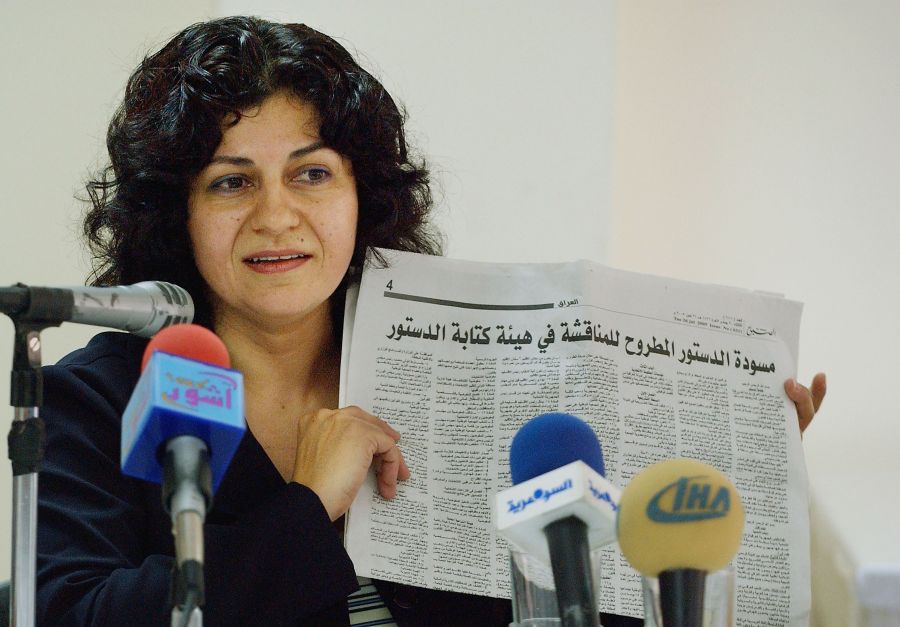
On 2 March 2026, woman human rights defender and feminist Yanar Mohammed was killed in an armed attack in front of her residence in northern Baghdad.
Yanar Mohammed was a prominent Iraqi woman human rights defender and feminist, and the co-founder and director of the Organisation of Women’s Freedom in Iraq (OWFI). Since 2003, she had worked to protect women facing gender-based violence, including domestic abuse, trafficking, and so-called ‘honour killings.’ Under her leadership, OWFI established a network of safe houses across several Iraqi cities, providing protection and support to hundreds of women. Yanar Mohammed led these efforts despite all the ongoing impediments and risks. She was a strong advocate for secularism and women’s equality. Throughout her activism, Yanar Mohammed faced death threats and, at times, was forced to restrict her movement. {see also: https://humanrightsdefenders.blog/2019/01/07/women-human-rights-defenders-in-iraq-have-to-live-dangerously/]
According to an offical statement from OWFI, on 2 March 2026 at 9:00, two unidentified gunmen on motorcycles opened fire on Yanar Mohammed as she stood outside her home. She was quickly transported to the hospital, however, despite the effort of medical personnel, she succumbed to her injuries.
Reportedly, Yanar Mohammed had returned to Baghdad from Canada just a few days prior to her assassination, raising concerns about the potential surveillance and monitoring of her movements.
The Internet Society (ISOC) and Global Cyber Alliance (GCA), on behalf of the Common Good Cyber secretariat, today announced on 23 June 2025 the launch of the Common Good Cyber Fund, an initiative to strengthen global cybersecurity by supporting nonprofits that deliver core cybersecurity services that protect civil society actors and the Internet as a whole.
This first-of-its-kind effort to fund cybersecurity for the common good—for everyone, including those at the greatest risk—has the potential to fundamentally improve cybersecurity for billions of people around the world. The Common Good Cyber secretariat members working to address this challenge are: Global Cyber Alliance, Cyber Threat Alliance, CyberPeace Institute, Forum of Incident Response and Security Teams, Global Forum on Cyber Expertise, Institute for Security and Technology, and Shadowserver Foundation.
The Fund is a milestone in advancing Common Good Cyber, a global initiative led by the Global Cyber Alliance, to create sustainable funding models for the organizations and individuals working to keep the Internet safe.
Despite serving as a critical frontline defense for the security of the Internet, cybersecurity nonprofits remain severely underfunded—exposing millions of users, including journalists, human rights defenders, and other civil society groups. This underfunding also leaves the wider public exposed to increasingly frequent and sophisticated cyber threats.
Common Good Cyber represents a pivotal step toward a stronger, more inclusive cybersecurity ecosystem. By increasing the resilience and long-term sustainability of nonprofits working in cybersecurity, improving access to trusted services for civil society organizations and human rights defenders, and encouraging greater adoption of best practices and security-by-design principles, the Common Good Cyber Fund ultimately helps protect and empower all Internet users.”Philip Reitinger, President and CEO, Global Cyber Alliance
The fund will support nonprofits that:
Maintain and secure core digital infrastructure, including DNS, routing, and threat intelligence systems for the public good;
Deliver cybersecurity assistance to high-risk actors through training, rapid incident response, and free-to-use tools
These future beneficiaries support the Internet by enabling secure operations and supplying global threat intelligence. They shield civil society from cyber threats through direct, expert intervention and elevate the security baseline for the entire ecosystem by supporting the “invisible infrastructure” on which civil society depends.
The Fund will operate through a collaborative structure. The Internet Society will manage the fund, and a representative and expert advisory board will provide strategic guidance.. Acting on behalf of the Common Good Cyber Secretariat, the Global Cyber Alliance will lead the Fund’s Strategic Advisory Committee and, with the other Secretariat members, engage in educational advocacy and outreach within the broader cybersecurity ecosystem.
The Common Good Cyber Fund is a global commitment to safeguard the digital frontlines, enabling local resilience and long-term digital sustainability. By supporting nonprofits advancing cybersecurity through tools, solutions, and platforms, the Fund builds a safer Internet that works for everyone, everywhere.
The Internet Society and the Global Cyber Alliance are finalizing the Fund’s legal and logistical framework. More information about the funding will be shared in the coming months.
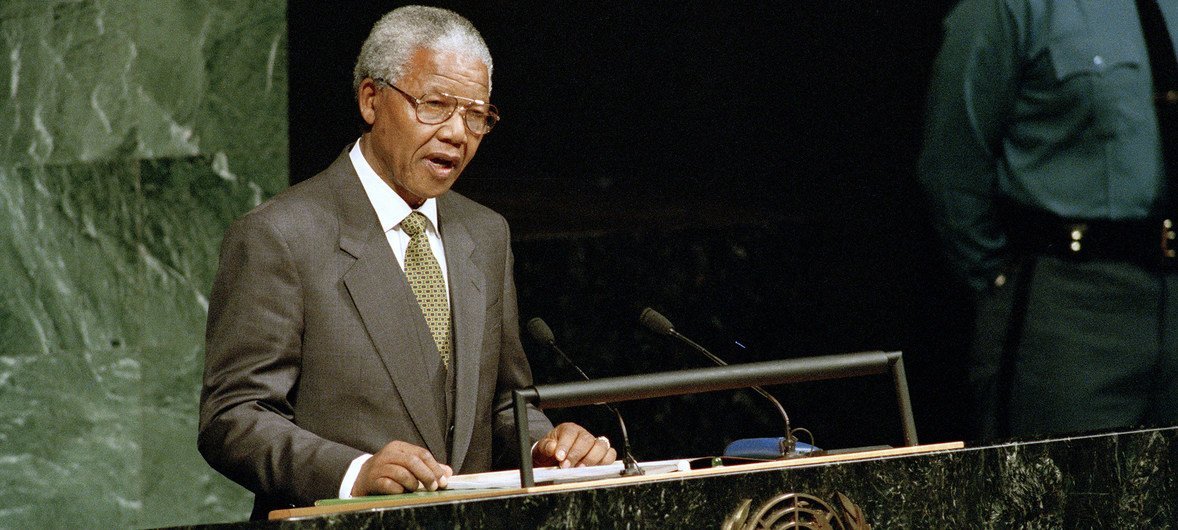
UN Photo/Evan Schneider President Nelson Mandela addresses the 49th session of the General Assembly October 1994.
An Indigenous social worker from Canada and a social entrepreneur from Kenya are the laureates of the 2025 Nelson Rolihlahla Mandela Prize, the United Nations announced on28 May 2025.
Secretary-General António Guterres will present the award to Brenda Reynolds and Kennedy Odede on 18 July, Nelson Mandela International Day. “This year’s Mandela prize winners embody the spirit of unity and possibility – reminding us how we all have the power to shape stronger communities and a better world,” said Mr. Guterres.
A Status Treaty member of the Fishing Lake Saulteaux First Nation in Saskatchewan, Canada, Brenda Reynolds has spent decades advancing Indigenous rights, mental health, and trauma-informed care. In 1988, she supported 17 teenage girls in the first residential school sexual abuse case in Saskatchewan. Later, she became a special adviser to the Truth and Reconciliation Commission (TRC), helping shape survivor support and trauma responses. She is most recognised for her key role in Canada’s court-ordered Indian Residential Schools Settlement Agreement and her subsequent development of the Indian Residential School Resolution Health Support Program—a national initiative offering culturally grounded mental health care for survivors and families. In 2023, she was invited by the UN High Commissioner for Human Rights and the European Union to share her expertise on trauma and cultural genocide.
Kennedy Odede
Living in Kenya’s Kibera Slum for 23 years, Kennedy Odede went from living on the street at 10 years old to global recognition when he was named one of TIME magazine’s 2024 100 Most Influential People. His journey began with a small act: saving his meagre factory earnings to buy a soccer ball and bring his community together. That spark grew into Shining Hope for Communities (SHOFCO), a grassroots movement he now leads as CEO. SHOFCO operates in 68 locations across Kenya, empowering local groups and delivering vital services to over 2.4 million people every year. Mr. Odede is also a New York Times bestselling co-author and holds roles with USAID, the World Economic Forum, the Obama Foundation, and the Clinton Global Initiative.
——-
Also interesting to note that according to the Sahara Press Service of29 May 2025 an unexpected and high-profile controversy led to the elimination of Moroccan nominee Amina Bouayach President of CNDH from the shortlist. Bouayach’s candidacy sparked a wave of international protest, with letters, petitions, and statements of condemnation sent to the selection committee from both Sahrawi organizations and Moroccan human rights defenders, who denounced the nomination as a betrayal of Mandela’s legacy.
The opposition was led by victims of human rights abuses—Sahrawis, Rifians, journalists, and former political prisoners—who expressed deep outrage that a figure associated with the whitewashing of Morocco’s ongoing violations could be considered for a prestigious prize meant to honor defenders of dignity and freedom.
In a series of forceful statements, the Sahrawi National Council and the Sahrawi Human Rights Commission described Bouayach’s nomination as “an insult” to Mandela and accused her of legitimizing repression in Western Sahara and within Morocco. Notably, Moroccan activists also voiced rare public criticism, calling the nomination a distortion of both the United Nations’ credibility and Mandela’s ideals…
Her leadership at the Moroccan National Human Rights Council has been, and still is marked not by independent advocacy, but by efforts to legitimize state atrocities even as reports of abuses against Sahrawis, Rifians, journalists, and peaceful dissidents have continued to mount. ..
According to sources close to the selection process, the committee was “taken aback” by the level and breadth of resistance, especially the coordinated objections from across the political and geographic spectrum. This pressure ultimately led to Bouayach’s exclusion from consideration.
On 14 March 2025, IDRC announced that it is funding research to uphold fundamental democratic freedoms and address rising threats to peoples’ rights. The CAD4.13 million investment supports six projects across five regions:
Demonstrators in Kampala, Uganda, march in 2018 to draw attention to the murders, kidnappings and, activists claim, a lack of action by the police in response. Frederic Noy/Panos Pictures
The freedom to associate, participate in decision-making and express views is fundamental to democracy. Yet, in many countries around the world, these hard-won political and civil rights are being questioned and eroded through physical attacks, online intimidation, smear campaigns, digital surveillance and the lack of response from authorities when attacks occur. Legal and policy restrictions limit individual rights such as same-sex unions and reproductive health services while, increasingly, obstacles like funding bans and censorship are reducing the ability of people and organizations to contest these measures.
Research is needed to inform the strategies and actions of organizations, groups and movements that advocate for the respect for human rights. Research institutions, networks, and women’s rights and LGBTI+ organizations are leading IDRC-supported research to:
understand what drives the erosion of rights in each context
analyze the strategies used to counter these trends
explore how to strengthen rights defenders, for example through alliance-building and cross-movement solidarity
generate policy recommendations to safeguard rights
Emile Dirks, Noura Aljizawi, Siena Anstis and Ron Deibert wrote in the The Globe and Mail of 10 February 2025 about the problem of transnational repression.
The final report of the public inquiry into foreign interference (the Hogue Commission) offers a measure of reassurance to Canadians; there is no evidence that Canadian MPs worked with foreign states to undermine the 2019 or 2021 federal elections. Justice Marie-Josée Hogue’s findings, however, are cold comfort to people at risk. While the commission’s work has ended, distant autocrats continue to target Canadians and Canadian residents with transnational repression, the most coercive form of foreign interference.
Commissioner Justice Marie-Josee Hogue Patrick Doyle/Reuters
Through digital harassment, assault and even assassination, authoritarians reach across borders to silence their foes abroad. Victims include activists, human-rights defenders, exiled critics and asylum seekers tied by citizenship or ancestry to repressive states like China, Russia, India or Saudi Arabia. For authoritarians, these people are not citizens, but disloyal subjects to silence.
The danger that transnational repression poses is not new. A 2020 report by the Canadian Coalition on Human Rights in China demanded the Canadian government address threats against pro-democracy activists, while a 2022 report by the Citizen Lab highlighted the lack of support to victims of digital transnational repression. Prior to the 2024 election, the Biden-Harris administration adopted a whole-of-government approach to ensure government agencies like the State Department, Department of Homeland Security, Department of Justice, and the FBI worked together to provide recommendations to victims on how to better protect themselves.
Researchers and civil society have long worried that Canadian authorities are overlooking transnational repression as a unique challenge that requires tailored responses. Considering the seriousness of the threat and the stark absence of action by the government, many researchers anticipated the commission’s final report would explore transnational repression as a distinct form of foreign interference. Yet, while Justice Hogue wrote that “it would be challenging to overstate the seriousness of transnational repression,” she ultimately reasoned the issue lay outside her mandate.
This was a mistake. The final report was a missed opportunity to fully explore the corrosive impact of transnational repression on Canadian democracy. A recent report by the Citizen Lab highlights the profound toll transnational repression takes on vulnerable people, especially women, in Canada and beyond. Intimidation, surveillance and physical attacks prevent victims from participating fully in civic life and create a climate of persistent fear.
Transnational repression harms victims in more subtle ways, too. Our research shows that the mere threat of an online or offline attack is enough to frighten many diaspora members into silence. Victims become wary of participating in social media or even using digital devices. They report being afraid to engage with members of their communities, leaving them increasingly isolated. It has an insidious, chilling effect on targeted communities.
Unfortunately, the future looks bleak. Democratic backsliding in the United States threatens to deprive Canada of an ally in the fight and reverse whatever measures U.S. agencies might have taken on the issue. Our research shows that suspicion of law enforcement discourages victims from contacting authorities. Proposed moves by the Trump administration – including halting asylum hearings, ending resettlement programs, and sending “criminal” migrants to Guantanamo Bay – will further erode victims’ confidence in the U.S.’s willingness to protect them.
Big Tech is also worsening the problem. Across social-media platforms, state-backed harassment of vulnerable diaspora members is rife. Elon Musk’s X tolerates and even promotes hate-mongering accounts, while Mark Zuckerberg’s announcement that Meta will stop using “politically biased” fact-checkers signals a worrying disinterest in robust content moderation. We should expect a tsunami of digital transnational repression targeting vulnerable Canadians now that tech CEOs are loosening the restraints.
Canada cannot rely on outside leadership or corporate actors to tackle this problem. What is needed is a commission on transnational repression. On Jan. 24, the British parliament’s Joint Committee on Human Rights launched such an inquiry. Once our House of Commons sits again we can follow our British counterparts and resume the Subcommittee on International Human Rights’s work on transnational repression. The new Parliament should launch a multiparty inquiry into the crisis, with a mandate to examine repression outside of federal elections. Crucially, it must earn the trust of victims, something the Hogue Commission lacked. The Uyghur Rights Advocacy Project and the Canadian Friends of Hong Kong both pulled out of the inquiry, citing the participation of three legislators with alleged links to the Chinese government.
This is not a partisan issue. Whoever wins the next federal election will have a duty to contend with the continuing threat transnational repression poses to Canada. With global authoritarianism on the rise, the problem is only likely to worsen in the years to come.
As the world marked Human Rights Day, Canada reiterated the importance of the protection and promotion of human rights defenders and their critical work. Mélanie Joly, Minister of Foreign Affairs, announced $1.85 million in funding for two projects that support child human rights defenders and a free and independent media worldwide.
Canada is contributing $850,000 to a three-year project led by Child Rights Connect to empower, to protect and promote the rights of child human rights defenders, who are increasingly engaged in global human rights challenges, without the same legal protections as adults. This funding will help Child Rights Connect promote safe and sustainable human rights advocacy by child human rights defenders in Togo, Thailand, Moldova and Brazil.
Canada will also contribute an additional $1 million to the Global Media Defence Fund, bringing Canada’s total contribution to the fund to $4 million. Administered by UNESCO, the Global Media Defence Fund works to enhance the protection of journalists and media organizations so they can carry out their critical work without fear of violence, censorship or intimidation. The fund will also ensure public access to diverse and reliable sources of news and information. [see also: https://humanrightsdefenders.blog/2024/02/12/investigative-journalism-in-arab-states-the-threats-to-journalists/]
“In the face of growing challenges to human rights globally, the work of human rights defenders and the protection of media freedom are more important than ever. Canada stands unwavering in its commitment to working with partners to safeguard and expand the protection and promotion of human rights defenders and journalists around the world.” – Mélanie Joly, Minister of Foreign Affairs
Are you an artist passionate about human rights and social justice? We’re looking for talented creators to develop original art pieces for our 2024 Write for Rights campaign. This is your chance to use your creative skills to fight injustice and show your solidarity with people who are advocating for change.
What We’re Looking For
We are looking for a wide range of artistic expressions, including but not limited to:
Graphic design artwork
Videos of spoken-word art
Musical pieces (vocal, instrumental…etc.)
Videos of dances, skits
Animations
Paintings
Comic Illustrations
Project Details
Objective: Create an original art piece representing a specific Write for Rights case. Compensation: TBD Timeline: September 15, 2024 – October 15, 2024 Submission Deadline: August 30th, 2024
How to Apply
Submit your application including:
A brief introduction of yourself, your artistic background and your interest in social justice
A short proposal outlining:
Two Write for Rights cases you are interested in working on and why
A short description of your artistic vision for the piece
Don’t miss this chance to make a global impact with your art. Join us in advocating for human rights through powerful, creative expression.
Write for Rights Cases
Manahel al-Otaibi (Saudi Arabia)
Manahel al-Otaibi is a fitness instructor and a brave outspoken advocate for women’s rights in Saudi Arabia. In November 2022, she was arrested after posting to Snapchat photos of herself at a shopping mall. In the photos, she was not wearing the traditional long-sleeved loose robe known as an abaya. Manahel has been sentenced to 11 years in prison.
Wet’suwet’en Nation Land Defenders (Canada)
The Wetʼsuwetʼen Nation are deeply connected to their ancestral lands, but this is threatened by the construction of a fossil fuel pipeline through their territory. Their Hereditary Chiefs did not consent to this construction. Land defenders have been charged for blocking pipeline construction sites, even though these sites are on their ancestral lands. They could face prison and a criminal record.
Maryia Kalesnikava (Belarus)
Political activist Maryia Kalesnikava dared to challenge the repressive Belarus government. On 7 September 2020, Maryia was abducted by the Belarus authorities. She was taken to the border where she resisted deportation by tearing up her passport. She was detained and later sentenced to 11 years in prison on false charges. Maryia’s family haven’t heard from her for more than a year.
Floraine Irangabiye (Burundi)
Floriane Irangabiye is a mother, journalist, and human rights defender from Burundi. In 2010 she relocated to Rwanda where she co-founded a radio station for exiled Burundian voices. In August 2022 she was arrested while visiting family in Burundi. In January 2023 she was sentenced to 10 years in prison for “undermining the integrity of the national territory”, all for criticizing Burundi’s human rights record.
Kyung Seok Park (South Korea)
Kyung Seok Park is a dedicated disability rights activist. Holding peaceful protests on Seoul’s public transport systems, Kyung Seok Park has drawn attention to how hard it is for people with disabilities to easily access trains and subways safely – denying them the ability to travel to work, school, or to live independently. Kyung Seok Park’s activism has been met with police abuse, public smear campaigns and punitive litigation.
The UK, US and Canada are announcing a sweeping package of sanctions targeting individuals linked to human rights abuses around the world, ahead of the 75th anniversary of the Universal Declaration of Human Rights on 10 December.
UK targets forced labour operations in Southeast Asia, and government-linked officials in Belarus, Haiti, Iran, and Syria complicit in repressing individual freedoms.
The first set targets 9 individuals and 5 entities for their involvement in trafficking people in Cambodia, Laos and Myanmar, forcing them to work for online ‘scam farms’ which enable large-scale fraud. Victims are promised well-paid jobs but are subject to torture or other cruel, inhuman, or degrading treatment…
The second is aimed at a number of individuals linked to the governments, judiciaries and prosecuting authorities of Belarus, Haiti, Iran, and Syria, for their involvement in the repression of citizens solely for exercising fundamental freedoms in those countries.
Included in the USA sanctions are two Afghanistan government ministers accused of repressing women and girls, by restricting access to secondary education; two Iranian intelligence officers who the Treasury says plot violence against Iranian regime opponents beyond the nation’s borders and two Chinese officials accused of torturing Uyghur ethnic minorities in the Xinjiang region of China.
On 12 October 2023, Laurie Wiseberg’s son, Jesse Scoble, informed the world on her passing on 11 October 2023 in Montréal.
“It is with great sadness that I announce the passing of Dr. Laurie Sheila Wiseberg, Laurie to most, Dr. Wiseberg to a few, Libby to her family, Nama to my kids, and mom to me. How does one sum up a life, let alone one as impressive and eventful as hers?
It would take another lifetime to try to capture it. She described herself in simple terms as:
Dr. Laurie S. Wiseberg (project advisor and contributor) was a human rights scholar/advocate who taught and wrote extensively about the work of human rights for non-governmental organizations. She served as Executive Director of a human rights NGO (Human Rights Internet) for 20 years. Dr. Wiseberg spent the following 20 years doing humanitarian work “in the field”, assisting United Nations agencies in providing better protection for persons displaced as a result of conflict or environmental disasters in countries across the globe.
Jesse will write a proper obit for her in the coming days, but wanted us to know that after a year long struggle she left this world on her own terms. “A glass of red wine in her hand“.
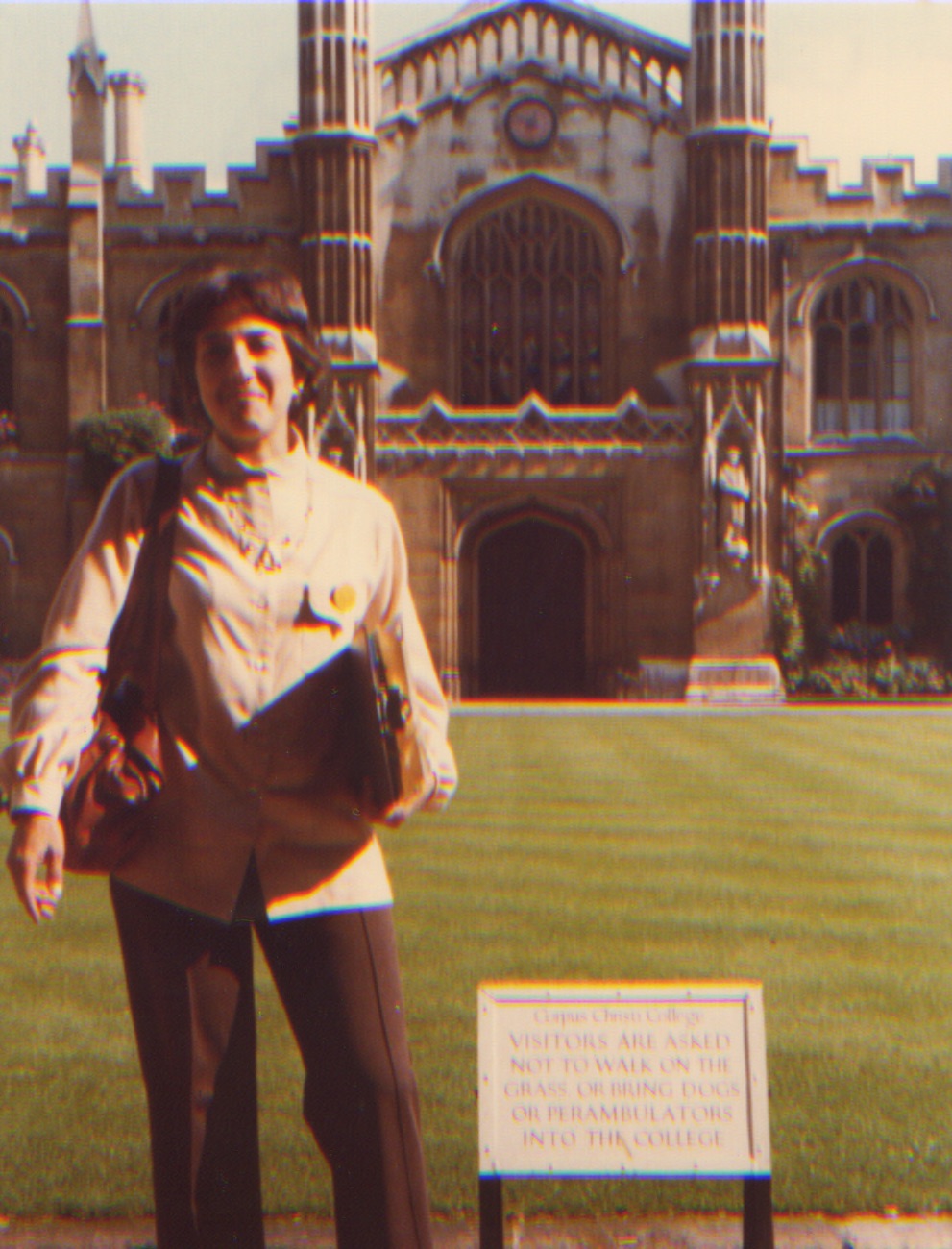
I personally have known Laurie almost all of my ‘human rights life’, starting with the creation of HURIDOCS some 40 years ago. Here the first picture i have of her, September 1978 in Cambridge at an Amnesty meeting.
“Canada firmly believes that the protection of human rights is the cornerstone of a just society. As the world grapples with numerous human rights challenges, Canada is reinforcing its role as a global leader in promoting human rights and protecting those who safeguard them,” said former Immigration Minister Sean Fraser.
“Together, we will continue to champion human rights and foster an environment where individuals can freely exercise their voices without fear of persecution.”
Although these individuals make huge contributions to the building of inclusive and democratic societies that contribute to a peaceful international community, they are repeatedly the victims of criminalization, arbitrary arrest, and threats, with hundreds of HRDs being tortured and assassinated every year.
In responding to the needs of this vulnerable group, Canada has long fostered a tradition of HRD resettlement. In fact, it was ranked as the top resettlement country in the world for the fourth year in a row, welcoming over 47,500 refugees from over 80 countries in 2022.
Fraser furthered this initiative on July 25 by declaring the expansion of the global HRD stream – a government initiative that has resettled HRDs since 2021 through the Government-Assisted Refugee (GAR) Program (and was one of the first to offer a dedicated, permanent pathway for HRDs globally).
Over the following months, Canada is also looking to re-engage civil society organizations on the development of a temporary protection pathway for HRDs in need.



 Hans Thoolen on Human Rights Defenders and their awards