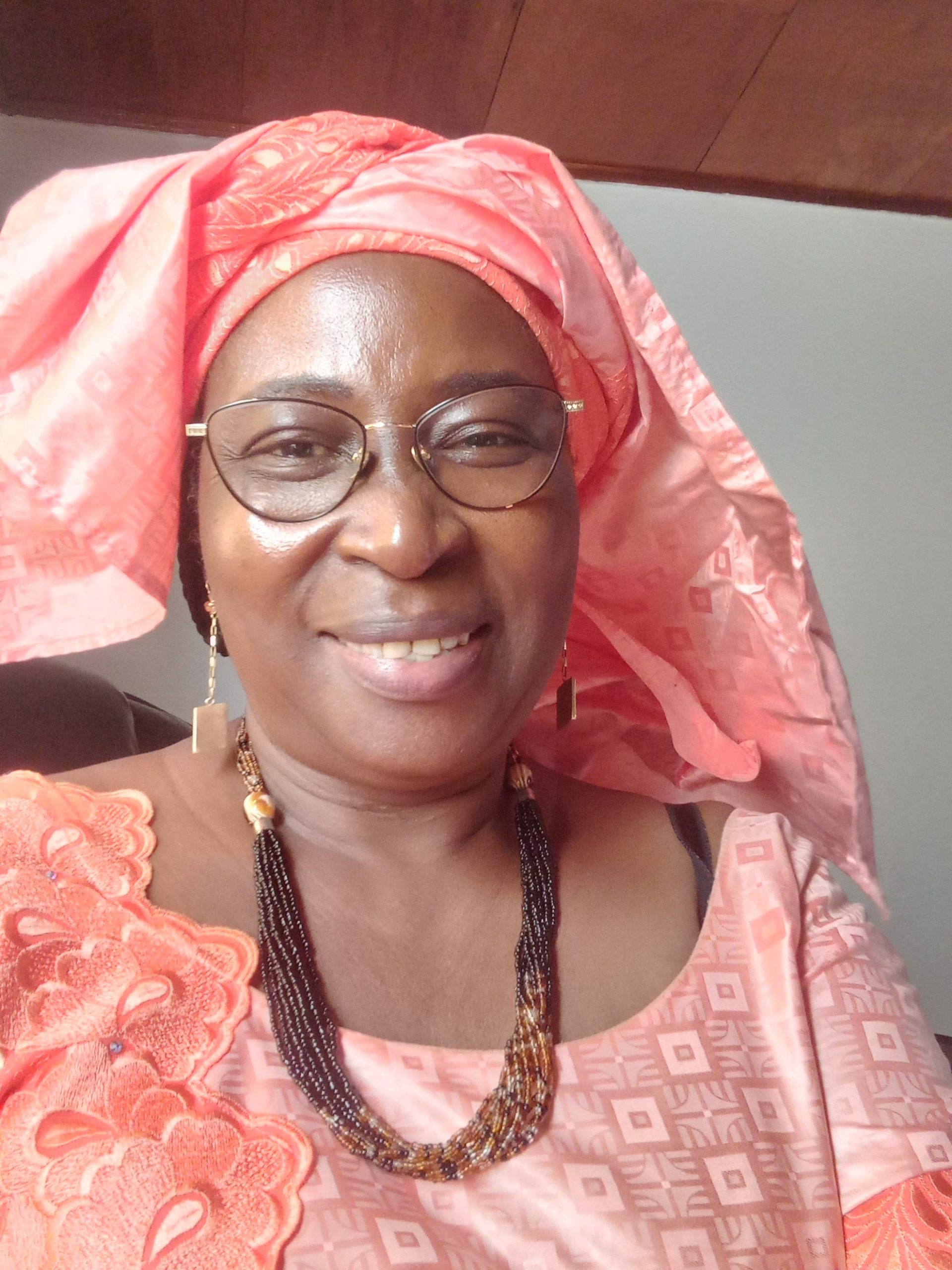
On 12 October 2023, Laurie Wiseberg’s son, Jesse Scoble, informed the world on her passing on 11 October 2023 in Montréal.
“It is with great sadness that I announce the passing of Dr. Laurie Sheila Wiseberg, Laurie to most, Dr. Wiseberg to a few, Libby to her family, Nama to my kids, and mom to me. How does one sum up a life, let alone one as impressive and eventful as hers?
It would take another lifetime to try to capture it. She described herself in simple terms as:
Dr. Laurie S. Wiseberg (project advisor and contributor) was a human rights scholar/advocate who taught and wrote extensively about the work of human rights for non-governmental organizations. She served as Executive Director of a human rights NGO (Human Rights Internet) for 20 years. Dr. Wiseberg spent the following 20 years doing humanitarian work “in the field”, assisting United Nations agencies in providing better protection for persons displaced as a result of conflict or environmental disasters in countries across the globe.
Jesse will write a proper obit for her in the coming days, but wanted us to know that after a year long struggle she left this world on her own terms. “A glass of red wine in her hand“.
I personally have known Laurie almost all of my ‘human rights life’, starting with the creation of HURIDOCS some 40 years ago. Here the first picture i have of her, September 1978 in Cambridge at an Amnesty meeting.
“Canada firmly believes that the protection of human rights is the cornerstone of a just society. As the world grapples with numerous human rights challenges, Canada is reinforcing its role as a global leader in promoting human rights and protecting those who safeguard them,” said former Immigration Minister Sean Fraser.
“Together, we will continue to champion human rights and foster an environment where individuals can freely exercise their voices without fear of persecution.”
Although these individuals make huge contributions to the building of inclusive and democratic societies that contribute to a peaceful international community, they are repeatedly the victims of criminalization, arbitrary arrest, and threats, with hundreds of HRDs being tortured and assassinated every year.
In responding to the needs of this vulnerable group, Canada has long fostered a tradition of HRD resettlement. In fact, it was ranked as the top resettlement country in the world for the fourth year in a row, welcoming over 47,500 refugees from over 80 countries in 2022.
Fraser furthered this initiative on July 25 by declaring the expansion of the global HRD stream – a government initiative that has resettled HRDs since 2021 through the Government-Assisted Refugee (GAR) Program (and was one of the first to offer a dedicated, permanent pathway for HRDs globally).
Over the following months, Canada is also looking to re-engage civil society organizations on the development of a temporary protection pathway for HRDs in need.
Disappeared Chinese human rights defender must be allowed to reunite with his family in Canada
After 31 months in hiding in Vietnam, on August 24, 2022 Chinese human rights defender Dong Guangping was arrested by Vietnamese police. There has been no news of his fate since then. His wife and daughter, who live in Toronto, are fearful that he has been handed over to Chinese authorities. In China he would face a grave risk of once again being jailed for his human rights activism. He has previously served three prison terms there, simply because he believes in human rights and refuses to remain silent in the face of grave violations in the country.
He was sentenced to 3 ½ years in prison in China. After he was released in 2019, Dong Guangping wanted to reunite with his wife and daughter in Canada. However, as China refused to issue him a passport, he was not allowed to leave the country through official channels. He first tried unsuccessfully to reach safety by swimming to a nearby Taiwanese island. In January 2020, he clandestinely crossed the border into Vietnam.
With backing from the Canadian government, Dong Guangping and his family had been hopeful that he would soon be allowed by Vietnamese officials to leave the country and travel to Canada. His arrest was unexpected and his subsequent disappearance has come as a crushing blow.
You can express Your Concern to the Embassies Please write, phone or send an email to Vietnam’s and China’s Ambassadors to Canada:
expressing your concern about Dong Guangping’s arrest in Vietnam on August 24, 2022 and the fact that there has been no news of his whereabouts or wellbeing since then;
asking them to immediately disclose where Dong Guangping is at this time and that Canadian officials be granted access to him; and
requesting that Dong Guangping be allowed to travel to Canada without any further delay, to join his wife and daughter.
His Excellency Cong Peiwu Ambassador of the People’s Republic of China in Canada
IFEX Deputy Executive Director Rachael Kay delivered a presentation on the situation of human rights defenders, journalists, and media organisations to the Canadian House of Commons Subcommittee on International Human Rights.
—
…Like everyone, we see the expansion of authoritarianism in all its forms. Information is being weaponized in ways that has a profound impact on people and is creating a kind of information chaos. In our network alone, we’ve seen how misuse of access to information legislation, internet shutdowns, misinformation, attacks on media and of course the murder of journalists is becoming routine. When those targeted directly with online disinformation and smear campaigns are women, the form the attacks take is usually gendered and often results in self-censorship.
The aim is to silence these voices, and it is doing just that.
We can see this played out in the current context. Immediate action is required in the most urgent situations, Ukraine/Russia, Afghanistan, Belarus, Ethiopia, Myanmar, Nicaragua and Sudan, just to name a few. It is imperative that coordinated systems of emergency support for journalists at risk and their families are created, something where we see Canada is already moving in the right direction. But we must continue to increase our effectiveness.
And to be effective, these systems should include providing emergency visas that have simple and secure methods of submission and, in the absence of such, they must expedite the processing of visas for journalists and their families, as well as ensure safe passage. Key to the success of any intervention is effective coordination with local and international civil society organisations working to protect and evacuate journalists.
We see that media freedom has never been more crucial. Democracies cannot survive and flourish without free, independent and pluralistic media. We need to reverse engineer the current branding of the media as fake news and the enemy of the people as normal. It has been the lexicon adopted around the world – language mimicked and acted upon that includes continued verbal and physical attacks on the media with total impunity. This has had a profound impact on press freedom and journalists in particular. And be sure, no country, including Canada, is exempt from this trend.
The narrative needs to be countered forcefully with words and actions. Outside of intervening in urgent situations, the government must play a significant, ongoing role in reinforcing the need for press freedom and respect for journalists in its own national context.
There is also the need for accountability. The criminalisation of journalism and abuse of law by state actors has to end and we call on multilateral relationships and institutions to ensure that those who attack the media face real consequences for their actions – otherwise attacks against the press will continue to escalate and any standards championed by Canada will remain empty.
…..
At IFEX our network of over 100 member organisations in more than 70 countries actively advocate for freedom of expression and information as a fundamental human right – many do so in very dangerous circumstances. The targeted repression of press freedom advocates and journalists, and attacks on communities and institutions, see accepted norms being increasingly undermined and weakened.
We have been called on to do more direct support for our members, across all regions, who find themselves increasingly under attack by authoritarian states focused on shutting down the voices of civil society and threatening dissent at any price.
Organisations whose offices and staff are targeted and harassed with no other aim but closure and erasure need to be supported, funded and engaged with – because these are the voices that call for accountability and if these voices are shuttered it will leave a vacuum for democracy.
We know these issues are complex. IFEX’s members and allies around the world have been working on them, doing grassroots advocacy, publishing reports, indexes and offering solutions and campaigning for years. They are a rich pool of knowledge that could inform Canada’s policies and discussions with nuance and a national and global perspective. As part of your efforts in focusing on press freedom we would welcome being a conduit to these sources.
Governments and civil society groups need to continue to find ways to collaborate, to be at the table together.
On Friday 11 March 2022, AFP reported that Saudi blogger Raif Badawi has been released from prison in Saudi Arabia after serving a 10-year sentence for advocating an end to religious influence on public life.
“Raif called me. He is free,” his wife, Ensaf Haidar, who lives in Canada with their three children and had been advocating for his release, told AFP. Badawi’s release was also confirmed by a Saudi security official who said on condition of anonymity that Badawi “was released today”. “I jumped when I found out. I couldn’t believe it. I can’t wait to see my dad, I’m so excited,” one of his daughters, Nawja Badawi, 18, told AFP. Badawi’s son Terad Raif Badawi tweeted: “After 10 years my father is free!”
“Raif Badawi, human rights defender in Saudi Arabia, has finally been released!” Amnesty International tweeted. “Thousands of you have mobilized alongside us in the defense of Raif Badawi for 10 years. A big thank you to all of you for your tireless support.”
Every Friday for almost seven years, Haidar – who fled to Canada after Badawi’s arrest and has since become a Canadian citizen – had held a public vigil for him. Quebec has paved the way for Raif Badawi to come to the country if he chooses by placing him on a priority list of possible immigrants for humanitarian reasons.
No details of his release conditions were immediately available. But Amnesty noted that the Saudi blogger could still face a 10-year ban on all travel outside Saudi Arabia following his release.
Immigration Minister Sean Fraser rises during Question Period, in Ottawa, Dec. 10, 2021. Fred Chartrand/The Canadian Press
Six months after the federal government promised to help thousands of Afghan women leaders, human- rights activists and journalists flee to Canada, the first planeload has landed.
Immigration Minister Sean Fraser announced the arrival of 252 Afghan refugees on Tuesday, including the first 170 admitted through a special program for people the government deems to be human-rights defenders.
“It is a privilege to welcome today this cohort of Afghan refugees, who face persecution as a result of their work to protect the human rights of others,” Mr. Fraser said in a statement.
“I am grateful for their work to document and prevent human rights abuses and proud that they now call our country home.”
The Liberal government launched the special program in July after weeks of criticism from angry Canadian veterans upset Ottawa wasn’t doing more to help Afghans facing possible Taliban reprisals for having worked with Canada in the past.
Mr. Fraser’s office said the 170 who arrived through the special program had been referred to Canada by the Ireland-based human-rights organization Front Line Defenders, which has been working to identify those most at risk.
The Liberals have promised to resettle 40,000 Afghan refugees to Canada, but nearly all of those are expected to be people living in UN camps in Pakistan and other neighbouring countries.
With Monday’s arrivals, the government says it has so far resettled about 6,750 Afghan refugees in Canada. Fraser suggested last month that it could take up to two years for the government to meet its promise of bringing in 40,000 Afghans.
Veterans and refugee groups aren’t the only ones who have lamented the pace of the government’s efforts when it comes to helping Afghans escape to Canada, with opposition parties also joining the chorus of criticism in recent months.
“For building a model of community-based child protection in the face of terrorist insurgency and gender-based violence in the Lake Chad region of Cameroon.”
On 16 July 2021 Reuters reported that Canada is establishing a dedicated refugee stream for “human rights defenders,” including journalists, who may need to seek asylum to escape persecution in their country,
The stream – the first of its kind in the world, according to the UN refugee agency – will accommodate 250 people a year, plus their families, and focus on people at heightened risk, such as women, journalists and LGBTQ2 rights advocates.
“We must not overlook those who bear witness to these human tragedies, who are active through demonstration and reporting so the rest of us can be informed. But in doing so they risk persecution, arrest, torture and even death,” Immigration, Refugees and Citizenship Minister Marco Mendicino said on Friday in a virtual news conference from Toronto.
One example a spokesperson gave of a person eligible under this program is an activist against the regime in Belarus who had fled to Poland but needed permanent refuge.
Canada aims to resettle 36,000 refugees this year, almost four times its total of 9,200 resettled in 2020. But by the end of April, only 1,630 resettled refugees had arrived in Canada, according to government figures.
Ron Deibert is director of the Citizen Lab at the University of Toronto’s Munk School of Global Affairs. (Courtesy of Ron Deibert)
On 25 May 2021 Nathaniel Basen for TVO.org spoke with professor Ron Deibert about internet censorship, espionage, and getting threats from authoritarian regimes. It is a long but rich interview: In 2001, Ron Deibert, a professor at the University of Toronto, founded Citizen Lab to help understand and track the spread of digital human-rights abuses around the world.
In the 20 years since, the interdisciplinary lab has made headlines for protecting journalists and human-rights defenders from digital attacks; one of its researchers helped identify members of the group that attacked the United States Capitol earlier this year.
TVO.org: Let’s start at the beginning. How and why did Citizen Lab start, and what did it look like at the time?
Ron Deibert: Back in the late 1990s, I was doing what I would consider to be conventional academic research — the lone professor studying a topic. A lot of desktop research. A student was taking a course of mine proposed doing a paper where he would explore censorship in China. This was a new topic back then — there was not any evidence really that China was censoring the internet — but people assumed they would, and there was a lot of uncertainty about what was going on there.
He was kind of a self-taught hacker, and he put together this research paper where he connected to computers in China using some proxy servers and started comparing the results he got to what he could see here in Canada, doing it very systematically. It opened my eyes to the ways in which methods from computer science and engineering science — technical interrogation tools and techniques — could be used to surface real primary evidence about what’s going on beneath the surface of the internet around information control. Especially what governments, and also private companies, are doing that isn’t in the public domain. No one was really doing that at the time, and a lightbulb went on, where I realized that this is a really powerful way of surfacing primary evidence and data in a way that really no one else was doing.
So I put together a prospectus for a lab that would be interdisciplinary, that would bring together people who have these skills to work systematically on uncovering information-control practices and look at surveillance and censorship and information warfare, from the standpoint of risks to citizens from a human-rights perspective. I was very fortunate at the time to get support from the Ford Foundation — I got a grant from them in 2001 — and I put the proposal together for the Citizen Lab from that.
TVO.org: And at the time you were in a pretty small basement lab.
Deibert: Actually, it was my office in political science where it all got started. When I got the grant, the Munk Centre was just being established, and the building at Devonshire [at the University of Toronto] was under construction. I went over to that building and scoped out what I thought would be a room that no one else would want, to increase my chance of getting approval. I found this space, and I went to Janice Stein, the director, and said, “Hey, I’ve got this grant. I’ve got this idea. I need some space.” And she said, “Okay, you can have it.”
So she supported the idea and took a risk. Space is a very valuable asset on campus. And even though it sounds less glamorous, we were really happy to have that room.
After 10 years, we moved to the new Munk building, the observatory, where we’re located now, and that was really great, because we needed more space. Security is not perfect — where we are there are lots of problems — but it is much better than it was in the old building, where people would just wander in and could easily locate us. Now we’re wrapped behind several layers of access control…..
TVO.org: Let’s talk a little bit about your process. How does Citizen Lab decide what to look into next?
Deibert: It’s a combination of factors. First and foremost, we are looking at the topic, at the domain, broadly speaking, which for us is global in scope. We don’t have a particular regional focus. We’re looking at risks to human rights that arise out of information technology: that’s the broadest possible definition of what we do.
That also limits our selection of cases that we want to examine. We assume that, however problematic cybersecurity is for big banks or government, they have resources — they can go hire a private company. But journalists, human-rights defenders, people living in the global south who are human-rights defenders and are advocating for policy change, they really lack capacity. So we put our effort into identifying cases that present the highest risk to human rights and, ideally, affect the most vulnerable parts of the population.
We divide our work systematically. So there are certain teams that we organize around, though there’s a bit of overlap. It’s fluid, but we have some teams that are more interested in applying network-measurement techniques to uncovering internet censorship, let’s say, and that’s probably the area where we’ve doing the most work for the longest time. Then there’s what we call the targeted-threats group, which is really the most serious stuff around espionage, and it certainly has the highest risk and has gotten us in the crosshairs of some bad actors, to such an extent that we’ve now become a target. We also apply non-technical methods in an interdisciplinary way — we have people who are trained in law and policy. So we’ve done a lot of work around legislation of analyzing national security laws and practices in Canada.
I would say how things are chosen depends on the opportunities that come up. We may hear about something, some preliminary evidence, perhaps a journalist tips us off or a victim comes forward. Or the team itself decides, hey, this is something we should look into. A good example of that is Zoom. We knew about Zoom: it was a kind of obscure business, networking-communications platform, until the pandemic hit. Suddenly, everyone was on Zoom. So our researchers got together and said, “Hey, we better take a look at this” and indeed uncovered some highly problematic security and privacy issues.
TVO.org: Your work with Zoom is a good example of getting immediate results from your work. If I’m correct, after a public outcry, Zoom cleaned up a lot of what you found. How does that feel to have an immediate impact on the world in that way?
Deibert: It’s actually super-rewarding in a number of ways. First of all, there’s the gratification to get the message out. Ultimately, we see ourselves as a university-based watchdog group, so if you can publish something and the next day everybody’s reading about it because it’s on the front page of the New York Times? That’s phenomenal. We’ve been actually really fortunate to have high-profile coverage for our research. I think we’ve had, like, close to 30 front-page stories in the New York Times, the Washington Post, other global media, the Financial Times, about different reports of ours over the last 20 years.
Going further, ultimately, we don’t just want to get attention for what we’re doing — we want to see some change. So there have been so many cases now where we’ve seen consequences, actions taken, policy changes, or advocacy campaigns started as a result of the work that we’ve done.
Probably the biggest one was back in 2016, when we investigated a targeted espionage attack against a human-rights defender in the United Arab Emirates. He shared with us an SMS message that was tainted with malware that the UAE government was using to try to hack his phone, and when we reverse-engineered it, that malware infected our own device, our own iPhone. We realized that it was so sophisticated and involved what were then three software flaws in the Apple operating system, that even Apple itself didn’t know about. We did a responsible disclosure to them and, within two weeks, they pushed out a patch that affected directly the security of more than 1 billion people. So, to be able to say, “Hey, we were responsible for that” is, I think, quite an accomplishment.
TVO.org: On the flip side, there are people that don’t like the work you do. What has it been like for you to become a target? I can’t imagine when you started this thing that you pictured yourself coming under threat.
Deibert: Well, first of all, you’re right. I grew up studying world politics as something out there, and I’m a spectator. There were a couple of instances before this, but, really, when we published the GhostNet report in 2009, which was the first public-evidence-based report on cyber espionage, it was the one that involved the hacking of the office of His Holiness the Dalai Lama, and we uncovered this massive Chinese espionage operation.
It suddenly dawned on me, okay, we’ve gone from kind of just observing and recording to becoming a factor, because very quickly thereafter, we had all sorts of inquiries and veiled threats and concerns about physical security. From that point on, from 2009 to today, they’ve really only amplified. The worst is probably when we were targeted by Black Cube, the same private-intelligence firm made up of ex-Mossad agents that notoriously went after the accusers of Harvey Weinstein. Now, that’s really frightening to be in their crosshairs. We ended up actually exposing that operation, but to know that something like that is going on, frankly, is very disturbing. It really forces you to change your behaviour, think about practical issues: when you’re travelling, hotels, getting into elevators, who’s accessing the same building as you.
At the same time, though, I think it’s a mark of success. If we’re not successful, those people wouldn’t care. It’s just something you have to factor into your risk calculation and take all the precautions, and we’re most concerned about the risks to the subjects of our research. Frankly, we go to extraordinary lengths to protect the security in terms of the data we handle, how we interact with them and interview them. But, yeah, it’s just constant. Actually, every day there’s something, ranging from people who, unfortunately, maybe are mentally disturbed, and they read about us and want to visit us, all the way to, you know, the world’s worst authoritarian regimes that are trying to threaten us.
TVO.org: A lot of this work is global in nature, but some Ontarians might be surprised to know a lot of it is quite local. I’m thinking about your work with internet-filtering technology and Waterloo-based Netsweeper. What makes filtering technology so important, and what was Netsweeper up to?
Deibert: As the internet evolves, there are all sorts of reasons why people want to control access to certain content online — beginning, I would say, with schools and libraries. There are legitimate concerns among parents and teachers that children have access to pornography or other types of content. Service providers like Netsweeper fill the market niche, providing filtering technology to those clients.
But, very quickly, there grew a need among governments — national-level internet censorship. In the beginning, like I talked about with the Chinese, it was very rare in the 1990s or 2000s. I could count on one hand the number of governments that were doing this sort of thing. Now, it’s routine, and it’s big business. So with a company like Netsweeper, for us, it was, frankly, a no-brainer to zero in on it, and not even because they’re based in our own backyard. There’s certainly a motivating factor there because we’re Canadians, and we want to make sure that, as best we can, we identify businesses operating out of Canada to see if they’re in compliance with Canadian law or Canadian values. Here, we had a company that seemed to be not just kind of stumbling into selling internet-censorship services to some of the world’s worst violators of human rights, but actively courting them.
They were showing up all over the world, especially in the Middle East. The Middle East is where Netsweeper really profited from selling internet-censorship services to governments that routinely violate human rights and block access to content that would be considered protected legally here in Canada. And they were also doing this in a non-transparent way.
This is not something they openly advertised, and yet we knew, from our research and technical investigation, we could identify basically unquestionable proof that their technology was being used to filter access to content that would be legally protected here in Canada, in places like Bahrain and Yemen and in the Gulf.
So we did a report about Netsweeper’s technology in Yemen, and at this time, the main telco, YemenNet, was controlled by Houthi rebels, and of course there’s an ongoing civil war, which at that time was really quite intense. We simply documented that Netsweeper’s technology was being used to actually block the entire Israeli top-level domain — the only time we’d ever seen that in the world, with the exception of Iran.
We published this report, and we mentioned in the commentary around it that, in providing services to one participant in an armed conflict, who is censoring information, including information related to international news, they’re effectively inserting themselves in an armed conflict, and it raises all sorts of ethical, moral, and potentially even legal issues. Netsweeper sued me and the University of Toronto for defamation for over $3 million. Of course, we thought that was entirely baseless, and six months later, they simply withdrew the suit.
Coincidentally, their suit came shortly before the Ontario government passed anti-SLAPP legislation to prevent lawsuits that chill free expression, which in our opinion, is very much what it is, because as we were going through the litigation, we couldn’t report on Netsweeper. After the lawsuit was dropped, we then published several subsequent reports on Netsweeper…..
TVO.org: In your 20 years, what is the work you’re most proud of?
Deibert: What I’m most proud of is the staff. I’d say a skill that I have is, I think I would make a good NHL scout or a band manager. I have the ability, for what it’s worth, to identify talented people and give them the support they need. So there’s not a particular report that I’m proud of; I’m most proud of the people who work at the lab. I’m so fortunate to be surrounded by these extremely talented, ethical, dedicated people, most of whom have been with me for over 10 years. It’s rare to have that in a small university. And that’s what I’m most proud of.
TVO.org: The lab itself, as we talked about a little bit, is somewhat unique: you’re working outside of government or corporations and working in the interest of human rights. Others around the world have taken note of your model. Do you hope to export it?
Deibert: It’s beginning to be surprising to me that there aren’t more Citizen Lab–like organizations at other universities. To me, this is a field with such endless opportunity. There’s so much unfortunate malfeasance going on in the digital world.
And, yet, you have these extremely powerful methods and techniques, as we’ve demonstrated, that, by way of analogy, act like an X-ray on the abuse of power. That’s the way I think about it. It’s astonishing.
Sometimes I sit back and shake my head. A lot of the stuff we don’t even publish. It’s remarkable what you can see when you use these very precise, careful methods to uncover and track abuses of power. Why haven’t other university professors jumped on this and tried to mimic it? I don’t really know. I suppose there’s no one answer. There are risks involved with it, and it’s actually not easy to cross disciplinary boundaries.
So I think that we’re helping to build the field, at least I hope, and you’re right that there are a few other places where I’m seeing either professors or, in some cases, human-rights organizations, attempting to build something like this. That is fantastic. That’s really where my effort and the next phase of my career is, around really field-building by promoting that model and hoping that others build up centres like the Citizen Lab at other universities, while also ensuring the sustainability of the lab.
This is a bit “inside university,” but the reality is, as the only professor in the lab, I’m the weakest link. So if something happens to me, the lab would really fall apart. Not because I’m the wizard directing everything — purely because I’m the responsible principal investigator for the grant, and you need that at a university. What I hope to do is ensure the sustainability of the lab outside of me, and that means recruiting other professors to the lab. We’re actively fundraising to do that and to try to get more tenure-track positions connected to the lab so that it can continue once I move on.
TVO.org: And what will the next 20 years hold for the lab itself?
Deibert: Hopefully, we ‘ll be able to continue. We know we have the support from the University of Toronto; they’ve been incredible in a number of ways. We live in a time when big university bureaucracies are criticized, sometimes rightfully so — I’ve been critical of my own university in various areas. But one thing I can say, they have been so supportive of work that we do in a variety of real practical ways, including legal support.
I just want the lab to not be something that is tied to one profession. I want it to continue and to duplicate what we do globally. If we had 25 Citizen Labs sprinkled around the planet, it would be better for human rights overall, because there would at least be another protective layer, if you will, of dogged researchers who aren’t afraid to uncover abuses of power, no matter where they are.
On 12 May 2021, Carleton University’s Department of Law and Legal Studies welcomed human rights advocate Rehana Hashmi as the inaugural Activist in Residence (AiR). Hashmi will teach students and provide them with access to her first-hand experience and an international perspective.
“Carleton is one of the first in Canada to start this type of program to help protect human rights defenders. They can come, rest, reflect, recharge and do their work without being silenced.”
Building on the department’s successful participation in the Scholars at Risk initiative, the new AiR program provides a home base for human rights activists within an academic setting, particularly for those at-risk. Students and faculty will have the opportunity to learn from someone with personal, lived experience fighting to protect human rights.
As part of the AiR program, Hashmi is working on a series of video interviews with human rights defenders from around the world. “When they are in exile, there should be mechanisms to protect them,” says Hashmi. “The Activist in Residence program is one way to do this.”
Hashmi also teaches a fourth-year seminar on patriarchy, human rights and informal justice. Students learn how traditional patriarchal attitudes operate towards women and minorities seeking legal justice.
“Students in the course get to learn from many human rights defenders,” says Hashmi. “Through online learning, we have been able to bring in experts from around the world. Recently, mothers from Palestine and Israel presented in a JurisTalk about how they lost their children, but are still doing reconciliation work.
“Activists bring knowledge from the field to help students get a firsthand experience on how advocacy works. This knowledge narrows the gap between the Global North and Global South. Faculty and students benefit from stories from the field, but it also helps activists at-risk.”
After being exiled from her home city for her activist work, Hashmi became even more involved with activism, giving shelter to women who were beaten or had acid thrown on them. Through Sisters Trust Pakistan, Hashmi helped victims of domestic violence and women and girls to break free of religious fundamentalism and forced marriages. This was just one step in her journey to support and protect the vulnerable.
The challenges in Pakistan are more difficult for women like Hashmi who are fighting to defend human rights. Offenders target women’s children and extended families. Women can’t always leave when they are at-risk. They may have many obstacles including limited mobility, family and societal restrictions to consider



:format(jpeg)/cloudfront-us-east-1.images.arcpublishing.com/tgam/DGNOFBC4NJKPNNZUIAOJ2ALYK4.jpg)