The fourth anniversary of the military coup in Myanmar is a time to mourn the loss of thousands of innocent lives at the hands of a brutal 2025military regime while celebrating the heroism of those who continue to stand up for human rights in a country under siege, a UN expert said on30januaary
“It is also a time for the international community to provide the people of Myanmar a genuine partnership to help end this nightmare,” said Tom Andrews, Special Rapporteur on the human rights situation in Myanmar.
Andrews said four years of military oppression, violence and incompetence have cast Myanmar into an abyss.
“Junta forces have slaughtered thousands of civilians, bombed and burned villages, and displaced millions of people. More than 20,000 political prisoners remain behind bars. The economy and public services have collapsed. Famine and starvation loom over large parts of the population,” the Special Rapporteur said.
“The junta’s plans, including holding sham elections this year in a backdrop of escalating armed conflict and human rights violations, are a path to ruin,” Andrews said.
He said it was not possible to hold a legitimate election while arresting, detaining, torturing and executing leaders of the opposition and when it is illegal for journalists or citizens to criticise the junta.
“Governments should dismiss these plans for what they are – a fraud,” Andrews said.
He lauded pro-democracy activists, journalists, doctors, human rights defenders and citizens from all walks of life who have risked their lives to fight for Myanmar’s future.
“The resilience and courage of Myanmar’s people continue to amaze and inspire others around the world. I am heartened by the courageous efforts of those documenting the junta’s crimes, caring for those injured by the attacks, providing food and shelter to those displaced, and teaching children whose education was upended by the coup. These heroic efforts are compelling indicators that Myanmar’s best days lie ahead,” the expert said.
Andrews said action by member states including targeted sanctions and a crackdown on the arms trade by Singapore have contributed to a one-third drop in the volume of weapons and military supplies the junta has been able to purchase through the formal banking system since the year ending March 2023.
“When governments muster the political will, they help save lives and support freedom in Myanmar,” the Special Rapporteur said, calling for stronger action from the international community. “The failure of the Security Council to take action requires that UN Member States who support human rights coordinate strong, sustained actions that can deny the junta the means to continue its brutality against the people of Myanmar.”
He urged governments to back efforts to hold perpetrators of grave human rights violations accountable, including in the International Criminal Court (ICC), and by supporting the democratic movement and civil society as they build the foundation for a strong justice system and transitional justice processes.
“Impunity has enabled a decades-long cycle of violence and oppression in Myanmar. Ultimately, this sad chapter of Myanmar’s history must end with junta leaders being prosecuted for their crimes,” Andrews said.
Every year, people from around the world take part in Amnesty International’s Write for Rights campaign. It’s a really easy way to make a big difference by doing something “little”. It doesn’t take much time – all you need to do is write a letter, send a post or sign a petition.
Since Write for Rights started in 2001, millions of people have changed the lives of those whose human rights have been taken away. In fact, over the past 20 years more than 56 million actions have been taken, while over 100 people featured in our campaign have seen a positive outcome in their case. For this years toolkit see:
This year’s campaign will feature nine individuals and groups from all around the world. From a TikToker in Angola to a women’s rights defender in Saudi Arabia, these inspiring people are connected because their human rights have been violated.
For results from the recent past: Meet three incredible people whose lives have been changed for the better and find out what people power means to them.
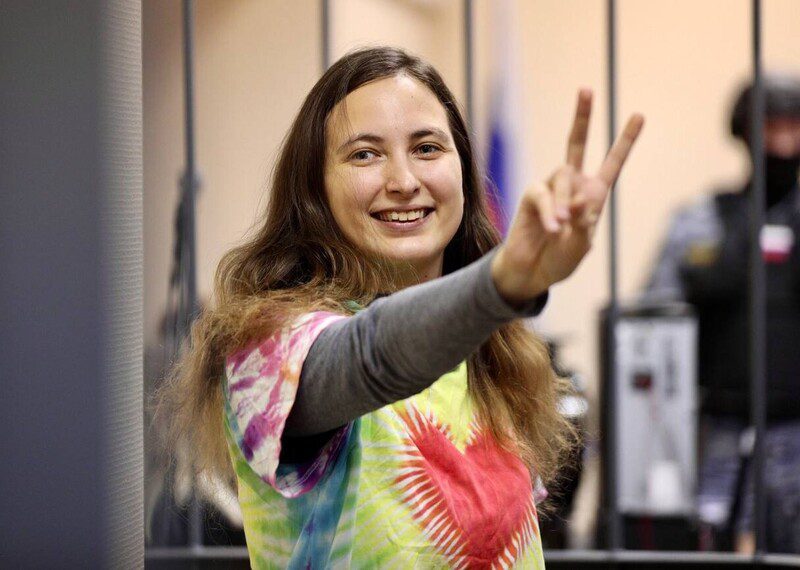
After huge public campaigning, artist and anti-war activist Aleksandra (Sasha) Skochilenko was freed in a historic prisoner swap in August 2024. The deal was brokered between Russia and Belarus on the one hand and Germany, Norway, Poland, Slovenia and the USA on the other.
Aleksandra Skochilenko on the day of sentencing, November 16, 2023.
Rita Karasartova is a human rights defender and expert in civic governance from Kyrgyzstan. For over a decade she dedicated her life to providing independent legal advice, helping people whose rights had been violated. Charged with attempting to “violently overthrow the government”, which carries a maximum sentence of 15 years’ imprisonment, Rita and 21 other defendants were acquitted on 14 June 2024.
In August 2017, Myanmar’s military unleashed a deadly crackdown on Rohingya Muslims – an ethnic minority who have faced decades of severe state-sponsored discrimination in Myanmar. Over 620,000 Rohingya fled to Bangladesh after security forces unleashed a campaign of violence, killing an unknown number of Rohingya; raping Rohingya women and girls; laying landmines; and burning entire Rohingya villages.
Fearing for their lives, then 17-year-old Maung Sawyeddollah and his family walked 15 days to Bangladesh, where they reached Cox’s Bazar refugee camps. Fuelled by his desire to become a lawyer, Sawyeddollah wanted to seek justice for the suffering around him.
Alongside his studies, he started a campaign calling for Facebook’s owner, Meta, to take responsibility for the way its algorithms amplified anti-Rohingya incitement on the Facebook platform, fuelling the Myanmar military’s violence.
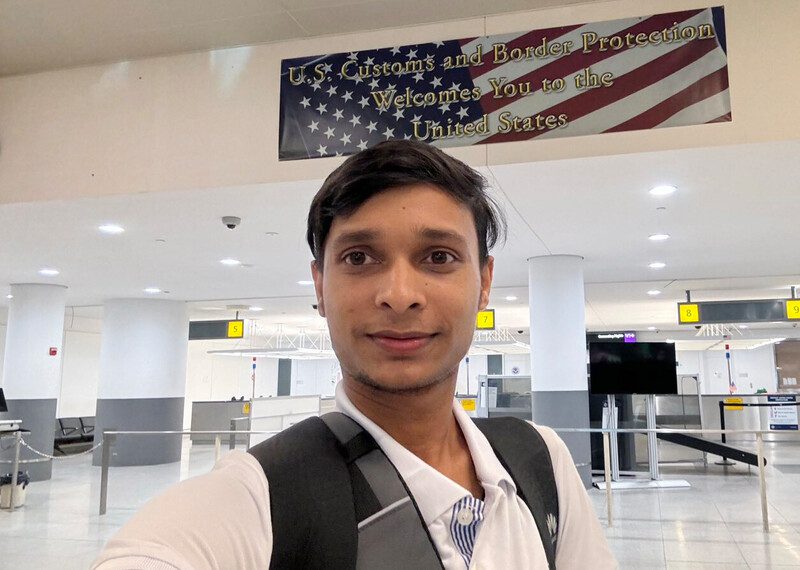
In 2023 Sawyeddollah was facing serious security risks in the refugee camps. Together with partners Victim Advocates International and Dev.tv, Amnesty International put together resources to help ensure Sawyeddollah’s safety. Through Amnesty’s Global Relief Team he was provided with urgent financial assistance to support his security needs throughout the year. In August 2024, Sawyeddollah was granted a student visa and moved to the USA to study. He landed in New York City on 19 August 2024, and he is now an international student at New York University.
Naw Hser Hser and Maggi Quadrini wrote in the Diplomat of 31 January 2024 how 3 years after the Myanmar coup, women Human Rights Defenders remain at the forefront
Three years have passed since the military coup in Myanmar. Since then, the resistance movement has flourished into an inspired example of people’s power and the defiance of authoritarian forces. In the eyes of the military, the hijacking of the 2020 general election and subsequent coup attempt was an easy conquest. They thought that violence and their long-practiced orders of “shoot to kill” would silence the civil unrest that immediately followed. It soon became clear that the generals gravely underestimated the will of the country’s people, who refused to inherit another era of military rule. The people’s rejection of the junta has been widespread and notable for the prominent role played by women in the revolution against military rule.
While the political, social, and armed aspects of the revolution have shifted, what has remained constant is the unwavering participation and leadership of women who have defied patriarchal systems, including gender stereotypes, and set an unquestionable new standard of what is possible for women and girls in Myanmar.
Women human rights defenders are resisting the military dictatorship in different ways despite the many challenges they face. They remain resilient and unwavering in their quest to see the fall of the junta. During these difficult times, women and girls, especially those from ethnic areas, including the Rohingya as well as those who identify as LGBTQ, have faced more forms of violence, including domestic assaults, sexual violence, rape, being coerced into sex work, and human trafficking.
No reliable justice mechanisms exist in Myanmar that can bring perpetrators to court and ensure accountability. Facing a myriad of barriers that prevent and undermine women’s participation, women human rights activists have defied the patriarchal systems promoted by the Myanmar military, which have been used to influence a culture that does not see women as equals.
Rather than submit to the military junta and its patriarchal dictates, women have increased their participation in various facets of the pro-democracy movement. The women’s rights movement has also become more intersectional than ever. Women from urban and rural backgrounds, different ages, ethnic groups, and religions have united in their shared goal of defeating the Myanmar armed forces, quashing the patriarchy, and ensuring gender equality.
In the immediate aftermath of the coup, many women human rights defenders were forced into exile. Many fled to border areas, their names rapidly reaching the top of the lists of those wanted by the junta. This also put a target on their family members. The threat of unlawful arrest and the possibility of torture and death has taken an immense strain on women fighting the military. Yet they have continued to resist the junta’s tactics of intimidation and terror in pursuit of a gender-equal future for Myanmar that is free from military rule.
Women human rights defenders have refused to adhere to Myanmar’s patriarchal status quo in many ways. This was evident through their strong participation in the Civil Disobedience Movement (CDM), where many female majority professions, including garment workers, health care providers, teachers, engineers, police, and even those in the military, quit their jobs following the attempted coup and refused to work for the junta. The Gender Equality Network has estimated that women comprise over 60 percent of frontline protest leaders and roughly 70 to 80 percent of the CDM’s leaders…
Women have been actively involved in resolving the many struggles of this revolution, including in the political, social, and armed arenas. However, there is still a lack of funding support and a lack of recognition within the resistance of women’s roles. There is also a lack of women’s participation in decision-making.
Findings from a new report called “Triple Resistance,” released this month by the Women’s League of Burma (WLB), a community-based organization working on the rights of the country’s women, revealed that despite the risks facing women human rights defenders, including threats to their physical and digital security, they have not been discouraged. On the contrary, they remain committed to seeing an end to military rule – something that is only possible through the participation of women. Of the women interviewed for WLB’s report, nearly 100 percent are involved in humanitarian work, and 50 percent have taken on new roles in the political arena, particularly as federalism becomes more established.
Women-led organizations are driving relief efforts on the ground, particularly in conflict-affected areas of Myanmar. These organizations provide services for victims of gender-based violence, counseling, food kits, and dignity kits, including menstrual care items and materials for expectant or new mothers. In Karenni State, where the capital city is being attacked relentlessly, the Karenni National Women’s Organization is continuing its operations to ensure displaced and vulnerable communities receive urgently needed humanitarian assistance and access to safe houses as gender-based violence rises.
Similarly, in Karen State, the Karen Women’s Organization works with its networks to ensure the swift and secure delivery of aid through cross-border channels effectively and efficiently to meet the needs of displaced groups, the majority of whom are women and children.
In addition, as local leadership across ethnic states and regions in Myanmar adopt federal bodies and institutions, women have participated in leadership capacities and have been central to forming a new federal Myanmar. For example, in Karenni State, women occupy several positions in the Karenni State Consultative Council, the Ta’ang Political Consultative Council, and other locally-driven bodies, as well as in People’s Administration Teams and village administrations.
Women leaders bring decades of experience working with armed actors and rights groups to provide security and protection for their communities. Their leadership must be recognized, encouraged, and accelerated. Without women, there is no sustainable development and consideration of gender perspectives during operations, service provision, or other political developments.
At an international level, governments and donors must understand that knowledge and expertise on locally-led challenges and solutions come from lived experiences and trust, which women and ethnic people can speak to. Global actors must recognize the efforts of women human rights defenders who continue to defy the status quo to ensure that the fall of the military junta will also lead to substantial improvements in gender equality. To do so, they must reinforce their commitment to amplify civil society organizations, including women-led initiatives. This new political space must be supported in order to hold the military junta accountable, at the International Criminal Court, if not in Myanmar itself.
In short, support of gendered programs, and for women’s participation more generally, is an integral part of the struggle against the military junta. Whether on the frontline, in political positions, or the classroom, women make up the substance of the revolution and are gradually carving out a new, progressive Myanmar. They deserve the world’s support.
EngageMedia posted on 28 February 2022 an anthology of films which highlight Myanmar’s long struggle for democracy
This movie playlist is from Cinemata, a platform for social and environmental films about the Asia-Pacific. It is a project of EngageMedia, a nonprofit that promotes digital rights, open and secure technology, and social issue documentary. This is edited and republished as part of a content-sharing agreement with Global Voices.
EngageMedia has curated a playlist of films that shows the extent of rights abuses in the country, as well as courageous forms of resistance against the continuing infringement on people’s rights. Marking the one-year anniversary of the coup, “A Year of Resistance” turns the spotlight on the long-standing struggle of the people of Myanmar for democracy.
This film collection is curated in solidarity with the people of Myanmar. In bringing the stories of unrest and atrocities to light, these films hope to inspire action and advocacy towards justice and freedom.
“Burma Rebel Artist: Moe Thandar Aung”
After the Myanmar military coup in February 2021, Moe Thandar Aung, a graphic designer whose work touched on themes on feminism, began making protest art in support of calls to defend and uphold democracy in the country.
“Black out”
In the aftermath of the 2021 Myanmar coup, the country is faced with state-mandated internet and information blackouts. Hnin, a single mother, and Mon, her daughter and an anti-coup protester, are among those who can no longer access the internet at home. In their pursuit of news on what is happening on the ground, they find only fabricated stories and unreliable information.
During the six months of the junta coup, at least 950 civilians have been violently killed. A total of 90 children under the age of 18 have been murdered, while at least 48 children were arrested.
An independent female humanitarian activist from Shan State describes the trauma she experiences in working in an environment pervaded by despair but also her commitment to helping those forced to flee armed conflict. This film was directed by Sai Naw Kham, Mon Mon Thet Khin, and Soe Yu Maw.
In this video, Myanmar activists talk about the digital rights and digital security challenges they face, arguing that freedom of expression, freedom to organize, and freedom to associate should be kept, protected elements of digital rights.
This song was made by 24 Youth from six different corners from Myanmar that participated in Turning Tables Myanmar’s yearlong social cohesion project “The Voice of the Youth.” Together they produced and recorded the song “Wake Up” which calls for democracy, youth participation, and sustainable development to replace corruption and injustice.
This 2009 film shows powerful footage from the Saffron Revolution, a series of economic and political protests led by students and Buddhist monks that swept Myanmar from August to September 2007. It also highlights the continuing need for international solidarity amongst Southeast Asians in times of political upheavals as in the current situation in Myanmar.
On 1 February last year, the military seized power over Myanmar/Burma by overturning the election results and detaining State Counsellor Aung San Suu Kyi. The military is still controlling power by force and uses brutal violence against human rights defenders, civil society groups, and journalists in order to silence all forms of protest and dissent. More than 1,500 people have been killed by the military and over 8,000 people have been arrested.
Despite the military’s brutal response, people have come together to fight the dictatorship. Nationwide protests, boycotts, strikes, and coordinated civil disobedience movements have taken place. Journalists across the country have continued their work despite severe attacks by the military.
A new report by Athan looks at how the military coup has affected journalists’ work and press freedom in the country. Throughout the country’s history, military coups have led to severe attacks on press freedom and the 2021 coup is no exception. Since the launch of the coup, 141 journalists have been arrested and 13 have been sentenced to prison. On 10 December, photojournalists Ko Soe Naing and Ko Zaw Tun were arrested while taking photos of a nationwide silent strike. Ko Soe Naing was tortured to death at the interrogation centre four days later. Just a couple of weeks after that, editor of the Federal Journal, A Sai Kay (Aka) Sai Win Aung, was shot dead by the military in Lay Kay Kaw. See also: https://humanrightsdefenders.blog/2021/05/11/three-democratic-voice-of-burma-journalists-and-two-activists-risk-refoulement-by-thailand/
According to Athan, the attacks on press freedom since the 2021 military coup have been the worst the country has seen. “Journalists and news media require continuous support to sustain local media and its journalists in order to secure journalists’ careers and their safety, and to enable an environment for journalistic professionals and the industry,” says a representative from Athan about the report.
On the one-year anniversary of the military coup in Myanmar, the High Representative on behalf of the European Union and the Foreign Ministers of Albania, Australia, Canada, New Zealand, Norway, Republic of Korea, Switzerland, the United Kingdom, and the United States, have made the following declaration:
….The European Union is deeply concerned by the continuing escalation of violence and the evolution towards a protracted conflict with regional implications. Since the military coup, the situation has continuously and gravely deteriorated. A large part of the population is now in a highly precarious situation, experiencing poverty, food shortages, displacement, and violence. ..
The European Union condemns in the strongest terms continuing grave human rights violations including torture, sexual and gender-based violence, the continued persecution of civil society, human rights defenders, and journalists, attacks on the civilian population, including ethnic and religious minorities by the Myanmar armed forces. Therefore, the EU calls for full accountability of the leaders responsible for the coup as well as of the perpetrators of violence and human rights violations. The EU also reiterates its firm demand for the immediate and unconditional release of all prisoners arbitrarily detained in relation to the coup and the return to power of democratically elected leaders.
As a matter of priority, the EU reiterates its calls for an immediate cessation of all hostilities, and an end to the disproportionate use of force and the state of emergency. The military authorities must ensure rapid, safe, and unhindered humanitarian access to all displaced persons and people in need, in all parts of the country. The European Union will continue to provide humanitarian assistance, in accordance with the principles of humanity, neutrality, impartiality, and independence and reiterates its call for the full and immediate respect of international humanitarian law…
In view of the escalating violence in Myanmar, increased international action is required in line with the already existing EU arms embargo on Myanmar. Since the military coup on 1 February 2021, the EU has imposed targeted sanctions on the Myanmar military, its leaders, and entities. In the absence of any swift progress of the situation in Myanmar, the EU stands ready to adopt further restrictive measures against those responsible for undermining democracy and the serious human rights violations in Myanmar.
“It is a failed coup,” said Yanghee Lee, co-founder of the Special Advisory Group on Myanmar and former UN special rapporteur for human rights in the country in a CNN report of 1 February. “The coup has not succeeded in the past year. And that is why they are taking even more drastic measures to finish out the coup.” He reported on problems for human rights defenders already in 2015, see: https://humanrightsdefenders.blog/2015/03/19/myanmar-backsliding-by-prosecuting-human-rights-defenders-instead-of-perpetrators/
The DVB made on 10 May 2021 the following emergency statement :
Three senior DVB’s journalists and two activists, who escaped to Thailand after the military crackdown in Burma, were arrested by the police on Sunday, May 9th in Chiang Mai, Thailand. They were arrested during a random search by the police and charged for illegal entry into Thailand. DVB strongly urges the Thai authorities to not deport them back to Burma, as their life will be in serious danger if they were to return. They have been covering the demonstrations in Burma until March 8 – the day the military authority revoked DVB’s TV license and banned DVB from doing any kind of media work. We also appeal to the United Nations High Commissioner for Refugees in Bangkok to intervene to help guard their safety. We request the international community to help call the Thai authorities to waive their deportation. Thank you in name of all DVB journalists, Aye Chan Naing, Executive director and chief editor DVB
This week’s ‘television programme’ Just Asia (9 February 20018) covers a number of important issues:
Burma: the UN’s Human Rights Commissioner warning that the government’s persecution of the Rohingya Muslim minority has the potential to spark regional conflict. “It is sometimes said that today’s human rights violations will become tomorrow’s conflicts.” Also this week, the Associated Press confirmed at least five mass graves found in Rakhine, through multiple interviews and time-stamped cell phone videos. The graves are the newest piece of evidence suggesting genocide.
Indonesia: the visit of the United Nations High Commissioner for Human Rights, Mr. Zeid Ra’ad Al Hussein, ended 7 February. Among the Commissioner’s various meetings, two important ones were the civil society meeting hosted by Indonesia’s Minister of Foreign Affairs, and the meeting with victims of human rights violations hosted by the National Commission on Human Rights. Local groups are hopeful that the high profile visit will significantly influence human rights development in Indonesia. Moreover, Mr. Zeid ended his visit with the announcement that his office would soon send a mission to West Papua to learn about the human rights situation there. (with an interview with Mr. Bedjo Untung, a Survivor of the 1965-1966 massacre)
The Philippines, President Rodrigo Duterte’s political allies are proposing to amend the Constitution, to change the country’s presidential form of government to a federal one. While focusing on political changes, the current constitutional debate is silent on constitutional rights. Philippines’1987 Constitution includes the Bill of Rights and many provisions relating to social justice. These are the culmination of a people’s aspirations after suffering for years under the dictatorship of Ferdinand Marcos. Any debate on constitutional change must therefore include discussion on the protection of constitutional rights.
Nepal, Plain clothes police arrested 14 year old Sandip Prasai on 1 February, and accused him of being a thief and a drug addict. Sandip was admitted to a hospital on February 4, where the doctors said there are no visible signs of injuries on his body, but he has suffered from panic attacks. Activists are calling on the government to investigate the incident and suitably punish the officers involved in beating a juvenile.
While receiving sharply worded emails and social media messages that the Rohingyas in Myanmar do not exist or have been ‘invented by the Saudis’, other more sober contributions put the serious question – whether with hindsight – Aung San Suu Kyi should not give back the many international awards she has received. Aung San Suu Kyi is the recipient of at least 15 international awards (e.g. Nobel Peace Prize, Rafto, Sakharov, AI’s Ambassador of Conscience, Vaclav Havel Price for Creative Dissent). The UNESCO-Madanjeet Singh Prize for the Promotion of Tolerance and Non-Violence (SIC) seems especially awkward.
Almost a year ago I referred in a blog post [https://humanrightsdefenders.blog/2016/09/20/how-awards-can-get-it-wrong-four-controversial-decisions-in-one-week/] to “a serious expression of concern by an ethnic minority: Prensa Latina reported on 19 September that hundreds of Muslim students demonstrated against the Peter J. Gomes Humanitarian Award 2016 given to Minister of State of Myanmar Aung San Suu Kyi by the Harvard Foundation. According to the website of the Harvard Foundation recent prizes of that foundation were given to education activist Malala Yousafzai, Kofi Annan and Ban Ki-Moon. According to the Mizzima news agency, the young people consider that Aung San Suu Kyi does nothing to handle the persecution of the Rohingya Muslim minority. According to the local press, Suu Kyi herself considered, while receiving the prize, that in her country there is still a long way to go before saying that the people are free and safe.”
Lindsay Murdoch on 2 September 2017 wrote under the title “The ‘human catastrophe’ that betrays Suu Kyi’s Nobel prize” some of this:
….In awarding her a degree from the Australian National University in 2013, then chancellor Gareth Evans called her “an exemplar of quiet courage and determination in the face of oppression and a champion of the peaceful path towards a better and more just world”. But Suu Kyi’s government, swept into power on a landslide election victory in 2015, last week accused international aid workers, including those from UN agencies, of helping Islamic “terrorists” who had attacked 30 police posts on August 27. She presented no evidence. The top UN human rights official, Zeid Raad al-Hussein, described the claim as “irresponsible”.
Now Reuters reports that about 120,000 people – mostly displaced and stateless Rohingya Muslims – in Rakhine camps are not receiving food supplies or healthcare after contractors for the World Food Program suspended operations following the government accusations. Staff have been too afraid to show up for work. “As a result of the disruption of activities in central Rakhine state, many people are not receiving their normal food assistance and primary healthcare services have been severe disrupted,” said Pierre Peron, a spokesman for the UN Office for Humanitarian Affairs.
Suu Kyi’s government refuses to allow UN investigators and the media access to parts of Rakhine where rights monitors fear a campaign of ethnic cleansing is underway.
Suu Kyi was idolised while spending 15 years as a prisoner of Myanmar’s army generals. Now she refuses to speak up for 1.1 million stateless and long persecuted Rohingya. She may not control her country’s armed forces but, since taking high office, Suu Kyi has refused to acknowledge the plight of the Rohingya in any meaningful way. She deflects questions about the persecution of Rohingya, saying only the “rule of law” must apply in Rakhine. She also dismisses the independent UN inquiry as “not suitable for the situation of our country.”
……Some human rights activists who campaigned for years for Suu Kyi’s release when she was a political prisoner now feel a deep sense of betrayal from the woman they formerly saw as a heroine. Perhaps it is time for her to hand back her Noble Peace Prize. (The story The ‘human catastrophe’ that betrays Suu Kyi’s Nobel prize first appeared on The Sydney Morning Herald.)
Front line Defenders reported on 2 August that human rights defender Ko Swe Win was prevented from travelling and detained in connection with defamation charges on 30 July 2017, at Yangon International Airport as he was trying to fly to Bangkok. He was reportedly taken into police custody in relation to a defamation case brought by a follower of extremist Buddhist monk U Wirathu, who told the police he believed Ko Swe Win was attempting to flee the country. Despite the defamation lawsuit filed against him, no travel restrictions were issued against Ko Swe Win. The human rights defender was released on bail on 31 July 2017. See also: https://humanrightsdefenders.blog/2013/11/23/burma-continued-prosecution-of-human-rights-defenders-and-peaceful-demonstrators/
has announced that the finalists for its 2016 award are human rights defenders from Azerbaijan, Burma/Myanmar, Colombia, Honduras, Palestine, and Tanzania. For more information on the annual Front Line Defenders Award for Human Rights Defenders at Risk: http://www.brandsaviors.com/thedigest/award/front-line-defenders-award.




 Hans Thoolen on Human Rights Defenders and their awards