Posts Tagged ‘bar association’

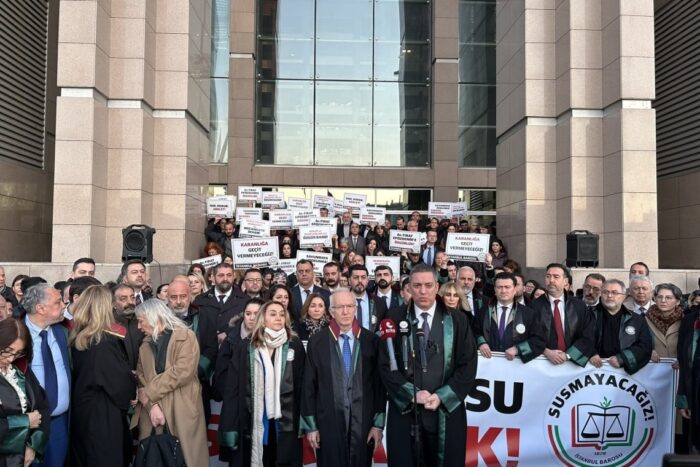
23 rights groups call for release of Istanbul Bar board member Fırat Epözdemir

February 7, 2025
Photo: Evrensel

Twenty-three human rights organizations have called for the immediate release of İstanbul Bar Association executive board member Fırat Epözdemir, who was arrested last week over alleged ties to the outlawed Kurdistan Workers’ Party (PKK), the Media and Law Studies Association reported February 3, 2025,

Advocacy groups condemned his detention as unlawful and part of a broader crackdown on human rights defenders and legal professionals in Turkey.

The Human Rights Defenders Solidarity Network (İHSDA) issued a statement denouncing Epözdemir’s arrest and urging authorities to drop the charges. The statement, signed by multiple rights organizations, emphasized that targeting lawyers and human rights advocates with judicial harassment is unacceptable.

Epözdemir was arrested Saturday by an İstanbul court on charges of “membership in an armed terrorist group” and “disseminating terrorist propaganda.”

Prosecutors in İstanbul accuse Epözdemir of joining a PKK-linked WhatsApp group in 2015, during the peak of clashes between Kurdish militants and Turkish security forces in the country’s predominantly Kurdish southeast.

The PKK has waged an armed insurgency against the Turkish state since 1984, a conflict that has left more than 40,000 people dead. 

Epözdemir’s legal team has faced severe restrictions in accessing case files due to a confidentiality order, preventing them from reviewing the evidence against him. Authorities also imposed a 24-hour ban on lawyer visits without providing a clear justification, raising concerns of due process violations.

The joint statement criticized the prosecution’s reliance on a decade-old public event and phone conversations as grounds for Epözdemir’s arrest, calling the charges baseless and politically motivated.

His detention, rights groups argue, is an attack on the legal profession and human rights advocacy in Turkey. They linked his arrest to broader efforts to suppress dissent, noting that members of the İstanbul Bar Association have faced mounting pressure after issuing a statement regarding two journalists killed in Syria.

“Lawyers and bar associations must not be criminalized for their advocacy and defense of fundamental rights,” the statement said. “We reject all attempts to silence human rights defenders and demand the immediate and unconditional release of Fırat Epözdemir.”

Among the signatories were the MLSA, the Human Rights Association (İHD), Civil Rights Defenders, the Turkish Human Rights Foundation (TİHV) and numerous other civil society organizations.

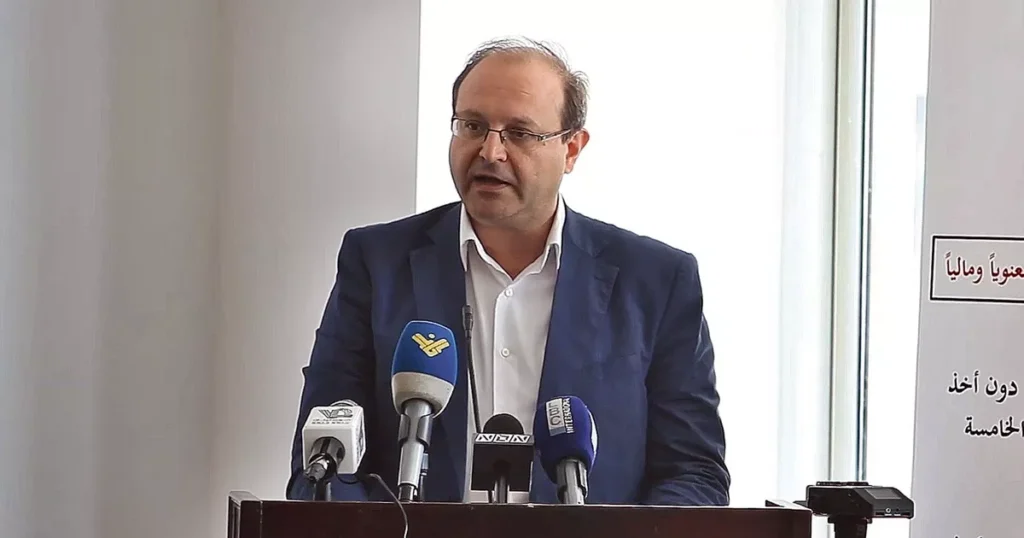
Lebanon: human rights lawyer Nizar Saghiyé’s freedom of expression curtailed

April 25, 2023

On Thursday 20 April, the Lebanese lawyer, human rights defender and director of the NGO Legal Agenda Nizar Saghiyé was summoned to appear before the Beirut Bar Council. The summons followed Mr Saghiyé’s criticism of an amendment to the Code of Ethics of the Beirut Bar Association which prevents lawyers from speaking publicly in the media without prior authorisation from the President of the Bar Association.

EuroMed Rights, Front Line Defenders, the International Federation for Human Rights (FIDH) and the World Organisation Against Torture (OMCT), both within the framework of the Observatory for the Protection of Human Rights Defenders, express their support for Mr Nizar Saghiyé and strongly condemns this summons. Requiring lawyers to obtain prior authorisation from the President of their Bar Association before making any media statements curtails their freedom of expression.

The modification of the Code of Ethics published by the Beirut Bar Association on 3 March 2023, interferes with Article 19 of the International Covenant on Civil and Political Rights, which was ratified by Lebanon in 1972. In addition to the ICCPR, the UN Basic Principles on the Role of Lawyers makes clear that whilst states bear the primary obligation to protect lawyers, they share this with the bar associations (Principle 25). In addition, Principle 23 states that “Lawyers like other citizens are entitled to freedom of expression, belief, association and assembly. In particular, they shall have the right to take part in public discussion of matters concerning the law, the administration of justice and the promotion and protection of human rights and to join or form local, national or international organizations and attend their meetings, without suffering professional restrictions by reason of their lawful action or their membership in a lawful organization. In exercising these rights, lawyers shall always conduct themselves in accordance with the law and the recognized standards and ethics of the legal profession.

Currently, the Lebanese government is debating a new media law behind closed doors and there has been an increase in the number of arrests of journalists. Recently the President of the Lebanese Bar Association recently denounced the “chaos and confusion” allegedly created by the proliferation of websites and social networking platforms. This latest summons is a worrying development in an already troubling trend towards limiting freedom of expression of Nizar Saghiyé, the Bar’s lawyers, amongst others.

https://euromedrights.org/publication/lebanon-behind-the-summons-of-nizar-saghiye-a-threat-to-freedom-of-expression/

Will long-running saga of trial against the Istanbul 10 end on Friday 3 July?

July 3, 2020

From the start, this has been a politically-motivated trial’Idil Eser© Amnesty International (Foto: Jordi Huisman)

The verdict in the trial of Amnesty Turkey’s chair, the organisation’s former Turkey director and nine other human rights defenders, is expected tomorrow. The key hearing will begin at 8.00am BST (10.00am local time) on Friday 3 July at Istanbul Heavy Penal Court, No 35.

Taner Kılıç, Idil Eser, Özlem Dalkıran, Günal Kurşun, Veli Acu, Nejat Taştan, Nalan Erkem, İlknur Üstün, Şeyhmus Özbekli, Ali Gharavi and Peter Steudtner are all on trial for baseless terrorism charges.

Over the course of 11 earlier hearings spread over nearly three years, ‘terrorism’ allegations against all 11 defendants have been repeatedly and categorically disproven, including – ironically – by the state’s own evidence. The prosecution’s attempt to present legitimate human rights activities as unlawful acts has comprehensively failed, said Amnesty. [see also: https://humanrightsdefenders.blog/2020/02/16/turkey-who-will-defend-the-human-rights-defenders/.]

In August 2018, after more than 14 months in prison, former Amnesty Turkey Chair Taner Kılıç was released on bail. Eight of the others spent almost four months each behind bars before they were released in October 2017.

At the tenth hearing in November 2019, the prosecutor requested acquittal for five of the 11, and convictions for the remaining six.

See: https://humanrightsdefenders.blog/2020/05/06/ali-gharavi-of-the-istanbul10-speaks-about-his-experience-and-his-hope/.

In the meantime, on 2 June 2020, the Council of Europe’s Commissioner for Human Rights spoke out on the independence of lawyers in Turkey: “I have taken note with concern of a bill recently submitted to the Turkish Parliament containing amendments to the Turkish Law No. 1136, which affect lawyers and their professional associations. The proposed changes would notably allow for a plurality of bar associations in provinces with large numbers of lawyers and modify the election procedures of bar associations and their Union. These changes raise particular concerns when seen against the background of the serious problems I identified in my latest report on Turkey published in February 2020. These problems include a hostile and repressive atmosphere affecting civil society in Turkey, of which professional associations, such as bar associations, are a very important part; the glaring lack of consultation and involvement of civil society in policy-making and legislation; and the very difficult situation, including undue judicial pressure, faced by lawyers in Turkey both as  human rights defenders and as a fundamental part of an increasingly hostile judicial system.

https://www.amnesty.org.uk/press-releases/turkey-verdict-expected-long-running-trial-amnesty-chair-and-ten-others

https://www.coe.int/en/web/commissioner/-/commissioner-s-concerns-about-proposed-changes-affecting-the-legal-profession-in-turkey

UN Rapporteurs concerned about detention of Miyan Abdul Qayoom of Kashmir Bar Association

April 28, 2020

Qayoom, who is also a human rights lawyer, was arrested on the night of 4 and 5 August during the clamp down. Qayoom was accused of being a “most staunch advocate of secessionist ideology”. [see also: https://humanrightsdefenders.blog/2020/02/09/forgotten-kashmir-something-has-to-be-done/]

Dated 27 February 2020, the UN has released the letter after 2 months. Qayoom was moved to Agra Central Jail, Uttar Pradesh, on 8 August and was kept in solitary confinement, as per the letter, adding that he is suffering from multiple health issues — including a scheduled open heart surgery at the time of his detention. On 29 January, the letter states, Qayoom suffered a heart attack. Next day, he was taken back to the jail’s dispensary. On 1 February 2020, he was transferred from Agra Central Jail to the All India Institute of Medical Science (AIIMS) in New Delhi, for a medical check-up. “He was then transferred to Tihar Jail, New Delhi,” the letter added.

The Special Rapporteurs also claimed in the letter that Qayoom is being denied “the right to a fair trial… and the right of everyone to hold opinions and to freedom of expression.”

We also express concern that Mr. Qayoom’s deprivation of liberty appears to be a reprisal for his opinions, the legitimate and peaceful exercise of his freedom to express them and his human rights work,” the letter added, citing various previous cases and relevant articles of ICCPR that entitles anyone who is deprived of liberty by arrest or detention to take proceedings before a court. “Arrest or detention as punishment for the legitimate exercise of other rights, as guaranteed by the ICCPR, is arbitrary, including the right to freedom of opinion and expression,” it mentioned.

The Special Rapporteurs stated:

“Please provide detailed information about the factual and legal grounds for the arrest and detention of Mr. Qayoom, including the charges brought against him. Please explain how his arrest and continued detention are in conformity with India’s international human rights obligations under the conventions it has acceded to.

Please provide detailed information on the treatment by the court of the habeas corpus petition initiated by Mr. Qayoom. Please explain how the absence of a decision on his petition more than six months after it was made is compatible with the requirement that the lawfulness of his detention’s petitioner is adjudicated as expeditiously as possible, and with India’s obligations under ICCPR.

Please provide detailed information on the present medical situation of Mr. Qayoom and explain how his medical concerns have been duly taken into account and addressed since he was arrested and placed in detention. Please explain what measures are being taken to ensure Mr. Qayoom’s access to appropriate medical care on a reliable and regular basis.

Please indicate what measures have been taken to ensure that human rights defenders in India are able to carry out their legitimate work in a safe and enabling environment without fear of threats or acts of intimidation and harassment of any sort.

Please provide detailed information, included disaggregated data to the extent possible, as to the number of persons from Jammu and Kashmir who have been detained under the Public Security Act since August 2019.”

https://thekashmirwalla.com/2020/04/un-special-rapporteurs-express-concern-over-detention-of-bar-president-mian-qayoom/

Azerbaijan: example of ‘sophisticated’ harassment of human rights lawyers

June 29, 2018

Om 29 June 2018 Front Line Defenders reported on the case of disbarment of human rights lawyer Irada Javadova in Azerbaijan. It shows how seemingly ‘neutral’ procedures within the Bar Association are used to silence human rights defenders.

Irada Javadova <https://www.frontlinedefenders.org/en/profile/irada-javadova> is a human rights lawyer who was involved in many resonant cases, including working on numerous violations of citizens’ property rights and violations against political activists and human rights defenders. She is the former head of NGO “Human Rights Education”. The procedure was initiated upon the complaint of an anonymous citizen, who stated that Irada Javadova wrote a letter to the Interior Ministry about her illegal detention in the Directorate for Combating Organized Crime and reported the incident to the press, without the citizen’s consent. According to reports, the citizen stated that Irada Javadova spread false information, defamed her, and requested that the Bar Association take action against the human rights defender. On 11 June 2018, the Presidium of the Bar Association announced the termination of her authority.

Irada Javadova denied the allegations, stating that she had an agreement with her client and that she had legitimately defended her and acted within the law. She had submitted the agreement with the complainant to the Bar Association, but her colleagues expressed doubts about the authenticity of the client’s signature. She was disbarred on 11 June 2018. On 12 June, she met with the chairman of the Presidium of the Bar Association and presented additional evidence, but she was told that there will be an appeal to Baku Administrative Economic Court No. 1, where she will have the opportunity to defend her rights. Irada Javadova believes that the disciplinary commission was biased and erroneous.  On 14 June 2018, human rights lawyer Irada Javadova appealed the Presidium of the Bar Association’s decision to disbar her.

[In recent years, Azeri authorities have been pursuing those lawyers who defend political activists and who speak before the European Court of Human Rights. Officials have dismissed such well-known and active lawyers as Namizad Safarov, Khalid Baghirov <https://www.frontlinedefenders.org/en/profile/khalid-bagirov> , Aslan Ismayilov, Alaif Hasanov, Elchin Namazov, Yalchin Imanov <https://www.frontlinedefenders.org/en/profile/yalchin-imanov> , Farhad Mehdiyev, Muzaffar Bakhshaliyev, Annaghi Hajibeyli, and Intigam Aliyev <https://www.frontlinedefenders.org/en/profile/intigam-aliyev>.  For some earlier posts on Azerbaijan: https://humanrightsdefenders.blog/tag/azerbaijan/page/4/

PS In 2018, Irada Javadova was the only member of Presidium of the Bar Association to vote against the disbarment of human rights lawyer Yalchin Imanov. It is believed that she lost her place in the Presidium following her defence of Yalchin Imanov.


Human Rights Lawyers Disqualified to run for Iran’s Bar Association

February 11, 2016

Not the most egregious of violations but showing how deep the ruling powers’ reach in Iran is: more than two dozen prominent lawyers, including well-known human rights defenders, have been disqualified (again) from running in next month’s election for the Iranian Bar Association’s board of directors. Judge Hosseinali Nayeri, the head of the Supreme Disciplinary Court for Judges, issued a statement on 2 February  2016 rejecting 25 of the 141 candidacy applications, according to Kaleme, an opposition website.

The disqualified include human rights lawyers Farideh Gheirat, Mohammad Saleh Nikbakht, Abdolsamad Khorramshahi, Ramazan Haji Mashhadi, and former Tehran University law professor, Ghasem Sholeh Sadi. The bar association has only published the names of the approved candidates on its website.

Sholeh Sadi, told the NGO ‘International Campaign for Human Rights in Iran’ that the bar association should operate as an independent body and elections for its board of directors should be conducted without the interference of the judicial system. “Governments want to limit the lawyers’ activities and try to control them,” said the former Member of Parliament who has served time as a political prisoner in Iran.

The independence of lawyers as well as the Iranian Bar Association have been seriously undermined since the passage of a law in 1997 that imposed several limits and controls on the process for testing and licensing new lawyers. In February 2014, some 200 lawyers wrote an open letter to President Hassan Rouhani expressing concern about the Judiciary’s attempts to curb their autonomy. They accused the Judiciary of trying to destroy the independence of the legal profession “established by Prime Minister Mohammad Mossadegh more than 70 years ago.” The Head of the Iranian Judiciary, Sadegh Larijani, denied the charges, claiming that the Judiciary’s supervision over lawyers would not curtail their independence.

For older posts on Iran: https://thoolen.wordpress.com/tag/iran/

Source: Prominent Lawyers Disqualified from Iran’s Bar Association Election


Glimmer of hope for Sotoudeh and Iran crashed by Tehran Bar Association

October 21, 2014

The glimmer of hope for Nasrin Sotoudeh and Iran which I saw in my post of 6 September [https://thoolen.wordpress.com/2014/09/06/glimmer-of-hope-in-iran-nasrin-sotoudehs-ban-to-practice-overruled/] seems to have been crushed already. Yesterday, 20 october, the Observatory for the Protection of Human Rights Defenders, the joint programme of FIDH and OMCT, has received new information that on 18 October 2014, a three-member disciplinary investigation panel of Tehran’s Bar Association has now suspended Nasrin Sotoudeh’s law license for three years, based on a complaint filed by the Islamic Revolution Court’s Prosecution Office (unlike the first disciplinary panel of the Tehran Bar Association which rejected a similar request). Read the rest of this entry »

Glimmer of hope in Iran: Nasrin Sotoudeh’s ban to practice overruled

September 6, 2014

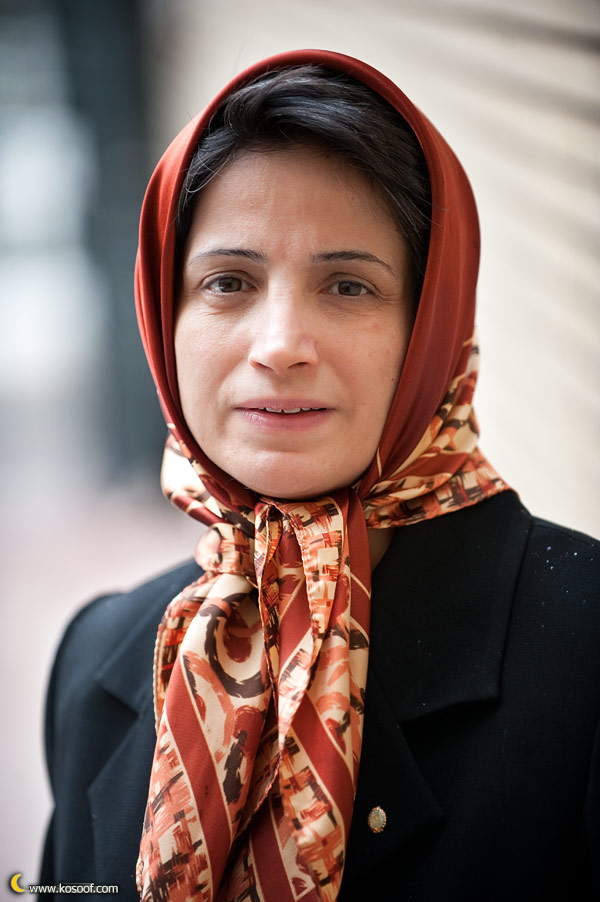
NASRIN_SOTOUDEH_PORTRAIT The International Campaign for Human Rights in Iran reports on 5 September that the Lawyers’ Court denied the Tehran Prosecutor’s Office request for the suspension of Sotoudeh’s license to practice, and stated in a ruling that, “In the opinion of the Lawyer’s Court, Ms. Sotoudeh’s temporary suspension was unwarranted and will be overruled”. According to this ruling Ms. Sotoudeh can continue her profession as a lawyer says her husband Reza Khandan on Facebook.

[Prominent lawyer and human rights defender Nasrin Sotoudeh – final nominee of the MEA in 2012 and winner of the Sakharov prize- was arrested on September 4, 2010. A lower court sentenced her to 11 years in prison, a 20-year ban on her legal practice, and a 20-year ban on foreign travel, on charges of “acting against national security,” “propaganda against the state,” and “membership in the Human Rights Defenders Center.” An appeals court reduced her sentence to six years in prison and a 10-year ban on her legal practice. After almost three years in prison, Nasrin Sotoudeh was released on September 18, 2013. Upon release, Nasrin Sotoudeh objected to the ruling by the Tehran Revolutionary Court to suspend her license to practice law, asserting the Court’s lack of jurisdiction over this matter. She subsequently renewed her license and announced that she would continue her legal practice. However, judges have refused to allow her to appear in court to represent her clients.]

via Ten-Year Ban on Nasrin Sotoudeh’s Legal Practice Overruled: Prominent Human Rights Lawyer Returns to Law : International Campaign for Human Rights in Iran.

for more posts on Sotoudeh: https://thoolen.wordpress.com/tag/nasrin-sotoudeh/


Alarming disbarments and suspensions of lawyers in Ukraine

February 13, 2014

While most attention is focused on the demonstration in Ukraine, a recent report by the respected International Commission of Jurists [ICJ] casts light on alarming trend of disbarments and suspensions of lawyers.  The report casts light on a conflict in the legal profession, which has led to apparently arbitrary disciplinary action against a significant number of lawyers. The report reveals the escalating dispute in the legal profession following the implementation of a new law, signed by the President on 5 July 2012, which significantly changed the organization of the profession and provides for the establishment of a new bar association. The law,icj_logo_pantone Read the rest of this entry »

Call for more moderate Muslim voices in Malaysia’s human rights debate

November 18, 2013

An interesting example of how human rights defenders should tackle the pernicious issue of islamic opposition to human rights progress comes from Malaysia:

According to Bar Council member Andrew Khoo, Muslim-majority countries were among those which have asked Malaysia to obey international human rights standards in the United Nations’ Universal Periodic Review (UPR) last month. “These are not Western, European-centric recommendations… For anyone to attempt to say this is a Western agenda, sorry you’re barking up the wrong tree,” said Khoo, who is the co-chairman of the Bar Council’s Human Rights Committee.  Read the rest of this entry »