The Trump administration’s omission of key sections and manipulation of certain countries’ rights abuses degrade and politicize the 2025 US State Department human rights report, Human Rights Watch, Amnesty International, Human Rights First and many other NGOs concluded .
On August 12, 2025, the State Department released its “Country Reports on Human Rights Practices” covering the year 2024. The report omits several categories of rights violations that were standard in past editions, including women, LGBT people, persons with disabilities, corruption in government, and freedom of peaceful assembly. The administration has also grossly mischaracterized the human rights records of abusive governments with which it has or is currently seeking friendly relations.
By undermining the credibility of the report, the administration puts human rights defenders at risk, weakens protections for asylum seekers, and undercuts the global fight against authoritarianism.
This year’s human rights report may strictly keep with the minimum statutory requirements but does not acknowledge the reality of widespread human rights violations against whole groups of people in many locations. As a result, Congress now lacks a widely trusted, comprehensive tool from its own government to appropriately oversee US foreign policy and commit resources. Many of the sections and rights abuses that the report omits are extremely important to understanding the trends and developments of human rights globally, Human Rights Watch said.
On Israel, the State Department disregards the Israeli authorities’ mass forced displacement of Palestinians in Gaza, their use of starvation as a weapon of war, and their deliberate deprivation of water, electricity, medical aid, and other goods necessary for civilians’ survival, actions that amount to war crimes, crimes against humanity, and acts of genocide. The State Department also fails to mention vast damage and destruction to Gaza’s essential infrastructure and the majority of homes, schools, universities, and hospitals.
The report is dishonest about abuses in some third countries to which the US is deporting people, stating that the US found “no credible reports of significant human rights abuses” in El Salvador, although they cite “reports” of extrajudicial executions, enforced disappearance, and mistreatment by police. The administration has transferred to El Salvador’s prisons, despite evidence of torture and other abuses.
The State Department glosses over the Hungarian government’s escalating efforts to undermine democratic institutions and the rule of law, including severe curbs on civil society and independent media, and abuses against LGBT people and migrants. It also fails to acknowledge that Russian authorities have widely used politically motivated imprisonment as a tool in their crackdown on dissent, and its prosecutions of individuals for “extremism” for their alleged affiliation with the LGBT movement.
In an update on its website on 6 August 2025, Front Line Defenders in raising alarm over the worsening conditions of detention for prominent Belarusian human rights defender Nasta Loika, currently held in Homel Correctional Facility No. 4. On August 1, independent Belarusian media reported that Loika had been transferred to a secure housing unit under harsher detention conditions — a common punitive tactic used by the Belarusian authorities against political prisoners. [see also; https://humanrightsdefenders.blog/2023/11/07/the-sad-story-of-nasta-loika-human-rights-defender-behind-bars-in-belarus/]
As described in the statement, these stricter conditions mean confinement in a tiny 4-square-meter cell without privacy or proper sanitation:
Loika’s ongoing persecution is part of a broader crackdown on civil society in Belarus. A lawyer and educator, she has long been involved in documenting state abuses, challenging Belarus’s vague and punitive “anti-extremist” legislation, and advocating for migrants and stateless persons. Her organization, Human Constanta, was forcibly dissolved by the state in 2021 as part of an orchestrated campaign against human rights groups. It now operates in exile.
Nasta Loika has been imprisoned since June 2023, when the Minsk City Court sentenced her to seven years in prison, accusing her of “incitement to social enmity.” In a further act of repression, she was later added to the KGB’s list of individuals “involved in terrorist activities.” Her supporters have also been targeted: in May 2025, the Instagram page @let_nasta_go, which calls for her release, was declared “extremist.”
In early July 2025, a pro-government Telegram channel claimed Aliaksandr Lukashenka had pardoned Loika, publishing a photo of a handwritten pardon request. While her colleagues acknowledged the handwriting resembled hers, they could not confirm whether the letter was written freely or under coercion. Later, another Telegram channel associated with the Belarusian police dismissed the report as a hoax.
“Front Line Defenders is deeply appalled by the continued persecution of Nasta Loika,” the organization said in its statement. “The organisation condemns the use of strict conditions of detention as part of the reprisals against her for peaceful and legitimate human rights work. Front Line Defenders expresses grave concern about the inhumane conditions of detention the woman human rights defender is enduring and reiterates its call to the Belarus authorities to quash Nasta Loika’s conviction and facilitate her immediate release.”
On May 28, 1961 -64 years ago today – a British lawyer named Peter Benenson penned a letter for the Observer newspaper in the UK launching the “Appeal for Amnesty 1961,” a campaign calling for the release of people imprisoned around the world because of the peaceful expression of their beliefs. This movement galvanized into what is now Amnesty International, an organization founded on the idea that ordinary people around the world could protect human rights by coming together to take action on behalf of others.
Sixty-four years later, Amnesty is a worldwide movement for human rights with a collective power of 10 million people, each one committed to fighting for justice, equality and freedom everywhere.
Today, Amnesty is needed more than ever to confront a backlash against human rights and increasing authoritarian practices, including right here in the United States.
As a global movement, we have—and continue to—show up in solidarity for communities and across issues and geographies. Caring, compassionate people have powered our movement for decades as we’ve shined a light on injustice and defended human rights. We will raise the political cost of authoritarian practices through direct advocacy, constituent pressure on Congress and other leaders to use their power in the defense of human rights, and other impactful campaigning efforts……
As we mark our anniversary, we are recommitting to our efforts to champion and protect human rights, here in the United States, and around the world.
12 tips from Amnesty International leaders around the world:
Fight hard against early attacks against individuals and institutions, and ask, “If we lose now, who will they come for next.”
Watch for new government agencies and data collection designed for repression. Leaders who embrace authoritarian tactics create “lists” to target effective activists, often using social media. Surveillance is a red flag.
Elections are dangerous flashpoints for accelerators of repression. Crackdowns and laws passed to restrict civic space often spike pre-elections.
Resist the legal system being weaponized. Governments will use trumped up charges, long pretrial detentions and lengthy trials to sideline activists, denying bail and delaying appeals.
Read new “unrelated” laws carefully with an eye on civic space and freedom of expression. Not every attack on rights will be direct and obvious.
Be ready for fake “facts” and smear campaigns to paint human rights defenders as corrupt or criminal. How are you going to get the truth out quickly and widely?
Catch repressive legislative drafts early and fight back hard and publicly. And don’t stop until bills are dead and won’t come back.
Stay inspired about a pro-rights future, but create strategies and stay ready for worsening anti-rights scenarios.
Public narrative matters. Anti-rights actors will reframe human rights as threats, to shrink civic space. Don’t let them. Resist and frame a public narrative that speech, protest and assembly are essential to defend all the other rights.
Protect yourself, your wellbeing and your safety. Threats come in many forms and will be experienced differently by each activist. Do what is right for you.
Be a good partner. Solidarity wins. Build coalitions, share resources, lean on allies and let them lean on you.
Keep an eye on other contexts. Repressive leaders learn from each other. Human rights activists need to do the same.
From Hungary to China to Venezuela, and anywhere else leaders think they can act with impunity—we have fought back at every turn.
Reacting to the news that the Russian authorities have declared Amnesty International an “undesirable organization” thereby criminalizing its activities and any association with the organization in Russia, Agnès Callamard, Amnesty International’s Secretary General, said19 May 2025
“This decision is part of the Russian government’s broader effort to silence dissent and isolate civil society. In a country where scores of activists and dissidents have been imprisoned, killed or exiled, where independent media has been smeared, blocked or forced to self-censor, and where civil society organizations have been outlawed or liquidated, you must be doing something right if the Kremlin bans you.
“The authorities are deeply mistaken if they believe that by labelling our organization “undesirable” we will stop our work documenting and exposing human rights violations – quite the opposite. We will not give in to the threats and will continue undeterred to work to ensure that people in Russia are able to enjoy their human rights without discrimination. We will keep documenting and speaking worldwide about the war crimes committed in Ukraine by Russia. We will redouble our efforts to expose Russia’s egregious human rights violations both at home and abroad.
The authorities are deeply mistaken if they believe that by labelling our organization “undesirable” we will stop our work documenting and exposing human rights violations – quite the oppositeAgnès Callamard, Amnesty International’s Secretary General
“We will never stop fighting for the release of prisoners of conscience detained for standing up for human rights or for the repeal of repressive laws that prevent people in Russia from speaking up against injustice. We will continue to work relentlessly to ensure that all those who are responsible for committing grave human rights violations, whether in Russia, Ukraine, or elsewhere, face justice. Put simply, no authoritarian assault will silence our fight for justice. Amnesty will never give up or back down in its fight for upholding human rights in Russia and beyond.”
Background
On 19 May 2025, the Russian Prosecutor General’s Office declared Amnesty International an “undesirable organization” under repressive 2015 Russian legislation which allows the authorities to ban arbitrarily any foreign organization and criminalize its activities in Russia. The announcement accused Amnesty International of promoting “Russophobic projects” and indicated that it was prompted by the organization’s work on freedom of expression and association in Russia, and its documentation and exposition of crimes under international law committed by Russian forces in Ukraine. The decision is based on a Russian law which in itself violates international law, and the language of the decision goes against facts accusing Amnesty International of activities which, within its statutory documents and policies, it is prevented from undertaking.
The designation comes three years after the Russian authorities blocked access to Amnesty International’s websites in Russia and de-registered – effectively closed down – the organization’s office in Moscow. The designation puts at risk of prosecution in Russia partner organizations and individual supporters, journalists, other persons who now work with, or are seen by the authorities as supporting or promoting, the organization.
Under Russian legislation, participation in the activities of an “undesirable organization” is punishable by law. First-time “offenses” may result in administrative fines of up to 15,000 rubles (around US$185). Repeated violations as well as funding or managing such organizations carry criminal liability and can lead to prison sentences of up to six years. The law has previously been applied to the distribution or reposting of any materials from the designated organization, including publications and hyperlinks predating its designation as “undesirable”.
This designation places Amnesty International among dozens of independent NGOs and media outlets that have been targeted in recent years as part of a sweeping campaign to suppress dissent and dismantle civil society in Russia and prevent international watchdogs and partners from providing support or showing solidarity with them. These moves are the backbone of a pattern whereby the Russian authorities are using authoritarian practices to silence voices, undermine accountability and entrench power. [see also: https://humanrightsdefenders.blog/2019/01/22/in-russia-first-criminal-case-under-undesirable-organizations-law/]
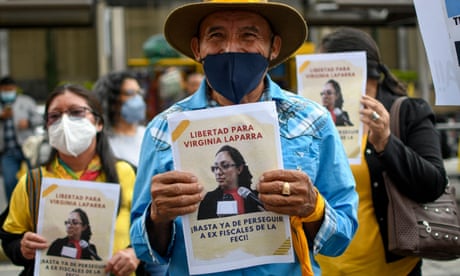
On 5 March 2025 Haroon Siddique in the Guardian wrote about Virginia Laparra, a Guatemalan anti-corruption prosecutor, who spent two years in prison after reporting her suspicion that a judge leaked sealed details of a case. She was forced into exile after being pursued by the country’s conservative elite.
Facing the prospect of going back to prison and further charges, Laparra left her two daughters behind to seek asylum across the border in Mexico.
In an interview with the Guardian in London after receiving the Alliance for Lawyers at Risk’s Sir Henry Brooke award honouring human rights defenders, Laparra said: “Nobody goes into exile voluntarily. Exile is the only thing left when nothing else has worked, it’s the only thing you’ve got left to defend your life and your freedom.
“Exile is just little bit different, a little bit less than death. [Your persecutors] take everything from you, take away your family, your children, your parents, your house, your way of life, your friends.’
Laparra headed a special prosecutor’s office working alongside the International Commission Against Impunity in Guatemala (Cicig), a UN anti-corruption mission that was controversially expelled in September 2019 by the then president, Jimmy Morales. Widespread reprisals followed against those who had worked with Cicig.
When Laparra was taken taken into preventive detention, she said it was as “if I were the worst drugs trafficker in Guatemala. When we drove out of the underground parking in my building there were soldiers, the police, hooded, with heavy weapons on both sides of the street. It was like in a film.”
She spent her first five months in solitary confinement in a windowless 2.5 sq meter cell in a high security jail in Guatemala City, 200 miles away from her Quetzaltenango home, and allowed out for only one hour a day.
She also endured bleeding to the womb in prison but waited months for treatment. Laparra eventually had a hysterectomy and four subsequent operations, during which she said police surrounded “the hospital, the gynaecology area, the operation room, and I had on each side of my bed a member of the police”.
She was later transferred to Matamoros prison, another notorious facility where drug traffickers and gang leaders are held, after she angered the authorities by speaking to a journalist. “My idea was that at least if I’m going to die [in jail], let’s make sure the world knows what happened,” said Laparra.
She considered pleading guilty in the hope that she might be released as both her sentences were commutable, which in Guatemala usually means no jail time is served, but her daughters told her: “Don’t do that, you’ve been here too long to give up now.”
When things reached their lowest ebb, Laparra said she decided to kill herself before remembering the promise she made to her daughters each time they visited – that she would be there the next time they came.
After her release on house arrest last year, she received an award from Guatemala’s current progressive president, Bernardo Arévalo, a surprise victor in the 2023 election. But Laparra believes the award only inflamed the pursuit of her by the public prosecutor’s office led by the attorney general, María Consuelo Porras, who had also tried to stop Arévalo from taking office.
Porras, who has pursued many other anti-corruption prosecutors and judges, also forced into exile her predecessor as attorney general and has been sanctioned by the US for corruption and the Council of the European Union for undermining democracy.
The Fund for Global Human Rights, which nominated Laparra for the Sir Henry Brooke award, and Amnesty International, which named her as a prisoner of conscience in 2022, said they were “deeply concerned about the systematic pattern of criminalisation imposed by the Guatemalan judiciary and the public prosecutor’s office against former judges, prosecutors, human rights defenders and journalists who have worked tirelessly for years to fight impunity and corruption in the country”.
Laparra says she feels proud to have received the award but adds that her persecutors reacted to the news with anger online. “I thought that it wasn’t possible to keep hate burning for so long,” she said. “Surely, two years in prison would have been enough for them, I thought, but it wasn’t.”
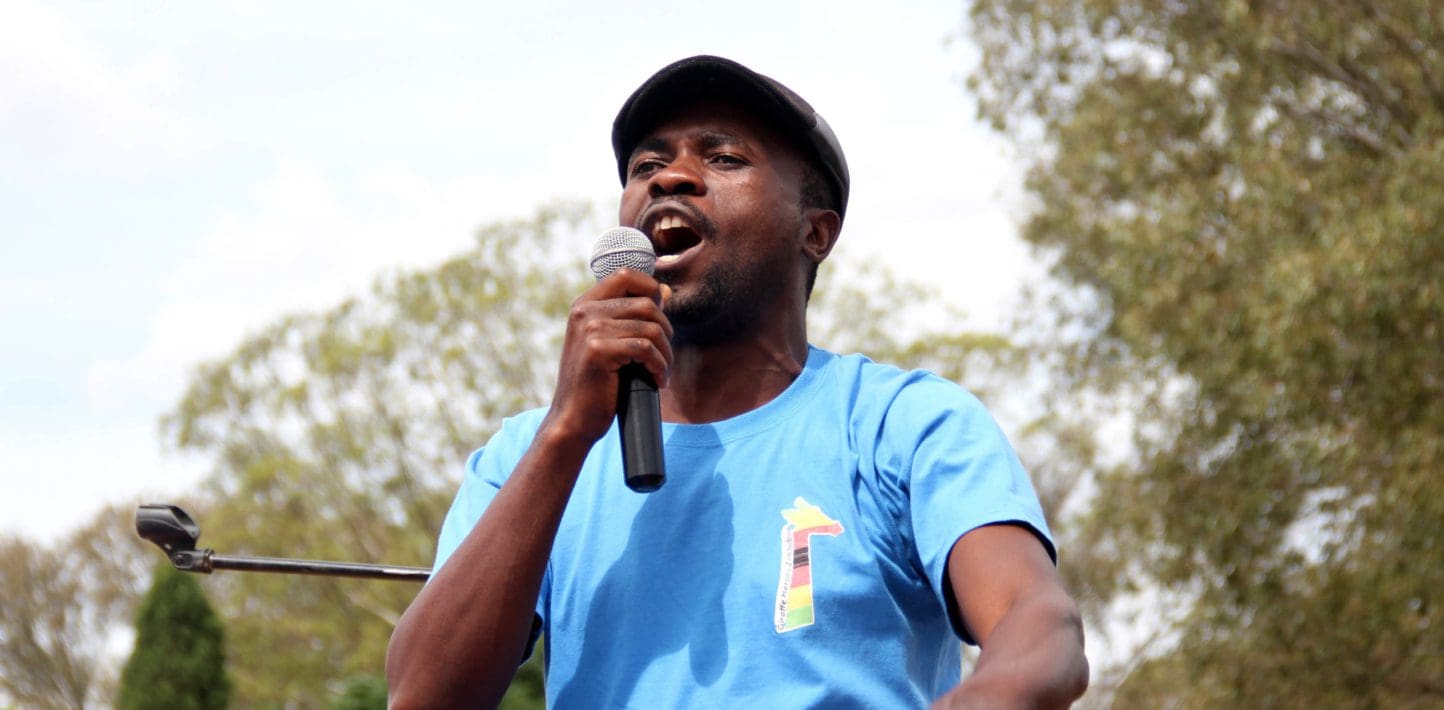
Ahead of the 10-year anniversary of the enforced disappearance of Zimbabwean journalist and pro-democracy activist Itai Peace Dzamara, Amnesty International 7 March 2025 called on authorities to urgently establish an independent, impartial and transparent investigation into his whereabouts.
Dzamara was a leader of the Occupy Africa Unity Square, a pro-democracy protest group. Two days before his enforced disappearance, Dzamara addressed an opposition rally where he called for mass action against Zimbabwe’s deteriorating economic conditions.
Immediately after Dzamara’s abduction, his wife filed a missing person report at Glen Norah Police Station in Harare. The next day, Zimbabwe Lawyers for Human Rights approached the High Court to try to force the state to expend all available resources to investigate and locate Dzamara.
The High Court of Zimbabwe ordered police and state security agents to search for Dzamara and report on their progress every two weeks. However, according to his lawyer, none of the security services have fully complied with the order. Police have reportedly not given any substantial information on the details of their supposed investigation when they submitted reports to the court, and have stopped submitting reports.
“Authorities have yet to conduct any credible inquiry into Itai Dzamara’s fate or whereabouts,” said Tigere Chagutah. “It is time for the authorities to stop pretending and get serious about finding Itai Dzamara and holding accountable whoever is suspected of responsibility for his enforced disappearance.” ..
Since Dzamara’s enforced disappearance, many other activists and human rights defenders in Zimbabwe have suffered harassment, intimidation or torture. In the last two years alone, at least ten opposition activists have been abducted.
Six people were abducted after disputed elections in 2023, including opposition activist and church leader Tapfumaneyi Masaya whose body was later found dumped on a farm. Others were allegedly tortured, some reported being injected with an unknown substance.
Last year, amid a massive crackdown on dissent opens in a new tab before a regional summit held in Harare, security agents pulled four activists off a plane and reportedly tortured them for up to eight hours.
Authorities have not conducted investigations into any of these cases.
“With the perpetrators of Itai Dzamara’s enforced disappearance enjoying complete impunity, it should be no surprise that similar human rights violations continue in Zimbabwe,” said Tigere Chagutah. “Zimbabwe’s government must protect human rights defenders, activists and opposition political parties to ensure they are able to do their work.”
One in four countries report backlash on women’s rights in 2024
Women’s and girls’ rights are facing unprecedented growing threats worldwide, from higher levels of discrimination to weaker legal protections, and less funding for programmes and institutions that support and protect women.
Despite important progress, only 87 countries have ever been led by a woman, and a woman or girl is killed every 10 minutes by a partner or member of her own family. Digital technology and artificial intelligence spread harmful stereotypes, while the digital gender gap limits women’s opportunities.
In the past decade, the world registered a disturbing 50 percent increase in the number of women and girls living in conflict, and women’s rights defenders confront daily harassment, personal attacks and even death. Recent global crises—like COVID-19, the climate emergency, soaring food and fuel prices—are only increasing the urgency to respond.
“UN Women is committed to ensuring that ALL Women and Girls, everywhere, can fully enjoy their rights and freedoms,” affirmed UN Women Executive Director Sima Bahous. “Complex challenges stand in the way of gender equality and women’s empowerment, but we remain steadfast, pushing forward with ambition and resolve. Women and girls are demanding change—and they deserve nothing less.”…
Today’s report also features the new Beijing+30 Action Agenda, a courageous roadmap to complete our unfinished business by focusing on:
A digital revolution for all women and girls: We must ensure equal access to technology, equip women and girls to lead in AI and digital innovation, and guarantee their online safety and privacy.
Freedom from poverty: Investments in comprehensive social protection, universal health coverage, education, and robust care services are needed for women and girls to thrive and can create millions of green and decent jobs.
Zero violence: Countries must adopt and implement legislation to end violence against women and girls, in all its forms, with well-resourced plans that include support for community-based organizations on the front lines of response and prevention.
Full and equal decision-making power: Temporary special measures like gender quotas have proven their effectiveness in rapidly increasing women’s participation.
Peace and security: Fully finance national plans on women, peace and security and gender-responsive humanitarian aid are essential. Frontline women’s organizations, so often the first responders to crisis, must receive dedicated, sustained funding to build lasting peace.
Climate justice: We must prioritize women’s and girls’ rights in climate adaptation, center their leadership and knowledge, and ensure they benefit from new green jobs.
Across these six Actions, putting young women and girls at the heart of our efforts is the best way to guarantee success, both today and tomorrow. These six plus one actions have the potential to unleash progress on women’s rights and put us back on track for 2030.
The Beijing+30 commemoration and the forthcoming UN Commission on the Status of Women (CSW69) are clear opportunities to enshrine this Action Agenda into national policies, regional strategies, and global agreements.
In a pivotal year for women and girls, that is also a year of pushback and crises like no other, let us push women’s rights forward to create a world where all women and girls enjoy equal rights and equal opportunities. We can be the first generation that can live in an equal world.
Ahead of International Women’s Day, Amnesty International’s Secretary General, Agnès Callamard, said:
“The significance of International Women’s Day 2025 cannot be overstated. It is no longer a case of addressing unfinished business on the gender justice front, but one of bracing ourselves to resist active regression and a mounting assault on our rights.
“Thirty years ago, 189 governments came together at the Fourth World Conference on Women to adopt the Beijing Declaration and Platform for Action, a groundbreaking blueprint for strengthening women’s rights endorsed by thousands of activists. Despite significant progress since then, the world has failed to fully deliver on all the promises. From rape and femicide to coercion, control and assaults on our reproductive rights, violence against women and girls still threatens their safety, happiness and very existence in a multitude of ways.
“And crucially, we are now going backwards. The aggressive patriarchal crusade led by President Trump and other powerful leaders against the rights and bodily autonomy of women and gender-diverse people has already had devasting consequences not just in the United States but all over the world. By dismantling domestic efforts to tackle gender-based, racial and other forms of discrimination, erasing recognition of transgender identity, and ending international funding for abortion counselling or referrals, the US administration is shamefully erasing years of hard-fought gains.
“Let us be clear, this trend has deeper roots than President Trump’s recent election. For several years now, brazen anti-rights movements have conspired to turn back the clock to an age when patriarchal oppression was the norm. We cannot afford to be complacent in the face of this gathering storm, for women, girls and LGBTQI+ people are under attack the world over.
“Amnesty International calls on states and non-state actors who believe in universal values and a rule-based international order to resist this accelerated and well-resourced attack against women’s rights. We call on them to strengthen protections of women, girls, LGBTQI+ people and other marginalized groups against gender-based violence. We urge them to recognize and support the vital work of all women human rights defenders and all those on the frontlines of the fight for sexual and reproductive rights, and to implement concrete measures to protect and empower them.
“We appeal to all to respect sexual and reproductive rights and prevent rollbacks, including by revoking any laws that criminalize or punish people for exercising these rights, as well as fully decriminalizing, providing and funding universal access to abortion.
“Finally, this International Women’s Day, Amnesty International reiterates its call on states to recognize gender apartheid under international law as a crime against humanity. Doing so would fill a major gap in the global legal framework and help to combat institutionalized and systematic domination and oppression on the basis of gender, no matter where it occurs.
“Despite suffering setbacks and facing countless attempts to block, divide and undermine us throughout history, feminist, LGBTI+ and grassroots movements keep marching forward. We may be walking a rocky path, but we will never stop fighting for a world where women, girls and gender-diverse people are free to enjoy the full range of human rights without discrimination or fear of reprisal.”
On 7 March 2025 SaferWorld carried a post “Still standing: The resilience of women peacebuilders in a time of crisis”
As we mark International Women’s Day 2025, women’s rights organisations (WROs) and frontline activists in crisis and conflict settings are standing strong despite immense challenges. ..Yet, while their work is more critical than ever, the harsh reality is that many are being forced to operate with dwindling resources, due to global funding cuts and shifting donor priorities towards militarisation, over a genuine investment in long-term peace, security and gender justice.
At a time when conflict, displacement and violence against women are escalating, and misogyny is a core pillar of the far-right agenda, these cuts will only deepen existing inequalities and undermine efforts to build sustainable peace and security globally. The reduction in funding for gender equality and Women, Peace and Security (WPS) initiatives threatens to reverse decades of progress and compounds the global rollback on women’s equality, safety and security. For example, cuts to the UK official development assistance (ODA) budget in 2021 led to a 30 per cent reduction in funding to programming with a focus on gender equality and to a 66% reduction in funding to WROs compared to 2017. WROs and women-led organisations – many of which are small community groups – often struggle to access direct, flexible and long-term funding, despite being the first responders in humanitarian crises and leading conflict prevention and peace efforts. When funding disappears, so do vital services, safe spaces for survivors of gender-based violence and conflict-related sexual violence, safe spaces for women peacebuilders to re-mobilise, legal aid for women and girls who have been displaced, and advocacy that ensures women’s voices are central in peace processes. But despite these constraints, WROs and women peacebuilders are still standing. Their resilience is evident in their ability to adapt, mobilise local resources and continue working in the most difficult circumstances. But resilience alone is not enough – they need meaningful and sustained support.
As the world commemorates International Women’s Day and gathers at the United Nations Commission on the Status of Women (CSW) to discuss gender equality and sustainable development, we reaffirm our commitment to ensuring that women and girls play a central role in peacebuilding and conflict prevention efforts around the world.
The international community, donors, funders and philanthropists will need to act urgently to ensure that WROs are not just surviving but thriving. This means:
Increasing direct, flexible and long-term funding and shifting power to local women-led organisations, women activists and women’s groups – we have seen the value in our work of providing sustained core funding to WROs, moving beyond short-term, project-based grants to ensure continuity of their critical efforts in conflict prevention, peacebuilding and humanitarian response. To make this shift meaningful, international organisations and donors should prioritise direct and flexible funding to frontline WROs rather than channelling resources through large intermediaries. This will ensure that funding reaches those who are best placed to drive lasting change within their communities.
Ensuring women’s leadership in conflict prevention, peace and humanitarian processes – women from all backgrounds and marginalised communities must have a seat at decision-making tables, not just as implementers but as equal partners in shaping policies and solutions that affect their lives.
Standing up for gender equality and women’s rights – urgently pushing back against reversals in women’s rights and gender equality, especially in fragile and conflict-affected contexts, where regressive policies and shrinking civic space are eroding hard-won gains. Women peacebuilders, human rights defenders and frontline activists are already standing up to these challenges, demanding that women’s voices remain central. Their leadership must be protected, amplified and meaningfully supported to sustain progress and counteract the global rollback on gender equality.
Protecting and supporting women human rights defenders and peacebuilding organisations – governments and international actors must recognise and safeguard the work of women human rights defenders and peacebuilding organisations in conflict zones, ensuring they can operate without fear of reprisals.
Strengthening accountability mechanisms – governments and multilateral bodies must hold themselves accountable to their commitments to the WPS agenda and support localisation of the UN Security Council Resolution 1325 on WPS.
Women’s rights organisations are the backbone of peace and resilience in crisis and conflict settings. This International Women’s Day, we celebrate their unwavering commitment – but celebration is not enough. The global community must act with urgency to fund, support and protect these organisations so they can continue to drive meaningful change.
Taner Kılıç, a human rights activist and the final defendant in the so-called “Büyükada Trials,” was acquitted on Tuesday, marking the end of a case widely seen as a stain on Turkey’s human rights record, Turkish media reported.
On July 5, 2017, 10 human rights advocates were detained during a workshop that was taking place in a hotel on Istanbul’s Büyükada, one of the Princes’ Islands. Among those detained were İdil Eser, then-director of Amnesty International Turkey; İlknur Üstün of the Women’s Coalition; Özlem Dalkıran, a member of the Helsinki Citizens’ Assembly; and several others. Two weeks after their detention eight were jailed after a court appearance, while the other two were released pending trial.
While the group was still in detention, pro-government news outlets published reports accusing them of being foreign agents and that the workshop in Büyükada was a “spying activity.” However, an indictment prepared by the prosecutor three months later accused the group of “membership in a terrorist organization” and “aiding and abetting a terrorist organization.” They were linked to the outlawed Kurdistan Workers’ Party (PKK) and the Gülen movement.
Taner Kılıç, Amnesty Turkey’s honorary chair, who wasn’t among those who were initially detained but had been imprisoned on June 6, 2017 for alleged involvement in the 2016 coup attempt, was added to the indictment and his case was merged with the Büyükada trials.
In 2020 he was sentenced to more than six years in prison for links to the Gülen movement.
That same year, Günal Kurşun from the Human Rights Agenda Association, along with İdil Eser and Özlem Dalkıran, were sentenced to two years in prison. Nalan Erkem from the Helsinki Citizens’ Assembly, İlknur Üstün, Iranian-Swedish writer Ali Gharavi, German human rights activist Peter Steudtner, Veli Acu from the Human Rights Agenda Association, Nejat Taştan from the Association for Monitoring Equal Rights and Şeyhmus Özbekli from the Rights Initiative were acquitted.
On October 17, 2022 the Supreme Court of Appeals overturned the sentences, and in the retrial, Eser, Kurşun, Dalkıran and Kılıç were acquitted. However, the prosecutor objected to Kılıç’s acquittal and requested a review of the decision. As a result, the case was sent back to the appeals court. Ultimately, the final ruling favored Kılıç, with his acquittal upheld. [https://humanrightsdefenders.blog/2020/07/03/will-long-running-saga-of-trial-against-the-istanbul-10-end-on-friday-3-july/]
The Büyükada trials were harshly criticized by international human rights organizations such as Freedom House and Amnesty International.
Following the initial convictions, Freedom House said it was “an assault on human rights.”
“The conviction of Taner Kılıç, Günal Kurşun, İdil Eser, and Özlem Dalkıran in this politically motivated case lays bare the Turkish authorities’ ongoing assault on human rights and the justice system’s abdication of its responsibility to protect them,” said Marc Behrendt, director for Europe and Eurasia programs at Freedom House. “We call on the Turkish courts to reaffirm the rule of law and to fulfill their obligation to uphold fundamental rights and freedoms in Turkey.”
Amnesty International called the trials “an ordeal” and said it was a “baseless trial” that “represents a shocking example of the authorities’ attempt to criminalize the defense of human rights with implications for everyone in Turkey.” “This injustice has become a stark symbol of the massive crackdown on human rights and on those who defend them,” said Amnesty International.
Amnesty International invites applications for an 18-month part-time fellowship to explore the global phenomenon of shrinking civic space and document grassroots resistance strategies from marginalized and overlooked voices. Fellows will analyze current trends in civic space restrictions, investigate emerging resistance and human rights movements, and convene activists to co-create a practical toolkit for defending civic space worldwide. The fellowship aims to ensure that Amnesty’s work remains innovative, grounded in lived experience, and contributes to new knowledge on resistance strategies.
Deadline for all applications: 06/03/2024
Rate: Fixed Rate of USD 25,000 for the duration of the fellowship
Location: This fellowship does not include relocation. The consultant must work from their preferred location and possess the necessary work authorization.
OBJECTIVES AND DELIVERABLES
The Fellowship project aims to:
Support human rights defenders, academics, and practitioners with lived experience to document and analyze grassroots resistance strategies against authoritarianism and civic space restrictions in their regions.
Use this research to develop concrete recommendations and practical tools that can inform Amnesty’s global civic space advocacy.
Produce regular short written outputs, including blog posts and opinion pieces, to be independently published.
Convene activists and thought leaders in the region through virtual, in-person, or hybrid meetings to share ideas, incubate new strategies, and foster collective learning.
Deliver a final in-depth think-piece for Amnesty International’s internal strategy and advocacy, with external publication at Amnesty’s discretion.
ESSENTIAL REQUIREMENTS
Fluency in written and spoken English; fluency in a relevant regional language is desirable.
Demonstrated experience working on civic space resistance—either formally (academia, NGOs, journalism, law, policy) or through grassroots activism.
Strong writing and research skills, with experience producing publications related to civic space and human rights activism.
No formal academic qualifications or certifications are required to apply.
To apply, please submit:
A short bio (maximum one page) outlining your recent experience.
Relevant case studies or descriptions of past work on civic space issues.
Your proposed approach to this fellowship opportunity, including how you would structure your research and engagement.
Applications must be in PDF, Word, PowerPoint or Excel format.
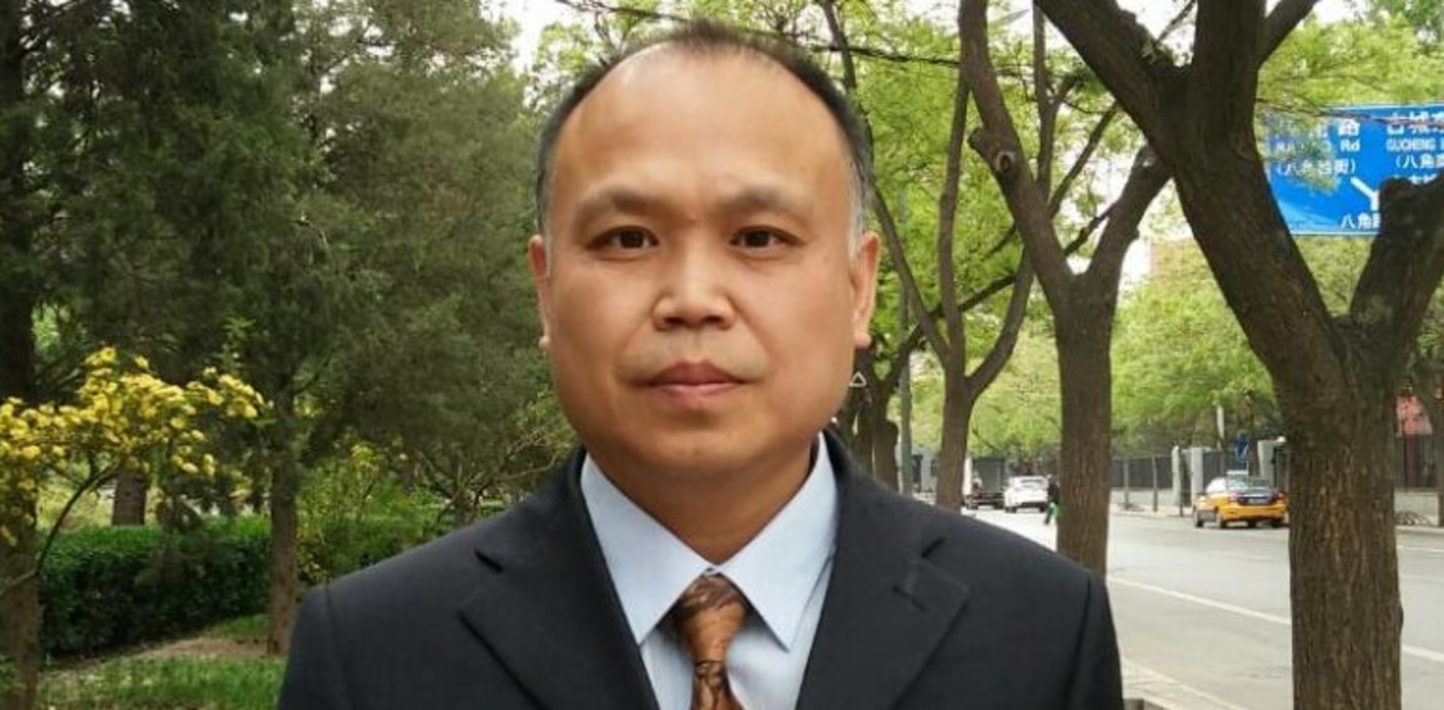
Responding to the rejection of Chinese human rights lawyer see also:s appeal against his three-year prison sentence for “inciting subversion of state power”, Amnesty International’s Interim Regional Deputy Director for Research Kate Schuetze said on 6 January, 2025: “The charges against Yu Wensheng and his wife, activist Xu Yan – who was convicted of the same offence – are entirely baseless. They reveal the authorities’ inability to provide any legitimate justification for their imprisonment.
“The Chinese government has used Yu’s online comments and his numerous international human rights awards as an excuse to label him a threat to national security. But all this really demonstrates is Beijing’s deep fear of human rights defenders who dare to dissent.
“Yu Wensheng and Xu Yan have been imprisoned solely for exercising their right to freedom of expression and they must be released immediately and unconditionally.”






 Hans Thoolen on Human Rights Defenders and their awards