Posts Tagged ‘Academic freedom’

Guidelines for Universities Hosting Human Rights Defenders

March 1, 2025

A landmark document for universities seeking to support HRDs, civil society and democracy was launched this February by York University
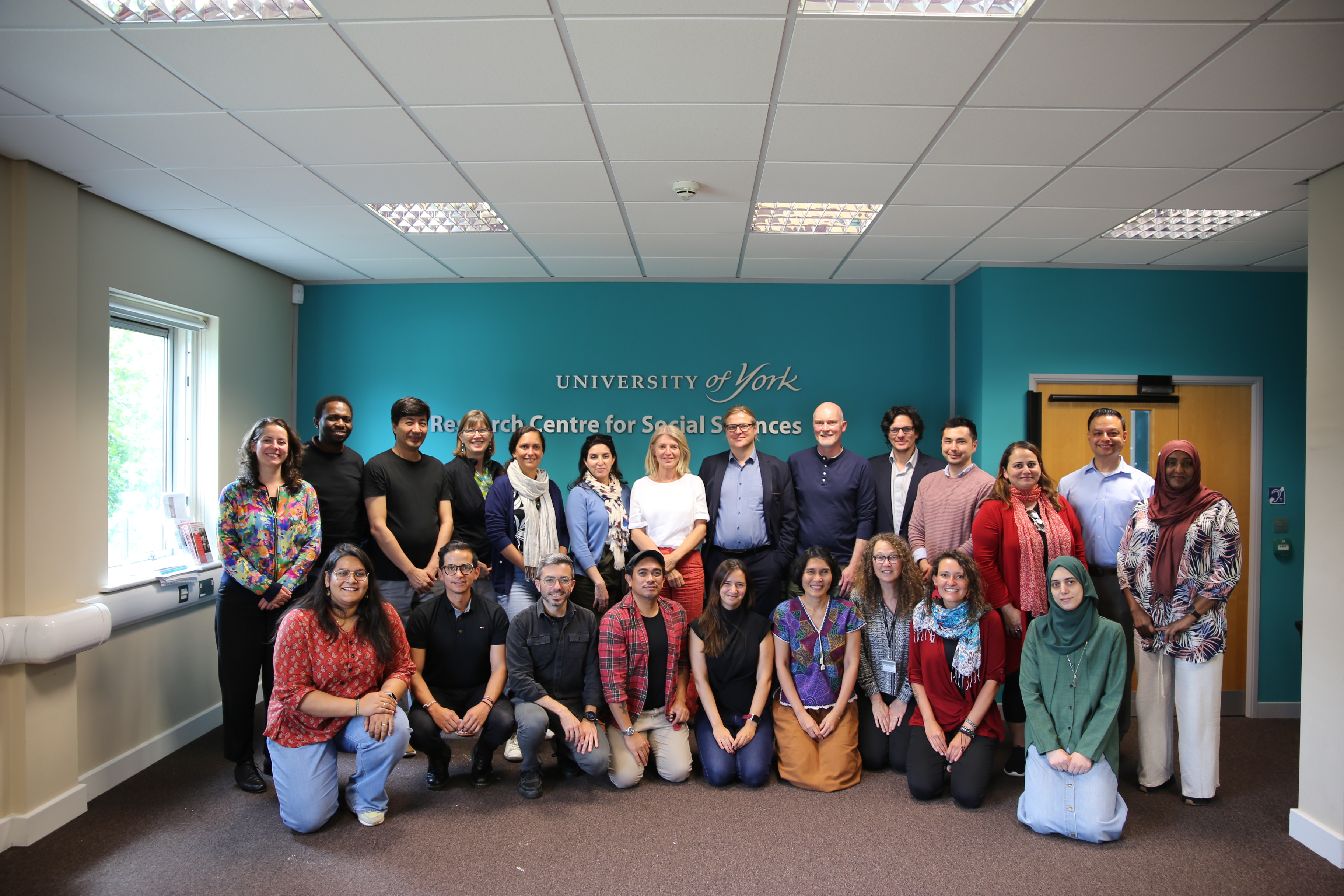
The Guidelines, co-produced through a year-long collaborative process, aim to support universities involved in human rights protection work and share best practice on hosting HRDs.

This initiative, led by the UNESCO Chair in the Protection of Human Rights Defenders and Expansion of Political Space, was facilitated by the Centre for Applied Human Rights (CAHR) at the University of York. Chairholder Professor Paul Gready highlighted the critical need for these guidelines: 

“Civil society is under attack in many parts of the world as it faces legislative, administrative, financial, and physical threats. Universities are spaces that uphold academic freedom and democracy, and they have a crucial role to play in protecting these values everywhere.” 

The Guidelines underscore the importance of universities in the human rights protection ecosystem, and their role in providing a platform for HRDs to continue their vital work in safer environments, and respite while rejuvenating HRDs for their future work.

At an event in July 2024 which discussed a draft of the Guidelines, Sharan Srinivas, Director, Protecting Rights Defenders, Open Society Foundations, emphasised the importance of building a community both within and outside of the university environment: 

“The Guidelines address critical issues in human rights work, such as risk, trauma and psychosocial support. The process has built a strong community, and it’s crucial to continue building solidarity and links within the human rights ecosystem. I hope universities can scale up this work, and I wish you well in your efforts.”

Professor Charlie Jeffery, Vice-Chancellor of the University of York, attended the event, and provided his support for the initiative. He said “Reading the draft Guidelines, and seeing the depth, purpose and quality of the discussions at this stage shows great enterprise and ambition. For me, the question of how to align these Guidelines with university values, and bring universities along with you is key. At York, CAHR not only aligns with our values but continues to push us further in our mission for public good.” 

Professor Gready thanked all the attendees for their generosity in sharing their experiences and expertise. He said “There is an enormous amount of work still to do to ensure these Guidelines have an impact. But these Guidelines will empower universities working with HRDs, who need our support in an increasingly volatile world.”

The UNESCO Chair is planning a series of regional “What Next?” events over the next 6-12 months to discuss how to implement the Guidelines as extensively as possible. To learn more about these events and the Chair’s work, please visit the UNESCO HRD Hub

https://www.york.ac.uk/cahr/news/2025/cahr-launches-guidelines-for-hosting-hrds/

SAR Global Congress June 2024 in Vilnius

December 21, 2023

Scholars at Risk invites you to register for the 2024 Global Congress to be held June 25-27, 2024, in partnership with the European Humanities University (EHU) in Vilnius, Lithuania. Global Congresses are SAR’s largest network events, and bring together leading scholars, advocates, students and professionals to rethink issues of academic freedom and related values, to learn from each other, and to help shape SAR’s agenda for the coming years.

The 2024 Global Congress theme, “Sustainable knowledge: Lessons from universities, scholars and students in exile,” seeks to explore and capture the experience of current and prior generations of academic communities forced into exile by political unrest, repression, disaster and conflict. From Afghanistan to Ukraine, Belarus to Myanmar, Turkey to Sudan, Nicaragua to Israel/Palestine, and beyond. How can we help more scholars and students reach safety and re-establish their academic roles most effectively? How can we help institutions and systems persevere and ultimately build better, stronger, freer higher education communities, whether in exile or upon return home?

Preliminary program:

A detailed program will be provided in early 2024.

  • Pre-congress workshops (June 25-26) On June 25-26, EHU will host SAR members, partners, and SAR-assisted scholars participating in pre-Congress workshops and trainings on hosting at-risk scholars, academic freedom advocacy, promoting higher education values, and regional academic freedom policy-making, among other themes. Side meetings will be organized for SAR sections and partner projects and consortium partners.
  • SAR Global Congress (June 26-27) On June 26-27, SAR and EHU will co-host the Global Congress at the historic Vilnius Town Hall, including keynotes, plenaries, and breakouts, in addition to networking and the 2024 Courage to Think Award dinner. [see https://www.trueheroesfilms.org/thedigest/awards/165B4CC5-0BC2-4A77-B3B4-E26937BA553C]

see also: https://news.harvard.edu/gazette/story/2023/12/human-rights-vision-and-reality/

China continues to imprison whoever disagrees

September 24, 2023

The New York Times of 22 September 2023 and other outlets report on the increasing crackdown on dissent: Huang Xueqin, the journalist who gave #MeToo Victims a voice, and Wang Jianbing, a labor activist, have been accused of inciting subversion.

A casually dressed woman in a broad-brimmed black hat stands against a green wall, holding a sign that reads “Me Too.”
The Chinese journalist Huang Xueqin in Singapore in 2017. She has been in detention in China for two years.Credit…#FreeXueBing, via Associated Press

On 22 September saw the start of their trial after two years of arbitrary detention. A large number of civil society organisations, including the FIDH and the World Organisation Against Torture (OMCT) expressed their deep concern about their conditions of detention and called for their immediate and unconditional release.

Huang Xueqin, an independent journalist who was once a prominent voice in China’s #MeToo movement, and her friend Wang Jianbing, the activist, were taken away by the police in September 2021 and later charged with inciting subversion of state power. Their trial was held at the Guangzhou Intermediate People’s Court in southern China.

Little is known about the government’s case, but the vaguely worded offence with which the two were charged has long been seen as a tool for muzzling dissent. Since China’s top leader, Xi Jinping, came to power in 2012, the ruling Communist Party has sought to essentially silence people who have fought for free speech and political rights. A steady stream of activists, lawyers, tycoons and intellectuals have been put on trial and sentenced.

In Ms. Huang and Mr. Wang’s cases, the authorities questioned dozens of their friends in the months after their detentions and pressured them to sign testimonies against the two, according to Chinese Human Rights Defenders, an advocacy group that is in close contact with many activists.

In the meantime the Washington Post of 22 September reports that Rahile Dawut, a prominent Uyghur academic who disappeared six years ago at the height of the Chinese government’s crackdown in Xinjiang, has been given a life sentence in prison, according to a human rights group that has worked for years to locate her..

Dui Hua, a California-based group that advocates for political prisoners in China, said in a statement Thursday that the 57-year-old professor — who was convicted in 2018 on charges of endangering state security by promoting “splittism” — had lost an appeal of her sentence in the Xinjiang Uyghur Autonomous Region High People’s Court.

At a regular press briefing, Ministry of Foreign Affairs spokesperson Mao Ning said she was “unaware” of Dawut’s case. “What I can tell you is that China is a law-based country and handles relevant cases in strict accordance with the law.”

A former professor at Xinjiang University and leading scholar on Uyghur folklore, she is among more than 300 intellectuals, artists and writers believed to be detained in Xinjiang, amid a government campaign ostensibly aimed at better assimilating China’s Muslim minority and promoting ethnic harmony. Rights groups have accused the Chinese government of committing “cultural genocide” by wiping out previously vibrant local Uyghur culture. See also: https://humanrightsdefenders.blog/2020/11/11/rahile-dawut-recipient-of-courage-to-think-award-2020/

The sentencing of Professor Rahile Dawut to life in prison is a cruel tragedy, a great loss for the Uyghur people, and for all who treasure academic freedom,” said John Kamm, executive director of the Dui Hua Foundation.

https://www.fidh.org/en/region/asia/china/china-call-for-the-release-of-human-rights-defenders-huang-xueqin-and

https://edition.cnn.com/2023/09/21/china/china-metoo-activist-huang-xueqin-trial-intl-hnk/index.html

https://www.washingtonpost.com/world/2023/09/22/rahile-dawut-life-sentence-uyghur-china/

https://www.theguardian.com/world/2023/sep/24/chinese-authorities-uyghur-professor-rahile-dawut

Group of UN Experts on Nicaragua finds escalating persecution against human rights defenders

September 14, 2023

Nicaragua has increased human rights violations and persecution of the opposition as it ratchets up its efforts to stifle dissent, a United Nations group of experts monitoring the country said on 12 September 2023.

The Group of Human Rights Experts on Nicaragua told the U.N. Human Rights Council in Geneva, Switzerland, that the government continues increasing pressure on human rights defenders to force them to leave the country.

That persecution has extended to the education sector, where the government has systematically cancelled the legal status of private universities and seized their campuses.

We have observed the intentional and severe deprivation of economic and social rights, in particular the right to education and academic freedom,” said Jan-Michael Simon, chair of the group. “Today, the university sector of Nicaragua as a whole no longer has independent institutions. Nicaragua is being stripped of its intellectual capital and critical voices, leaving the country’s prospects and development on hold.”

Last month, the government confiscated the prestigious Jesuit-run University of Central America in Nicaragua. It was the latest in a series of actions by authorities against the Catholic Church, but also among some 27 higher education institutions that have been cancelled and confiscated.

The group noted that religious figures, in particular from the Catholic Church, are increasingly targets of attacks and some have been forced to leave the country. Once abroad they are sometimes stripped of their nationality and have their assets in Nicaragua confiscated.

The university and other education institutions were important centers of dissent during the popular protests in April in 2018 that became a referendum on President Daniel Ortega’s administration. Ortega was re-elected after jailing seven potential competitors in 2021.

The government’s pursuit of the opposition has continued and intensified. Students and other opposition figures have been imprisoned or forced into exile.

In February, the Nicaraguan government put 222 prisoners on a plane to the United States, declaring them traitors.

The seriousness of these violations, in conjunction with the other crimes documented to date, perpetrated by reason of the political identity of the group targeted, leads the Group of Experts to conclude that these constitute prima facie the crime against humanity of persecution on political grounds,” the group said.

See also: https://humanrightsdefenders.blog/2022/02/21/nicaragua-death-in-detention-and-sham-trial/

https://www.ohchr.org/en/news/2023/09/group-experts-nicaragua-finds-escalating-persecution-against-dissent-and-crackdown?sub-site=HRC

https://abcnews.go.com/International/wireStory/nicaraguas-human-rights-violations-persecution-dissidents-rise-103128377

Harvard comes to its senses: rescinds decision on Roth

January 20, 2023
Roth poses after an interview with Reuters in Geneva
Picture January 12, 2021. REUTERS/Denis Balibouse

Following the shocking decision not to award a fellowship to Kenneth Roth, the former head of Human Rights Watch (HRW), [see: https://humanrightsdefenders.blog/2023/01/10/pro-israel-lobby-in-usa-seems-to-control-harvards-human-rights-centre/], the Kennedy School at Harvard University said on 19 January that it has reversed its decision.

In the case of Mr. Roth, I now believe that I made an error in my decision not to appoint him as a Fellow at our Carr Center for Human Rights… We will extend an offer to Mr. Roth to serve as a Fellow. I hope that our community will be able to benefit from his deep experience in a wide range of human rights issues,” Elmendorf said.

The decision not to award a fellowship to Roth, first reported by The Nation, drew criticism from some alumni, the American Civil Liberties Union and HRW itself. Freedom of expression advocacy group PEN America said the decision “raises serious questions about the credibility of the Harvard program itself.”

Roth in a statement posted on Twitter on Thursday said he was “thrilled” that Elmendorf had rescinded his decision.

https://www.reuters.com/world/us/harvard-school-reverses-course-will-extend-fellowship-human-rights-advocate-2023-01-19/

Pro-Israel lobby in USA seems to control Harvard’s human rights centre

January 10, 2023

Kenneth Roth wrote in the Guardian of 10 January 2023 “I once ran Human Rights Watch. Harvard blocked my fellowship over Israel. I was told that my fellowship at the Kennedy School was vetoed over my and Human Rights Watch’s criticism of Israel”.

Kenneth Roth said Harvard’s move was a reflection of ‘how utterly afraid the Kennedy School has become of any criticism of Israel’.

. ..If any academic institution can afford to abide by principle, to refuse to compromise academic freedom under real or presumed donor pressure, it is Harvard, the world’s richest university. Yet the Kennedy School’s dean, Douglas Elmendorf, vetoed a human rights fellowship that had been offered to me because of my criticism of Israel. As best we can tell, donor reaction was his concern.

Soon after I announced my departure from Human Rights Watch [see: https://humanrightsdefenders.blog/2022/04/27/after-almost-30-years-kenneth-roth-will-leave-human-rights-watch/], the Kennedy School’s Carr Center for Human Rights Policy reached out to me to discuss offering me a fellowship. ..

.. in anticipation of my stay at the school, I reached out to the dean to introduce myself. We had a pleasant half-hour conversation. The only hint of a problem came at the end. He asked me whether I had any enemies.

It was an odd question. I explained that of course I had enemies. Many of them. That is a hazard of the trade as a human rights defender.

I explained that the Chinese and Russian governments had personally sanctioned me – a badge of honor, in my view. I mentioned that a range of governments, including Rwanda’s and Saudi Arabia’s, hate me. But I had a hunch what he was driving at, so I also noted that the Israeli government undoubtedly detests me, too.

That turned out to be the kiss of death. Two weeks later, the Carr Center called me up to say sheepishly that Elmendorf had vetoed my fellowship. He told Professor Kathryn Sikkink, a highly respected human rights scholar affiliated with the Kennedy School, that the reason was my, and Human Rights Watch’s, criticism of Israel.

That is a shocking revelation. How can an institution that purports to address foreign policy – that even hosts a human rights policy center – avoid criticism of Israel. Elmendorf has not publicly defended his decision, so we can only surmise what happened. He is not known to have taken public positions on Israel’s human rights record, so it is hard to imagine that his personal views were the problem.

But as the Nation showed in its exposé about my case, several major donors to the Kennedy School are big supporters of Israel. Did Elmendorf consult with these donors or assume that they would object to my appointment? We don’t know. But that is the only plausible explanation that I have heard for his decision. The Kennedy School spokesperson has not denied it.

Some defenders of the Israeli government have claimed that Elmendorf’s rejection of my fellowship was because Human Rights Watch, or I, devote too much attention to Israel. The accusation of “bias” is rich coming from people who themselves never criticize Israel and, typically using neutral sounding organizational names, attack anyone who criticizes Israel.

Moreover, Israel is one of 100 countries whose human rights record Human Rights Watch regularly addresses. Israel is a tiny percentage of its work. And within the Israeli-Palestinian context, Human Rights Watch addresses not only Israeli repression but also abuses by the Palestinian Authority, Hamas and Hezbollah.

In any event, it is doubtful that these critics would be satisfied if Human Rights Watch published slightly fewer reports on Israel, or if I issued less frequent tweets. They don’t want less criticism of Israel. They want no criticism of Israel.

The other argument that defenders of Israel have been advancing is that Human Rights Watch, and I, “demonize” Israel, or that we try to “evoke repulsion and disgust”. Usually this is a prelude to charging that we are “antisemitic”.

Human rights advocacy is premised on documenting and publicizing governmental misconduct to shame the government into stopping. That is what Human Rights Watch does to governments worldwide. To equate that with antisemitism is preposterous. And dangerous, because it cheapens the very serious problem of antisemitism by reducing it to criticism of Israel. See also: https://humanrightsdefenders.blog/2022/02/04/amnesty-joins-debate-on-apartheid-versus-palestinians-but-reactions-debase-struggle-against-real-antisemitism/

The issue at Harvard is far more than my own academic fellowship. I recognized that, as an established figure in the human rights movement, I am in a privileged position. Being denied this fellowship will not significantly impede my future. But I worry about younger academics who are less known. If I can be canceled because of my criticism of Israel, will they risk taking the issue on?

The ultimate question here is about donor-driven censorship. Why should any academic institution allow the perception that donor preferences, whether expressed or assumed, can restrict academic inquiry and publication? Regardless of what happened in my case, wealthy Harvard should take the lead here.

To clarify its commitment to academic freedom, Harvard should announce that it will accept no contributions from donors who try to use their financial influence to censor academic work, and that no administrator will be permitted to censor academics because of presumed donor concerns. That would transform this deeply disappointing episode into something positive.

See also the reaction by Gerald L. Neuman: https://hrp.law.harvard.edu/staff-reflections/hks-kenneth-roth-and-the-message-to-human-rights-defenders/

https://www.theguardian.com/commentisfree/2023/jan/10/kenneth-roth-human-rights-watch-harvard-israel

Israeli Court backs Oded Goldreich who wants to donate Israel Prize money to human rights NGOs

April 15, 2022
Israel Prize winner in mathematics and computer science Professor Oded Goldreich will be donating his prize money to five left-wing human rights organisations [@WeizmannScience/Twitter]

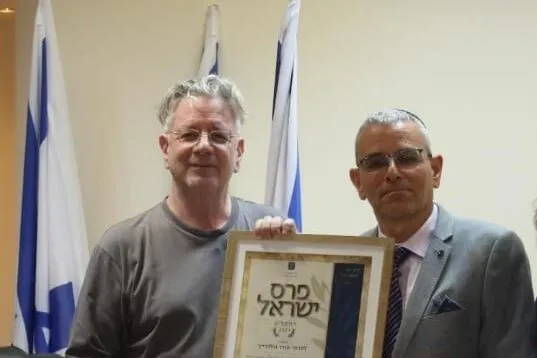
Times of Isrel (TOI ) on 14 April 2022 reports on Professor Oded Goldreich, a recent recipient of the Israel Prize in mathematics, wants to donate his NIS 75,000 ($23,350) in prize money to five human rights organizations, including Breaking the Silence and B’Tselem.

Goldreich, a professor of computer science at Israel’s Weizmann Institute, received the Israel Prize at the offices of the Education Ministry Monday, despite opposition from some government ministers and following a nearly year-long political saga over his alleged support for anti-Israel boycotts.

The five groups that will receive the prize money are Breaking the Silence, Standing Together, Kav LaOved, B’Tselem, and Adalah.

Breaking the Silence collects and publicizes mostly anonymous testimony of alleged IDF mistreatment of Palestinians. The organization has riled Israelis, and drawn ire from officials, who have challenged the authenticity of its anonymous claims and decried its work in international forums.

Standing Together supports and donates supplies to soldiers; Kav LaOved is a legal aid group for disadvantaged workers; B’Tselem documents alleged human rights violations in the West Bank; and Adalah is a legal center for Palestinians.

Last month, the High Court of Justice ruled that Education Minister Yifat Shasha-Biton must hand over the prize to Goldreich, following a petition against her refusal to give him the award filed by the members of the prize committee. The committee had initially awarded the honor to Goldreich last year.

The court ruling was a majority decision, with Justices Yael Willner and Yitzhak Amit siding with the appeal and Justice Noam Sohlberg opposing it.

Shasha-Biton had claimed that an academic boycott of Israel, which she said Goldreich supports, impacts freedom of speech. Amit ruled that “the harm to academic freedom of speech by withholding the prize from professor Goldreich is much worse.”

Denying the honor to a recognized academic over comments he made is “an invitation to monitor, track, and persecute academics in Israel,” Amit said. Shasha-Biton said at the time that she regretted the justices’ decision, but would respect it. She noted that since the court had previously said the education minister should decide the matter, it should have respected her decision.

“A person who calls for a boycott of an Israeli academic institution is not worthy of a state prize, no matter what his achievements or political views are,” she said.

Likud MK and former intelligence minister Eli Cohen tweeted that “Goldreich is the symptom. The root of the problem is the High Court of Justice.”

https://www.timesofisrael.com/controversial-israel-prize-winner-to-donate-grant-money-to-human-rights-ngos/

https://www.ynetnews.com/article/skrb3h4eq

https://www.middleeastmonitor.com/20220414-israel-prize-winner-to-donate-award-money-to-groups-fighting-to-end-the-occupation/

Dutch university closes human rights centre funded by China

January 29, 2022

The Scholars at Risk Media Review of January 2022, carries an in-depth article about a university funding row which has raised fears of Chinese influence, written by Yojana Sharma on 26 January 2022:

The Free University of Amsterdam (Vrije Universiteit Amsterdam or VU Amsterdam) in the Netherlands has said it will return Chinese funding for its Cross Cultural Human Rights Centre (CCHRC) after an embarrassing row over Chinese influence on academia when it emerged that several of the centre’s academics publicly denied China oppresses Uyghur peoples. See also: https://chinachange.org/2020/04/30/one-chinese-gongos-war-against-global-human-rights/

But the row in the Netherlands amid other recent controversies over Chinese funding of university centres and Confucius Institutes in Germany and the United Kingdom has also made university disclosure of foreign funding more urgent, academics said. In 2018, 2019 and 2020, the CCHRC at VU Amsterdam received a subsidy of between €250,000 (US$282,000) and €300,000 (US$339,000) from the Southwest University of Political Science and Law in Chongqing, China.

According to documents obtained by Dutch broadcaster NOS, the Chinese university was the sole financial contributor to the CCHRC during those years, which has raised eyebrows.

VU Amsterdam has said it would return the money it had already received from China for this year, NOS revealed last week. But the university only backed down after the damaging revelations prompted a public outcry and strong statements by the Dutch education minister and others condemning the activities of the centre.

On Wednesday NOS said the activities of the Centre were being suspended, with all its lectures for students cancelled, ascribing the decision to the executive board and deans of the university. The Centre’s activities were already in doubt after the return of funds, making it dependent on the university or other donors for its continued survival.

The row blew up just as the Dutch education ministry is due to present its National Guidelines on Knowledge Security on 31 January and to announce its ‘Government-wide knowledge security front-office’, which is expected to have an advisory role and support universities in identifying risks.

It also followed the publication last week of the European Commission ‘toolkit’ for universities on how to deal with foreign interference.

Dutch Education Minister Robbert Dijkgraaf responded swiftly and unequivocally to the report, saying he was “very shocked” that the funding arrangement signalled possible academic dependence.

“It is urgent and sensible that the Free University now takes action quickly. Scientific core values such as academic freedom, integrity and independence must always be guaranteed,” he said in a statement.

The minister added: “It is important that Dutch knowledge institutions are and remain alert to possible risks of undesired influence by other countries and that they take adequate measures to safeguard academic core values, especially when it comes to universal values like human rights.”

The centre runs an academic journal and organises conferences. Its mission, laid down in the financing agreement with the Chinese university, is to draw attention to a “global view of human rights”, and specifically to the way in which non-Western countries such as China view human rights.

University’s lukewarm initial response

After a lukewarm initial response when the university merely underlined that “as befits the Free University, the research of the CCHRC is independent, interdisciplinary, dialogical and socially relevant”, it added to its statement just hours later, saying “even the appearance of dependence is unacceptable” and announced that it was “taking appropriate measures”, including halting the funding from China.

The university said it has not yet decided whether it will also refund subsidies from previous years, but it said it would first conduct an investigation to determine “whether the independence of the institute’s research has been safeguarded on all fronts”.

The CCHRC website noted in October 2020 that a delegation of people affiliated to the centre ‘recently’ visited the western Chinese region of Xinjiang… the CCHRC website noted: “The situation we encountered in the four cities in this trip did not reflect the grim situation as depicted in the Western reports. There is definitely no discrimination of Uyghurs or other minorities in the region.”

CCHRC Director Tom Zwart, professor at Utrecht University, who is also a frequent guest at Chinese state events and on Chinese state television, told NOS any similarities between the centre’s positions online and those of the Communist Party were “coincidental” and were not steered by any direct influence. Zwart described the CCHRC website as a place for “uncensored free thought”, ascribing the comments on its webpages to individuals “who do not represent the organisation as a whole”.

On 26 January CCHRC released a new statement on its website saying the website would be “temporarily taken offline” in order “to check whether a sufficiently clear distinction is made between statements made on behalf of the Centre and opinions and observations made in a personal capacity.”

It added: “[The] Centre explicitly endorses the conclusions of the United Nations regarding the systematic violation of the Uyghur human rights. In this vein, the Centre’s director, in the presence of members of the Chinese State Council and the Politburo, called on 8 April 2021 to respect and protect the rights of Uyghurs and stop repressive anti-terrorism policies.”

Ingrid d’Hooghe, an expert on China-Europe relations and senior research fellow at the Leiden Asia Centre, Leiden University in the Netherlands, said: “The director of the Centre said in an interview which was also on TV that they were fully independent, there was nothing that made them say what they were saying. But apparently it did not cross their mind that even if they are independent, it doesn’t look like it.

Dutch academic Lokman Tsui, a researcher on digital freedoms and a former assistant professor at the Chinese University of Hong Kong, said via Twitter: “Important to note: until this year, they [the university in Chongqing] were the only funder. Problematic, because it’s hard to be independent if your research centre relies on one single funder. Problematic also, because public universities in China are closely affiliated with the Chinese Communist Party.”

Tsui added: “But whether the research centre is independent or not is also beside the question. The more important question is: Why is the university allowing its integrity and its reputation to be compromised by accepting money meant to validate China’s atrocious human rights record?”

Need for disclosure legislation

“We need legislation that universities have to make funding public,” Fulda said, pointing to Section 117 of the United States Higher Education Act which requires universities that receive foreign gifts of US$250,000 or more within a calendar year to file a disclosure report to the government.

Other draft foreign influence bills, including the Senate Bill S.1169 in the US, are currently attempting to tighten those rules, including reducing the amount that has to be declared by institutions and individuals if the funding comes from certain countries such as China, after a number of universities failed to report substantial foreign gifts under Section 117.

An amendment to the UK Higher Education Bill tabled on 12 January in the House of Commons would require disclosures of foreign funds of £50,000 (US$68,000) going back 10 years.

“The question is, if the Dutch government or other governments in Europe issued new regulations where universities were forced to make these contracts public, whether it would change things, and I think it would,” said Fulda.

Leiden Asia Centre’s d’Hooghe said: “There is no regulation that forces people to register somewhere what kind of collaboration they have. With new regulations in Australia and, to a certain extent, in the US and Canada, you have to become public with that kind of information. Not so in the Netherlands.”

“It’s not necessarily that people want to keep it a secret, it’s just not something that is done routinely. So at top levels in the university, but often even at the faculty level, the departments don’t have a good overview of exactly what kind of research is being done with whom, and how this is financed,” she said

The Association of Universities in the Netherlands (VSNU) published a “Framework for Knowledge Security” in July 2021 that outlined risks and the need for monitoring research collaboration, as well as recommending that universities set up their own internal ‘knowledge security advisory team’ to include experts such as cybersecurity specialists.

The focus is on building risk awareness but does not go as far as requiring disclosure of foreign funding. Some universities have pointed out that they cannot ‘police’ research or researchers on behalf of the government.

Who will investigate?

The Netherlands Inspectorate of Education has not indicated that it will carry out a broader investigation into China influence at universities in the country, saying in a statement following the VU Amsterdam row: “No other signals about Chinese influence are known to the inspectorate.”

Sophie Richardson, China director at Human Rights Watch, said in a statement that the Inspectorate of Education “would be wise to do more homework in this area”.

“In a decade of documenting Chinese government threats to academic freedom around the world, Human Rights Watch has found threats at universities from Australia to the United States, and proposed a code of conduct to help mitigate these risks.

“One key step: universities should publicly disclose all direct and indirect Chinese government funding and a list of projects and exchanges with Chinese government counterparts on an annual basis,” she said.

“In showing its permeability to Chinese government influence, the Free University shouldn’t limit its response simply to returning the funding. It should urgently assess whether students and scholars of and from China on its campus are subjected to harassment or surveillance,” which she noted had been well documented elsewhere, notably in Australia, Canada, the UK and the US.

“University leadership and scholars should assess whether censorship and self-censorship have eroded the curriculum or classroom debate,” Richardson added.

“The Free University should also join forces with counterparts across Europe – from Berlin to Cambridge to Budapest – who have faced similar problems, and agree to share information and adopt common standards with the goal of collectively resisting Beijing’s efforts to curtail academic freedom. The list of potential participants – supposedly ‘free’ universities – is disturbingly long.”

EU toolkit for universities: will it make a difference?

The EU issued a toolkit for universities on 18 January. Although it is comprehensive, d’Hooghe noted that “these rules are not binding because the EU has no competence in the area of education”. Universities are outside Brussels’ remit.

She saw it more as a “service to EU member states who still don’t have national rules, who find it very difficult to develop them or don’t have the capacity to develop them”.

While many ongoing collaboration projects with Chinese universities continue, despite academics and researchers being unable to travel due to pandemic restrictions, d’Hooghe said she knew of many who “are staying away” from starting new projects with China, in part due to risks, including reputational risks.

But she noted that legislation on a national level regarding foreign influence could be tricky. “University autonomy is regarded as an important value and very important for science to advance, so universities are very reluctant to be limited by binding regulations.”

https://www.hrw.org/news/2022/01/20/dutch-university-hit-chinese-government-funding-scandal

seehttps://www.theguardian.com/education/2025/nov/03/uk-university-halted-human-rights-research-after-pressure-from-china

Ahmadreza Djalali honored with 2021 Courage to Think Award

November 10, 2021

Scholars at Risk (SAR) announced on 9 November 2021 that Dr. Ahmadreza Djalali is the recipient of its Courage to Think Award for 2021. Dr. Djalali, a prominent scholar of disaster medicine sentenced to death in Iran, is being recognized for his struggle for academic freedom and connection to the international academic community. For more on the Courage to Think Award see: https://www.trueheroesfilms.org/thedigest/awards/165B4CC5-0BC2-4A77-B3B4-E26937BA553C.

Dr. Djalali’s wife, Vida Mehrannia, will accept the award on Dr. Djalali’s behalf at SAR’s virtual symposium, Free to Think 2021, on December 9. Information and registration for the free, online event is available here <https://www.scholarsatrisk.org/event/free-to-think-2021-and-courage-to-think-award/> .
Dr. Djalali is an Iranian-Swedish scholar who has held academic positions at Karolinska Institute, in Sweden; the Università del Piemonte Orientale, in Italy; and Vrije Universiteit Brussel, in Belgium. In December 2020, he was awarded a Scholars at Risk Fellowship at Harvard University, in the United States.
The continued imprisonment, extreme sentence, and mistreatment of Dr. Djalali in custody should be of grave concern for anyone who cares about the ability of scholars to work safely,” said Rob Quinn, executive director of SAR. “No scholar should face a death sentence, solitary confinement, and withholding of medical care for their academic or scientific work.
Not only has Dr. Djalali helped the development of the field of disaster medicine at higher education institutions, but he has also put his expertise into practice by supporting communities impacted by crises. Dr. Djalali provided medical aid, health services, and education to communities impacted by floods, earthquakes, and other disasters in Iran, including the 2003 Bam earthquake. While at the Center for Research and Training in Disaster Medicine, Humanitarian Aid, and Global Health (CRIMEDIM), in Italy, Dr. Djalali dedicated his research to resilience and performance of health systems, hospitals, and medical and rescue staff, and trained hundreds of humanitarian and medical staff around the world.
Dr. Djalali was arrested in April 2016 during a trip to Iran to participate in a series of academic workshops. It is strongly believed that he was targeted because of his ties to the international academic community, and the belief that he might trade his freedom in exchange for working for the Iranian intelligence service. On October 21, 2017, Dr. Djalali was sentenced to death for “corruption on earth,” based on unsubstantiated allegations that he had provided intelligence to a foreign government. Dr. Djalali was denied the right to appeal the conviction and sentence and has suffered from torture, ill-treatment, and a growing number of medical complications while in state custody.
On November 24, 2020, Iranian authorities moved Dr. Djalali to solitary confinement in preparation to carry out his death sentence. Dr. Djalali spent five nightmarish months in solitary confinement, awaiting imminent execution, until April 14, 2021, when authorities transferred him to a multiple-occupancy cell. See also: https://humanrightsdefenders.blog/2020/11/26/as-iran-prepares-to-execute-ahmadreza-djalali-the-world-reacts/
For years, Dr. Djalali has been denied access to appropriate medical care for numerous health complications that worsened while he was in solitary confinement. These include leukemia, severe weight loss, chronic gastritis, low heart rate, and hypotension, gallstones, partial paralysis of the right foot, indirect inguinal hernia, hemorrhoid and fissures, low blood cell count, low levels of calcium and vitamin D, malnutrition, dyspepsia, and depression.
Authorities continue to deny Dr. Djalali access to his lawyer and his family in Iran, and from making calls to his wife and children in Sweden.

Call for Nominations for Courage to Think award 2021

June 23, 2021

Scholars at Risk is seeking nominations for the 2021 Courage to Think Award, which will be presented during an award ceremony at its annual Free to Think event in November 2021. Please submit a nomination by July 31, 2021, here.

The Courage to Think Award recognizes individuals, groups, or institutions that have demonstrated an exemplary commitment to protecting scholars and promoting academic freedom, whether through their professional work, private or community service, or by facing personal risk. For more of this award and its laureates, see: https://www.trueheroesfilms.org/thedigest/awards/165B4CC5-0BC2-4A77-B3B4-E26937BA553C