Archive for the 'Witness' Category

Witness’ Sam Gregory gave Gruber Lecture on artificial intelligence and human rights advocacy

June 23, 2025
Sam Gregory Headshot

Sam Gregory delivered the Spring 2025 Gruber Distinguished Lecture on Global Justice on March 24, 2025, at 4:30 pm at Yale Law School. The lecture was co-moderated by his faculty hosts, Binger Clinical Professor Emeritus of Human Rights Jim Silk ’89 and David Simon, assistant dean for Graduate Education, senior lecturer in Global Affairs and director of the Genocide Studies Program at Yale University. Gregory is the executive director of WITNESS, a human rights nonprofit organization that empowers individuals and communities to use technology to document human rights abuses and advocate for justice. He is an internationally recognized expert on using digital media and smartphone witnessing to defend and protect human rights. With over two decades of experience in the intersection of technology, media, and human rights, Gregory has become a leading figure in the field of digital advocacy. He previously launched the “Prepare, Don’t Panic” initiative in 2018 to prompt concerted, effective, and context-sensitive policy responses to deepfakes and deceptive AI issues worldwide. He focuses on leveraging emerging solutions like authenticity infrastructure, trustworthy audiovisual witnessing, and livestreamed/co-present storytelling to address misinformation, media manipulation, and rising authoritarianism.

Gregory’s lecture, entitled “Fortifying Truth, Trust and Evidence in the Face of Artificial Intelligence and Emerging Technology,” focused on the challenges that artificial intelligence poses to truth, trust, and human rights advocacy. Generative AI’s rapid development and impact on how media is made, edited, and distributed affects how digital technology can be used to expose human rights violations and defend human rights. Gregory considered how photos and videos – essential tools for human rights documentation, evidence, and storytelling – are increasingly distrusted in an era of widespread skepticism and technological advancements that enable deepfakes and AI-generated content. AI can not only create false memories, but also “acts as a powerful conduit for plausible deniability.” Gregory discussed AI’s impact on the ability to believe and trust human rights voices and its role in restructuring the information ecosystem. The escalating burden of proof for human rights activists and the overwhelming volume of digital content underscore how AI can both aid and hinder accountability efforts.

In the face of these concerns, Gregory emphasized the need for human rights defenders to work shape AI systems proactively. He stressed that AI requires a foundational, systemic architecture that ensures information systems serve, rather than undermine, human rights work. Gregory reflected that “at the fundamental (level), this is work enabled by technology, but it’s not about technology.” Digital technologies provide new mechanisms for exposing violence and human rights abuse; the abuse itself has not changed. He also pointed to the need to invest in robust community archives to protect the integrity of human rights evidence against false memories. Stressing the importance of epistemic justice, digital media literacy, and equitable access to technology and technological knowledge, Gregory discussed WITNESS’ work in organizing for digital media literacy and access in human rights digital witnessing, particularly in response to generative AI. One example he highlighted was training individuals how to film audiovisual witnessing videos in ways that are difficult for AI to replicate.

As the floor opened to questions, Gregory pointed to “authenticity infrastructure” as one building block to verify content and maintain truth. Instead of treating information as a binary between AI and not AI, it is necessary to understand the entire “recipe” of how information is created, locating it along the continuum of how AI permeates modern communication. AI must be understood, not disregarded. This new digital territory will only become more relevant in human rights work, Gregory maintained. The discussion also covered regulatory challenges, courts’ struggles with AI generated and audiovisual evidence at large, the importance of AI-infused media literacy, and the necessity of strong civil society institutions in the face of corporate media control.A recording of the lecture is available here.
https://law.yale.edu/centers-workshops/gruber-program-global-justice-and-womens-rights/gruber-lectures/samuel-gregory

Witness publishes video Guide for environmental defenders

April 26, 2023

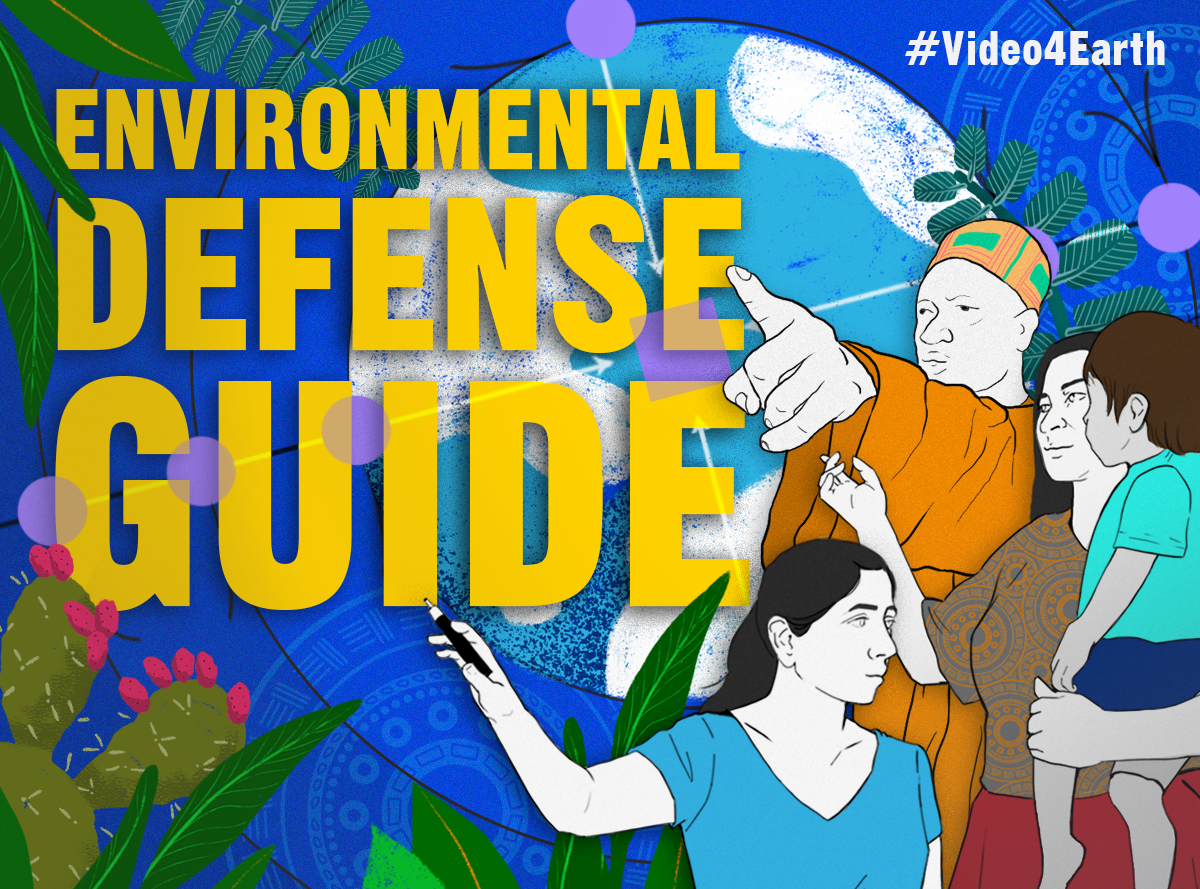
WITNESS recognizes the great risks that environmental defenders take to stand up to power, and understand that the collection of visual evidence is only one strategy communities use to protect their environmental human rights. It wants to support this movement by sharing information and good practices to help community-based documenters collect visual documentation of environmental human rights crimes and violations so that it can be effectively used in advocacy and accountability processes. This Guide is primarily for community members who:

  • Live where industries that mine, extract oil and gas, build dams, cut timber, clear land for agri-business developments, grab land for high-end real-estate development, and do so in a way that violates the environmental human rights of communities
  • Want to—and can—safely document these violations with phones, cameras, and drones
  • Want to—and can—safely use the documentation to protect human rights
  • Would like to help train others to safely collect relevant and reliable visual documentation for human rights advocacy and accountability.

see also: https://humanrightsdefenders.blog/2022/03/02/human-rights-high-commissioner-bachelet-urges-support-for-environmental-defenders/

Sam Gregory finally in the lead at Witness

April 5, 2023

On 4 April 2023 WITNESS announced that Sam Gregory will be stepping into the role of Executive Director after two decades of service to the organization. Sam is a highly respected human rights leader and award-winning technologist who brings over 25 years of global experience innovating and leading interventions at the intersections of video, technology and human rights.

If Sam’s name sounds familiar – it should! [Also from this blog, see: https://humanrightsdefenders.blog/tag/sam-gregory/] He has dedicated over two decades to WITNESS, most recently directing programs and strategy. In that capacity, Sam has supported WITNESS’ global teams and partners in more than 100 countries addressing urgent issues such as land rights, state violence, and war crimes – as well as spearheading our pioneering work on emerging technologies such as deepfakes and AI. Sam brings both the history and an ambitious vision for the future of WITNESS.

Sam steps into this role at an exceptional moment for those concerned with information technology and human rights. This era of omnipresent video, growing misinformation, synthetic media, and declining trust in a shared reality presents a serious threat to the idea of truth itself. Sam has led a global effort to ‘prepare, not panic’ for the new digital landscape, fighting for preservation of truth, trust in critical voices, and media integrity efforts. He is also a fierce advocate for centering the voices of those most removed from decision-making centers yet most profoundly impacted by the proliferation of new technologies.

Read more about him here: https://www.witness.org/portfolio_pag…

Ukraine: visually documenting violations

March 1, 2022

Witness stands with the victims of Russia’s unlawful attacks. In a conflict that is rife with disinformation, false narratives, and manipulated media, the importance of capturing and preserving trusted, authentic accounts of human rights crimes cannot be underestimated.   They are sharing resources for those on the ground in Ukraine and Russia – who are navigating immense risks as they capture and share video documentation of potential human rights violations and war crimes. And, they are sharing resources for those of us witnessing from a distance, so that we amplify grassroots truths and decrease the spread of mis/disinformation. 

Guidance for Frontline Documenters working with and learning from activists documenting and preserving visual evidence of war crimes and human rights violations from Syria and Yemen to Brazil, it developed its peer-reviewed and field tested Video As Evidence Field Guide. Earlier they also worked with Ukrainian civil society and human rights groups during the 2014-15 conflict to prepare versions in Ukrainian and Russian

In Ukrainian: ПОЛЬОВИЙ ПОСІБНИК “ВІДЕО ЯК ДОКАЗ” Field Guide: Video as Evidence wit.to/VAE-UA  

In Russian: ПОЛЕВОЕ ПОСОБИЕ «ВИДЕО КАК ДОКАЗАТЕЛЬСТВО» Field Guide: Video as Evidence wit.to/VAE-RU  

https://www.witness.org/


Witness’ animated film “We Have Rights” to be used when documenting ICE Arrests

August 27, 2020

It wil take only 3 minutes to watch this well-done animated film “We Have Rights When Documenting ICE Arrests” which Witness co-created for the We Have Rights Campaign.   


Witness reminds us of the power of images through the Floyd Case

June 13, 2020

The video of the gruesome murder of George Floyd ignited protests around the world in solidarity against racism and white supremacy supported by the government and enforced by police. But we know for every video of police violence, there are many deaths that were not recorded that still deserve our attention and support.

Founded on the power of video to bring attention to the breach of human rights during the Rodney King arrest, beating, filming, and subsequent uprising 28 years ago, WITNESS continues to train and guide people to use their cell phone video camera to record incidents of human rights abuse, then share it with the media and justice system to prosecute wrongdoers. 

Today, the systems and patterns of police abuse are as rampant as ever. What has changed is our collective ability to document these moments. 

We help people document state violence, push for accountability, and implement structural change. In the past few weeks, we’ve seen a spike in demand for our guidance on how to shoot and share footage of police violence safely, ethically, and effectively. Our tips continue to inform ethical and strategic filming of police misconduct and protests.  Video is a tool to show violence. But more importantly, it’s a tool to show patterns. It forces the broader public to pay attention, and authority to change. We have seen commitments from local and state leaders and we encourage more people around the world to break down military and police power.  And to film it.  Ambika Samarthya-Howard Head of Communications WITNESS

https://mailchi.mp/witness.org/the-power-of-video-to-film-injustice?e=e2d40a1193

See also: https://humanrightsdefenders.blog/2020/04/05/policy-response-from-human-rights-ngos-to-covid-19-witness/

Have a smartphone – become a human rights defender!

August 10, 2017
Witness’ Asia-Pacific team adapted this video from WITNESS’ tip sheet on Filming Hate – a primer for using video to document human rights abuses. “Filming Hate” guides activists through documenting abuses safely, providing context, verifying footage, and sharing that footage responsibly. It may help millions of bystanders become witnesses, and hence human rights defenders, spurred to combat hatred by wielding a powerful weapon: their smartphone. Published on 6 August 2017. Full tipsheet available on our Library at: https://library.witness.org/product/f…     Music credit: ‘India’ — http://www.bensound.com Creative Commons Attribution licence (reuse allowed)

Are human rights videos making a difference?

September 3, 2014

Yvette Alberdingk Thijm, the Executive Director of WITNESS, posted an important piece in the Huffington Post of 2 September on how to make sure that the increase in human rights videos uploaded to Witness (and the same for other NGOs) make a real difference. After citing several examples of such footage of violence, conflict, and human rights abuses, she reflects as follows: “When I watch these videos with such potential to transform human rights advocacy, I am concerned about the gaps and the lost opportunities: the videos that cannot be authenticated; the stories that will be denied or thrown out of court — or worse, will never reach their intended audience; a survivor’s account lost in a visual sea of citizen media. Mostly, I worry about the safety of the person who filmed, about her privacy and security.

…….

“When WITNESS was created, we talked about the power of video to “open the eyes of the world to human rights violations.” Today, our collective eyes have been opened to many of the conflicts and abuses that are going on around us. This creates, for all of us, a responsibility to engage. I am deeply convinced that citizen documentation has the power to transform human rights advocacy, change behaviors, and increase accountability. But let’s make sure that all of us filming have the right tools and capabilities, and that we apply and share the lessons we are learning from citizen witnesses around the world, so that more people filming truly equals more rights.”

How Do We Ensure That More People Using Video Equals More Rights? | Yvette Alberdingk Thijm.

Witness makes available beta version of the InformaCam App

January 10, 2014

The reliability of images captured and transmitted by HRDs is crucial to keep the value of their hard-won evidence high . The InformaCam application proposed by Witness uses the built-in sensors in modern smartphones as well as wi-fi, bluetooth, and cell-tower information to create a snapshot of the environment in which an image or video was captured. This validates the date, time and location of capture. Digital signatures and encryption ensure that the images haven’t been tampered with and can only be opened by the intended recipient.

I have always tried to keep you up to date on technological developments that can benefit human rights defenders. On 5 September 2013 I listed several new ideas (Natalia bracelet;  Panic Button; Silent Circle; Security in a Box)  and added the question who among the hard-pressed human rights defenders on the ground have the time and energy to sort through all this and pick what is most meaningful for them?.

 InformaCam – Secure & Verified Mobile Media.