The virtual ink on my post this morning is hardly dry when I see a case reported by Front Line on anti-mining protesters in Malaysia who were released on conditions that infringe their right to freedom of expression, while Mintpress of 10 July published a more detailed piece by Carey Biron on the intricacies of the new UN proposal to negotiate a legally binding treaty to prevent human rights abuses by transnational corporations.
On 8 July 2014, six human rights defenders were released on condition a social media ban, as well as monthly reporting to the police station. Six members of the Malaysian environmentalist movement Himpunan Hijau (“Green Assembly”) were detained on charges of illegal assembly and rioting, following their participation in a protest on 22 June 2014 calling for the closure of Australian mining company, Lynas Corporation. The Lynas Advanced Materials Plant – a rare earth processing plant being set up in Kuantan – will potentially impose tonnes of toxic waste on the local community. On 22 June 2014, around 1000 activists and local residents gathered to protest Lynas Corporation’s activities at Jalan Bandaran in Gebeng. At around 4:30pm, while the demonstrators were sitting peacefully, the police moved in and reportedly started beating and arresting the protesters. Allegedly, the human rights defenders did not disperse when Kuantan police issued a directive to do so. ..The lawyer for the human rights defenders rejected the conditions, arguing that this injunction was an unconstitutional infringement of his clients’ right to freedom of expression. Furthermore, the judge in Kuantan ordered an injunction (a ‘gag order’) against the six human rights defenders not to discuss their case on social media, and they must also report to the police station once per month.
The article in Mintpress entitled “Without the US and EU on board, what might become of a UN proposal to negotiate a legally binding treaty to prevent human rights abuses by transnational corporations?“ is so relevant that I include the full text below:
In a landmark decision at the end of June, the United Nations Human Rights Council voted to allow negotiations to begin toward a binding international treaty around transnational companies and their human rights obligations.
The move marked a key success for activists worldwide who have been working for decades to jumpstart such a process. Yet while the development is being lauded by many groups, others are cautioning that the treaty idea remains unworkably broad and could even divert attention from a nascent international mechanism already working toward similar goals.
That mechanism, known as the Guiding Principles on Business and Human Rights, was unanimously adopted only in 2011. Formal conformance to these principles has thus far seen only stuttering, initial success. And while the same session of the Human Rights Council approved a popular second resolution to now strengthen implementation of the Guiding Principles process, some worry the new treaty push will divert energy.
Indeed, this was the rationale offered by the U.S. delegation to the council, explaining why the United States voted against the start of treaty negotiations. The U.S. now says it will not take part in the intergovernmental working group that will initiate discussions around a binding agreement. It is also urging other countries to boycott the process.
“We have not given states adequate time and space to implement the Guiding Principles … this resolution is a threat to the Guiding Principles themselves,” Stephen Townley, the U.S. representative to the U.N. Human Rights Council, said on June 26.
“The proposed Intergovernmental Working Group will create a competing initiative, which will undermine efforts to implement the Guiding Principles. The focus will turn to the new instrument, and companies, states and others are unlikely to invest significant time and money in implementing the Guiding Principles if they see divisive discussions here in Geneva.”
The European Union also voted against the treaty process in June, and had initially suggested that it, too, would not take part in the intergovernmental negotiations process. Sources tell MintPress News, however, that the EU could now be rethinking this position.
Home-state skepticism
The treaty push has come primarily from countries in the Global South, spearheaded particularly by Ecuador and backed by South Africa, Bolivia, Cuba and Venezuela. Ecuador floated the initial resolution in September, and others voting for the measure in June included China, India and Russia.
Perhaps reflecting this division, Townley warned in his speech that the treaty process would “unduly polarize these issues.” Certainly, any treaty on transnational corporate rights obligations would be largely meaningless if neither the U.S., nor the EU, takes part, given that the vast majority of the world’s major corporations are based in these countries.
“The development of a treaty on business and human rights is an important opportunity to strengthen corporate respect for human rights, the protection of human rights defenders working on issues of corporate accountability, and access to justice for victims of corporate human rights violations,” Phil Lynch, director of International Service for Human Rights, a Geneva-based advocacy group, told MintPress in an email.
“If a treaty is to be effective in fulfilling these purposes, however, it needs to be developed in close consultation with all relevant States, including those that headquarter many transnational corporations such as the US and EU States, together with other stakeholders such as human rights defenders and affected communities.”
Influential voices in the global business community, which have vociferously pushed against binding rights commitments for decades, have expressed broad concern over the idea of a treaty.
“While the business community continues to be fully engaged to effectively implement voluntary commitments for respecting human rights, no initiative or standard with regard to business and human rights can replace the primary role of the state and national laws in this area,” Viviane Schiavi, a senior policy manager with the International Chamber of Commerce, a prominent lobby group, said in astatement.
The chamber expressed its “deep concern” over the new treaty process. Like others, it is warning that the new aims will divert attention away from the Guiding Principles.
The U.S. delegation, meanwhile, has already laid down an important marker in this argument. Immediately following last month’s vote, Townley, the U.S. representative, noted that any treaty “would only be binding on the states that became party to it.”
Excuse for inaction
Among supporters of the new treaty process, response to the concerns and stances of the U.S. and EU has been highly critical. While nearly all such groups continue to support the Guiding Principles, their concern has always revolved around the voluntary nature of these principles. A binding treaty, on the other hand, would likely include enforcement mechanisms for recalcitrant corporations and governments alike.
“The U.S. position is misguided. The real threat to the U.N. Guiding Principles comes from the reluctance of governments to give effect to them,” Peter Frankental, director of the economic relations program at Amnesty International U.K., a watchdog group, told MintPress.
“Our main concern with the U.S. delegation’s stance on the Human Rights Council resolution is that it offers governments an excuse for inaction.”
Gauging progress on the Guiding Principles is complex, and it is undeniable that the global environment today around the idea of corporate rights obligations has seen a sea change from just a decade ago. Companies around the world have moved to conform their corporate policies with a variety of related concerns, though much more remains to be done.
At the same time, analysts have told MintPress that only around eight governments worldwide have come out with national action plans on how they will implement the Guiding Principles, as urged by the Human Rights Council in June. Despite its strong support for the Guiding Principles, the U.S. also has yet to release such a plan. (Last week, Danish and U.S. groups released a comprehensive report offering a roadmap for countries aiming to put together such a plan.)
“It has been clear from the outset that the U.N. Guiding Principles alone would not be enough,” Frankental said. “They must be complemented by effective regulatory measures, including with extra-territorial effect, to address the continuing human rights protection gaps relating to the adverse impacts of business.”
Parallel processes
Advocates say that these two processes can now proceed alongside one another — implementing the voluntary Guiding Principles while simultaneously pursuing a binding treaty, which would likely take a decade or more to complete.
“There is no reason why countries and businesses should not continue working on implementing the [Guiding Principles]. It has taken civil society, governments and companies years to agree on a set of criteria that businesses need to uphold when operating at an international level,” Anne van Schaik, accountable finance campaigner at Friends of the Earth Europe, a watchdog group, told MintPress.
“They should continue to work on this, but now there is a parallel process that ensures that if companies do not abide by international human rights obligations … they can be hold responsible.”
Global civil society groups are also preparing parallel pressure campaigns. Van Schaik says her office will begin pushing governments to step up their drafting of national action plans on implementation of the Guiding Principles, while simultaneously trying to convince countries that voted against the recent treaty resolution to honor it.
“We think this threat is another example of how the Western countries are trying to bully NGOs and other countries in order to weaken support for the Ecuador resolution,” she said.
“We have built in very short time a coalition that consists of more than 610 organizations … That shows there is huge support for this idea, and that people, organizations as well as 95 countries are fed up with transnational corporations’ cowboy style [of] producing where and how they want to. Enough is enough, and that was shown in Geneva last month.”
Overly ambitious?
Even among some of the most forceful proponents of stronger accountability around corporate rights abuses, however, there remains significant concern about the current scope and potential impact of the treaty process.
As it stands today, for instance, the language of the Ecuador resolution appears to focus solely on multinational corporations, leaving national companies accountable solely to domestic legislation and regulation.
As John Ruggie, the Harvard professor who led the drafting of the Guiding Principles as a U.N. rapporteur, wrote in a nuanced analysis published Tuesday, this would hold foreign companies involved in last year’s Rana Plaza disaster in Bangladesh solely responsible for the catastrophe. The treaty would place no liability on the garment factory’s local owners for the fire and building collapse, which killed more than 1,100 workers.
Ruggie, who remains a widely admired figure, also expressed concern that the treaty’s scope, as currently envisioned, is unworkably broad, warning that “neither the international political or legal order is capable of achieving [such an agreement] in practice.” Speaking also of a “resurgent polarization” seen over the past year around the issue, Ruggie warns that proponents on both sides are becoming increasingly, and unhelpfully, dogmatic.
Ultimately, observers say the ideas behind the Guiding Principles are now increasingly entrenched across the globe. But implementation remains up in the air, and it is here that the treaty’s impact is uncertain.
“What is at issue today is not whether we will have a treaty or not. What matters today are the effects of a treaty process on the politics of the corporate accountability movement and the effects of a treaty process on the likelihood of regulation by governments,” Mark Taylor, a senior researcher at the Fafo Institute for Applied International Studies, a Norwegian think tank, told MintPress.
“The challenge for activists — no matter where they sit with respect to a treaty — is to identify an advocacy strategy that can pressure states to deliver actual protection and accountability. Making sure any treaty process is narrowly focused, for example, on judicial remedies, would be a step in the right direction.”
The U.N. Human Rights Council’s new intergovernmental working group on a treaty around business and human rights is expected to begin talks next year.
Contentious Start For UN Process Toward Business And Human Rights Treaty.
https://thoolen.wordpress.com/2014/07/11/news-un-human-rights-council-agrees-to-start-negotiating-about-a-binding-treaty-against-human-rights-abuses-by-corporations/
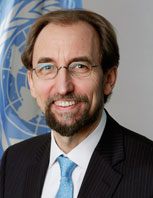 On 8 September 2014 the new UN High Commissioner for Human Rights, Zeid Ra’ad Al Hussein, addressed for the first time the Human Rights Council, and many will have been listening for clues about where he stands on key issues, how ‘activist’ he is likely to be etc. As the speech was rather long and covered a huge variety of issues, it is not easy to draw any conclusions yet. The fist half addressed issues of war and violence and in particular the humanitarian crises of today.