Archive for the 'UN' Category

UN High Commissioner for Human Rights under pressure for providing names of human rights defenders

February 10, 2017

There has been a slew of accusations coming from the Government Accountability Project (GAP) – a US based whistleblower NGO – against the UN and in particular the Office of the UN High Commissioner for Human Rights. The latest piece by Bea Edwards is entitled “Trouble at UN OHCHR: Investigate the High Commissioner” (9 February 2017). While I am most supportive of the OHCHR and its successive high commissioners including the current incumbent who has been vocal and courageous in taking on powerful adversaries [see: https://humanrightsdefenders.blog/tag/zeid-raad-al-hussein/ and especially https://humanrightsdefenders.blog/2016/09/14/un-high-commissioner-for-human-rights-states-may-shut-my-office-out-but-they-will-not-shut-us-up/], I have to admit that there are some worrying aspects, especially the latest accusation that a senior official “made a habit of providing the Chinese Government with the names of Chinese human rights activists who applied for accreditation to the sessions of the Human Rights Council before they traveled to Geneva“. UN Watch – known for its anti UN bias – took this issue and even linked it to the death of Cao Shunli [https://humanrightsdefenders.blog/tag/cao-shunli/]. The High Commissioner issued on 2 February 2017 a forceful statement entitled “UN rights office categorically rejects claims it endangered NGOs” (see http://www.ohchr.org/EN/NewsEvents/Pages/DisplayNews.aspx?NewsID=21139&LangID=E). In this statement it says that “Chinese authorities, and others, regularly ask the UN Human Rights Office, several days or weeks prior to Human Rights Council meetings, whether particular NGO delegates are attending the forthcoming session. The Office never confirms this information until the accreditation process is formally under way, and until it is sure that there is no obvious security risk.” I give both document below but must say that the UN statement leaves open the possibility that Governments are given the names of those who intend to attend before they have left their country. Read the rest of this entry »

Murder of human rights defender Ko Ni in Myanmar

February 1, 2017

On 30 January 2017 the United Nations Special Rapporteur on the situation of human rights in Myanmar, Yanghee Lee, joined her voice to the many that have strongly condemned the brutal murder of Ko Ni, a prominent Muslim lawyer and constitutional law expert, who was also the legal adviser to the National League for Democracy (NLD). Mr. Ko Ni was shot and killed outside Yangon Airport on Sunday 29 January after returning from Indonesia where he had been part of a Government-led delegation attending an interfaith study tour. A suspect has been arrested.

“This appears to be another shocking example of a reprisal against those speaking out on behalf of the rights of others,” the expert said, recalling her recent end of visit statement, where she highlighted her concern at the increasing risks faced by human rights defenders, lawyers, journalists and others working on sensitive issues. [see below“I am shocked to the core by the senseless killing of a highly respected and knowledgeable individual, whom I have met during all of my visits to the country, including most recently just over a week ago,” Ms. Lee said. She expressed her sincerest condolences to his family, and the family of taxi driver Nay Win killed in the same incident after he bravely attempted to apprehend the gunman. The Special Rapporteur underlined that, “U Ko Ni’s passing is a tremendous loss to human rights defenders and for Myanmar.”

Also Front Line Defenders deplores in strong term the killing of human rights defender U Ko Ni. His profile [https://www.frontlinedefenders.org/en/profile/u-ko-ni] describes him as human rights defender and human rights lawyer. He was the legal advisor for the National League for Democracy. He participated in the pro-democracy protests known as the 88 Uprising and was a former political prisoner. Upon release, he became actively involved in the interfaith peace movement and advocated for the rights of Muslim citizens in Myanmar. He strongly opposed the country’s race and religion protection bill which was introduced in August 2015 and which restricted interfaith marriage and caused a rise in anti-Muslim sentiment. In 2016, he helped found the Myanmar Muslim Lawyers Association. He also wrote six books on good governance and various human rights issues. U Ko Ni’s daughter reported that the human rights defender often received threats for speaking out against the continuing influence of the military on politics.

As recently as 25 January 2017 the Special Rapporteur had expressed her fears of government retaliation following her visit to Myanmar. She expressed concern that people may face reprisals for meeting with her. Lee recently concluded an official visit in the area during which individuals shared accounts of human rights abuses by the government. Some of the statements came from those in a hard labor camp as well as survivors of a village burning. Lee fears these individuals who met with her will face reprisals from those who believe the accounts given are contrary to the government. “I am deeply concerned about those with whom I met and spoke, those critical of the Government, those defending and advocating for the rights of others, and those who expressed their thoughts and opinions which did not conform to the narrative of those in the position of power.” (Lee will submit her report on Myanmar in March to the UN Human Rights Council).

(Ms. Yanghee Lee (Republic of Korea) was appointed by the UN Human Rights Council in 2014 as the Special Rapporteur on situation of human rights in Myanmar.) See also:

https://humanrightsdefenders.blog/2015/03/19/myanmar-backsliding-by-prosecuting-human-rights-defenders-instead-of-perpetrators/

https://humanrightsdefenders.blog/2015/01/21/u-n-rapporteur-on-myanmar-called-whore-by-radical-buddhist-monk/

Sources:

JURIST – UN rights expert fears government retaliation following visit to Myanmar

http://reliefweb.int/report/myanmar/myanmar-un-rights-expert-condemns-senseless-killing-respected-muslim-lawyer-ko-ni

2017 (7): Trump’s first orders to cut global funding and treaties

January 26, 2017

The ‘ink’ of my previous post [https://humanrightsdefenders.blog/2017/01/26/2017-6-predictions-on-trump-and-the-un-prophets-or-cassandras/] has hardly dried and I see the piece written by Max Fisher in the New York Times of 25 January 2017 that states that the latest draft orders suggest that President Trump intends to pursue his campaign promises of withdrawing the United States from international organizations: Read the rest of this entry »

2017 (6): predictions on Trump and the UN – prophets or Cassandras?

January 26, 2017

The U.N. Human Rights Chief Fixes for a Fight with Trump

Photo credit: FABRICE COFFRINI/AFP/Getty Images

Already on 22 November 2016 Colum Lynch posted in “Foreign Policy” an insightful piece entitled: “The U.N. Human Rights Chief Fixes for a Fight with Trump”.  It records the thinking of senior UN staff and NGO leaders who are going to confront a Donald Trump with a hard-line national security team. They fear that a Trump presidency could spur a global retreat from international human rights principles, marking the dawn of American leadership (see long extracts from the piece below) on green. Now – on 26 January 2017 – Daniel Warner in his weekly blog in the Tribune de Geneve wrote a post entitled: “The U.N., Trump and Cassandra” in which he reports that a bill was introduced into the U.S. House of Representatives on January 3 calling for the total disengagement of the United States from the United Nations. The bill, H.R. 193 – known as American Sovereignty Restoration Act of 2017 – has been referred for deliberations to the House Foreign Affairs Committee. The bill – tried before in 2015 – may not pass, but the writer fears it reflects the tenor of the current Trump administration. See his words below marked in blue.

—-

The U.N. high commissioner for human rights, Prince Zeid Ra’ad al-Hussein, informed his staff in the weeks following the U.S. election that they will have to serve as the front line in an international effort to check any excesses on the human rights front. A chief concern, officials say, is that if the U.N. doesn’t call out its most powerful member for straying from universally accepted human rights norms, the rest of the world will be emboldened to ditch them. “We are going to speak up,” one U.N. official told Foreign Policy. “It’ll be rough, but if [Trump] puts any of those ghastly campaign pledges into action we will condemn.”

…..Still, Trump’s campaign pledged to restore waterboarding, deport millions of undocumented migrants, and ban Muslims from traveling to the United States. …

The U.N.’s approach to human rights is particularly tricky for the incoming U.N. secretary-general, António Guterres, a former Portuguese prime minister who headed the U.N. refugee agency for nearly 10 years. Guterres has been an outspoken champion of refugees, pressing European governments, as well as the United States, to resettle far larger numbers of refugees. Two weeks after Trump called for his ban on Muslims last December, Guterres admonished the Security Council, saying, “Those that reject Syrian refugees because they are Muslims are the best allies in the recruitment propaganda of extremist groups.” But Guterres may be constrained as the leader of the United Nations, a job that requires a close relationship with the United States and other big powers. ……

That makes it likely that Zeid will take the lead on human rights. Throughout the U.S. presidential campaign, Zeid, a Muslim prince from the Jordanian royal family, has repeatedly excoriated Trump, telling reporters in December that his threat to ban Muslim travel to the United States is “grossly irresponsible.” In September, Zeid included Trump, along with France’s Marine Le Pen and Dutch far-right politician Geert Wilders, on a list of “populists, demagogues, and political fantasists” who promoted their arguments grounded in “half truths and oversimplification.” [see also: https://humanrightsdefenders.blog/2016/09/14/un-high-commissioner-for-human-rights-states-may-shut-my-office-out-but-they-will-not-shut-us-up/]

Some U.N. officials say Zeid’s criticism of the U.N.’s most powerful country could strengthen his hand in disputes with other U.N. members, particularly those from the developing world who have long accused the United Nations of applying greater pressure on small powers for breaching human rights norms, while letting the United States and other big powers off the hook. Other U.N. officials fear that Zeid may be exposing the organization to a battle with the U.N.’s most powerful players that he can’t win. In September, Russia’s U.N. ambassador Vitaly Churkin formally protested Zeid’s public denunciations of Trump and other European nationalists. “Prince Zeid is overstepping his limits from time to time, and we’re unhappy about it,” Churkin told The Associated Press.

More recently, Zeid tangled with China over his attendance at a ceremony for the Martin Ennals Award for Human Rights Defenders, which honored a Uighur economist, Ilham Tohti, who is serving a life sentence on charges of fomenting separatism and violence. A senior Chinese official appealed to Zeid not to attend the event, according to a U.N. official. But Zeid refused, insisting that he had an independent mandate to shed light on human rights violations wherever they occur, including China.

Even before Trump’s election, U.N. officials believed that human rights were under threat from authoritarian governments, including China, Egypt, Russia, and Turkey, which have been engaged in major crackdowns on civil liberties at home. “They are backsliding on human rights, but from a position of weakness,” said Kenneth Roth, executive director of the New York City-based advocacy group Human Rights Watch. “Both [Vladimir] Putin and Xi Jinping are engaging in the worst crackdowns in their countries in two decades, each driven by the terror as to how their countries will react to a weakening economy; they’re trying to snuff out in advance opposition they anticipate.”

Roth said there is a real danger that Trump and other populist leaders will accelerate the curtailment of human rights. “The entire human rights movement is weary about Trump,” he said. “It’s not clear what his values are. That is why his initial appointees are so important.” Dimitris Christopoulos, president of the International Federation for Human Rights, fears Trump’s controversial positions, including torture and deportation, would embolden smaller countries. When big powers, particularly the United States, tread on human rights the world tends to follow. If smaller countries, such as Burundi and Kenya, hear Trump threatening to cast out foreign refugees they may choose to act in kind, Christopoulos said. Saudi Arabia threatened this year to cut funding to U.N. relief programs and to lead a walkout by Muslim states from the United Nations if the U.N. didn’t lift its name from a list of countries that killed or maimed children in armed conflict, according to a senior U.N. official. In its defense, Saudi officials noted that the United States had shielded its closest Middle East ally, Israel, from being included on the same list in 2015. It was only fair, therefore, that Riyadh be spared the shame of being included on the list...

Rights advocates say the rising tide of nationalism and populism in Europe and the United States represents a potentially existential threat to the human rights movement, as governments that once championed the cause on the international stage head into retreat. Britain’s new prime minister, Theresa May, has railed against “left-wing human rights lawyers” who are seeking the prosecution of British soldiers alleged to have committed war crimes in Afghanistan and Iraq. She has proposed that London withdraw from key provisions of the European Convention on Human Rights that potentially expose British troops to prosecution. A generation of European nationalist leaders, including Le Pen and Wilders, who had been on the fringe of the European political spectrum, have seen their electoral prospects grow in the face of spreading anti-immigrant sentiment. That has left German Chancellor Angela Merkel as one of the “only outspoken leaders on human rights,” Roth said. In her first statement following Trump’s election, Merkel said she would work closely with Trump, but only on the basis of “democracy, freedom, respect for the rule of law, and the dignity of men regardless of origin, skin color, religion, gender, or sexual orientation.”

———-

Daniel Warner further wrote: Fervent supporter of H.R. 193 and prominent Republican Rand Paul (Rep-KY) said in 2015: “I dislike paying for something that two-bit Third World countries with no freedom attack us and complain about the United States… There’s a lot of reasons why I don’t like the U.N., and I think I’d be happy to dissolve it,” added the Kentucky senator. Or, as John Bolton, once U.S. ambassador to the U.N. and now being considered for the number two spot in the State Department famously said: “There’s no such thing as the United Nations. The Secretariat building in New York has 38 stories. If it lost ten stories it wouldn’t make a bit of difference.”
This time, following the election of Donald Trump and the U.S. abstention on a Security Council resolution to condemn the continued construction of illegal Israeli settlements, the bill has a better chance. The mood in Washington of “America First” will try to repeal all multilateral agreements such as the Trans-Pacific Partnership and the North American Free Trade Agreement as well as weakening multilateral organizations like the North Atlantic Treaty Organization.
Does the introduction of the bill matter? For International Geneva, it certainly does. While the United States might not withdraw from the U.N., the negative attitude of the current administration towards multilateralism and multilateral organizations will have obvious negative consequences for Geneva, sometimes called “The Rome of Multilateralism.” Even with U.S. participation, the international system will lack United States leadership during the Trump presidency. The visit of the Chinese President to the U.N. Office in Geneva and his speech at Davos were clear signs of shifting multilateral leadership.
I heard a comment from someone within the Washington bureaucracy that gives some hope.  Her feeling was that career civil servants will slow down if not block radical changes in U.S. foreign policy. The slow wheels of government will crush any unilateral attempts by the Trump leadership. The ship of state will carry on with deep divisions between the political appointments and career civil servants. This would be an indirect check on the incoming politicians.
On January 21, one day after Trump’s inauguration, millions marched against the Trump presidency throughout the United States. Millions more marched around the world for women’s dignity and many against Donald Trump as well. Will anyone march to save multilateralism and the U.N?

——

Sources:

The U.N. Human Rights Chief Fixes for a Fight with Trump | Foreign Policy

The U.N., Trump and Cassandra : Le blog de Daniel Warner

see also:

https://humanrightsdefenders.blog/2017/01/23/2017-4-canadas-year-of-real-human-rights-action/

https://humanrightsdefenders.blog/2017/01/24/2017-5-with-trump-us-president-sweden-must-stand-up-for-human-rights/

Palestinian human rights defenders continue to be persecuted

December 21, 2016

Sources:

Amnesty slams Israel’s detention of Palestinian human rights defender – Middle East Monitor

https://electronicintifada.net/blogs/ali-abunimah/israel-threatens-expel-reporter-who-asked-apartheid-question

http://www.huffingtonpost.com/david-palumboliu/israel-puts-celebrated-_b_13590812.html

http://ohchr.org/EN/NewsEvents/Pages/DisplayNews.aspx?NewsID=21041&LangID=E

http://www.ohchr.org/EN/NewsEvents/Pages/DisplayNews.aspx?NewsID=16906&LangID=E

Sampling International Human Rights Day 2016: be a human rights defender. .

December 9, 2016

International Human Rights Day commemorates the day on which, in 1948, the United Nations General Assembly adopted the Universal Declaration of Human Rights. In 1950, the Assembly passed resolution 423 (V), inviting all States and interested organisations to observe 10 December as Human Rights Day. The theme this year is: Stand up for someone’s rights today, in other words: be a human rights defender. .

There is a lot going on during this period, so I just give a small sample (10!) from different parts of the world: Read the rest of this entry »

Pakistani human rights defender Hina Jilani is the new President of OMCT

November 30, 2016

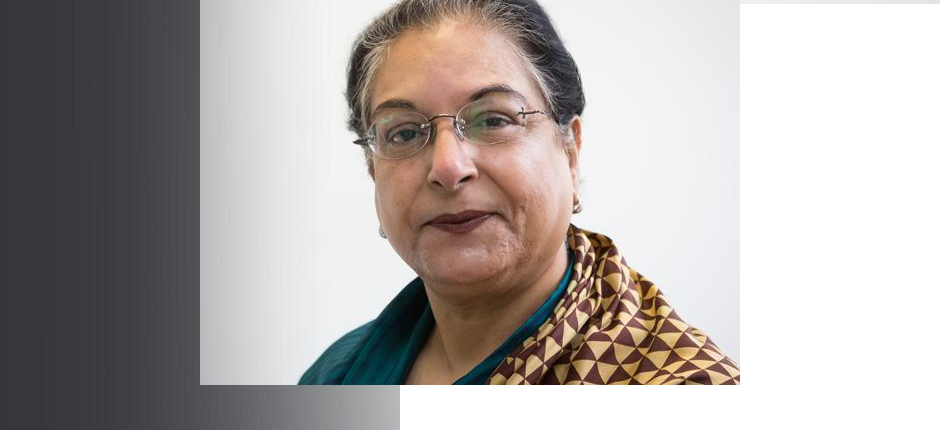
On 29 November 2016 OMCT announced that Hina Jilani, a prominent Pakistani human rights defender, is the newly elected President of the World Organisation Against Torture (OMCT).hina-jilani-biography-1_940x430

Ms. Jilani was elected to a four-year term on Saturday 26 November at the organization’s General Assembly meeting held every four years. Addressing OMCT partners and members of its SOS-Torture network of more than 200 non-governmental organizations around the world, she said she would focus on boosting its cohesion to make its voice louder. “We can’t just condemn points of view; we have to convince people,” she said. “We have to show them that these values did not come out of nothing, that they are worth being preserved.  We have to show that undermining these values is not in the best interest of humanity.

Hina Jilani created Pakistan’s first all-women law firm and co-founded Pakistan’s first legal aid centre in 1986. In 1991 helped set up a shelter for women fleeing violence and abuse and presented one of the first cases of domestic violence in the country. Ms. Jilani was also one of the founders of the Human Rights Commission of Pakistan, an NGO promoting human rights in Pakistan. She also created Pakistan’s Women Action Forum, a prominent women’s rights group whose campaigns have been at the heart of the democracy movement in the country. Ms. Jilani has been a lawyer at the Supreme Court of Pakistan since 1992.

At the international level, she was the first United Nations Special Representative of the Secretary-General on the situation of Human Rights Defenders from 2000 to 2008. She was appointed in 2006 and 2009, respectively, to the UN International Fact-Finding Commissions on Darfur and on the Gaza Conflict.

Her expertise and lifelong dedication to human rights has earned her international recognition. In 2013, she joined The Elders, a group of statesmen, peace activists and human rights advocates, brought together by Nelson Mandela.  In 2000 she was honoured with the Amnesty International Ginetta Sagan Award for Women’s Rights, just a year after she was awarded the Human Rights Award by the Lawyers Committee for Human Rights. In 2008 she received the human rights award of the American Bar Association.

For more posts on Hina see: (https://thoolen.wordpress.com/tag/hina-jilani/OMCT-LOGO

She spoke after a two-day forum organized on the occasion of the 30th anniversary of OMCT and its SOS-Torture network, along with UN Human Rights Commissioner Zeid Ra’ad Al-Hussein, who shared concern that many countries were “returning to authoritarianism”, human rights defenders around the world were under “enormous pressure”, and that reprisals and arbitrary detentions were increasingly done under the pretext of fighting terrorist activities. The High Commissioner said he feared that declarations such as United States President-elect Donald Trump’s campaign declarations (condoning ill treatment such as “waterboarding”, for instance) might inspire other Governments to resume resorting to torture, hence exacerbating the practice around the world.

She also seemed undeterred by the consequent risks of wavering support of multilateral institutions, since the US election and the British “Brexit” vote triggered a wave of speculation as to a possible shift in funding priorities away from international aid, and since the withdrawal by several States such as South AfricaBurundiGambia and Russia from the International Criminal Court, triggered concerns over the deconstruction of a system built up to protect victims of serious human rights violations. “This is not an easy time for human rights defenders, but when has it been for us? We keep our determination despite all the challenges,” she told activists. “The global donors must understand that if there is hesitation in supporting these human rights defenders and their networks it will only reduce our outreach. But we did it before we had money. We have no reason to believe that this is a favour to any one organization or community.”

Ms. Jilani said that OMCT was one of the organizations best placed to uphold human rights and combat torture, adding: “It has the experience, the capacity, and the knowledge to take this challenge forward.”

Source: Prominent Pakistani human rights defender Hina Jilani becomes new OMCT President / November 29, 2016 / Statements / OMCT

Virgin Islands’ Genevieve Whitaker selected for United Nations Human Rights Fellowship

November 30, 2016

I am using this little known country (Virgin Islands) to highlight a little-known programme: the Virgin Islands Consortium reports that Deputy Elections System Supervisor Genevieve Whitaker has been selected as a fellow for the 2016 Fellowship Programme for the People of African Descent of the UN.

Ms. Whitaker has been involved with human rights from an early age. She received her law degree from Stetson University College of Law, serving as a public service fellow and received the Public Service Recognition Award from Stetson’s Advocacy Board for her exemplary service locally and worldwide. She was instrumental in the establishment of Stetson’s Amnesty International Student chapter. She obtained certificates in human rights and humanitarian law during her legal studies at the University of Oxford School of Law and Santa Clara University Law School, respectively. There she joined Amnesty International USA, and United Nations Association of the USA. Ms. Whitaker is also a former board member of the DC-based Partners for Freedom & Democracy, a nonprofit organization for which she organized a human rights-based youth leadership development summit that took place in Abuja, Nigeria in 2008.

In 2009 she co-founded the Virgin Islands Youth Advocacy Coalition, Inc., a nonprofit established to promote the political and civic engagement of the young people of the Virgin Islands. Ms. Whitaker’s human rights work also includes service on the Board of the Caribbean Institute for a New Humanity, which housed the Virgin Islands Reparations Movement (ACRRA). Ms. Whitaker served as an international election observer with the Organization of American States for the February 25, 2016 Jamaican Parliamentary elections.

Ms. Whitaker says she plans on bringing back to the territory the knowledge she gains during her training to promote the important work of decolonization, by obtaining support among the key stakeholders who will be dedicated to the cause for the human right to self-determination, she says. The goal is centered on achieving the political, social, economic and cultural right advancement for people of African descent and all those negatively affected/impacted by the resultant human rights abuses tied to our colonial status, according to Ms. Whitaker.

Source: Genevieve Whitaker Selected For United Nations Human Rights Fellowship –

ISHR 2017 training course for human rights defenders now open for applications

November 12, 2016

 The International Service for Human Rights (ISHR) is calling for applications for its flagship Human Rights Defenders Advocacy Program in 2017 – the extensive training programme for human rights defenders. The training will take place in Geneva between 29 May and 9 June 2017 and provides defenders with opportunities to put their advocacy skills directly into action at the 35th session of the UN Human Rights Council.

ISHR’s Human Rights Defender Advocacy Programme (HRDAP) equips defenders with the knowledge and skills to make strategic use of the international human rights system. It also provides an opportunity for participants to directly engage in lobbying and advocacy activities at the UN level to effect change on the ground back home. As well as receiving training modules on all the UN human rights mechanisms from a range of experts, participants will also have the opportunity to build networks in Geneva and around the world, carry out lobbying of UN member States and UN staff, and learn from peers from a range of regions working on a range of human rights issues.

Participants will take part in:

  1. A short online learning component, prior to face-to-face training, to enable you to consolidate your existing knowledge and develop your advocacy objectives;
  2. Intensive training in Geneva during June, to coincide with the 35th session of the Human Rights Council. The training will focus on ways to effectively use international human rights mechanisms and to influence outcomes;
  3. Specific advocacy at Human Rights Council sessions and other relevant meetings, with regular feedback and peer education to learn from the experiences, including expert input from leading human rights advocates.

This programme is directed at experienced human rights defenders in non governmental organisations and national human rights institutions, with existing advocacy experience at the national level and some prior knowledge of the international human rights system. If you are interested in applying for ISHR’s training programme, please read the call for applications to check that you comply with the requirements. The link to the online application form can be found under point 5 of the call for applications.

The call for applicants can be found here. For more information, write to hrdap2017@ishr.ch.

Source: ISHR 2017 training for human rights defenders: now open for applicants! | ISHR

FORUM-ASIA 25th Anniversary Event in Geneva on 16 November 2016

November 7, 2016


flyer-web-geneva

The Asian Forum for Human Rights and Development (FORUM-ASIA), together with the Martin Ennals Award and the Right Livelihood Award, will host a panel discussion on the 25th Anniversary of its founding and 10th Anniversary of its presence in Geneva, entitled 50 Years of the International Bill of Human Rights and 10 Years of the UN Human Rights Council – What does this mean for Asia?’,  on 16 November 2016 at 18:30 at the Ivan Pictet Auditorium, Maison de la Paix, in Geneva, Switzerland.

The panelists are:

– Jose Ramos-Horta (Laureate, Nobel Peace Prize)

– Ruth Manorama (Laureate, Right Livelihood Award) [http://www.rightlivelihoodaward.org/laureates/ruth-manorama/]

– Adilur Rahman Khan (Finalist, Martin Ennals Award) [https://thoolen.wordpress.com/2014/10/29/bangladesh-human-rights-defender-adilur-accorded-more-awards/]

The panel discussion will be followed by a reception.

If you’re interested in attending, please register on l.forum-asia.org/GenevaRegistration

Source: FORUM-ASIA 25th Anniversary Event in Geneva, Switzerland (16 November 2016) « FORUM-ASIA