Hans Thoolen on Human Rights Defenders and their awards

share information on human rights defenders, with special focus on human rights awards and laureates


Archive for the 'UN' Category

« Older posts
Newer posts »

Human rights defenders at the 51st session of the UN Human Rights Council

September 20, 2022

The 51st session of the UN Human Rights Council has started well and good on 12 September and will last until 7 October. I am awfully delayed in extracting from the – as always excellent – guide – produced by the team of the ISHR – the issues most directly affecting human rights defenders. Apologies.

Readthe full Alert to the session online here and to stay up-to-date, follow @ISHRglobal and #HRC51 on Twitter. See also: https://humanrightsdefenders.blog/2022/09/15/new-high-commissioner-for-human-rights-volker-turk-the-man-for-an-impossible-job/

Throughout the session ISHR is calling on States to #EndReprisals against human rights defenders and civil society groups who engage with the United Nations!

Some Thematic areas

Reprisals On 29 September, Ilze Brands Kehris, the Assistant Secretary-General for Human Rights will present the Secretary-General’s annual report on Cooperation with the United Nations, its representatives and mechanisms in the field of human rights (also known as ‘the Reprisals Report’) to the Council in her capacity as UN senior official on reprisals. The presentation of the report will be followed by a dedicated interactive dialogue, as mandated by the September 2017 resolution on reprisals. ISHR remains deeply concerned about reprisals against civil society actors who engage or seek to engage with UN bodies mechanisms. The dedicated dialogue is a key opportunity for States to raise concerns about specific cases of reprisals and demand that Governments provide an update on any investigation or action taken toward accountability. An increasing number of States have raised concerns in recent sessions about individual cases of reprisals, including in Egypt, Nicaragua, Cuba, Saudi Arabia, Malaysia, Bahrain, Yemen, Burundi, China and Venezuela, Egypt, Burundi, Lao and China, Belarus, Iran, Turkmenistan, and the Philippines. During its 48th session, the Council adopted a resolution on reprisals. The text, which was adopted by consensus, invited the UN Secretary-General to submit an annual report on reprisals and intimidation to the UN General Assembly. Once again, the resolution listed key trends including that acts of intimidation and reprisals can signal patterns, increasing self-censorship, and the use of national security arguments and counter-terrorism strategies by States as justification for blocking access to the UN. The resolution also acknowledged the specific risks to individuals in vulnerable situations or belonging to marginalised groups, and called on the UN to implement gender-responsive policies to end reprisals. The Council called on States to combat impunity by conducting prompt, impartial and independent investigations and ensuring accountability for all acts of intimidation or reprisal, both online and offline, by condemning all such acts publicly, providing access to effective remedies for victims, and preventing any recurrence.

Other thematic reports At this 51st session, the Council will discuss a range of civil, political, economic, social and cultural rights and issues through dedicated debates, including

Special Rapporteur on truth, justice, reparation and guarantees of non-recurrence

Special Rapporteur on contemporary forms of slavery, including its causes and consequences 

Working Group on Arbitrary Detention Independent Expert on the promotion of a democratic and equitable international order.

Working Group on Enforced or Involuntary Disappearances

Special Rapporteur on the implications for human rights of the environmentally sound management and disposal of hazardous substances and wastes 

In addition, the Council will hold dedicated debates on the rights of specific groups including with the: Special Rapporteur on the rights of indigenous peoples and the Expert Mechanism on the Rights of Indigenous Peoples

The Council will also consider various other reports, see the full list here.  

Country-specific developments
Afghanistan The Council will hold an interactive dialogue with the Special Rapporteur on Afghanistan and enhanced interactive dialogue on the human rights situation of women and girls in Afghanistan on 12 September. While a Special Rapporteur mandate is necessary to monitor and report on the human rights situation in Afghanistan, the dire situation in the country and the atrocities affecting women and girls warrant a more robust and systematic response. ISHR together with other NGOs call on the Council to establish in parallel an ongoing accountability mechanism with the specific mandate: To investigate all alleged violations and abuses of human rights law amounting to crimes under international law in Afghanistan, in particular against women and girls, To collect, consolidate and analyse evidence of such violations and abuses, including their gender dimension, and to systematically record and preserve all information, documentation and evidence, including interviews, witness testimony and forensic material, consistent with international law standards, in view of any future legal proceedings; To document and verify relevant information and evidence, including through field engagement, and to cooperate with judicial and other entities, national and international, as appropriate; To identify, where possible, those individuals and entities responsible for all alleged violations and abuses of human rights law amounting to crimes under international law in Afghanistan, in particular against women and girls, with a view to ensuring that those responsible are held accountable.

China  Despite significant pressure, the UN human rights office (OHCHR) has published its human rights assessment on the Uyghur region (Xinjiang). The report highlights ‘serious human rights violations’, including torture and sexual and gender-based violence, stressing that existing ‘highly securitised and discriminatory’ re-education camps ‘provide fertile ground for such violations to take place on a broad scale.’ The OHCHR found that the ‘arbitrary and discriminatory detention of members of Uyghur and other predominantly Muslim group […] may constitute international crimes, in particular crimes against humanity.’ It also warns that ‘conditions remain in place for serious violations to continue and recur’, calling for ‘urgent attention’ by the international community.  The Human Rights Council, and all governments that are genuinely committed to rights protection globally, cannot turn a blind eye to the severity and scale of evidence verified by the UN.  In line with ‘objective criteria’ for Human Rights Council action, ISHR calls on:  The Council to hold a formal discussion on China’s human rights crisis, including the human rights situations in the Uyghur region (Xinjiang), the Tibetan region, Hong Kong, and on human rights defenders;  States to initiate and support efforts to establish an independent international mechanism to monitor and report on the human rights situation in China, in line with the call by 50 UN Special Procedures experts. See also: https://humanrightsdefenders.blog/2022/09/01/finally-the-long-awaited-un-report-on-china/

Burundi The Council will hold an Interactive Dialogue with the Special Rapporteur on Burundi on 22 September.  Since the Special Rapporteur’s mandate was operationalised, the human rights situation in Burundi has not changed in a substantial or sustainable way. The limited improvements since President Évariste Ndayishimiye was sworn in, in June 2020, as well as the positive signals he sent, particularly with regard to freedom of the press and promises of justice, have not materialised into long-term reforms. All the structural issues the CoI and other human rights actors identified remain in place. These include arbitrary arrests of political opponents or those perceived as such, acts of torture and other cruel, inhuman or degrading treatment or punishment, enforced disappearances, extrajudicial killings, sexual and genderbased violence, undue restrictions to freedoms of expression, peaceful assembly and association, and violations of economic, social and cultural rights that are intertwined with the economic underpinnings of the State. In the absence of structural improvements and as grave human rights violations and abuses continue to be committed with impunity, the Council should adopt a resolution that reflects realities on the ground and ensures continued monitoring, reporting, and public debates on Burundi’s human rights situation. It should grant the Special Rapporteur the time he needs to fulfill his mandate and urge Burundi to cooperate with him, including by granting him access to the country. At its 51st session, the Council should adopt a resolution that extends the mandate of the Special Rapporteur on Burundi for a further year.

Egypt The continued silence of the Council on the critical human rights situation in Egypt is of great concern. As Egypt prepares to host COP27, it continues to carry out widespread and systematic violations of human rights, including freedom of expression and freedom of assembly and association against Egyptian and foreign nationals.

Egyptian authorities have for years employed draconian laws, including laws on counterterrorism, cybercrimes, and civil society in order to subdue the civilian populations and stifle all forms of peaceful dissent and mobilization. Under the current government, Egypt has become among the worst three countries in the world in the numbers of jailed journalists and almost all independent media has been forced to shut down or threatened into silence. Hundreds of websites continue to be banned. Scores of civil society and media representatives have been and continue to be disappeared, tortured and/or arbitrarily detained under the pretense of counter-terrorism and national security.

While the release of a few select arbitrarily-detained activists is a sign that international pressure works, the number of releases pales in comparison to the vast numbers of individuals newly detained by the National Security Prosecution, or whose arbitrary detention has been renewed in 2022. Amongst those still in prison is well known Egyptian-British human rights defender Alaa Abdel Fattah – recently sentenced to an additional 5 years in prison by an exceptional court.  He is on hunger strike for over 150 days. [see also: https://humanrightsdefenders.blog/2022/07/07/mona-seifs-letter-a-cry-for-help-for-alaa/]We urge the Council and its Special Procedures to take action to protect and ensure the release of all those arbitrarily detained in Egypt.

Russia  Together with Russian and international human rights organisations, ISHR continues to call on the Human Rights Council to establish a dedicated international mechanism to monitor and report on the dire human rights situation in Russia. As recognised by UN human rights experts, this situation includes: the stigmatisation and criminalisation of independent civil society; the persecution of human rights defenders, peaceful protesters and political activists, including through arbitrary arrest, detention, ill-treatment and torture; the banning of independent media and the silencing of journalists; attacks against women and LGBTI persons and activists; the propagation of massive disinformation; and the systematic erosion of any semblance of the rule of law or accountability mechanisms.  As further recognised by independent UN experts, by undermining and attacking independent civil society, persecuting human rights defenders, activists, and opposition and dissenting voices, banning independent media, silencing journalists, and effectively outlawing any form of peaceful protest, the Russian authorities have created an environment that, at least in part, facilitates its war in Ukraine. The war has led to an enormous loss of civilian life, displacement of millions of Ukrainian civilians, and contributed to a global food security and energy crisis, among other developments. A dedicated Special Rapporteur mandate would independently collect, analyse and present information on the human rights situation in Russia and make recommendations to the Council and the authorities on how to address it. It would serve as a crucial lifeline between Russian human rights defenders and the international community at a time when other bridges have been cut. [see also: https://humanrightsdefenders.blog/2022/04/26/lev-ponomarev-human-rights-defender-leaves-russia/] Finally, a Special Rapporteur could speak up authoritatively against the deepening restrictions on human rights in Russia and on behalf of those facing intimidation, harassment and reprisal for their human rights work.

Israel and oPT ISHR joined over 150 organisations from all world regions demand that the international community condemns and takes action to protect seven Palestinian civil society organisations that have been subject to illegal threats, raids and closure by Israeli authorities.

On the morning of 18 August 2022, the Israeli occupying forces (IOF) raided and sealed the doorways into the offices of the seven Palestinian organisations: Addameer Prisoner Support and Human Rights Association, Al-Haq Law in the Service of Man (Al-Haq), Bisan Center for Research and Development, Defense for Children International-Palestine (DCI-P), Health Work Committees (HWC), the Union of Agricultural Work Committees (UAWC), and the Union of Palestinian Women’s Committees (UPWC). We urge States to unequivocally condemn Israel’s targeting of Palestinian civil society and tactics to further repress of freedom of expression, and to take all necessary action to support and protect Palestinian human rights defenders and ensure the continuation of their invaluable work.

We call upon States to demand that Israel immediately revoke its designations of Palestinian human rights and civil society organisations as ‘terrorist organisations’, reverse the military orders designating the organisations and closing their offices, and repeal its Anti-Terrorism Law (2016) as it does not meet basic human rights standards. See also: https://humanrightsdefenders.blog/2021/12/15/human-rights-defenders-targeted-by-israel-launch-new-joint-website/

Venezuela The HRC’s fact-finding mission on Venezuela will present its final report under its current mandate to the Human Rights Council on 26 September, followed by an interactive dialogue with States. All eyes are on Latin American states, in particular, to see whether or not they will present a resolution to renew the mission’s mandate.  While there have been significant human rights changes in Venezuela – including a reduction in extrajudicial executions between 2020 and 2021 – the human rights situation in the country remains grim, with clear retrogression in some cases. This is not the time for States to end the work of the Mission, a key accountability mechanism which during its work to date has produced evidence of likely crimes against humanity.  Not only is its work on past violations far from over, but it could play a key role in the prevention of further violations, particularly at times of instability such as is possible during upcoming Presidential elections.   ISHR has worked as part of a Coalition of Venezuelan, regional and international organisations calling for the continuation of the mandate of the Mission. These demands were recently made in a letter to States, signed by 125 other Venezuelan and international organisations. The continuation of the Mission should be a key part of foreign policy aims of states of the region, and ISHR hopes to see States step up on this front in the coming days and weeks.

Yemen ISHR joined NGOs in urging States to work toward the establishment of an independent international criminally focused investigative mechanism on Yemen in the coming period, including at HRC51. While a Yemen truce hangs in the balance, little to no progress has been made by parties to the conflict to  address ongoing and widespread violations and abuses of international human rights and humanitarian law or remedy the harms they have inflicted on civilians throughout the conflict. The humanitarian situation in Yemen remains desperate, and, in recent weeks, armed clashes have once again increased. Civilians continue to fall victim to shelling, drone strikes and other attacks.These factors attest to the urgent and critical need to reinvigorate international accountability efforts on Yemen through the establishment of an independent international investigation. After its mandate ended in October 2021, members of the GEE called on the international community to take specific initiatives at the international level in pursuit of accountability.  Continued impunity will only increase the likelihood that more children will starve, more rights defenders and journalists will be imprisoned or executed, more homes and schools will be bombed, and the cycle of violence and suffering will continue. In this context, an international independent criminal accountability mechanism for Yemen can play a critical role to deter violence, protect civilians and promote a genuine and lasting peace.  In December 2021, nearly 90 civil society organisations called on member states of the UN to move quickly and establish such a mechanism in order to  investigate and publicly report on the most serious violations and abuses of international law committed in Yemen.

Other country situations These include: Interactive Dialogue with the Special Rapporteur on Afghanistan and Enhanced Interactive Dialogue on the human rights situation of women and girls in Afghanistan Interactive Dialogue on the report of the High Commissioner on Nicaragua Interactive Dialogue on the report of the OHCHR on Sri Lanka Interactive Dialogue on the report of the Independent Investigative Mechanism for Myanmar, Interactive Dialogue with the SR on Myanmar, Interactive Dialogue on the OHCHR report on Myanmar, Acting High Commissioner oral update on the human rights situation in Myanmar Interactive Dialogue with the Commission of Human Rights Experts on Ethiopia Interactive Dialogue on the oral update of OHCHR on technical assistance and capacity-building for South Sudan Interactive Dialogue with the Commission of inquiry on the Syrian Arab Republic  Interactive Dialogue on the interim oral update of the Acting High Commissioner on the situation of human rights in Belarus  Interactive Dialogue with the Commission of Inquiry on Ukraine and Interactive Dialogue on the Acting High Commissioner oral update on Ukraine Enhanced Interactive Dialogue on the report of the High Commissioner and experts on the Democratic Republic of Congo Interactive Dialogue with the Special Rapporteur on Cambodia and presentation of the Secretary-General’s report  Interactive Dialogue with the Independent Expert on Somalia Interactive Dialogue with the Independent Expert on the Central African Republic  Presentation of the High Commissioner’s report on cooperation with Georgia  Enhanced Interactive Dialogue on the report of the High Commissioner on the Philippines

Council programme, appointments and resolutions

States announced at least 29 proposed resolutions. Read here the reports presented this session. Appointment of mandate holders: The President of the Human Rights Council will propose candidates for:  Special Rapporteur on the human rights of internally displaced persons; Special Rapporteur on the independence of judges and lawyers; Working Group on Arbitrary Detention, member from Eastern European States; Special Rapporteur on contemporary forms of racism, racial discrimination, xenophobia and related intolerance.

Read here the three year programme of work of the Council with supplementary information. Read here ISHR’s recommendations on the key issues that are or should be on the agenda of the UN Human Rights Council in 2022.

Concerning side events, the Secretariat informed the Bureau that it had developed a way to organise the time slots for the three meeting rooms in order to allow for side events to take place in the Palais des Nations during the 51st session of the Council. The time slots for side events will be allocated according to availability and on a first-come, first-served basis. In order to accommodate as many requests as possible, only one side event per requesting organiser will be accommodated and each side event would be limited to one hour in duration. Organisers are requested to strictly respect the allotted time and to leave the room on time in order to ensure the smooth organisation of the following side event. NGOs will find additional information on the modalities and the criteria at the OHCHR NGO participation web page. The Secretariat underscored that these measures will be implemented during the 51st session on a pilot basis.

See also: https://humanrightsdefenders.blog/2022/09/20/report-on-the-50th-session-of-the-un-hrc/

https://ishr.ch/latest-updates/hrc51-key-issues-on-agenda-of-september-2022-session/
Posted in human rights, Human Rights Council, Human Rights Defenders, ISHR, UN | 2 Comments »
Tags: 51st session of the UN Humann, Afghanistan, Burundi, China, Egypt, Human Rights Defenders, ISHR, Israel, reprisals, Russia, side events, Yemen

The Swimmers: Netflix film about Syrian refugee swimmers

September 15, 2022

UNHCR announced on 9 September 2022 that a new Netflix film, The Swimmers, tells the remarkable tale of Yusra Mardini, a young Syrian refugee and UNHCR Goodwill Ambassador, who escaped conflict and went on to compete in two Olympics.

“This is a movie that any person in the world can relate to,” the 24-year-old said shortly before the film’s world premiere on Thursday at the prestigious opening night of the Toronto International Film Festival (TIFF). “We want the movie to make a difference.” UNHCR Goodwill Ambassador Yusra Mardini hopes the dramatic new film of her and her sister’s escape from conflict to new lives in Europe will challenge attitudes towards refugees.

Directed by acclaimed Egyptian-Welsh filmmaker Sally El Hosaini of My Brother the Devil, the film stars Lebanese actors and real-life sisters Nathalie and Manal Issa, as Yusra and her older sibling Sara.

It tells the story of their childhood in Damascus, their focus on swimming from a young age, and their dramatic journey to Europe in 2015 that saw them help save the lives of fellow refugees by jumping into the water and steering their stricken dinghy to shore through the Aegean Sea’s dark waters.

While the public will have to wait until 23 November for the film’s general release, Mardini has already seen it twice and says it is impossible for her to pick the best moments. “Honestly, the whole movie is my favourite scene!” she says.

She hopes it will prove much more than simple entertainment. “This movie is going to put the conversation on the table of what a refugee is, of what we want to change,” says Yusra.

El Hosaini, the director, echoes this ambition. “My greatest hope for the film is that it subverts the tired stereotypes of both refugees and young Arab women.

“I want the film to remind us that refugees are regular people with full, regular lives, with hopes and dreams. Ordinary people who’ve had to make unimaginable choices, leaving their homes and risking everything in search of a safer, better life.”

Since becoming the youngest ever UNHCR Goodwill Ambassador in 2017, and competing as a swimmer in both the Rio 2016 and Tokyo 2020 Olympics, Yusra has emerged as a leading voice for refugees, one that The Swimmers will amplify still further.e

To change perceptions of refugees, understanding must come first, she says. “The education systems have to change: they have to be more open, they have to teach the stories of migrants and refugees,” says Yusra, who hopes sharing her story far and wide, through her 2018 memoir Butterfly and now The Swimmers, will help educate people about the potential, and the value, that all refugees have. “We have to treat everyone the same,” she says.

“The Olympic Games changed the way I think about being a refugee. I walked into the stadium in Rio and I realised that I can inspire so many people. I realised that ‘refugee’ is just a word, and what you would do with it is the most important thing.”

Despite being in the Hollywood spotlight, Yusra has not lost sight of her calling. “A lot still has to change for refugees,” she says. “This is not the end. This is just the beginning.”

https://www.unhcr.org/news/stories/2022/9/631b527f4/netflix-brings-yusra-mardinis-inspiring-story-world.html

Posted in films, UN | 2 Comments »
Tags: film, Netflix, Olympic Games, Sally El Hosaini, sportswoman, Syria, UNHCR, UNHCR Goodwill Ambassador, Yusra Mardini

New High Commissioner for Human Rights Volker Turk – the man for an impossible job?

September 15, 2022

On 23 June 2022 Marc Limon, Executive Director of the Universal Rights Group posted a Blog: “Time to ask again: is being the UN High Commissioner for Human Rights an impossible job?”

In February 2018, he published a blog on the early departure of the previous High Commissioner for Human Rights, Zeid Ra’ad Al Hussein. The blog responded to David Petrasek’s article in OpenGlobaRights, entitled ‘Another one bites the dust’ (8 February 2018).

Limon argues that the High Commissioner position is, in fact, several jobs rolled into one. The mandate of the High Commissioner and his/her Office comprises inter alia:

  • Monitoring and speaking out about human rights violations around the world – ‘preventing the continuation of human rights violations throughout the world,’ (OP4f of GA resolution 48/141 of 7 January 1994).
  • Acting as the Secretariat to the ‘competent bodies of the United Nations system in the field of human rights and [making] recommendations to them,’ (OP4b of GA res. 48/141).
  • Providing capacity building, advisory services and technical assistance, at the request of the State concerned, ‘with a view to supporting actions and programs in the field of human rights,’ (OP4d, GA res. 48/141).
  • Engaging in human rights diplomacy (‘dialogue’) with governments and ‘enhanc[ing] international cooperation,’ in order to promote the implementation of international human rights obligations and commitments, and respect for human rights, (OP4g, OP5h, GA res. 48/141).
  • Coordinating human rights mainstreaming across the UN system, (OP4i, GA res. 48/141).
  • Making recommendations and driving efforts to ‘rationalize, adapt, strengthen and streamline the United Nations machinery in the field of human rights with a view to improving its efficiency and effectiveness,’ (OP4j, GA res. 48/141).

It is clear that, when held in the hands of a single human being, these different parts of the High Commissioner’s overall mandate operate in tension and are, perhaps, even mutually incompatible…

Is it possible for one person to wear all these hats at the same time? Can a single person publicly criticise States in one breath, then in the next reach out to them to forge agreement on reform of the UN human rights system or to provide human rights technical assistance?

Petrasek has made no secret of his belief (apparently shared by the UN Secretary-General, Antonio Guterres) that Zeid over-prioritised human rights monitoring and public advocacy, to the detriment of almost all other parts of his mandate. Yet for many other civil society representatives in Geneva and for many Western diplomats, this singlemindedness (together with Zeid’s natural eloquence) made the former High Commissioner something of a cult hero and the perfect High Commissioner,

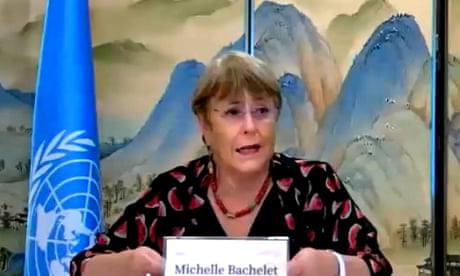
Fast forward four and a half years and Zeid replacement as High Commissioner, the former President of Chile Michelle Bachelet, has also fallen on her sword – yet for precisely the opposite reasons as Zeid.

Bachelet was handpicked by Guterres to mark a clear break from Zeid by pursuing a more holistic and balanced approach to the role and mandate of the High Commissioner. In addition to public advocacy Bachelet tried to emphasise human rights diplomacy, international cooperation, support for the international human rights machinery, a focus on emerging thematic human rights concerns (e.g., climate change, the right to a healthy environment, prevention, digital technology), and the on-the-ground delivery of technical assistance and capacity-building support.

See: https://humanrightsdefenders.blog/2022/06/09/disappointment-with-un-high-commissioners-visit-to-xinjiang-boils-over/ and

Finally the long awaited UN report on China

In truth, the world needs a High Commissioner Zeid and a High Commissioner Bachelet. The question is: is that possible? Maybe other solutions might be considered? Might, perhaps, the High Commissioner focus on public advocacy, and the Deputy High Commissioner on the more cooperation-orientated aspects of the mandate? Maybe different Deputies could be appointed for each of the main ‘baskets’ of the High Commissioner’s overall mandate? Or maybe the parts of the mandate related to the human rights machinery could be ‘spun off’ – for example, into a new position of secretary-general of the Human Rights Council and its mechanisms, and of the Treaty Bodies?

These are difficult and sensitive questions, and yet it is surely important that they be asked and considered now rather than later. Perhaps today, as the Secretary-General ponders the appointment of the next High Commissioner, is an opportune moment to do so?

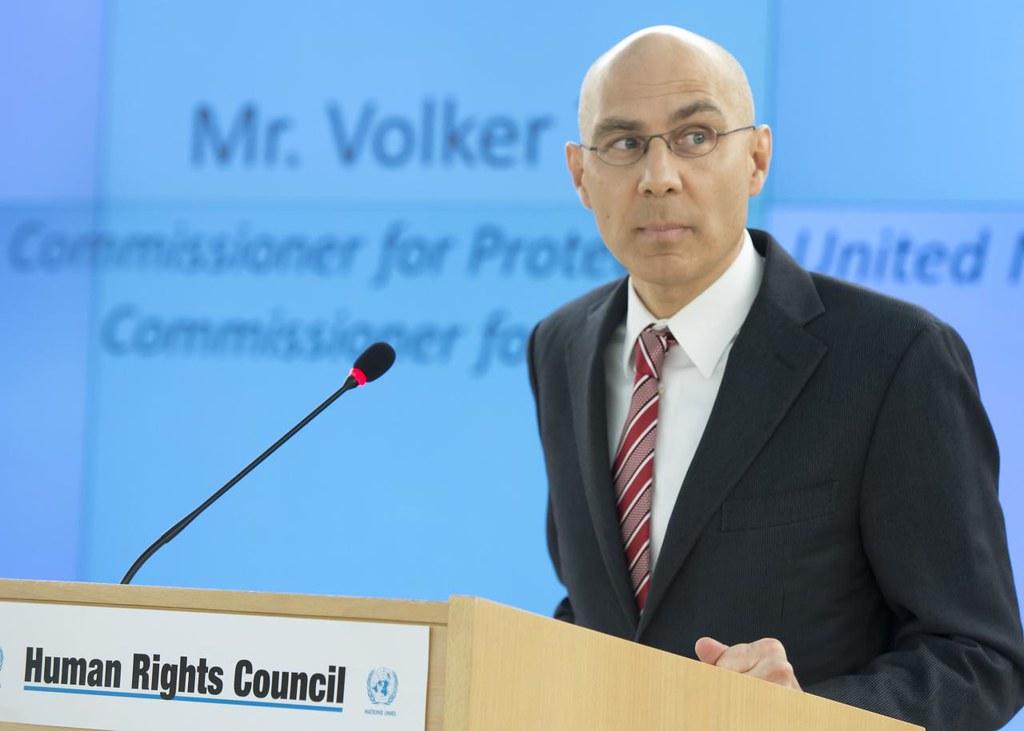
On September 7, 2022, the UN announced Secretary-General António Guterres’ decision to appoint Volker Türk, an Austrian national, to replace Michelle Bachelet.

Reactions were swift, most of them expressing the need for action, e.g. “The new UN high commissioner for human rights should neither seek nor expect a honeymoon period from UN member states,” said Tirana Hassan, interim executive director of Human Rights Watch on 8 September “What’s needed by the millions of people around the world whose rights are being violated every day is an advocate in their corner who will take on abusive governments large and small without fear and without hesitation.”

Yoni Ish-Hurwitz, Executive Director of Human Rights Likeminded Office was invited by the Universal Human Rights Group on 12 September, 2022, to contribute a Blog `’Who is Volker Türk?’:

Opinions have already begun forming about Volker Türk in the short time since the announcement of his appointment last week as the new UN High Commissioner for Human Rights. However, in the absence of a public competition, there was little opportunity to learn about Türk. He is also not well-known outside of the UN (and had few followers on twitter until last week). Therefore, in the absence of personal familiarity, it may be useful to focus on his biography, body of work and statements. This would lead to a better understanding of why he was selected for this role. [DISCLAIMER; I happen to know him personally from my days in UNHCR. He has always struck me as an honest and dedicated person with a pronounced interest in the human rights side of refugee work.]

Central to Türk’s biography is his long professional relationship with the Secretary-General Antonio Guterres. They worked together at UNHCR when Guterres led the agency as High Commissioner for Refugees. When Guterres became UN Secretary-General, Türk joined him in New York, to serve as Assistant Secretary-General for Strategic Coordination in the Executive Office. Guterres promoted him in January, to the rank of Under-Secretary-General for Policy, also in the Executive Office, perhaps setting him up to take the role of the High Commissioner for Human Rights.

Having a close confidant as the High Commissioner may be especially important for the Secretary-General at present, considering the significant current political challenges he faces. This is especially the case in the aftermath of the release of the long-awaited report on Xinjiang by the former High Commissioner, Michelle Bachelet. She spared Türk the need to continue holding this hot potato. However, China won’t let Türk off the hook, and will likely exert pressure on him, as it has done with Bachelet, to carefully weigh his words and the way he manages his Office’s work on China. In the meantime, Chen Xu, the Permanent Representative of China in Geneva, announced that ‘the Office closed the door of cooperation by releasing the so-called assessment.’ This means that this is one political crisis that will not end with Bachelet’s departure.

One key question is whether the new High Commissioner will prioritise engagement over speaking truth to power. Bachelet was criticised of doing just that following her recent statements on China, until she released her report at the 11th hour on the job. .. On the face of it, it may appear that Guterres selected a diplomat, rather than an advocate. Türk is a UN career officer through and through, and as such he is in a better position to offer ‘good offices,’ as the UN does, compared to any former Head of State that could have taken the High Commissioner’s post. Among his predecessors were two presidents, two supreme court judges, one foreign minister and one permanent representative to the UN headquarters. However, every day before walking into his new office, the face that Türk will see first is that of his predecessor Sérgio Vieira de Mello, who also spent most of his career in UNHCR. He was commemorated in a bust at the entrance to Palais Wilson, four years after his death in a bombing at UN headquarters in Iraq.

Türk worked in the UN refugee agency for over 30 years, including in the field. Coming from within the UN system is an asset for navigating organisational politics, fostering collaboration with other parts of the UN, enhancing the contribution of OHCHR to all relevant UN fora, and understanding how to engage with Member States to address the situation of the most vulnerable people. His intimate understanding of the UN system is manifested in two major initiatives he stewarded – the Secretary-General’s flagship report, Our Common Agenda, as well as the Secretary-General’s Call to Action for Human Rights. This may not be the place to analyse their successes or shortcomings, but it can be said that they were both well-received. Our Common Agenda offered a vision for mobilising the UN to address global challenges. OHCHR needs a manager with this kind of foresight to grasp the organisation’s structure, programmes and needs. The second initiative, the Call to Action for Human Rights, identified areas for action to advance human rights. As High Commissioner, perhaps Türk will be in a better position to support the implementation of the Call to Action.

This work demonstrates deep engagement on human rights. His legal background, holding a doctorate in international law, will support his role as an advocate. He can substantively articulate concerns and uphold norms based in international human rights law, humanitarian law and refugee law. He certainly appears as an advocate on twitter (@volker_turk). His tweets show his compassion, as he mostly addresses human rights concerns, with people at the centre.

Civil society was concerned about the selection process. Phil Lynch, Executive Director of the International Service for Human Rights (ISHR), said: ‘The lack of transparency and meaningful consultation with independent civil society in the selection process meant that the Secretary-General missed a key opportunity to build the legitimacy and authority of the next High Commissioner.’ The appointment of the Secretary-General’s confidant may have reaffirmed worries that the High Commissioner would prioritise diplomacy and engagement over advocacy for human rights. However, Türk appears to have the appropriate biography and a heart in the right place to fulfil both of the High Commissioner’s roles as an advocate and a diplomat. Hopefully he will be attentive to civil society and rights-holders, in line with his advice during his time as Assistant High Commissioner for Protection at UNHCR: ‘Listen to what refugees are telling us.’

After being appointed at the last minute as the next UN high commissioner for human rights, Volker Turk is not expected to be at the 51st session of the UN Human Rights Council, held from 12 September to 7 October. When he does, Turk will have to grapple among other challenges with his predecessor’s report on Xinjiang, but for the moment deputy high commissioner Nada Al Nashif is in charge of the UN rights office and will have to answer any questions about China that might come up during the first days of debate..

https://www.universal-rights.org/uncategorized/time-to-ask-again-is-being-the-un-high-commissioner-for-human-rights-an-impossible-job/

https://www.hrw.org/news/2022/09/08/un-new-rights-chief-should-speak-out-all-victims

https://www.universal-rights.org/by-invitation/who-is-volker-turk/

Posted in human rights, OHCHR, UN | 5 Comments »
Tags: appointment, Austria, Call to Action on human rights (UN), China Change, Marc Limon, Nada Al Nashif, UN High Commissioner for Human Rights, UN High Commissioner for Human Rights Volker Turk, UNHCR, United Nations, Volker Turk, Yoni Ish-Hurwitz

Finally the long awaited UN report on China

September 1, 2022

A long-delayed but groundbreaking United Nations report published on August 31, 2022, says the Chinese government has committed abuses that may amount to crimes against humanity targeting Uyghurs and other Turkic communities in the Xinjiang region. The report by the outgoing UN High Commissioner for Human Rights, Michelle Bachelet, contains victim accounts that substantiate mass arbitrary detention, torture, cultural persecution, forced labor, and other serious human rights violations, and recommends that states, businesses, and the international community take action with a view to ending the abuses, and advancing justice and accountability. See also: https://humanrightsdefenders.blog/2022/06/09/disappointment-with-un-high-commissioners-visit-to-xinjiang-boils-over/

“The UN human rights chief for the first time lays bare the Chinese government’s grave abuses and concludes they may amount to crimes against humanity,” said John Fisher, Global Advocacy Deputy Director at Human Rights Watch. “Victims and their families whom the Chinese government has long vilified have at long last seen their persecution recognized, and can now look to the UN and its member states for action to hold those responsible accountable.”

The high commissioner’s report challenges the Chinese government’s blatant disregard for its international human rights obligations, Human Rights Watch said. It calls on businesses to meet their responsibilities to respect human rights, and for follow-up by UN member countries and bodies, which could take the form of an investigation to interview victims and survivors, identify those responsible, gather evidence, and recommend strategies for accountability. Similar recent UN Human Rights Council mechanisms have included commissions of inquiry, fact-finding missions, and independent international monitoring missions. This could also lead to the identification of all those missing and forcibly disappeared so that they can be reunited with their families.

The report should be formally presented to the Human Rights Council as a matter of priority, Human Rights Watch said, so that states can discuss the report’s findings and take the steps needed to implement its recommendations.

In the report, the high commissioner details widespread abuses, including targeting of cultural and religious practices, family separation, arbitrary arrests and detention, rape, torture, and enforced disappearances, across Xinjiang. The report concludes that “[t]he extent of arbitrary and discriminatory detention of members of Uyghur and other predominantly Muslim groups, pursuant to law and policy, in context of restrictions and deprivation more generally of fundamental rights enjoyed individually and collectively, may constitute international crimes, in particular crimes against humanity.”

Detainees interviewed for the report described conditions in so-called “vocational training centres” that would amount to torture or other forms of ill-treatment, including “being beaten with batons, including electric batons while strapped in a so-called “tiger chair”; being subjected to interrogation with water being poured in their faces; prolonged solitary confinement; and being forced to sit motionless on small stools for prolonged periods of time.”

The report noted that Chinese authorities continue to openly criticize victims and their relatives now living abroad for speaking about their experiences in Xinjiang, engaging in acts of intimidation, threats, and reprisals. In the words of one interviewee: “We had to sign a document to remain silent about the camp. Otherwise, we would be kept for longer and there would be punishment for the whole family.”

The report also draws on analyses of Chinese laws, regulations, and policies. The findings are consistent with those of academics, journalists, and human rights organizations, published since 2017 documenting grave international crimes. In the past five years, Human Rights Watch has documented mass arbitrary detention, pervasive surveillance, and crimes against humanity across the region.

The high commissioner has been systematically assessing a growing body of evidence regarding Chinese government human rights violations targeting Uyghurs and other Turkic communities. Treaty body reviews and reports from UN human rights experts also informed the new report, reinforcing concerns about secret detention and unlawful family separations, among other violations.

In June 2020, 50 UN human rights experts urged the Human Rights Council to establish an independent UN mandate to monitor and report on human rights violations in China, partly in response to Chinese government resistance to UN human rights scrutiny. In June 2022, another group of UN experts reiterated the 2020 statement and again urged Chinese authorities to grant them access to investigate “allegations of significant human rights violations and repression of fundamental freedoms in the country.”

In May, Bachelet visited China, despite being unable to travel or engage with interlocutors freely, and had little direct engagement with affected communities. In an end-of-mission statement delivered on May 28, Bachelet underlined that the visit was not an investigation, which she noted would require “detailed, methodical, discreet work of an investigative nature.” The new report lays a solid foundation for further UN and Human Rights Council action towards accountability in China.

“Never has it been so important for the UN system to stand up to Beijing, and to stand with victims,” Fisher said. “Governments should waste no time establishing an independent investigation and taking all measures necessary to advance accountability and provide Uyghurs and others the justice they are entitled.”

Amnesty International’s Secretary General Agnès Callamard said: 

“This 46-page document lays bare the scale and severity of the human rights violations taking place in Xinjiang – which Amnesty International previously concluded amounted to crimes against humanity. There can be little doubt why the Chinese government fought so hard to pressure the UN to conceal it. 

https://www.hrw.org/news/2022/08/31/china-new-un-report-alleges-crimes-against-humanity

China: Long-delayed UN report must spur accountability for crimes against humanity in Xinjiang

Click to access 22-08-31-final-assesment.pdf

Posted in Amnesty international, HRW, Human Rights Council, Human Rights Defenders, OHCHR | 4 Comments »
Tags: Amnesty International, China, crimes against humanity, Human Rights Watch, Michelle Batchelet, UN High Commissioner for Human Rights, UN Report, Uyghurs

Karen activist Porlajee ‘Billy’ Rakchongcharoen’s murder: finally an indictment

August 22, 2022

The Thai authorities should fully and fairly prosecute all those responsible for the murder of a prominent ethnic Karen environmental activist, Porlajee ‘Billy’ Rakchongcharoen, in 2014, Human Rights Watch said on 16 August 2022. See also: https://humanrightsdefenders.blog/2014/05/06/un-high-commissioner-condemns-disappearance-of-billy-in-context-of-retaliation-against-environmentalist-in-south-east-asia/

Porlajee “Billy” Rakchongcharoen
Porlajee “Billy” Rakchongcharoen, a prominent ethnic Karen community and environmental activist, was allegedly murdered in the custody of the Kaeng Krachan National Park officials in Phetchaburi province, Thailand, in April 2014. © 2014 Private

On August 15, 2022, the Attorney General’s Office formally notified the Justice Ministry’s Department of Special Investigation (DSI) of its decision to indict four park officials accused of abducting and murdering Porlajee “Billy” Rakchongcharoen in April 2014. The charges include illegal confinement, premeditated murder, and concealing the victim’s body.

“Thai officials have long hindered justice for Billy through cover-ups and exploitation of legal loopholes,” said Elaine Pearson, acting Asia director at Human Rights Watch. “The authorities can right this wrong by ensuring that the attorney general’s decision to indict four officials moves promptly to an effective and fair prosecution.”

Billy was last seen on April 17, 2014, in the custody of Chaiwat Limlikitaksorn, then-head of Kaeng Krachan National Park in Phetchaburi province, and his staff. The park officials said they released him after questioning him briefly and had no information regarding his whereabouts. On September 3, 2019, DSI officials announced that his remains had been found in Kaeng Krachan National Park. Chaiwit was among the four indicted.

Pinnapa Prueksapan, Billy’s wife, told Human Rights Watch that she hoped there would be answers to basic questions, such as who had abducted and killed her husband, and who had obstructed justice.

Thailand is obligated under international human rights treaties to which it is a party to investigate and appropriately prosecute enforced disappearance, torture, custodial deaths, and other alleged human rights violations. In addition, in September 2019, Prime Minister Gen. Prayut Chan-ocha ordered the Department of Special Investigation to ensure that the case was watertight so the culprits could be brought to justice, regardless of their rank or position.

However, the investigation has suffered from a cover-up, Human Rights Watch said. Despite a long list of allegations against Chaiwat for serious abuses and misconduct during his tenure as head of Kaeng Krachan National Park, he has never been held to account.

In addition, Thai law does yet not recognize enforced disappearances as a crime. Human Rights Watch has repeatedly urged Prime Minister Prayut and his government to ratify the International Convention for the Protection of All Persons from Enforced Disappearance, which Thailand signed in 2012, and make enforced disappearance a criminal offense.

Chaiwat and his staff arrested Billy on April 17, 2014, for alleged illegal possession of a wild bee honeycomb and six bottles of honey.

At the time of his enforced disappearance, he was traveling to meet with ethnic Karen villagers and activists in preparation for an upcoming court hearing in the villagers’ lawsuit against Chaiwat and the National Park, Wildlife, and Plant Conservation Department of the Ministry of Natural Resources and Environment.

The villagers alleged in the lawsuit that, in July 2011, park authorities had burned and destroyed the houses and property of more than 20 Karen families in the Bangkloy Bon village. Billy was also preparing to submit a petition about this case to Thailand’s monarch. When he was arrested, he was carrying case files and related documents with him. Those files have never been recovered.

In September 2014, Police Region 7 officers filed malfeasance charges under article 157 of the penal code against Chaiwat and three other park officials for unlawfully detaining him. The other suspects named in the case are Boontaen Bussarakham, Thanaseth or Pitoon Chaemthes, and Krissanapong Jitthes. The DSI found traces of human blood in a vehicle belonging to the park office, but was not able to verify if the blood belonged to Billy because the vehicle was cleaned before forensic experts could examine it.

On September 3, 2019, the DSI announced that his remains had been found in Kaeng Krachan National Park, where he was last seen in custody of the park officials. The investigation team found an oil barrel, its lid, two steel rods, a burned wooden piece, and two bones at the bottom of the reservoir on April 26, 2019.

The Central Institute of Forensic Science subsequently confirmed the genetic trace of one of the bones found inside the barrel matched Billy’s mother. The investigation team then concluded it was part of his remains. The condition of this piece of human skull, which was burned, cracked, and shrunk due to exposure to heat of 200 to 300 degrees Celsius, suggests the killers burned his body to conceal the crime.

“The indictment of Chaiwat and other park officials is an important step for justice for Billy and all those whom Thai government officials have forcibly disappeared and killed,” Pearson said. “Thai authorities should recognize that they can’t escape being held accountable for the most heinous crimes.”

https://www.hrw.org/news/2022/08/16/thailand-officials-indicted-karen-activists-murder

Posted in HRW, Human Rights Defenders, OHCHR | 1 Comment »
Tags: environmental defenders, Human rights defender, Human Rights Watch, impunity, indigenous peoples, Karen, Porlajee ‘Billy’ Rakchongcharoen, prosecution, Thailand

Human rights defenders in Greece, my adopted country: not doing well

July 28, 2022
OHCHR | Ms Mary Lawlor

Special Rapporteur on the situation of human rights defenders, Mary Lawlor, conducted an official visit to Greece from 13 to 22 June 2022, to assess the government’s efforts towards creating an enabling environment for those seeking to protect and promote human rights.

Human rights defenders in Greece, particularly those working on migration, operate in an environment of pervasive fear and insecurity, concluded Mary Lawlor. “I am concerned about the increasing criminalization of humanitarian assistance in Greece. Solidarity should never be punished and compassion should never be put on trial,” she said while presenting her preliminary findings at the end of a 10-day mission in the country.

With Greece facing intense international criticism over unlawful pushbacks of migrants at its borders and wider human rights concerns related to migration and asylum, the Greek government has moved to silence groups and individuals documenting these abuses. While acknowledging Greece’s migration challenges and government efforts to address them, Lawlor criticized burdensome rules for the registration of nongovernmental organizations working on migration, introduced in 2019, calling them discriminatory and in violation of Greece’s international human rights obligations. See my earlier: https://humanrightsdefenders.blog/2021/11/17/greeces-mistaken-deterrence-migrants-and-aid-workers-facing-heavy-prison-sentences/

The UN expert noted that human rights defenders not only face criminal sanctions for their activities, but are operating in an increasingly hostile environment where the general public is influenced by negative rhetoric from high-ranking officials and their unfavorable portrayal in the media, which often conflates their activities with traffickers and criminal networks.

Greece fell 38 positions within a year in Reporters Without Borders’ 2022 report on the Press Freedom Index, with the organization marking it the lowest-ranked European Union country for press freedom. “Journalists who counter the government’s narrative on the management of migration flows are often under pressure and lack access to mainstream media outlets.… Journalists reporting on corruption are sometimes facing threats and even charges,” Lawlor said. She noted that journalists have very limited or no access to facilities where migrants, refugees, and asylum seekers are being held, further contributing to a general lack of transparency regarding the government’s policies in this area.

See also: https://humanrightsdefenders.blog/2022/02/18/greek-court-fails-human-rights-defenders-on-antisemitism/

Lawlor will present a detailed report with her findings at the March 2023 session of the UN Human Rights Council. The government should listen to what the UN expert has to say and champion human rights defenders. The European Commission, which noted in July last year the narrowing space in Greece for groups working with migrants and asylum seekers, should step up its engagement on the issue and press Greece to stop harassing civil society groups and activists.

https://www.ohchr.org/en/media-advisories/2022/06/un-human-rights-expert-visit-greece-assess-situation-human-rights

https://www.ohchr.org/en/press-releases/2022/06/greece-migration-policy-having-suffocating-effect-human-rights-defenders

https://www.amnesty.org/en/location/europe-and-central-asia/greece/report-greece/

see also later:

https://www.theguardian.com/world/2022/aug/31/greece-should-face-more-checks-over-asylum-seeker-treatment-eu-official

https://www.theguardian.com/world/2022/aug/31/i-was-close-to-death-syrian-man-tells-how-greek-officials-pushed-refugees-back-out-to-sea

And on 7 November : https://www.hrw.org/news/2022/11/07/greeces-surveillance-scandal-puts-rights-risk

and then: https://www.hrw.org/news/2023/03/16/un-expert-slams-greece-over-civil-society-curbs

Posted in Amnesty international, HRW, human rights, Human Rights Council, Human Rights Defenders, UN | 2 Comments »
Tags: criminalisation, Greece, HRW, Human Rights Defenders, Mary Lawlor, migration defenders, push backs, Reporters without Borders, the Guardian, UN Rapporteur on Human Rights Defenders

Who are human rights defenders?

July 2, 2022

On 30 June 2022 the Office of the UN High Commissioner for Human Rights uploaded this video clip outlining the basic issue of human rights defenders:

In crisis, civic space is the ‘most crucial – and valuable’ element of building resilience. @ High Commissioner for Human Rights, Michelle Bachelet says, “a vibrant civic space is a lever of a stable, secure society. Yet, we continue documenting attacks against defenders and journalists, off-line and online, worldwide.”

Posted in films, Human Rights Defenders, OHCHR | Leave a Comment »
Tags: Human Rights Defenders, Office of the United Nations High Commissioner for Human Rights, video clip, You Tube

50th session Human Rights Council: issues directly affecting Human Rights Defenders

June 22, 2022

A bit belatedly this overview for the 50th session:

The 50th session of the UN Human Rights Council, from 13 June to 8 July 2022, will consider issues including sexual orientation and gender identity, violence and discrimination against women and girls, poverty, peaceful assembly and association, and freedom of expression, among others. It will also present an opportunity to address grave human rights situations including in Afghanistan, Belarus, China, Eritrea, Israel and OPT, Russia, Sudan, Syria and Venezuela, among many others. With “HRC50 | Key issues on agenda of June 2022 session” the ISHR provided again its indispensable guide. Here’s an overview of some of the key issues on the agenda that are the most relevant to HRDs [see also: https://humanrightsdefenders.blog/2022/02/21/guide-to-49th-session-of-human-rights-council-with-human-rights-defenders-focus/ and https://humanrightsdefenders.blog/2022/04/15/results-49th-session-human-rights-council-as-seen-by-ngos/

Thematic areas of interest

Here are some highlights of the session’s thematic discussions

Business and human rights

Despite their vital work to protect the environment and combat climate change, Indigenous peoples as well as land and environmental defenders continue to be attacked. New data shows an alarming pattern of violence and harassment as a precursor to lethal attacks against defenders. 

In 2020, Global Witness registered the killings of 137 land and environmental defenders in just five of the most dangerous countries for them: Colombia, Guatemala, Kenya, Mexico and the Philippines. However, a new dataset from the ALLIED Data Working Group, a coalition in which ISHR takes part, focused on these countries has for the first time documented what is often hidden – the non-lethal attacks, including threats, harassment, smear campaigns and stigmatisation that are a precursor to the shocking number of deaths we see each year.

The findings highlight the urgent need for States to monitor, collect data, report on the situation of these defenders, and address the root causes of attacks against them. ISHR urges all States to make a commitment to the systematic monitoring of attacks on indigenous, land and environmental defenders in their countries, and to take stronger action, together with civil society and relevant UN Special Procedures, to address the root causes of attacks in the debate with the Working Group due to take place on 21 June 2022. 

Reprisals

Reports of cases of intimidation and reprisal against those cooperating or seeking to cooperate with the UN not only continue, but grow. Intimidation and reprisals violate the rights of the individuals concerned, they constitute violations of international human rights law, and they undermine the UN human rights system.

The UN has taken action towards addressing this critical issue, including:

  • Requesting that the Secretary General prepare an annual report on cases and trends of reprisals;
  • Establishing a dedicated dialogue under item 5 to take place every September;
  • Affirmation by the Council of the particular responsibilities of its Members, President and Vice-Presidents to investigate and promote accountability for reprisals and intimidation; and
  • The appointment of the UN Assistant Secretary General on Human Rights as the Senior Official on addressing reprisals.

Despite this, ISHR remains deeply concerned about reprisals against civil society actors who try to engage with UN mechanisms, and consistent in its calls for all States and the Council to do more to address the situation.

During the 48th session, the Council adopted a resolution on reprisals. The text was adopted by consensus for the first time since 2009 and invites the UN Secretary General to submit his annual report on reprisals and intimidation to the UN General Assembly. Once again the resolution listed key trends, including that acts of intimidation and reprisals can signal patterns, increasing self-censorship, and the use of national security arguments and counter-terrorism strategies by States as justification for blocking access to the UN. The resolution also acknowledged the specific risks to individuals in vulnerable situations or belonging to marginalised groups, and called on the UN to implement gender-responsive policies to end reprisals. The Council called on States to combat impunity by conducting prompt, impartial and independent investigations and ensuring accountability for all acts of intimidation or reprisal, both online and offline, by condemning all such acts publicly, providing access to effective remedies for victims, and preventing any recurrence.

Item 5 of the Human Rights Council’s agenda provides a key opportunity for States to raise concerns about specific cases of reprisals, and for governments involved in existing cases to provide an update to the Council on any investigation or action taken toward accountability. The President should also update the Council on actions taken by the President and Bureau to follow up on cases and promote accountability under this item.

Due to the lack of a general debate under item 5 at HRC 50, ISHR encourages States to raise concerns about specific cases of reprisals during the interactive dialogues on the relevant countries on the agenda at this session or in the context of thematic interactive dialogues where relevant.

During the organisational meeting held on 30 May, the President of the Council stressed the importance of ensuring the safety of those participating in the Council’s work, and the obligation of States to prevent intimidation or reprisals.

In line with previous calls, ISHR expects the President of the Human Rights Council to publicly identify and denounce specific instances of reprisals by issuing formal statements, conducting press-briefings, corresponding directly with the State concerned, publicly releasing such correspondence with States involved, and insisting on undertakings from the State concerned to investigate, hold perpetrators accountable and report back to the Council on action taken.

Sexual orientation and gender identity

The mandate of the Independent Expert on violence and discrimination on the basis of sexual orientation and gender identity is up for renewal for the second time at this session. We will be following this closely and call on all States to support the mandate and contribute to the Council’s efforts to combat violence and discrimination on the basis of sexual orientation and gender identity.

Other thematic reports

At this 50th session, the Council will discuss a range of civil, political, economic, social and cultural rights through dedicated debates with the mandate holders and the High Commissioner, including interactive dialogues with:

  • The Special rapporteur on the rights to freedom of peaceful assembly and of association
  • The Independent Expert on protection against violence and discrimination based on sexual orientation and gender identity
  • The Special Rapporteur on the right of everyone to the enjoyment of the highest attainable standard of physical and mental health
  • The Special Rapporteur on the promotion and protection of the right to freedom of opinion and expression
  • The Special Rapporteur on the right to education
  • The Independent Expert on human rights and international solidarity
  • The Special Rapporteur on extrajudicial, summary of arbitrary executions
  • The Special Rapporteur on extreme poverty and human rights
  • The Special Rapporteur on promotion and protection of human rights in the context of climate change
  • The Working Group on the issue of human rights and transnational corporations and other business enterprises
  • The Special Rapporteur on contemporary forms of racism, racial discrimination, xenophobia and related intolerance
  • The High Commissioner on State responses to pandemics 

In addition, the Council will hold dedicated debates on the rights of specific groups including;

  • The Special Rapporteur on the rights of internally displaced persons
  • The Working Group on discrimination against women and girls
  • The Special Rapporteur on violence against women and girls, its causes and consequences
  • The Special Rapporteur on the human rights of migrants
  • The Special Rapporteur on trafficking in persons, especially women and children
  • The Special Rapporteur on the elimination of discrimination against persons affected by leprosy and their family members
  • The Special Rapporteur on independence of judges and lawyers

Country-specific developments

Afghanistan

Together with WHRDs from the country and civil society organisations from all regions, ISHR calls on States to lead and support an Urgent Debate at HRC50 on women’s rights in Afghanistan.

Since August 2021, when the Taliban took control of the country, there has been an enormous deterioration in the recognition and protection of the rights of women and girls in Afghanistan, including with respect to the rights to non-discrimination, education, work, public participation, health, and sexual and reproductive health. The Taliban has also imposed sweeping restrictions on the rights to freedom of expression, association, assembly and movement for women and girls. Afghanistan is now the only country in the world to expressly prohibit girls’ education.

The world’s worst women’s rights crisis demands a response and it would be unacceptable for the June session of the HRC, traditionally the session focused on gender-related issues, to pass without some meaningful action on the issue. I

The Council will hold an interactive dialogue with the High Commissioner on the update on Afghanistan on 15 June 2022. 

China 

The High Commissioner’s visit to China failed to adequately address widespread and systematic violations in the country, express solidarity with victims and defenders, or pave the way for meaningful monitoring of China’s human rights crisis across the Uyghur and Tibetan regions, Hong Kong and mainland China. The High Commissioner’s end of mission statement failed to address strong, specific concerns or make substantive, concrete recommendations to the governmen. The broad concerns issued in a light language do not match the scope and gravity of human rights violations across the country that have been thoroughly documented by UN experts and civil society and that could amount to crimes against humanity and genocide.

States should call on the High Commissioner to immediately publish her OHCHR report on the Uyghur region, with clear, compelling recommendations to the government, and present her findings in a briefing to the Human Rights Council. The High Commissioner should also ensure that the established annual meeting and working group for dialogue with the authorities are of public nature, include specific substantive recommendations to the government, and involve substantial consultation with a diverse set of independent civil society groups. China should also follow suit on promises for subsequent visits by the OHCHR by granting prompt unfettered access to Hong Kong and the Tibetan region. See also: https://humanrightsdefenders.blog/2022/06/09/disappointment-with-un-high-commissioners-visit-to-xinjiang-boils-over/

Burundi

The Commission of Inquiry on Burundi (CoI) concluded its work at the 48th HRC session in October 2021 while a new resolution establishing a mandate of UN Special Rapporteur on Burundi was adopted, resolution 48/16. The resolution tasks the mandate with monitoring the human rights situation in the country, making recommendations for its imp­ro­ve­ment, and re­por­ting to the Human Rights Council. During the 50th HRC session, the newly nominated Special Rapporteur on Burundi will present their first oral update on 29 June 2022.

Egypt

Notwithstanding the launch of a national human rights strategy, the fundamental purpose of which is to deflect international scrutiny rather than advance human rights, there has been no significant improvement in the human rights situation in Egypt since the joint statement delivered by States in March 2021 at HRC46. Emblematic recent examples include: Ayman Hadhoud’s death in the custody of Egyptian security forces following his enforced disappearance over two months ago and the execution of seven people in Egypt on 8 and 10 March 2022 following trials in which the defendants were forcibly disappeared, tortured, and denied their right to a lawyer.

In response to the Egyptian President’s announcement of “reactivating the work of the Presidential Pardon Committee” on 26 April 2022, Egyptian human rights organisations submitted a proposal for a fair and transparent process to release political prisoners in Egypt. Yet, recent harsh sentences in unfair trials against peaceful critics demonstrate further the lack of political will of the Egyptian authorities to address the crisis of arbitrary detention in Egypt. ISHR joined more than 100 NGOs from around the world in urging the HRC to create a monitoring and reporting mechanism on the ever-deteriorating human rights situation in Egypt. 

Israel and oPT

This session, the COI on the oPt and Israel established in 2021 will present its first report to the HRC. Civil society from around the world had welcomed the historic resolution establishing the standing Commission of Inquiry to address Israel’s latest and ongoing violations against the Palestinian people on both sides of the Green Line, while also addressing the root causes of Israel’s settler colonialism and apartheid. The interactive dialogue with the CoI comes in the context of mounting recognition of Israel’s establishment and maintenance of an apartheid regime by Israel over the Palestinian people as a whole. During HRC49, the SR on the oPT called on the international community to accept and adopt his findings as well as the “findings by Palestinian, Israeli and international human rights organisations that apartheid is being practised by Israel in the occupied Palestinian territory and beyond.” In its 2019 concluding observations, the Committee on the Elimination of Racial Discrimination found that Israel’s policies violated Article 3 of ICERD pertaining to segregation and apartheid on both sides of the Green Line. In 2022, the Human Rights Committee concluding observations on Israel emphasized the “pre-existing systematic and structural discrimination against non-Jews”.

While some States continue to seek to undermine the mandate of the CoI and effective accountability mechanisms to put an end to Israel’s apartheid regime, CSOs support the CoI’s methodological approach to fulfill its vital mandate. We call on States to engage with the substance of the mandate of the CoI during the interactive dialogue, express support for this important accountability mechanism and ensure it has sufficient resources to discharge its mandate.

Russia 

Together with a coalition of international and regional NGOs, as well as numerous Russian civil society organisations, ISHR urges the Council to establish an independent international monitoring and reporting mechanism on Russia. In the context of the systematic repression of civil society organisations, severe restrictions on press freedoms and independent media, severe restrictions and criminalisation of many forms of free expression, association, assembly and peaceful protest, and the propagation of huge volumes of misinformation, a Special Rapporteur is necessary to ensure that the international community receives vital information about the human rights situation on the ground. 

Sudan

The Council will hold a debate with the High Commissioner and Expert on Sudan on 15 June 2022.

The Sudanese Women Rights Action documented from March to April 2022 the violations against women protesters, including arrests, injuries, and sexual violence. Their report also highlighted the economic and humanitarian situation in conflict areas and in the country in general. The report shows that “the coup leaders are using increasing violence against women protesters, including arrests, fabricated charges, direct lethal violence in protests, and sexual violence. The civic space is shrinking across Sudan, where human rights groups and WHRDs are not able to work freely and safely. Surveillance on internet, communication, movement, and offices of many groups led them to work from underground. The economic conditions and the fragile political situation is increasing women insecurity, as the peace process failed to end violence conflict areas. Women in Sudan are living in constant fear of violence with growing threats of the collapse of the state.”

In light of this context, ISHR urges all States to support the adoption of a resolution that ensures continued attention to Sudan’s human rights situation through enhanced interactive dia­logues at the Council’s 52nd and 53rd regular sessions. While the Expert’s mandate is ongoing, a resolution is required for the Council to hold public de­bates and continue to formally discuss the situation. A resolution at the Council’s 50th session would ope­ra­tio­nalise resolution S-32/1, which in its operative paragraph 19 called upon “the High Commis­sioner and the designated Expert to monitor human rights violations and abu­ses and to continue to bring information thereon to the attention of the Human Rights Council, and to advise on the further steps that may be needed if the situation continues to deteriorate.”

Venezuela

On 29 June, the Council will hold an interactive dialogue with the High Commissioner on her report on the situation of human rights in Venezuela. The Council requested her to provide in this report a detailed assessment of the implementation of the recommendations made in her previous reports. Implementation of recommendations and improvements in the human rights situation on the ground remains a critical question as HRC mandates for OHCHR and the international investigative body for Venezuela expire in September. Venezuelan civil society groups continue to show evidence of a lack of any substantive human rights reform in the country, of a lack of meaningful cooperation by the State and – in fact – of regression in key areas such as judicial independence and civic space. ISHR urges States at the upcoming session to express support for the work of OHCHR in the country, and encourage the Office to speak clearly to realities on the ground. In addition, States should signal their support for the continuance of the work of the HRC’s fact-finding mission to the country through an extension of the Mission’s mandate at HRC51. 

The adoption of the report of the third cycle UPR on Venezuela will also take place on the 29 June or 1 July.  

Other country situations

The Council will hold an interactive dialogue on the High Commissioner’s annual report on 14 June 2022. The Council will hold debates on and is expected to consider resolutions addressing a range of country situations, in some instances involving the renewal of the relevant expert mandates. These include:

  • Interactive Dialogue with the Special Rapporteur on Eritrea
  • Interactive Dialogues with the High Commissioner and Special Rapporteur on Myanmar
  • Interactive Dialogue with the High Commissioner on Nicaragua
  • Interactive Dialogues with the High Commissioner on Ukraine
  • Interactive Dialogue with the Commission of Inquiry on Syria
  • Interactive Dialogue with the International commission of Human Rights Experts on Ethiopia 
  • Interactive Dialogue with the Special Rapporteur on Belarus
  • Interactive Dialogue with the Independent Fact-Finding Mission on Libya
  • Interactive Dialogue with the Independent Expert on Central African Republic 

Council programme, appointments and resolutions

The President of the Human Rights Council will propose candidates for the following mandates: 

  1. Special Rapporteur on freedom of religion or belief
  2. Special Rapporteur on the right to education
  3. Special Rapporteur on the situation of human rights in the Democratic People’s Republic of Korea
  4. Working Group on the issue of human rights and transnational corporations and other business enterprises, member from African States
  5. Expert Mechanism on the Right to Development, member from Latin American and Caribbean States
  6. Special Rapporteur on torture and other cruel, inhuman or degrading treatment or punishment
  7. Working Group on Enforced or Involuntary Disappearances, member from Eastern European States
  8. Working Group on the issue of human rights and transnational corporations and other business enterprises, member from Western European and other States

Resolutions to be presented to the Council’s 50th session

At the organizational meeting on 30 May the following resolutions were announced (States leading the resolution in brackets):

  1. Elimination of discrimination against women (Mexico), mandate renewal 
  2. Freedom of expression (Brazil, Canada, Fiji, Sweden, Namibia, Netherlands) 
  3. Elimination of female genital mutilation (Africa Group)
  4. Rights to freedom of peaceful assembly and of association (Czech Republic, Indonesia, Lithuania, Maldives, Mexico), mandate renewal 
  5. Human rights situation in Sudan (United Kingdom, Germany, Norway, United States)
  6. Human rights situation in Syria (Germany, France, Italy, Jordan, Kuwait, Netherlands, Qatar, Turkey, United States, United Kingdom)
  7. Mandate of the Independent Expert on protection against violence and discrimination based on sexual orientation and gender identity  (Argentina, Brazil, Chile, Colombia, Costa Rica, Mexico, Uruguay), mandate renewal 
  8. Casualty recording and the promotion and protection of human rights (Liechtenstein, Croatia, Costa Rica, Sierra Leone) 
  9. Human rights and climate change (Bangladesh, Philippines, Viet Nam)
  10. Access to medicines and vaccines in the context of the right of everyone to the enjoyment of the highest attainable standard of physical and mental health (Brazil, China, Egypt, India, Indonesia, Senegal, South Africa, Thailand)
  11. Enhancement of international cooperation in the field of human rights (NAM)
  12. Independence and impartiality of the judiciary, jurors and assessors, and the independence of lawyers (Hungary, Australia, Botswana, Maldives, Mexico, Thailand)
  13. Human rights and the regulation of civilian acquisition, possession and use of firearms (Ecuador, Peru)
  14. Human rights in Belarus, mandate renewal (European Union)
  15. Human rights in Eritrea, mandate renewal (European Union) 
  16. The promotion and protection of human rights in the context of peaceful protest (Switzerland, Costa Rica)
  17. Situation of human rights of Rohingya Muslims and other minorities in Myanmar (OIC) 
  18. Accelerating efforts to eliminate all forms of violence against women (Canada), mandate renewal 
  19. Mandate of the Special Rapporteur on the human rights of internally displaced persons (Austria, Honduras, Uganda), mandate renewal
  20. Human rights and international solidarity (Cuba)
  21. Social Forum (Cuba)

Read the calendar here. 

Adoption of Universal Periodic Review (UPR) reports

During this session, the Council will adopt the UPR working group reports on Myanmar, Togo, Syrian Arab Republic, Iceland, Venezuela, Zimbabwe, Lithuania, Uganda, Timor-Leste, Republic of Moldova, South Sudan, Haiti and Sudan.

Panel discussions

During each Council session, panel discussions are held to provide member States and NGOs with opportunities to hear from subject-matter experts and raise questions. Seven panel discussions are scheduled for this upcoming session:

  1. Panel discussion on the root causes of human rights violations and abuses against Rohingya Muslims and other minorities in Myanmar 
  2. Panel discussion on menstrual hygiene management, human rights and gender equality
  3. Panel discussion on good governance in the promotion and protection of human rights during and after the COVID-19 pandemic
  4. Annual full-day discussion on the human rights of women
  5. Panel discussion on the adverse impact of climate change on the full and effective enjoyment of human rights by people in vulnerable situations
  6. High-level panel discussion on countering the negative impact of disinformation on the enjoyment and realization of human rights
  7. Annual thematic panel discussion on technical cooperation and capacity-building

Stay up-to-date: Follow @ISHRglobal and #HRC50 on Twitter, and look out for its Human Rights Council Monitor. During the session, follow the live-updated programme of work on Sched. 

https://ishr.ch/latest-updates/hrc50-key-issues-on-agenda-of-june-2022-session/

Posted in Human Rights Council, Human Rights Defenders, ISHR, OHCHR | Leave a Comment »
Tags: 50th session Human Rights Council, Afghanistan, Burundi, Business and human rights, China, Egypt, Human Rights Defenders, human rights of women, ISHR, Israeli-occupied territories, reprisals, Russia, Sexual orientation, Sudan, Venezuela

UN and NGOs denounce ODHIKAR’s deregistration in Bangladesh

June 16, 2022

The Office of the United Nations High Commissioner for Human Rights and 11 international and regional rights organisations have demanded that the government must immediately cancel its decision to deregister rights organisation Odhikar and allow the rights organisation to function without fear of reprisal.

Ravina Shamdasani, spokesperson for the UN High Commissioner for Human Rights, said in a press briefing in Geneva statement on Friday, ‘We are concerned by the Government of Bangladesh’s decision not to approve the renewal of registration for Odhikar, a prominent and respected human rights organisation in the country’.

She said, ‘We urge the government to immediately reconsider this decision, and to ensure that Odhikar has the ability to seek full judicial review of any such determination. We are further concerned that this decision will have a chilling effect on the ability of civil society organisations to report serious human rights violations to UN human rights mechanisms.’

Odhikar has documented and reported on rights violations for many years to the Office of the UN High Commissioner for Human Rights, UN Special Procedures mandate holders and human rights treaty bodies, she mentioned in the briefing available on the website of the UN body.

Intimidation and reprisals against Odhikar have been documented since 2013, and appear to have intensified, with accusations of ‘anti-state’ and ‘anti-government’ activities, she added.

‘There has been increased surveillance of its activities in recent months. The UN Secretary-General has also raised concerns about reprisals against Odhikar over the past decade for cooperating with the UN,’ she said.

On June 5, 2022, the bureau sent a letter to Odhikar, denying its application for renewal of registration. Odhikar’s application for renewal of its registration with the NGO Affairs Bureau under the Prime Minister’s Office has been pending since 2014, she said, adding that Odhikar’s bank account was also frozen in 2014. ‘We call for Odhikar to be permitted access to its banked funds pending reconsideration of the renewal application,’ said the UN official.

Eleven international and regional human rights organisations, meanwhile, in a joint statement called on the government to immediately reverse the decision to deregister Odhikar.

‘Human rights defenders should be allowed to conduct their work without fear of reprisals, intimidation, and harassment from the authorities,’ read the statement issued by Human Rights Watch, Amnesty International, Anti-Death Penalty Asia Network, Asian Federation Against Involuntary Disappearances, Capital Punishment Justice Project, Elios Justice at Monash University, Human Rights First, International Coalition Against Enforced Disappearance, International Federation for Human Rights, within the framework of the Observatory for the Protection of Human Rights Defenders, Robert F Kennedy Human Rights and World Organisation Against Torture. {See also: https://humanrightsdefenders.blog/2022/03/17/un-experts-urge-bangladesh-to-end-reprisals-against-human-rights-defenders/]

The rights organisation in the statement said this latest development appeared to be part of a pattern of reprisals by the government against human rights organisations groups and defenders following the US sanctions against the Rapid Action Battalion on December 10, 2021. [See https://humanrightsdefenders.blog/2022/03/21/bangladesh-sanctions-seem-to-work/]

On 14 June 2022 Forum Asia in a strong statement said: FORUM-ASIA expresses its solidarity with Odhikar and calls on the Bangladeshi authorities to immediately recall the decision of rejecting Odhikar’s renewal application thereby ensuring it to carry on their human rights work. FORUM-ASIA reiterates its earlier call to repeal the Foreign Donation (Voluntary Activities) Regulation Act, 2016 as it imposes restrictions on civil society organisations’ ability to access resources.

The same day, the Asian Human Rights Commission (AHRC) and CIVICUS: World Alliance for Citizen Participation said they “are extremely alarmed by the decision of the government to arbitrarily revoke the registration of Odhikar, a leading human rights organisation in Bangladesh. This move is another blow to civil society and human rights defenders who have been facing systematic repression by the Sheikh Hasina regime.“

http://www.humanrights.asia/opinions/AHRC-ETC-004-2022/

https://www.newagebd.net/article/172898/un-11-intl-orgs-slam-odhikar-deregistration

Posted in human rights, Human Rights Defenders, OHCHR | 1 Comment »
Tags: AHRC, Bangladesh, CIVICUS, Forum Asia, freedom of association, funding restrictions, NGOs, Odhikar, Office of the High Commissioner for Human Rights, registration, reprisals

Disappointment with UN High Commissioner’s visit to Xinjiang boils over

June 9, 2022

Many have been the reactions to the UN High Commissioner’s visit to China, some even expressing doubt BEFORE the visit took place [see: https://www.aljazeera.com/news/2022/5/24/what-will-the-un-human-rights-commissioner-see-in-xinjiang and https://www.hrw.org/news/2022/05/20/un-rights-chiefs-credibility-stake-china-visit]. The open referred to in the Guardian of 9 June 2022 was signed by academics in wake of Michelle Bachelet’s China visit and demands release of UN report on human rights abuses.

Agnes Callamard, the secretary general of Amnesty International, said on 28 June that Bachelet should condemn human rights violations in Xinjiang, and call on China to release people arbitrarily detained and end systematic attacks on ethnic minorities in the region. “The high commissioner’s visit has been characterized by photo opportunities with senior government officials and manipulation of her statements by Chinese state media, leaving an impression that she has walked straight into a highly predictable propaganda exercise for the Chinese government,“.

Dozens of scholars have accused the UN human rights chief of having ignored or contradicted academic findings on abuses in Xinjiang with her statements on the region. In an open letter published this week, 39 academics from across Europe, the US and Australia called on Michelle Bachelet to release a long-awaited UN report on human rights abuses in China.

The letter, published online, included some academics with whom Bachelet had consulted prior to her visit to Xinjiang. The letter’s signatories expressed gratitude for this, but said they were “deeply disturbed” by her official statement, delivered at a press conference in Guangzhou at the end of her six-day tour. They said her statement “ignored and even contradicted the academic findings that our colleagues, including two signatories to this letter, provided”.

UN High Commissioner for Human Rights visits China.

“It is rare that an academic field arrives at the level of consensus that specialists in the study of Xinjiang have reached,” the letter said. “While we disagree on some questions of why Beijing is enacting its atrocities in Xinjiang, we are unanimous in our understanding of what it is that the Chinese state is doing on the ground.”.

Rights organisations and several governments have labelled the campaign a genocide or crime against humanity. Beijing denies all allegations of mistreatment and says its policies are to counter terrorism and religious extremism.

At the end of her visit Bachelet said she had urged the Chinese government to review its counter-terrorism policies in Xinjiang and appealed for information about missing Uyghurs. She was quickly criticised by some rights groups for giving few details or condemnation of China while readily giving long unrelated statements about US issues in response to questions from Chinese state media.

The academics’ letter is among growing criticism of Bachelet for not speaking out more forcefully against Chinese abuses after her visit, as well as a continued failure to release the UN report, which is believed to have been completed in late 2021. On Wednesday dozens of rights groups, predominately national and local chapters of organisations associated with Uyghur and Tibetan campaigns, demanded her resignation. See: http://www.phayul.com/2022/06/09/47195/

The 230 organisations accused Bachelet of having “whitewashed the Chinese government’s human rights atrocities” and having “legitimised Beijing’s attempt to cover up its crimes by using the Chinese government’s false ‘counter-terrorism’ framing”.

“The failed visit by the high commissioner has not only worsened the human rights crisis of those living under the Chinese government’s rule, but also severely compromised the integrity of the Office of the High Commissioner for Human Rights in promoting and protecting human rights globally,” the statement said.

They also decried that she had repeatedly referred to the detention camps in Xinjiang by the Chinese government’s preferred term: “vocational education and training centres”.

All this led to speculation that Mrs Bachelet’s decision not to seek a second term was related to the critcism [see: https://www.theguardian.com/world/2022/jun/13/un-human-rights-chief-michelle-bachelet-no-second-term-china]

https://www.theguardian.com/world/2022/jun/09/fury-at-un-human-rights-chief-over-whitewash-of-uyghur-repression

https://www.ohchr.org/en/statements/2022/05/statement-un-high-commissioner-human-rights-michelle-bachelet-after-official

https://www.npr.org/2022/05/29/1101969720/un-human-rights-chief-asks-china-to-rethink-uyghur-policies?t=1654771491735

Posted in Amnesty international, HRW, Human Rights Defenders, OHCHR, UN | 3 Comments »
Tags: academic, Agnès Callamard, China, country visit, Helen Davidson, High Commissioner Michelle Bachelet, NGOs, open letter, the Guardian, UN High Commissioner for Human Rights, Uyghurs, Xinjiang

« Older posts
Newer posts »
  • Enter your email address to subscribe to this blog and receive notifications of new posts by email.

    Join 1,807 other subscribers
  • Recent Posts

    • Thai Prime Minister files criminal defamation complaint against human rights defender Yingcheep Atachanont
    • Defenders’ Days in Stockholm: international conference for human rights defenders starts today
    • The laureates of the 2026 Front Line Defenders Award are..
    • Nice example of local empowerment of HRDs (Nigeria)
    • Nobel Peace Prize for 2026 to “Navi” Pillay – great choice
    • The 2026 Right Livelihood Awards go to women and their organisations confronting: authoritarian rule, patriarchal violence, and unchecked AI development.
    • New Amnesty International report ‘We Start With the Verdict’ on Pegasus surveillance by Morocco
    • NGOs call for the release of Egyptian investigative journalism platform Matsadaash
Blog at WordPress.com.
Entries and comments feeds.Valid XHTML and CSS.
  • Subscribe Subscribed
    Hans Thoolen on Human Rights Defenders and their awards
    Join 434 other subscribers

    Have a WordPress.com account? Log in now.

  • Hans Thoolen on Human Rights Defenders and their awards
    View site in Reader
    Manage subscriptionsSign upLog in
    Report this content
    Collapse this bar
Loading Comments...