Archive for the 'UN' Category

Sad symbolic number reached in Mexico: 100,000 disappeared.

May 17, 2022

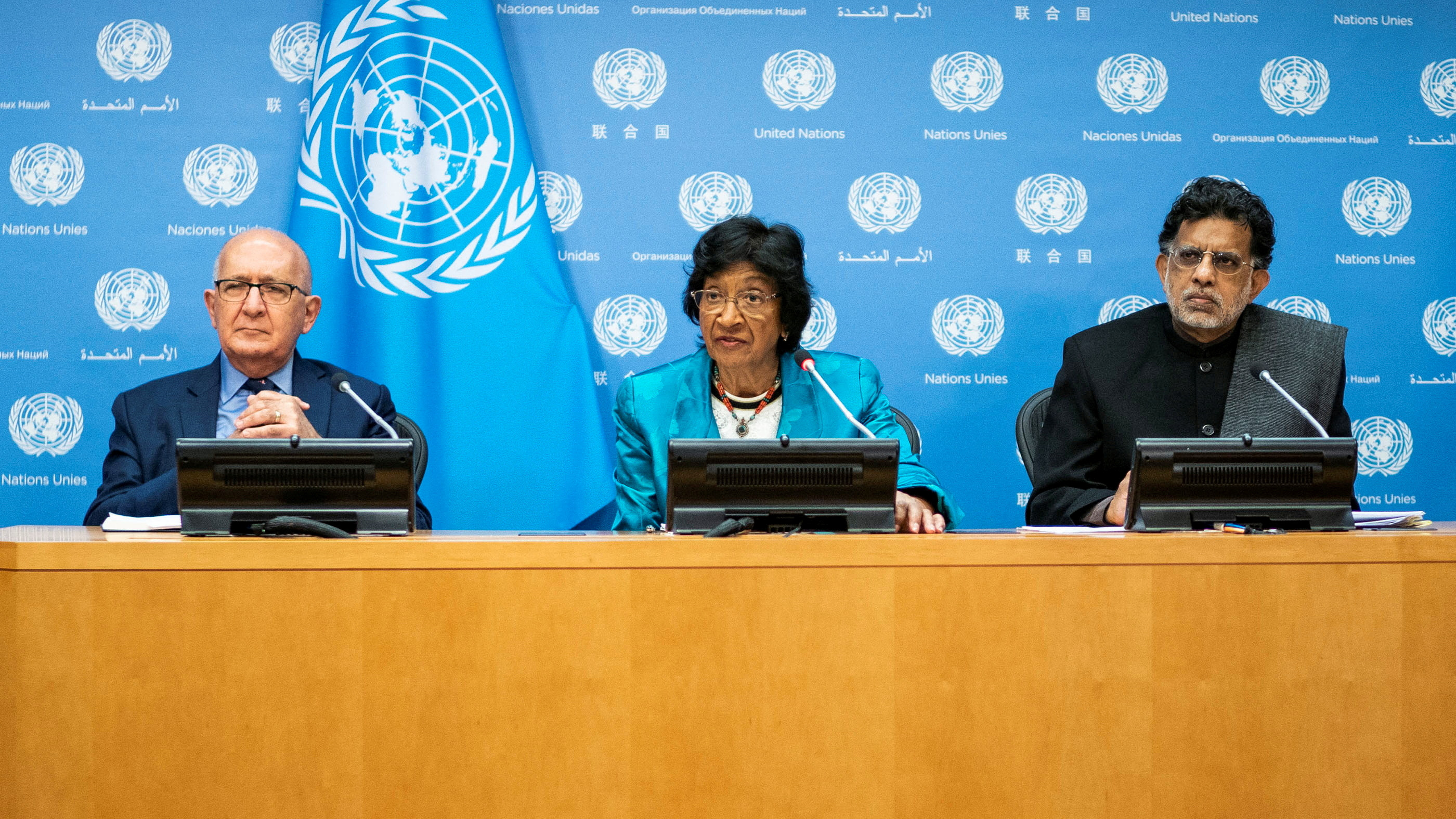
The 100,000 officially registered disappearances in Mexico illustrate a long-standing pattern of impunity in the country, indicating the tragedy continues daily, UN human rights experts warned.

The Committee on Enforced Disappearances (CED) and the Working Group on Enforced or Involuntary Disappearances (WGEID) on 17 May 2022 expressed grave concern about the growing numbers registered by Mexico’s National Register of Disappeared Persons

There are now over 100,000 people in Mexico’s national register of the “disappeared.” The UN says organized crime is among the leading causes of missing people in the country. Human rights organizations and relatives of the missing have called on the government to step up investigations and conduct searches more effectively

In the last two years the numbers have spiked from about 73,000 people to more than 100,000 — mostly men.

Mexico has seen spiralling violence since the war on drugs began in 2006, with over 350,000 people having died since then. Last year, the country of more than 129 million people saw 94 murders a day on average.

It’s incredible that disappearances are still on the rise,” Virginia Garay, whose son went missing in 2018 in the state of Nayarit, told news agency Reuters. “The government is not doing enough to find them,” said Garay, who works in a group called Warriors Searching for Our Treasures that seeks to locate missing loved ones.

Civil society groups that help try and locate missing people stress that many families do not report disappearances because of distrust in the authorities. The actual figure of missing people is therefore believed to be much higher than the official data.

Organized crime has become a central perpetrator of disappearance in Mexico, with varying degrees of participation, acquiescence or omission by public servants,” a report by the UN Committee on Enforced Disappearances, released last month, said.

“State parties are directly responsible for enforced disappearances committed by public officials, but may also be accountable for disappearances committed by criminal organizations,” the report added.

The missing people include human rights defenders, some of whom went missing because of their own involvement in the fight against disappearances.

According to the UN committee, over 30 journalists have also disappeared in Mexico between 2003 and 2021. See also: https://humanrightsdefenders.blog/2022/01/31/more-killings-of-journalists-in-mexico-in-2022/

https://www.ohchr.org/en/statements/2022/05/mexico-dark-landmark-100000-disappearances-reflects-pattern-impunity-un-experts

https://www.dw.com/en/mexicos-number-of-disappeared-people-rises-above-100000/a-61820055

Historic vote: Russia also out of ECOSOC NGO Committee

May 13, 2022

On Wednesday, 13 April, members of the United Nations Economic and Social Council (ECOSOC) elected 19 members to the UN Committee on NGOs, a body frequently criticised for restricting civil society participation at the UN. See my earlier posts on this topic: https://humanrightsdefenders.blog/tag/ngo-committee/

Members of the United Nations Economic and Social Council (ECOSOC) voted to elect 19 members for the next 4 year term (2022-2025) of the ECOSOC Committee on NGOs. The 19 members of the Committee, elected from five regional groups, are the gatekeepers for civil society at the UN as they decide which NGOs receive UN accreditation participation rights.

In the election, the Eastern European States was the only regional group which presented a competitive slate, as three candidates, Armenia, Georgia and Russia, contested for the two available seats. Armenia, Georgia and Russia received 47, 44 and 15 votes respectively. As a result, Russia,  a member of the Committee since its establishment in 1947, has been voted out. This result comes one week after a historic resolution of the UN General Assembly to suspend Russia’s Human Rights Council membership. https://humanrightsdefenders.blog/2022/04/08/suspension-of-membership-un-human-rights-council-finally-operationalised/

Despite Russia’s departure, the incoming NGO Committee still includes members with deeply problematic records on safeguarding human rights and civil society participation. According to the CIVICUS Monitor, 60% of the incoming members are currently characterised as being ‘closed’ or ‘repressed’ civic spaces. This includes all members for the Asia-Pacific region. Civic space is ‘obstructed’ or ‘narrowed’ within the remaining 40%.

Members of the NGO Committee are the primary decision makers on which NGOs can access UN bodies and processes,” said Maithili Pai, Programme Officer and ISHR focal point for civil society access and participation. “States must fulfil their fundamental mandate under ECOSOC Resolution 1996/31 by acknowledging the breadth of NGO expertise and their capacity to support the work of the UN, and ensuring just, balanced, effective and genuine involvement of NGOs around the world.” she added.

ISHR is aware of 352 currently deferred organisations seeking UN accreditation, at least 40 which have faced over four years of deferrals, and one that has been deferred for 14 years. In response, ISHR sought to campaign for states to engage in competitive and meaningful elections that could produce positive outcomes for civil society. We urge incoming members of the Committee to open the doors of the UN to civil society groups from around the world.

https://ishr.ch/latest-updates/ecosoc-committee-on-ngos-elections-russia-voted-out-for-first-time-in-75-years/

and see also: https://crm.ishr.ch/civicrm/mailing/view?reset=1&id=1918&cid=8618&cs=b3f224fa0f7ed22b7621a3ed628f1096_1777282522_168

Karla Avelar speaks out in Diversity in Adversity campaign

April 28, 2022

Episode 4: People who work to end violence and discrimination based on sexual orientation and gender identity (SOGI) face multiple forms of risk. They can be targeted for their actual or perceived sexual orientation or gender identity, and for being human rights defenders as well.

Karla Avelar is trans woman human rights defender from El Salvador who has been working since the 1990s to defend the rights of LGBTI persons, people with HIV and other marginalised groups. After being subjected to two and a half years in prison, where she was tortured, sexual assaulted and denied access to medical treatment, she began to work more intensely for the rights of LGBTI persons. She began by calling for appropriate provision of HIV medications and greater access to justice within El Salvador. In 2008 she founded COMCAVIS trans, El Salvador’s first organisation for trans women with HIV. In 2013, she was the first trans woman to appear before the Inter-American Commission on Human Rights. After multiple threats to her own life and that of her mother, she applied for asylum in Switzerland in 2017, where she now lives and continues her work. She was a finalist of the MEA in 2017 [see: https://humanrightsdefenders.blog/2017/05/16/trans-defenders-karla-avelars-life-is-under-constant-threat/]

Diversity in Adversity is a joint campaign by Mary Lawlor, UN Special Rapporteur on Human Rights Defenders, and Victor Madrigal-Borloz, UN Independent Expert on sexual orientation and gender identity. It will feature interviews with 10 SOGI rights defenders from all over the world; ordinary people engaged in extraordinary work. For more on this campaign, visit: https://www.ohchr.org/en/special-proc…

Sudan: providing information against sexual violence to the UN equals “leaking state secrets”

April 26, 2022

Mat Nashed in Al-Jazeera of 18 April 2022 reports how Sulima Ishaq’s work against sexual violence is now being used against her.

On March 28, Volker Perthes told the United Nations’ Security Council that Sudanese government forces had raped 16 female protesters since last December’s anti-coup protests. He added that as UN envoy for Sudan, he was working with the Combating Violence Against Women (CVAW) Unit under the Ministry of Social Affairs and civil society to mitigate sexual violence in the country.

The next week, Sulima Ishaq, head of the unit, was interrogated by security services. Her lawyers say she is being investigated for accusations of “leaking state secrets” to the UN envoy under Article 47 of the country’s criminal act.

The information I gave to the [UN] had already been broadcasted on television channels and media outlets,” Ishaq, who is now worried that she’ll go to prison on trumped-up charges, told Al Jazeera over the phone. “But because the information was presented to the Security Council and the [coup forces] are afraid of getting sanctioned, they are [targeting] me now.”

In March, a Khartoum office – belonging to a commission investigating a June 3, 2019 incident in which security forces reportedly murdered at least 120 people to break up a sit-in – was raided by security forces.

According to Emma DiNapoli, a legal officer focusing on Sudan for Redress, a London-based non-profit advocating an end to torture worldwide, activists cooperating with the organisation have recently reported more security officers stalking them outside their homes. In some cases, this has resulted in unlawful arrests.

None of our partners has had arrest warrants issued against them, but I think there is a general sentiment that there is higher surveillance,” DiNapoli told Al Jazeera. “Even if they are not really being surveilled, [the arrests] are having a chilling effect.”

However, experts and rights groups say Ishaq’s case represents an escalation of a broader campaign to intimidate activists and put human rights defenders on high alert.

Kholood Khair, manager of Khartoum-based think-tank Insight Strategy Partners, told Al Jazeera that the coup government is trying to make an example out of Ishaq. The authorities, she said, are particularly irked since Ishaq is a civil servant, which gives her allegations more credibility in the eyes of the international community.

In Sudan, rape victims are traditionally harassed by the public and even punished by the police, so the number of people coming forward to Ishaq was seen as a big deal, Khair explained.

“Sulima was trying to highlight that rape is a weapon of war and a weapon of repression and the number of cases [documented] shows that it is a state tactic … not a case of just individual rapists,” she said.

Mohamed Osman, Sudan researcher at Human Rights Watch (HRW), said activists have always feared that they could be targeted for documenting human rights violations against protesters. He cited the recent arrests of journalists, lawyers and doctors who appear to have been targeted for tracking unlawful arrests and killings in the country.

But the targeting of a high-profile person like Ishaq suggests that security forces are even more sensitive to scrutiny following the United States’ decision to impose sanctions on the Central Reserve Police last month, said Osman. The US cited the unit’s excessive force against protesters – including the use of live ammunition – as the reason for the decision.

Ishaq told Al Jazeera that she wished the UN envoy had been more subtle by not mentioning her unit at the Security Council meeting, given the level of repression in Sudan. “I feel that the way [the information] was stated was a little bit insensitive,” she said.

In response, Fadi Al Qadi, the spokesperson for the UN envoy, told Al Jazeera that “the special representative to the secretary-general did not name any individual in the Security Council as a source”.

And now, an atmosphere of fear is slowly enveloping the country, causing dissidents, activists and civil society to beef up personal security and take more precautions to protect themselves and sources from the eye of the authorities.

One of them is Nabil Adeeb, the septuagenarian human rights lawyer heading the investigation into the June 2019 massacre.

After government forces stormed the tribunal’s office, there were fears that evidence could be compromised and that the names of witnesses – who provided testimonies that possibly implicated specific security branches in the massacre – could be exposed.

“Our records are secure and we know that nobody would be able to access them, but we are concerned that if we resume our activities in the same place then we might expose the investigation to unwanted people since the office could be bugged,” he said.

Adeeb  – who is also Ishaq’s lawyer – told Al Jazeera that she is currently being charged for defaming the security forces under Sudan’s cybercrime law, an accusation he believes has little merit.

He is concerned that Ishaq could still face more harassment and graver accusations for simply doing her job from the state, which should naturally be helping her instead. Ishaq too fears that the worst is yet to come.

”I think that I will be scapegoated to kick out Volker [from Sudan],” she said.  “I will then be charged for jeopardising national security for providing [him] with sensitive information.”

https://www.aljazeera.com/features/2022/4/18/sudan-investigates-social-worker-fo-leaking-state-secrets-to-un

Green economy and human rights defenders: Provide data, denounce attacks

April 21, 2022

On 21 April 2022 Christen Dobson, Ana Zbona and Andrea Pelliconi of the Business & Human Rights Resource Centre wrote a piece entitled: “Safe, legitimate engagement between firms, human rights defenders key to a just transition

..Human rights defenders are vital leaders of a just transition to green economies. They are on the front lines of the climate crisis – and they hold essential information on the risks and harms associated with business actions, which can be used by companies and investors to conduct effective environmental and human rights due diligence to create long-term value.

Yet, these defenders are under sustained attack. In 2021, there were at least 615 attacks against people raising concerns about business-related harms, with nearly 70 per cent of attacks against climate, land and environmental rights defenders. Since January 2015, we have documented more than 3,870 attacks globally, including killings, death threats, arbitrary detention and strategic lawsuits against public participation.

Indigenous peoples, who are at the forefront of protecting biodiversity and our shared planet, experience a disproportionately high level of attacks. Although they comprise approximately 5 per cent of the world’s population, they faced 18 per cent of attacks globally in 2021. [see also: https://humanrightsdefenders.blog/2021/09/13/global-witness-2020-the-worst-year-on-record-for-environmental-human-rights-defenders/]

One of the main drivers of this violence is the failure of companies and investors to engage in safe and legitimate consultation with rights-holders and defenders. This failure stands to derail the fast transition to a zero-carbon economy that we urgently need.

If companies and investors do not listen to people highlighting risks related to their operations, investments, supply chains, and business relationships, or if it is not safe to raise these concerns, they will lose out on critical information needed to mitigate harm and achieving a fast and fair energy transition, essential for averting the climate crisis. [see also: https://humanrightsdefenders.blog/2021/09/07/un-experts-urge-eu-to-take-the-lead-on-protecting-human-rights-defenders-in-context-of-business/]

Renewable energy firms guilty too

While companies and investors are increasingly making welcome and necessary commitments to climate action, including promises to achieve net zero by mid-century, many do not have policies expressing zero-tolerance against reprisals, nor do they assess risks to defenders or engage in consultation with them. See: https://humanrightsdefenders.blog/2022/04/07/clean-energy-will-not-automatically-be-good-for-indigenous-land-defenders/

That’s the case even in the sector most crucial to the transition: our 2021 Renewable Energy Benchmark, we found that of the 15 of the largest global renewable energy companies evaluated, all scored zero on their commitment to respect the rights of human rights and environmental defenders.

The urgently needed global transition to green economies will only be successful if it is sustainable and just. This means respecting the rights of the people at the forefront of protecting our earth and raising the alarm about harmful business practices.

We have seen this failure to secure consent from affected communities prior to starting development projects lead to horrific outcomes. On 30 December 2021, police officers in the Philippines raided an Indigenous village, killing nine leaders. Local groups said that those killed were targeted and red-tagged because of their opposition to the Jalaur Mega Dam construction. Indigenous groups had challenged the project for years saying it would destroy their ancestral domain.

Meanwhile, in Mexico, an Indigenous Zapotec community has been raising concerns about wind farm construction not respecting their rights to self-determination and free, prior, and informed consent. Leaders have faced stigmatisation and harassment. In October 2018, a federal court in Mexico delivered a historic ruling in favour of the community, ordering the Mexican authorities to carry out a consultation at a wind farm operated by a state-owned company based in Europe. In October 2020, the community filed a civil lawsuit in Paris against the company.

Engaging with rights-holders and defenders early on is one of the most effective ways of identifying actual and potential human rights and environmental impacts, while also reducing business risks. It is also their responsibility under the United Nations Guiding Principles on Business and Human Rights.

For human rights due diligence processes to be effective, companies and investors can start by making clear they will not tolerate any attacks to defenders related to their operations, value chains or investments, communicating this publicly and to their suppliers and business partners. Companies should also conduct due diligence across their entire value chains, as the biggest risks and harms to people and planet occur in the lower tiers…

Throughout the entire due diligence process, companies should engage in ongoing consultation with rights-holders and defenders, including prior to and at every stage of business activity, and integrate their input into decision-making.

Effective due diligence also involves conducting human rights and environmental impact assessments. The assessments should map potentially affected rights-holders and land and resource conflicts and by informed by rights-holders and defenders’ expertise

This is not just nice to do. Conducting safe and legitimate human rights and environmental due diligence benefits everyone and will ensure companies are more effectively achieving their climate commitments. As the UN Working Group on Business and Human Rights says, defenders need to be seen as key partners who can help businesses identify their human rights impacts, rather than being seen as obstacles to be disposed of.

The urgently needed global transition to green economies will only be successful if it is sustainable and just. This means respecting the rights of the people at the forefront of protecting our earth and raising the alarm about harmful business practices.

https://www.eco-business.com/opinion/safe-legitimate-engagement-between-firms-human-rights-defenders-key-to-a-just-transition/

Pramila Patten on Enhancing the Protection of Women Human Rights Defenders and honoring Jineth Bedoya

April 14, 2022

On 12 April 2022 SRSG-SVC Pramila Patten made a statement at a side event in New York on the Protection of Women Human Rights Defenders and Journalists:

…..Today’s meeting is a critical opportunity to take stock of both the persistent and entrenched, as well as new and emerging, challenges that women activists, women human rights defenders, and women journalists face in their daily lives. The annual Report of the Secretary-General on Conflict-Related Sexual Violence, which is due to be debated tomorrow by the Security Council, notes that in 2021, women peace builders and human rights defenders were specifically targeted, including through sexual violence and harassment as a form of reprisal, in order to exclude them from public life in a number of country settings, such as Afghanistan, Libya, Myanmar, Yemen and elsewhere. Moreover, activists working to highlight the plight and rights of survivors of conflict-related sexual violence, and to support their access to justice and services, were also subjected to reprisals and intimidation, which has a chilling effect on their critical work.

The high-risk environment in which women leaders and activists are compelled to operate is directly correlated with the trend of intersecting humanitarian, security and political crises, including coups, military takeovers, and unconstitutional shifts of power seen in recent months. This has exacerbated the root causes and drivers of conflict-related sexual violence, including militarization, the proliferation of arms, impunity, the collapse of rule of law institutions, structural gender-based inequality, and harmful social norms.

Today, we will hear directly from powerful women activists who have raised their voices against injustice, at great personal risk, and continue to advocate for the eradication of conflict-related sexual violence, and the closure of accountability and protection gaps. Today’s panel of speakers will highlight the tireless efforts of women human rights defenders and journalists, as well as the risks they endure working on the frontlines of armed conflict and civic strife. In the work of my mandate, I am continually reminded that we are only as strong as our partnerships. Since I took up this mandate in 2017, I have consistently emphasized the importance of working directly with survivors as the co-creators of solutions. It is in this spirit that today, I recognize Ms. Jineth Bedoya Lima, a trailblazing survivor, activist, and agent of change, with the demonstrated ability to lead and influence others to take action to end the scourge of conflict-related sexual violence. [see: https://www.trueheroesfilms.org/thedigest/laureates/6f49a0f6-7dd6-4f95-902c-9d9f126e0bcc] I commend her courage and commitment in elevating the issue of conflict-related sexual violence onto the public agenda and historical record in Colombia and globally, and her two-decade quest for justice, truth and reparations for these heinous crimes. Her vision and determination contributed to the establishment of the National Day for the Dignity of Women Victims of Sexual Violence in the context of the internal armed conflict in Colombia, which is commemorated every year on the 25th of May. [see also: https://humanrightsdefenders.blog/2021/10/19/inter-american-court-holds-colombia-responsible-in-the-case-of-jineth-bedoya/]

I also congratulate Ms. Bedoya on the emblematic judgment delivered by the Inter-American Court of Human Rights on 18 October 2021, in connection with her case, which sets a powerful precedent for women activists, journalists, human rights defenders, and peace builders the world-over, who are subjected to, or at risk of, sexual violence. This ruling marks the first time that a court has specifically considered the use of sexual violence as a tool to silence a female journalist in the context of the Colombian armed conflict. Significantly, the judgment also entailed important reparative measures, such as the creation of a fund for the prevention, protection, and assistance of women journalists who are victims of sexual and gender-based violence.

I am pleased to announce that today I am naming Ms. Jineth Bedoya Lima a Global Champion for the Fight Against Sexual Violence in Conflict. In this capacity, she will contribute to the efforts of my mandate to enhance advocacy and awareness-raising, and to amplify the voices of survivors.

Please join me in showing our appreciation for Jineth’s remarkable journey and infinite courage. Jineth, I look forward to working with you in common cause to break not only the silence of history, which has hidden these crimes, but also the vicious cycle of violence and impunity, which must be replaced with a virtuous cycle of recognition and redress for all survivors. It is only by facing difficult truths that we can transcend them and end the seemingly endless cycle of violence.

OSRSG Sexual Violence in Conflict

https://reliefweb.int/report/world/statement-srsg-svc-pramila-patten-side-event-enhancing-protection-women-human-rights

Suspension of membership UN Human Rights Council finally operationalised

April 8, 2022

(Credit: UNTV)

It was big news that Russia was stripped of its seat in the Un human Rights Council.

In March 2014 in one of my first blog posts I argued for making better use of the possibility to suspend member states (be it in the context of reprisals): “The resolution establishing the new Human Rights Council – replacing the previous Commission – states that “members elected to the Council shall uphold the highest standards in the promotion and protection of human rights.” And one of the novelties touted was that the General Assembly, via a two-thirds majority, can suspend the rights and privileges of any Council member that it decides has persistently committed gross and systematic violations of human rights during its term of membership. 

The chilling effect that reprisals can have – especially when met with impunity – is potentially extremely damaging for the whole UN system of human rights procedures and will undo the slow but steady process of the last decades. Taken together with the above-mentioned seriousness of the aggravating character of reprisals, a powerful coalition of international and regional NGOs could well start public hearings with the purpose of demanding that States that commit reprisal be suspended.

If States can lose their right to vote in the General Assembly if they do not pay their fees for several years, there is in fact nothing shocking in demanding that States, who persecute and intimidate human rights defenders BECAUSE they cooperate with the United Nations, are not allowed to take part in the proceedings of the UN human rights body.” [see: https://humanrightsdefenders.blog/2014/03/13/zero-tolerance-for-states-that-take-reprisals-against-hrds-lets-up-the-ante/]

UN members voted on Thursday 7 April to strip Russia from its seat at the Human Rights Council, over alleged civilian killings in the region around Kyiv, Ukraine. The proposal, presented at a UN General Assembly emergency session in New York, was backed by 93 countries. Russia, China, Belarus, Syria and Iran were among the 24 countries to vote against, while 58 countries, including India, Brazil and South Africa abstained.

Introducing the US-led resolution, Ukrainian ambassador to the UN, ​​Sergiy Kyslytsya, told fellow members that suspending Russia’s right to sit on the Council, was “not an option, but a duty”.

This is the second time in the history of Human Rights Council (HRC) since its creation in 2006 that a sitting member has been kicked out. The first one was Libya, when late former dictator Muammar Gaddafi led a deadly crackdown on protests in 2011, only to be reinstated eight months later. See also: https://humanrightsdefenders.blog/2016/07/05/amnesty-and-hrw-trying-to-get-saudi-arabia-suspended-from-the-un-human-rights-council/

This is the first time a permanent member of the UN Security Council has been removed from any UN body.

Countries react

Taking the floor, China, Iran, Syria, North Korea, Venezuela and Cuba, echoed Russia’s comments and said the move was politically driven. Belarus dubbed it an attempt to “demonise” Russia. Warning that they would abstain, several countries including India, Egypt, Senegal, Brazil, Mexico, Saudi Arabia and the United Arab Emirates, argued it was too soon to vote on such a proposal and that investigations into the allegations should be conducted beforehand.

In a statement published on its website, Russia’s permanent mission in Geneva called the decision “an unlawful and politically motivated step, the sole purpose of which – to exert pressure on a sovereign state that pursues an independent domestic and foreign policy”.

Russia’s deputy ambassador, Gennady Kuzmin, said after the vote that Russia had already withdrawn from the council before the assembly took action, apparently in expectation of the result. By withdrawing, council spokesman Rolando Gomez said Russia avoided being deprived of observer status at the rights body.

See also the Geneva Solutions piece: https://genevasolutions.news/global-news/what-does-russia-s-suspension-mean-for-the-human-rights-council

https://genevasolutions.news/peace-humanitarian/un-votes-russia-out-of-the-human-rights-council-over-alleged-gross-violations-in-ukraine

https://news.un.org/en/story/2022/04/1115782

Chinese approach to international human rights

April 4, 2022

China appears regularly in this blog, usually in a less than flattering role. For some recent examples, see: https://humanrightsdefenders.blog/tag/china/. So, it could be useful to see the official ‘view’ from a country that is so sensitive on the issue of human rights [see also: https://humanrightsdefenders.blog/2012/12/06/china-and-its-amazing-sensitivity-on-human-rights-defenders/]. You will not see a reference to the Russian invasion of Ukraine, of course:

On 28 February, 2022 the Chinese foreign Minister urged “sound development of global human rights” Wang issued his call at the high-level segment of the 49th session of the United Nations Human Rights Council, which he attended via video link.

Chinese State Councillor and Foreign Minister Wang Yi delivered a speech calling on the international community to uphold equity and justice to promote the sound development of the global human rights cause.

He said that ensuring the full enjoyment of human rights by all is an unremitting pursuit of humanity, while protecting human rights is the shared cause of all countries.

China believes that all parties should act as true practitioners of human rights, staunch guardians of people’s interests, positive contributors to common development, and firm defenders of equity and justice, said Wang.

Wang noted that respecting and protecting human rights is the unremitting pursuit of the Communist Party of China (CPC), and China will continue to steadfastly pursue a human rights development path that meets the trend of the times and suits its national conditions.

We will continue to uphold a human rights philosophy that puts people front and center, develop the whole-process people’s democracy, promote common prosperity for all, and safeguard the human rights of the Chinese people at a higher level,” said Wang.

China will continue to take an active part in UN human rights endeavours by making China’s voice heard and contributing China’s part to this worthy cause, he added.

Wang refuted false information about the affairs of China’s Xinjiang and Hong Kong, saying they had been hyped up with ulterior motives, and adding that China is ready to engage in human rights exchanges and cooperation with all countries on the basis of equality and mutual respect.

We do not accept self-styled ‘lecturers’ on human rights and reject stoking bloc confrontation in the name of human rights,” said the foreign minister.

http://www.china.org.cn/china/node_7076505.htm

FC Barcelona will support programmes for displaced children

March 28, 2022

Having pointed to football clubs’ bad behaviour on several occasions [see: https://humanrightsdefenders.blog/2022/03/25/premier-league-football-and-human-rights-continuing-saga/], it is fair to point out good examples: UNHCR, along with its National Association in Spain, Spain for UNHCR, announced 24 March 2022 a new partnership with FC Barcelona and the FC Barcelona Foundation.

The partnership will span the next four years. From next season, the UNHCR logo will appear on the back of the iconic FC Barcelona jerseys worn by the men’s and women’s first team and the Barça Genuine Foundation team, below each player’s number, with the aim of raising awareness of the plight of refugees and forcibly displaced people around the world.

In addition, the Foundation will make a cash contribution of €400,000 per football season towards four UNHCR projects on four continents (€100,000 per project), plus a separate donation (valued by the club at €100,000 per season) of FC Barcelona sports equipment, as well as the technical expertise of the FC Barcelona Foundation’s sports specialists.

The president of FC Barcelona, Joan Laporta, has stressed the club’s desire to respond to the growing number and complexity of refugee crises. UNHCR has been increasing its focus on the power of sport to help forcibly displaced people – and local communities that host them – to rebuild their lives.

FC Barcelona, through its Foundation, has collaborated with UNHCR since 2009 in various initiatives and programmes for people forced to flee. The Foundation has developed several of its own programmes in refugee settlements in Greece and Lebanon, and for unaccompanied children in Italy and Spain. In 2019, the FC Barcelona Foundation joined the Sport for Refugees Coalition, which was set up at UNHCR’s Global Refugee Forum, where it pledged to increase availability and access to organized sports and sport-based initiatives for refugee and hosting communities.

https://www.unhcr.org/news/press/2022/3/623c47ef4/fc-barcelona-unhcr-unite-forcibly-displaced-children-worldwide.html

Myanmar: no impunity for the military leaders

March 23, 2022

On 23 March 2022 the above-mentioned NGOs issued a Joint Press Release: “Hold the Myanmar military accountable for grave crimes”

UN must explore all possible ways to prosecute Myanmar military leaders and hold them accountable for genocide and atrocity crimes” said Human Rights Defenders from Myanmar in an online event as they engaged with the UN Human Rights Council following a series of reporting on Myanmar during the Council’s 49th Regular Session.

Nearly 14 months after the military launched its nationwide campaign of violence and terror in an attempt to illegally seize power, the military has killed over 2,000 people, including women and children and detained over 12,000. See also: https://humanrightsdefenders.blog/2022/02/02/myanmar-one-year-after-the-coup-only-getting-worse/

Having so far failed to impose its rule over the territory and population, the military continues to intensify its cruel and brutal attacks against the people of Myanmar with indiscriminate airstrikes, shelling, massacres, burning down of villages, torture, and sexual and gender-based violence. In addition, the military continues to block humanitarian aid to over 880,000 displaced people across the country while attacking medical facilities and medical and humanitarian workers.

Despite the brutal violence, the Myanmar people have continued to resist the military, steadfastly demonstrating their courageous will and defense of their democracy.

Over 400,000 civil servants who have joined the Civil Disobedience Movement refuse to work under the military, while others carryout general strikes and street protests. Boycott of military products and refusal to pay electricity bills continues and self-defense forces and formation of new autonomous local administrations alongside the existing parallel administrations in ethnic areas mar the military’s desperate attempts to assert administrative and territorial control.

Responding to calls made by civil society organizations for the UN to explore avenues to prosecute Myanmar military leaders and hold them accountable for grave crimes in Myanmar, His Excellency Aung Myo Min, National Unity Government’s Minister for Human Rights expressed his support during the online event, stating, ‘The UN Secretary-General should explore the feasibility of the establishment by the General Assembly or the Human Rights Council of an ad hoc tribunal to support accountability for alleged violations of international law in Myanmar.’

Following Minister Aung Myo Min’s remarks, Marzuki Darusman of Special Advisory Council for Myanmar and Former Chairperson of the Indpendent International UN Fact-Finding Mission on Myanmar stated during the event, ‘To complement the Independent Investigative Mechanism for Myanmar, that has been in operation for the last few years, it is only logical that an entity needs to be set up that is precisely a jurisdiction that would allow the IIMM – that was established by the Human Rights Council – to undertake its next step, and that is, on the basis of preparing the ground for criminal prosecution, for the Council to decide on a jurisdiction where those prosecutions can take place.’

Human Rights Defenders also called on the UN to seek pathways for accountability.
‘International community must rally to end cycle of impunity enjoyed by the military, and call on the Human Rights Council to explore all options to establish a jurisdiction to prosecute Myanmar military for committing war crimes, crimes against humanity and genocide, and stand with the people of Myanmar in their defense of democracy,’ said Khin Ohmar of Progressive Voice.

‘We welcome US designating the brutal violence committed against the Rohingya as genocide, but this must translate into action to hold the perpetrators accountable. Failure to act on the grave crimes being committed against the people of Myanmar, past and present, will only serve to embolden the military junta,’ said Razia Sultana of RW Welfare Society.

‘The military junta continues to conduct fierce airstrikes against civilians in Karen State, as well as in Karenni, Chin, and Sagaing with total impunity. CSOs and other human rights organizations have already provided, and continue to provide, the necessary evidence of atrocity crimes committed by the Myanmar military to UN bodies. It is time for active steps to be taken by the Human Rights Council to ensure that justice mechanisms move forward without delay.’ said Naw Htoo Htoo of Karen Human Rights Group.

‘Myanmar military is burning villages to the ground, conducting mass scorched earth campaigns in towns such as Thantlang, Chin State and using rape as a weapon of war. Without concrete action to stop this military’s campaign of terror, including an arms embargo and targeted sanctions, whole villages will continue to be reduced to ashes,’ said Salai Za Uk of Chin Human Rights Organization.

‘The price of inaction is surely clear to the Members of the Human Rights Council, which has documented military’s crimes for over 15 years. Through its various mandates and mechanisms such as the Fact-Finding Mission and Independent Investigative Mechanism for Myanmar, the Council has amassed vast amounts of evidence of Myanmar military’s atrocities including the genocide against Rohingya. It is time for the Council to build on this work and explore all possible avenues to hold the military leaders accountable through criminal prosecutions,” said FORUM-ASIA.

The online Side Event during the 49th Regular Session of the Human Rights Council “Justice and Accountability for Myanmar: Expectations and Possibilities”, which took place on 22 March 2022 can be viewed here: https://www.facebook.com/progressivevoice/videos/2137679243064231

***

For a PDF version of this press release, click here