Archive for the 'OHCHR' Category

Good practice examples abound in new UN report on civil society

June 15, 2020

Participation, promotion and protection are the three watchwords that should guide the UN’s work on and with civil society, says a newly-released UN report.  Offering examples of good practice within the UN system -which provide a baseline for a new UN strategy on civil society- and a range of  recommendations, the report is timed to inform decision-making at the 44th session of the UN’s Human Rights Council. 

On 31 May 2020 the ISHR discussed the new report of the UN on civil society: with countless recent examples of restrictive and repressive measures taken to silence or discredit civil society actors, the UN’s new report drawing together examples of some good practices across the UN, is timely. Re-stating the vital contribution of civil society actors, the report goes on to cite examples of good practices of UN entities engaging with and protecting civil society. The report recommendations – aimed at encouraging improvement across the UN system as well as by States – echo several which ISHR has consistently voiced .

ISHR’s Eleanor Openshaw said that good practice examples to inspire reform by the UN and States were valuable: ‘In days where we’ve seen journalists being arrested in Minneapolis and an increasing number of defenders murdered in Colombia – as just two such examples – we need States and UN bodies to revise and strengthen their practice to ensure the voice of civil society is heard and safeguarded.’…

The report contains examples where discussion between different stakeholders has been formalized and where their input is part of the process from policy inception to implementation,’ noted Openshaw.

One such example is the Inter-Agency Standing Committee (IASC), created by the UN General Assembly which styles itself as ‘a unique inter-agency forum for coordination, policy development and decision-making involving the key UN and non-UN humanitarian partners’. ‘This example of civil society having a seat at the table in recognition of the experience and expertise they bring to the issue makes more evident the lack of such opportunities in other spaces, particularly in human rights bodies,’ said Openshaw.

The report also highlights clear gaps. One of the key findings is the absence in 2/3 of UN mechanisms of means to contest restrictions on civil society participation or access to information. Whilst the report makes no explicit reference to Covid-19, having sought input prior to the onset of the pandemic, it does contain recommendations that speak to shifts in practice the pandemic has engendered.It notes how the impact of any modifications should be assessed to ensure civil society is not disadvantaged or disproportionately affected. This is one of several recommendations ISHR and other civil society have been making over time.

It’s great to see that the UN has reflected the recommendations of civil society groups such as ISHR, who have experience working with defenders and engaging with UN and regional organisations,’ noted Openshaw. ‘It’s but one example of civil society expertise adding value.’

The need for the UN to improve and make more consistent its work to promote, engage with and safeguard civil society has been a long-term call. The Secretary General made such a recommendation in his 2018 report on the Declaration on Human Rights Defenders, and again in his recent Call to Action for Human Rights. This new UN report was as a result of the request made by the Human Rights Council in 2018

https://www.ishr.ch/news/hrc44-three-key-principles-should-guide-uns-work-civil-society-says-new-report

Along with the full report, the UN has produced a one-pager summarizing key report recommendations.
How a Philipines website does the reporting on the UN findings on human rights violations

June 5, 2020

There has been quite a bit of media interest in the UN investigation into impunity in the Philippines [see: https://humanrightsdefenders.blog/2019/07/22/why-iceland-led-the-un-resolution-on-the-philippines/]. Could be interesting to see how a Philippines site reported on the outcome on 5 June 2020, showing both the UN and Government reaction:

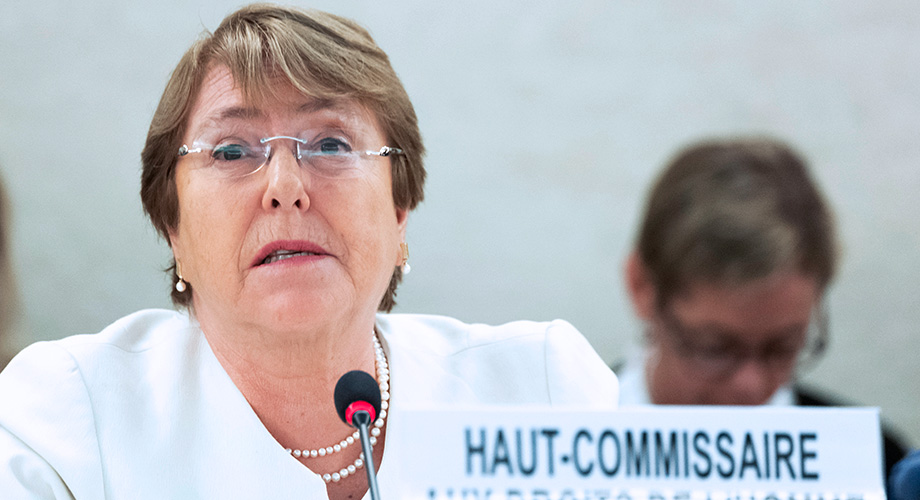
The Philippines government has dismissed a UN human rights report which had claimed that the country had acted with impunity during its war on drugs, as “unfounded”. The UN High Commissioner for Human Rights Michelle Bachelet said the report found “deep-seated impunity for serious human rights violations, and victims have been deprived of justice for the killings of their loved ones. Their testimonies are heartbreaking“, reports Efe news.

The report said President Rodrigo Duterte’s tough anti-drugs campaign had led to human rights abuses including “credible accusations of extrajudicial killings”. In response, presidential spokesman Harry Roque said on Thursday that impunity had no place in the Philippines. “Law enforcers operate on strict protocols and transgressors of the law are made accountable,” he said in a statement.

The UN report also highlighted the issue of official language used by Duterte in the implementation of his war on drugs, noting the use of vocabulary such as “neutralization”.

Such ill-defined and ominous language, coupled with repeated verbal encouragement by the highest level of State officials to use lethal force, may have emboldened police to treat the circular as permission to kill,” the report said. Roque dismissed the accusations. “We remain a nation that takes pride in protecting our people’s rights and freedoms, among which is the freedom of expression,” he said.

According to the UN, at least 8,633 people have been killed since the Philippines government launched its anti-drug campaign, while rights groups claim the tolls is more than 12,000. It added that among those killed between 2014-19 were 248 human rights defenders, social leaders, journalists, lawyers and union members.

http://www.daijiworld.com/news/newsDisplay.aspx?newsID=716146

see also:

https://www.philstar.com/headlines/2020/06/05/2018893/intl-rights-watchdogs-call-un-launch-investigative-body-ejks-philippines

https://www.gmanetwork.com/news/news/nation/741407/gov-t-should-address-un-findings-on-police-planting-evidence-drug-war-killings/story/

EU human rights committee condemns India’s arrest of human rights defenders

June 1, 2020
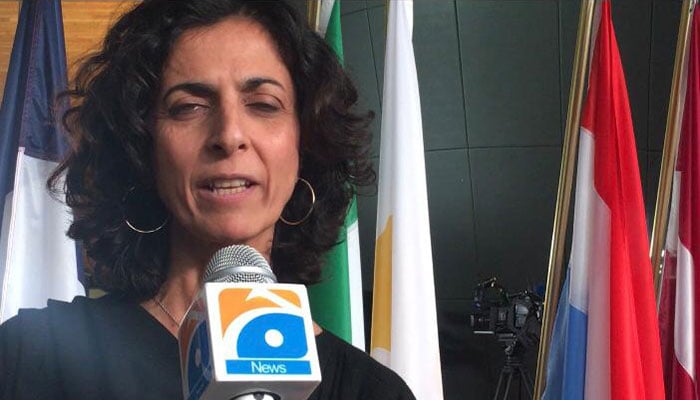
Maria Arena is the chairperson of the Subcommittee of Human Rights of the European Parliament member of Socialist and Democrats parliamentary group. Photo: Reporter

20 May 2020 the chairperson of the Subcommittee of Human Rights of the European Parliament sent a letter to Indian Home Minister Amit Shah, condemning the arrest of human rights defenders under the Unlawful Activities (Prevention) Act.

In her letter, Maria Arena said the European body has been closely following the arrests of human rights defenders Anand Teltumbde and Gautam Navlakha by the National Investigative Agency in India.

Academic and Dalit author Teltumbde and human rights defender Navlakha had surrendered to the police last month after exhausting their possible legal remedies.

Nine other defenders have been in jail since 2018 in the Bhima Koregaon case, where the charges relate to caste violence around an Ambedkarite event and an alleged Maoist plot to foment armed revolution and possibly assassinate Prime Minister Narendra Modi.

In 2018, the United Nations’ Office of the High Commissioner for Human Rights had issued a statement against terror charges being invoked against the activists.

It is particularly alarming to note that human rights defenders cannot conduct advocacy activities, notably in favor of India’s poorest and most marginalised communities, without becoming subject to intimidation and harassment,” Arena said in her letter.

Equally worrying is the fact that terrorism charges, including under the Unlawful Activities Prevention Act (UAPA) have been used to silence them,” she noted pointing out that by United Nations Special Procedures, this clearly represents a violation of international human rights standards.

The letter further stated that to date, the European Parliament had noted that various forms of legitimate peaceful protests against laws, policies and governmental actions, including the Citizenship Amendment Act, had been portrayed as terrorist activities under this legislation, resulting in a number of arrests. [see also: https://humanrightsdefenders.blog/2018/10/07/india-attacks-on-human-rights-defenders-abound-under-unlawful-activities-prevention-act/]

This is notably the case for human rights activists such as Safoora Zargar, Gulfisha Fatima, Khalid Saifi, Meeran Haider, Shifa-Ur-Rehman, Dr Kafeel Khan, Asif Iqbal and Sharjeel Imam, who were recently arrested by the police,” the letter noted.

Against this background, there are also increased fears that the legislation might confer discretionary powers upon state agencies. India, she said, should do much more to ensure a safe and conducive environment for civil society working in the country and consider enacting a law on the protection and promotion of human rights defenders.

In a similar vein, ProtectDefenders on May 26 2020 reports “Increasing attacks against human rights defenders in India and Guatemala”. …..

Over the past month, ProtectDefenders.eu has received a considerable and growing number of reports regarding attacks, threats, and alerts affecting human rights defenders in India. This information alerts to the numerous acts of police and judicial harassment in the repression of legitimate activities in favor of human rights. Among other incidents, police harassment and arbitrary detention of human rights defenders were reported in Manipur State, in relation to statements made to criticise the management of the current COVID-19 pandemic by local authorities.

Safoora Zargar, a 27-years old student and woman human rights defender unjustly detained since 10 April, is one of the OMCT’s campaign #FacesOfHope

For the OMCT campaign see: https://humanrightsdefenders.blog/2020/05/25/faces-of-hope-campaign-human-rights-defenders-imprisoned-worldwide/

Moreover, the Paris-based International Federation for Human Rights has written to Prime Minister Narendra Modi and home minister Amit Shah terming the detentions of several Indian human rights activists ‘arbitrary’. It says the activists have been arrested for “their participation in peaceful protests against the Citizenship Amendment Act 2019 (CAA)” in the last few months.

The letter highlights the cases of Devangana Kalita and Natasha Narwal, student activists who have been associated with the anti-CAA protests in Delhi and were arrested recently by the Delhi police.

https://www.geo.tv/latest/290529-eu-human-rights-subcommittee-condemns-indias-arrest-of-human-rights-activists

https://www.telegraphindia.com/india/europe-flags-rights-concern/cid/1777254

https://thewire.in/rights/ifhr-anti-caa-activists-arrests-release

Virtual Human Rights Council adopts President’s statement on implications of COVID-19

May 30, 2020

On 29 May 2020 the UN Human Rights Council adopted a decision appealing to States to ensure human rights were at the front and centre of national responses to the pandemic and not side-lined while contending with the multiple ill effects of the virus on their societies.

Today’s decision is a profound reminder of the far-reaching effects of this deadly virus on all aspects of our livelihoods and our rights which we cannot take for granted”, stated Council President Elisabeth Tichy-Fisslberger. “We are all in this together, and we must act together with a sense of purpose if we are going to achieve our common agenda to promote and protect human rights around the globe”, she added.

The President’s Statement, presented by Ambassador Tichy-Fisslberger, and adopted by the 47 member States of the human rights body by silence procedure, “calls upon States to ensure that all human rights are respected, protected and fulfilled while combatting the pandemic and that their responses to the COVID-19 pandemic are in full compliance with their human rights obligations and commitments”.

The adopted statement also calls on High Commissioner for Human Rights Michelle Bachelet to produce a report on the impact of the COVID-19 pandemic on the enjoyment of human rights around the world, including highlighting good practices and areas of concern, to be presented at the 46th session of the Human Rights Council scheduled to take place in February/March 2021. [One is to hope that it will include a hard look at the fragmentation of Covid-19 relate policy statements, see: https://humanrightsdefenders.blog/2020/05/27/proliferation-of-human-rights-bodies-guidance-on-covid-19/]

States also invited the High Commissioner to present an oral update on the human rights impact of COVID-19 at the 44th session of the Council which is still scheduled to start on 22 June, which is expected to set the tone for similar statements addressing the multiple human rights angles of the virus during the planned three-week meeting. Since suspending its 43rd session on 13 March due to coronavirus restrictions, the Human Rights Council has been conducting its business in a virtual manner holding regular Bureau meetings, with States and NGOs, and three “virtual informal conversations”, including with the High Commissioner and Special Procedures who have issued more than 90 press releases and statements addressing COVID-19.

https://reliefweb.int/report/world/human-rights-council-adopts-president-s-statement-human-rights-implications-covid-19

4 June 2020 Webinar on business and human rights in the context of COVID-19

May 27, 2020

Having just posted a report on the prolifiration of intergovernmental responses to the Corona virus pandemic [https://wp.me/pQKto-4ob], it perhaps good to point to the webinar that Business & human rights is organising on 4 June 2020 on Risks and Protection of Human Rights Defenders.

This webinar will have a focus on the risks and protection of HRDs, particularly labour rights and land/environmental defenders and ensuring their participation in the post-pandemic recovery.

Date & Time: 4 June, 4.15 – 5.15 (ICT) / 10.15 – 11.15 (BST)

It will have two parts: a closed and an open session. The closed session – happening on Jitsi – will be a safe space for civil society organisations, human rights defenders, including labour rights and land and environmental defenders, labour unions, and journalists to jointly define practical recommendations on what governments and companies can do to address human rights situation, particularly of labour, land, environmental defenders and civic freedoms, in the context of COVID-19. This part of the webinar is invite-only.

The second part – happening on Zoom – will be an open session, will be an opportunity for civil society, defenders, and journalists to interact with government and business representatives and discuss how companies, governments and civil society can work together to ensure all stakeholders are able to shape recovery efforts, and make sure they are human rights compliant. Anyone is free to join us in the public session by RSVP-ing below.

Proliferation of Human Rights Bodies’ Guidance on COVID-19

May 27, 2020

On 22 May 2020 in “Just Security” [see: https://www.justsecurity.org/about-us/) published a post ” Mapping the Proliferation of Human Rights Bodies’ Guidance on COVID-19 Mitigation “. It is in some ways rather critical of the response by intergovernmental bodies in the human rights area when it comes to the COVID-19 pandemic. It starts by pointing out that they have collectively put out more than 150 statements on respecting human rights during the pandemic since late February. ..To help those interested in keeping track of the many statements, the International Justice Resource Center (IJRC) has published a webpage – COVID-19 Guidance from Supranational Human Rights Bodies – listing and linking to all relevant press releases and other guidance. This article serves to provide an overview of – and initial response to – the nature, scope, and sources of human rights advice available to States in the context of the pandemic. Having myself contributed with my blog to the proliferation of policy repsonse by NGOs and IGOs, I feel that this piece deserves full citation:

Read the rest of this entry »

Coronavirus and human rights: New guidance highlights support for persons with disabilities

May 2, 2020
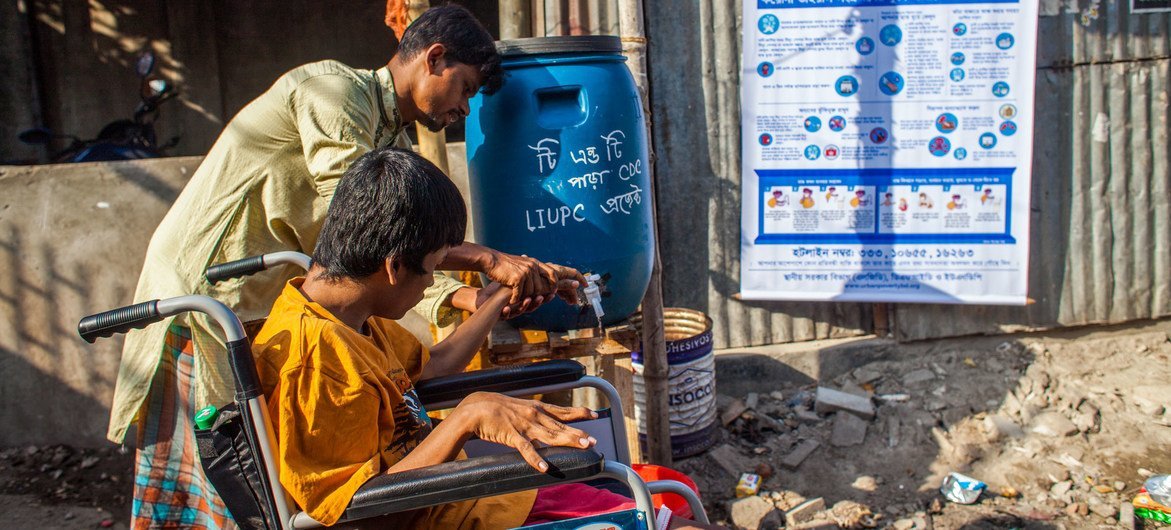
UNDP Bangladesh/Fahad Kaizer – In Bangladesh, the UN Development Programme and partners have rolled out emergency support to vulnerable communities.

New guidance issued on 30 April 2020 sets out key actions, to counter what the UN High Commissioner for Human Rights has called the “double risk” faced by persons with disabilities in the COVID-19 pandemic. As Michelle Bachelet explained, not only are people with disabilities at higher risk because of the crisis, they also are disproportionately affected by response measures such as lockdowns. “People with disabilities are in danger in their own homes, where access to day-to-day support and services may be limited due to lockdowns, and some may suffer greatly from being isolated or confined”, she said. “Persons with disabilities face even greater threats in institutions, as care facilities have recorded high fatality rates from COVID-19 and horrific reports have emerged of neglect during the pandemic.”

The UN rights chief added that making information about the virus available in accessible formats is vital. She also expressed concern over discrimination and stigma at this unprecedented time. “I have been deeply disturbed by reports that the lives of persons with disabilities may somehow be given different weight than others during this pandemic”, she said. “Medical decisions need to be based on individualized clinical assessments and medical need, and not on age or other characteristics such as disability.”

The guidance note published by the UN human rights office outlines steps governments and stakeholders can take during the pandemic. They range from discharging persons with disabilities from institutions, to increasing existing disability benefits, and removing barriers to COVID-19 treatment. Prioritizing testing and promoting preventive measures within institutions to reduce infection risk are other recommendations. Additionally, the guidance spotlights promising practices already in place in some countries. For example, in Switzerland and Spain, some persons with disabilities living in institutions were moved out to be at home with their families, while authorities in Canada have issued priority COVID-19 testing guidelines with specific measures for these settings.

https://news.un.org/en/story/2020/04/1062912

UN High Commissioner for Human Rights Bachelet calls for restraint in governments’ COVID emergency powers

April 29, 2020

UN rights chief calls for restraint in governments’ COVID-19 emergency powers

photo credit: UN

During the ongoing pandemic, the exercise of emergency powers has been used as an excuse for unlawful detention, restriction of movement and suppression of press freedoms, according to Bachelet. The International Press Institute (IPI), a press freedoms watchdog, reports that many nations have silenced journalists under the pretext of stifling “fake news.” The IPI maintains a list of international media freedom violations occurring as a result of emergency powers abuses.

In Cambodia the application of emergency powers in response to the COVID-19 pandemic have resulted in the unlawful detention of those who disobey the emergency measures for up to 10 years in a move Amnesty International called “a naked power grab which seeks to manipulate the COVID-19 crisis in order to severely undercut human rights.” Further human rights abuses are reported from El Salvador, where grocery shoppers were unlawfully detained when President Nayib Bukele defied a Supreme Court order in their defense. In Central Asia, Amnesty International reports massive expansion of police powers through emergency powers granted during the pandemic.

To guide responsible enacting of emergency powers, the UN has released a new set of policy guidelines that advise states to follow principles such as legality, proportionality and non-discrimination during “humane application of emergency powers,” pursuant to the International Covenant on Human Rights. See also: https://humanrightsdefenders.blog/2020/04/14/un-guidelines-for-use-of-emergency-powers-in-time-of-covid-19-pandemic/.

Given the exceptional nature of the crisis, it is clear States need additional powers to cope,” Bachelet’s statement concluded. “However, if the rule of law is not upheld, then the public health emergency risks becoming a human rights disaster, with negative effects that will long outlast the pandemic itself.”


Joint NGO statement on civil and political rights at First Virtual Informal Dialogue with the UN High Commissioner for Human Rights on COVID-19

April 15, 2020

In the context of policy response by Human Rights NGOs to COVID-19 this joint statement should not be missing: On 9 April 2020 Reliefweb published the Joint NGO statement on civil and political rights at First Virtual Informal Dialogue with the UN High Commissioner for Human Rights on COVID-19

This joint statement on the protection of civil and political rights in the context of the COVID-19 crisis was delivered on behalf of 33 non-governmental organizations (NGOs) during the first virtual informal briefing with the UN High Commissioner for Human Rights on 9 April 2020. It was delivered in conjunction with a separate joint statement on economic, social and cultural rights (IOR 40/2124/2020).

See also: https://humanrightsdefenders.blog/2020/04/14/un-guidelines-for-use-of-emergency-powers-in-time-of-covid-19-pandemic/

Tanzania shows great power sensitivity to UN human rights criticism

April 6, 2020
Chadema party MPs Halima Mdee, Ester Matiko and Ester Bulaya attend a press conference after being released from Segerea prison in Dar es Salaam, Tanzania, on March 12. PHOTO | AFP

Chadema party MPs Halima Mdee, Ester Matiko and Ester Bulaya attend a press conference after being released from Segerea prison in Dar es Salaam, Tanzania, on March 12. PHOTO | AFP
According to BOB KARASHANI in the East African of 4 April 2020 Tanzania‘s Foreign Affairs ministry has hit out at the United Nations Human Rights Office for criticising the country’s human rights record as it heads to the October general election. According to the ministry’s Permanent Secretary Col Wilbert Ibuge, the statement issued by the Geneva-based UN agency on March 17, was biased, with unsubstantiated allegations, and an attempt to both malign Tanzania’s international reputation and intrude on its sovereignty. Col Ibuge said that before going public, the agency should have first raised its concerns with the government for clarification “which would have been duly and graciously provided.”

The UN recently called the sentencing of several opposition leaders on charges including sedition and unlawful assembly “further troubling evidence” of a crackdown on dissent and stifling of public freedoms in the country. It accused the government of using the country’s criminal justice system to target its critics, and called on Tanzania to “immediately lift” a four-year ban on political rallies ahead of the October election. “The democratic and civic space has shrunk to almost nothing in Tanzania,” the agency said.

[see also: https://humanrightsdefenders.blog/2019/12/31/annual-reports-2019-tanzania-mostly-a-bad-year/]

—–

https://www.theeastafrican.co.ke/news/ea/Tanzania-slams-UN-rights-abuses-claims/4552908-5514120-6n56syz/index.html