Archive for the 'organisations' Category

2019 Dublin Platform opens with 120 HRDs but five not able to attend

October 2, 2019

The 3-day 2019 Dublin Platform for Human Rights Defenders at Risk was opened on 2 October by Irish Foreign Minister, Simon Coveney, and UN High Commissioner for Human Rights, Michelle Bachelet. Over 120 human rights defenders (HRDs) from more than 80 countries are attending. Front Line Defenders Executive Director, Andrew Anderson, said that five human rights defenders were prevented from traveling to Dublin – Khadija Ismayilova (Azerbaijan), Oyub Titiev (Russia), Said Boudour (Algeria), Michel Matos (Cuba) and Marivic Danyan (Philippines). See more below.

The opening ceremony featured a testimony by Bahraini woman human rights defender (WHRD) Ebtisam Alsaegh, who was finally able to leave Bahrain and attend Dublin Platform years after first being invited. Speaking in Dublin, she called for an immediate end to gendered and sexualized attacks against women human rights defenders around the world.

Over three days, human rights defenders will share tactics and strategies for their protection and security, while learning from each other about their struggles, protests, resistance movements and victories. On Thursday evening, the HRDs will march in a procession to Christchurch Cathedral as part of the “Set Them Free” campaign, calling for the release of HRDs facing multi-decade prison sentences around the world. The campaign includes former Front Line Defenders Protection Coordinator for the Middle East and North Africa, Bahraini HRD Abdulhadi Al-Khawaja, now serving a life sentence for his role in the peaceful pro-democracy uprising of 2011.

Four human rights defenders were either prevented from leaving their countries – or decided not to risk it due to pending charges. [see also: https://humanrightsdefenders.blog/2017/10/18/repressive-governments-and-ophelia-compete-to-prevent-hrds-to-travel-to-dublin/]

On 26 September, Cuban cultural rights defender Michel Matos was banned from travelling from José Martí International Airport in Havana while en route to attend the event in Ireland. Michel is an activist for cultural rights in Cuba. He, along with other artists, musicians and performers, has taken a stand against the controversial Decree 349, signed by Cuba’s President Miguel Díaz-Canel in April 2018, which grants the Ministry of Culture disproportionate power to control, cancel and sanction artistic expression, while containing vague and overly broad restrictions. While being processed at passport control, officials informed him he was not permitted to board the plane as he is on an automatic travel ban list. He was not shown any documents or given any further details on the ban, other than being told that the officials “were following orders”.

Due to his work advocating for the rights of political prisoners in Algeria, Said Boudour has been informed that he is currently being sought by the Algerian authorities. As he prepared to travel to Ireland to attend the Platform, he received advice from his lawyer that should he attempt to leave the country he would almost certainly be arrested at the airport. Said is a member of the Algerian League for Human Rights. He works on a range of civil and political rights in Algeria, with a particular focus on the rights of prisoners in the context of the ongoing anti-government demonstrations, and on democracy in Algeria. The human rights defender has been frequently harassed by the Algerian authorities; he has been previously detained three times and has been under regular police surveillance.

Khadija Ismayilova, a woman human rights defender and journalist from Azerbaijan, was also unable to accept her invite to the Dublin Platform due to a travel ban imposed against her following her release from prison in 2016. In 2018 the Baku Court of Appeal refused for the third time to lift the ban. Khadija is well known for her investigative reports on corruption in Azerbaijan, including the President’s family’s involvement.

Oyub Titiev, a human rights defender from Chechnya, was similarly prevented from travelling due to a travel ban stemming from his conditional release from prison in June 2019. He was detained in January 2018 on fabricated drug charges in retaliation for his work with Human Rights Center Memorial in Chechnya. Both Oyub and Front Line Defenders had written without success to the Russian authorities seeking permission for him to allowed travel to attend the Dublin Platform.

https://www.frontlinedefenders.org/en/2019-dublin-platform

Flight from Manus: the inside story of an exceptional case

September 30, 2019

The journalist Michael Green produced for Earshot a fascinating story on the long trip of Abdul Aziz Muhamat from Manus Island to Geneva. Green followed Aziz closely for years and came to Geneva with him for the Martin Ennals Award ceremony where I met them both. Now the story is complete with beautiful pictures, insights and sound tracks. Flight from Manus cannot really be summarised and the best is to see the whole story for yourself (link below).

“One day, he’s in a detention centre. The next he’s in Geneva, where his face is on billboards and he’s celebrated as a champion of human rights. Aziz was in an incongruous situation, burdened with a heavy choice….

…..With some delays and complications, he made it to Switzerland, but he was only given permission to stay for two weeks. Then, he’d have to return to Manus Island — back to the situation he was being celebrated for campaigning against.

After he accepted the award, a meeting frenzy ensued. Over the following days, Aziz met with a slew of diplomats, dignitaries, politicians and UN bodies. He made speeches at universities and at the United Nations Human Rights Council….[see also: https://humanrightsdefenders.blog/2019/03/02/mea-laureate-abdul-aziz-addresses-un-human-rights-council-on-off-shore-refugee-policy/]

One day, when he arrived for an event at a university, I noticed he was sporting a brand new navy blue overcoat. That morning, someone who had attended the awards ceremony recognised Aziz at the train station. The man said he’d been following Aziz on Twitter and noticed that he was always wearing the same flimsy, zip-up top. He wanted to buy Aziz a proper winter coat — and took him into a nearby store to do just that. Aziz never even got his name.

And yet, despite the all interest and adulation, he still wasn’t free…

..Aziz started getting headaches every day. In his meetings, people were telling him he should not go back to Manus Island. His friends back there were saying it wasn’t safe to return. Despite his doubts, and a crushing sense of guilt and duty towards the people he left behind, Aziz decided he would be a more effective advocate if he could remain in Europe. On the day he was due to leave Switzerland, in early March, Aziz instead sought asylum. He submitted himself to a new detention centre — and to a new uncertain, indefinite future…

…The months went by. ……Finally, in June, Aziz received a phone call from his lawyer that changed everything. Switzerland granted him asylum and permanent residency. [see also: https://humanrightsdefenders.blog/2019/06/10/aziz-mea-laureate-2019-recognised-as-refugee-in-switzerland-from-where-he-promises-to-continue-the-sttuggle/]

———–

The sound bites were turned into a podcast, The Messenger, co-produced by Behind the Wire and The Wheeler Centre.

———————————–

For those in Geneva on Wednesday 2 October 2019 (18:15 – 19:30) in Auditorium A2 of the Maison de la paix, Geneva, Abdul Aziz Muhamat will be speaking about “Surviving Manus Island detention Centre:  A testimony” Moderator: Vincent Chetail  A staunch defender of human rights and dignity, Abdul Aziz Muhamat will share his experience and offer his insight into what lies ahead.

https://www.facebook.com/events/2720741894616336/

—-

https://www.abc.net.au/news/2019-09-30/refugee-abdul-aziz-muhamat-manus-to-geneva/11539314

see also: https://www.abc.net.au/news/2019-10-09/un-bachelet-criticises-australia-asylum-seeker-policies/11588084

In Tajikistan lawyers have to be human rights defenders

September 29, 2019
In June, the United Nations Working Group on Arbitrary Detention declared the detention of Buzurgmehr Yorov a violation of international law.

For more than five years now, lawyers’ ranks have been thinned as the Tajik authorities imposed new rules to disbar lawyers and, in some cases, brought criminal cases against lawyers who defended political opponents. According to RFE/RL’s Tajik Service, known locally as Ozodi, there are only around 850 lawyers in Tajikistan, a country of more than 9 million people. Yorov’s situation is one of the best-known. He had taken on clients who were almost surely targeted by the government. In 2015, Tajik authorities withdrew the registration of and then banned the country’s leading opposition party, the Islamic Renaissance Party of Tajikistan (IRPT), then later declared it an extremist group and claimed it was behind what the government said was a coup attempt. There is scant evidence to support the claim of an attempted coup and even less evidence connecting the IRPT to the purported coup’s alleged mastermind, who was killed by Tajik security forces. More than a dozen senior IRPT leaders were detained at the end of September 2015. Yorov said he would defend them in court, meeting with one of them on September 26. Two days later, he said publicly that his client was being tortured; shortly after that, Yorov was himself taken into custody.

In October 2016, Yorov and fellow rights lawyer Nuriddin Makhamov were found guilty of fraud and inciting national, racial, local, or religious hatred. Yorov was sentenced to 23 years in prison, but additional time was added to his sentence in two successive trials. At one of those trials, Yorov was given two extra years for contempt of court for quoting 11th-century poet Ibn Avicenna.*

On September 18, the Association of Central Asian Migrants announced Yorov was being given the first Fayziniso Vohidova award. The prize is named after a rights lawyer who died earlier this year. Yorov’s brother, Jamshed, accepted the award on his behalf. Buzurgmehr Yorov has since been shortlisted for the Vaclav Havel Human Rights Prize, whose winner should be announced on September 30. [see: https://humanrightsdefenders.blog/2019/08/29/ilham-tohti-one-of-the-finalists-for-the-vaclav-havel-human-rights-prize/]

A September 10 statement by the Geneva-based International Commission of Jurists expressed concern about the Tajik Anti-Corruption Agency’s “acts of intimidation” against a group of lawyers. The statement mentions Abdulaziz Abdurahmonzoda, a member of the independent Lawyers Union of Tajikistan.

Abdurahmonzoda is being charged with fraud. Prosecutors allege that he demanded a $500 bribe from a man named Saidmurod Saidov, who came seeking Abdurahmonzoda’s legal services.

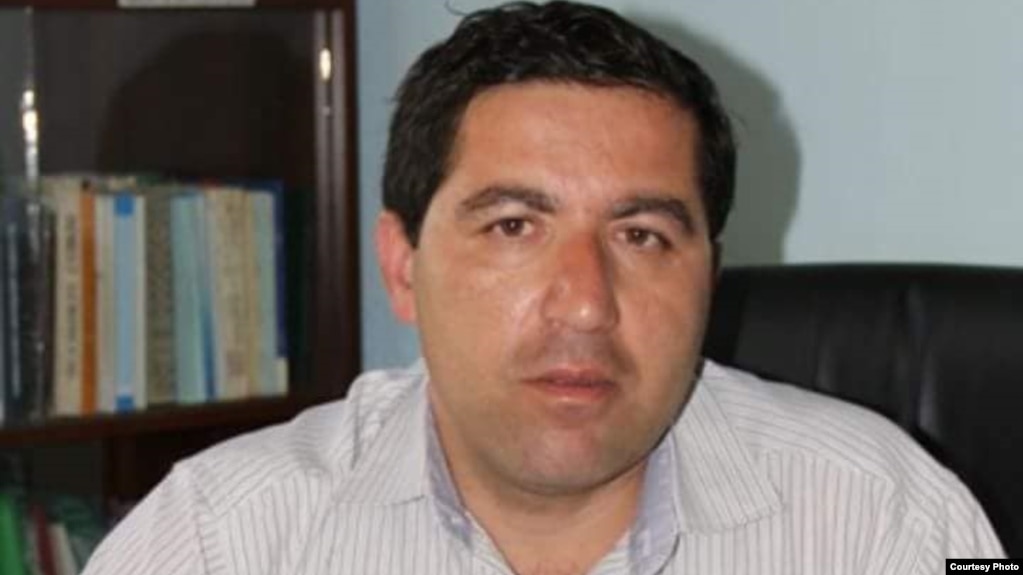
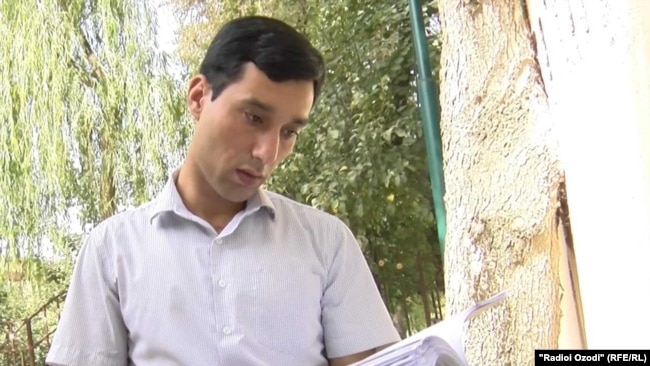
Abdulaziz Abdurahmonzoda

According to the International Commission of Jurists, “Following the initiation of the inquiry of the allegations of ill-treatment, the head of the Anti-Corruption Agency of Dushanbe allegedly sent requests to a number of district courts of Dushanbe to obtain information about civil and criminal cases in which Saidbek Nuriddinov had participated as a lawyer.” Saidbek Nuriddinov is the chairman of the Lawyers Union of Tajikistan.

In 2013, Yorov, Fakhriddin Zokirov, Ishoq Tabarov, and Shukrat Kudratov were the defense attorneys for Zayd Saidov, a successful and former minister of industry who suddenly faced charges ranging from financial crimes to sexual relations with a minor and polygamy, after he declared earlier in the year that he planned to establish a new political party. In December 2013, Saidov was found guilty and sentenced to 26 years in prison (three more years were added in a later trial).

In June, the United Nations Working Group on Arbitrary Detention declared the detention of Buzurgmehr Yorov a violation of international law. Rights groups including Human Rights Watch, Freedom Now, and Lawyers for Lawyers have repeatedly called for an end to the crackdown on lawyers in Tajikistan and the release of those who have been imprisoned.

https://www.rferl.org/a/finally-a-defense-of-tajikistan-s-lawyers/30185435.html

‘Bertxit’: ..Bert Verstappen leaves HURIDOCS after 32 years

September 27, 2019

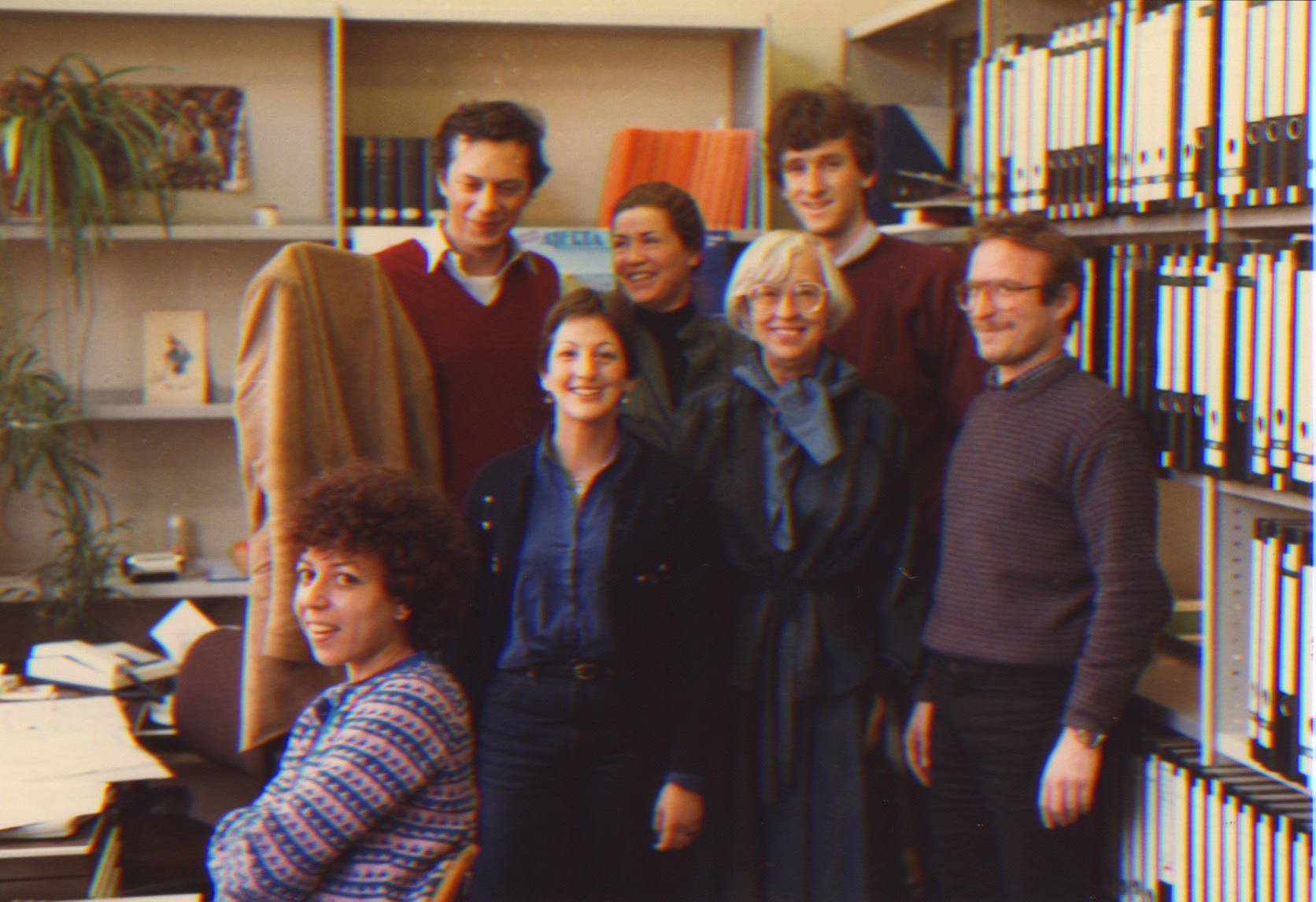
The SIM team in 1984, Bert Verstappen on the right

It is usually not a compliment when somebody is described as ‘furniture’. But Bert Verstappen, senior documentalist at HURIDOCS, is the exception. And the furniture in mind is an expensive, solid oak Dutch cupboard where all valuables are kept. Bert Verstappen – an historian by education – started working as a conscientious objector doing alternative service in the Netherlands Institute for Human Rights (SIM) in approximately 1983, soon after I became the founding director.

He proved his value immediately by working on themes such as documenting human rights violations and together we started a long term research project on the practice of fact finding by NGOs, which resulted in the first-of-its-kind publication of Human Rights Missions, a  Study of the Fact‑Finding Practice of Non‑governmental Organizations, published in 1986 by Martinus Nijhoff Publishers (ISBN: 90 247 3355 3). Morever, as SIM had become the initial ‘secretariat’ of the new HURIDOCS network created in 1982, Bert gave a lot of support to the fledgling unit. In 1987 HURIDOCS moved to Oslo and Bert moved with it, learned Norwegian very quickly and kept the flame burning for many years. He moved to Geneva with HURIDOCS after the big Crete conference in 1992.


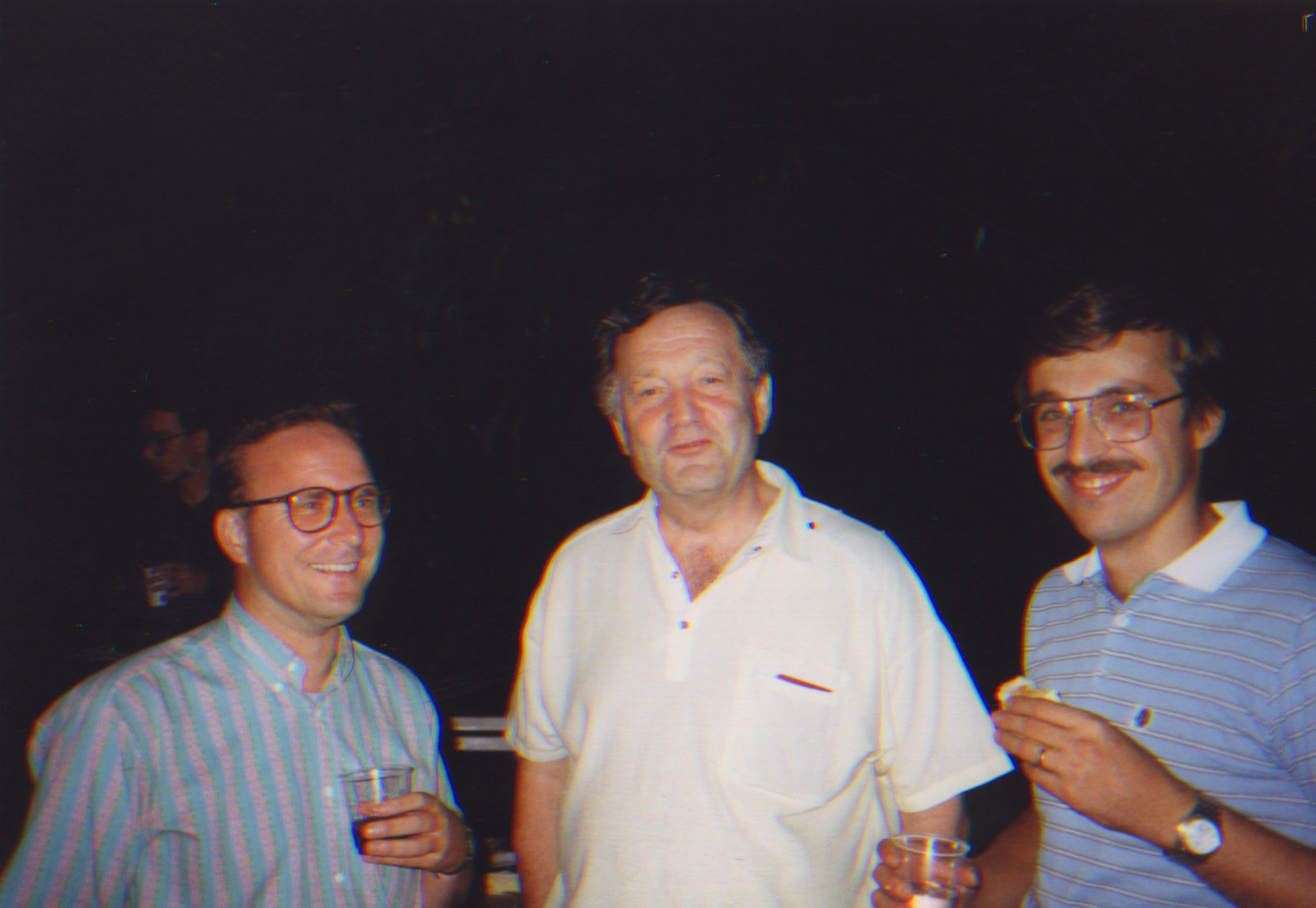
Bert (l.) 1993 in Geneva with Theo van Boven and Oldrich Andrysek

There he continued to coordinate the work of different task forces and co-authored essential HURIDOCS publications. He was involved in many capacity building projects, providing expertise mainly from the documentation angle.  As from 1 October 2019 he goes into retirement but will remain involved in some HURIDOCS projects on a part-time basis until the end of the year, ensuring a “soft bertxit”.

“The development of new tools deeply changed HURIDOCS’ work throughout the years. We renew ourselves constantly. I have committed my career to this exciting challenge because I want to feel useful to human right defenders. Their courage is a source of inspiration for all of us” says Bert Verstappen on the HURIDOCS website

If you want to know more about the history of HURIDOCS in which Bert has played such an important role, see:

“We were breaking new ground”

and about the organnisation today: https://www.huridocs.org/who-we-are/

International Commission of Jurists tries fundraising Gala in Geneva

September 25, 2019

The ICJ is organizing its first fundraising Gala concert on Monday 14 October at 7:30pm in the Palais Eynard, 4 rue de la Croix Rouge, Geneva. The event will support the ICJ and its fight for the defense of the Rule of Law in the world and marks the end of the series of events we organized for our 60th anniversary in the city of human rights. The theme of our Gala will be: “Geneva, the Defense of the Rule of Law: What can I do?”

After a welcome from the Mayor of Geneva and an introduction from Me Pierre de Preux, former Bâtonnier of the Geneva Bar, ICJ Commissioners including Sir Nicolas Bratza (former President of the European Court of Human Rights), Dame Silvia Cartwright (former Judge and Governor General of New Zealand), Professor Bob Goldman (ICJ President and former President of the Inter-american Commission on Human Rights) and Ms Roberta Clarke (ICJ Executive Chair, UN Women’s Regional Office for Asia and the Pacific) will give concrete answers to this question. The evening is also to enjoy a Concert of the ‘Soloists of the Menuhin Academy’ and the cocktail after that.

https://www.facebook.com/events/511460076090161/

Saudi Arabia in the spotlight at the 42nd Sesstion of the Council – hits back wildly

September 25, 2019

The ISHR published a media release on 23 September 2019 about Australia delivering a joint statement on behalf of a cross-regional group of States expressing their concern over the persecution and intimidation of activists, including women human rights defenders, reports of torture, extrajudicial killings, enforced disappearances, unfair trials, arbitrary detention and impunity. It calls on the Saudi government to end impunity including for the murder of Saudi journalist Jamal Khashoggi, accept visits by UN experts, end the death penalty and ratify international human rights treaties.  [see: https://humanrightsdefenders.blog/2019/03/08/saudi-arabia-for-first-time-openly-criticized-in-un-human-rights-council/]

During the same debate, the sister of woman human rights defender Loujain Al-Hathloul, Lina Al-Hathloul called on the UN Human Rights Council to help her hold those who tortured her sister accountable, and secure her immediate and unconditional release.  Since March 2019, the Council has increased its scrutiny of Saudi Arabia, when Iceland delivered the first ever joint statement on the country. In June 2019, the Special Rapporteur on extrajudicial and summary executions Dr. Agnes Callamard presented to the Council her investigation which found the State of Saudi Arabia responsible for the murder of Saudi journalist Jamal Khashoggi in the Saudi consulate in Turkey in October 2018. The UN expert urged States to act immediately to ensure accountability for Khashoggi’s murder and guarantee non-repetition.

‘Australia, leading a cross-regional group of States, has stood up today for human rights despite the political and economic costs’, said Salma El Hosseiny, ISHR’s Human Rights Council advocate. ‘The international community sent a strong and clear message to the government of Saudi Arabia that its crimes won’t go unanswered and that as a Council member, it will be held to heightened scrunity’. [The States who signed on the joint statement are: Belgium, Canada, Croatia, Denmark, Estonia, Finland, Germany, Iceland, Ireland, Latvia, Liechtenstein, Lithuania, Luxembourg, Monaco, Montenegro, Netherlands, New Zealand, Norway, Peru, Slovakia, Slovenia, Sweden, The United Kingdom].

ISHR, as part of the Coalition of Free Saudi Women Human Rights Defenders has been advocating for the immediate and unconditional release of Saudi women’s rights activists. The statement has set out a list of measures that Saudi Arabia should take to demonstrate its political will to engage in good faith with the Council and improve its human rights record. They include:

  • ending the persecution and intimidation of activists, journalists, dissents and their family members;
  • ending impunity for torture and extrajudicial killings, including establishing the truth and accountability for the murder of Saudi journalist Jamal Khashoggi;
  • ending its use of the death penalty;
  • accepting visits by relevant UN Special Procedures;
  • ratifying the International Covenant on Civil and Political Rights and the International Covenant on Economic, Social and Cultural Rights.

[see also: https://humanrightsdefenders.blog/2019/09/16/rsfs-press-freedom-award-2019-goes-to-three-women-journalists/]

‘If Saudi Arabia does not meet any of the benchmarks, the Council should follow up with a resolution establishing a monitoring mechanism over the human rights situation in the country in the upcoming session in March 2020′, concluded El Hosseiny.  Read the joint statement here and watch Lina Al-Hathloul’s statement here.

In response the Saudi delegation has accused the Australian government of racism and of supporting anti-Islamic terrorists like the alleged Christchurch shooter.

https://www.theguardian.com/australia-news/2019/sep/25/saudi-arabia-accuses-australia-of-racism-in-extraordinary-un-broadside

https://mailchi.mp/ishr/alert-to-the-human-rights-councils-35th-session-32317?e=d1945ebb90

Human Rights Watch takes populist leaders in UN to task

September 25, 2019
World leaders gathering for the United Nations General Assembly should reject the abusive policies of autocratic populists and promote greater respect for human rights worldwide, Human Rights Watch said ton 23 September 2019. Four leaders who have spearheaded aggressive attacks on human rights at home and at times abroad – Brazilian President Jair Bolsonaro, US President Donald Trump, Egyptian President Abdel Fattah al-Sisi, and Turkish President Recep Tayyip Erdogan – will open the annual General Debate at UN headquarters on September 24, 2019.

Greta Thunberg receives Amnesty’s Ambassador of Conscience award

September 17, 2019

“The politics required to take on this crisis simply doesn’t exist today,” Thunberg said, standing on a step to reach the microphone. “That is why every single one of us must push from every possible angle to hold those responsible accountable and to make the people in power act.” “Even though it is slow, the pace is picking up and the debate is shifting,” she said, before concluding: “See you on the street!”

Earlier, Kumi Naidoo, the secretary-general of Amnesty International, said that the organization was originally not going to give out the prize in 2019, following the unprecedented decision to withdraw it from Aung San Suu Kyi in late 2018. Amnesty rescinded the award from the Myanmar leader for “the shameful betrayal of the values she once stood for” over Suu Kyi’s “apparent indifference” to the suffering of the Rohingya population. But Naidoo was swayed by the impact Thunberg and other youth activists had already achieved and could achieve in future, adding that the U.K.’s Parliament declared a climate emergency after she met with British political leaders.

Naidoo added that the issue of climate change was increasingly a human rights issue, and touched upon every aspect of Amnesty’s work, from refugees to indigenous rights to the defense of rights defenders, with an ever growing number of environmental activists being killed. “These young, high school students are playing a very important role in educating their own parents.”

https://www.japantimes.co.jp/news/2019/09/17/world/social-issues-world/swedish-activist-greta-thunberg-wins-amnestys-top-human-rights-award/#.XYD87yVS9TY

Has NSO really changed its attitude with regard to spyware?

September 17, 2019

Cyber-intelligence firm NSO Group has introduced a new Human Rights Policy and a supporting governance framework in an apparent attempt to boost its reputation and comply with the United Nations’ Guiding Principles for Business and Human Rights. This follows recent criticism that its technology was being used to violate the rights of journalist and human rights defenders. A recent investigation found the company’s Pegasus spyware was used against a member of non-profit Amnesty International. [see: https://humanrightsdefenders.blog/2019/02/19/novalpina-urged-to-come-clean-about-targeting-human-rights-defenders/]

The NSO’s new human rights policy aims to identify, prevent and mitigate the risks of adverse human rights impact. It also includes a thorough evaluation of the company’s sales process for the potential of adverse human rights impacts coming from the misuse of NSO products. As well as this, it introduces contractual agreements for NSO customers that will require them to limit the use of the company’s products to the prevention and investigation of serious crimes. There will be specific attention to protect individuals or groups that could be at risk of arbitrary digital surveillance and communication interceptions due to race, colour, sex, language, religion, political or other opinions, national or social origin, property, birth or other status, or their exercise or defence of human rights. Rules have been set out to protect whistle-blowers who wish to report concerns about misuse of NSO technology.

Amnesty International is supporting current legal actions being taken against the Israeli Ministry of Defence, demanding that it revoke NSO Group’s export licence. In January 2020 an Israeli court ordered a  closed door hearing.

Danna Ingleton, Deputy Program Director for Amnesty Tech, said: “While on the surface it appears a step forward, NSO has a track record of refusing to take responsibility. The firm has sold invasive digital surveillance to governments who have used these products to track, intimidate and silence activists, journalists and critics.”

CEO and co-founder Shalev Hulio, counters: “NSO has always taken governance and its ethical responsibilities seriously as demonstrated by our existing best-in-class customer vetting and business decision process. With this new Human Rights Policy and governance framework, we are proud to further enhance our compliance system to such a degree that we will become the first company in the cyber industry to be aligned with the Guiding Principles.”

https://www.verdict.co.uk/nso-group-new-human-rights-policy/

https://www.ynetnews.com/article/HJSNKJAeU

RSF’s Press Freedom Award 2019 goes to three women journalists

September 16, 2019

On 12 September Reporters Without Borders (RSF) awarded its 2019 Press Freedom Prize to Saudi journalist Eman al Nafjan, Vietnamese journalist Pham Doan Trang and Maltese journalist Caroline Muscat, at a ceremony held for the first time in Berlin. The award used to be called the Reporters Without Borders Prize {see: http://www.trueheroesfilms.org/thedigest/awards/reporters-without-borders-prize} but is increasingly referred to as Press Freedom Award which could be confusing as there are other awards with that name such as: http://www.trueheroesfilms.org/thedigest/awards/international-press-freedom-awards-canada and http://www.trueheroesfilms.org/thedigest/awards/international-press-freedom-awards-cpj.

The Prize for Courage, which is given to journalists, media or NGOs who demonstrate courage in the practice, defence or promotion of journalism, was awarded to Saudi journalist Eman al Nafjan. The founder of the SaudiWoman.me website and author of many articles in the international media including the Guardian and New York Times, Eman al Nafjan spearheaded the Saudi women’s campaign for the right to drive and against Saudi Arabia’s oppressive male guardianship system. Arrested along with other women’s rights activists in May 2018, she was freed conditionally on 28 March 2019. According to the Saudi media, she is accused of endangering “national security,” maintaining “suspicious contacts with foreign entities” and of being a “traitor,” for which she could be jailed for up to 20 years.

The Prize for Impact, which is given to journalists whose work has led to concrete improvements in journalistic freedom, independence and pluralism, or to an increase in awareness of these matters, was awarded to Vietnamese journalist and blogger Pham Doan Trang. She is the founder of Luât Khoa, an online magazine that specializes in providing information about legal issues, and she edits another, thevietnamese, which also helps Vietnamese citizens to defend their rights and resist the Communist Party’s arbitrary rule. The author of many books including one defending the rights of Vietnam’s LGBT communities, she has been beaten by the police because of her work and was detained arbitrarily twice for several days in 2018.

The Prize for Independence, awarded to journalists for resisting financial, political, economic or religious pressure, went to Malta’s Caroline Muscat. After fellow Maltese journalist Daphne Caruana Galizia was murdered in October 2017, she helped to create The Shift News, an independent investigative news website committed to combatting corruption and defending press freedom in Malta. In this small island nation where most media outlets are subservient to the government, she has exposed many cases of corruption implicating local politicians. Although the repeated target of gag suits, The Shift News has refused to comply with content take-down demands from Henley & Partners, a British firm that advises governments on residence and citizenship-by-investment policy. She received an award from the European Commission in 2015 for her journalism,

“Every year, award-winners are unable to attend because the leaders of their countries prevent them,” RSF Secretary-General Christophe Deloire said. “Two of this year’s three laureates have been unable to collect their awards personally,………… These journalists, who should be honoured in their countries, are denied the freedom to travel and often their freedom, period. But their commitment transcends borders without the dictators being able to do anything to prevent it.”

https://rsf.org/en/news/journalists-saudi-arabia-vietnam-and-malta-honoured-rsfs-2019-press-freedom-awards