Archive for the 'organisations' Category

China’s “Residential Surveillance at a Designated Location” needs to disappear!

February 5, 2022

In China, brave activists are trying to improve the daily life of their fellow citizens and defend their rights to speak freely, to be treated on an equal footing with others, to protest peacefully, or to practice a religion. But the Chinese government fears that their actions will challenge its power and that their criticisms will undermine it. Like the Uyghur and Tibetan peoples, many who stand up for human rights are repressed and silenced, and the authorities have found a very effective way to do that: they disappear them.

On 22 October 2020, exactly a year ago, lawyer Chang Weiping was disappeared under ‘Residential Surveillance at a Designated Location’ (or ‘RSDL’) for ‘inciting subversion of State power.’ Lawyer Chang is a human rights lawyer, who has bravely defended sensitive cases of victims of sexual harassment during China’s ‘Me Too’. He has also worked with victims of discriminatory practices due to their sexual orientation or HIV status, or targeted for speaking freely or practicing their religion. Ten days before his disappearance, he had published a video denouncing torture he had endured when he was first held under RSDL in January 2020, after attending a meeting with other activists a month earlier. UN experts have publicly called for his release. No one knows where he is held. [see also: https://www.trueheroesfilms.org/thedigest/laureates/2e6ec951-79e7-4a36-b077-76bfe05e3817]
Since 2012, China’s rubber-stamp legislative body passed and amended several articles in its Criminal Procedure Law that give police the power to take people into custody without disclosing where they will be held: this is called ‘Residential Surveillance at a Designated Location’. When this happens, people are denied all contact with the outside world, even with their family or a lawyer, for up to six months. No one knows where they are. They are interrogated and often tortured to extract confessions. Meanwhile, despite the barriers and risks they have to overcome, their families persist in seeking knowledge about their loved one’s fate and justice for what they suffered.

United Nations experts are clear: RSDL is a form of enforced disappearance. With estimations of up to 57.000 individuals under RSDL, enforced disappearances are endemic in China. RSDL tears families apart, and is intended to instill fear into China’s human rights movement. See also: https://humanrightsdefenders.blog/2018/01/10/more-on-residential-surveillance-in-a-designated-location-rsdl-in-china/

Many human rights activists have stopped promoting dignity, peace and justice in their communities because they fear to be disappeared by the police. This practice – enforced disappearance – is absolutely wrong and prohibited under international law. Everyone should be able to speak their mind and participate in the life of their communities. 
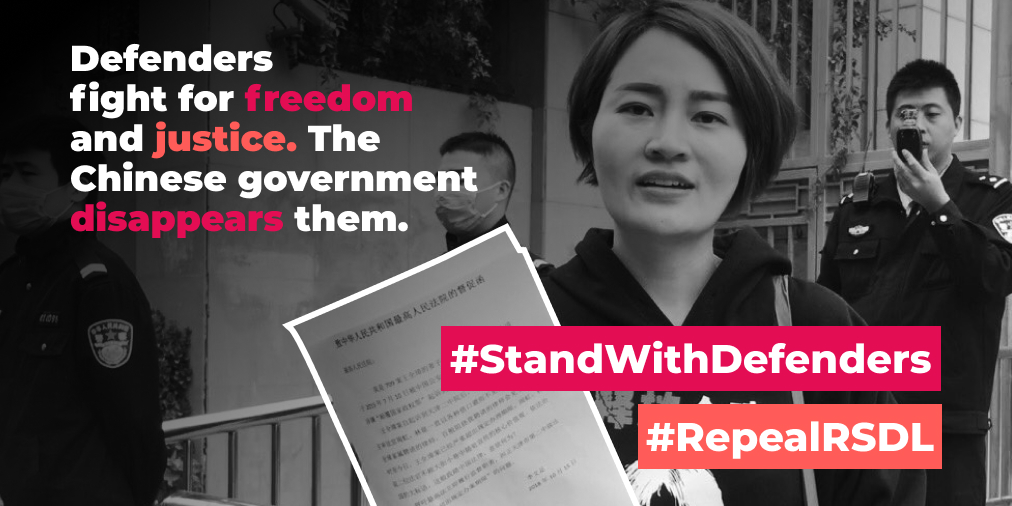
ISHR, Safeguard Defenders, The Rights Practice and The 29 Principles are mobilising the international community to put pressure on China to #RepealRSDL and end enforced disappearances against human rights defenders.

They want the Chinese government to repeal RSDL (articles 74 to 79 of China’s Criminal Procedure Law), and to bring truth and justice to victims.

RSDL should be high on the agenda of any human rights exchange with the Chinese government. We want governments worldwide to speak out and use all bilateral and multilateral channels to press the Chinese government to #RepealRSDL. We want the UN to amplify its monitoring of RSDL in China, and to sustain its pressure on the authorities to respect international law and to #RepealRSDL.

Feeling supported is vital for disappeared defenders and their relatives. We want the media, human rights groups and activists across the world to pay closer attention to RSDL, to raise awareness around them, and to stand in solidarity with disappeared Chinese human rights defenders and their relatives.

How do we achieve this? 

We are working hard to: 

  • Increase the awareness and legal understanding of government officials and diplomats, UN experts, journalists, and human rights groups, there is a short document that explains clearly what UN experts have said about RSDL, and are spreading the word online and offline.
  • Mobilise diplomatic missions, through meetings and letters, and encourage them to speak out on RSDL at the UN and in other spaces; 
  • Push UN experts to take up individual cases and pay a closer look at the use and impact of RSDL in light of China’s obligations under international human rights law ;
  • Encourage governments, activists, and concerned individuals to stand in solidarity with disappeared human rights defenders and their relatives

What can you do? 

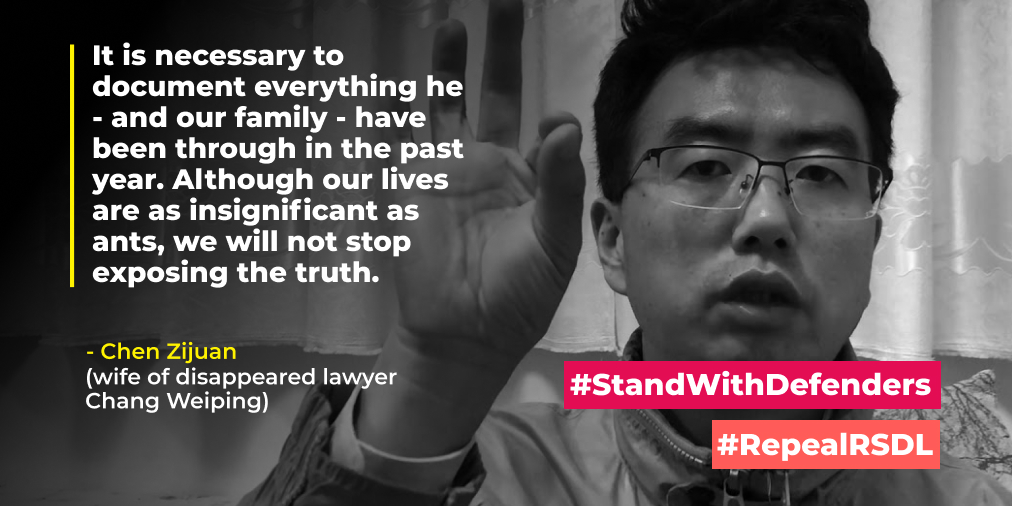
Stand in solidarity! Feeling supported is vital for disappeared defenders and their relatives. Send a solidarity message with Chen Zijuan, lawyer Chang’s wife: write a postcard, and share it with her on your social media by clicking on the image below. Don’t hesitate to personalise it before tweeting. Alternatively you can copy paste this link in your browser: https://ctt.ac/477cf
You can also raise awareness! Check out the informational and communication material in our ‘Campaign Toolbox’, and share it with your country’s ministry of foreign affairs, a journalist you know, your friends or your social media followers – and remember to tag @ISHRglobal, and #StandWithDefenders #RepealRSDL.

https://ishr.ch/action/campaigns/call-on-china-to-free-defenders-and-repealrsdl/
Donovan Ortega, young Human Rights Defender from Mexico

February 5, 2022

We try to defend happiness from a principle of reality” – Donovan Ortega, Human Rights Defender.
Donovan Ortega is a human rights defender from Mexico who participated in the 2021 online edition of ISHR’s Human Rights Defender Advocacy Programme (HRDAP).
Donovan is responsible for the international advocacy agenda at the Fray Francisco de Vitoria Human Rights Center in Mexico, and had the opportunity to do advocacy activities at the Human Rights Council in the framework of Mexico’s Universal Periodic Review (UPR).

In this short video, he explains how his work will help to achieve his objectives and vision in the future.

Amnesty joins debate on Apartheid versus Palestinians but reactions debase struggle against real antisemitism

February 4, 2022

In Newsweek of 3 February 2022 Omar Baddar, Director of the Arab American Institute, published an opinion piece entitled “Amnesty Settles It: It’s Time for U.S. Accountability on Israel”.

Amnesty International, issued on 1 February 2022 an extensive report titled “Israel’s Apartheid against Palestinians: Cruel System of Domination and Crime against Humanity.” As the report documents, “Israel has imposed a system of oppression and domination over Palestinians wherever it exercises control over the enjoyment of their right.” The report further found that Israel’s policies are part of a “systematic as well as widespread attack directed against the Palestinian population, and that the inhuman or inhumane acts committed within the context of this attack have been committed with the intention to maintain this system and amount to the crime against humanity of apartheid.

In recent years, some leading Israeli human rights organizations have started using the word apartheid to describe their government’s systems of oppression. Last year, Human Rights Watch, one of the best-known American human rights organization, similarly accused Israel of apartheid. Amnesty International following suit this week has solidified the human rights community’s emerging consensus on Israeli apartheid. See: https://humanrightsdefenders.blog/2021/01/18/israel-and-apartheid-israeli-human-rights-group-stirs-debate/ and https://humanrightsdefenders.blog/2021/07/09/israel-and-the-international-crime-of-apartheid-a-response-by-human-rights-watch-worth-studying-in-full/

Omar Baddar, states: The most important consequence of this consensus is that it lays to rest the false but popular notion of an “Israeli-Palestinian conflict” between two equal sides. The new consensus instead frames the issue more accurately as a struggle between an oppressor and an oppressed people. In the same way that Apartheid in South Africa and Jim Crow segregation in the American South denied people the ability to live in freedom with their full rights simply because of who they are, Israel also denies freedom to Palestinians and many basic rights to Palestinians just because they are Palestinians.

Like the Human Rights Watch report before it, what’s remarkable about the new Amnesty report is how extensive and detailed it is. Amnesty did its due diligence and made sure that its central claims are backed by a mountain of evidence, meticulously documenting unlawful killings, forced displacement and systemic discrimination on a massive scale. Unsurprisingly, the devastating and irreproachable nature of this report triggered a meltdown among Israel’s apologists. See for this also: https://yubanet.com/world/human-rights-organizations-from-israel-condemn-vicious-attacks-on-amnesty-international/

Unable to argue with the substance of the Amnesty report, pro-Israel groups have resorted either to blindly asserting—as AIPAC did—that Amnesty was lying, or baselessly claiming—as the ADL did—that the report would spark antisemitic attacks. The latter is nothing short of a cynical weaponization of antisemitism—which, in fact, is a serious and rising scourge in America and across the world—unscrupulously exploited in order to silence criticism of Israeli government policy.

We cannot have the open debate we need in a free society if speaking honestly about Israeli policy results in smears of bigotry. By misusing the charge of antisemitism in this fashion, Israel’s apologists aren’t just harming the human rights defenders being smeared by it; they’re also harming the real effort to eliminate antisemitism—a goal that we all have a moral obligation to come together and accomplish.

What this Amnesty report should have done is serve as a wake-up call to an American political establishment that prioritizes pandering over sensible policy, and that has turned a blind eye to a grave injustice for far too long. After all, it is U.S. military funding, to the unrivaled tune of $3.8 billion per year, which enables the Israeli military to maintain its suffocating grip on the occupied Palestinian population, and it is U.S. diplomatic protection, through more than 40 vetoes at the UN Security Council and beyond, that shields Israel from accountability for its crimes.

And yet, despite repeatedly claiming to prioritize human rights in its foreign policy, the Biden administration’s reaction to this report was utterly disappointing. The administration rejected it out of hand.

The Amnesty report bemoans the fact that, “for over seven decades, the international community has stood by as Israel has been given free rein to dispossess, segregate, control, oppress and dominate Palestinians.” It criticizes countries like ours that have “actively supported Israel’s violations by supplying it with arms, equipment and other tools to perpetrate crimes under international law and by providing diplomatic cover, including at the UN Security Council, to shield it from accountability.” The report also reiterated its call for “states to immediately suspend the direct and indirect supply, sale or transfer of all weapons, munitions and other military and security equipment.”

https://www.newsweek.com/amnesty-settles-it-its-time-us-accountability-israel-opinion-1675876

https://www.juancole.com/2022/02/prolonged-occupation-palestinians.html

https://www.thecitizen.in/index.php/en/NewsDetail/index/6/21449/Why-Is-Israel-Fearful-of-Amnestys-Apartheid-Report

Council of Europe starts infringement process against Turkey

February 3, 2022
Osman Kavala © 2017 Private

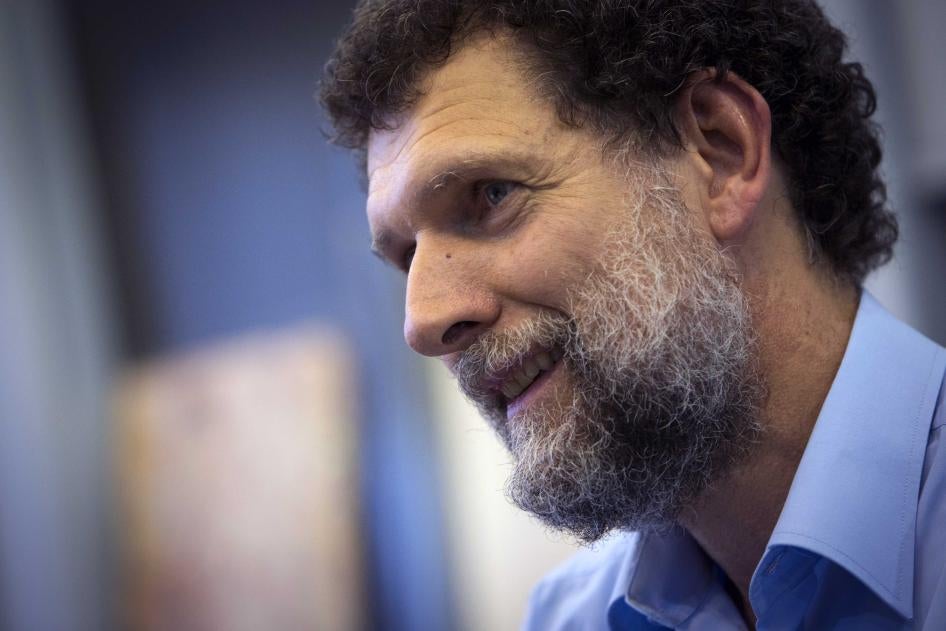
The Council of Europe Committee of Ministers voted on 2 February, 2022 to begin infringement proceedings against Turkey. Human Rights Watch called it an important step to support human rights protection in Turkey and uphold the international human rights framework. The resolution concerns Turkey’s failure over the past two years to comply with the European Court of Human Rights’ judgment in which the Court ruled that Turkey should free human rights defender Osman Kavala and fully restore his rights. See also: https://humanrightsdefenders.blog/2022/01/18/kavala-saga-continues-turkish-court-keeps-philanthropist-in-prison/

The Committee of Ministers’ vote to pursue infringement proceedings against Turkey for its politically motivated, arbitrary detention of human rights defender Osman Kavala shows a resolve to uphold the international human rights law framework on which the Council of Europe is based,” said Aisling Reidy, senior legal adviser at Human Rights Watch. “The resolution sends a reminder to all Council of Europe member states that European Court of Human Rights judgments are binding, and it is an important acknowledgement of Turkey’s rule of law crisis.

The Committee voted to send the case of Kavala v Turkey back to the European Court of Human Rights for a legal opinion on whether Turkey has met its obligations to comply with the judgment. If the European Court confirms – as it is expected to do – that Turkey has failed to implement its judgment, the Committee of Ministers may then take additional measures against Turkey.

These could include ultimately suspending Turkey’s voting rights in the Council of Europe and could even jeopardize Turkey’s membership. Turkey is the second country in Council of Europe history to be subjected to the sanction process for breaching member states’ obligations to implement European Court of Human Rights judgments. (first time was in 2017 against Azerbaijan in the case of Ilgar Mammadov).

The Kavala judgment is legally binding, yet the Turkish authorities have snubbed the Strasbourg court and ignored the decisions of the Committee of Ministers, which represents the Council’s 47 member states, calling for his release and the full restoration of his rights. Ankara has already reacted as expexted: it has accused the Council of Europe of “interfering in an ongoing judicial process

The Turkish courts and prosecutors have engaged in a series of tactics to circumvent the authority of the European Court and the Council of Europe, using domestic court decisions to prolong Kavala’s detention and extend the life of baseless prosecutions. The courts have issued sham release orders, initiated multiple criminal proceedings against Kavala on the same facts, and separated and re-joined case files accusing him of bogus offenses.

In 2021, Turkey merged the proceedings against Kavala with an entirely separate and much older case against football fans and others charged with a demonstration during 2013 protests a few kilometers away from Istanbul’s Gezi Park.

Turkey’s international partners, in particular countries that supported the infringement vote, should make it clear that Turkey’s continued failure to implement the Court’s judgment and to release Osman Kavala would have consequences on their relations with Turkey. In particular, the European Union should tie its proposed “positive agenda” with Turkey to Kavala’s release and make respect for rights a prerequisite for opening talks on the Customs Union modernization that Turkey is seeking.

Turkey knows that the European Court’s judgments are binding but has chosen to defy its obligations and the rule of law,” Reidy said. “Through the infringement proceedings and engagement from other countries, that needs to change, and Turkey should free Osman Kavala immediately and restore all of his rights.

https://www.hrw.org/news/2022/02/02/turkey-council-europe-votes-infringement-process

https://www.hurriyetdailynews.com/turkey-slams-council-of-europe-for-intervening-in-ongoing-kavala-case-171229

Myanmar: one year after the coup – only getting worse

February 2, 2022
A crowd of protesters wearing face masks, holding up an image of a woman, Aung San Suu Kyi.

On 1 February last year, the military seized power over Myanmar/Burma by overturning the election results and detaining State Counsellor Aung San Suu Kyi. The military is still controlling power by force and uses brutal violence against human rights defenders, civil society groups, and journalists in order to silence all forms of protest and dissent. More than 1,500 people have been killed by the military and over 8,000 people have been arrested.

The coup prompted mass protests and more than 1,500 people have been killed by the military. Over 8,000 people have been arrested in the harsh crackdowns. In a series of charges, Aung San Suu Kyi has been sentenced to several years in prison. Most recently, five new corruption charges against her were announced and in all she faces up to 164 years in jail. See also: https://humanrightsdefenders.blog/2021/09/30/rohingya-human-rights-leader-mohibullah-murdered-in-bangladesh-refugee/

Despite the military’s brutal response, people have come together to fight the dictatorship. Nationwide protests, boycotts, strikes, and coordinated civil disobedience movements have taken place. Journalists across the country have continued their work despite severe attacks by the military.  

A new report by Athan looks at how the military coup has affected journalists’ work and press freedom in the country. Throughout the country’s history, military coups have led to severe attacks on press freedom and the 2021 coup is no exception.  Since the launch of the coup, 141 journalists have been arrested and 13 have been sentenced to prison. On 10 December, photojournalists Ko Soe Naing and Ko Zaw Tun were arrested while taking photos of a nationwide silent strike. Ko Soe Naing was tortured to death at the interrogation centre four days later. Just a couple of weeks after that, editor of the Federal Journal, A Sai Kay (Aka) Sai Win Aung, was shot dead by the military in Lay Kay Kaw.  See also: https://humanrightsdefenders.blog/2021/05/11/three-democratic-voice-of-burma-journalists-and-two-activists-risk-refoulement-by-thailand/

According to Athan, the attacks on press freedom since the 2021 military coup have been the worst the country has seen.  “Journalists and news media require continuous support to sustain local media and its journalists in order to secure journalists’ careers and their safety, and to enable an environment for journalistic professionals and the industry,” says a representative from Athan about the report. 

On the one-year anniversary of the military coup in Myanmar, the High Representative on behalf of the European Union and the Foreign Ministers of Albania, Australia, Canada, New Zealand, Norway, Republic of Korea, Switzerland, the United Kingdom, and the United States, have made the following declaration:

….The European Union is deeply concerned by the continuing escalation of violence and the evolution towards a protracted conflict with regional implications. Since the military coup, the situation has continuously and gravely deteriorated. A large part of the population is now in a highly precarious situation, experiencing poverty, food shortages, displacement, and violence. ..

The European Union condemns in the strongest terms continuing grave human rights violations including torture, sexual and gender-based violence, the continued persecution of civil society, human rights defenders, and journalists, attacks on the civilian population, including ethnic and religious minorities by the Myanmar armed forces. Therefore, the EU calls for full accountability of the leaders responsible for the coup as well as of the perpetrators of violence and human rights violations. The EU also reiterates its firm demand for the immediate and unconditional release of all prisoners arbitrarily detained in relation to the coup and the return to power of democratically elected leaders.

As a matter of priority, the EU reiterates its calls for an immediate cessation of all hostilities, and an end to the disproportionate use of force and the state of emergency. The military authorities must ensure rapid, safe, and unhindered humanitarian access to all displaced persons and people in need, in all parts of the country. The European Union will continue to provide humanitarian assistance, in accordance with the principles of humanity, neutrality, impartiality, and independence and reiterates its call for the full and immediate respect of international humanitarian law…

In view of the escalating violence in Myanmar, increased international action is required in line with the already existing EU arms embargo on Myanmar. Since the military coup on 1 February 2021, the EU has imposed targeted sanctions on the Myanmar military, its leaders, and entities. In the absence of any swift progress of the situation in Myanmar, the EU stands ready to adopt further restrictive measures against those responsible for undermining democracy and the serious human rights violations in Myanmar.

It is a failed coup,” said Yanghee Lee, co-founder of the Special Advisory Group on Myanmar and former UN special rapporteur for human rights in the country in a CNN report of 1 February. “The coup has not succeeded in the past year. And that is why they are taking even more drastic measures to finish out the coup.” He reported on problems for human rights defenders already in 2015, see: https://humanrightsdefenders.blog/2015/03/19/myanmar-backsliding-by-prosecuting-human-rights-defenders-instead-of-perpetrators/

https://edition.cnn.com/2022/01/31/asia/myanmar-coup-anniversary-resistance-junta-intl-hnk-dst/index.html

Burkina Faso: Coup Puts Rights at Risk – Diallo asks military to respect international law

January 29, 2022

Burkina Faso military officers responsible for the January 2022 coup should ensure the protection of human rights and a swift transition to democratic rule, Human Rights Watch said today. The authorities should give priority to the humane treatment of people in custody, respect freedoms of the media and rights defenders, and ensure that counterterrorism operations respect basic rights. ..  

“The Burkina Faso military coup occurred in a country with weak democratic institutions amid a brutal armed conflict and a growing humanitarian crisis,” said Corinne Dufka, Sahel director at Human Rights Watch. “The military authorities now in control need to act urgently to protect people’s rights and ensure they don’t make a bad human rights situation even worse.”

During a January 24 news conference, the self-proclaimed Patriotic Movement for Safeguard and Restoration led by Lt. Col. Paul-Henri Sandaogo Damiba, announced the suspension of the constitution, the dissolution of the government and national assembly, and a nationwide curfew. The movement’s spokesperson said elections would be held “within a reasonable time frame” and pledged to respect Burkina Faso’s international commitments, notably including human rights.

The coup leaders claimed the coup took place “without bloodshed.” However, there is uncertainty about the safety of President Kaboré and his close associates, amid reports of potential injuries and deaths during the military takeover. The MPSR should publicly account for the whereabouts and condition of government officials in custody and allow the Office of the United Nations High Commissioner for Human Rights, the national human rights commission, and independent human rights monitors to visit Kaboré and any other detainees. All those detained should be promptly brought before a judge and charged or be released.

The coup occurred within the context of a marked deterioration in the country’s human rights and security situation over the past year as attacks and atrocities by armed Islamist groups surged and the humanitarian situation worsened. Burkina Faso was already struggling to ensure justice for hundreds of unlawful killings by all sides, and to uphold the civil and political rights of its population.

During 2021, armed Islamist groups killed at least 250 civilians and scores of security force members during attacks in several provinces. Since 2018, Human Rights Watch has documented that government security forces and pro-government militias allegedly summarily executed hundreds of suspects, mostly in the country’s northern regions. Virtually none of these attacks have resulted in investigations and prosecutions.

Burkinabé rights defender, Dr. Daouda Diallo, secretary-general of the Collective Against Impunity and Stigmatization (CISC), and laureate of the 2022 Martin Ennals Award for Human Rights Defenders, told Human Rights Watch that he hoped the military authorities would “address Burkina Faso’s deepening social divisions, and ensure crucially needed protection for all civilians at risk from conflict, while scrupulously respecting international humanitarian law.”  See also: https://www.trueheroesfilms.org/thedigest/laureates/ca7f1556-8f73-4b48-b868-b93a3df9b4e1

The military authorities should also ensure respect for freedom of expression. In late 2021 and early 2022, the government shut down internet services in a move to quell protesters who had taken to the streets to demand an end to the violence and to protest rising food prices. A 2019 law criminalizing some aspects of reporting on security force operations dampened media freedom, with journalists reluctant to report on allegations of abuses by pro-government forces. Further, in 2021, the government implemented a de facto ban on visits by journalists to internally displaced camps. After taking power, the MPSR issued a warning against the communication of “false news.”..

Military takeovers in Africa in the past year occurred in Chad, Guinea, Mali, and Sudan. Coup leaders have often taken advantage of social unrest, grievances about corruption, and the failure of governments to respect basic rights, uphold constitutional obligations, and carry out promised reforms. Democratically elected governments need to look beyond elections as a marker of democratic progress, and focus on upholding human rights, strengthening the rule of law, and building credible, independent institutions, Human Rights Watch said…

“Burkina Faso’s military leadership should not allow the political upheaval created by the coup to lead to a vacuum in the protection of basic rights,” Dufka said. “The military authorities need to maintain discipline within the security forces and ensure that the human rights of all Burkinabé are respected, including their right to vote freely in elections.”

https://www.hrw.org/news/2022/01/27/burkina-faso-coup-puts-rights-risk

Anti-terror laws in India keep being used against human rights defenders

January 28, 2022

On 26 January 2022 four major NGOs made a strong joint statement on India:

We, the undersigned civil society organizations, are deeply concerned about the ongoing harassment of 18 human rights defenders under the Unlawful Activities (Prevention) Act (UAPA) in reprisal for their advocacy work against the Citizenship (Amendment) Act (CAA) 2019. Thirteen of those arrested under the UAPA are currently in Rohini, Tihar, and Mandoli jails, New Delhi. We call for the immediate and unconditional release of all the human rights defenders arrested, and the dismissal of all charges against them.

The CAA has been widely criticized by activists, human rights defenders, civil society organizations, students and the international community for being openly sectarian and discriminatory against Muslims. After the CAA’s adoption, protesters across the country took the street to voice their concerns against the legislation, which goes against India’s Constitutional principles of secularism and equality. Police authorities responded by arresting human rights defenders and activists who spoke up against the CAA. Most of them were student activists and human rights defenders from the minority Muslim community.

The arrests of human rights defenders began in February 2020 and are still ongoing. Many of them had multiple First Information Reports (FIR) registered against them and were charged with serious offenses, including under UAPA. Of those arrested, only five human rights defenders – Natasha Narwal, Devangana Kalita, Safoora Zargar, Asif Iqbal Tanha, and Md. Faizan Khan – were released on bail. Thirteen others – Sharjeel Imam, Umar Khalid, Khalid Saifi, Tahir Hussain, Saleem Malik, Mohd. Saleem Khan, Meeran Haider, Shadab Ahmed, Tasleem Ahmed, Shifa Ur Rehman, Athar Khan, and women human rights defenders Ishrat Jahan and Gulfisha Fatima– remain in jail. Despite prolonged incarceration, the trial for their case has not commenced yet.

See also: https://humanrightsdefenders.blog/2020/06/01/eu-human-rights-committee-condemns-indias-arrest-of-human-rights-defenders/ and https://humanrightsdefenders.blog/2020/06/27/un-experts-address-3-big-ones-usa-china-and-india/

On 24 January 2022, a Delhi court framed charges against human rights defender Sharjeel Imam while rejecting his application for bail. The charges include Sections 124A (“sedition”), 153A (“promoting enmity between different groups on grounds of religion), 153B (“imputations, assertions prejudicial to national integration”), 505 (“statements conducing to public mischief”), along with Section 13 (“punishment for unlawful activities”) of the UAPA.

Khalid Saifi, Ishrat Jahan, and Gulfisha Fatima have reported custodial violence and torture by the Delhi police. There has been no effective investigations into these allegations or responsibility taken for their treatment. Shifa Ur Rehman, who has been in detention since 26 April 2020, suffers from severe kidney disease and has been denied access to adequate medical care in prison.

We express our deep concern over the harassment and arbitrary detention of human rights defenders that appear to be in retaliation to their peaceful activism and the legitimate expression of dissent against a discriminatory law. Despite the risks, human rights defenders have raised their voice for those oppressed by the CAA and in support of the Constitutional values that represent India.

We call on the Indian authorities to protect those defending human rights values and principles enshrined in national laws and to uphold international human rights commitments. We stand in solidarity with those who cannot speak out due to their incarceration, threats by Indian authorities, or due to a prevailing sense of fear. The treatment of these human rights defenders highlights a pattern of perpetrated abuse and violence, which is also exerted through legal mechanisms. This is especially concerning given India’s membership in the United Nations Human Rights Council and its pledge to preserve and protect human rights.

We urge the relevant authorities in India to:

1. Immediately and unconditionally release all human rights defenders arrested for protesting against the CAA, dismiss all charges, and cease all forms of harassment against them.
2. Guarantee under all circumstances that the arrested human rights defenders are not subjected to any form of torture and other ill-treatment while in police custody, and guarantee their access to adequate medical care and treatment.
3. Initiate a thorough judicial review of the Unlawful Activities (Prevention) Act and the Citizenship (Amendment) Act in genuine consultation with independent civil society organizations and human rights defenders, with a view to aligning these laws with India’s obligations under international human rights law.
4. Guarantee in all circumstances that all human rights defenders in India are able to carry out their legitimate human rights activities without fear of reprisals, and free of all restrictions—including police and judicial harassment.

Please inform us of any actions that may be taken with regard to the above case.

-FIDH
· Civicus:
· Front Line Defenders
· World Organisation Against Torture (OMCT)

https://www.fidh.org/en/region/asia/india/india-ongoing-targeting-of-18-human-rights-defenders-under-anti

Rights Arcade – a game to help human rights education

January 24, 2022

This International Day of Education, Amnesty International has launched Rights Arcade, a free human rights game app which aims to educate the next generation of human rights defenders about rights such as freedom of expression and freedom of peaceful assembly.

Rights Arcade is designed to strengthen the human rights movement through action-oriented education. The games will boost players’ knowledge about human rights and encourage people to take action on human rights issues.  

One of Rights Arcade’s key features is a self-paced approach that allows players to learn, reflect and take action at their own pace while navigating through the game’s stories.

This game has been designed to empower and encourage people everywhere, but especially younger audiences, to learn about human rights in an engaging manner,” said Agnès Callamard, Amnesty International’s Secretary General.

Young people are pivotal in setting the human rights agenda, today and for the future. Reaching them in the spaces they inhabit, or with which they engage regularly, is key to enabling new generations of activists and empowering them to fight for, and protect, human rights – now and in the future.”

The players take a human rights journey through the experiences of three real-life people: Ahmed Kabir Kishor, a cartoonist unjustly charged under the Digital Security Act in Bangladesh [see: https://humanrightsdefenders.blog/2020/06/16/30-information-heroes-honored-by-reporters-without-borders/] Zhang Zhan, a citizen journalist sentenced to four years in prison for reporting about Covid-19 in China [see: https://humanrightsdefenders.blog/2021/11/06/chinese-journalist-zhang-zhan-at-imminent-risk-of-death/]; and Panusaya Sithijirawattanakul, a student activist facing more than 25 charges for protesting in Thailand [see: https://humanrightsdefenders.blog/2021/01/04/new-year-new-charges-against-thai-protesters-the-lese-majesty-law-in-thailand/].

The game’s stories, which are fictionalized experiences inspired by real world events, are driven by a player’s choices.

The player gets to play the role and navigate the experiences of the three central characters, making decisions based on their own understanding of human rights and unpacking how human rights concepts apply in daily life.

People around the world will be able to access a collection of three games currently available in four languages: English, Simplified Chinese, Thai and Korean.

Rights Arcade can be downloaded on iOS and Android devices, ensuring its accessibility in regions with poor internet connectivity.

Rights Arcade will be regularly updated to accommodate learning in more languages, and with new game offerings in the months and years to come.

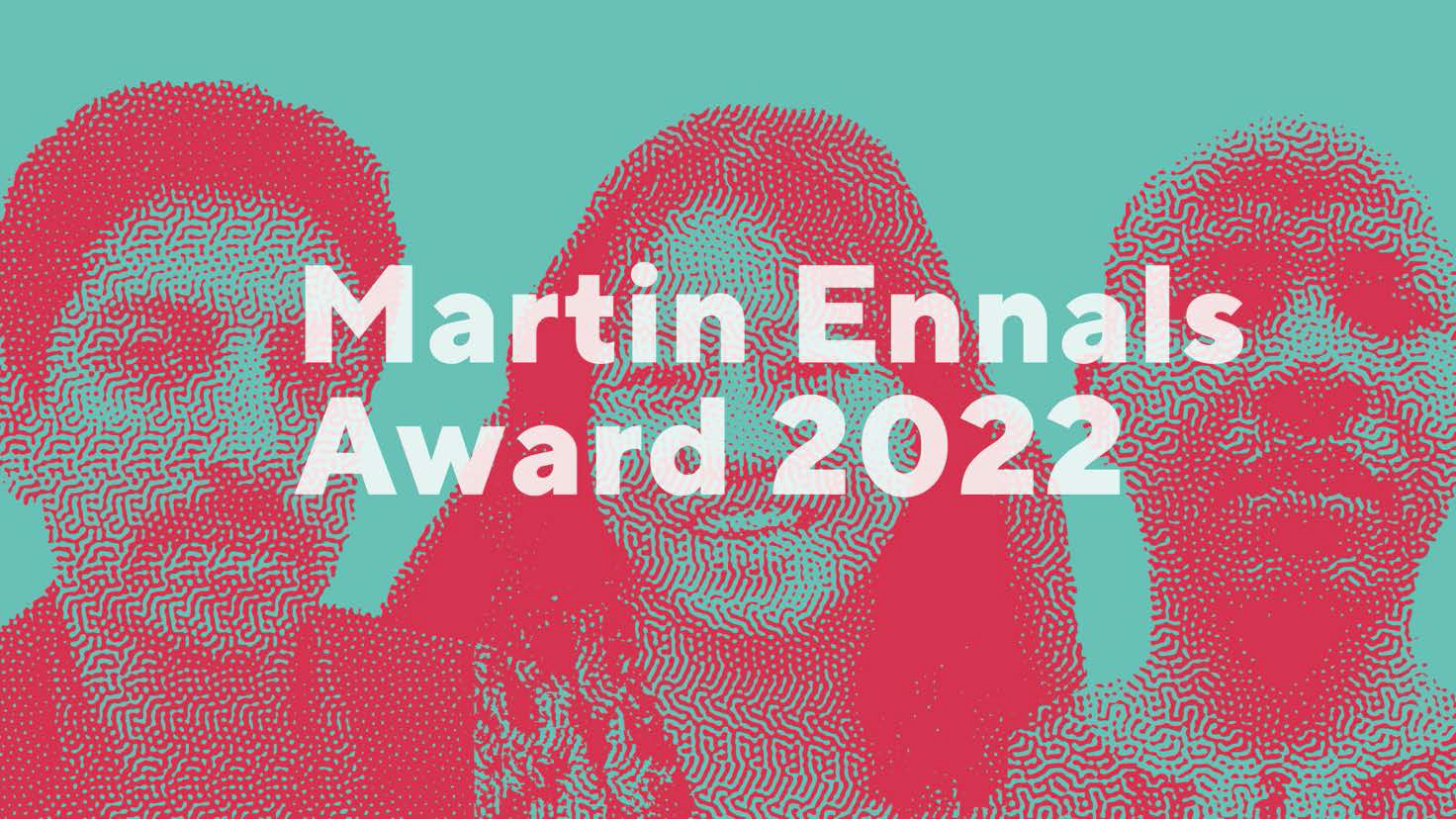
Breaking News: 3 laureates of the Martin Ennals Award 2022 announced today

January 19, 2022

This morning, 19 January 2022, at a virtual press conference in Geneva three driving forces of the human rights movement were announced as the Laureates of the 2022 Martin Ennals Award for Human Rights Defenders. For more on the Martin Ennals Award and its laureates, see: https://www.trueheroesfilms.org/thedigest/awards/043F9D13-640A-412C-90E8-99952CA56DCE

Pham Doan Trang is a leading journalist, editor and democracy advocate in Vietnam, where
the Communist Party has left little room for opposition voices to flourish. She directed several
independent media outlets to raise awareness amongst Vietnam’s citizens of their fundamental
rights galvanising many other journalists and human rights defenders to speak up. She was one
of the most hunted activists in her country before being arrested in October 2020. On 14
December 2021, Pham Doan Trang was sentenced to nine years in prison for “conducting
propaganda against the state”. There are growing concerns about her health. [see also: https://www.trueheroesfilms.org/thedigest/laureates/fe8bf320-1d78-11e8-aacf-35c4dd34b7ba]

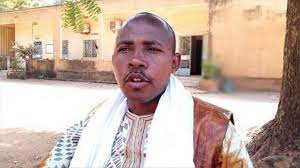
Dr. Daouda Diallo is a trained pharmacist-turned-human rights activist in Burkina Faso. The
founder of the civil society coalition CISC, he dedicatedly documents human rights violations in
a country rocked by violent crossfires between government forces, local paramilitary groups
and Islamist factions. He carries the torch for justice and accountability to victims of the violence
and their families. Dr. Diallo’s message of unity amongst different ethnic groups and faiths.

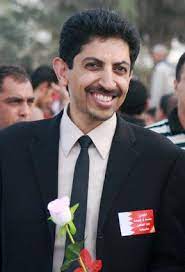
Abdul-Hadi Al-Khawaja is a charismatic architect of Bahrain’s human rights movement and
a leader of the 2011 protests calling for democracy and greater freedom in the Gulf region. Al-
Khawaja is not only an activist, but also a social entrepreneur who founded some of the first
human rights research and defence organizations in the region, which still exist today. He
inspires future generations in Bahrain to continue to fight despite his now decade-long
imprisonment. See also: https://www.trueheroesfilms.org/thedigest/laureates/4d45e316-c636-4d02-852d-7bfc2b08b78d

You can relive the conference here: https://youtu.be/UgvIli5X-T8

It was also announced that due to the COVID-19 pandemic, the Award Ceremony is postponed until 2 June 2022. “As a city of human rights, Geneva is committed to supporting international cooperation
on critical issues. Throughout the pandemic, many organizations have persisted in their human rights
missions, demonstrating tremendous resilience. In this spirit, we are proud to co-organise another
edition of the Martin Ennals Award
”, said Member of the City Executive Alfonso Gomez. (https://www.martinennalsaward.org/committed-to-a-better-world/)

AS Chair of the Martin Ennals Award Jury, I mentioned that the Jury had selected “three galvanizers of the human rights movement and that courage is the connecting dot between them ”.

https://www.martinennalsaward.org/and-the-martin-ennals-laureates-2022-are/

Guidelines on Human Rights Defenders in US Foreign Policy

January 19, 2022

On 13 January 2022 Brian Dooley devoted a blog post for Human Rights First to the US’ State Department’s efforts to draft HRD Guidelines:

Ten years ago, I testified in the US Congress for Human Rights First on why the US government should issue guidelines to its embassies on engaging with human rights defenders.

We then spoke to State Department bureaucrats in many months of negotiations too soporific to recount here, and by March 2013 they finally produced some useful guidelines for US diplomats, modelled largely on those adopted by European countries a decade before.

It’s a great idea – US government officials were offered specific advice on how and why to engage with Human Rights Defenders, and the hope was that the guidelines would set minimum standards for US embassies all over the world. 

Engagement with human rights defenders by US diplomats tends to patchy – some embassies do it well, others hardly do it at all. HRDs in countries which are antagonistic to Washington tend to enjoy relatively easy access to US diplomats who share their criticism of the local government, whereas HRDs in countries ruled by dictators who are allies of the US complain about a lack of support from US embassies.

The guidelines encouraged officials to maintain regular contact with HRDs, or possibly to attend their trials or visit them in detention, and otherwise explore ways to support and protect them. All good in principle, but the State Department failed to adequately encourage its embassies to implement the suggestions. 

So five years ago I was back in the US Congress, testifying that the guidelines “haven’t been properly promoted or widely translated …[and that] protecting HRDs is too important a job to do half-heartedly.”

Those US guidelines were pretty good, but the problem was so few people ever heard about them. When I mentioned them to human rights NGO staff, to officials of other governments, to human rights defenders, to people in the UN, to American ambassadors in the Middle East, even to State Department officials in the Bureau of Democracy, Rights and Labor, I was generally met with a “Huh?”

The good news is that, after more years of advocacy by ourselves, Earthrights, and others, the State Department has now released updated guidelines, complete with an assurance that “The Biden-Harris Administration is committed to putting human rights and democratic principles at the center of our foreign policy.” All nice enough, though these commitments to support HRDs should be institutionalized long term and not dependent on a particular administration.

The content is strong, advising sensible courses of action including that US officials “Encourage investigations and prosecution of those who harass and attack human rights defenders,” and that US officials  “seek the consent of human rights defenders before taking any actions on their behalf and take precautions in communicating with them online and offline.”

The guidelines could act a great starting point for US officials at any embassy who want to connect with local civil society and activists. The challenge is to prevent these new standards from getting left on the shelf like the last ones. 

To guard against that, we and others are hoping Congress will pass legislation aimed at keeping the State Department focused on protecting HRDs, including requiring US embassies to post the guidelines on their websites in relevant languages in an invitation to local HRDs to engage with them.

This engagement and support is currently horribly inconsistent. For instance, last week the US embassy in Niger issued a short public statement in support of local HRDs, which is great. But the US embassy in Cairo has for years been mortifyingly silent about the extensive attacks on local HRDs by Egyptian authorities.

The US government should use its power much more often to protect human rights defenders, not least at a  local level where its embassies can offer much more consistent support to human rights defenders, and not just in countries that are adversaries of the US, but with its allies too.

See e.g. https://humanrightsdefenders.blog/2014/06/11/osce-publishes-guidelines-on-the-protection-of-human-rights-defenders/

https://www.government.nl/topics/human-rights/human-rights-worldwide/supporting-human-rights-defenders

https://www.humanrightsfirst.org/blog/state-department-s-second-chance-get-hrd-guidelines-right