A bit belatedly this overview for the 50th session:
The 50th session of the UN Human Rights Council, from 13 June to 8 July 2022, will consider issues including sexual orientation and gender identity, violence and discrimination against women and girls, poverty, peaceful assembly and association, and freedom of expression, among others. It will also present an opportunity to address grave human rights situations including in Afghanistan, Belarus, China, Eritrea, Israel and OPT, Russia, Sudan, Syria and Venezuela, among many others. With “HRC50 | Key issues on agenda of June 2022 session” the ISHR provided again its indispensable guide. Here’s an overview of some of the key issues on the agenda that are the most relevant to HRDs [see also: https://humanrightsdefenders.blog/2022/02/21/guide-to-49th-session-of-human-rights-council-with-human-rights-defenders-focus/ and https://humanrightsdefenders.blog/2022/04/15/results-49th-session-human-rights-council-as-seen-by-ngos/
Thematic areas of interest
Here are some highlights of the session’s thematic discussions
Business and human rights
Despite their vital work to protect the environment and combat climate change, Indigenous peoples as well as land and environmental defenders continue to be attacked. New data shows an alarming pattern of violence and harassment as a precursor to lethal attacks against defenders.
In 2020, Global Witness registered the killings of 137 land and environmental defenders in just five of the most dangerous countries for them: Colombia, Guatemala, Kenya, Mexico and the Philippines. However, a new dataset from the ALLIED Data Working Group, a coalition in which ISHR takes part, focused on these countries has for the first time documented what is often hidden – the non-lethal attacks, including threats, harassment, smear campaigns and stigmatisation that are a precursor to the shocking number of deaths we see each year.
The findings highlight the urgent need for States to monitor, collect data, report on the situation of these defenders, and address the root causes of attacks against them. ISHR urges all States to make a commitment to the systematic monitoring of attacks on indigenous, land and environmental defenders in their countries, and to take stronger action, together with civil society and relevant UN Special Procedures, to address the root causes of attacks in the debate with the Working Group due to take place on 21 June 2022.
Reprisals
Reports of cases of intimidation and reprisal against those cooperating or seeking to cooperate with the UN not only continue, but grow. Intimidation and reprisals violate the rights of the individuals concerned, they constitute violations of international human rights law, and they undermine the UN human rights system.
The UN has taken action towards addressing this critical issue, including:
- Requesting that the Secretary General prepare an annual report on cases and trends of reprisals;
- Establishing a dedicated dialogue under item 5 to take place every September;
- Affirmation by the Council of the particular responsibilities of its Members, President and Vice-Presidents to investigate and promote accountability for reprisals and intimidation; and
- The appointment of the UN Assistant Secretary General on Human Rights as the Senior Official on addressing reprisals.
Despite this, ISHR remains deeply concerned about reprisals against civil society actors who try to engage with UN mechanisms, and consistent in its calls for all States and the Council to do more to address the situation.
During the 48th session, the Council adopted a resolution on reprisals. The text was adopted by consensus for the first time since 2009 and invites the UN Secretary General to submit his annual report on reprisals and intimidation to the UN General Assembly. Once again the resolution listed key trends, including that acts of intimidation and reprisals can signal patterns, increasing self-censorship, and the use of national security arguments and counter-terrorism strategies by States as justification for blocking access to the UN. The resolution also acknowledged the specific risks to individuals in vulnerable situations or belonging to marginalised groups, and called on the UN to implement gender-responsive policies to end reprisals. The Council called on States to combat impunity by conducting prompt, impartial and independent investigations and ensuring accountability for all acts of intimidation or reprisal, both online and offline, by condemning all such acts publicly, providing access to effective remedies for victims, and preventing any recurrence.
Item 5 of the Human Rights Council’s agenda provides a key opportunity for States to raise concerns about specific cases of reprisals, and for governments involved in existing cases to provide an update to the Council on any investigation or action taken toward accountability. The President should also update the Council on actions taken by the President and Bureau to follow up on cases and promote accountability under this item.
Due to the lack of a general debate under item 5 at HRC 50, ISHR encourages States to raise concerns about specific cases of reprisals during the interactive dialogues on the relevant countries on the agenda at this session or in the context of thematic interactive dialogues where relevant.
During the organisational meeting held on 30 May, the President of the Council stressed the importance of ensuring the safety of those participating in the Council’s work, and the obligation of States to prevent intimidation or reprisals.
In line with previous calls, ISHR expects the President of the Human Rights Council to publicly identify and denounce specific instances of reprisals by issuing formal statements, conducting press-briefings, corresponding directly with the State concerned, publicly releasing such correspondence with States involved, and insisting on undertakings from the State concerned to investigate, hold perpetrators accountable and report back to the Council on action taken.
Sexual orientation and gender identity
The mandate of the Independent Expert on violence and discrimination on the basis of sexual orientation and gender identity is up for renewal for the second time at this session. We will be following this closely and call on all States to support the mandate and contribute to the Council’s efforts to combat violence and discrimination on the basis of sexual orientation and gender identity.
Other thematic reports
At this 50th session, the Council will discuss a range of civil, political, economic, social and cultural rights through dedicated debates with the mandate holders and the High Commissioner, including interactive dialogues with:
- The Special rapporteur on the rights to freedom of peaceful assembly and of association
- The Independent Expert on protection against violence and discrimination based on sexual orientation and gender identity
- The Special Rapporteur on the right of everyone to the enjoyment of the highest attainable standard of physical and mental health
- The Special Rapporteur on the promotion and protection of the right to freedom of opinion and expression
- The Special Rapporteur on the right to education
- The Independent Expert on human rights and international solidarity
- The Special Rapporteur on extrajudicial, summary of arbitrary executions
- The Special Rapporteur on extreme poverty and human rights
- The Special Rapporteur on promotion and protection of human rights in the context of climate change
- The Working Group on the issue of human rights and transnational corporations and other business enterprises
- The Special Rapporteur on contemporary forms of racism, racial discrimination, xenophobia and related intolerance
- The High Commissioner on State responses to pandemics
In addition, the Council will hold dedicated debates on the rights of specific groups including;
- The Special Rapporteur on the rights of internally displaced persons
- The Working Group on discrimination against women and girls
- The Special Rapporteur on violence against women and girls, its causes and consequences
- The Special Rapporteur on the human rights of migrants
- The Special Rapporteur on trafficking in persons, especially women and children
- The Special Rapporteur on the elimination of discrimination against persons affected by leprosy and their family members
- The Special Rapporteur on independence of judges and lawyers
Country-specific developments
Afghanistan
Together with WHRDs from the country and civil society organisations from all regions, ISHR calls on States to lead and support an Urgent Debate at HRC50 on women’s rights in Afghanistan.
Since August 2021, when the Taliban took control of the country, there has been an enormous deterioration in the recognition and protection of the rights of women and girls in Afghanistan, including with respect to the rights to non-discrimination, education, work, public participation, health, and sexual and reproductive health. The Taliban has also imposed sweeping restrictions on the rights to freedom of expression, association, assembly and movement for women and girls. Afghanistan is now the only country in the world to expressly prohibit girls’ education.
The world’s worst women’s rights crisis demands a response and it would be unacceptable for the June session of the HRC, traditionally the session focused on gender-related issues, to pass without some meaningful action on the issue. I
The Council will hold an interactive dialogue with the High Commissioner on the update on Afghanistan on 15 June 2022.
China
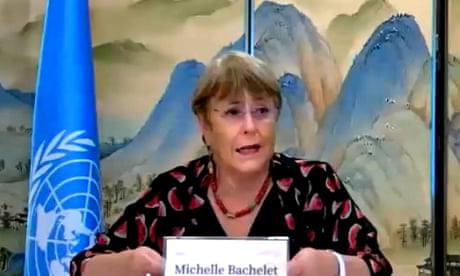
The High Commissioner’s visit to China failed to adequately address widespread and systematic violations in the country, express solidarity with victims and defenders, or pave the way for meaningful monitoring of China’s human rights crisis across the Uyghur and Tibetan regions, Hong Kong and mainland China. The High Commissioner’s end of mission statement failed to address strong, specific concerns or make substantive, concrete recommendations to the governmen. The broad concerns issued in a light language do not match the scope and gravity of human rights violations across the country that have been thoroughly documented by UN experts and civil society and that could amount to crimes against humanity and genocide.
States should call on the High Commissioner to immediately publish her OHCHR report on the Uyghur region, with clear, compelling recommendations to the government, and present her findings in a briefing to the Human Rights Council. The High Commissioner should also ensure that the established annual meeting and working group for dialogue with the authorities are of public nature, include specific substantive recommendations to the government, and involve substantial consultation with a diverse set of independent civil society groups. China should also follow suit on promises for subsequent visits by the OHCHR by granting prompt unfettered access to Hong Kong and the Tibetan region. See also: https://humanrightsdefenders.blog/2022/06/09/disappointment-with-un-high-commissioners-visit-to-xinjiang-boils-over/
Burundi
The Commission of Inquiry on Burundi (CoI) concluded its work at the 48th HRC session in October 2021 while a new resolution establishing a mandate of UN Special Rapporteur on Burundi was adopted, resolution 48/16. The resolution tasks the mandate with monitoring the human rights situation in the country, making recommendations for its improvement, and reporting to the Human Rights Council. During the 50th HRC session, the newly nominated Special Rapporteur on Burundi will present their first oral update on 29 June 2022.
Egypt
Notwithstanding the launch of a national human rights strategy, the fundamental purpose of which is to deflect international scrutiny rather than advance human rights, there has been no significant improvement in the human rights situation in Egypt since the joint statement delivered by States in March 2021 at HRC46. Emblematic recent examples include: Ayman Hadhoud’s death in the custody of Egyptian security forces following his enforced disappearance over two months ago and the execution of seven people in Egypt on 8 and 10 March 2022 following trials in which the defendants were forcibly disappeared, tortured, and denied their right to a lawyer.
In response to the Egyptian President’s announcement of “reactivating the work of the Presidential Pardon Committee” on 26 April 2022, Egyptian human rights organisations submitted a proposal for a fair and transparent process to release political prisoners in Egypt. Yet, recent harsh sentences in unfair trials against peaceful critics demonstrate further the lack of political will of the Egyptian authorities to address the crisis of arbitrary detention in Egypt. ISHR joined more than 100 NGOs from around the world in urging the HRC to create a monitoring and reporting mechanism on the ever-deteriorating human rights situation in Egypt.
Israel and oPT
This session, the COI on the oPt and Israel established in 2021 will present its first report to the HRC. Civil society from around the world had welcomed the historic resolution establishing the standing Commission of Inquiry to address Israel’s latest and ongoing violations against the Palestinian people on both sides of the Green Line, while also addressing the root causes of Israel’s settler colonialism and apartheid. The interactive dialogue with the CoI comes in the context of mounting recognition of Israel’s establishment and maintenance of an apartheid regime by Israel over the Palestinian people as a whole. During HRC49, the SR on the oPT called on the international community to accept and adopt his findings as well as the “findings by Palestinian, Israeli and international human rights organisations that apartheid is being practised by Israel in the occupied Palestinian territory and beyond.” In its 2019 concluding observations, the Committee on the Elimination of Racial Discrimination found that Israel’s policies violated Article 3 of ICERD pertaining to segregation and apartheid on both sides of the Green Line. In 2022, the Human Rights Committee concluding observations on Israel emphasized the “pre-existing systematic and structural discrimination against non-Jews”.
While some States continue to seek to undermine the mandate of the CoI and effective accountability mechanisms to put an end to Israel’s apartheid regime, CSOs support the CoI’s methodological approach to fulfill its vital mandate. We call on States to engage with the substance of the mandate of the CoI during the interactive dialogue, express support for this important accountability mechanism and ensure it has sufficient resources to discharge its mandate.
Russia
Together with a coalition of international and regional NGOs, as well as numerous Russian civil society organisations, ISHR urges the Council to establish an independent international monitoring and reporting mechanism on Russia. In the context of the systematic repression of civil society organisations, severe restrictions on press freedoms and independent media, severe restrictions and criminalisation of many forms of free expression, association, assembly and peaceful protest, and the propagation of huge volumes of misinformation, a Special Rapporteur is necessary to ensure that the international community receives vital information about the human rights situation on the ground.
Sudan
The Council will hold a debate with the High Commissioner and Expert on Sudan on 15 June 2022.
The Sudanese Women Rights Action documented from March to April 2022 the violations against women protesters, including arrests, injuries, and sexual violence. Their report also highlighted the economic and humanitarian situation in conflict areas and in the country in general. The report shows that “the coup leaders are using increasing violence against women protesters, including arrests, fabricated charges, direct lethal violence in protests, and sexual violence. The civic space is shrinking across Sudan, where human rights groups and WHRDs are not able to work freely and safely. Surveillance on internet, communication, movement, and offices of many groups led them to work from underground. The economic conditions and the fragile political situation is increasing women insecurity, as the peace process failed to end violence conflict areas. Women in Sudan are living in constant fear of violence with growing threats of the collapse of the state.”
In light of this context, ISHR urges all States to support the adoption of a resolution that ensures continued attention to Sudan’s human rights situation through enhanced interactive dialogues at the Council’s 52nd and 53rd regular sessions. While the Expert’s mandate is ongoing, a resolution is required for the Council to hold public debates and continue to formally discuss the situation. A resolution at the Council’s 50th session would operationalise resolution S-32/1, which in its operative paragraph 19 called upon “the High Commissioner and the designated Expert to monitor human rights violations and abuses and to continue to bring information thereon to the attention of the Human Rights Council, and to advise on the further steps that may be needed if the situation continues to deteriorate.”
Venezuela
On 29 June, the Council will hold an interactive dialogue with the High Commissioner on her report on the situation of human rights in Venezuela. The Council requested her to provide in this report a detailed assessment of the implementation of the recommendations made in her previous reports. Implementation of recommendations and improvements in the human rights situation on the ground remains a critical question as HRC mandates for OHCHR and the international investigative body for Venezuela expire in September. Venezuelan civil society groups continue to show evidence of a lack of any substantive human rights reform in the country, of a lack of meaningful cooperation by the State and – in fact – of regression in key areas such as judicial independence and civic space. ISHR urges States at the upcoming session to express support for the work of OHCHR in the country, and encourage the Office to speak clearly to realities on the ground. In addition, States should signal their support for the continuance of the work of the HRC’s fact-finding mission to the country through an extension of the Mission’s mandate at HRC51.
The adoption of the report of the third cycle UPR on Venezuela will also take place on the 29 June or 1 July.
Other country situations
The Council will hold an interactive dialogue on the High Commissioner’s annual report on 14 June 2022. The Council will hold debates on and is expected to consider resolutions addressing a range of country situations, in some instances involving the renewal of the relevant expert mandates. These include:
- Interactive Dialogue with the Special Rapporteur on Eritrea
- Interactive Dialogues with the High Commissioner and Special Rapporteur on Myanmar
- Interactive Dialogue with the High Commissioner on Nicaragua
- Interactive Dialogues with the High Commissioner on Ukraine
- Interactive Dialogue with the Commission of Inquiry on Syria
- Interactive Dialogue with the International commission of Human Rights Experts on Ethiopia
- Interactive Dialogue with the Special Rapporteur on Belarus
- Interactive Dialogue with the Independent Fact-Finding Mission on Libya
- Interactive Dialogue with the Independent Expert on Central African Republic
Council programme, appointments and resolutions
The President of the Human Rights Council will propose candidates for the following mandates:
- Special Rapporteur on freedom of religion or belief
- Special Rapporteur on the right to education
- Special Rapporteur on the situation of human rights in the Democratic People’s Republic of Korea
- Working Group on the issue of human rights and transnational corporations and other business enterprises, member from African States
- Expert Mechanism on the Right to Development, member from Latin American and Caribbean States
- Special Rapporteur on torture and other cruel, inhuman or degrading treatment or punishment
- Working Group on Enforced or Involuntary Disappearances, member from Eastern European States
- Working Group on the issue of human rights and transnational corporations and other business enterprises, member from Western European and other States
Resolutions to be presented to the Council’s 50th session
At the organizational meeting on 30 May the following resolutions were announced (States leading the resolution in brackets):
- Elimination of discrimination against women (Mexico), mandate renewal
- Freedom of expression (Brazil, Canada, Fiji, Sweden, Namibia, Netherlands)
- Elimination of female genital mutilation (Africa Group)
- Rights to freedom of peaceful assembly and of association (Czech Republic, Indonesia, Lithuania, Maldives, Mexico), mandate renewal
- Human rights situation in Sudan (United Kingdom, Germany, Norway, United States)
- Human rights situation in Syria (Germany, France, Italy, Jordan, Kuwait, Netherlands, Qatar, Turkey, United States, United Kingdom)
- Mandate of the Independent Expert on protection against violence and discrimination based on sexual orientation and gender identity (Argentina, Brazil, Chile, Colombia, Costa Rica, Mexico, Uruguay), mandate renewal
- Casualty recording and the promotion and protection of human rights (Liechtenstein, Croatia, Costa Rica, Sierra Leone)
- Human rights and climate change (Bangladesh, Philippines, Viet Nam)
- Access to medicines and vaccines in the context of the right of everyone to the enjoyment of the highest attainable standard of physical and mental health (Brazil, China, Egypt, India, Indonesia, Senegal, South Africa, Thailand)
- Enhancement of international cooperation in the field of human rights (NAM)
- Independence and impartiality of the judiciary, jurors and assessors, and the independence of lawyers (Hungary, Australia, Botswana, Maldives, Mexico, Thailand)
- Human rights and the regulation of civilian acquisition, possession and use of firearms (Ecuador, Peru)
- Human rights in Belarus, mandate renewal (European Union)
- Human rights in Eritrea, mandate renewal (European Union)
- The promotion and protection of human rights in the context of peaceful protest (Switzerland, Costa Rica)
- Situation of human rights of Rohingya Muslims and other minorities in Myanmar (OIC)
- Accelerating efforts to eliminate all forms of violence against women (Canada), mandate renewal
- Mandate of the Special Rapporteur on the human rights of internally displaced persons (Austria, Honduras, Uganda), mandate renewal
- Human rights and international solidarity (Cuba)
- Social Forum (Cuba)
Read the calendar here.
Adoption of Universal Periodic Review (UPR) reports
During this session, the Council will adopt the UPR working group reports on Myanmar, Togo, Syrian Arab Republic, Iceland, Venezuela, Zimbabwe, Lithuania, Uganda, Timor-Leste, Republic of Moldova, South Sudan, Haiti and Sudan.
Panel discussions
During each Council session, panel discussions are held to provide member States and NGOs with opportunities to hear from subject-matter experts and raise questions. Seven panel discussions are scheduled for this upcoming session:
- Panel discussion on the root causes of human rights violations and abuses against Rohingya Muslims and other minorities in Myanmar
- Panel discussion on menstrual hygiene management, human rights and gender equality
- Panel discussion on good governance in the promotion and protection of human rights during and after the COVID-19 pandemic
- Annual full-day discussion on the human rights of women
- Panel discussion on the adverse impact of climate change on the full and effective enjoyment of human rights by people in vulnerable situations
- High-level panel discussion on countering the negative impact of disinformation on the enjoyment and realization of human rights
- Annual thematic panel discussion on technical cooperation and capacity-building
Stay up-to-date: Follow @ISHRglobal and #HRC50 on Twitter, and look out for its Human Rights Council Monitor. During the session, follow the live-updated programme of work on Sched.
https://ishr.ch/latest-updates/hrc50-key-issues-on-agenda-of-june-2022-session/


 Hans Thoolen on Human Rights Defenders and their awards