Archive for the 'organisations' Category

Front Line Defenders Award for human rights defenders at risk 2023: call for nominations

December 2, 2022

Front Line Defenders is currently accepting nominations for the 2023 Front Line Defenders Award for Human Rights Defenders at Risk:

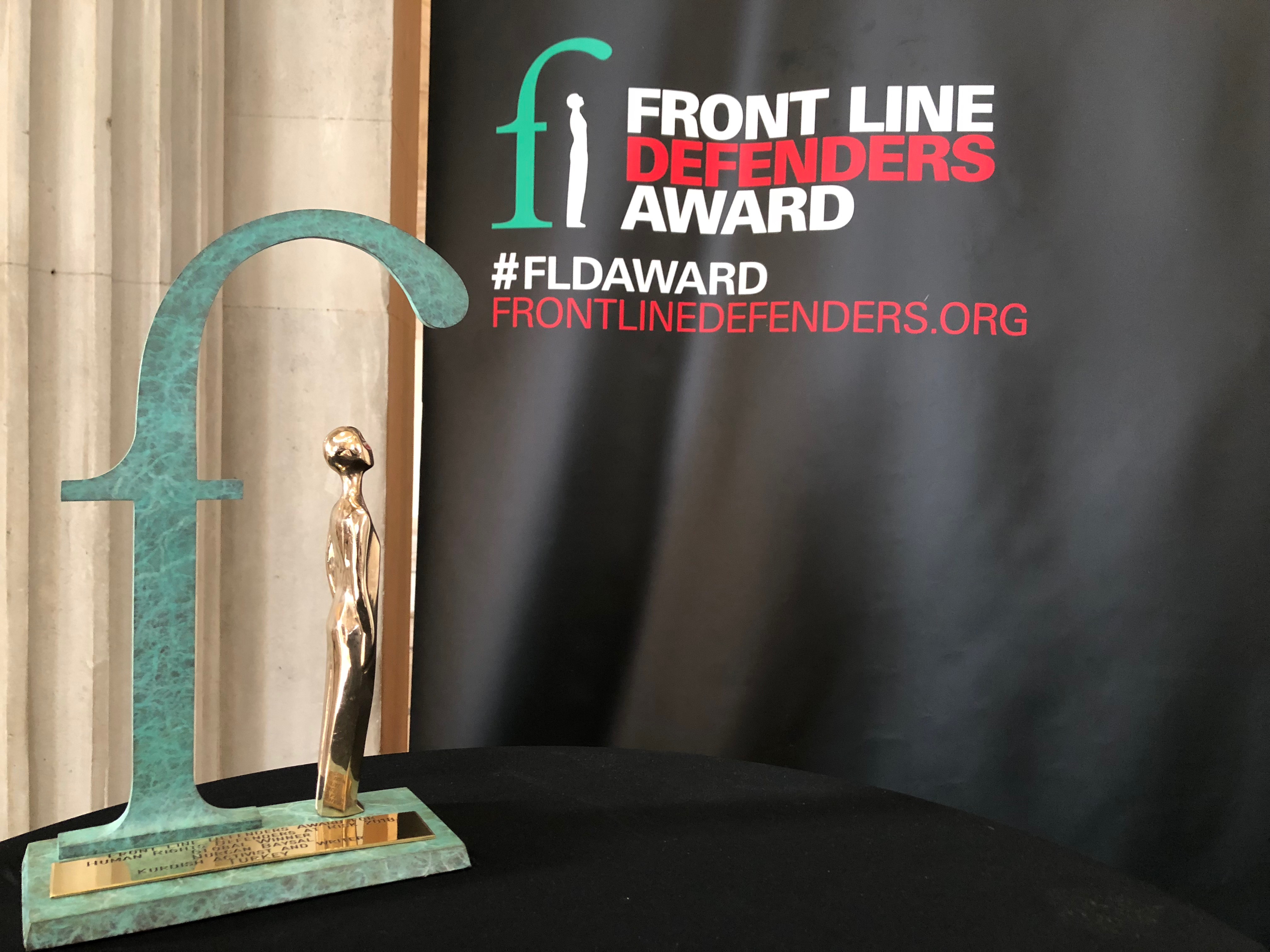
award banner

For more this annual award and its laureates, see: https://www.trueheroesfilms.org/thedigest/awards/2E90A0F4-6DFE-497B-8C08-56F4E831B47D

Starting in 2018, Front Line Defenders changed the format of the Award, naming 5 Regional Award Winners, with one chosen as the Global Laureate by a jury comprised of representatives of Ireland’s parliament from a number of political parties. In 2021, Front Line Defenders took the decision to name all 5 regional winners as Global Laureates, in response to the overwhelming positive response to the greater visibility and recognition of the winners of the Award.

For each region of the world (Africa; Americas; Asia-Pacific; Europe & Central Asia; and Middle East & North Africa) there will be one winner selected and Front Line Defenders will recognize all five as the 2023 Front Line Defenders Award Laureates.

The nomination process is open for anyone to submit a nomination of a human rights defender, collective, organisation or community working on any human rights issue and facing significant risk due to their work or operating in an environment that itself is characterised as insecure. The purpose of the Award is to give visibility to HRDs who are not normally acknowledged or recognised at the international level. At the same time, the Award should not bring additional risk for which the HRD is not prepared. In addition to the Award, winners will receive:

  • a modest financial prize;
  • a security grant to improve their security measures;
  • collaboration with Front Line Defenders for media work in recognition of the Award;
  • advocacy by Front Line Defenders related to the Award and the work of the winners;
  • an event co-organized by the HRD, local partners and Front Line Defenders to give visibility to the Award in the winners’ countries (as determined and guided by the winners);
  • the Global Laureates will attend a ceremony in Dublin at a date to be determined;
  • ongoing security consultation with Front Line Defenders

If you would like to nominate a HRD for the 2023 Front Line Defenders Award for Human Rights Defenders at Risk, please follow this link to the secure online nomination form

2023 Front Line Defenders Award – Nomination Form

As the person, group or organisation making the nomination, you will be consulted by Front Line Defenders to verify the information submitted and possibly for additional information. Please complete all parts of the nomination form to the best of your ability. Please submit nominations via the online form. If there are any problems using the form, or if you have any questions, please contact: award@frontlinedefenders.org

Deadline for nominations: 13 January 2023

https://www.frontlinedefenders.org/en/call-nominations-2023-front-line-defenders-award-human-rights-defenders-risk

MEA laureate AbdulHadi Al-Khawaja facing new charges for protesting injustice in Jau Prison

November 29, 2022

There seems to b no end to the persecution of AbdulHadi AlKhawaja, the 2022 laureate of the Martin Ennals Award [see: https://www.trueheroesfilms.org/thedigest/laureates/4d45e316-c636-4d02-852d-7bfc2b08b78d]

On Americans for Democracy and Human Rights in Bahrain strongly denounced new charges brought against this dual Bahraini-Danish citizen, who is serving a life sentence at Jau Prison for his participation in the 2011 pro-democracy demonstrations. See also: https://humanrightsdefenders.blog/2014/09/12/bahrain-travails-of-a-family-of-human-rights-defenders/

In November 2022, AlKhawaja informed his family that authorities are bringing four new charges against him for his protests against the harsh conditions which he and other political prisoners have been subjected to in Jau prison.

On 16 November, the Second Lower Criminal Court scheduled a hearing on the first of these new charges for an incident in November 2021 when authorities denied his right to call his daughters. However, the court postponed this hearing until 28 November on the grounds that Al-Khawaja needed to perform a power of attorney, something which he was going to do in-person during the hearing. A lieutenant attempted to pressure and threatened Al-Khawaja into recording a video stating that he was refusing to attend the hearing. Nevertheless, Al-Khawaja  refused and repeatedly stated on camera his desire to attend the hearing. He was then transferred back to his cell.

The second charge against him is for insulting a public servant and criticizing a foreign state (Israel) in March 2022 when Al-Khawaja led a peaceful protest inside the prison. He was chanting his opposition to the normalization of relations between Bahrain and Israel, as well as insulting a public servant, who allegedly tortured one of his cellmates. The hearing for this charge was set for 21 November. Prior to the hearing, authorities denied him the every-other-day calls with his lawyer. This hearing was also postponed and while the judge stated that AlKhawaja refused to attend, has not presented any evidence to AlKhawaja’s attorney to support this claim. AlKhawaja has informed his daughter that he wanted to attend.

The third charge, by far the most serious, is a charge of incitement to overthrow or change the regime, and relates to an incident in July 2022 when AlKhawaja was scheduled to attend a medical appointment for treatment on his back. During this appointment, authorities insisted on shackling his feet and hands during transfer and putting him in a small bus with no ventilation, creating conditions like an oven. In response, AbdulHadi started protesting and chanting “Down with the Interior Minister ” holding him accountable for his mistreatment and torture.

The fourth and final charge relates to the protest against the ill-treatment of a fellow inmate and is expected in the coming days.

In addition to these charges and violations, AlKhawaja was already suffering the unceasing legal and bodily violations of prison authorities since his arrest 12 years ago. In addition to inhumane restrictions and property confiscation, authorities have systematically used medical negligence as a form of reprisal against AlKhawaja’s activism. He has been denied proper medical treatment which has significantly contributed to the deterioration of his health. He suffers from back pain and vision impairment which were exacerbated by the extreme torture he endured during interrogations by security officers, as well as magnesium deficiency and leg spasms. In response to this treatment, AlKhawaja has gone on multiple hunger strikes and protests with his fellow inmates against the dehumanizing and unjust treatment by authorities.

These charges clearly demonstrate how prison authorities are trying to silence all dissent against their systematic repression of pro-democracy Bahrainis. Many organizations and individuals have condemned these charges because they set a dangerous precedent.

See also: https://humanrightsdefenders.blog/2021/01/27/over-100-ngos-write-to-prime-minister-of-denmark-to-pressure-bahrain-to-release-abdul-hadi-al-khawaja/

Joint statement NGOs on 77th GA Third Committee

November 23, 2022

14 NGOs that closely follow and engage with the Third Committee have joined together to publish a joint statement on outcomes of this 77th session. The undersigned civil society organisations mark the conclusion of the UN General Assembly’s (GA) 77th Third Committee session with the following observations on some thematic and country-specific resolutions considered at this session. We urge all States to implement the commitments they have made in the resolutions discussed below to their full extent.

  • Joint statements

We welcome the joint statement on the human rights situation in Xinjiang, China delivered by Canada on behalf of a cross-regional group of 50 countries. This statement echoes the UN Human Rights Office’s independent, objective analysis and its findings which the UN’s human rights office determined may amount to crimes against humanity, and urges China to implement that report’s recommendations, in particular on enforced disappearance. There was an increase in State support compared to last year, signalling hope for future initiatives to debate the situation and support victims to secure accountability. Nonetheless, there is more work to ensure support from member states, in the EU and globally, as well as from Muslim-majority countries. 

We welcome the joint statement on reprisals led by Ireland and joined by a cross-regional group of countries, calling on all States and the UN to prevent, respond to, and ensure accountability for cases of intimidation and reprisals against those who engage or seek to engage with the UN. We welcome that 80 States continued to sign on to the statement but urge more States to sign on to future such statements. See also: https://humanrightsdefenders.blog/2020/11/30/75-countries-join-statement-on-reprisals-at-the-third-committee-but-more-needed/

We welcome a resolution on the right to privacy in the digital age. The resolution integrates much of the progressive language seen in the most recent Human Rights Council version of the resolution, contending with new and persisting challenges for the right to privacy worldwide, with a particular focus on the impact on human rights defenders and journalists. However, the resolution missed an opportunity to make strong recommendations on the proliferation of private surveillance technologies, including spyware, which global experts are calling to ban or suspend through a moratorium. We call on future resolutions to contain stronger language on biometric technologies, particularly recognising that these technologies should never be used for mass surveillance of public spaces. 

We welcome the adoption of the resolution on Extrajudicial, summary or arbitrary executions by a vote which aims to uphold the right to life, liberty and security and acknowledges that impunity is a major contributor to executions. We welcome the new references to freedom of religion or belief, new technologies, institutions as places of custody, as well as strengthened language on the role of civil society and human rights defenders in the protection against arbitrary deprivation of life. We also welcome that the resolution once again highlighted the targeting (including killing) of specific groups of persons belonging to national or ethnic, religious and linguistic minorities, indigenous communities, human rights defenders, lawyers, journalists or demonstrators, or because of their sexual orientation or gender identity. Critically, we welcome the rejection by a vote of an oral amendment attempting to remove the reference to ‘sexual orientation and gender identity’ in that listing.

We welcome support by an overwhelming majority of States for the resolution on a moratorium on the use of the death penalty proposed by Australia and Costa Rica (on behalf of an Inter-Regional Task Force of States). A record number of 126 States voted in favour of the text (including Ghana, Liberia and Myanmar, after abstaining in the GA plenary in 2020), while 37 voted against and 24 abstained. The text reiterates calls made in previous resolutions, including to halt executions with the view to abolishing the death penalty. It also includes additions on the importance of transparency and access to information regarding the use of the death penalty and criminal prosecutions to identify discriminatory practices, the negative impact on the rights of children and youth whose parental caregivers face the death penalty, the need to ensure that trial leading to imposition of the death penalty complies with fair trial and non-discrimination guarantees, ensuring the death penalty is not applied on the basis of laws targeting individuals for exercising their human rights, the need to improve conditions in detention for those on trial for capital crimes or on death row, ensuring respect for their inherent dignity, and complying with international standards, in evaluating, promoting, protecting and improving their physical and mental health.  

We welcome the adoption of the resolution on Inclusive development for and with persons with disabilities, that newly calls for leadership and participation of persons with disabilities in disaster risk reduction, climate change adaptation and mitigation, and other climate change policies and programmes, as well as affordable and accessible internet, and continues to emphasize non-discrimination, accessibility and inclusion in the implementation of the 2030 Agenda, including for women and girls with disabilities. In particular, we welcome the request for the Secretary-General to report on participation of persons with disabilities in COVID-19 response and recovery, and on the implementation of the UN Disability Inclusion Strategy. We regret that despite wide support, language supporting the right to the enjoyment of the highest attainable standard of sexual and reproductive health of persons with disabilities, on an equal basis with others, was not included in the final resolution.

We welcome the adoption by consensus of the resolution on the Human rights treaty body system. We regret that States were not able to ‘welcome’, but merely ‘take note’ of the biennial report by the UN Secretary-General on the state of the treaty body system and the report of the most recent meeting of treaty body chairpersons. We urge all States to follow through with their reaffirmation in the resolution of the formula contained in General Assembly resolution 68/268, and allocate corresponding financial and human resources in the Fifth Committee that the treaty bodies require to function effectively.

Gender Issues

We welcome the adoption by consensus of the resolution on Child, Early and Forced Marriage (CEFM) presented by Canada and Zambia, and for the first time co-sponsored by 125 States, including several countries with high CEFM prevalence. We welcome new references to multiple and intersecting forms of discrimination, including in the context of climate change, conflict and poverty. We particularly welcome the call to Member States to address the root causes of gender inequality, gender stereotypes and negative social norms that underlie CEFM and for participatory and adequately funded measures to address the ongoing impacts of COVID-19 including school closures; the digital divide; uninterrupted access and funding for sexual and reproductive health-care services; adolescent-centered services; and redistribution of unpaid care and domestic work. We regret that despite significant support, references to comprehensive sexuality education and intimate partner violence were omitted. 

The resolution on Intensification of efforts to prevent and eliminate all forms of violence against women and girls, presented by Netherlands and France, was adopted by a vote for the second time. We welcome the text, focused this year on eliminating gender stereotypes and negative social norms. It included commitments to prevent and eliminate violence against all women, including intimate partner violence, femicide, commitments to protect, respect and fulfill all human rights, including sexual reproductive health and reproductive rights; recognize challenges and obstacles to eliminating discriminatory attitudes perpetuating multiple and intersecting forms of discrimination against women and girls; text on migrant and indigenous women and girls, racism, xenophobia, women human rights defenders, promoting young women and adolescents’ participation and leadership in decision making positions as well as full, effective, equal and meaningful participation of all women in all their diversity. Although we are encouraged by the rejection of 9 amendments presented by Guatemala, Egypt, Iraq, Libya, Nigeria, Russia, Saudi Arabia and Yemen, we regret that consensus was not achieved on a number of important commitments, that have been previously agreed, aiming to prevent and eliminate gender stereotypes and negative social norms and take multisectoral, effective and gender-responsive measures to prevent and eliminate all forms of violence. We are also dismayed that a vote was called on the reference to the Generation Equality Forum, an initiative with wide support from diverse stakeholders globally.

We welcome the adoption of the resolution on Intensifying global efforts for the elimination of female genital mutilation (FGM) presented by Burkina Faso (on behalf of African Group) which has not been fully opened up since 2018. The resolution failed to strengthen the most pertinent and pressing areas for preventing and eliminating FGM, especially in relation to health outcomes for girls, adolescents and women including the lack of inclusion on sexual and reproductive health, comprehensive sexuality education and  multiple and intersecting forms of discrimination. Despite this, we welcome language on the cross-border and transnational practice of FGM, an important component of FGM prevention and elimination.

The resolution on Intensifying efforts to end obstetric fistula presented by Senegal (on behalf of African Group) was a  technical rollover (with no substantive changes to the respective 2018 and 2020 texts) and adopted by consensus. Given the devastating impact of Obstetric fistula on women and girls, and the exacerbation of root causes due to climate change and the COVID-19 pandemic, we are disappointed about the missed opportunity to outline global, regional and national level efforts to end this tragedy by 2030, an integral component of achieving the Sustainable Development Goals. 

We welcome the adoption of the resolution on Trafficking in women and girls presented by the Philippines, which includes references to access to justice for victims, government commitments to eliminate, prevent and respond to all forms of violence against women and girls including trafficking, and the linkage between climate change and trafficking. While encouraged that the text maintained critical elements from previous years, we regret that it did not include: progressive references to gender transformative, survivor, victim-centred and trauma-informed approaches to anti-trafficking efforts; references to women and girls in all their diversity; comprehensive sexuality education; and recognition of the importance of full, equal and meaningful participation of women and girls in addressing trafficking. 

Country Situations

We welcome the adoption of the resolution on the human rights situation in the Islamic Republic of Iran, with 50 cosponsors by a vote of 79 (80) votes in favour (Panama voted after votes were locked), 28 against and 68 abstentions. We welcome new references expressing concern on the violent enforcement of the hijab and chastity law by the Iranian morality police, ‘widespread use of force against non-violent protestors’, the proposed bill on the use of firearms during protests, and calls to release persons participating in peaceful protests, to address poor conditions of prisons, and to implement the amendment to the Nationality Law, which gives Iranian women married to foreign nationals the right to request Iranian citizenship for their children under 18. We also welcome calls to end violations of the rights to freedom of expression and opinion including internet disruption practices, and the right to freedom of thought, conscience, religion or belief against recognized and unrecognised religious minorities, particularly Baha’is being subject to increased persecution, arrest, destruction and confiscation of property.  See more: https://humanrightsdefenders.blog/2022/11/23/un-human-rights-council-holds-special-session-on-iran-on-24-november/

We welcome the resolution on the situation of human rights in the Syrian Arab Republic, cosponsored by 32 Member States. The resolution references the wide range of human rights violations and abuses perpetrated in Syria, many of which may amount to war crimes and crimes against humanity. We particularly welcome the decision to take further actions on the issue of missing people in Syria, based on the SG’s recommendation in his report on the matter, and to include survivors and their families throughout the process. We call upon the Member States to implement the SG’s recommendation by establishing an International Mechanism to reveal the fate and whereabouts of the missing persons in Syria without further delay.  

We regret that the resolution on the situation of human rights of Rohingya Muslims and other minorities in Myanmar, which was adopted by consensus, does not reiterate key elements of the 2021 UNGA resolution which followed the military coup in February 2021. We regret that it fails to comprehensively address, condemn, and call for an end to ongoing and escalating human rights violations by the military, as described in detail by the Special Rapporteur on human rights in Myanmar. However, we acknowledge that language regarding the ongoing commission of rights violations against and protection needs of the Rohingya has been retained, and the expression of solidarity with the Rohingya made by Myanmar’s Permanent Representative.

We welcome the consensus adoption of the resolution on the human rights situation in the Democratic People’s Republic of Korea (DPRK). We welcome in particular the retention of a call for the UN Security Council to resume discussions on the human rights situation in the DPRK, supplemented with a call for the OHCHR to brief it. The Security Council held formal meetings annually on the human rights situation in the country in December from 2014-2017, however in December 2020 and 2021, the subject was discussed in closed consultations under ‘Any other Business’.

We welcome the adoption of the resolution on Human rights in the temporarily occupied Autonomous Republic of Crimea and the city of Sevastopol, Ukraine. We welcome in particular the resolution’s condemnation of the ‘unprecedented wave’ of violations that Russian forces have committed in Crimea following the February 2022 invasion of Ukraine, including  arbitrary detention, forcible transfers and enforced disappearances. We also welcome the call on Russia to cease violations and abuses including those within the framework of so-called filtration procedures and forcible transfers or deportation of Ukrainian children to Russia, and to lift discriminatory regulatory barriers prohibiting or limiting the activities of religious groups.

  • Civil society access

While we welcome the action by some States to welcome civil society organisations to join informals as observers this session, it was deeply disappointing that only a few States extended this invitation. This year, civil society again faced additional challenges in even keeping abreast of information regarding informal negotiations as information on informals taking place was once again not shared in the UN journal as it previously was. This year this information was only published on the e-deleGATE platform to which civil society has no access. These critical barriers to civil society access to Third Committee negotiations, deprive the Committee of civil society’s technical expertise and mean that its outcomes fail to leverage the contributions of a crucial stakeholder in promoting the implementation of human rights.

Access Now 

Amnesty International

Association for Progressive Communications 

Center for Reproductive Rights

Fòs Feminista, International Alliance for Sexual and Reproductive Health, Rights and Justice

Global Centre for the Responsibility to Protect

Global Justice Centre

Human Rights in China

Human Rights Watch

International Disability Alliance

International Service for Human Rights

Jacob Blaustein Institute for the Advancement of Human Rights

Outright Action International

Syrian Center for Media and Freedom of Expression (SCM)

https://ishr.ch/latest-updates/joint-civil-society-statement-on-the-outcomes-of-unga-77-third-committee/
UN Human Rights Council holds special session on Iran on 24 November

November 23, 2022
Iranian demonstrators in the streets of the capital, Tehran.
Iranian demonstrators in the streets of the capital, Tehran, during a September 21, 2022 protest for Mahsa Amini, days after she died in police custody.  © 2022 AFP via Getty Images

Just before the United Nations Human Rights Council will hold a special session on ongoing human rights violations in Iran on 24 November, Human Rights Watch urge it to establish an independent fact-finding mission to investigate Iran’s deadly crackdown on widespread protests as a first step toward accountability, Human Rights Watch said today.

The demonstrations began on September 16, 2022, following the death of Mahsa (Jina) Amini, a 22-year-old Kurdish-Iranian woman, in the custody of the “morality police.” As of November 22, human rights groups are investigating the deaths of 434 people including 60 children. Human Rights Watch has documented a pattern of Iranian authorities using excessive and unlawful lethal force against protesters in dozens of instances in several cities including Sanandaj, Saghez, Mahabad, Rasht, Amol, Shiraz, Mashhad, and Zahedan.

“Iranian authorities seem determined to unleash brutal force to crush protests and have ignored calls to investigate the mountains of evidence of serious rights violations,” said Tara Sepehri Far, senior Iran researcher at Human Rights Watch. “The UN Human Rights Council should shine a spotlight on the deepening repression and create an independent mechanism to investigate Iranian government abuses and hold those responsible accountable.”

Since mid-November, Iranian authorities have dramatically escalated their crackdown against protests in several Kurdish cities, with at least 39 people killed, according to the Kurdistan Human Rights Network. The group reported that from November 15 to 18, at least 25 Kurdish-Iranian residents were killed in Kurdish cities during three days of protests and strikes to commemorate the victims of the government’s bloody crackdown on protests in November 2019.

The authorities have pressured families of recent victims to bury their loved ones without public gatherings, but several funerals have become the scene of new protests. The group said that at least 14 people were killed in Javanrood, Piranshahr, Sanandaj, Dehgan, and Bookan from November 19 to 21, 2022. Radio Zamaneh said the victims included Ghader Shakri, 16, killed in Piranshahr on November 19, and Bahaedin Veisi, 16, killed in Javanrood on November 20.

A 32-year-old Sanandaj resident told Human Rights Watch that the security forces fatally shot Shaho Bahmani and Aram Rahimi on November 17 and forcibly removed their bodies from the Kowsar Hospital in Sanandaj, and threatened the two men’s families outside the hospital.

Jalal Mahmoudzadeh, a parliament member from Mahabad, told Shargh Daily on November 21 that between October 27 and 29, security forces killed seven protesters in the city Mahabad. Mahmoudzadeh said security forces also damaged people’s houses; one woman was killed in her home outside of the protests. He said that since then, another man had been killed, and three more had been shot and killed during his funeral, bringing the total number killed in Mahabad, since October 27, to 11.

Videos circulated on social media show that authorities have deployed special forces and Islamic Revolutionary Guard Corps units armed with military assault rifles, vehicle-mounted DShK 12.7mm heavy machine guns, and armored vehicles.

On October 24, Masoud Setayeshi, the judiciary spokesperson, told media that authorities have started prosecuting thousands of protesters. These trials, which are often publicized through state media, fall grossly short of international human rights standards, with courts regularly using coerced confessions and defendants not having access to the lawyer of their choice. As of November 21, trial courts have handed down death sentences to at least six protesters on the charges of corruption on earth and enmity against God. The acts judicial authorities have cited to bring charges against the defendants, including “incineration of a government building” or “using a “cold weapon” to “spread terror among the public.” Amnesty International said that at least 21 people are facing charges in connection to the protests that can carry the death penalty.

Since the protests began in September, the authorities have arrested thousands of people during protests as well as hundreds of students, human rights defenders, journalists, and lawyers outside the protests. Detainees are kept in overcrowded settings and are subjected to torture and other ill-treatment, including sexual harassment, Human Rights Watch said.

Two women who were arrested during the first week of protests in Sanandaj told Human Rights Watch that the authorities brutally beat them, sexually harassed them, and threatened them during their arrests and later while they were detained at a police station. One of these women said she had several severe injuries, including internal bleeding and fractures.

Over the past four years, Iran has experienced several waves of widespread protests. Authorities have responded with excessive and unlawful lethal force and the arbitrary arrests of thousands of protesters. In one of the most brutal crackdowns, in November 2019, security forces used unlawful force against massive protests across the country, killing at least 321 people. Iranian authorities have failed to conduct any credible and transparent investigations into the security forces’ serious abuses over the past years.

Iranian authorities have also used partial or total internet shutdowns during widespread protests to restrict access to information and prohibit dissemination of information, in particular videos of the protests, Human Rights Watch said. They have blocked several social media platforms, including WhatsApp messaging application and Instagram, since September 21, 2022, by an order of Iran’s National Security Council.

On November 24, UN Human Rights Council members should vote to establish an independent mechanism to document serious human rights violations in Iran and advance on the path to accountability,” Sepehri Far said.

https://www.hrw.org/news/2022/11/23/iran-un-rights-council-should-create-fact-finding-mission

https://news.un.org/en/story/2022/09/1128111

https://www.aljazeera.com/news/2022/11/12/iran-pushes-back-against-protests-scrutiny-at-un

30 November: film screening; women human rights defenders in Latin America

November 23, 2022

The illusion of abundance: Film screening and discussion

In their film, Erika Gonzalez Ramirez and Matthieu Lietaert introduce us to Berta Cáceres, Carolina de Moura and Maxima Acuña, three women from Latin America defending their communities, land and livelihood against transnational corporations. b Fo rmore on Carceres, see: https://humanrightsdefenders.blog/tag/caceres/ as well as https://www.trueheroesfilms.org/thedigest/laureates/2AD0CEE4-80CB-3234-04B4-F2ED7ACBE6C5

Their quest for corporate accountability brought the activists to Geneva, where ISHR accompanied them during the negotiations at the United Nations Palais des Nations on the elaboration of an international legally binding treaty that seeks to regulate, in international human rights law, the activities of transnational corporations. 

  • Wednesday 30 November 2022, 1:20pm-2:40pm
     
  • Room XVIII, Palais des Nations, Geneva
     
  • Languages: movie in original version with English subtitles; discussion in English

https://www.theillusionofabundance.earth/

Saudi sports washing continues with tennis exhibition

November 11, 2022

The Guardian of 9 November 2022 reports on the Diriyah Tennis Cup which is a ‘sport swashing’ event according to Amnesty UK

Cameron Norrie and other top men’s players appearing at the Diriyah Tennis Cup in Saudi Arabia have been urged by Amnesty International to use their platforms to speak out against the country’s human rights abuses. “Everyone playing in Diriyah will surely realise that this tennis tournament is yet another example of Saudi Arabia trying to sportswash its bloody human rights record,” said Amnesty International in a statement.

With Saudi Arabia currently throwing sizeable bundles of money at everything from golf and Grand Prix to boxing and football, it’s really important that top sporting figures use their high profiles to speak out about Saudi human rights abuses.” See e.g. https://humanrightsdefenders.blog/tag/sports-washing/

Novak Djokovic in action during the Paris Masters.

The exhibition tournament Diriyah Tennis Cup represents Saudi Arabia’s latest attempt to enter the world of professional tennis. There has been interest from the country in hosting an officially sanctioned Women’s Tennis Association event, which the WTA has not yet pursued. A slew of current and former top players have already committed to the lucrative exhibition in December during the short off-season, including Norrie, who is the British No 1, Daniil Medvedev and Andrey Rublev of Russia, Alexander Zverev of Germany, Stan Wawrinka of Switzerland and Austria’s Dominic Thiem. The inaugural edition was held in December 2019, which also featured Medvedev and Wawrinka.

In a statement, Norrie said “I’m not a politician and I don’t feel it’s right for me to get involved with individual government politics,” said Norrie. Amnesty International UK’s Felix Jakens suggested Norrie and others could use their presence in Saudi Arabia to show solidarity with Salma al-Shehab, the Leeds University student jailed for 34 years there for using Twitter.

We were never going to be telling people like Cameron Norrie where they should or shouldn’t play tennis, but by appearing in Diriyah Cameron should realise he’s effectively being deliberately hired in to take part in the latest jamboree of Saudi sportswashing,” said Jakens. “Cameron has a big platform and genuine influence, and he should use this to show solidarity with people like Salma al-Shehab who are being cruelly persecuted in Saudi Arabia. What Saudi Arabia appears to look for with these competitions is a smiling high-profile sports star who will studiously avoid talking about human rights – Cameron should speak out.”

Up to seven-figure appearance fees have been offered to some top tennis players since the inaugural event in 2019, but not all have entertained them. Matt Gentry, Andy Murray’s agent, revealed at the beginning of the year that he had turned down an offer to compete in the 2019 edition, which Murray echoed at Wimbledon.

“I know a number of the other guys on the tour were offered to play there. I don’t think the player field that went was what they were hoping. A lot of the, I would say, top players and bigger names turned it down. And I personally wouldn’t go and play there,” said Murray.

https://www.theguardian.com/sport/2022/nov/09/diriyah-tennis-cup-cameron-norrie-amnesty-human-rights-sportswashing

Human rights defender Şebnem Korur Fincancı in Turkey now also jailed

October 31, 2022
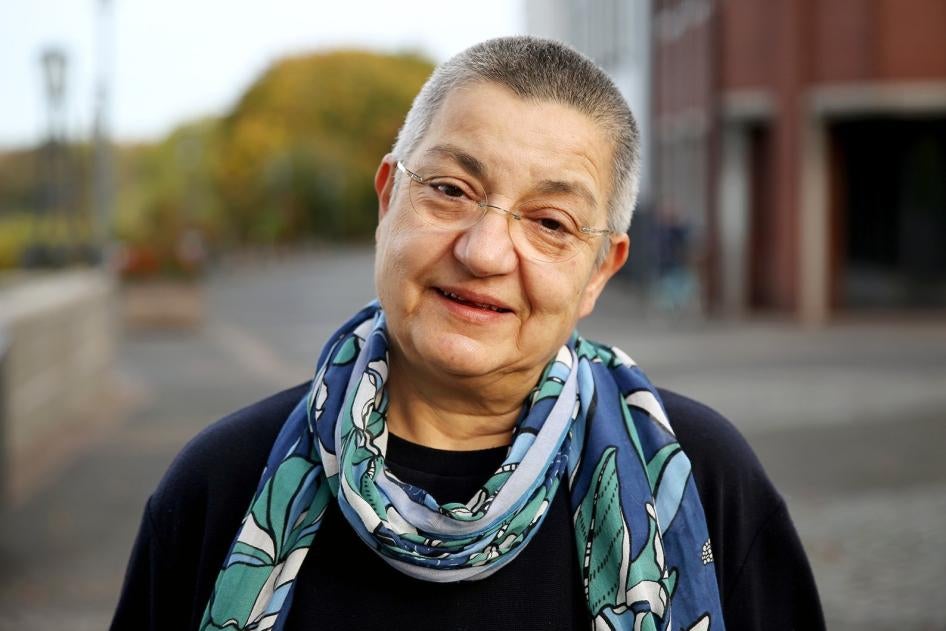
Şebnem Korur Fincancı
Şebnem Korur Fincancı © 2022 TİHV

On 28 October 2022 HRW reports on the continuing crackdown on human rights defenders in Turkey, where Şebnem Korur Fincancı is the latest human rights defender to be jailed as authorities pursue a bogus investigation against her for “spreading terrorist propaganda.” Korur Fincancı is head of the Turkish Medical Association, former head of the Human Rights Foundation of Turkey, and a retired professor of forensic pathology. Her work was central to the creation of the United Nations’ “Istanbul Protocol,” a landmark manual on how to identify and document signs of torture. She has also worked on the exhumation of mass graves and forensic documentation of war crimes in different countries. See also: https://humanrightsdefenders.blog/2018/11/05/turkish-human-rights-defender-and-forensic-doctor-sebnem-korur-fincanci-honoured/

Korur Fincancı’s arrest and pre-trial detention followed an interview she gave to pro-Kurdish TV on October 19. Responding to allegations that the Turkish military had used chemical weapons against the armed Kurdistan Workers’ Party (PKK) in the Kurdistan Region of Iraq, Korur Fincancı said the video footage she had seen suggested use of toxic gases affecting the nervous system and that there should be a full investigation. Turkish pro-government media and President Recep Tayyip Erdoğan accused Korur Fincancı and the Turkish Medical Association of slandering the Turkish military. Prosecutors and courts rapidly responded by ordering her investigation and detention.

Korur Fincancı’s arrest is the latest in a pattern of politically motivated cases as the Erdoğan government continues its crackdown on critics and opponents. Just this week, police also detained 10 Kurdish journalists on top of 16 incarcerated in June. The Turkish authorities show all the signs of being determined to silence the voices of experts like Korur Fincancı as well as the journalists who report their words.

Authorities also appear focused on a broader plan of reshaping and taking over professional bodies that have been critical of government policies. On October 27, Turkey’s justice minister announced a plan to restructure both the Turkish Medical Association, from which Korur Fincancı will be removed as head, and the Union of Chambers of Turkish Engineers and Architects. Mücella Yapıcı, a prominent member of the latter, was convicted and jailed in April along with rights defender Osman Kavala and six others for her alleged role in the 2013 Gezi Park protests.

In the run-up to the 2023 presidential and parliamentary elections, the Turkish government is likely to continue to misuse criminal charges and detention against individuals it wants to silence and attempt to seize institutions outside its control.

https://www.hrw.org/news/2022/10/28/turkey-jails-another-human-rights-defender

Today: the people of Ukraine win this year’s European Union Prize

October 19, 2022

The European Parliament on Wednesday 19 October awarded “the people of Ukraine” its annual Sakharov Prize for freedom of thought amid the ongoing war with Russia. For more on this award and its previous laureates, see: https://www.trueheroesfilms.org/thedigest/awards/BDE3E41A-8706-42F1-A6C5-ECBBC4CDB449

This award is for those Ukrainians fighting on the ground. For those who have been forced to flee. For those who have lost relatives and friends. For all those who stand up and fight for what they believe in. I know that the brave people of Ukraine will not give up and neither will we,” said Roberta Metsola, the European Parliament’s head.

EU Commission chief Ursula von Der Leyen congratulated the people of Ukraine and said: “Their spirit and determination to fight for the values we hold dear is an inspiration to us all.”

At (the EU Council) we’ll focus on continuing our assistance; we will stand with Ukraine for as long as it takes,” European Council President Charles Michel said on Twitter.

Last year: https://humanrightsdefenders.blog/2021/10/21/alexei-navalny-wins-eus-sakharov-prize/

https://www.europarl.europa.eu/news/en/press-room/20221017IPR43706/the-ukrainian-people-awarded-the-european-parliament-s-2022-sakharov-prize

https://www.aa.com.tr/en/europe/ukrainian-people-awarded-eus-sakharov-prize-for-freedom-of-thought/2715666

Report on the 51st session of the Human Rights Council

October 14, 2022

The International Service for Human Rights (ISHR) and 12 other NGOs gave a joint assessment of the 51st session of the Human Rights Council which was held from Monday 12 September to Friday 7 October 2022. [see also: https://humanrightsdefenders.blog/2022/09/20/human-rights-defenders-at-the-51st-session-of-the-un-human-rights-council/]

We welcome that for the first time, the Council heard from two representatives of directly impacted communities from the podium in the enhanced interactive dialogue with the High Commissioner and the International Independent Expert Mechanism to Advance Racial Justice and Equality in Law Enforcement: Collette Flanagan of Mothers against Police Brutality (MAPB) whose son was killed by United States‘ police in 2013; and Jurema Werneck, director of Amnesty International in Brazil. As highlighted in the HC’s report, States are continuing to deny the existence and impact of systemic racism, especially institutional racism. Our view is that States actively protect the interests of police institutions in order to maintain the status quo which is designed to oppress Africans and people of African descent.  We call on States to fully implement the Durban Declaration and Programme of Action (DDPA), to fully cooperate with the International Independent Expert Mechanism to Advance Racial Justice and Equality in the context of Law Enforcement including accepting country visits, implement the recommendations from their report and the High Commissioner’s Agenda towards Transformative Change for Racial justice and Equality.

We welcome the ‘from rhetoric to reality: a global call for concrete action against racism, racial discrimination, xenophobia and related intolerance’ resolution. The resolution, interalia,  strongly condemns the discriminatory treatment, unlawful deportations, excessive use of force and deaths of African migrants and migrants of African descent, including refugees and asylum-seekers, at the hands of law enforcement officials engaged in migration and border governance. It calls on States to ensure accountability and reparations for human rights violations at borders and to adopt a racial justice approach, including by adopting policies to address structural racism in the management of international migration. It reiterates that the Transatlantic Trade in Enslaved Africans and colonialism were grave violations of international law that require States to make reparations proportionate to the harms committed and to ensure that structures in the society that are perpetuating the injustices of the past are transformed, including law enforcement and administration of justice and to dispense reparatory justice to remedy historical racial injustices…..

We welcome the resolution on the “human rights implications of new and emerging technologies in the military domain” and its request for a study examining these implications. The adoption of the resolution adds to the growing attention that UN human rights mechanisms are paying to the negative human rights impacts of arms, including new technologies that can be weaponised.  It is undoubtable that concerns relating to the military domain should not be seen as only relevant to disarmament fora. In response to comments from some States on whether international humanitarian law (IHL) falls within the remit of HRC, we recall that international human rights law and IHL are complementary and mutually reinforcing, as the HRC itself has reiterated on several occasions in past resolutions. We welcome the inclusion of paragraph on the responsibility to respect human rights of business enterprises, and in this regard, we recall the Information Note by the UN Working Group on Business and Human Rights on the Arms Industry (“Responsible business conduct in the arms sector: Ensuring business practice in line with the UN Guiding Principles on Business and Human Rights”) published in August 2022. While we welcome the reference in the resolution to the role of human rights defenders and civil society organisations in raising awareness about the human rights impacts of the use of new and emerging technologies in the military domain, we regret that it does not include a specific mention of the risks that the use of these technologies can pose for human rights defenders and civil society organisations.

We welcome the resolution on arbitrary detention and especially the inclusion of a new paragraph on the necessity to fully implement the Declaration on Human Rights Defenders. The resolution recognises the role of HRDs, peaceful protesters, journalists and media workers in safeguarding the prohibition of arbitrary deprivation of liberty and calls upon States to make sure that they are not arbitrarily detained as a result of their activities. We further commend the main sponsor, France, for having rejected any language that could have weakened the resolution, especially on the right to legal assistance.

We welcome the adoption of the safety of journalists resolution. It has now been a decade since the first resolution on this topic, and the HRC has since created an elaborate and robust set of international standards to protect journalists. This iteration of the resolution adds new strong commitments on multiple new and emerging issues affecting journalists, from strategic lawsuits against public participation to extraterritorial attacks. It also strengthens language on investigations into attacks against journalists, calling on authorities to exhaust lines of enquiry that determine whether such attacks are linked to their journalistic work. We now urge States to implement these commitments to their full extent.

We welcome the approval by consensus by the Council of the resolution on terrorism and human rights, that has been updated with important paragraphs related to the centrality of the rule of law and human rights to counter terrorism, international human rights obligations in transfers of terrorist suspects, profiling of individuals, detention, the right to a fair trial and other due process guarantees, the right to privacy and freedom of expression, and in relation to children rights and civil society. We regret that paragraphs stemming from security based concerns have increased even though they are unrelated to the competence of the Council to promote human rights.

We warmly welcome the adoption of the resolution on the human rights situation in the Russian Federation, mandating a Special Rapporteur on Russia for the first time. …The Russian Federation’s growing repressive policies, combined with the country’s exclusion from the Council of Europe – victims of new human rights violations committed by the Russian Federation from 17 September lost protection under the European Convention on Human Rights– and its diplomatic isolation from those States which have been supportive of human rights and civil society in Russia, have made it increasingly difficult for Russian human rights defenders, activists, and civil society organisations to engage with the international community. Russian civil society had been vocal in calling for a Special Rapporteur’s mandate, strongly believing it will help to create a bridge between the United Nations and Russian civil society and the wider general public in Russia at an acute moment of widespread domestic human rights violations, both ensuring their voice is heard at an international level, and that the United Nations can further develop its understanding and analysis of the deterioration in Russia’s domestic human rights situation and the implications that has had – and continues to have – for Russia’s foreign policy decisions.

We welcome the extension and strengthening of the OHCHR capacity to collect, consolidate, analyse and preserve evidence and information and to develop strategies for future accountability, as well as to extend the mandate for enhanced monitoring and reporting by the OHCHR on Sri Lanka. Given the complete lack of any credible avenues for accountability at the national level, the OHCHR’s Sri Lanka Accountability Project remains the only hope of justice, more than thirteen years after the war, for thousands of victims of war time atrocities and their families.

We welcome the UN Secretary General’s report on missing people in Syria; and urge States to support and implement the report’s findings, in line with resolution A/HRC/51/L.18 which underscored “the report’s finding that any measure towards addressing the continuing tragedy of missing persons in the Syrian Arab Republic requires a coherent and holistic approach going beyond current efforts, which must be inclusive and centered on victims”. Addressing the issue of missing persons in Syria requires a “new international institution” mandated to clarify the fate and whereabouts of missing persons, to “work in cooperation and complementarity with existing mechanisms”, the body having “a structural element that ensures that victims, survivors and their families […] may participate in a full and meaningful manner in its operationalization and work” as recommended in the study of the Secretary General.

The Council has taken a vitally important step in renewing the mandate of the Fact-Finding Mission on Venezuela and of the reporting mandate of OHCHR for a further two years. In its most recent report, A/HRC/51/43, the Fact-Finding Mission deepened its investigation of alleged crimes against humanity, making clear that alleged perpetrators remain in power. The ongoing accountability drive through the work of the Mission allied with the work of OHCHR, is key to providing victims of violations with hope for justice. It is also key to the prevention of ongoing violations, particularly in the context of upcoming elections, and of encouraging political processes that respect human rights.

We regret that the Council failed to respond adequately to several human rights situations including Afghanistan, China, Philippines, and Yemen.

We welcome the extension and strengthening of the mandate of the Special Rapporteur on Afghanistan. However, this in no way makes up for the Council’s repeated failure to respond to the calls from Afghan human rights defenders, especially women human rights defenders, and civil society for an independent accountability mechanism with a mandate and resources to investigate the full scope of violations abuses that continue to be committed in Afghanistan by all parties and to preserve evidence of these violations for future accountability. It is particularly concerning that despite the overwhelming evidence of gross violations and abuses in Afghanistan that the Council failed to muster consensus on even the bare minimum.

We deplore that this Council was unable to endorse the proposal for a debate on Xinjiang, after the UN identified possible crimes against humanity committed by the Chinese government against Uyghurs and Turkic peoples. Dialogue is a pillar of multilateralism, and is fundamental, even on the hardest issues. Despite the leadership of the core group and all 18 States who voted in favour, this Council looked the other way. We strongly condemn the 19 countries who blocked this proposal, and regret all the abstentions that enabled it. We particularly regret that leading OIC States Indonesia and Qatar, as well as Kazakhstan, Uzbekistan, Pakistan, the UAE, Côte d’Ivoire, Mauritania, Sudan, Gabon, Cameroon and Eritrea, decided to abandon Uyghurs and Muslim minorities in China. We command Somalia for being the only Muslim Council member to stand up for Muslim minorities. Uyghur and international human rights groups won’t give up efforts to hold China accountable. We urgently call on current and future Council members to support efforts to prevent the continuation of atrocity crimes in Xinjiang, and uphold this Council’s credibility and moral authority. [see: https://humanrightsdefenders.blog/2022/10/05/uyghur-issue-at-the-un-human-rights-council-will-there-be-even-a-debate/]

We are deeply disappointed that despite the High Commissioner’s clear recommendation and demands by victims and their families as well as civil society from the Philippines, the Council has failed to put forward a resolution mandating the High Commissioner to continue monitoring and reporting on the situation, allowing the Philippines to use the rhetoric of cooperation and the UN Joint Programme for Human Rights to window-dress its appalling human rights record without any tangible progress or scrutiny.

We are dismayed by an Item 10 resolution that will not allow for reporting to the HRC on the human rights situation in Yemen.   Despite a truce that now looks in danger of collapsing, the humanitarian and human rights crisis in Yemen has not ended.  …Lasting peace in Yemen requires a sustained commitment by the international community to ensure accountability and redress for the millions of victims in Yemen. We call on UN member states to give meaning to the pledges they have made and begin to work toward the establishment of an international independent investigative mechanism on Yemen.

On 10 October 2022 a Blog post of the Universal Rights NGO gave the following quick summary of this session of the Human Rights Council

With Ms. Michelle Bachelet’s mandate as the UN High Commissioner for Human Rights having come to an end on 31 August 2022, and the incoming UN High Commissioner, Mr. Volker Türk, not taking up his official functions until 17 October 2022, Ms. Nada Al-Nashif, opened, as Acting High Commissioner, by presenting a global update on the situation of human rights around the world.

Four new Special Procedures mandate-holders were appointed to the following mandates: the Special Rapporteur on contemporary forms of racism, racial discrimination, xenophobia and related intolerance (India), the Special Rapporteur on the human rights of internally displaced persons (Colombia), the Special Rapporteur on the independence of judges and lawyers (United States of America), and one member of the Working Group on Arbitrary Detention (from Eastern European States).

9 expert members were elected to the Human Rights Council’s Advisory Committee (from Algeria, Angola, China, Qatar, Slovenia, Spain, Uruguay, Bahamas, Brazil).

42 texts (39 resolutions, one decision, and one statement by the President) were considered by the Council. This represents a 52% increase in the number of adopted texts compared to one-year prior (HRC48). Of the 41 adopted texts, 30 were adopted by consensus (73%), and 11 by a recorded vote (27%).

The Council rejected a draft decision to hold a debate on the situation of human rights in the Xinjiang Uyghur Autonomous Region, China by vote (17 votes in favour, 19 against, and 11 abstentions).

Following the adoption by vote of a draft resolution on the situation of human rights in the Russian Federation (17 votes in favour, 6 against, and 24 abstentions), the Council created a new Special Procedure mandate on the situation of human rights in the Russian Federation for a period of one year, and requested the mandate holder to make recommendations and to present a comprehensive report to the Council at its 54th session and to the General Assembly at its 78th session, while calling upon the Russian authorities to cooperate fully with the Special Rapporteur.

The Council further extended the mandates of 8 thematic Special Procedures (i.e., the Independent Expert on older persons; the Special Rapporteurs on the right to development, on contemporary forms of slavery, on the rights to water and sanitation, on Indigenous Peoples, and on the right to health, as well as the Working Groups on arbitrary detention, and on mercenaries), and 7 country-specific mechanisms (i.e., the Special Rapporteurs on Afghanistan, and on Burundi; the International Commission of Human Rights Experts on Ethiopia; the Independent International Fact-Finding Mission on the Bolivarian Republic of Venezuela, the International Team of Experts on the Democratic Republic of the Congo; the Independent Expert on the situation of human rights in the Central African Republic; and the mandate of the Independent Expert on the situation of human rights in Somalia).

25 written amendments were tabled by States ahead of the consideration of texts by the Council but 14 were withdrawn by the main sponsor prior to voting. The remaining 11 amendments were rejected by a vote. Additionally, one oral amendment was brought forward by China during voting proceedings.

31 of the texts adopted by the Council (79%) had Programme Budget Implications (PBI) and required new appropriations not included in previous Programme Budgets. 

https://ishr.ch/latest-updates/hrc51-civil-society-presents-key-takeaways-from-human-rights-council/

https://www.universal-rights.org/urg-human-rights-council-reports/report-on-the-51st-session-of-the-human-rights-council/

Criticizing Kremlin leads to treason charges

October 8, 2022
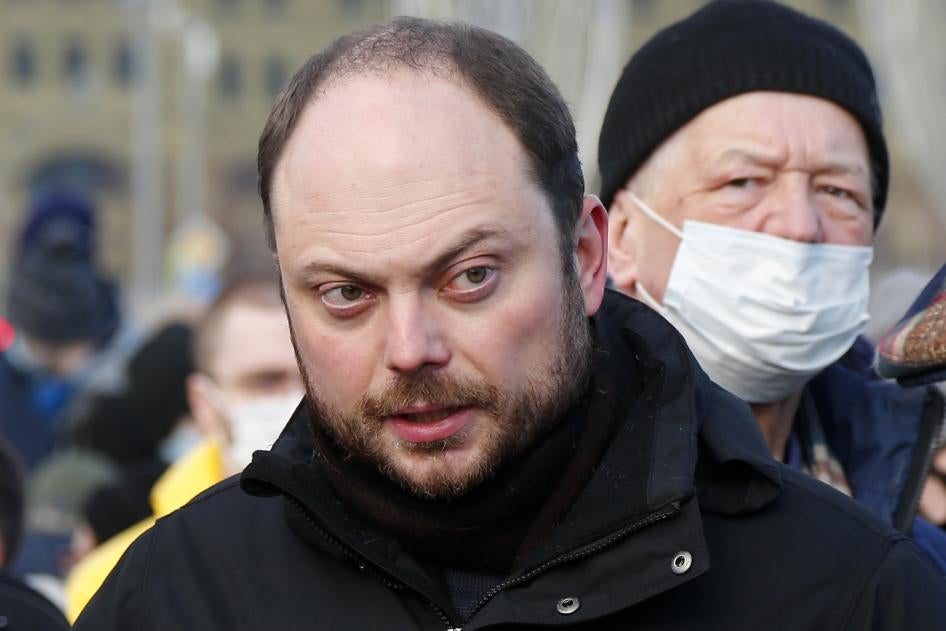
Opposition activist Vladimir Kara-Murza in Moscow.
Opposition activist Vladimir Kara-Murza in Moscow. © 2021 AP Photo/Alexander Zemlianichenko

On 7 October 2022 Human Rights Watch criticised sharply the Russian charge of high treason against an opposition politician, Vladimir Kara-Murza. It is “a blatant attempt to quash any criticism of the Kremlin and deter contact with the international community“, Human Rights Watch said. 

This is the third baseless criminal charge against Kara-Murza since he was detained in April 2022. He has already been indicted for spreading “fake news” about the Russian Armed Forces because he publicly criticized Russia’s invasion of Ukraine, and for alleged involvement with an “undesirable” foreign organization. He now risks an additional sentence of up 20 years if convicted on high treason charges. [see also: https://humanrightsdefenders.blog/2022/04/14/human-rights-defender-vladimir-kara-murza-arrested-in-russia/]

Vladimir Kara-Murza is a longstanding proponent of democratic values and has been a vocal opponent of Vladimir  Putin and Russia’s war on Ukraine,” said Hugh Williamson, Europe and Central Asia director at Human Rights Watch. “It is painfully obvious that the Kremlin sees Kara-Murza as a direct and imminent threat.  These charges against him and his prolonged detention are a travesty of justice. Russian authorities should immediately and unconditionally free Kara-Murza and drop all charges against him.” See also: https://www.trueheroesfilms.org/thedigest/laureates/34e43b60-3236-11ea-b4d5-37ffeeddd006

Vadim Prokhorov, Kara-Murza’s lawyer, said the high treason charges relate to Kara-Murza’s  public criticism of the Russian authorities in international forums.

Kara-Murza has called for sanctions against the Kremlin and has spoken in person before national political bodies throughout Europe and in the United States, and at many international and intergovernmental forums, including at the United Nations. He was a key figure advocating for the US Magnitsky Act that gave rise to the Global Magnitsky sanctions regime for serious human rights violations.

Kara-Murza was also a close friend of the murdered Russian opposition politician Boris Nemtsov. He survived two near-fatal poisonings, in 2015 and 2017, which Bellingcat investigative journalists reported was most likely orchestrated by the Russian Federal Security Service and which the Russian authorities have failed to investigate. 

Since the full-scale invasion of Ukraine started in February, the Russian authorities have expanded their repressive toolbox. In March, Russian authorities criminalized calls for sanctions against Russia, and in July also criminalized “confidential cooperation” with foreign states, international or foreign organizations as well as public calls for action that are “against national interests.”

These new provisions cannot be applied retroactively to the years of advocacy by Kara-Murza, Human Rights Watch said, and so he is being charged with high treason under Russia’s criminal code, which was expanded in November 2012. The definition was expanded to include consultations or any other assistance to a foreign state or international or foreign organizations…

Russia’s rules on prosecution and trial of treason cases also breach human rights safeguards, in particular fair trial guarantees. For example, the criminal case materials in such proceedings are classified so that the defense team may not have access to key pieces of evidence, and the trial takes place behind closed doors, preventing public scrutiny.

Ivan Safronov, a journalist, was recently convicted of high treason and sentenced to 22 years in maximum security prison and given a substantial fine for his journalistic investigations of defense contracts, spotlighting how treason cases are handled.  He was tried behind closed doors, key evidence obtained by fellow journalists was not accepted by the court, and his defense team came under immense pressure. Two of his lawyers had to flee the country, and a third was detained on accusations of spreading false information and remains in detention.

“Sadly, it is unrealistic to expect that fair trial standards will be observed in Kara-Murza’s case,” Williamson said. “By jailing leaders like him, Russian authorities are attempting to instill fear in the Russian people and eradicate any opportunity for civil society to mobilize and oppose the Kremlin and its war.” 

https://www.hrw.org/news/2022/10/07/russia-first-treason-charges-criticizing-kremlin