Archive for the 'HRW' Category

More join Maryam Al-Khawaja’s solidarity trip to Bahrain……to be continued

September 14, 2023

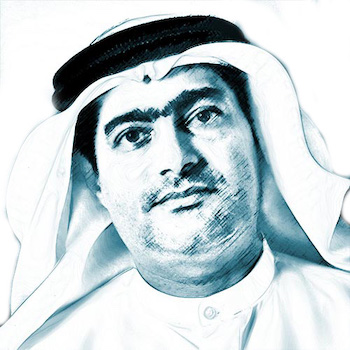
On 7 September 2023, Maryam Al-Khawaja announced that she would return from exile to Bahrain to try and save her father Abdulhadi Al-Khawaja [see: https://humanrightsdefenders.blog/2023/09/11/maryam-al-khawaja-risks-prison-by-returning-to-bahrain-to-press-for-her-fathers-release/]. Now Front Line’s Interim Director Olive Moore announced that she will accompany Maryam on the trip to Manama this week to press the Bahraini authorities to release him. Other leading human rights figures have announced their participation in the trip, including Agnès Callamard, Amnesty International’s Secretary General; Tim Whyte, Action Aid-Denmark’s Secretary General; and Andrew Anderson, former Front Line Defenders Executive Director and Amnesty International staff member.

“Front Line Defenders owes a debt of gratitude to Abdulhadi, both as a former staff member and friend to many in the organisation, but more importantly as a principled and trailblazing human rights defender in Bahrain and the region. We will not rest until the Bahraini authorities free him and the human rights defenders Dr Abduljalil Al-Singace and Naji Fateel, both also unjustly imprisoned for over a decade.” said Moore.

The exact timing of the solidarity trip is not being publicised, but it comes the same week as the Bahraini Crown Prince visits Washington, DC, and more than a dozen human rights organisations, including Front Line Defenders, have also called on President Biden’s administration to demand the release of human rights defenders.

“Now is the moment for the Biden administration to step up to the plate and show solidarity with human rights defenders in Bahrain. In meetings with the Crown Prince this week, the US government must be unequivocal in its calls for the immediate and unconditional release of Abdulhadi Al-Khawaja and other unjustly imprisoned human rights defenders,” said Olive Moore.

Human Rights Watch stated on 11 September: “If Maryam al-Khawaja can have the courage to risk her life for democracy and human rights in Bahrain, the least the Biden Administration can do is show the political strength to use its leverage to call on its allied government to free its political prisoners.

The same day Human Rights First’s Brain Dooley blogged about two prisoners (among the hundreds on hunger strike) that have told him about the daily reality of the protest.

One of them is 49-year-old Ahmed Jaafar Mohammed Ali, who has been in prison since he was extradited from Serbia in January 2022 and Sayed Sajjad who has been in prison since September 2013, and is one of the inmates negotiating with the prison authorities. See more at: https://humanrightsfirst.org/library/two-prisoners-on-hunger-strike-in-bahrain-tell-of-their-ordeal/

https://www.frontlinedefenders.org/en/statement-report/front-line-defenders-director-join-solidarity-trip-bahrain-free-abdulhadi-al

https://www.hrw.org/video-photos/audio/2023/09/11/bahrain-brutality-and-biden

https://www.france24.com/en/live-news/20230914-bahrain-activist-says-to-return-home-for-father-despite-arrest-fears-1

Call to release human rights defender Manuchehr Kholiqnazarov and others in Tajikistan

September 14, 2023

With Tajikistan marking its Independence Day on 9 September 2023, CIVICUS and the Brussels-based International Partnership for Human Rights (IPHR) called on 7 September 2023 on Tajikistan’s authorities to immediately release imprisoned human rights defender Manuchehr Kholiqnazarov, and other activists and journalists detained for their human rights activities.

Manuchehr Kholiqnazarov is a peaceful human rights lawyer and activist who has sat in jail for far too long on trumped-up charges,” said Mandeep Tiwana, CIVICUS Chief Programmes Officer. “As Tajikistan celebrates its national day, the authorities must free him and others unjustly imprisoned without hesitation.”

Authorities arrested Manuchehr on 28 May 2022 while he was a member of “Commission 44,” an official body investigating a November 2021 extrajudicial killing which sparked mass protests in Tajikistan’s Gorno-Badakhshan Autonomous Oblast (GBAO). Prosecutors falsely charged Manuchehr with participating in a criminal association and publicly calling for violent change of the constitutional order. After a closed trial which failed to meet international fairness standards, Tajikistan’s Supreme Court sentenced him to 16 years’ imprisonment in December 2022.

It is completely absurd that the government appointed someone to a commission to investigate and report on human rights violations and then charged that same person for doing the work they were commissioned to do,” said IPHR director Brigitte Dufour. “Manuchehr should be released immediately.

Manuchehr’s continued detention is symptomatic of the ongoing civic space restrictions in Tajikistan, which is one of the world’s most repressed countries. Tajikistan authorities have repeatedly levelled trumped-up charges of “extremism” and “terrorism” against journalists, bloggers and activists who criticise the government. CIVICUS Monitor, which assesses civic space worldwide, rates Tajikistan as “closed,” its worst possible ranking.

CIVICUS and IPHR recognise Manuchehr as part of the Stand As My Witness campaign, which advocates for the release of jailed activists and human rights defenders worldwide.

On 11 September 2023 the Norwegian Helsinki Committee, Human Rights Watch, Freedom for Eurasia, and Freedom Now demanded that he Tajik authorities drop trumped up charges against Nizomiddin Nasriddinov and immediately release him. Nasriddinov, a political activist, was recently extradited from Belarus at the request of the Tajik government.

https://www.civicus.org/index.php/media-resources/news/6551-civil-society-demands-tajikistan-release-jailed-human-rights-defender

https://www.hrw.org/news/2023/09/11/tajikistan-free-political-activist-and-drop-charges

19 NGOs Call on US to Press the UAE to Release Ahmed Mansoor ahead of COP 28

September 1, 2023

On August 29, 2023, Amnesty International USA, Human Rights Watch, Project on Middle East Democracy (POMED) and 16 additional civil society organizations delivered an open letter urging U.S. Secretary of State Antony Blinken to encourage the United Arab Emirates (UAE) government to immediately and unconditionally release Emirati human rights defender Ahmed Mansoor ahead of the 28th Conference of Parties of the United Nations Framework Convention on Climate Change (COP28) that will take place from November 30 to December 12, 2023. [for more on UAE: see https://humanrightsdefenders.blog/tag/ahmed-mansoor/]

In the letter, the organizations urged Secretary Blinken to call on the UAE government to immediately and unconditionally release Ahmed Mansoor and other jailed human rights defenders and peaceful critics both privately and publicly at the highest levels. The organizations also called on the Secretary to signal deep concern about Mansoor’s well-being and request permission to visit him in prison as soon as possible.

“With the world’s attention on Dubai, the US government should deliver on this administration’s promise to center human rights in its foreign policy and press the Emirati authorities to finally release Ahmed Mansoor,” said Elizabeth Rghebi, Advocacy Director for the Middle East and North Africa, “As a participant in COP28, the US government can demand the UAE demonstrate through this high profile release its commitment to the human rights principles required for healthy civic space at this upcoming global gathering.”

Governments have an obligation to protect the civic space for protest, in particular guaranteeing the rights to freedom of peaceful assembly and freedom of expression. Subjecting human rights defenders and critics to unlawful use of force, arbitrary detention, unfair trials, and abusive detention conditions violate these and other rights. The US government should work to uphold its obligations both at home and when engaging diplomatic partners.

Mansoor was arrested by Emirati authorities in March 2017 for “spreading false news” to “harm the reputation of the state.” All the charges on which he was convicted were based solely on his human rights advocacy, including using email and WhatsApp to communicate with human rights organizations. Following more than a year in isolation in pre-trial detention and a grossly unfair trial, an Emirati state security court sentenced Mansoor to 10 years in prison. Mansoor is a laureate of the MEA [see: https://www.trueheroesfilms.org/thedigest/laureates/074ACCD4-A327-4A21-B056-440C4C378A1A]

Throughout his imprisonment, Mansoor has been subjected to treatment that violates the prohibition against torture and other cruel, inhuman, or degrading treatment, including being held in solitary confinement without access to reading materials, television, or radio. Since December 2017, he has been denied eyeglasses, most personal hygiene items and, at least until recently, a bed or mattress in his cell.

https://www.amnestyusa.org/press-releases/19-organizations-call-on-us-administration-to-press-uae-on-release-of-ahmed-mansoor/

https://www.hrw.org/news/2023/08/30/cop28-us-should-press-uae-activists-release

UN Human Rights offices in Uganda have to close

August 10, 2023
Communities, marking Human Rights Day in Uganda, 2016 © OHCHR Photo

On 4 August 2023 UN High Commissioner for Human Rights, Volker Türk, expressed deep regret at the closure of his office in Uganda, following the Government’s decision not to renew the Host Country Agreement. The office in Kampala will officially cease its operations on Saturday. Sub-offices in Gulu and Moroto closed on 30 June and 31 July. See also: https://www.hrw.org/news/2023/02/15/uganda-threatens-close-un-human-rights-office

I regret that our office in Uganda had to close after 18 years, during which we were able to work closely with civil society, people from various walks of life in Uganda, as well as engaging with State institutions for the promotion and protection of the human rights of all Ugandans,” said Türk.

“Much progress has been made in the country over the years, but serious human rights challenges remain in the path to full enjoyment of human rights for all,” the High Commissioner said.

Türk expressed particular concern about the human rights situation in Uganda ahead of the 2026 elections, given the increasingly hostile environment in which human rights defenders, civil society actors and journalists are operating.

He noted that most of the 54 NGOs that were arbitrarily suspended in August 2021 remain closed. The High Commissioner also expressed concerns that the amended Computer Misuse law may further erode free expression.

Türk warned against retrogression from Uganda’s commitments under the international human rights treaties it has ratified, including in the passage of the deeply discriminatory and harmful anti-homosexuality law, that is already having a negative impact on Ugandans.

Türk urged the Government to ensure the national human rights body can function effectively and independently, as the the main body tasked with human rights oversight in Uganda.

“The Uganda Human Rights Commission, our long-standing partner in the protection and promotion of human rights in the country, is chronically under-funded and under-staffed, and reports of political interference in its mandate undermine its legitimacy, independence and impartiality,” he said.

“I urge the Ugandan government to provide the Commission with adequate human, technical and financial resources so that it may more effectively execute its important mandate.”

“On our part, the UN Human Rights Office remains committed to working on human rights in Uganda, in line with my global mandate,” he added.

https://www.ohchr.org/en/press-releases/2023/08/turk-announces-closure-un-human-rights-office-uganda

NGOs protest sentencing of human rights defender Patrick George Zaki – with success

July 19, 2023

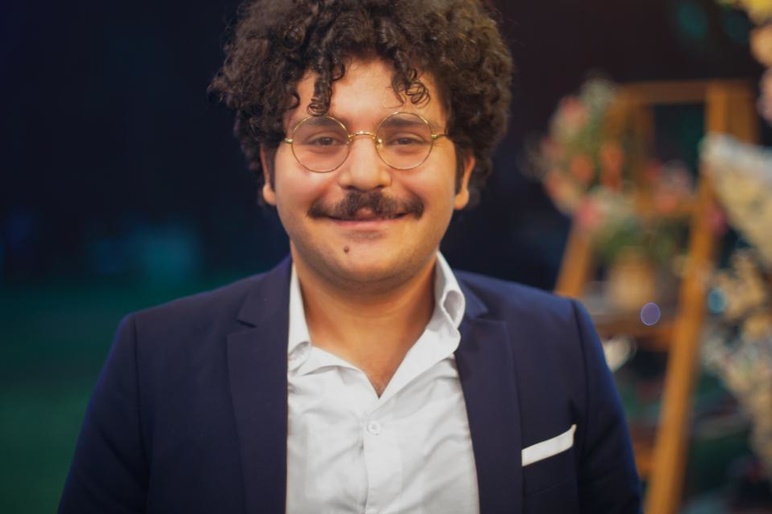
A large group of civil society organizations, condemn the three-year prison sentence handed down to human rights researcher at the Egyptian Initiative for Personal Rights (EIPR) and academic Patrick George Zaki for his writings highlighting the hardship and discrimination faced by Coptic Christians in Egypt, such as himself.

On July 18, 2023, following a trial rife with due process violations, an Egyptian emergency state security court handed down a three-year prison sentence to Patrick on trumped up charges of spreading false news. Patrick, who was a graduate student at the University of Bologna at the time, was arrested by Egyptian authorities on February 7, 2020, while at the Cairo Airport during a visit home to see his family. In custody, he was held incommunicado for a 24-hour period; he was beaten, stripped, electrocuted, verbally abused, and threatened. He was initially accused of joining a terrorist organization and spreading false news. In September 2021, lawyers learned that he had been referred to emergency state security court on false news charges for a 2019 article that he authored for independent digital media outlet Daraj on his experience as a Coptic Christian religious minority, titled, “Displacement, Killing & Harassment: A Week in the Diaries of Egypt’s Copts.” On December 7, 2021, following 22 months behind bars, he was ordered released from detention pending trial, and placed on travel ban. His trial continued until the July 2023 verdict, following which he was taken back into custody today.

Verdicts handed down by an emergency court are not subject to legal appeal, only to ratification by the President. The President also has the authority to commute the sentence or to quash the verdict. Furthermore, under Circular No. 10 of 2017 governing emergency state security courts, “If the accused is brought to trial while not in custody and sentenced to a prison penalty, he must be released immediately without executing the penalty pending the decision of the ratifying authority.” Per this provision, Patrick must legally be free while the President considers ratification; for Egyptian authorities to have taken him into custody constitutes a clear violation of this circular.

The targeting, arrest, prosecution, and sentencing of Patrick Zaki for writing about his experiences as a Coptic Christian is an egregious measure by Egyptian authorities that is indicative of a larger failure by the state to protect religious minorities. Instead, the authorities target Copts for merely expressing themselves and bringing attention to the discrimination they regularly endure. This sentence occurs in violation of Egypt’s domestic laws and international legal commitments, and sends a clear message that the Egyptian government is not serious about implementing its national human rights strategy or carrying out a meaningful national dialogue. At a time during which Egyptian authorities should be addressing the dire economic crisis, this step raises severe questions on the trajectory of the country.

The undersigned civil society organizations, call on Egyptian President Abdel Fattah El-Sisi not to ratify the verdict handed down to Patrick Zaki and instead to quash it in its entirety. We call on Egyptian authorities to immediately release Patrick Zaki from custody, to drop all charges and close all cases brought against him in their entirety, and to lift the travel ban brought against him. We urge all of Egypt’s international, multilateral, and government partners to press the Egyptian government to immediately release Patrick and cease persecuting him for his legally protected speech and vital human rights work.

For once it seems to have worked: https://www.barrons.com/news/egypt-s-sisi-pardons-researcher-a-day-after-jailing-sparked-outcry-e22a3c1a?refsec=topics_afp-news

Signatories

  • Access Now
  • Alternative Press Syndicate
  • Amnesty International
  • Arab Reform Initiative
  • Cairo Institute for Human Rights Studies (CIHRS)
  • Campaign Against Arms Trade
  • Center for International Policy
  • CNCD-11.11.11
  • Committee for Justice
  • Daraj
  • Democracy in the Arab World Now (DAWN)
  • DIGNITY Danish Institute Against Torture
  • Egyptian Commission for Rights and Freedoms
  • Egyptian Front for Human Rights (EFHR)
  • Egyptian Human Rights Forum (EHRF)
  • Egyptian Initiative for Personal Rights (EIPR)
  • EgyptWide for Human Rights
  • El Nadim Center
  • FIDH (International Federation for Human Rights), within the framework of the Observatory for the Protection of Human Rights Defenders
  • Human Rights First
  • Human Rights Watch
  • HuMENA for Human Rights and Civic Engagement
  • INSM for Digital Rights
  • International Service for Human Rights (ISHR)
  • Kawaakibi Foundation
  • Lebanese Center for Human Rights – CLDH
  • MENA Rights Group
  • PEN America
  • PEN International
  • Project on Middle East Democracy (POMED)
  • Refugees Platform in Egypt (RPE)
  • Scholars at Risk
  • Shadow World Investigations
  • Sinai Foundation for Human Rights (SFHR)
  • SMEX
  • Start Point
  • Taafi initiative
  • The Freedom Initiative
  • The Legal Agenda
  • The Syria Campaign
  • The Tahrir Institute for Middle East Policy (TIMEP)
  • World Liberty Congress
  • World Organisation Against Torture (OMCT), within the framework of the Observatory for the Protection of Human Rights Defenders

https://www.omct.org/en/resources/statements/egypt-sentencing-of-academic-and-researcher-patrick-george-zaki

https://www.hrw.org/news/2023/07/18/civil-society-organizations-condemn-sentencing-egyptian-academic-and-researcher

https://www.aljazeera.com/news/2023/7/18/egypt-jails-rights-researcher-patrick-zaki-for-3-years-ngo-says

State of Human Rights in Belarus called ‘Catastrophic’ at the UN

July 12, 2023
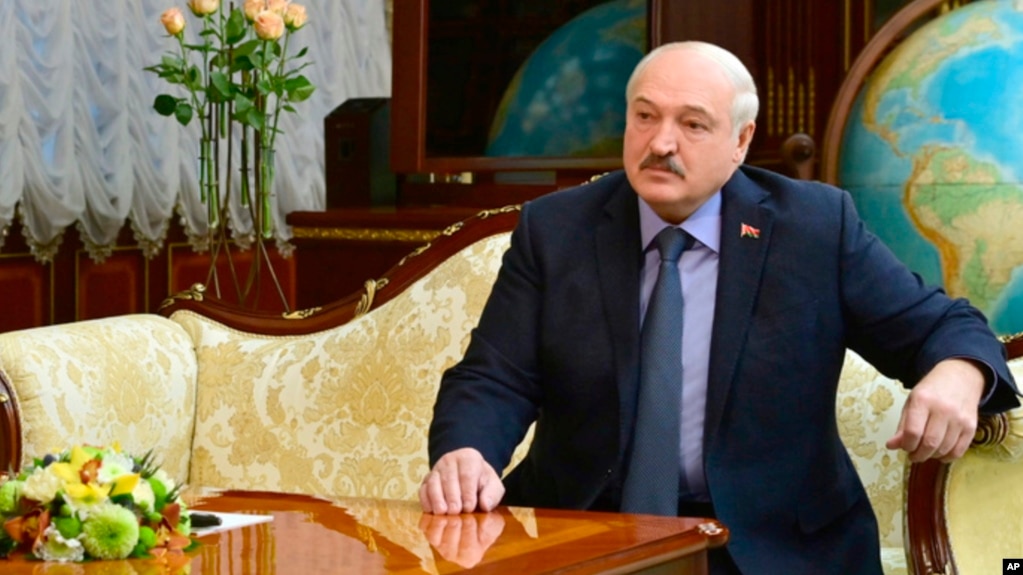
The regime of Belarusian President Alexander Lukashenko — seen here in Minsk, Belarus, on April 10, 2023 — is deliberately purging civil society of its last dissenting voices, a United Nations special rapporteur told the U.N. Human Rights Council on Tuesday.

The human rights situation in Belarus is catastrophic, and only getting worse, the United Nations special rapporteur on the country said on 4 July 2023, according to AFP.

Belarusian leader Alexander Lukashenko’s regime in Minsk is deliberately purging civil society of its last dissenting voices, Anais Marin told the U.N. Human Rights Council.

“The situation remains catastrophic. Unfortunately, it keeps on worsening,” said the special rapporteur on the human rights situation in Belarus. “The Belarusian government amended an already restrictive legislation aimed at dismantling civic freedoms, leading to a surge in politically motivated prosecutions and sentencing.

“The lack of accountability for human rights violations fosters a climate of fear among victims and their families,” Marin said. Marin has been in post for five years and reminded the council that she alerted them two years ago to the “totalitarian turn” taken by Minsk, evidenced by the “disregard for human life and dignity” during the crackdown on peaceful protesters in 2020. In her annual report, the French political scientist said more than 1,500 individuals were still being detained on politically motivated charges, with a daily average of 17 arbitrary arrests since 2020.

“I have good reasons to believe that prison conditions are deliberately made harsher for those sentenced on politically motivated grounds, by placing them in punishment cells for petty infraction to prison rules,” said Marin.

“No one has been held accountable in Belarus for arbitrarily detaining tens of thousands of peaceful protesters in 2020, nor for the violence or torture many of them have been subjected to.

“This general impunity, and the climate of fear resulting from ongoing repression, have compelled hundreds of thousands of Belarusians into exile.

Human rights defenders face ongoing persecution, she said, with more than 1,600 “undesirable organizations forcibly dissolved, including all remaining independent trade unions.

“This illustrates a deliberate state policy of purging civic space of its last dissenting elements,” she said.

Marin said independent media outlets had been labelled as “extremist organizations,” while academic freedom is “systematically attacked.”

“Ideological control and disciplinary measures restrict freedom of opinion and their expression,” she said.

Primary and secondary education is also subject to “ideological control,” with children “discouraged from expressing their own opinions” and facing “threats and consequences” for holding dissenting views.

Consequences for speaking out

As for the Russian invasion of Ukraine, individuals face challenges when trying to speak out against it or question Belarus’s role in facilitating the 2022 invasion.

“Anti-war actions led to numerous detentions and arrests, some on charges of planning terrorist attacks — a crime which can now be punished by death,” she said.

Belarus was immediately offered the Human Rights Council floor to respond to Marin’s comments but was not present.

On 11 July HRW underlined this with the case of Belarusian lawyer Yulia Yurhilevich and journalist Pavel Mazheika who ace up to seven years in prison

https://www.eeas.europa.eu/delegations/un-geneva/hrc53-interactive-dialogue-situation-human-rights-belarus-eu-statement_en?s=62

https://www.voanews.com/a/state-of-human-rights-in-belarus-catastrophic-un-told-/7167606.html

https://www.hrw.org/news/2023/07/11/travesty-justice-reaches-new-low-belarus

Vietnam Frees Australian democracy activist Chau Van Kham

July 12, 2023

On 11 July 2023 EFE reported that Vietnam had released Vietnamese-Australian activist Chau Van Kham, sentenced in 2019 to 12 years in prison for extremism over his ties to the Viet Tan pro-democratic party.

Australian Prime Minister Anthony Albanese said he “very much welcomes the release of Chau,” in remarks Monday from Berlin, through Australian public broadcaster ABC.

Chau’s lawyer Dan Nguyen said in a statement through Amnesty International Australia that the activist, who returned Monday night to Australia, is with his wife and two sons. He also thanked the government’s, organizations and individuals’ efforts that fought for his release.

Chau was arrested in Ho Chi Minh City in January 2019 after being accused of entering the country with a false document and sentenced in an express trial to 12 years in prison for extremism charges 10 months later. See: https://humanrightsdefenders.blog/2020/06/08/chau-van-kham-australian-human-rights-defender-disappeared-inside-vietnams-prison-system/

This was due to Chau, 73, being linked to pro-democratic group Viet Tan, considered an extremist entity in the country but a human rights organization in Australia.

Deputy Australian Prime Minister Richard Marles said Chau was released on “humanitarian” reasons and “in the spirit of friendship which exists between Australia and Vietnam,” according to ABC.

Chau is one of “more than 150 political activists in Vietnam who have been detained for peaceful acts in favor of freedom of expression,” Human Rights Watch Asia Human Rights Director Elaine Pearson said in a statement.

Pearson spoke of journalist Dang Dihn Bach and activists Mai Phan Loi, Dang Dinh Bach, and Hoang Thi Minh Hong among them and urged Australia to continue advocating for their release.

The exact number of political prisoners in Vietnam is unknown, as numbers provided by different human rights organizations have discrepancies.

While Human Rights Watch says the total exceeds 150, Amnesty International said there were 128 political prisoners in the country last year. Dissident organization Defend the Defenders raised the number to more than 250.

https://www.abc.net.au/news/2023-07-26/dan-phuong-nguyen-chau-van-kham-human-rights-vietnam-730/102646526

Journalist Elena Milashina and lawyer Alexander Nemov severely attacked in Chechnya

July 10, 2023

Rights defenders are sure of Chechen law enforcers’ involvement in attack on Milashina says Roman Kuzhev, СK correspondent

The attack on the journalist Elena Milashina and the advocate Alexander Nemov has to do with Milashina’s publications in which she wrote about human rights violations in Chechnya, human rights defenders have noted.

The “Caucasian Knot” reported that on July 4, Elena Milashina, a journalist of the “Novaya Gazeta” outlet, and Alexander Nemov, an advocate for Zarema Musaeva, were attacked in Chechnya. They were beaten up by masked gunmen when they were on the way from the airport to Grozny, where the verdict in the case of Zarema Musaeva was to be announced. The head of Chechnya, Ramzan Kadyrov, has promised to “sort things out”; and Akhmed Dudaev, the head of the Chechen Press Ministry, have pointed out that “the style of Western intelligence services” is seen in the attack.

Svetlana Gannushkina, the head of the “Civic Assistance” Committee, is sure that the attack had to do with Milashina’s human rights activities. “They were waiting for her there to beat her for her so much writing on human rights issues, conducts inquiries and shows the real Chechnya,” Ms Gannushkina has stated.

According to her version, the attackers are definitely law enforcers. Gannushkina* has also added that the attackers would not be identified and punished. Oyub Titiev, a human rights defender, is also sure that Milashina was the attackers’ target. “Only law enforcers can beat a woman so openly and with such cruelty,” he has stated.

Ruslan Kutaev, the president of the Assembly of Caucasian Nations, is sure that Milashina would have been attacked at any moment while in Grozny.

A criminal case on the attack on Milashina and Nemov can be initiated under several articles, said Galina Tarasova, a lawyer. According to her story, the case should have been transferred to the central office of the Investigating Committee of the Russian Federation (ICRF).

This article was originally published on the Russian page of 24/7 Internet agency ‘Caucasian Knot’ on July 5, 2023 at 08:07 pm MSK. https://eng.kavkaz-uzel.eu/articles/62817

Many other human rights groups reported on this:

https://www.frontlinedefenders.org/en/case/human-rights-defenders-aleksandr-nemov-and-elena-milashina-attacked-and-severely-beaten-0

https://www.democracynow.org/2023/7/6/elena_milashina_attack

https://www.hrw.org/news/2023/07/04/journalist-and-human-rights-lawyer-viciously-attacked-chechnya

https://www.ohchr.org/en/press-releases/2023/07/russia-un-experts-dismayed-violent-attack-against-journalist-yelena

Off-shoring refugees is an expensive snake oil..

July 2, 2023

On 29 June 2023 Andrew Stroehlein wrote for Human Rights Watch a short obituary on ‘off-shoring refugees’, concluding “That offshoring refugees has been a costly, abusive, illegal failure should surprise no one apart from maybe a few politicians who believed their own slogans and a portion of the public who fell for the politicians’ expensive snake-oil cures”

Offshoring Refugees: A Costly, Abusive Failure. Australia no longer holds any refugees on the island country of Nauru. In welcome news, the last refugee kept there under the Australian government’s abusive offshore processing policy has finally been evacuated to Australia. The hope now is that Australia, and the rest of the world, will finally realize what an abusive failure such policies have been.The so-called “Australian model” – variously labelled “externalizing,” “offshoring,” or “outsourcing” – has been wrongly admired and repackaged elsewhere by unscrupulous politicians around the globe for years. In the EU, they bloviate over its supposed merits, and member state Denmark pushed plans to send asylum seekers to detention in Rwanda, a country known for torture in detention. The UK government’s efforts to mimic Australia have also focused on sending folks to Rwanda, with the UK home secretary bizarrely saying it was not only her “dream” but also her “obsession” to do so. The Court of Appeal has just ruled the scheme unlawful this morning – more good news. Of course, the US has been “outsourcing” for years. Under both Biden and Trump, US authorities force asylum seekers to wait interminably in Mexico, where they face kidnapping, rape, and extortion.  And despite the good news about Nauru, Australia itself still holds about 80 refugees and asylum seekers in limbo in Papua New Guinea.The “appeal” of outsourcing was based on a kind of political sadism. Politicians promised to be “tough” on asylum seekers – meaning cruel and vicious toward powerless, desperate people. That, they told voters, would deter people from coming. The truth is, it’s been absurdly expensive, it’s led to appalling human rights abuses, and it hasn’t deterred anyone. Australia has spent billions on transferring 3,127 asylum seekers and refugees to Nauru and Papua New Guinea. Last year, the system apparently cost 22 million Australian dollars per person being held in Nauru (US$ 14.5 million). The abuses you get for that money are clear. HRW has documented how individuals and families with children spent years living in substandard conditions in these centers, where they suffered severe, inhumane treatment, violence, and medical neglect. At least 14 people subjected to Australia’s offshore detention system have died, half from suicide or suspected suicide. [re Australia, see also: https://humanrightsdefenders.blog/2021/07/21/australias-migration-detention-industry-again-denounced/] And offshoring hasn’t “worked” even in the most limited sense of what politicians promised. Desperate people searching for safety and the chance of a better life keep coming. They’re not going to stop fleeing war and oppression just because you threaten to send them to a third country when they arrive. That offshoring refugees has been a costly, abusive, illegal failure should surprise no one apart from maybe a few politicians who believed their own slogans and a portion of the public who fell for the politicians’ expensive snake-oil cures. But now, it should be obvious to everyone: cruelty is never a good policy.

https://www.hrw.org/the-day-in-human-rights/2023/06/29

Tunisia no longer poster child of Arab spring

June 29, 2023

The Human Rights Council should urgently address the deterioration of the human rights situation in Tunisia, four human rights organizations said on 27 June 2023 as the 53rd Council’s session is underway.

In a letter sent to UN Member States’ Representatives on 5 June 2023, the four undersigned organizations warned against the rapidly worsening situation in Tunisia, and urged States to seize the opportunity of the ongoing Human Rights Council’s session to address it. The organizations called on the Council and Member States to press the Tunisian authorities to comply with their obligations under international human rights law particularly those guaranteeing the rights to fair trial, freedom of expression, freedom of peaceful assembly and association, and non-discrimination.

The Human Rights Council should urge Tunisia to end the ongoing crackdown on peaceful dissent and freedom of expression, and drop charges against, and release, all individuals being detained and prosecuted solely on the basis of their peaceful political activities and the exercise of their human rights. The Council should also call on Tunisia to conduct prompt, thorough, independent, impartial and transparent and investigation into a wave of anti-Black violence – including assaults and summary evictions – against Black African foreign nationals, including migrants, asylum seekers and refugees, and bring to justice anyone reasonably suspected to be responsible, and provide victims with access to justice and effective remedies.

Over the past two years, Tunisia has witnessed a significant rollback on human rights. Judicial independence guarantees have been dismantled and individual judges and prosecutors have been subjected to arbitrary dismissal, politicized criminal prosecutions and increased interference by the executive. Lawyers are being prosecuted for the discharge of their professional duties and exercise of their right to freedom of expression.

The Tunisian authorities’ interference in the judiciary and attacks on lawyers have greatly undermined the right to fair trial and public trust in the integrity of the justice system. The authorities must ensure that the courts are not weaponized to crush dissent and free expression,’ said International Commission of Jurists’ MENA director Said Benarbia. 

Under the guise of ‘fighting offences related to information and communication systems’,  punishable by up to a 10 years’ imprisonment and a hefty fine according to Decree Law 54, at least 13 individuals, including journalists, political opponents, lawyers, human rights defenders and activists, have been subject to police or judicial investigations and are facing possible prosecutions.

‘With Tunisia facing political uncertainty and economic crisis, it’s more important than ever that Tunisians be free to debate their country’s future without fear of reprisal. The authorities should strive to allow the effective enjoyment of the right to freedom of expression of everyone; instead, they are attacking it,’ said Rawya Rageh, Amnesty International’s acting deputy director for the Middle East and North Africa.

Last week, the UN High Commissioner for Human Rights called on the Tunisian authorities to stop restricting media freedoms and criminalizing independent journalism. In a statement published on 23 June, Volker Türk expressed deep concern at the increasing restrictions on the right to freedom of expression and press freedom in Tunisia, noting that vague legislation is being used to criminalize independent journalism and stifle criticism of the authorities. ‘It is troubling to see Tunisia, a country that once held so much hope, regressing and losing the human rights gains of the last decade,’ said the High Commissioner.

Since February 2023, a wave of arrests targeted political opponents and perceived critics of Tunisia’s President, Kais Saied. In the absence of credible evidence of any offences, judges are investigating at least 48 people, such as dissidents, opposition figures, and lawyers, for allegedly conspiring against the State or threatening State security, among other charges. At least 17 of them are being investigated under Tunisia’s 2015 counter-terrorism law.

‘By jailing political leaders and banning opposition meetings, the authorities are dangerously trampling on the fundamental rights that underpin a vibrant democracy. The democratic backsliding and the human rights violations, which are unprecedented since the 2011 revolution, require urgent attention from the Human Rights Council and Member States,’ said Salsabil Chellali, Tunisia director at Human Rights Watch.

Signatories:

  1. International Commission of Jurists (ICJ)
  2. International Service for Human Rights (ISHR)
  3. Amnesty International
  4. Human Rights Watch (HRW)

Download as PDF