“We welcome this opportunity to work in Israel and Palestine alongside vigorous national human rights organisations,” said Iain Levine, executive deputy director for programme at Human Rights Watch. “Israeli authorities do not always agree with our findings, but, in facilitating the ability of our staff to carry out our research and documentation, they have taken an important step to safeguard the principle of transparency and demonstrate their openness to criticism.”
Nikki Haley, the US ambassador to the UN, with Liu Jieyi, China’s ambassador, before the April 18 Security Council meeting. Rick Bajornas/UN Photo
The United States led on Tuesday 18 April what it (and not many others) dubbed a ‘historic‘ U.N. Security Council meeting on the link between rights abuses and conflict, but it had to drop a push for the broad issue of human rights to become a fixed item of the Security Council’s agenda when it appeared that at least six members would oppose it [Russia, China, Egypt, Ethiopia, Kazakhstan and Bolivia were against the move and Senegal’s support was uncertain]. The United States, council president for April, did not risk the measure being put to a rare procedural vote, which requires nine in favour, and vetoes cannot be used. The opposing council members say rights discussion should be confined to the Geneva-based Human Rights Council – which Washington accuses of being anti-Israel and has threatened to quit – and the 193-member U.N. General Assembly third committee. Here is some of the analysis:
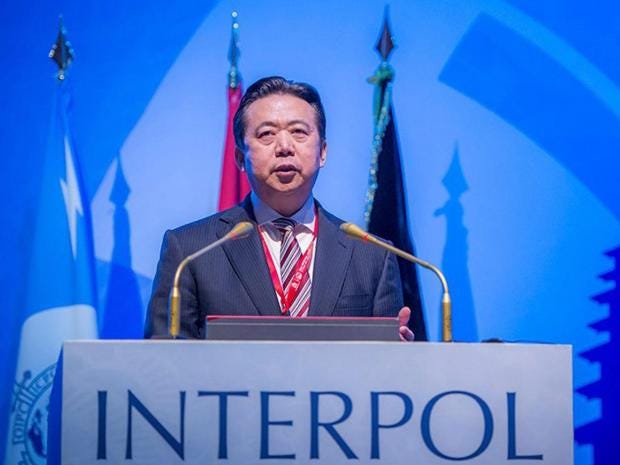
‘Old’ but underreported news is that Meng Hongwei – a top Chinese police official – has been elected president of Interpol, which worries some human rights NGOs. The Independent had an article on 10 November 2016.
Chinese President Xi Jinping has waged a four-year campaign against corruption, which includes a push to return former officials and other suspects who fled abroad. China filed a list of 100 of its most-wanted suspects with Interpol in April 2014, about one third of which have since been repatriated. The country’s police and judicial systems have been routinely criticised for abuses, including eliciting confessions under torture and the disappearance and detention without charges of political dissidents and their family members. Many Western nations have been reluctant to sign extradition treaties with China or return suspects wanted for non-violent crimes.
Given those circumstances, Mr Meng’s election is an “alarming prospect“, said Maya Wang, Hong Kong-based researcher at Human Rights Watch. “While we think it’s important to fight corruption, the campaign has been politicised and undermines judicial independence,” Ms Wang added. Mr Meng’s election “will probably embolden and encourage abuses in the system,” she said, citing recent reports of close Chinese ally Russia’s use of Interpol to attack President Vladimir Putin’s political opponents.
“This is extraordinarily worrying given China’s longstanding practice of trying to use Interpol to arrest dissidents and refugees abroad,” Nicholas Bequelin, east Asia director at Amnesty International wrote on Twitter.
Recently, 5 April 2017, Wei Jingsheng, a well-known human rights defender in exile, said while visiting Lyon (the HQ of Interpol) that the election of Meng Hongwei as chief of the global police organisation could give Beijing new leverage over its critics. “The Chinese government’s message to all political opponents like me or party officials who have fled the country is: ‘Wherever you are, the international police work with us and we will find you’,” “That’s frightening,” he said, adding that Meng “is still vice-minister of public security in China. He has led the secret police.”
While Interpol’s charter officially bars it from undertaking “any intervention or activities of a political, military, religious or racial character,” critics say some governments, primarily Russia and Iran, have abused the system to harass and detain opponents of their regime.
The Human Rights Council Network (HRCnet) is seeking a Coordinator based at the International Service of Human Rights in Geneva. For details on the post see below:
HRCnetis a 10-year old coalition of national, regional and international NGOs engaging with the UN Human Rights Council. Its current members are:
in Africa: African Centre for Democracy and Human Rights Studies (The Gambia), DefendDefenders (East and Horn of African Human Rights Defenders Network) (Uganda), Southern African Human Rights Defenders Network (Zimbabwe), West African Human Rights Defenders Network (Togo),
in Asia: Asian Legal Resource Centre (Hong Kong, China), Asian Forum for Human Rights and Development (FORUM ASIA) (Thailand), Commonwealth Human Rights Initiative (India),
in Latin America: Centro de Estudios Legales y Sociales (CELS) (Argentina), Conectas Direitos Humanos (Brazil),
in the Middle East and North Africa: Cairo Institute for Human Rights Studies (Egypt), Egyptian Initiative for Personal Rights (Egypt),
and the following International NGOs: Human Rights Watch (USA), International Service for Human Rights (Switzerland), Open Society Foundations (USA).
On 4 April 2017 Nils Muižnieks, the Council of Europe’s Human Rights Commissioner, wrote about “The Shrinking Space for Human Rights Organisations“. The new EU ‘alert site I referred to yesterday [see: https://humanrightsdefenders.blog/2017/04/03/protectdefenders-eu-launches-new-alert-website-but-no-single-stop-yet/] showed in 2016 some 86 reported violations in the European (and Central Asian) region, mostly detention and judicial harassment. Also the recent CIVICUS findings of the narrowing space for civil society points in this direction. An example could be Hungary as illustrated by reports of Human Rights Watch (2016), Human Rights First (2017) and Amnesty International (2016/17); the issue of academic freedom is not directly related but part of the restrictive trend [see links below].
Middle East Eye reported on 31 March 2017 that the Emirates (UAE) had sentenced human rights defender Nasser Bin Ghaith to 10 years for ‘offensive online posts‘ (i.e. that criticised Egypt).
Dr Nasser bin Ghaith speaking at a conference (ADHRB)
After all the attention on the recent arrest of MEA Laureate, Ahmed Mansoor [https://humanrightsdefenders.blog/tag/ahmed-mansoor/], it is good to point out that he is not the only one being silenced in the UAE. On Wednesday Nasser Bin Ghaith was sentenced to 10 years in jail. Ghaith told the court he had been beaten and deprived of sleep for up to a week at a time by prison guards. The court did not specify which social media posts the charge related to or what they said. The authorities said he had published “photos and articles that are offensive to the state’s symbols and values, its internal and foreign policies and its relations with an Arab state,” which is understood to refer to Egypt. Ghaith is an Emirati economist who has lectured at the Abu Dhabi campus of the Paris-based Sorbonne University. He also worked as an economic and legal consultant to the UAE army.”By imposing this ludicrous sentence in response to his peaceful tweets, the authorities have left no room for doubt: those who dare to speak their minds freely in the UAE today risk grave punishment,” declared Lynn Maalouf, deputy director for research at Amnesty International. Amnesty called Ghaith “a prisoner of conscience, imprisoned for the peaceful expression of his conscientiously held beliefs.” See also: https://humanrightsdefenders.blog/2016/05/18/uae-emirates-human-rights-defender-nasser-bin-ghaith-ngos-censorship/
On 24 March 2017 a group of important NGOs that are active at the UN Human Rights Council made a joint statement at the end of the 34th session. These are: International Service for Human Rights, Asian Forum for Human Rights and Development (FORUM ASIA), Global Centre for the Responsibility to Protect, Human Rights House Foundation, CIVICUS, International Lesbian, Gay, Bisexual, Trans and Intersex Association (ILGA), Amnesty International, and Human Rights Watch. They:
….. welcome the renewal of key Special Procedures mandates, and in particular that of the Special Rapporteur on human rights defenders. At a time when defenders are under an unprecedented attack and killings of defenders are on the rise, the united stance of the Human Rights Council is key. While we welcome the restoring of consensus to this key resolution, we deeply regret the fracturing of the same on the right to food resolution, particularly given the increasing interrelationship of food insecurity, conflict and human rights violations.
At the outset of this session, High Commissioner Zeid has described 2017 as a pivotal year for the Council, and has diagnosed an attack on the entire rights-based system. To be a credible part of this system, and rise to the world’s challenges, the Council must – while appropriately engaging the concerned States – respond firmly to human rights violations and victims’ demands for accountability Some actions at this session have struck this balance in part; others – such as the decision hastily ending the mandate on Haiti – have not. The Council still fails to bring needed attention to a range of violations in countries such as Azerbaijan, Bahrain, China, Egypt, Philippines, Turkey and others.
The urgent dispatch of a Fact-Finding Mission [FFM] on Myanmar is a welcome step. We now look to you, President, to consult, including with civil society, on the appointment of the FFM’s members. But we regret the dissociation of Myanmar from the resolution, and call on Myanmar to fully cooperate with the FFM. We look to all States, including in particular those with investment, trade and business relationships with Myanmar, to fully facilitate the work of the FFM. We commend the Council for recognising the fundamental relationship between violations of human rights and the commission of mass atrocities, including by advancing accountability for such crimes in the DPRK, South Sudan, Sri Lanka and Syria.
Finally, Mr President, we are again concerned about allegations of intimidation and reprisals against defenders from Myanmar, Bahrain and Sri Lanka, including during the current session. In line with your legal obligation, we urge you to take these cases seriously, follow-up thoroughly on the allegations, and ensure that all those who engage with the body you preside over can do so safely.
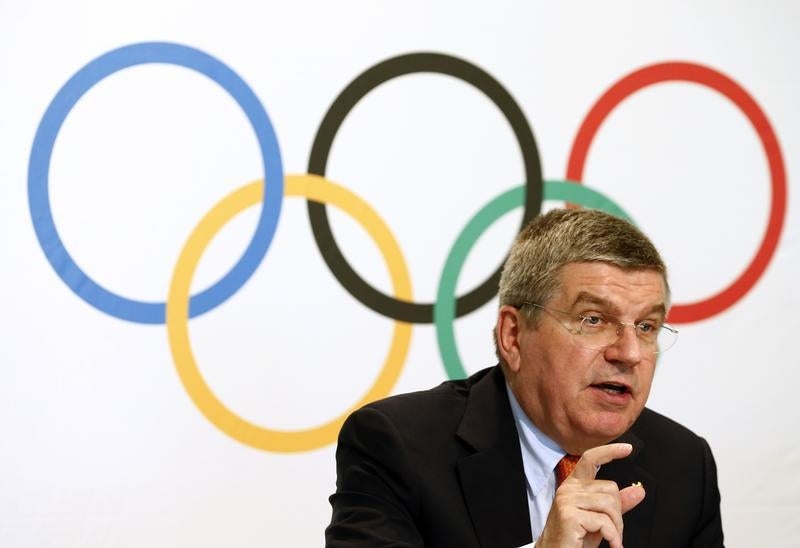
For the first time, the IOC has included explicit reference to the United Nations Guiding Principles on Business and Human Rights (UNGP), which outline the human rights responsibilities of businesses, as well as references to anti-corruption standards. The Guiding Principles explain how commercial enterprises should assess human rights risks, take effective steps to avoid human rights problems, and ensure a remedy for abuses that occur in spite of those efforts.
“This is an important step by the IOC for the future,” said Sharan Burrow, International Trade Union Confederation general secretary. “Implementing the UN Guiding Principles across all major global sporting events could help break the cycle of human rights abuses, and this example from the IOC should be applied to all such events, starting now.”
The SRA’s mission is to ensure that sports bodies and mega-sporting events respect human rights, the environment, and anti-corruption requirements at all stages of the process. “Time after time, Olympic hosts have gotten away with abusing workers building stadiums, and with crushing critics and media who try to report about abuses,” said Minky Worden, director of global initiatives at Human Rights Watch. “The right to host the Olympics needs to come with the responsibility not to abuse basic human rights.”
The revised contract requires host cities to “protect and respect human rights and ensure any violation of human rights is remedied in a manner consistent with international agreements, laws and regulations applicable in the Host Country and in a manner consistent with all internationally-recognized human rights standards and principles, including the United Nations Guiding Principles on Business and Human Rights, applicable in the Host Country.”
“If implemented, the revised Host City Contract will help ensure that Olympic hosts respect ‘human dignity’ as required by the Olympic Charter,” said Brendan Schwab, head of UNI World Athletes. “This should have a ripple effect across all mega-sporting events such as the World Cup, and wherever abuses tied to sport still occur.”
[Key provisions of the revised Olympic Host City Contract include:
13. Respect of the Olympic Charter and promotion of Olympism
13.1. The Host City, the Host NOC and the OCOG undertake to abide by the provisions of the Olympic Charter and the IOC Code of Ethics and agree to conduct their activities related to the organisation of the Games in a manner which promotes and enhances the fundamental principles and values of Olympism, as well as the development of the Olympic Movement.
13.2. Pursuant to their obligations under §13.1, the Host City, the Host NOC and the OCOG shall, in their activities related to the organisation of the Games:
a. prohibit any form of discrimination with regard to a country or a person on grounds of race, colour, sex, sexual orientation, language, religion, political or other opinion, national or social origin, property, birth or other status;
b. protect and respect human rights and ensure any violation of human rights is remedied in a manner consistent with international agreements, laws and regulations applicable in the Host Country and in a manner consistent with all internationally-recognised human rights standards and principles, including the United Nations Guiding Principles on Business and Human Rights, applicable in the Host Country; and
c. refrain from any act involving fraud or corruption, in a manner consistent with any international agreements, laws and regulations applicable in the Host Country and all internationally-recognised anti-corruption standards applicable in the Host Country, including by establishing and maintaining effective reporting and compliance.
13.3. The IOC, through its Coordination Commission referred to in §27, shall establish a reporting mechanism to address the obligations referred to in §13.1 and §13.2 in connection with the activities of the Host City, the Host NOC and the OCOG related to the organisation of the Games.
15. Sustainability and Olympic legacy
15.1. The Host City, the Host NOC and the OCOG undertake to carry out all activities foreseen under the HCC in a manner which embraces sustainable development and contributes to the United Nations’ Sustainable Development Goals.]
I was reading (belatedly) about the UN Special Rapporteur on the situation of human rights in Cambodia, Rhona Smith, who in January 2017 intervened strongly in the case of the 5 Cambodian human rights defenders of ADHOC (#FreeThe5KH) who have been in detention since April last year. [https://humanrightsdefenders.blog/2016/05/04/civil-society-condemns-charges-human-rights-defenders-cambodia/]Only then did I realize that the case had led a few months earlier to a landmark decision by the United Nations Working Group on Arbitrary Detention (WGAD): the first time that any UN body has referred to HRDs as a protected group.
On 21 November 21, 2016, the WGAD ruled that the ongoing detention of Mr. Ny Chakrya, Deputy Secretary-General of the National Election Committee (NEC), and four staff members of the Cambodian Human Rights and Development Association (ADHOC), Messrs. Ny Sokha, Yi Soksan, Nay Vanda, and Ms. Lim Mony, was “arbitrary.” Following a submission made by the Observatory for the Protection of Human Rights Defenders (OMCT-FIDH partnership), the Cambodian Center for Human Rights (CCHR) and the Cambodian League for the Promotion and Defense of Human Rights (LICADHO) in June 2016, the WGAD’s Opinion No. 45/2016 ruled that the five human rights defenders (HRDs) “have been discriminated against based on their status as human rights defenders, and in violation of their right to equality before the law and equal protection of the law under article 26 of the ICCPR.” This is the first time ever that the WGAD – or any other UN mechanism receiving individual complaints – has referred to HRDs as a protected group that is entitled to equal legal protection under Article 26 of the International Covenant on Civil and Political Rights (ICCPR). The ruling also recognised the violation of the five HRDs’ “rights to offer and provide professionally qualified legal assistance and other relevant advice and assistance in defending human rights.”
In addition, the WGAD found that the targeting of ADHOC staff members for having provided “legitimate legal advice and other assistance” violated the five HRDs’ right to freedom of association. It ruled that violations of fair trial rights (including the fact that the five were denied legal counsel from the beginning of their questioning), unjustified pre-trial detention, and statements made by the Cambodian authorities which denied the five the presumption of innocence – all of which contravene Cambodia’s international human rights obligations in respect to the right to a fair trial – are also serious enough to consider their ongoing detention as arbitrary. The WGAD concluded that “the deprivation of liberty ofNy Sokha, Nay Vanda, Yi Soksan, Lim Monyand Ny Chakrya, being in contravention of articles 7, 9, 10, 11 and 20 of the Universal Declaration of Human Rights and of articles 9, 10, 14, 22 and 26 of the International Covenant on Civil and Political Rights, is arbitrary.”
That Cambodian authorities are not impressed is shown by the continued detention of the 5 ADHOC HRDs and by the press release of 7 February 2017 calling for the cessation of the politically motivated criminal investigation of human rights defenders Am Sam-at and Chan Puthisak. Amnesty International, Civil Rights Defenders, Human Rights Watch, and the International Commission of Jurists signed the statement.
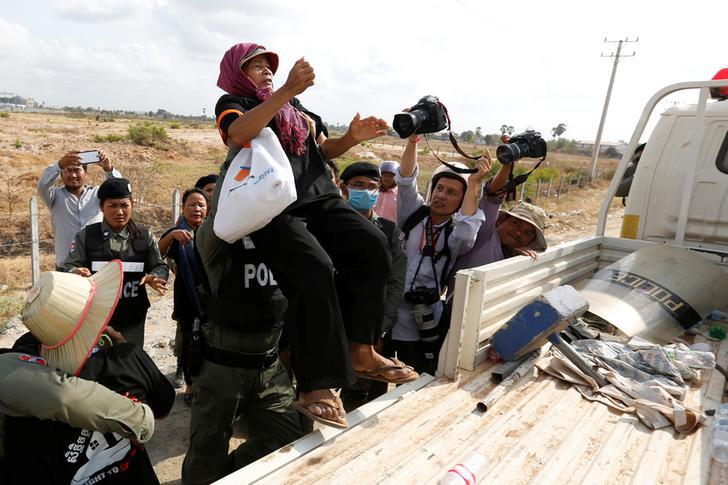
Cambodian officials have accused Sam-at, a respected human rights monitor at the Cambodian League for the Promotion and Defense of Human Rights (LICADHO) for nearly 20 years, and Puthisak, a land rights activist from Boeung Kak Lake and former prisoner of conscience, of instigating violence at an October 10, 2016 demonstration. Para-police forces, who are regularly used to suppress demonstrations, violently dispersed what had been a peaceful protest in Phnom Penh. When Puthisak attempted to prevent para-police from confiscating a drum that was being used by a demonstrator, four or five para-police attacked him, repeatedly beating him on the head with their fists, according to a video of the incident. When Sam-at tried to stop the assault, the para-police attacked him, also beating him on the head. Both men sustained injuries that needed medical attention.
“The investigation of Sam-at and Puthisak by the Cambodian authorities is a typically absurd and undisguised case of judicial harassment,” said Champa Patel, Southeast Asia and Pacific director at Amnesty International. “As usual, unnecessary and excessive use of force by the para-police goes unpunished, and those who work to promote and protect human rights find themselves subject to criminal proceedings.”
The Voice of America (3/3/17: Tillerson in Background as State Department Issues Human-Rights Report) and other media reported on the low-key way in which the US State Department launched the2016 Country Reports on Human Rights Practices.
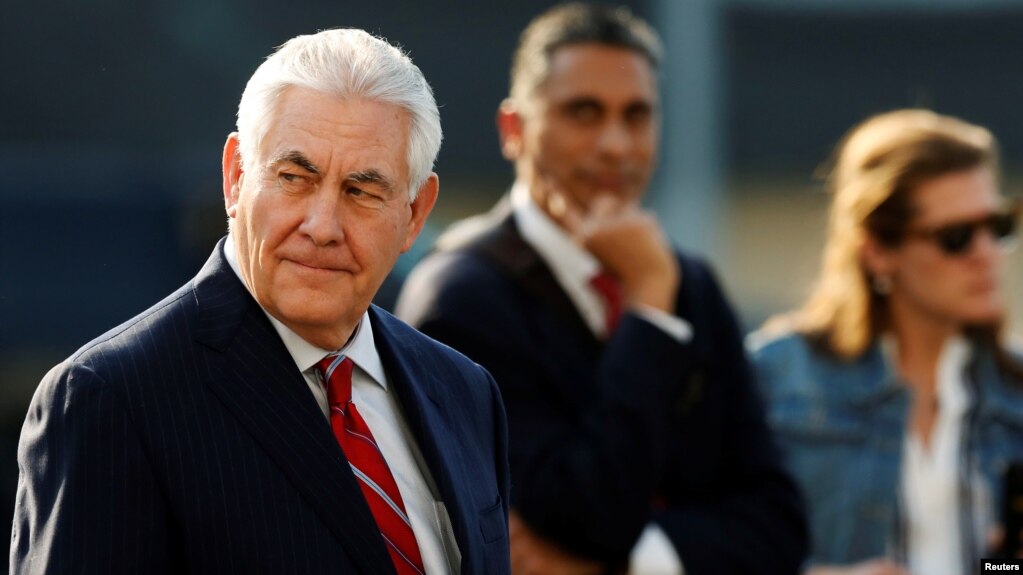
U.S. Secretary of State Rex Tillerson arrives in Mexico City, Mexico, Feb. 22, 2017.
A senior Trump administration official briefed reporters on the 2016 Country Reports on Human Rights Practices and rejected criticism from some human-rights groups and lawmakers that the briefing was not announced a day in advance, was not on camera and did not feature Tillerson. “The report speaks for itself. We’re very, very proud of it. The facts should really be the story here,” the senior official said Friday. “Secretary Tillerson spoke quite clearly in his confirmation hearing about his views of the impact of human rights on, and the importance to, U.S. interests.” When questioned by reporters, the senior administration official did not explain why Tillerson did not unveil the report, but did say that the State Department wanted to get it out without delay.
Human Rights Watch and Human Rights First both issued statements sharply criticizing the low-key rollout of the report, which reflects thousands of hours of painstaking work. The annual effort is read carefully by both governments and human-rights defenders around the world. Sarah Margon of Human Rights Watch noted in a statement that Tillerson’s absence “reinforces the message to governments, rights activists and at-risk minorities that the State Department might also be silent on repression, abuse, and exploitation.”
In an overview, the 2016 report did not specifically highlight any countries. As is customary, it does not rank or compare countries’ human-rights records. The report offers country-by-country analysis of 199 countries, and it paints a devastating picture of conditions in Syria: