In 2013 I reported on human rights defender, Lena Hendry, in Malaysia who was charged with showing the film “No Fire Zone: The Killing Fields of Sri Lanka”, a film on human rights violations in Sri Lanka. [see: https://humanrightsdefenders.blog/2013/09/18/human-rights-worker-in-malaysia-to-appear-in-court-tomorrow-for-screening-the-film-no-fire-zone/#more-3469]. Now Front Line reports on 21 February 2017, that the human rights defender was convicted by the Magistrate’s Court in Kuala Lumpur [https://www.frontlinedefenders.org/en/profile/lena-hendry]. On 21 February 2017, Lena Hendry was found guilty by a magistrate’s court in Kuala Lumpur for screening “No Fire Zone: The Killing Fields of Sri Lanka” under Section 6 of the Film Censorship Act 2002. She is currently on bail and intends to appeal the court’s decision. Her sentencing is scheduled for 22 March 2017.
Lena Hendry is the former Programme Coordinator for Pusat KOMAS, a human rights organisation established in 1993 in Malaysia. This organisation works to empower indigenous peoples, poor people in urban areas, workers, and civil society organisations through the use of popular media. [On 10 March 2016, The Magistrates’ Court of Kuala Lumpur acquitted Lena Hendry of the charges but on 21 September 2016, the High Court in Kuala Lumpur reversed Lena Hendry’s aquittal following an appeal issued by the prosecution.
Front Line Defenders condemns the conviction of Lena Hendry, as it believes that the charges brought against the human rights defender are directly linked to her legitimate and peaceful work in the defence of human rights, in particular in exposing human rights violations in Sri Lanka. Front Line Defenders urges the Malaysian government to repeal provisions of the Film Censorship Act 2002 that allow unnecessary and arbitrary government interference in the showing of films in Malaysia.
After a short break, this blog resumes its job of selecting and summarizing events related to Human Rights Defenders. 2016 was a horrible year for HRDs and the launch of the annual report of Front Line Defendersconfirms this by reporting that “more than 1000 human rights defenders were killed, harassed, detained, or subjected to smear campaigns and other violations in 2016″.
According to the report, 281 human rights defenders were murdered in 25 countries, 49 percent of whom were defending land, indigenous and environmental rights. Front Line Defenders found that in the vast majority of cases, killings were preceded by warnings, death threats and intimidation which, when reported to police, were routinely ignored. In addition to killings, over half of the cases reported by Front Line Defenders in 2016 concerned criminalisation, a tactic which the organisation calls “the first choice of governments to silence defenders and to dissuade others”.
The Office of the United Nations High Commissioner for Human Rights released a statement on Friday 16 December 2016 condemning the “daily violations” of human rights and international law faced by human rights defenders in the occupied Palestinian territory. A “worrying number of complaints” have been filed by human rights activists to the UN in recent months, which have highlighted in particular the Israeli government practice of arbitrarily detaining Palestinian activists “as a direct result of their important work in their communities.” The statement, which drew from the investigations of two UN special rapporteurs highlighted the cases of Issa Amro, founder of the Hebron-based group Youth Against Settlements, and Hebron-area lawyer Farid al-Atrash, who were both arrested for participating in a peaceful protest in February. [The march commemorated the 22 years since extremist American-born Israeli settler Baruch Goldstein opened fire on Muslim Palestinian worshipers killing 29 and injuring more than 120 in Hebron’s Ibrahimi mosque in 1994.]
Israeli officials later presented al-Atrash to the Ofer military court with charges amounting to “participating in an illegal demonstration” and “attacking soldiers”. Al-Atrash vehemently denied the charges, with video footage of the arrest corroborating his account, showing that he was standing and holding a poster peacefully in front of Israeli soldiers when he was pushed, dragged, and then violently arrested by a number of soldiers.
Meanwhile, Israeli authorities handed Amro 18 charges, ranging from “insulting a soldier” to “assault,” and “participation in a rally without a permit,” with some of the charges dating back to 2010. … “This relatively unusual practice of bringing up stale charges, which were not pursued many years ago, strongly suggests that Mr. Amro is being unfairly targeted due to his legitimate and peaceful human rights work,” the UN experts noted in Saturday’s statement. The UN experts said Amro’s current trial was part of a “concerted pattern of harassment and intimidation by the Israeli authorities aimed at inhibiting his work as a human rights defender.” Amro faces up to three years in prison. His attorney, Gabby Lasky, has submitted a motion to have 14 of the 18 charged dismissed on the grounds that those charges are several years old and in some cases the charges were already investigated and closed without indictment. Issa Amro’s arrest has garnered international attention—many see it as one of the most serious examples of Israel’s intent to clamp down on all forms of resistance—violent or non-violent. The hearings promise to be a landmark legal battle over what Israel will permit in terms of peaceful protest and the consequences that face those who engage in it. In 2010 he was named Human Rights Defender of the Year for Palestine by the Office of the United Nations High Commissioner for Human Rights (OHCHR), in 2011 he was a guest of the US State Department as part of their International Visitor Leadership Program. In a 2015 op-ed he wrote for The Guardian, Amro explained how he became involved in activism:“I read books by Martin Luther King, Mahatma Gandhi and Nelson Mandela. I became convinced that their non-violent method was the best strategy for community resistance.” Magdalena Mugrabi, Amnesty International’s Deputy Regional Director for the Middle East and North Africa says “Issa Amro has faced a sustained campaign of harassment and assault at the hands of the Israeli military and settlers because of his activism. His case is emblematic of the climate of increasing hostility towards activists who protest the settlements, which are illegal under international law.” She added, “The deluge of charges against Issa Amro does not stand up to any scrutiny. In their determination to silence him and stifle his human rights work, the Israeli authorities have apparently even reopened a closed case file. If he is convicted we will consider Issa Amro a prisoner of conscience.”
Palestinian journalist, human rights defender and Addameer media coordinator Hasan Safadi
The Special Rapporteurs also recalled the case of Hasan Safadi, media coordinator for Addameer human rights organization, whose three-month administrative detention order was renewed for an additional six months on 8 December. On 13 December Front Line issues an update on the extension of his administrative detention with an additional six months [Hasan Safadi was due to be released on 10 December 2016 from the Negev Desert (Ktziot) prison – where he is currently being held. Hasan Safadi has been in detention since 1 May 2016. – https://www.frontlinedefenders.org/en/profile/hasan-safadi]. On 27 October 2016 Hasan Safadi was sentenced to three months and one day imprisonment for visiting Lebanon, a country that is considered an enemy State under Israeli law. He had been placed in administrative detention on 1 May 2016 upon returning from an Arab youth conference in Tunisia.
The UN statement 0f 16 December went on to mention the case of Salah Khawaja, a member of the Stop the Wall Campaign, who was arrested in October and remains in detention without charges.
Republished as some readers could not properly see the post: This blog has a special interest in human rights awards, so I noted with dismay that according to some obscure sources President Duterte of the Philippines had been given an international human rights award. The announcement looked like this:
Philippine President Rodrigo Duterte has been named as one of the honorees in the annual Human Rights Award by the International Human Rights Committee.”
Unable to find any confirmation elsewhere I wrote to the American Bar Association which has an award and an ‘International Human Rights Committee’. No reply received yet but in the meantime I saw yesterday the “Fake news alert!” published on December 14, 2016 in Busted. And indeed it seems that fake news has also entered the human rights awards arena:
Various Facebook Duterte supporter groups such as “Duterte Warriors”, “Duterte News Global”, and “Duterte Media” have been sharing news of President Duterte being awarded by the International Human Rights Committee. According to the news article sourced from Trending News PH, President Rodrigo Duterte was named as one of the honorees in the annual Human Rights Award held by the International Human Rights Committee. This “committee” was said to have bestowed this award to Duterte for his “exemplary service in the promotion of human rights.” However, the said article is not linked to any other source and no major news outlets have reported on the headline. Furthermore, upon closer inspection, there are numerous inconsistencies on the dates the groups posted the article. The article itself was posted 4 months ago while the groups posted on September and October, with the “Duterte Warriors” group sharing the post twice, once in August and another in September. What was the point of posting the same news article more than once and on different months?
Moreover, the photo used in the article was originally a photo taken during LPU’s Quality Awards Convocation wherein Duterte, still a mayor that time, was awarded as the Most Outstanding Alumnus of Lyceum of the Philippines University in 2015. [http://newsinfo.inquirer.net/677750/duterte-is-lpus-outstanding-alumnus]
Even if it would turn out that some biased or incompetent committee did bestow a minor award, it does not change the fact that Duterte has issues with human rights defenders for the way he is conducting his war on drugs. In fact, recently, Human Rights Watch and other NGOs demanded that Duterte should renounce his earlier statement that seemed to threaten the lawyers of alleged drug dealers. “Duterte’s threats against lawyers and human rights defenders constitute a dangerous extension of his abusive ‘war on drugs’ that has already resulted in more than 5,000 killings,” HRW deputy Asia director Phelim Kine said. See also: https://humanrightsdefenders.blog/2016/11/02/duterte-is-wrong-human-rights-defenders-are-beautiful/
See also Front Line Defenders on 1 December: “On 28 November 2016, President Rodrigo Duterte threatened (<http://newsinfo.inquirer.net/848933/duterte-threatens-to-kill-human-rights-activists-if-drug-problem-worsens)> to kill human rights defenders in the Philippines in his speech in Malacañang. “The human rights (defenders) said I ordered the killings. I told them, ‘OK Let’s stop. We’ll let them (drug users) multiply so that when it’s harvest time, more people will die, I will include you because you are the reason why their numbers swell,” referring to human rights defenders.`
This Bergen-based award (established in 1987) is seeking candidates for its 2017 award. Candidates should be active in the struggle for the ideals and principles underlying the United Nations Universal Declaration of Human Rights and should represent a non-violent perspective. Nominations for the Rafto Prize are received and evaluated by the Rafto Prize Committee. Recipient(s) are selected by the Board of Directors in August. For questions regarding nominations, please contact the Secretary of the Committee, Liv Unni Stuhaug, e-mail: livunni.stuhaug(at)rafto.no. For 2016 award see: https://humanrightsdefenders.blog/2016/10/01/iraqi-human-rights-defender-yanar-mohammed-laureate-of-2016-rafto-prize/
Front Line Defenders Award for Human Rights Defenders at Risk.
Established in 2005 the award is to honour the work of a human rights defender who, through non-violent work, is courageously making an outstanding contribution to the promotion and protection of the human rights of others, often at great personal risk to themselves. A cash prize of €15,000 is awarded to recipient and his/her organisation in an effort to support the continuation of this important work. Individual nominees may not play a prominent role in a political party and must be currently active in human rights work (no posthumous contribution). Nominees must not be living in exile. For 2016 award see: https://humanrightsdefenders.blog/2016/06/10/ana-mirian-romero-environmental-activist-from-honduras-wins-2016-front-line-award/
Willie Kimani, the Kenyan human rights lawyer who was murdered this year [https://humanrightsdefenders.blog/2016/07/03/body-of-disappeared-human-rights-lawyer-kimani-client-found-kenya-impunity/], was honoured with an award for his bravery in defending the poor and oppressed in Kenya. While receiving the award, Kimani’s widow Hannah Kimani said she had never imagined that his standing up for justice would eventually amount to his death. “No amount of words can explain who Willy was. He was one of a kind… with this award, it shows that his work was not in vain,” she said.
Executive Director Samwel Mohochi of the Kenyan chapter of the International Commission of Jurists said “We give it to him as recognition for the ultimate price he paid in performing his work as human rights defender and as a reminder to the risks that face all other human rights defenders”…“This will renew our commitment to all human rights defenders. It is an appreciation of the work he did”.
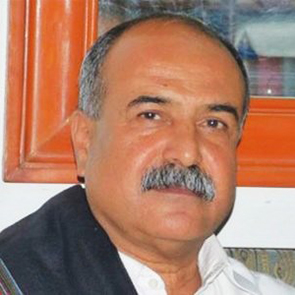
Re-appearances after a time lapse of 4 months are rare. So this case in Pakistan deserves a mention: Abdul Wahid Balochis a human rights defender who has called for justice for the Baloch community through the organisation of campaigns, protests and public condemnation of a number of high profile cases. Human rights defenders that have demanded justice for state violations against the Baloch community have been regarded as being anti-state by the Pakistani authorities. On the morning of 5 December 2015, Abdul Wahid Baloch returned to his house in Karachi, roughly four months after his disappearance on 26 July 2016. Abdul Wahid Baloch thanked human rights groups, media and individuals who campaigned for his release but refused to comment on anything involving his disappearance.
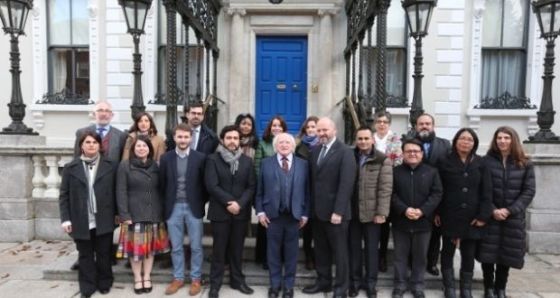
Irish President Michael D Higgins with international activists and NGO representatives in Dublin at the launch of the Human Rights Defenders Memorial. Photograph: Conor McCabe
Rachel Flaherty reports in the Irish Times of 24 November on the launch of an on-line Memorial o honour human rights defenders who have been killed The online memorial would be a tool to track investigations and advance the struggle for justice for human rights defenders. The Human Rights Defenders Memorial (HRD Memorial) has been set up by Dublin-based Front Line Defenders as an online international and interactive database. It will detail all the human rights defenders who have been murdered around the world since 1998. The Front Line Defenders organisation has estimated 3,500 have been murdered since then.
A coalition of 20 national and international human rights organisations jointly coordinated the project. Contributors included human rights groups from Colombia, Honduras and the Philippines, which Front Line Defenders said are ranked among three of the deadliest countries in the world for human rights defenders. The organisation said other countries included among the worst in terms of killing and physical attacks against human rights defenders included North Korea, China, Russia, Egypt, Saudi Arabia and Zimbabwe.
Andrew Anderson, executive director of Front Line Defenders, said the memorial sent a message the human rights community was stronger than any one person. “It will not be deterred, and its leaders will not be forgotten,” he said. “This is not random violence. This is the calculated elimination of those who speak out to defend the rights of the most vulnerable. Autocrats and powerful economic interests think that if they kill an activist, they kill a movement. The goal of the HRD Memorial is to prove them wrong.”
On 30 November 2016, Khurram Parvez was released from jail but even this was not done without wrangling by the police as reported by Front Line on 30 November: On 25 November 2016, the High Court of Jammu and Kashmir in Srinagar quashed the order of detention under the Public Safety Act (PSA) and ordered the immediate release of Khuram Parvez. Justice Muzaffar Hussain Attar in his order said Khuram Parvez’s detention was “illegal”. However, in the judge’s order there was a small clerical error, so the police at Jammu’s Kot Balwal jail decided to keep Khurram Parvez in detention until a corrigendum could be issued. On 29 November 2016 at 3 pm the Jammu’s Kot Balwal jail received the corrigendum, but did not release Khurram Parvez. Instead, at around 5 pm of the same day, he was taken to the joint interrogation centre at Meeran Sahib, Jammu. No reasons were provided for his continued detention to the human rights defender or his legal counsel. Khurram Parvez was released on the morning of 30 November.
[Khurram Parvez is the Chairperson of the Asian Federation Against Involuntary Disappearances (AFAD), a collective of 13 non-governmental organizations from ten Asian countries, that campaign on the issue of enforced disappearances. He is also the Programme Coordinator of the Jammu Kashmir Coalition of Civil Society (JKCCS), which is a coalition of various campaign, research and advocacy organisations based in Srinagar, Jammu and Kashmir, which monitor and investigate human right abuses. See: https://www.frontlinedefenders.org/en/profile/khurram-parvez]
Travel bans on human rights defenders are popular with all kind of autocratic regimes but seem to enjoy special status in the Middle East. The video clip above (part of a joint campaign by AI and HRW) focuses on Egypt and so does the statement by 6 other NGOs issued on 9 November. They strongly condemn the travel ban against Malek Adly, prominent Egyptian human rights lawyer and director of the Lawyers Network of the Egyptian Center for Economic and Social Rights (ECESR). But there is more: Read the rest of this entry »