Military coups, violence against peaceful protesters, and efforts to weaken constitutional safeguards in 2025 drove the 20th consecutive year of decline in global freedom, according to a new report released on 19 March by Freedom House. The report, Freedom in the World 2026: The Growing Shadow of Autocracy, found that 54 countries experienced deterioration in their political rights and civil liberties, while only 35 registered improvements. Today just 21 percent of the world’s people live in countries rated Free, down from 46 percent two decades ago.
“Even as 2026 has brought new opportunities for those living under authoritarian rule from Venezuela to Iran, the last 20 years have been a dark period for global freedom,” said Jamie Fly, chief executive officer of Freedom House. “Armed conflict, coups, attacks on democratic institutions, and crackdowns on rights by authoritarians have now resulted in two full decades of decline. Those who still enjoy the blessings of freedom must do more to counter authoritarianism and provide more effective support for the democratic aspirations of people standing up to repression around the world, or this persistent decline will continue.”
In addition to deepening repression among authoritarian regimes, the past year featured a chequered performance among the world’s democracies. Of the 88 countries rated Free, the United States experienced the sharpest decline, with a drop of 3 points to a score of 81 on the report’s 100-point scale; it was matched in this group only by a decline in Bulgaria (−3), closely followed by Italy (−2). Worsening gridlock in Congress and escalating assertions of unilateral executive authority—combined with a multiyear rise in threats and reprisals for nonviolent speech, and a weakening of anti-corruption safeguards—brought the US score to its lowest level since Freedom in the World began publishing 0–100 scores in 2002. The United States’ decline for 2025 contributed to a 12-point erosion over the past two decades, under both Republican and Democratic administrations.
Key report findings:
Global freedom declined for the 20th consecutive year in 2025. A total of 54 countries experienced deterioration in their political rights and civil liberties during the year, while only 35 countries registered improvements.
Largest increases and best overall scores: On Freedom in the World’s 100-point scale for political rights and civil liberties, Syria (+5), Sri Lanka (+5), Bolivia (+4), and Gabon (+4) recorded the largest gains for 2025. The best overall country scores were those of Finland (100), Sweden (99), Norway (99), and New Zealand (99).
Largest declines and worst overall scores: Guinea-Bissau (−8), Tanzania (−7), Burkina Faso, (−5), Madagascar (−5), and El Salvador (−5) had the largest one-year score declines.The countries with the worst overall scores were South Sudan (0), Sudan (1), and Turkmenistan (1).
Status changes: Three countries—Bolivia, Fiji, and Malawi—improved from Partly Free to Free status thanks to competitive elections, growing judicial independence, and the strengthening of the rule of law.
Deepening and persistent authoritarian repression: Conditions for freedom continued to deteriorate in Iran in 2025, with authorities arresting more than 21,000 people as part of a crackdown on alleged espionage and collaboration following the regime’s 12-day war with Israel in June, and expelling some 1.8 million Afghan migrants and refugees without regard for their basic rights. The country’s score fell by 1 point to 10 out of 100. The scores for Russia and China remained unchanged at 12 and 9, respectively, but Russian authorities took further steps to suppress antiwar speech and independent journalism, while Chinese officials cracked down on small but multiplying protests.
Although the scores for many rights and liberties deteriorated over the last two decades, media freedom, freedom of personal expression, and due process have suffered the heaviest impacts. Coups, armed conflicts, attacks on democratic institutions by elected leaders, and intensified repression by authoritarian regimes have been the main drivers of global decline during this 20-year period.
Since 2005, the group of countries with Partly Free status has shrunk substantially. Of the 59 countries that were rated Partly Free as of 2005, a total of 19 have dropped to Not Free, swelling the ranks of the world’s autocracies, whereas just 9 have improved to Free.
Most democracies remain resilient in the face of daunting challenges. Despite internal pressures and threats from foreign powers, democracies continue to demonstrate that their domestic political systems are responsive and capable of course correction. Of the 87 countries rated Free in 2005, a total of 76—more than 85 percent—have remained Free throughout the two-decade period of global decline.
The event “Tackling the protection gap: Host States’ responsibility to prevent and respond to transnational repression” will bring together defenders and UN experts to discuss the international human rights law obligations of States in respect of transnational repression against individuals and groups within their territory, as well as the strengthening of international standards, and gaps arising from shortcomings in their implementation domestically.
Location: Geneva, Switzerland. Date: 09 March 2026. Palais des Nations, Room VIII. Time: 2:00PM – 3:00PM CET and livestreamed on ISHR’s YouTube channel.!
Research from international organisations, NGOs and academics shows that transnational repression (TNR) – acts by States and their proxies to deter, silence or punish dissent, criticism or advocacy outside their territory – is affecting a growing array of individuals and groups worldwide.[1] With the emergence of new surveillance and communication technologies, many actors have found new avenues to silence and punish critics and opponents. The most common targets have been exiled human rights defenders and political activists, but today broader groups such as journalists, lawyers, artists, academics and ordinary members of diaspora communities are frequently targeted. See e.g.
The immediate effect of TNR is the violation of, or constraint on the exercise of, fundamental human rights. States have obligations towards those subject to such violations taking effect within their territory. These obligations have long been recognised, but have not yet been the subject of focused discussion in relation to TNR, leaving the scope and nature of the duties of host States unclear.
This event will bring together defenders and UN experts to discuss the international human rights law obligations of States in respect of transnational repression against individuals and groups within their territory, as well as the strengthening of international standards, and gaps arising from shortcomings in their implementation domestically.
Speakers:
Sayed Ahmed al-Wadaei, Director of Advocacy, Bahrain Institute for Rights and Democracy (BIRD)
Birgit Kainz-Labbe, Coordinator of Civic Space Unit, Office of the UN High Commissioner for Human Rights
Ben Saul, UN Special Rapporteur on counter-terrorism and human rights
Hélène Tigroudja, Human Rights Committee, Vice-Chair
Moderator: Raphael Viana David, International Service for Human Rights
This event is organised by ISHR and co-hosted with Human Rights Watch, Human Rights House Foundation and the International Federation for Human Rights (FIDH).
Repressive regimes throughout the world deploy the machinery of the state to silence criticism and dissent. It is therefore hardly surprising that artists—whose creative work can expose, ridicule, and condemn in emotive and powerful ways—are common targets of political persecution. Over the past few years, there have been crackdowns on artists and performers in Russia, Belarus, Cuba, Azerbaijan, Egypt, China, and Venezuela, among other countries. The following artists dared to use their creative expression to challenge powerful systems, and have been punished with political imprisonment. From: Political Prisoners Watch February 19, 2026
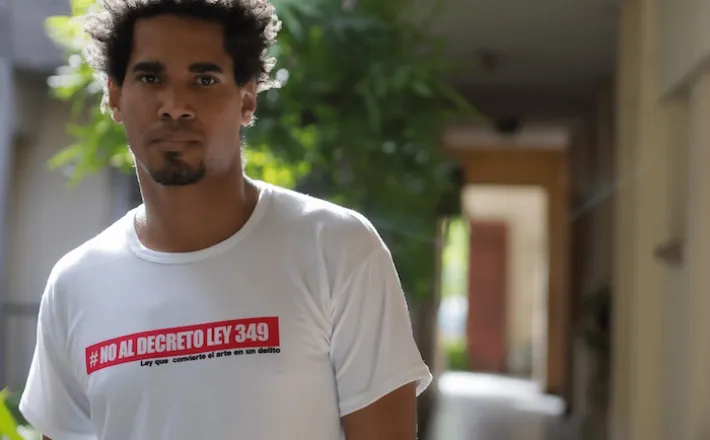
Luis Manuel Otero Alcántara is a Cuban artist and activist whose evocative performance art led to government harassment and numerous periods of detention. After the Cuban government enacted Decree 348 in 2018, which required artists to obtain advance approval for even private performances, he cofounded the San Isidro Movement to protest the increasing censorship of free expression. On July 11, 2021—the start of the historic J11 protests—he was arrested and has been detained ever since. In June 2022, he was sentenced to five years in prison for contempt, public disorder, and insulting symbols of the homeland, and remains in prison in Cuba. [https://humanrightsdefenders.blog/2024/09/19/the-rafto-prize-2024-to-cuban-artivist-luis-manuel-otero-alcantara/]
Maykel Osorbo Castillo Pérez is a Cuban musician who cofounded the San Isidro Movement with Luis Manuel Otero Alcántara. Due to his activism and vocal opposition to the Cuban regime, he was subjected to systemic harassment, including being arrested 121 times in a five-month period. He cowrote the 2021 song Patria y Vida(Homeland and Life), which inspired thousands to demonstrate against Cuba’s repressive regime and won two Latin Grammys. He was not able to accept the awards, however—in May 2021, he was arrested, forcibly disappeared for 14 days, and eventually sentenced to nine years in prison on charges of contempt, public disorder, and defamation of institutions and organizations, heroes, and martyrs.
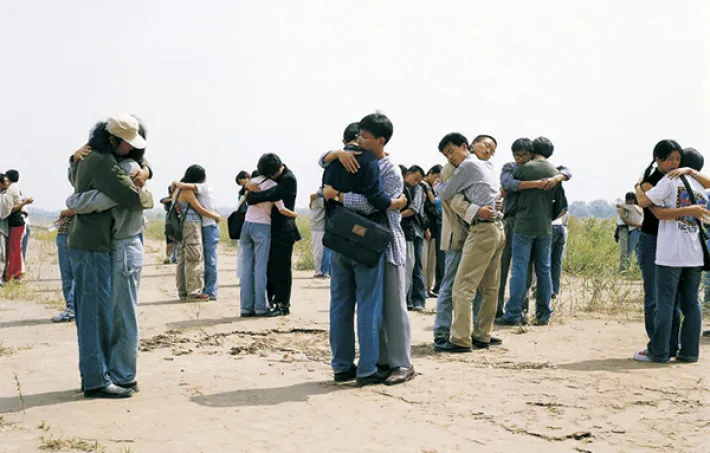
Gao Brothers, The Utopia of the 20 Minute Embrace (2000), modified image via Wikimedia Commons, used under CC BY-SA 3.0.
Gao Zhen is a Chinese artist and US permanent resident who was detained while visiting family in China in August 2024. Avant-garde works by Gao and his brother Gao Qiang—known together as the Gao Brothers—include huge, mirror-like sculptures and other works critiquing Mao Zedong and China’s Cultural Revolution. Authorities allege that Gao committed the offense of “insulting or defaming heroes and martyrs,” though the art in question had been created years before the Law on the Protection of Heroes and Martyrs was enacted. Gao’s wife Zhao Yaliang has been prohibited from leaving China, and she and their young son have remained there since his detention.
Galal El-Behairy is an Egyptian poet and singer/songwriter who has faced severe retaliation for his artistic work. He wrote the lyrics for the guitar-driven protest song Balaha, which mocked Egyptian President Abdel Fattah al-Sisi and the country’s corrupt establishment. Five days after its release in February 2018, he was arrested by the National Security Police and disappeared for a week. In July 2018, he was sentenced to three years in prison by a military court for allegedly spreading false news and rumors and insulting the Egyptian army in his poetry book The Finest Women on Earth. Although his sentence expired in 2021, he was not released, and he is now facing additional charges including disseminating fake news and joining and aiding a terrorist organization.
Freedom House announced the appointment of Jamie Fly as its Chief Executive Officer, effective 2 February, 2026.
“Jamie Fly is a transformational leader ready to advance Freedom House’s vision of a world where all are free. He has stepped forward at a consequential moment as Freedom House pivots toward a private- and public-sector funding model, while growing existing and attracting new investors in freedom and democracy. This is particularly important as our flagship Freedom in the World report has documented nearly 20 years of democratic decline and as authoritarian leaders threaten fundamental freedoms and security around the world. Jamie brings deep global experience, bipartisan credibility, and a demonstrated ability to lead complex organizations under pressure. His leadership marks the start of a new chapter in Freedom House’s fight to expand and defend freedom around the world and to champion democratic values,” said Norman Willox, chair of the Freedom House Board of Trustees.
Fly has decades of experience in government, civil society, and the private sector. He has served as President and CEO of Radio Free Europe/Radio Liberty (RFE/RL) and held senior positions on the US National Security Council staff, at the Department of Defense, on Capitol Hill, and at the German Marshall Fund of the United States. Most recently, he served as Senior Counselor at Palantir Technologies, where he supported efforts to defend Ukrainian democracy from Moscow’s illegal, full-scale military invasion. He is a recipient of the Office of the Secretary of Defense Medal for Exceptional Public Service and the Czech Foreign Ministry’s Medal for Distinguished Contribution to Diplomacy.
“I am excited and honored to join Freedom House at this critical moment for democracy and global freedom as the organization celebrates its 85th anniversary this year in the midst of significant change. Additionally, I would like to thank Norm Willox, Freedom House’s board, and its talented leadership team and staff for their tremendous efforts, resilience, and accomplishments in the face of great challenges and opportunities,” said Fly.
Freedom House is the oldest American organization devoted to the support and defense of democracy and freedom around the world. It was formally established in 1941 to promote American involvement in World War II and the fight against fascism. Lauded for its nonpartisan approach, it has grown into the world’s premier institution for supporting the democratic aspirations of societies around the world through its globally recognized convening power, coalition building, advocacy, independent research, and emergency support to human rights defenders.
The New Indian Express of 22 March 2024 reports (based on Al Jazeera) that Prime Minister Narendra Modi government has approached a major Indian think tank to develop its own democracy ratings index that could help it counter recent downgrades in rankings issued by international groups that New Delhi fears could affect the country’s credit rating. The Observer Research Foundation (ORF), which works closely with the Indian government on multiple initiatives, is preparing the ratings framework,
On June 2023, The Guardian reported that the Indian government has been secretly working to keep its reputation as the “world’s largest democracy” alive after being called out by researchers for serious democratic backsliding under the nationalist rule of the Narendra Modi government, according to internal reports seen by The Guardian.
Despite publicly dismissing several global rankings that suggest the country is on a dangerous downward trajectory, officials from government ministries have been quietly assigned to monitor India’s performance, minutes from meetings show, The Guardian said. Al Jazeera revealed that the Observer Research Foundation (ORF), which works closely with the Indian government on multiple initiatives, is preparing the ratings framework. The new rankings system could be released soon, an official was quoted as saying.
Global human rights NGO Amnesty International has continued to highlight the erosion of civil rights and religious freedom under the Narendra Modi regime.
Similarly, Human Rights Watch has also continued to highlight the crackdown on civil society and media under the Modi government citing persecution of activists, journalists, protesters and critics on fabricated counterterrorism and hate speech laws. The vilification of Muslims and other minorities by some BJP leaders and police inaction against government supporters who commit violence are also among HRW’s concerns in India.
Notably, the ‘Democracy Index’, prepared by The Economist Group’s Economist Intelligence Unit, had downgraded India to a “flawed democracy” in its 2022 report due to the serious backsliding of democratic freedom under the Modi government.
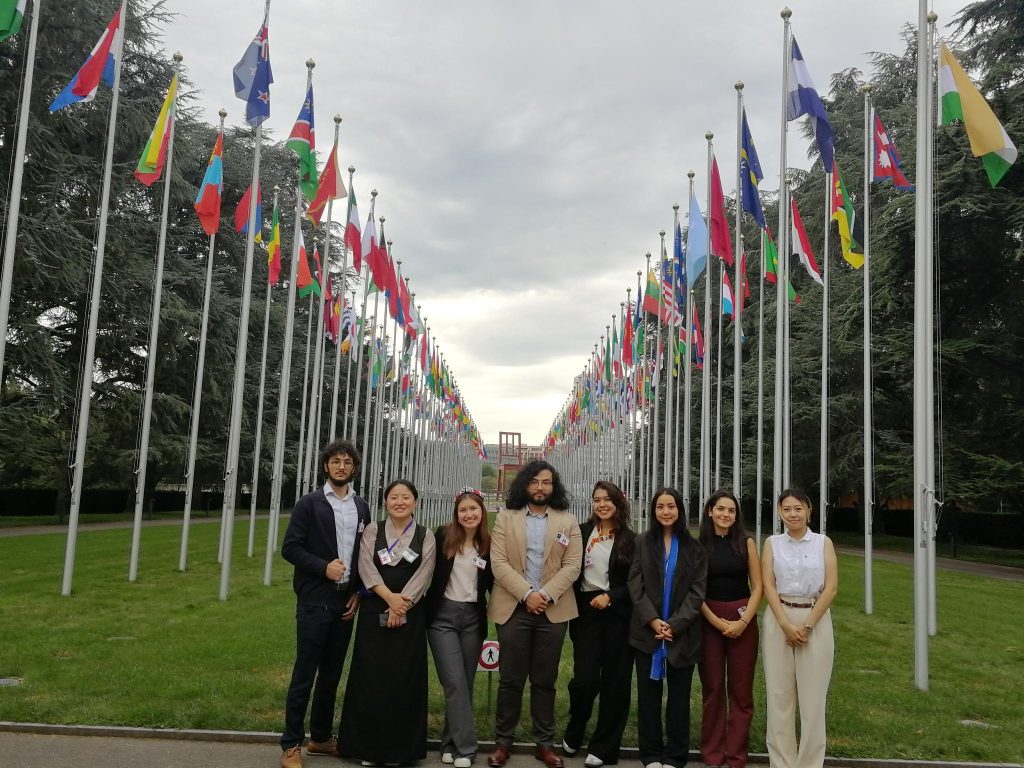
ISHR and Freedom House hosted a group of young defenders from the diaspora for a training on UN human rights mechanisms and joint advocacy meetings in Geneva.
Eight activists working on Uyghur, Tibetan and Hong Kong rights across six countries, including Canada, Germany, India, the Netherlands, the United Kingdom and the United States, participated in the United Nations Advocacy Training (UNAT) program to learn and strategise together on ways to hold the Chinese government accountable for its human rights violations at the international level.
Why a training for youth diaspora activists?
Young activists play a critical role in diaspora movements to address and counter the Chinese government’s persecution of peoples from the Uyghur region, Tibet, and Hong Kong. When capacity building and support are available to them, they can meaningfully engage their host governments and international institutions, like the UN, to hold the Chinese government accountable for its ongoing abuses against their communities inside the People’s Republic of China, and acts of transnational repression outside Chinese borders. Unfortunately, youth diaspora activists don’t have many opportunities to convene and collaborate in those international spaces.
Working together as allies and partners, these groups can help increase the confidence in their efforts and improve impact and sustainability. Opportunities to network, train together, and work on joint advocacy efforts will help individual diaspora groups communicate and coordinate more effectively amongst themselves and with other relevant local and international groups to amplify and sustain pressure on the Chinese government for meaningful human rights change.
Aged between 19 and 28 years old, this was the first time that young activists from these communities came together in Geneva to work on cross-cutting community issues and build solidarity. Participants are engaged in rights advocacy through their work with established groups like the Hong Kong Democracy Council, Free Uyghur Now, and the Uyghur Human Rights Project or have founded impactful youth led organisations in their host countries, such as Students for a Free Tibet, Harvard College Students for Uyghur Solidarity, and Uyghur Youth Initiative. They are working toward better visibility and accountability towards violations outlined in the UN’s Xinjiang report published last August 2022, including the curtailment of free assembly and expression, mass surveillance, forced labour, and cultural and religious persecution.
During the interactive training programme, participants engaged with one another through peer check-in sessions, with human rights experts and advocates through live Q&As, discussions on the Human Rights Council, Special Procedures, Treaty Bodies and the Universal Periodic Review, and considered how to engage in advocacy activities at the UN in order to effect change for their communities.
The in-person training was designed to coincide with the 54th Session of the Human Rights Council so that the participants could attend the United Nations for the first time in their careers. As well as receiving additional advocacy training modules on all the UN human rights mechanisms from a range of experts, participants had the opportunity to build networks in Geneva and around the world, engage in meetings with UN member States and UN staff, and produce a powerful solidarity video statement which summarises their call to action to the UN States members.
All of the participants expressed they were satisfied with the training and increased their skills and networks to engage in advocacy at the UN. Freedom House and ISHR will continue to support these participants as they develop joint advocacy initiatives and build solidarity among their communities.
Participants in front of the flags of UN Member States, at UN Office, Geneva
A recent case study by Freedom House focuses on programming that offers holistic protection, support, and services, tailored to the needs of human rights defenders in their host country. This case study focused on the most current wave of migration of HRDs and CSOs who were forced to flee after anti-government protests in April 2018.
The Nicaraguan government continues to violate freedoms of expression, assembly and information and thwart the work of HRDs, including journalists and CSOs. Ortega-Murillo’s recent actions against potential presidential candidates and opposition figures demonstrate that the country will continue to see an outpouring of critics, activists, and HRDs to Costa Rica, among other countries. Nicaraguans continue to flee based on the attacks and harassment they face as HRDs and members of CSOs that champion democracy and human rights. See also: https://humanrightsdefenders.blog/2022/02/21/nicaragua-death-in-detention-and-sham-trial/
Of those 20 Nicaraguan HRDs who were surveyed, almost 90% stated that harassment and surveillance was a primary reason for leaving Nicaragua, followed by violence (65%) and threats (50%). Costa Rica provides comparatively ample protection for migrants, and recently launched a new asylum category for those fleeing from authoritarian regimes in Venezuela, Cuba, and Nicaragua. The flow of migration since 2018 has persisted until March 2020 when the border shut due to the COVID-19 pandemic. Yet, migrant flows have begun to increase in recent months. However, Costa Rica is struggling to recover economically from the pandemic, particularly within the tourist, service, and commercial industries where most migrants and refugees find work. Most Nicaraguan refugees find themselves in a precarious economic situation, unable to find steady work, forcing many to resort to informal work with low salaries. HRDs are often not recognized as having different needs or characteristics from the larger refugee population, either by organizations or the Costa Rican population in general. Even for those who continue to work in human rights describe their ability to continue work is difficult, and many express experiencing severe trauma as an exile, with remorse for not being able to stay and remain fighting for human rights at home. [see also: https://humanrightsdefenders.blog/2021/12/24/vilma-nunez-human-rights-defender-who-stays-in-nicaragua/] However, many Nicaraguan HRDs try to carry out their work by investigating the laws and procedures in Costa Rica, accompanying their compatriots in their efforts, sharing knowledge, and giving advice. There are support and protection options for HRDs and CSOs in exile in Costa Rica, including a network of organizations and institutions facilitated by the United Nations High Commissioner for Refugees (UNHCR) that provide access to vital services.
All available support and protection options for Nicaraguan HRDs are operating at full capacity and cannot keep pace with the growing demand. We believe that it is necessary to seek support and accompaniment mechanisms for HRDs that facilitate their subsistence and enhance the implementation of their work to defend the human rights of exiles and other Nicaraguan migrants who lack mechanisms for complaint and demand for their rights in Costa Rica.
Freedom House‘s annual report 2019, which in fact covers 2018!, is out. It concludes that in 2018Freedom in the Worldrecorded the 13th consecutive year of decline in global freedom. The reversal has spanned a variety of countries in every region, from long-standing democracies like the United States to consolidated authoritarian regimes like China and Russia. The overall losses are still shallow compared with the gains of the late 20th century, but the pattern is consistent and ominous. The report concludes with a special chapter on the US (see below). For other annual reports 2018, see: https://humanrightsdefenders.blog/tag/annual-report-2018/.
In states that were already authoritarian, earning Not Free designations from Freedom House, governments have increasingly shed the thin façade of democratic practice that they established in previous decades, when international incentives and pressure for reform were stronger. More authoritarian powers are now banning opposition groups or jailing their leaders, dispensing with term limits, and tightening the screws on any independent media that remain. Meanwhile, many countries that democratized after the end of the Cold War have regressed in the face of rampant corruption, antiliberal populist movements, and breakdowns in the rule of law. Most troublingly, even long-standing democracies have been shaken by populist political forces that reject basic principles like the separation of powers and target minorities for discriminatory treatment.
Some light shined through these gathering clouds in 2018. Surprising improvements in individual countries—including Malaysia, Armenia, Ethiopia, Angola, and Ecuador—show that democracy has enduring appeal as a means of holding leaders accountable and creating the conditions for a better life. Even in the countries of Europe and North America where democratic institutions are under pressure, dynamic civic movements for justice and inclusion continue to build on the achievements of their predecessors, expanding the scope of what citizens can and should expect from democracy. The promise of democracy remains real and powerful. Not only defending it but broadening its reach is one of the great causes of our time.
THE WAVE OF DEMOCRATIZATION ROLLS BACK
The end of the Cold War accelerated a dramatic wave of democratization that began as early as the 1970s. The fall of the Berlin Wall in 1989 and the Soviet Union’s collapse in 1991 cleared the way for the formation or restoration of liberal democratic institutions not only in Eastern Europe, but also in the Americas, sub-Saharan Africa, and Asia. Between 1988 and 2005, the percentage of countries ranked Not Free in Freedom in the World dropped by almost 14 points (from 37 to 23 percent), while the share of Free countries grew (from 36 to 46 percent). This surge of progress has now begun to roll back. Between 2005 and 2018, the share of Not Free countries rose to 26 percent, while the share of Free countries declined to 44 percent.
The reversals may be a result of the euphoric expansion of the 1990s and early 2000s. As that momentum has worn off, many countries have struggled to accommodate the political swings and contentious debates intrinsic to democracy. Rapidly erected democratic institutions have come under sustained attack in nations that remain economically fragile or are still riven by deep-seated class or ethnic conflicts. Of the 23 countries that suffered a negative status change over the past 13 years (moving from Free to Partly Free, or Partly Free to Not Free), almost two-thirds (61 percent) had earned a positive status change after 1988. For example, Hungary, which became Free in 1990, fell back to Partly Free this year after five consecutive years of decline and 13 years without improvement.
AN EBB TIDE IN ESTABLISHED DEMOCRACIES
With the post–Cold War transition period now over, another shift in the global order is challenging long-standing democracies, from within and without. A crisis of confidence in these societies has intensified, with many citizens expressing doubts that democracy still serves their interests. Of the 41 countries that were consistently ranked Free from 1985 to 2005, 22 have registered net score declines in the last five years.
The crisis is linked to a changing balance of power at the global level. The share of international power held by highly industrialized democracies is dwindling as the clout of China, India, and other newly industrialized economies increases. China’s rise is the most stunning, with GDP per capita increasing by 16 times from 1990 to 2017. The shift has been driven by a new phase of globalization that unlocked enormous wealth around the world. The distribution of benefits has been highly uneven, however, with most accruing to either the wealthiest on a global scale or to workers in industrializing countries. Low- and medium-skilled workers in long-industrialized democracies have gained relatively little from the expansion, as stable, well-paying jobs have been lost to a combination of foreign competition and technological change.
These developments have contributed to increasing anger and anxiety in Europe and the United States over economic inequality and loss of personal status. The center of the political spectrum, which dominated politics in the established democracies as the changes unfolded, failed to adequately address the disruption and dislocation they caused. This created political opportunities for new competitors on the left and right, who were able to cast existing elites as complicit in or benefiting from the erosion of citizens’ living standards and national traditions.
So far it has been antiliberal populist movements of the far right—those that emphasize national sovereignty, are hostile to immigration, and reject constitutional checks on the will of the majority—that have been most effective at seizing the open political space. In countries from Italy to Sweden, antiliberal politicians have shifted the terms of debate and won elections by promoting an exclusionary national identity as a means for frustrated majorities to gird themselves against a changing global and domestic order. By building alliances with or outright capturing mainstream parties on the right, antiliberals have been able to launch attacks on the institutions designed to protect minorities against abuses and prevent monopolization of power. Victories for antiliberal movements in Europe and the United States in recent years have emboldened their counterparts around the world, as seen most recently in the election of Jair Bolsonaro as president of Brazil.
These movements damage democracies internally through their dismissive attitude toward core civil and political rights, and they weaken the cause of democracy around the world with their unilateralist reflexes. For example, antiliberal leaders’ attacks on the media have contributed to increasing polarization of the press, including political control over state broadcasters, and to growing physical threats against journalists in their countries. At the same time, such attacks have provided cover for authoritarian leaders abroad, who now commonly cry “fake news” when squelching critical coverage.
Similarly, punitive approaches to immigration are resulting in human rights abuses by democracies—such as Australia’s indefinite confinement of seaborne migrants in squalid camps on the remote island of Nauru, the separation of migrant children from their detained parents by the United States, or the detention of migrants by Libyan militias at the behest of Italy—that in turn offer excuses for more aggressive policies towards migrants and refugees elsewhere in the world. Populist politicians’ appeals to “unique” or “traditional” national values in democracies threaten the protection of individual rights as a universal value, which allows authoritarian states to justify much more egregious human rights violations. And by unilaterally assailing international institutions like the United Nations or the International Criminal Court without putting forward serious alternatives, antiliberal governments weaken the capacity of the international system to constrain the behavior of China and other authoritarian powers.
The gravity of the threat to global freedom requires the United States to shore up and expand its alliances with fellow democracies and deepen its own commitment to the values they share. Only a united front among the world’s democratic nations—and a defense of democracy as a universal right rather than the historical inheritance of a few Western societies—can roll back the world’s current authoritarian and antiliberal trends. By contrast, a withdrawal of the United States from global engagement on behalf of democracy, and a shift to transactional or mercenary relations with allies and rivals alike, will only accelerate the decline of democratic norms.
THE COSTS OF FALTERING LEADERSHIP
There should be no illusions about what the deterioration of established democracies could mean for the cause of freedom globally. Neither America nor its most powerful allies have ever been perfect models—the United States ranks behind 51 of the 87 Free countries in Freedom in the World—and their commitment to democratic governance overseas has always competed with other priorities. But the post-Soviet wave of democratization did produce lasting gains and came in no small part because of support and encouragement from the United States and other leading democratic nations. Despite the regression in many newly democratized countries described above, two-thirds of the countries whose freedom status improved between 1988 and 2005 have maintained their new status to date.
That major democracies are now flagging in their efforts, or even working in the opposite direction, is cause for real alarm. The truth is that democracy needs defending, and as traditional champions like the United States stumble, core democratic norms meant to ensure peace, prosperity, and freedom for all people are under serious threat around the world.
For example, elections are being hollowed out as autocracies find ways to control their results while sustaining a veneer of competitive balloting. Polls in which the outcome is shaped by coercion, fraud, gerrymandering, or other manipulation are increasingly common. Freedom House’s indicators for elections have declined at twice the rate of overall score totals globally during the last three years.
In a related phenomenon, the principle of term limits for executives, which have a long provenance in democracies but spread around the world after the end of the Cold War, is weakening. According to Freedom House’s data, leaders in 34 countries have tried to revise term limits—and have been successful 31 times—since the 13-year global decline began. Attacks on term limits have been especially prominent in Africa, Latin America, and the former Soviet Union.
Freedom of expression has come under sustained attack, through both assaults on the press and encroachments on the speech rights of ordinary citizens. Freedom in the World data show freedom of expression declining each year over the last 13 years, with sharper drops since 2012. This year, press freedom scores fell in four out of six regions in the world. Flagrant violations, like the imprisonment of journalists Wa Lone and Kyaw Soe Oo for their investigative reporting in Myanmar, have become more widespread. Even more stark have been the declines in personal expression, as governments have cracked down on critical discussion among citizens, especially online. The explosion of criminal cases for “insulting the president” in Turkey—more than 20,000 investigations and 6,000 prosecutions in 2017 alone—is one of the most glaring examples of this global trend.
The offensive against freedom of expression is being supercharged by a new and more effective form of digital authoritarianism. As documented in Freedom House’s most recent Freedom on the Net. report, China is now exporting its model of comprehensive internet censorship and surveillance around the world, offering trainings, seminars, and study trips as well as advanced equipment that takes advantage of artificial intelligence and facial recognition technologies. As the internet takes on the role of a virtual public sphere, and as the cost of sophisticated surveillance declines, Beijing’s desire and capacity to spread totalitarian models of digitally enabled social control pose a major risk to democracy worldwide.
Another norm under siege is protection of the rights of migrants and refugees, including the rights to due process, to freedom from discrimination, and to seek asylum. All countries have the legitimate authority to regulate migration, but they must do so in line with international human rights standards and without violating the fundamental principles of justice provided by their own laws and constitutions. Antiliberal populist leaders have increasingly demonized immigrants and asylum seekers and targeted them for discriminatory treatment, often using them as scapegoats to marginalize any political opponents who come to their defense. In Freedom in the World, eight democracies have suffered score declines in the past four years alone due to their treatment of migrants. With some 257 million people estimated to be in migration around the world, the persistent assault on the rights of migrants is a significant threat to human rights and a potential catalyst for other attacks on democratic safeguards.
In addition to mistreating those who arrive in their territory in search of work or protection, a growing number of governments are reaching beyond their borders to target expatriates, exiles, and diasporas. Freedom House found 24 countries around the world—including heavyweights like Russia, China, Turkey, Iran, and Saudi Arabia—that have recently targeted political dissidents abroad with practices such as harassment, extradition requests, kidnapping, and even assassination. Saudi Arabia’s murder of journalist Jamal Khashoggi in Turkey put a spotlight on authoritarian regimes’ aggressive pursuit of prominent critics. Turkey itself, which has sought to keep Khashoggi’s murder on the front pages, has by its own account captured 104 of its citizens from 21 countries over the last two years in a global crackdown on perceived enemies of the state. Beijing’s growing apparatus for policing opinions and enforcing its views among Chinese citizens and communities overseas has led to outcomes including the forced repatriation of Uighurs from countries where they sought safety and the surveillance of Chinese students at foreign universities. Interpol’s notification system has become a tool for authoritarian governments to detain and harass citizens in exile. The normalization of such transnational violence and harassment would not just shut down the last refuges for organized opposition to many repressive regimes. It would also contribute to a broader breakdown in international law and order, a world of borderless persecution in which any country could be a hunting ground for spies and assassins dispatched by tyrants looking to crush dissent.
Most disturbingly, Freedom House’s global survey shows that ethnic cleansing is a growing trend. In 2005, Freedom in the World reduced the scores of just three countries for ethnic cleansing or other egregious efforts to alter the ethnic composition of their territory; this number has since grown to 11, and in some cases the scale or intensity of such activities has increased over time as well. In Syria and Myanmar, hundreds of thousands of civilians from certain ethnic and religious groups have been killed or displaced as world powers either fail to respond adequately or facilitate the violence. Russia’s occupation of Crimea has included targeted repression of Crimean Tatars and those who insist on maintaining their Ukrainian identity. China’s mass internment of Uighurs and other Muslims—with some 800,000 to 2 million people held arbitrarily in “reeducation” camps—can only be interpreted as a superpower’s attempt to annihilate the distinct identities of minority groups.
Even in a time of new threats to democracy, social movements around the world are expanding the scope of democratic inclusion. They are part of a multigenerational transformation in how the rights of women, of ethnic, sexual, and religious minorities, of migrants, and of people with disabilities are recognized and upheld in practice—not least in places where they were already constitutionally enshrined. Authoritarian and antiliberal actors fear these movements for justice and participation because they challenge unfair concentrations of status and power. The transformation may still be fragile and incomplete, but its underlying drive—to make good on the 20th century’s promise of universal human rights and democratic institutions—is profound.
In this sense, the current moment contains not only danger, but also opportunity for democracy. Those committed to human rights and democratic governance should not limit themselves to a wary defense of the status quo. Instead we should throw ourselves into projects intended to renew national and international orders, to make protections for human dignity even more just and more comprehensive, including for workers whose lives are disrupted by technological and economic change. Democracy requires continuous effort to thrive, and a constant willingness to broaden and deepen the application of its principles. The future of democracy depends on our ability to show that it is more than a set of bare-minimum defenses against the worst abuses of tyrants—it is a guarantee of the freedom to choose and live out one’s own destiny. We must demonstrate that the full promise of democracy can be realized, and recognize that no one else will do it for us.
There are length chapters on the following regions:
ASIA-PACIFIC: MILITARY INFLUENCE AND PERSECUTION OF MINORITIES
MIDDLE EAST AND NORTH AFRICA: REPRESSION GROWS AS DEMOCRACIES STUMBLE
SUB-SAHARAN AFRICA: HISTORIC OPENINGS OFFSET BY CREEPING RESTRICTIONS ELSEWHERE
There is a special and uneasily frank section on “The Struggle Comes Home: Attacks on Democracy in the United States” by By Mike Abramowitz the President of Freedom House
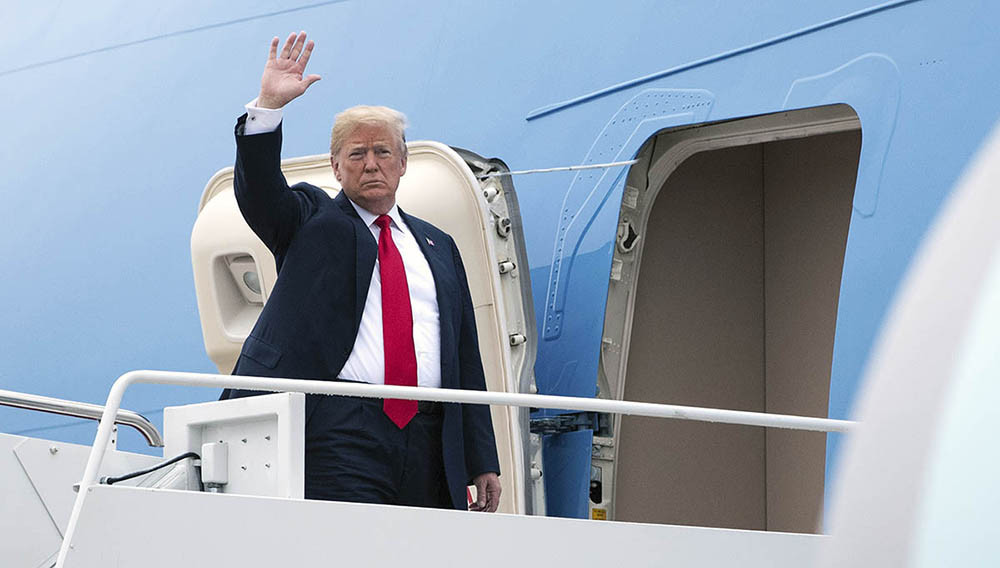
U.S. President Donald Trump Photo credit: Kevin Dietsch-Pool/Getty Images.
….And just as we have called out foreign leaders for undermining democratic norms in their countries, we must draw attention to the same sorts of warning signs in our own country. It is in keeping with our mission, and given the irreplaceable role of the United States as a champion of global freedom, it is a priority we cannot afford to ignore.
The great challenges facing US democracy did not commence with the inauguration of President Donald Trump. Intensifying political polarization, declining economic mobility, the outsized influence of special interests, and the diminished influence of fact-based reporting in favor of bellicose partisan media were all problems afflicting the health of American democracy well before 2017. Previous presidents have contributed to the pressure on our system by infringing on the rights of American citizens. Surveillance programs such as the bulk collection of communications metadata, initially undertaken by the George W. Bush administration, and the Obama administration’s overzealous crackdown on press leaks are two cases in point.
At the midpoint of his term, however, there remains little question that President Trump exerts an influence on American politics that is straining our core values and testing the stability of our constitutional system. No president in living memory has shown less respect for its tenets, norms, and principles. Trump has assailed essential institutions and traditions including the separation of powers, a free press, an independent judiciary, the impartial delivery of justice, safeguards against corruption, and most disturbingly, the legitimacy of elections. Congress, a coequal branch of government, has too frequently failed to push back against these attacks with meaningful oversight and other defenses.
We recognize the right of freely elected presidents and lawmakers to set immigration policy, adopt different levels of regulation and taxation, and pursue other legitimate aims related to national security. But they must do so according to rules designed to protect individual rights and ensure the long-term survival of the democratic system. There are no ends that justify nondemocratic means.
… While the United States suffered an unusual three-point drop on Freedom in the World’s 100-point scale for 2017, there was no additional net decline for 2018, and the total score of 86 still places the country firmly in the report’s Free category.
….The United States has already been weakened by declines in the rule of law, the conduct of elections, and safeguards against corruption, among other important indicators measured by Freedom in the World. The current overall US score puts American democracy closer to struggling counterparts like Croatia than to traditional peers such as Germany or the United Kingdom.
……In any democracy, it is the role of independent judges and prosecutors to defend the supremacy and continuity of constitutional law against excesses by elected officials, to ensure that individual rights are not abused by hostile majorities or other powerful interests, and to prevent the politicization of justice so that competing parties can alternate in office without fear of unfair retribution. While not without problems, the United States has enjoyed a strong tradition of respect for the rule of law.
President Trump has repeatedly shown disdain for this tradition. Late in 2018, after a federal judge blocked the administration’s plan to consider asylum claims only from those who cross the border at official ports of entry, the president said, “This was an Obama judge. And I’ll tell you what, it’s not going to happen like this anymore.”
The president has since urged the Department of Justice to prosecute his political opponents and critics. He has used his pardon power to reward political and ideological allies and encourage targets of criminal investigations to refuse cooperation with the government. He has expressed contempt for witnesses who are cooperating with law enforcement in cases that could harm his interests and praised those who remain silent. His administration’s harsh policies on immigrants and asylum seekers have restricted their rights, belittled our nation’s core ideals, and seriously compromised equal treatment under the law. In October 2018, the president went so far as to claim that he could unilaterally overturn the constitutional guarantee of birthright citizenship…
The president’s attacks on the judiciary and law enforcement, echoed by media allies, are eroding the public’s trust in the third branch of government and the rule of law. Without that trust, the outright politicization of justice could well ensue, threatening the very stability of our democracy. Any American is free to contest the wisdom of a judge’s ruling, but no one—least of all the president—should challenge the authority of the courts themselves or use threats and incentives to pervert the legal process.
This is followed by chapters on
DEMONIZING THE PRESS
SELF-DEALING AND CONFLICTS OF INTEREST
ATTACKING THE LEGITIMACY OF ELECTIONS
THE THREAT TO AMERICAN IDEALS ABROAD
NEITHER DESPAIR NOR COMPLACENCY: Ours is a well-established and resilient democracy, and we can see the effect of its antibodies on the viruses infecting it. The judiciary has repeatedly checked the power of the president, and the press has exposed his actions to public scrutiny. Protests and other forms of civic mobilization against administration policies are large and robust. More people turned out for the midterm elections than in previous years, and there is a growing awareness of the threat that authoritarian practices pose to Americans.
Yet the pressure on our system is as serious as any experienced in living memory. We cannot take for granted that institutional bulwarks against abuse of power will retain their strength, or that our democracy will endure perpetually. Rarely has the need to defend its rules and norms been more urgent. Congress must perform more scrupulous oversight of the administration than it has to date. The courts must continue to resist pressures on their independence. The media must maintain their vigorous reporting even as they defend their constitutional prerogatives. And citizens, including Americans who are typically reluctant to engage in the public square, must be alert to new infringements on their rights and the rule of law, and demand that their elected representatives protect democratic values at home and abroad.
Freedom House will also be watching and speaking out in defense of US democracy. When leaders like Mohammed bin Salman or Victor Orbán take actions that threaten human liberty, it is our mission to document their abuses and condemn them. We must do no less when the threats come from closer to home.
On 3 October 2018 a number of NGOs published a Joint Statement on Ukraine deploying the many attacks against Human Rights Defenders:
More than 50 attacks on activists and human rights defenders in Ukraine have been recorded by local human rights organisations in just the last nine months, Amnesty International, Human Rights Watch, Freedom House and Front Line Defenders said today. Those under attack include people working to defend the rights of lesbian, gay, bisexual, and transgender (LGBT) people, protect the environment, and campaign against corruption.
The organisations criticised the lack of effective investigations into these incidents and of prosecutions of those responsible, which heightens the risk to human rights defenders and sends a message that the authorities tolerate such attacks and assaults. Recently, the prosecutor general suggested that civil society activists brought the attacks on themselves <https://www.pravda.com.ua/news/2018/09/27/7193378/>for criticising the authorities, giving an impression that human rights defenders can be openly targeted.
In most cases, the attacks have targeted individuals or groups that campaign against corruption in the local community, shine a light on the operation of local government and businesses, or defend people’s rights. The purpose of such attacks is clear: to silence activists and human rights defenders and to discourage others from speaking out against injustice and standing up for human rights.
Two recent examples of the kind of vicious attacks that have yet to be effectively investigated took place on 22 September, in Odessa and Kryvyi Rih. Oleh Mikhaylyk, an anti-corruption activist, was shot in Odessa, in southern Ukraine, and remains in the hospital. Mikhaylyk had campaigned with the Syla Lyudei (People’s Power) movement against illegal construction in Odessa. Three hundred kilometers away, in Kryvyi Rih, unidentified assailants broke into the home of Artem Moroka after he criticised the local police on Facebook. The assailants severely beat him, breaking his nose, Moroka told Ukrainian human rights monitors.
In June, an environmental activist, Mykola Bychko, was found dead under suspicious circumstances in a village in Kharkiv region. Villagers found Bychko hanged in the woods near the village of Eskhar on June 5. The local police initially started a suicide investigation, but have yet to investigate the possibility that he was killed in connection with his activism. At the time, Bychko was documenting the pollution of a local river, allegedly caused by a nearby waste treatment plant.A lawyer representing Bychko’s family questioned the conduct of the local police for ignoring the possibility that this was an intentional killing, and for allegedly intentionally delaying the investigation. The lawyer told Freedom House that police lost relevant evidence from the site where Bychko’s body was found, such as the rope from the improvised gallows. The authorities have also not pursued allegations that Bychko had received threats related to his documentation work, such as questioning people from the waste treatment plant.
On July 31, an unidentified assailant threw acid on Kateryna Handzyuk, a local council member who monitored police activities, in Kherson. ……….
The Ukrainian authorities should take effective steps to prevent further threats and attacks against activists and human rights defenders, and ensure prompt, thorough, impartial and independent investigations into such threats and attacks and bring those responsible to justice in fair trials.
The Interior Ministry, the National Police, the prosecutor general’s office, and other relevant institutions should explicitly recognise the important work of human rights defenders in protecting human rights and uncovering corruption. The authorities should publicly denounce any threats and attacks against human rights defenders. They should take decisive measures to ensure that government critics can work in a safe and enabling environment in which they can exercise the rights to freedom of expression, peaceful assembly and association, and conduct their activities without fear of reprisals.
An academic and two journalists who play a key role in Turkey’s human rights movement have been jailed pending investigation into spurious allegations of spreading terrorist propaganda. Human Rights Watch, Reporters without Boarder, Front Line, and the Observatory for the Protection of Human Rights Defenders (a joint program of FIDH and OMCT), among others, have raised serious concern and demanded their immediate release.
An Istanbul court on 20 June, 2016, accepted a prosecutor’s request for them to be placed in pretrial detention on suspicion of having committed terrorist offenses. They are Erol Önderoglu, who is the Turkey representative of Reporters Without Borders and a journalist with the independent news website Bianet; Professor Şebnem Korur Fincancı, an academic at Istanbul University’s forensic medicine department and head of the Human Rights Foundation of Turkey; and Ahmet Nesin, a writer and journalist.
“The decision to demand the detention of Önderoğlu, Fincancı, and Nesin is a shocking new indication that the Turkish authorities have no hesitation about targeting well-known rights defenders and journalists who have played a key role in documenting the sharp deterioration in human rights in the country,” said Hugh Williamson, HRW’s Europe and Central Asia Director. “
The three were among 44 journalists, writers, and activists who participated in a solidarity campaign for media freedom in which each of them acted as a symbolic co-editor-for-a-day at the pro-Kurdish daily Özgür Gündem in Istanbul. The government sees the newspaper as hostile to it and as a result has placed it under immense pressure.
“Jailing a world-renowned journalist and human rights defender such as Erol sends a very powerful signal of intimidation to the entire profession in Turkey. It’s a new, unbelievable low for press freedom in Turkey,”Johann Bihr, head of the Eastern Europe and Central Asia desk at RSF, told CPJ. At least 14 journalists were imprisoned in Turkey on December 1, 2015, when CPJ last conducted its annual census of journalists jailed around the world. [see also: https://thoolen.wordpress.com/2016/03/20/turkey-fair-trial-human-rights-lawyers-expression-l4l/]
While the NGO reactions are expected, more remarkable is the reaction from Russia which (in the good company of the USA, the UN and the EU) has condemned the crackdown on Turkey’s press freedom: Read the rest of this entry »





 U.S. President Donald Trump Photo credit: Kevin Dietsch-Pool/Getty Images.

 Hans Thoolen on Human Rights Defenders and their awards
