Archive for the 'EU' Category
March 16, 2019
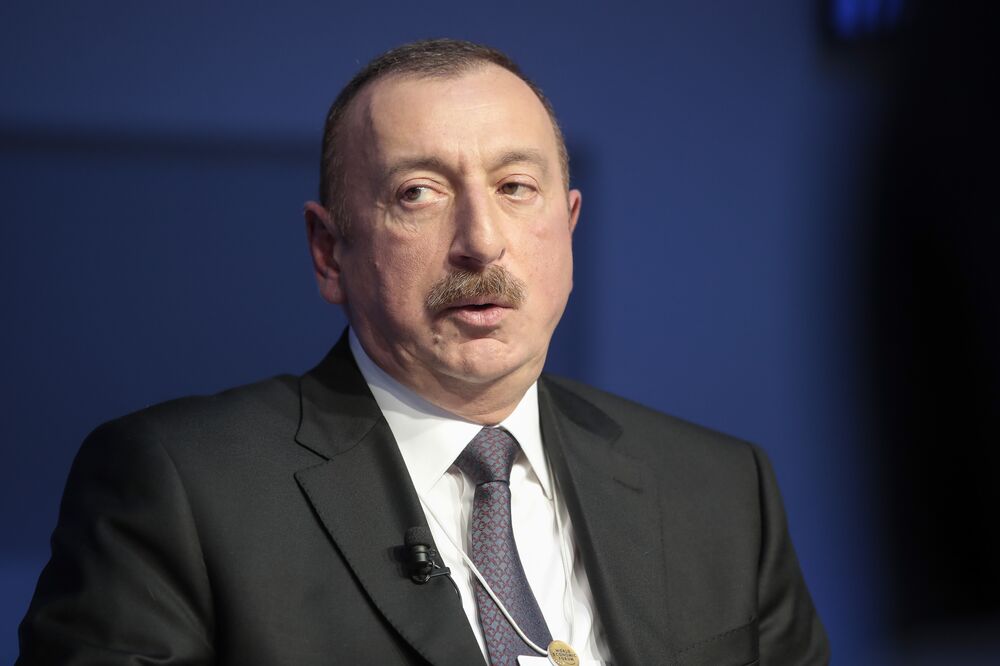
The ink on an EU report (March 15) concluding that human rights in Azerbaijan remain in need of improvement, is hardly dry and there is a surprise announcement that Azerbaijan’s strongman-resident has ordered the release of more than 400 people, including opposition politicians and pro-democracy youth activists who were listed as political prisoners by international human rights groups. True, the EU report comes ahead of the upcoming EU-Azerbaijan Cooperation Council, scheduled to take place on 4 April in Brussels, but there must be other reasons.
Posted in EU, HRW, Human Rights Defenders | Leave a Comment »
Tags: Azerbaijan, Bayram Mammadov, EU-Azerbaijan Cooperation Council, Fuad Qahramanli, Gozal Bayramli, Human Rights Defenders, Ilkin Rustamzada, pardon, President Ilham Aliyev, Qiyas Ibrahimov, release
February 20, 2019
Today the foreign affairs committee voted its annual report on Turkey, drafted by Socialists & Democrats MEP Kati Piri, in which European Parliamentarians called on the member states to formally suspend the accession negotiation with Ankara, due to a stark regression in the area of the rule of law and human rights in the country during the last few years. Kati Piri is also the European Parliament’s rapporteur on Turkey.
The latest European Parliament report on Turkey set a clear red line: if the constitutional reform package, including the expansion of the president’s powers were to be implemented unchanged, then Turkey’s EU accession talks should be suspended without delay. The procedure for suspending EU accession negotiations, sets out in Article 5 of the Negotiating Framework for Turkey stipulates that “in the case of a serious and persistent breach in Turkey of the principles of liberty, democracy, respect for human rights and fundamental freedoms and the rule of law on which the Union is founded, the Commission will, on its own initiative or on the request of one third of the Member States, recommend the suspension of negotiations and propose the conditions for eventual resumption.”
“The rapid decline of the rule of law in Turkey, is also reflected in the European Parliament’s position on the accession process. With all the flagrant human rights violations, the lack of judicial independence and the implementation of a new constitution missing crucial checks and balances, it makes no sense to continue talks on EU membership with the current government. When a candidate country crosses key red lines, there should also be political consequences,” said Kati Piri.
(note that the report also expresses the will to keep bridges with the citizens of Turkey and continue to provide support to civil society)
https://www.europeaninterest.eu/article/sds-turkey-crossed-red-lines/
—–
See also: https://humanrightsdefenders.blog/2017/07/11/council-of-europe-losing-patience-with-turkey-after-arrest-of-human-rights-defenders/
Posted in EU | 1 Comment »
Tags: accession, EU, European Parliament, Kati Piri, MEPs, negotiations, suspension, Turkey
January 18, 2019
The EU should do more to promote democracy, rule of law and fundamental rights across the EU, including through support to civil society organisations, says an article in the European Sting of 18 January 2019.
MEPs endorsed on Thursday the position of the Civil Liberties Committee to triple the funds allocated in the long-term EU budget (2021-2027) for the Rights and Values Programme, up to 1.834 billion euros (the European Commission had proposed €642 million). Parliament’s mandate to start negotiations with EU ministers was approved with 426 votes to 152 and 45 abstentions. With a general objective to protect and promote the rights and values enshrined in Article 2 of the EU Treaty through support to civil society organisations at local, regional, national and transnational level, the Programme seeks to promote equality and non-discrimination, encourage citizens’ engagement and participation in the democratic process, and fight violence.
MEPs decided to specifically mention the protection and promotion of democracy and the rule of law as the main aim, as these are a prerequisite for protecting fundamental rights and for ensuring mutual trust among member states and of citizens’ trust in the European Union, says the text.
Regarding the activities to be funded with EU money, Parliament suggests awareness-raising campaigns on European core values and the rights and obligations derived from EU citizenship. Initiatives to reflect on the factors that lead to totalitarian regimes occurring and to commemorate their victims were also suggested. MEPs also want to support town-twinning projects, human rights defenders and whistle-blowers, measures countering hate-speech and misinformation, and protection of victims of violence, among others.
MEPs agreed that, in exceptional cases, when there is a serious and rapid deterioration of the situation in a member state and the founding values are at risk, the European Commission may open a call for proposals, under a fast-track procedure, to fund civil society organisations to facilitate and support the democratic dialogue in the country.
Promoting rule of law and fundamental rights in the EU
Posted in EU, Human Rights Defenders | Leave a Comment »
Tags: budget, Civil society, Democracy, EU, European Parliament, funding, hate speech, Human Rights Defenders, MEPs, NGOs
December 15, 2018
On 11 December 2018 the European Parliament published “Rule of law and human rights in Cuba and Venezuela and EU engagement”, done by external authors Par ENGSTROM and Giulia BONACQUISTI.
The European Parliament (EP) has consistently followed the situation in Cuba and Venezuela. It has expressed its support for human rights defenders and democracy with the award of the Sakharov prize to Cuban activists on three occasions (2002, 2005, 2010), and to Venezuela’s Democratic Opposition in 2017 [see: https://humanrightsdefenders.blog/2017/10/27/european-parliaments-sakharov-prize-awarded-to-venezuela-opposition/]. In line with this engagement, a workshop on human rights and rule of law in both countries was held on 6 September 2018, in Brussels, at the request of the EP’s Subcommittee on Human Rights (DROI). Dr. Par Engstrom (University College London) presented the first draft of an independent study analysing the main human rights developments in Cuba and Venezuela since 2014 and the EU’s response. The paper, which focused specifically on the Sakharov laureates, was discussed with Members and other experts, including from the UN Office of the High Commissioner for Human Rights, the European External Action Service and the European Commission. During the lively discussion, there was broad agreement with the description of major trends in the human rights situation in the two countries. Critical comments and controversial issues related to the impact of the government’s repression of the Venezuelan opposition, the need to consider not only civil and political but also economic and social rights, the effectiveness of sanctions against Venezuela and the potential role of the Sakharov Prize. Observations and comments made during the workshop fed into the final version of the study, which is also included in this report.
http://www.europarl.europa.eu/thinktank/en/search.html?word=Venezuela
Posted in awards, books, EU, Human Rights Defenders | 4 Comments »
Tags: Cuba, EP, European Parliament, Giulia Bonacquisti, Par Engstrom, Sakharov Prize for Freedom of Thought, study, Venezuela
December 10, 2018
Posted in Amnesty international, EMHRN, EU, human rights, Human Rights Defenders, ISHR, UN | 3 Comments »
Tags: 70th anniversary UDHR, AI, António Guterres, anthology, Australia, EU, Global Compact on Migration, Human Rights Day, Human Rights Defenders, International Film Festival and Forum on Human Rights, International Humanist and Ethical Union (IHEU), Jamaica, reprisals
November 16, 2018
E uromed Rights announced on 15 November 2018 that representatives from over 150 civil society organisations, the majority of which coming from the South of the Mediterranean region, will gather in Brussels on November 20-21 for the First Majalat Civic Forum in order to debate four regional themes: Good Governance; Security and Countering Violence; Migration; Economic Development and Social Dialogue.
After its launch in Jordan last September, Majalat will move to the heart of the European Union in order to initiate a three-year cycle of regional dialogues, in the presence of the Commissioner at the European Neighbourhood Policy and Enlargement Negotiations, Johannes Hahn.
Majalat is thus the first civil society run process of this kind. The word itself stands for ‘spaces, opportunities, fields and domains’. Supported by the EU, the project aims at promoting structured dialogue between civil society in the South Mediterranean region and the EU institutions. It also aims at enhancing regional exchanges between civil society in the region.
The project has been coordinated and set up by six partner organisations: Arab NGO Network for Development (ANND), Arab Trade Union Confederation (ATUC), EuroMed Network France (REF), EuroMed Rights, Forum for Alternatives Morocco (FMAS) and SOLIDAR.
The whole process will be facilitated by an Interactive Digital Platform.
In addition to the six partners, six organisations with a regional scope are invited to sit in the Steering Committee: Arab Campaign for Education for All, Arab Network for Human Rights Information, Disabled People International, Maghreb Observatory on Migration Transparency International and Syrian Citizens’ League.
For the programme see: Programme
https://mailchi.mp/euromedrights/majalat-first-ever-eu-south-mediterranean-forum-with-civil-society-in-lead-to-be-launched-in-brussels-enarfr?e=1209ebd6d8
Posted in EU | Leave a Comment »
Tags: Brussels, civil society organisations, cooperation, dialogue, euroMed Rights, Majalat Civic Forum, Mediterranean, meeting, north africa
October 9, 2018
ProtectDefenders.eu is the EU Human Rights Defenders mechanism, established to protect Human Rights Defenders (HRDs) at high risk and facing the most difficult situations worldwide. The mechanism is implemented by a Consortium of 12 international NGOs with the support of the European Commission. The EU HRD mechanism began its operations on 1st October 2015 for a duration of 36 months, this project has been extended by another year, with the possibility of renewal for 3 years in 2019.
ProtectDefenders.eu is seeking to recruit an experienced manager to run the Secretariat of the mechanism in Brussels and to ensure coordination of the project implementation and all related financial and narrative reporting. This is an exciting opportunity for an experienced manager with strong communication skills who will play a crucial role in the successful implementation of the project.
…..
- Tasks & General Responsibilities:
The HoS reports directly to the Chair of the Board of ProtectDefenders.eu. She/He works under the supervision and management of the Board with the assistance of other Secretariat staff members: she/he coordinates effectively all elements of the mechanism so as to help deliver the commitments of the Consortium in an efficient and effective manner; provides overall representation of, and coordination between, Consortium members; ensures liaison with the EU Commission, EEAS, EP and other external actors; manages the Secretariat and its staff.
- Experience/knowledge:
- Masters Degree in International Relations, Human Rights, Law or other related field
- Minimum of five years of successfully managing the implementation of complex projects, ideally
EU funded projects, preferably with an international NGO
- Demonstrated experience in developing and managing large budgets, with preference for previous
experience with a Consortium or a network.
- Experience in working on projects funded by major international donors, with preference for
previous experience with EU.
- Strong coordination/negotiation skills with the ability to effectively coordinate among partner
organisations and with diverse partners and stakeholders
- Understanding of the security and protection of human rights defenders around the world.
Skills:
- Excellent oral and written English language skills, French or Spanish requested
- Strong management skills
- Strong analytical skills
- Strong interpersonal and communication skills.
This position will be available to begin from November 2018. The initial contract is a fix-term contract up to December 2019. The Head of Secretariat will be based in ProtectDefenders.eu Secretariat in Brussels. The Head of Secretariat should have the necessary permit to work in the EU. The gross monthly salary for the position is €4.100 with lunch vouchers, transportation costs, health insurance coverage and retirement plan.
Applications comprising a CV with at least two references and a cover letter should be sent by email to recruit@protectdefenders.eu by October 15th 2018. Interviews will be planned in the week of the 22nd of October.
Posted in EU | Leave a Comment »
Tags: Brussels, career, job opening, job opportunity, ProtectDefenders.eu, Secretariat, vacancy
September 30, 2018
The nominees for the 2018 Sakharov Prize for Freedom of Thought have been announced on 27 September (Nominations can be made by political groups and groups of at least 40 MEPs – remarkable is the more active role played by right-wing groups in the EP, see the last two nominees):
Oleg Sentsov, a Ukrainian film director, convicted to 20 years in prison for “plotting terrorist acts” against the Russian “de facto” rule in Crimea. Amnesty International has described the court process as “an unfair trial before a military court”. He has become a symbol for the approximately 70 Ukrainian citizens illegally arrested and convicted to long prison sentences by the Russian occupation forces in the Crimean peninsula. He has been on hunger strike since May 2018. Nominated by EPP.
NGOs protecting human rights and saving migrant lives across the Mediterranean Sea. Since 2015, NGOs from across the EU have launched search and rescue operations in the Mediterranean to try and save the lives of refugees struggling to reach EU shores. The NGOs are: Boat Refugee Foundation, Jugend Rettet, Lifeline Rescue Boat, Médecins Sans Frontières International, MOAS, Proactiva Open Arms, PROEM-AID, Save the Children, Sea Eye, Sea Watch, and SOS Mediterranée. Nominated by S&D and the Greens/EFA.
Seyran Ateş, a German lawyer of Turkish origin, fighting against political and religious extremism and the oppression of women. She was behind the establishment of the Ibn Rushd Goethe Mosque in Berlin, where men and women can pray together and has received numerous death threats and has to have round the clock protection. She was nominated by ECR, Hans-Olaf Henkel and 40 other MEPs for her “commitment to the protection of human rights and her devotion to a modern and open Islam”.
Caesar is the code name of a former Syrian military photographer who smuggled more than 55,000 pictures out of Syria exposing the war atrocities. Their authenticity is confirmed by the Human Rights Watch. Caesar’s photographs will play a vital role in building criminal and civil cases against those responsible for the crimes documented. Nominated by ALDE.
Nasser Zefzafi is the leader of Hirak, a mass protest movement in the Rif region, Morocco, fighting corruption, oppression and abuse of power. He was arrested in May 2017 and sentenced to 20 years in prison for “conspiracy against the security of the state”. On August 2018, King Mohammed VI pardoned 188 Hirak activists, but Zefzafi was not among them. At the end of August he went on hunger strike to denounce his conditions of detention. Nominated by GUE, Kati Piri, Judith Sargentini, Marie-Christine Vergiat and 39 other MEPs for his fight “against oppression and abuse of power”.
Dewayne Johnson is a former groundskeeper from the US who has just won a landmark case against Monsanto. He was the first person to take Monsanto to trial over allegations that the chemicals sold by the company under the herbicide brand Roundup cause cancer. At the end of the process Dewayne had just months to live, yet he took the stand and described his pain and suffering. Nominated by EFDD as an inspiration “for those afraid to go to court and defend their rights”.
AfriForum is an NGO that aims to protect the rights of minorities in South Africa, with a specific focus on the rights of Afrikaners. It focuses on raising national and international awareness about farm attacks, murders and the expropriation of farm land without compensation, which threatens property rights, food supply and food security. Nominated by ENF.
Mary Wagner is a Canadian activist who has been arrested on multiple occasions and accused of “disturbing the business” of an abortion clinic in Toronto. She remained in prison for not complying with a probation order to stay away from abortion clinics. She was nominated by Marek Jurek and 41 other MEPs for her work “safeguarding the rights of those who cannot speak for themselves”.
For more information this award and 2 others with Sakharov in the name: http://trueheroesfilms.org/thedigest
Posted in awards, EU, Human Rights Defenders | 3 Comments »
Tags: AfriForum, Caesar, Dewayne Johnson, digest of human rights awards, human rights award, Mary Wagner, Mediterranean, migrants, Morocco, Nasser Zefzafi, Oleg Sentsov, Sakharov Prize for Freedom of Thought, Seyran Ateş, Turkey, Ukraine, USA
July 24, 2018

ProtectDefenders.eu, the EU Human Rights Defenders mechanism, is organising the HUMAN RIGHTS DEFENDERS WORLD SUMMIT 2018 – to be held in Paris, October 29-31 2018 at Palais de Chaillot (Espace Niemeyer). The event is organised with a coalition of international NGOs and human rights defenders networks – including Amnesty International, AWID, the International Service for Human Rights, and ProtectDefenders.eu’ board members FIDH, Front Line Defenders, OMCT, and RSF -, with the support of the European Union.
On the occasion of the 20th Anniversary of the UN Declaration on Human Rights Defenders, the Human Rights Defenders World Summit 2018 will constitute an opportunity to review the progress made in the defence of human rights and in the protection of all those that defend these rights in all their diversity since the adoption of the Declaration. By creating a unique platform for the human rights defenders’ voices to be heard, this Summit will also call for the international community to reinforce its commitments to protect human rights defenders, celebrate the essential work HRDs carry out in the most difficult environments, and raise awareness about the threats, obstacles and restrictions HRD are constantly confronted with. The Summit intends to shape the upcoming human rights defenders’ agenda, showing the way forward to the international community engaged in the protection of human rights defenders and the promotion of a safer and more enabling environment.
To learn more about the Human Rights Defenders World Summit 2018, and meet the HRDs who are confirming their participation, check for updates at the Summit’s website.
Open call for human rights defenders
The Human Rights Defenders World Summit 2018 will bring together a diverse group of over 150 HRDs, from around the world, for three days of meetings, panel discussions, networking and workshopping. These HRDS who are at the forefront of the struggles for social, political and environmental changes will have the opportunity to connect, work and debate together and engage with regional and international human rights organisations, global leaders from governments, the United Nations, and the private sector. In addition to a focus on those HRDs who are most vulnerable and at risk, the Summit will be a unique space to convene marginalised groups, including ethnic and religious minorities, diverse gender identity activists, indigenous peoples and other defenders who are geographically remote from centres of power, media and international attention.
For achieving this goal, the World Summit is launching an open call for human rights defenders to present their candidacies. The aim of this call is to reach out to the most isolated and less connected defenders, traditionally underrepresented, members of less visible categories and groups or profiles of special concern. This call is, thus, very important to ensure and reinforce the representativeness, inclusiveness and diversity of the Summit’s participants.
This call will be open until 1st September, and is available in the HRD World Summit website, in English, French, Spanish, Arabic, and Russian. Please, share it widely within your network!
Communication and coordination
Louise Levayer – llevayer@amnesty.fr
Javier Roura – jroura@protectdefenders.eu
Website
https://hrdworldsummit.org
Facebook
https://www.facebook.com/hrdworldsummit2018
Twitter
https://twitter.com/HRDWorldSummit
Posted in EU, Human Rights Defenders | 3 Comments »
Tags: call for applications, EU, Human Rights Defenders, Human Rights Defenders World Summit 2018, meeting, Paris, ProtectDefenders.eu
May 9, 2018
On 9 May 2018, Hungary’s (remaining) civil society issued the Professors Solidarity Call below, signed by 77 professor until now and asking for more signatories. It concerns the so-called “Stop Soros” bill, to be voted by the Hungarian parliament very soon, which will have a devastating impact on both Hungarian civil society and the asylum seekers and refugees that are already in a dire state. That Victor Orban is behind an ‘anti-Soros bill’ is the more remarkable as he himself was the beneficiary of a Soros scholarship [in 1988 a dissident Hungarian university graduate wrote a letter to George Soros, a billionaire philanthropist, asking for help obtaining a scholarship to Oxford University. In the letter, which has recently resurfaced, the young Viktor Orban said he wanted to study the “rebirth of civil society”. He got the scholarship.– the Economist 7 April 2018].
(see also my earlier: https://humanrightsdefenders.blog/2018/02/20/250-ngos-address-letter-to-hungarian-parliament-regarding-restriction-on-the-work-of-human-rights-defenders/ and https://humanrightsdefenders.blog/2018/03/19/ahmed-h-personifies-the-real-danger-of-populist-anti-terror-measures/)
PROFESSORS’ SOLIDARITY DECLARATION AND CALL FOR ACTION IN DEFENCE OF THE HUNGARIAN HELSINKI COMMITTEE AND THE HUNGARIAN CIVIL SOCIETY
We, 77 university professors and academics from 28 countries around the world, express our solidarity with the Hungarian Helsinki Committee and the independent Hungarian civil society, which currently faces an imminent existential threat.
The so-called “Stop Soros” bill, to be voted by the Hungarian Parliament in mid-May 2018, will have a devastating impact on both Hungarian civil society and those vulnerable human beings that cannot count on anyone else’s support. The new legislation will allow the government to simply ban the activities of organizations assisting refugees and migrants in a fast and arbitrary process. Activities such as legal aid to asylum-seekers, reporting to the UN or the EU, holding university lectures about refugee law or recruiting volunteers will be rendered illegal, if these are performed by civil society actors who dare to criticise government practices. Practices, which are equally condemned by the EU and the international community.
The Hungarian Helsinki Committee (HHC) is an outstanding human rights organization, well-known and respected for its professionalism around the world, not only by civil society, but by academia, state authorities and the judiciary as well. The HHC has massively contributed to the promotion of refugee law education and legal clinics on various continents. We all personally know and highly respect their work. States should be proud of such NGOs, instead of aiming to silence them.
Strong and independent civil society organisations are as indispensable for democracy and the rule of law as strong and independent universities. If NGOs such as the Hungarian Helsinki Committee are threatened, democracy is threatened. If a prestigious organization, winner of various international human rights awards, can simply be banned from providing legal aid to refugees, if a globally reputed voice of human rights can be silenced with an administrative measure in an EU member state, then further dramatic anti-democracy measures are likely to follow. There is a real risk that the Hungarian example will be increasingly copied elsewhere, and soon it may be too late to stop the domino effect.
We call on our governments to express, without delay, their vivid discontent with Hungary’s legislation aiming at annihilating independent civil society. We call on universities around the world to do the same and actively demonstrate their solidarity with the Hungarian Helsinki Committee and the entire threatened Hungarian civil sector. We call on the European Union to prove to the world its credibility as a guardian and global promoter of fundamental rights, and immediately take action to prevent this flagrant human rights violation from happening on its own territory.
Signatures (in alphabetical order) at the end of the document: https://www.helsinki.hu/wp-content/uploads/Professors-solidarity-call-HHC-HU-NGOs-2018.pdf
https://www.economist.com/news/europe/21739968-election-april-8th-hungarys-prime-minister-looks-unbeatable-viktor-orban-set
Posted in EU, human rights | 4 Comments »
Tags: academic, asylum seekers, Civil society, EU, Europe, George Soros, Hungarian Helsinki Committee, Hungary, populism, refugees, Stop Soros, Victor Orban