Chris Collier, Human Rights Consultant, is organising a Training Workshop “Lobbying for HRD protection by the EU, EU member states and like-minded countrie”. The date is 18 June 2019, 09:30 – 17:00 at EuroMed Rights, Rue des Comédiens 22, 1000 Brussels.
This is a one-day, participatory training workshop for HRDs and staff of European and international human rights organizations.
Participants will:
Discuss current guidelines and (good) practices of the EU, EU member states and like-minded countries (Norway, Canada, Switzerland) in HRD protection
Learn what kind of action to ask the EU, EU MS and like-minded countries to take in different situations and how to approach them to take such action
Create action plans to get the EU, EU MS and like-minded countries to take action on specific HRD issues or cases they are dealing with
The training addresses situations in which HRDs face stigmatization, threats, physical attacks, trumped-up charges, unfair trials and other violations. It covers action by EU/like-minded countries such as public statements, trial observation, raising cases with authorities, public recognition, visits to HRDs offices/areas of work and visas/temporary relocation. [see also an earlier course: https://humanrightsdefenders.blog/2017/01/24/training-workshop-on-protection-of-hrds-by-foreign-governments/]
The language of the workshop is English. The workshop fee is €300. Participants are responsible for all costs of participating in the workshop such as travel, accommodation and meals. The maximum number of participants in the workshop is 10.
Please contact Chris Collier directly if you would you be interested in participating in this workshop or in receiving further information: tel. +31-(0)6-34936026 mail@chriscollier.nl http://www.chriscollier.nl
Many readers of this blog wil already follow ProtectDefenders.eu[see also: https://humanrightsdefenders.blog/2018/02/27/10611/]. Still, for those who don’t here follows a short overview taken from a 31 May 2019 communication which gives an impressive tally of the last three year:
Over the past three years, ProtectDefenders.eu – the EU Human Rights Defenders mechanism implemented by a Consortium of international civil society organisations, has emerged as a solid, successful and crucial tool for at-risk human rights defenders, and as an increasingly referenced instrument within the international human rights defenders community. As per the three-years report, ProtectDefenders.eu has stepped up the practical support available to HRDs at risk and local human rights NGOs, and mobilised resources in favour of at least 30,018 defenders in a timely and comprehensive manner.
In a context marked by the increasing demand for support from human rights defenders operating in the most difficult contexts, ProtectDefenders.eu…
has granted emergency support to 1,402 human rights defenders at high risk, in order to implement security measures, such as emergency relocation, individual security, medical support, or legal support. Over the past three years, the countries from which the highest number of HRDs received support were Syria, Burundi, Honduras, Russia, China, Iran, and DRC.
has facilitated and funded temporary relocation programmes for 459 human rights defenders (and their families when needed) with the support of comprehensive accompaniment schemes within host institutions from all over the world. For this purpose, ProtectDefenders.eu has maintained and broadened the EU Temporary Relocation Platform, supported the creation of new host organisations and engaged as an essential counterpart for human rights defenders in need for relocation and for host organisations.
has expanded the capacitites of more than 173 local human rights organisations, communities, and groups operating in the most dangerous contexts, through funding (such as seed-funding, core-funding and lifeline support) and contributions to develop sensitive initiatives and capacity-building programmes.
has provided capacity-development and training for at least 6,673 defenders aimed at empowering them to better manage their own security and to develop effective stragies and action to help them advance their their work in defence of Human Rights.
has provided effective guidance and immediate responses to 2,600 human rights defenders thanks to direct access to the 24/7 hotline, the ProtectDefenders.eu single-entry points, and direct contact with the Secretariat.
has monitored the situation of at least 1,323 human rights defenders in the field, through 284 fact-finding and advocacy missions, trial monitoring, accompaniment, or visits to prison.has mobilised public and media attention, as well as political responses on more than 5,100 individual cases such as attacks or threats against defenders through appeals, letters or petitions:
has reached out to at least 4,289 of the less connected, most targeted and at-risk defenders around the world, through 60 initiatives, such as missions to remote areas.
ProtectDefenders.eu aims at reaching out to the less connected and particularly targeted defenders and these groups (such as Women Human Rights Defenders, LGBTI+ rights defenders, land and environment rights defenders, indigenous rights defenders, or defenders from remote areas) represent approximately 75% of the beneficiaries.
On 17 April 2019eub2 reports that “EU Parliament deletes the worst threats to freedom of expression proposed in the Terrorist Content Regulation”:Read the rest of this entry »
An African at a temporary camp for immigrants seeking entry to Europe, in Melilla (Spanish autonomous city in North Africa), 12 October 2005 (EPA/Chema Moya)
Lizan Nijkrake published on 25 March 2019 an excellent piece under the title “Should it be a crime to help illegal immigrants?” She describes how European defenders of migrants are being prosecuted for aiding illegal immigrants. EU states had a choice to exempt humanitarian aid from criminal charges but most didn’t take it. And those who did are not always following the rules.
Take the UK as an example: The United Kingdom’s Institute for Race Relations, which has been tracking criminal cases, reported that 81 people were prosecuted for assisting immigrants in 2018, compared with 20 in 2017. “Things escalated in 2018,” says Anya Edmond-Pettitt, a researcher at the Institute of Race Relations. “People got charged with serious crimes, linked to terrorism and membership of a criminal organization.”
Why is this happening?
In 2002, the EU adopted a directive that requires all EU member states to impose sanctions on citizens who intentionally help illegal immigrants secure unauthorized entry into, transit across or residence within in the EU — thus making it illegal to offer aid in the form of free rides or overnight stays. The directive says its objective is to “combat the aiding of illegal immigration” to further the EU’s goal of creating “an area of freedom, security and justice.” But in a study for the European Parliament, the Centre for European Policy Studies (CEPS), a Brussels-based think tank, concluded that the EU rules are not in line with the United Nations Protocol against the Smuggling of Migrants by Land, Sea and Air.
The UN protocol stipulates that assisting a migrant can be a crime only when there is a clear aim of making money or other material gains. While the EU directive says offering overnight stays is illegal only if it is done for profit, CEPS reported last December that 13 out of 28 member states have criminalized free sleepovers. Out of 28 EU countries, CEPS says that only four have laws that adhere fully to UN protocol: Germany, Ireland, Luxembourg and Portugal.
The EU directive allows member states to exempt individuals from sanctions for helping illegal immigrants enter or move across EU territory if done for reasons of “humanitarian assistance,” such as giving food, shelter and first aid to people in need. Nine member states have included some types of exemption in their national laws, according to the European Commission.
But the CEPS said states should be required to make such an exception. “And even in the European nations that have exempted humanitarian acts, we still see prosecutions happening, for example in Italy,” said CEPS researcher Lina Vosyliūtė.
Lizan Nijkrake’s piece gives concrete examples of how the laws and the application in practice are affecting those who try to help.
But no change is expected any time soon. The European Commission has consistently said there’s no need to change the law. In early 2018, Nijkrake wrote that it should be left to judges in the countries themselves to decide on a case-by-case basis whether or not to prosecute citizens. It has noted that few people have been convicted. While most of those charged have been acquitted, in the case involving Van Gestel and Berghe (in Belgium), seven of the defendants were convicted and given suspended sentences of 12 to 24 months.
More than 170 organizations have launched an initiative, “We are a welcoming Europe – let us help!” (#WelcomingEurope), with the goal of securing a million signatures on a citizens’ petition that calls for migration policy reforms, including the decriminalization of deeds of solidarity.
For details about the arrest, please see the link below to HRW
AnEU spokesperson on 19 March stated:
“We believe that the sentencing of Oyub Titiev is directly connected to his human rights work for Memorial, an organisation that has been the subject of ongoing intimidation and harassment in the North Caucasus and beyond. We also believe that Mr Titiev has not received a fair trial. His sentencing continues a trend of arrests, attacks and discrediting of human rights defenders and journalists who work in that region of the Russian Federation. Mr Titiev’s predecessor as head of Memorial in Chechnya, Ms Natalia Estemirova, was killed in 2009 and, almost ten years later, not a single person has yet been brought to justice for this crime,”.
“The European Union expects Mr Titiev to be released immediately and unconditionally. The Russian Federation freely entered into commitments, first in Helsinki in 1975 and later in Copenhagen in 1990, to ensure “the right of everyone, individually or in association with others, to seek, receive and impart freely views and information on human rights and fundamental freedoms, including the rights to disseminate and publish such views and information.” We expect these commitments to be upheld”.
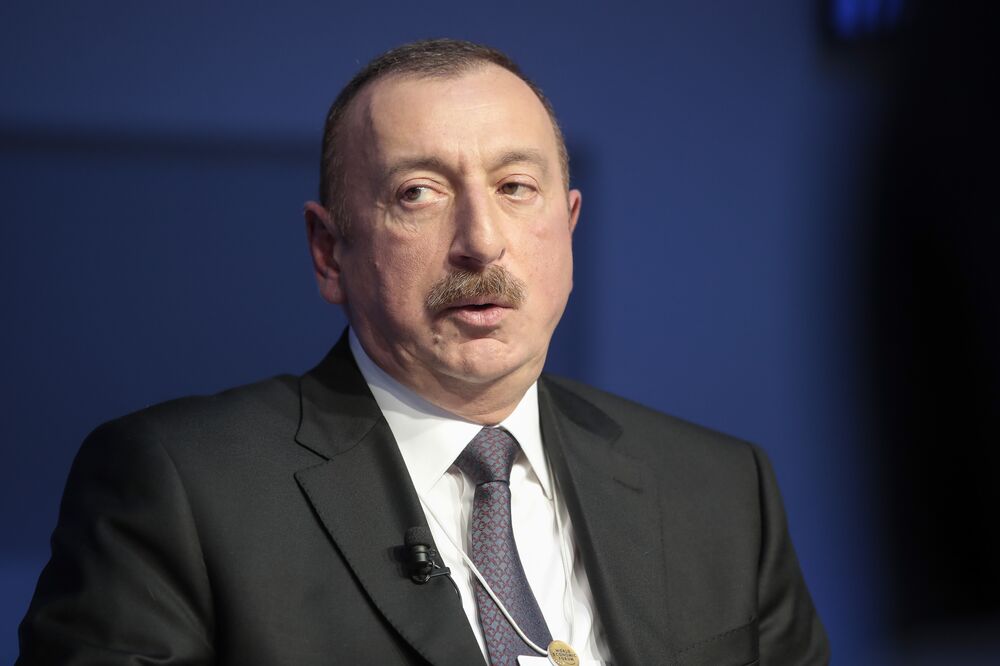
The ink on an EU report (March 15) concluding that human rights in Azerbaijan remain in need of improvement, is hardly dry and there is a surprise announcement that Azerbaijan’s strongman-resident has ordered the release of more than 400 people, including opposition politicians and pro-democracy youth activists who were listed as political prisoners by international human rights groups. True, the EU report comes ahead of the upcoming EU-Azerbaijan Cooperation Council, scheduled to take place on 4 April in Brussels, but there must be other reasons.
Ilham AliyevPhotographer: Jason Alden/Bloomberg
Fuad Qahramanli and Gozal Bayramli, deputy leaders of the opposition Popular Front of Azerbaijan Party, are among the pardoned, according to a statement on the presidential website. Pro-opposition youth activists Ilkin Rustamzada, Qiyas Ibrahimov and Bayram Mammadov will also be released. The pardoned are to be freed within 24 hours. At least 43 human rights defenders, journalists, political and religious activists remained wrongfully imprisoned in Azerbaijan last year, according to Human Rights Watch. Whether all of these are freed is not yet clear.
Today the foreign affairs committee voted its annual report on Turkey, drafted by Socialists & Democrats MEP Kati Piri, in which European Parliamentarians called on the member states to formally suspend the accession negotiation with Ankara, due to a stark regression in the area of the rule of law and human rights in the country during the last few years. Kati Piri is also the European Parliament’s rapporteur on Turkey.
The latest European Parliament report on Turkey set a clear red line: if the constitutional reform package, including the expansion of the president’s powers were to be implemented unchanged, then Turkey’s EU accession talks should be suspended without delay. The procedure for suspending EU accession negotiations, sets out in Article 5 of the Negotiating Framework for Turkey stipulates that “in the case of a serious and persistent breach in Turkey of the principles of liberty, democracy, respect for human rights and fundamental freedoms and the rule of law on which the Union is founded, the Commission will, on its own initiative or on the request of one third of the Member States, recommend the suspension of negotiations and propose the conditions for eventual resumption.”
“The rapid decline of the rule of law in Turkey, is also reflected in the European Parliament’s position on the accession process. With all the flagrant human rights violations, the lack of judicial independence and the implementation of a new constitution missing crucial checks and balances, it makes no sense to continue talks on EU membership with the current government. When a candidate country crosses key red lines, there should also be political consequences,” said Kati Piri.
(note that the report also expresses the will to keep bridges with the citizens of Turkey and continue to provide support to civil society)
The EU should do more to promote democracy, rule of law and fundamental rights across the EU, including through support to civil society organisations, says an article in the European Sting of 18 January 2019.
MEPs endorsed on Thursday the position of the Civil Liberties Committee to triple the funds allocated in the long-term EU budget (2021-2027) for the Rights and Values Programme, up to 1.834 billion euros (the European Commission had proposed €642 million). Parliament’s mandate to start negotiations with EU ministers was approved with 426 votes to 152 and 45 abstentions. With a general objective to protect and promote the rights and values enshrined in Article 2 of the EU Treaty through support to civil society organisations at local, regional, national and transnational level, the Programme seeks to promote equality and non-discrimination, encourage citizens’ engagement and participation in the democratic process, and fight violence.
MEPs decided to specifically mention the protection and promotion of democracy and the rule of law as the main aim, as these are a prerequisite for protecting fundamental rights and for ensuring mutual trust among member states and of citizens’ trust in the European Union, says the text.
Regarding the activities to be funded with EU money, Parliament suggests awareness-raising campaigns on European core values and the rights and obligations derived from EU citizenship. Initiatives to reflect on the factors that lead to totalitarian regimes occurring and to commemorate their victims were also suggested. MEPs also want to support town-twinning projects, human rights defenders and whistle-blowers, measures countering hate-speech and misinformation, and protection of victims of violence, among others.
MEPs agreed that, in exceptional cases, when there is a serious and rapid deterioration of the situation in a member state and the founding values are at risk, the European Commission may open a call for proposals, under a fast-track procedure, to fund civil society organisations to facilitate and support the democratic dialogue in the country.
On 11 December 2018 the European Parliament published “Rule of law and human rights in Cuba and Venezuela and EU engagement”, done by external authors Par ENGSTROM and Giulia BONACQUISTI.
The European Parliament (EP) has consistently followed the situation in Cuba and Venezuela. It has expressed its support for human rights defenders and democracy with the award of the Sakharov prize to Cuban activists on three occasions (2002, 2005, 2010), and to Venezuela’s Democratic Opposition in 2017 [see: https://humanrightsdefenders.blog/2017/10/27/european-parliaments-sakharov-prize-awarded-to-venezuela-opposition/]. In line with this engagement, a workshop on human rights and rule of law in both countries was held on 6 September 2018, in Brussels, at the request of the EP’s Subcommittee on Human Rights (DROI). Dr. Par Engstrom (University College London) presented the first draft of an independent study analysing the main human rights developments in Cuba and Venezuela since 2014 and the EU’s response. The paper, which focused specifically on the Sakharov laureates, was discussed with Members and other experts, including from the UN Office of the High Commissioner for Human Rights, the European External Action Service and the European Commission. During the lively discussion, there was broad agreement with the description of major trends in the human rights situation in the two countries. Critical comments and controversial issues related to the impact of the government’s repression of the Venezuelan opposition, the need to consider not only civil and political but also economic and social rights, the effectiveness of sanctions against Venezuela and the potential role of the Sakharov Prize. Observations and comments made during the workshop fed into the final version of the study, which is also included in this report.


 Hans Thoolen on Human Rights Defenders and their awards