Two journalists, one imprisoned in Belarus and the other in Georgia, have won the European Union’s top human rights honor, the Sakharov Prize, European Parliament President Roberta Metsola announced on Wednesday 22 October 2025.
Andrzej Poczobut is a correspondent for the influential Polish newspaper Gazeta Wyborcza. He was convicted of “harming Belarus’ national security” and sentenced to eight years, which he is serving in the Novopolotsk penal colony.
Mzia Amaghlobeli, a prominent journalist who founded two of Georgia’s independent media outlets, was in August convicted of slapping a police chief during an anti-government protest. She was sentenced to two years in prison in a case that was condemned by rights groups as an attempt to curb media freedom.
“Both are journalists currently in prison on trumped up charges simply for doing their work and for speaking out against injustice. Their courage has made them symbols of the struggle for freedom and democracy,” Metsola said at the parliament in Strasbourg, France.
Members of the Foreign Affairs and Development Committees of the European Parliament voted on Thursday for the three finalists for the 2025 Sakharov Prize for Freedom of Thought (in alphabetical order):
-Imprisoned journalists fighting for your freedom and ours, Andrzej Poczobut from Belarus and Mzia Amaglobeli from Georgia
-Journalists and Humanitarian Aid Workers in Palestine and all conflict zones, represented by the Palestinian Journalists Syndicate, the Red Crescent, and UNRWA ;
-Serbian students
Find the biographies of the candidates and finalists by following this link.
The Conference of Presidents, comprising European Parliament President Roberta Metsola and the leaders of the political groups, will choose the 2025 laureate from this shortlist. Their decision will be announced in the Strasbourg Hemicycle during the plenary session on 22 October 2025.
Each year the European Parliament awards the Sakharov Prize to honour exceptional individuals and organisations defending human rights and fundamental freedoms, safeguarding the rights of minorities, and fighting for respect of international law, democracy and rule of law. Nominations are made by political groups or by at least 40 MEPs. This year’s nominations were presented during a joint meeting of the foreign affairs and development committees, and the human rights subcommittee on 23 September 2025:
Andrzej Poczobut
Andrzej Poczobut is nominated by the groups of theEuropean People’s Party and the European Conservatives and Reformists. He is a journalist, essayist and blogger from the Polish minority in Belarus, known for his criticism of Alexander Lukashenko’s regime and has become a symbolic figure in the struggle for freedom and democracy in the country.
Poczobut has been repeatedly arrested by the authorities. Detained in 2021, he was sentenced to eight years in a penal colony. He has at times been held in solitary confinement without adequate medical treatment. His current condition is unknown and his family is denied any visits. Parliament has called for his immediate and unconditional release.
The Socialists and Democratsgroup has nominated journalists and humanitarian aid workers in conflict zones represented by the Palestinian Press Association, the Palestine Red Crescent Society (PRCS), and the United Nations Relief and Works Agency (UNRWA). Gaza is identified as the world’s deadliest region for journalism, with a high number of Palestinian journalists killed. Humanitarian workers have also endured significant losses during the conflict, with deadly attacks affecting organisations such as World Central Kitchen, the PRCS and UNRWA. These individuals, through their work and sacrifices, ensure international awareness of the critical human rights situation in Gaza.
The Left group has also nominated journalists in Palestine, with a specific mention of Hamza and Wael Al-Dahdouh, Plestia Alaqad, Shireen Abu Akleh, Ain Media (in honour of Yasser Murtaja & Roshdi Sarraj), representing all the journalists active in Palestine.
Franco-Algerian writer Boualem Sansal is nominated by the Patriots for Europe group. A former senior official in Algeria’s Ministry of Industry, he began writing novels after retiring. He has received several literary awards and is known for his criticism of Islamism and the Algerian government.
In November 2024, Sansal was arrested in Algeria for “undermining national unity” following an interview with French media. In March 2025, he was sentenced to five years in prison, despite health concerns and without his French lawyer present. The sentence was later upheld on appeal. The European Parliament and French National Assembly have both called for his immediate release.
The Renew Europe group has nominated the Serbian students who initiated nationwide protests after the collapse of a railway station canopy in Novi Sad, Serbia, on 1 November 2024. This tragedy, which killed 16 people, was linked to alleged systemic corruption and infrastructural neglect. It triggered silent nationwide protests demanding accountability. The movement has transcended ideological and political divisions and now includes academic staff and students, farmers, artists, journalists, taxi drivers, engineers, and others. It culminated on 15 March 2025, when over 350,000 people gathered in Belgrade for the largest demonstration in Serbia’s post-Yugoslav history.
Budapest Pride
Budapest Pride has been nominated by the Greens/European Free Alliance group as well as by Marc Angel (S&D, Luxembourg), Kim van Sparrentak (Greens/EFA, Netherlands) and 43 other MEPs. Taking place despite a government-announced ban, 2025 Budapest Pride drew the largest attendance in the event’s history and became the seventh-largest Pride march in Europe. Despite the risks of potential police intervention, fines, and imprisonment, the march emphasised freedom of assembly and expression. By combining grassroots LGBTQ activism with support from established NGOs amid increasing government restrictions, the event has played a role in advocating for democratic values and civil liberties in Hungary.
Charlie Kirk, nominated by the Europe of Sovereign Nations group, was an American civic activist and public speaker, co-founder and CEO of Turning Point USA (TPUSA), founded in 2012 to engage students and young voters. Under his leadership, TPUSA played a significant role in youth political participation and debates on free speech on university campuses. On 10 September 2025, Charlie Kirk was shot dead during an outdoor event at Utah Valley University. The assassination has been widely condemned and highlights concerns over threats to freedom of expression.
Mzia Amaglobeli and Georgia’s pro-democracy protest movement have been nominated by Rasa Juknevičienė (EPP, Lithuania) and 60 other MEPs. Mzia Amaglobeli, a Georgian journalist and director of online media outlets, was detained in 2025 for participating in an anti-government protest and imprisoned for two years on politically motivated charges. The first female political prisoner in Georgia since its independence and a fighter for freedom of expression, she has become the symbol of Georgia’s pro-democracy protest movement that opposes the Georgian Dream regime after the October 2024 elections.
‘In 2024, we have witnessed extraordinary levels of hostility towards democracy, from rampant disinformation and information manipulation by foreign actors, to the silencing of media and human rights defenders, and a strong pushback against gender equality and diversity, undoing years of progress in many countries across the globe. Today, only 29% of the world’s population live in liberal democracies. At the heart of these challenges lies peace. Peace is not simply the absence of war. It is the active cultivation of justice, the protection of the most vulnerable, the realisation of all human rights and the commitment to dialogue and reconciliation.’ – High Representative, Kaja Kallas
The publication of the EU’s Annual Human Rights Report takes place in the context of multiple and cascading crises, including war on the European continent and the resurgence of conflict in many other areas of the world. These developments underscore the strong links between peace, human rights and democracy. Climate change, digital transformation, and rising inequalities add to the growing human rights challenges worldwide.
The report follows the structure of the EU’s Action Plan on Human Rights and Democracy, particularly the EU’s work on protecting and empowering individuals, building resilient, inclusive and democratic societies, promoting a global system for human rights and democracy, harnessing opportunities and addressing challenges, and ensuring that the EU delivers by working with our partners.
The EU continues to support the strengthening of inclusive, representative and accountable institutions, and promoted a collaborative approach to democracy through the Team Europe Democracy initiative. The fight against information manipulation and interference also continues to be a priority through initiatives such as EUvsDisinfo. Over the past year, the European Endowment for Democracy has kept up its work on fostering democracy and working with free media and civil society in challenging circumstances in Belarus, and Ukraine among others. The EU has carried on supporting and empowering people on the frontlines of human rights advocacy.
While the global outlook is challenging, the EU is steadfastly pursuing deeper international cooperation and stronger early warning and prevention mechanisms. Efforts to ensure accountability for violations and abuses of human rights continue to be a key priority. Together with its partners, the EU is determined to protect the multilateral human rights system and uphold the central role of human rights and democracy in fostering peace, security and sustainable development.
The Council decided 14 April to impose restrictive measures on an additional seven individuals and two entities responsible for serious human rights violations in Iran, including for the use of thejudiciary as a tool for arbitrary detention.
The European Union continues to be deeply concerned by Iran’s distressing practice to arbitrarily detain EU mono and dual nationals ..
In this context, the EU is imposing sanctions on the Shiraz Central Prison, located in Fars Province, and the First Branch of the Revolutionary Court of Shiraz. Furthermore, the EU is imposing restrictive measures on members of the judiciary, including Hedayatollah Farzadi, head of Evin prison, and Mehdi Nemati, head of the Fars Prisons Protection and Intelligence Department.
Restrictive measures now apply to a total of232 individuals and 44 entities. They consist of an asset freeze, a travel ban to the EU, and a prohibition to make funds or economic resources available to those listed. A ban on exports to Iran of equipment, that might be used for internal repression, and of equipment for monitoring telecommunications is also in place.
The European Union expresses its support for the fundamental aspiration of the people of Iran for a future where their universal human rights and fundamental freedoms are respected, protected and fulfilled. The relevant legal acts have been published in the Official Journal of the EU.
The EU introduced in 2011 a regime consisting of restrictive measures that have been renewed annually since, and last extended until 13 of April 2026. Since 2022, the EU has drastically increased restrictive measures, adopting 11 packages of sanctions in the context of growing concerns about serious human rights abuses and violations in Iran.
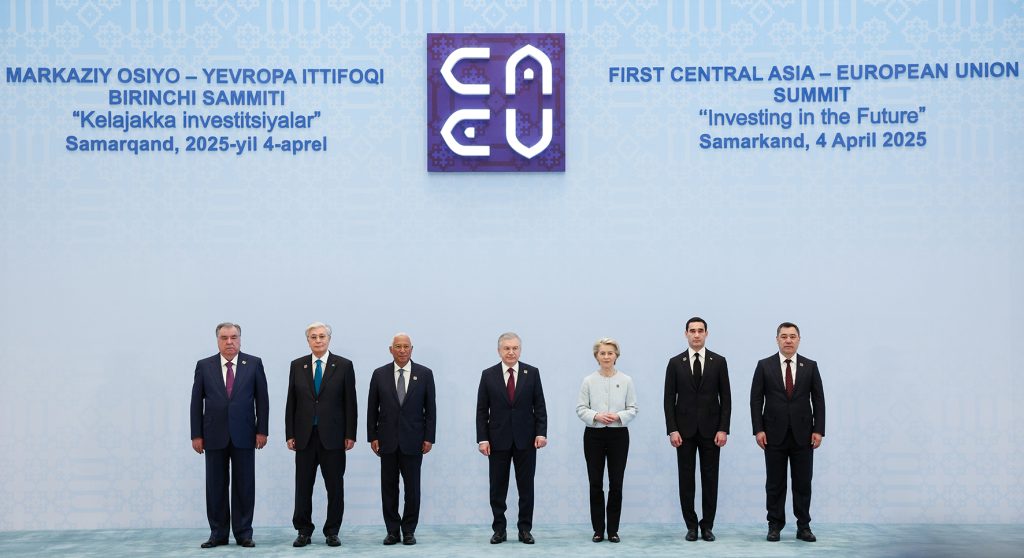
On 10 April 2025 Civil Rights Defenders, along with seven other international human rights organizations, commend the commitments made at the EU-Central Asia Summit in Samarkand. We urge Central Asian leaders to prioritize human rights and uphold the civil and political freedoms enshrined in their national constitutions and international treaties. The commitments to peace, security, democracy, and the elevation of relations to a strategic partnership must be matched by concrete actions to protect human rights.
On Friday, April 4, the Uzbek city of Samarkand hosted the first ever EU – Central Asia Summit where high-level officials – all five regional presidents and European Council President António Costa and European Commission President Ursula von der Leyen – discussed economic cooperation and agreed to bring their existing partnership to a new strategic level. At the end of the summit, participants issued a joint declaration that, among others, stated their commitment to freedom of expression and association, creating an enabling environment for civil society and independent media, protection of human rights defenders, as well as to respecting the rights of women and children. According to an official press release, the European Commission promised to invest €12 billion in the region to strengthen transport links and deepen cooperation on critical raw materials, digital connectivity, water, and energy.
Paragraph 3 of the joint declaration says: “We are committed to cooperate for peace, security, and democracy, to fully respect international law, including the UN Charter and the fundamental principles of respect for the independence, sovereignty and territorial integrity of all States, within their internationally recognised borders. We emphasised the importance of achieving as soon as possible, a comprehensive, just, and lasting peace in Ukraine in accordance with the principles of the Charter of the United Nations. We emphasized the need to uphold the principles of the OSCE by the participating States. We reconfirmed the obligation of all States to refrain in their international relations from the threat or use of force, to respect international humanitarian law and underlined the need for peaceful resolution of conflicts.”
In paragraph 16, the “EU and Central Asian leaders reiterated that the promotion and protection of rule of law, human rights and fundamental freedoms is a common fundamental value. Ensuring freedom of expression and association, an enabling environment for civil society and independent media, protection of human rights defenders as well as the respect for the rights of women, the rights of the child, and labor rights remain at the core of EU–Central Asia relations. The EU reiterated its readiness to support efforts in this regard at regional as well as at national level.”
Furthermore, in paragraph 15 the “Participants affirmed the need for their continued commitment to enhanced cooperation and the development of new approaches in the joint fight against organised crime, violent extremism, radicalisation, terrorism, drug trafficking, trafficking in human beings, migrant smuggling, cyber threats, including cybercrime and disinformationas well as addressing Chemical, Biological, Radiological and Nuclear risks whilst safeguarding human rights and media freedom [emphasis added].”
Civil Rights Defenders, International Partnership for Human Rights (IPHR), Araminta, Freedom Now, Norwegian Helsinki Committee, People in Need, International Federation for Human Rights (FIDH), and the World Organisation Against Torture (OMCT) welcome these declared commitments and urge the leaders of each Central Asian nation to take immediate steps to fulfill their promises. They should start by releasing from prison all journalists, bloggers, lawyers, human rights defenders, civil society activists, and political opponents who have been prosecuted and convicted on retaliatory and unsubstantiated charges. They should also repeal legislation containing provisions that directly contradict their declared commitment to human rights standards.
The Central Asian governments should also end–and establish safeguards to prevent–the misuse of anti-extremism and anti-disinformation policies and security tools to restrict, persecute, and/or criminalize legitimate civil society activity. While enhanced cooperation in the joint fight against organized crime, violent extremism and terrorism, and disinformation are a welcome development, these types of laws and cooperation initiatives have been instrumentalized by the Central Asian governments against legitimate civil society actors, media and political opposition activists, including for imprisonment on lengthy sentences and transnational repression extending to the territory of the European Union.
In particular:
In Kazakhstan, President Kassym-Jomart Tokayev should order the release from custody of activist Aigerim Tleuzhanova, political opposition party leader Marat Zhylanbayev, satirist blogger Temirlan Ensebek, and labor rights activist Erzhan Elshibayev among others prosecuted on politically motivated charges, We believe that these individuals were targeted in direct retaliation for exercising their civil and political rights, and authorities have failed to provide any credible evidence to support the allegations levelled against them. Kazakh authorities should repeal or thoroughly revise broadly worded criminal code provisions penalising the involvement in ‘’extremist’’ activities, ‘’incitement’’ to discord and the spread of ‘’false’’ information, which are frequently misused to target critics, including in some of the cases mentioned above. Kazakh authorities should also drop their declared plans to adopt a so-called “foreign agents’” law, cease the public attacks on the LGBTIQ community, and end reprisals against NGOs-recipients of foreign grants.
In Kyrgyzstan, it is welcome that President Sadyr Japarov pardoned Temirov Live associated journalist Azamat Ishenbekov this week, although he should not have been imprisoned in the first place. Authorities should also quash the charges against his colleagues convicted on similar charges, releasing Makhabat Tajibek Kyzy and lifting the probational sentences imposed on Aike Beishekeyeva and Aktilek Kaparov. We believe all four journalists were targeted in retaliation for their critical opinions and independent journalism. Authorities should also release independent journalist Kanyshay Mamyrkulova and drop the criminal charges initiated against her and others in apparent retaliation for social media posts critical of the government. In addition, they should reverse the court ruling that ordered the liquidation of independent news organization Kloop Media and stop pressuring other independent media. They should repeal the law on so-called “foreign representatives” and revoke vaguely worded provisions that prohibit the dissemination of “false’’, defamatory or insulting information, as well as content that ‘’promotes non-traditional sexual relations’’. This legislation severely violates the fundamental freedoms of expression, association, and assembly.
In Tajikistan, President Emomali Rakhmon should take immediate steps to release from prison the eight independent journalists Rukhshona Hakimova, Abdusattor Pirmuhammadzoda, Ahmad Ibrohim, Abdullo Ghurbati, Daler Imomali, Khurshed Fozilov, Khushom Gulyam, and Zavqibek Saidamini. Human rights activists and lawyers Ulfatkhonim Mamadshoeva, Buzurgmehr Yorov, Manuchehr Kholiknazarov, and Faromuz Irgashov should also be freed without delay. By imprisoning these individuals the Tajik authorities have cemented a climate of fear among civil society actors – a record that must be reversed. Tajik authorities should also cease its continued crackdown in the Gorno-Badakshan Autonomous Region and its systematic use of transnational repression to target government opponents abroad, including in EU countries. Several individuals who were forcibly returned to Tajikistan in 2024 were tortured, arrested and handed lengthy prison sentences after closed trials.
In Turkmenistan, President Serdar Berdimuhamedov should take concrete steps to rectify his government’s extremely poor human rights record, free political prisoners, and allow space for an independent civil society to develop. The government should publicly declare tolerance towards criticism in the media and end wide ranging internet censorship. Authorities should immediately end attacks and harassment of critics of the regime both inside the country and abroad, including veteran human rights defender and journalist Soltan Achilova, who has repeatedly been barred from leaving the country. They should also decriminalize homosexuality while adopting legislation to criminalize domestic violence.
We urge the leaders of each Central Asian nation to demonstrate that they have the political will to deliver on their declared commitments made at the Samarkand summit and to respect human rights and civil and political freedoms protected by their national constitutions and international treaties ratified by them. We call on the EU to ensure that the commitments expressed in the joint declaration are followed through and that Central Asian governments are held accountable for violations of their human rights obligations under EU cooperation instruments, including bilateral partnership and cooperation agreements and preferential trade schemes. In line with the EU’s value-based partnership with the Central Asian countries, advancing connectivity, trade, and investment should go hand in hand with efforts to promote concrete progress in human rights and rule of law in these countries. The steps listed above are merely a suggested choice of actions that we urge the Central Asia governments to implement without delay. Much more needs to be done for addressing past and ongoing abuses that respect and protect citizens’ rights and freedoms.
The European Parliament’s Sakharov Fellowship is offering up to 14 human rights defenders selected from non-EU countries the opportunity to follow an intensive two-week training in Brussels and at the Global Campus of Human Rights in Venice.
The empowering programme for human rights defenders has been organised annually since 2016, further to an initiative taken by the Sakharov Prize Community at the 25th Anniversary Conference of the Sakharov Prize.
The Brussels programme focuses on EU policies and tools in support of human rights defenders, accessing funding, developing communications skills, and raising awareness of specific security challenges facing human rights defenders. It further includes meetings with Members of Parliament, officials of the EU institutions and Brussels-based NGOs. The Fellows will also have space for individual advocacy and networking activities.
Training at the Global Campus of Human Rights in Venice combines academic teaching on international human rights law, instruments and mechanisms, with case studies, and provides practical tools for improving the work of human rights defenders to effect change on the ground. Lecturers include prominent academics, representatives of leading human rights NGOs, Sakharov Prize laureates and other outstanding human rights practitioners.
The programme will be organised in person in Brussels and Venice.
Candidates should have a proven record in campaigning for human rights in an NGO or other organisation or in an individual capacity. They must have a high level of English, sufficient to follow and contribute to discussion groups and workshops in Brussels and Venice.
The Fellowship covers return travel from the country of origin, accommodation in Brussels and Venice and a daily living allowance.
Democratic leader María Corina Machado and exiled presidential candidate Edmundo González won the top human rights award for representing all Venezuelans who are “fighting for the restoration of freedom and democracy.” | Marcelo Perez del Carpio/Getty Images
The European Parliament on Thursday 24 October 2024 awarded the Sakharov Prize to Venezuela’s opposition leaders. Democratic leader María Corina Machado and exiled presidential candidate Edmundo González won the top human rights award for representing all Venezuelans who are “fighting for the restoration of freedom and democracy.”
The Venezuelan opposition leaders were nominated by the center-right European People’s Party (EPP) and the hard-right European Conservatives and Reformists (ECR). The far-right Patriots group rallied behind them after their original candidate, tech billionaire Elon Musk, failed to make the shortlist for the prestigious prize.
After Venezuela’s elections in late July, in which incumbent socialist President Nicolás Maduro declared victory for another term, the European Union’s foreign service said it would not recognize the results because the government had failed to release supporting voting records from polling stations.
The authoritarian Maduro’s disputed declaration of victory sparked massive opposition protests and a violent government crackdown that left more than two dozen people dead and nearly 200 injured.
Later, presidential candidate González — who fled to Madrid during the crackdown — was recognized by the European Parliament as the country’s legitimate leader.
Two other finalists made the shortlist. One was Gubad Ibadoghlu, a jailed Azerbaijani dissident and critic of the fossil fuel industry nominated by the Greens. The other finalist was a joint nomination of Israeli and Palestinian peace organizations Women Wage Peace and Women of the Sun. The groups, who announced a partnership in 2022, were nominated by the Socialists and the Renew group.
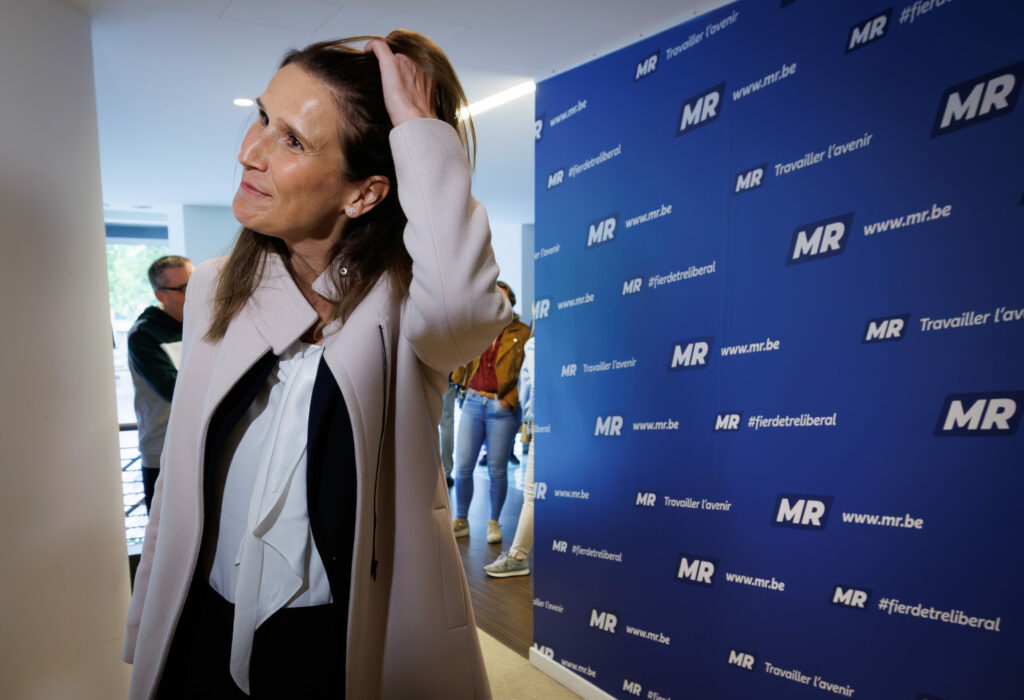
MR’s Sophie Wilmès (Renew). Credit: Belga/Benoit Doppagne
Human rights, democracy and the rule of law are at the heart of the powers that were delegated to Belgian Vice-President of the European Parliament Sophie Wilmès (Renew), President Roberta Metsola announced during the September plenary session in Strasbourg.
Metsola announced the powers delegated to the different vice-presidents for their two-and-a-half-year mandate. For Belgium’s Wilmès, there was a strong emphasis on human rights, democracy and the rule of law.
“Defending our fundamental values is a priority for me. With the democratic model clearly under threat around the world and under attack from all sides in Europe by those who indulge in authoritarian adventures, we democrats must show ourselves combative,” she said. “We are talking about the great inviolable principles that are part of our identity as Europeans. That is non-negotiable.“
In practice, Wilmès’ powers will take form in her work within the Democracy Support and Elections Coordination Group, which focuses on election observation and supporting parliaments to strengthen democracy and the rule of law in third countries, especially candidate countries.
She will also develop mediation initiatives to promote a culture of dialogue and support proponents of democratic change and human rights defenders. Additionally, she will represent the European Parliament at the United Nations, where it remains important to raise these issues.
In the study The Landscape of Public International Funding for Human Rights Defenders, released on 12 June 2024, ProtectDefenders.eu sheds light on the critical challenges faced by human rights defenders (HRDs) worldwide, specifically focusing on their financing by public actors.
The research, which combines an analysis of financial data over a period of four years with interviews, investigations, and input from defenders, underscores the pressing need for greater financial support and resources to safeguard the invaluable work of human rights defenders in promoting and protecting human rights globally.
The ProtectDefenders.eu study reveals and documents a concerning trend: while the need for support for HRDs has never been greater, funding levels have stagnated, with only marginal increases observed over the examined period. Despite rhetoric emphasising the importance of prioritising human rights prioritisation, the actual allocation of resources has failed to keep pace with the deteriorating global situation, representing a mere 0.11% of total Official Development Assistance (ODA) annually.
Key findings from the study include:
Disparity in funding: While some donors have demonstrated a strong commitment to supporting HRDs, others have allocated minimal resources, with wide variations observed among donor contributions. This disparity is also evident among different groups of defenders and thematic areas, as well as in funding dynamics by region, with a concerning decrease in attention to the MENA region
Challenges in accessing funds: HRDs continue to face obstacles in accessing international funds, including restrictive funding requirements and bureaucratic hurdles
Need for core funding: There is a critical need for core, flexible, and sustainable funding to enable HRDs to effectively carry out their vital work
Lack in localisation efforts: The study emphasises the importance of localising HRD protection programs and ensuring that funding reaches grassroots organisations and movements.
“This research underscores the urgent need for action to better support human rights defenders and is a call to action for donors, policymakers, and stakeholders to stand in solidarity with human rights defenders,” said Gerald Staberock, Chair of the Board of ProtectDefenders.eu and Secretary-General of the World Organisation against Torture. “HRDs play a vital role in advancing human rights and democracy worldwide, yet they continue to face increasing risks and challenges. It is imperative that donors and stakeholders heed the recommendations outlined in this study to ensure that HRDs receive the support they need to carry out their crucial work.”
In response to these findings, the study presents a series of detailed recommendations aimed at addressing the funding gap and improving support for HRDs. These recommendations include increasing overall funding levels, reducing restrictions on grants, enhancing political and diplomatic support, and investing in donors’ own capacities to better understand the needs and contexts of HRDs.
ProtectDefenders.eu issues a clear call to all donors and public actors to urgently address this situation. Specifically, the demands include:
Increase in public funding: Advocating for an increase in public funding for HRDs from 0.11% to 0.5% for the period 2025-2028.
Building trust through core grants: Urging for more core grants with reduced restrictions, audits, lower result expectations, and extended support horizons.
Directing more grants locally: Advocating for a higher proportion of grants to be allocated to local NGOs to ensure funding reaches grassroots organizations and movements.
Establishment of HRD principles for regranting: Calling upon the community of donors and financiers of HRD work to establish HRD Principles for Regranting, outlining guidelines for more effective and equitable distribution of funds.




 Hans Thoolen on Human Rights Defenders and their awards
