Archive for the 'human rights' Category

Positioning China as THE threat, overlooks the bigger issues within democracies

August 7, 2021

Zack Beauchamp in VOX of 28 July 2021 makes a strong but perhaps controversial plea that “In the fight for democracy’s future, Indian and American politics is more important than anything China is doing“:

Donald Trump and Narendra Modi shaking hands while standing in front of US and Indian flags.
Donald Trump and Narendra Modi.

One of the emerging tenets of the Biden presidency is that the United States and China are locked in ideological conflict over the fate of democracy.

In March, during his first press conference as president, he declared that “this is a battle between the utility of democracies in the 21st century and autocracies.” In April, during his first address to a joint session of Congress, he labeled this struggle “the central challenge of the age” — and that China’s Xi Jinping is “deadly earnest about becoming the most significant, consequential nation in the world.”

More recently, in last week’s CNN town hall, he warned that Xi “truly believes that the 21st century will be determined by oligarchs, [that] democracies cannot function in the 21st century. The argument is, because things are moving so rapidly, so, so rapidly that you can’t pull together a nation that is divided to get a consensus on acting quickly.”

Inasmuch as there is a Biden doctrine, the notion that the US needs to protect democracy from China’s authoritarian model is at the center of it. “Biden’s administration [is] framing the contest as a confrontation of values, with America and its democratic allies standing against the model of authoritarian repression that China seeks to impose on the rest of the world,” Yaroslav Trofimov writes in the Wall Street Journal.

Biden’s thinking captures an important insight: that the struggle over democracy’s fate will be one of the defining conflicts of the 21st century. But his analysis is crucially flawed in one respect: China is not an especially important reason why democracy is currently under threat — and centering it is not only wrong, but potentially dangerous.

In countries where democracy is at real risk of collapse or even outright defeated — places like India, Brazil, Hungary, Israel, and, yes, the United States — the real drivers of democratic collapse are domestic. Far-right parties are taking advantage of ethno-religious divides and public distrust in the political establishment to win electorally — and then twist the rules to entrench their own hold on power. Leaders of these factions, like former US President Donald Trump and Indian Prime Minister Narendra Modi, aid and abet each other’s anti-democratic politics.

More traditional authoritarian states, even powerful ones like China or Russia, have thus far played at best marginal roles in this struggle.

“Much of the recent global democratic backsliding has little to do with China,” Thomas Carothers and Frances Brown, two leading experts on democracy, write in a recent Foreign Affairs essay. “An overriding focus on countering China and Russia risks crowding out policies to address the many other factors fueling democracy’s global decline.”

This misdiagnosis has real policy stakes. Leaning into competition with China could lead the US to excuse anti-democratic behavior by important partners, like Modi or the Philippines’ Rodrigo Duterte, in a manner reminiscent of US relations with anti-communist dictators during the Cold War. Moreover, too much emphasis on competition with China could distract from the place where Biden has the most power to affect democracy’s fate — the home front, an area in which voting rights advocates increasingly see him as indefensibly complacent.

There are real problems associated with China’s rise. Its increasing military belligerence, predatory economic practices, and horrific human rights abuses in places like Xinjiang are all very serious concerns. But the fact that China is the source of many real issues doesn’t mean it’s the source of democratic erosion worldwide — and positioning it as such will do little to advance the democratic cause.

Democracies are rotting from within, not without

In his public rhetoric, Biden often argues that the US needs to prove that democracy “works” — that it can “get something done,” as he said last week — in order to outcompete the Chinese model.

While he hasn’t spelled out the nature of this competition all that precisely, the concern seems to center on Chinese policy success: that its rapid economic growth and authoritarian ability to make swift policy changes will inspire political copycats unless democracies prove that they can also deliver real benefits for their citizens.

“I believe we are in the midst of an historic and fundamental debate about the future direction of our world,” the president wrote in a March letter outlining his national security strategy. “There are those who argue that, given all the challenges we face, autocracy is the best way forward. And there are those who understand that democracy is essential to meeting all the challenges of our changing world.”

But at this point, the fear of Chinese political competition is mostly hypothetical. While the Chinese government and state media frequently tout the superiority of its political model to American-style democracy, there’s little evidence that these efforts are all that influential globally — and certainly not in the countries where democracy is most at risk.

A look back at the Soviet Union, the last major challenge to the hegemony of liberal democracy, is telling. ln ideological terms, there’s no comparison: Soviet communism was a far more powerful model than Chinese authoritarian state capitalism is today.

CHINA-BEIJING-XI JINPING-JULY 1 MEDAL-AWARD CEREMONY (CN)
Xi Jinping.

Marxist ideals inspired revolutionary Communist movements and governments around the globe, successfully toppling Western-backed governments in countries ranging from Cuba to Vietnam to China itself. By contrast, there are vanishingly few foreign governments or even political parties today openly vowing to emulate modern China. While the Soviets had the Iron Curtain in Europe, modern China’s most notable client state is North Korea — perhaps the most isolated and mistrusted government on the planet.

In the countries that observers worry most about — established democratic states experiencing “backsliding” toward authoritarianism — Chinese influence is minimal at best.

In backsliding democracies, authoritarian-inclined leaders win and hold power through the electoral system for domestic reasons. Corruption scandals in India and Hungary, violent crime in the Philippines, a racist backlash against America’s first Black president: These are some of the key factors in the rise of authoritarian populists, and they weren’t created or even significantly promoted by China.

Elected authoritarians still bill themselves as defenders of democracy while in power — even after they start undermining the electoral system with tactics like extreme gerrymandering and takeovers of state election agencies. Their political appeal isn’t grounded in an overt rejection of democracy in favor of a Chinese model, but rather a claim to be taking democracy back from corrupt elites in the name of the “true” people, typically defined in ethno-nationalist terms.

The ideology driving modern democratic decline is vastly different from the sort that China promotes at home and through official state media. It represents a home-grown challenge inside the democratic world, rather than an externally stoked, Cold War-style threat.

That’s not to say China does nothing to undermine democracy outside its borders. It has, for example, exported surveillance technology and provided training in “cybersecurity” for foreign officials that amount to teaching them tools for controlling public opinion — underscoring its role as a global pioneer in using technology to repress dissent.

Yet even in this area, China’s influence can easily be overstated. Backsliding countries typically do not ban websites outright or arrest online dissidents in the way China does. Instead, they rely on spreading misinformation and other more subtle uses of state power. When they do use more traditional authoritarian tools, they often don’t need China’s help in doing so — as shown by recent reporting on Israel’s NSO Group, a company with close links to the Israeli state that sold spy software to India and Hungary (whose governments allegedly used it to surveil journalists and opposition figures).

In his recent book The Rise of Digital Repression, Carnegie Endowment scholar Steven Feldstein attempts to systematically document the use of digital tools and tactics for undermining democracy around the world. He found that while such practices were indeed becoming more widespread, this is largely due to domestic factors in authoritarian and backsliding countries rather than Chinese influence.

“China really wasn’t pushing this technology any more so than other countries were pushing advanced technology or censorship technologies,” he told me in an interview earlier this year. “What I saw — when I spoke on the ground to intelligence officials, government officials, and others — was that there were many other factors at play that were much more determinative in terms of whether they would choose to purchase a surveillance system or use it than just the fact that China was trying to market it.”

The problem with blaming China for democracy’s crisis

Biden and his team recognize that many of the challenges to democracy have domestic roots. But in casting the rise of anti-democratic populism as part of a grander ideological struggle against an authoritarian Chinese model, they conflate two distinct phenomena — and risk making some significant policy errors.

Again, an analogy to the Cold War is helpful here. One of the most grievous errors of America’s containment policy was its repeated willingness to align itself with anti-communist dictators. The perceived need to stop the expansion of Soviet influence consistently trumped America’s commitment to democracy — with horrific consequences for the people of Iran, Argentina, Indonesia, and Bangladesh (to name just a handful of examples from a very long list).

The more China is treated like the new Soviet Union — the principal ideological threat to democracy whose influence must be curtailed — the more likely the US is to repeat that mistake.

Take India, for example. In the past six months, Biden has courted Modi’s government as a potential counterweight to China. “There are few relationships in the world that are more vital than one between the U.S. and India. We are the world’s two leading democracies,” Secretary of State Antony Blinken said in a July 28 press conference in New Delhi.

Yet this is an Indian government that has assailed the rights of its Muslim citizens, strong-armed US social media companies into removing critical posts, and arrested a leading protest figure. Earlier this year, V-Dem — a research group behind the leading academic metric of democracy — announced that India under Modi was an “electoral autocracy,” rather than a true democracy. It’s easy to see how an emphasis on China could lead to these problems getting swept under the rug.

“There has long been a bipartisan consensus in Washington that India is a critical ally in its attempt to check Chinese influence in Asia,” the Indian intellectual Pankaj Mishra wrote in a June Bloomberg column. “In overlooking the Modi government’s excesses, Biden probably counts on support from a US foreign policy establishment invested more in realpolitik than human rights.”

If you take the notion that democracy’s crisis is emerging from within seriously, then it follows that very best thing that Biden could do for democracy’s global future has nothing to do with China or even foreign policy. It’s arresting creeping authoritarianism at home.

Black Voters Matter Protest
Cliff Albright, co-founder of Black Voters Matter, and Rep. Hank Johnson (D-GA) are arrested during a protest to support voting rights outside of Hart Senate Office Building on Thursday, July 22, 2021.

Biden has acknowledged this at times, writing in his March letter that his global strategy “begins with the revitalization of our most fundamental advantage: our democracy.” And yet that urgency hasn’t translated into action — legislation necessary to safeguard American democracy from the GOP’s increasingly anti-democratic politics appears stalled out. Biden, for his part, has refused to publicly endorse more aggressive action to break the logjam — like abolishing the filibuster for voting rights bills.

The New York Times recently reported that “in private calls with voting rights groups and civil rights leaders, White House officials and close allies of the president have expressed confidence that it is possible to ‘out-organize voter suppression’” — an implausible claim that reflects an administration that, according to activists, has “largely accepted the Republican restrictions as baked in and is now dedicating more of its effort to juicing Democratic turnout.”

Shoring up American democracy after the recent attacks it has suffered should be the top priority of any US government concerned with democracy’s global fate. But for all of Biden’s lofty language about out-competing China and winning the future for democracy, there’s a striking lack of urgency when it comes to the perhaps the most important backsliding country — his own.

In this sense, China has very little influence over the future of democracy globally. The key battles are happening not in the South China Sea or the Taiwan Strait, but in the legislatures of New Delhi and Washington. If there really is to be a grand struggle for democracy’s survival in the 21st century, it needs to start there.

https://www.vox.com/policy-and-politics/22590777/biden-china-democracy-voting-india-doctrine
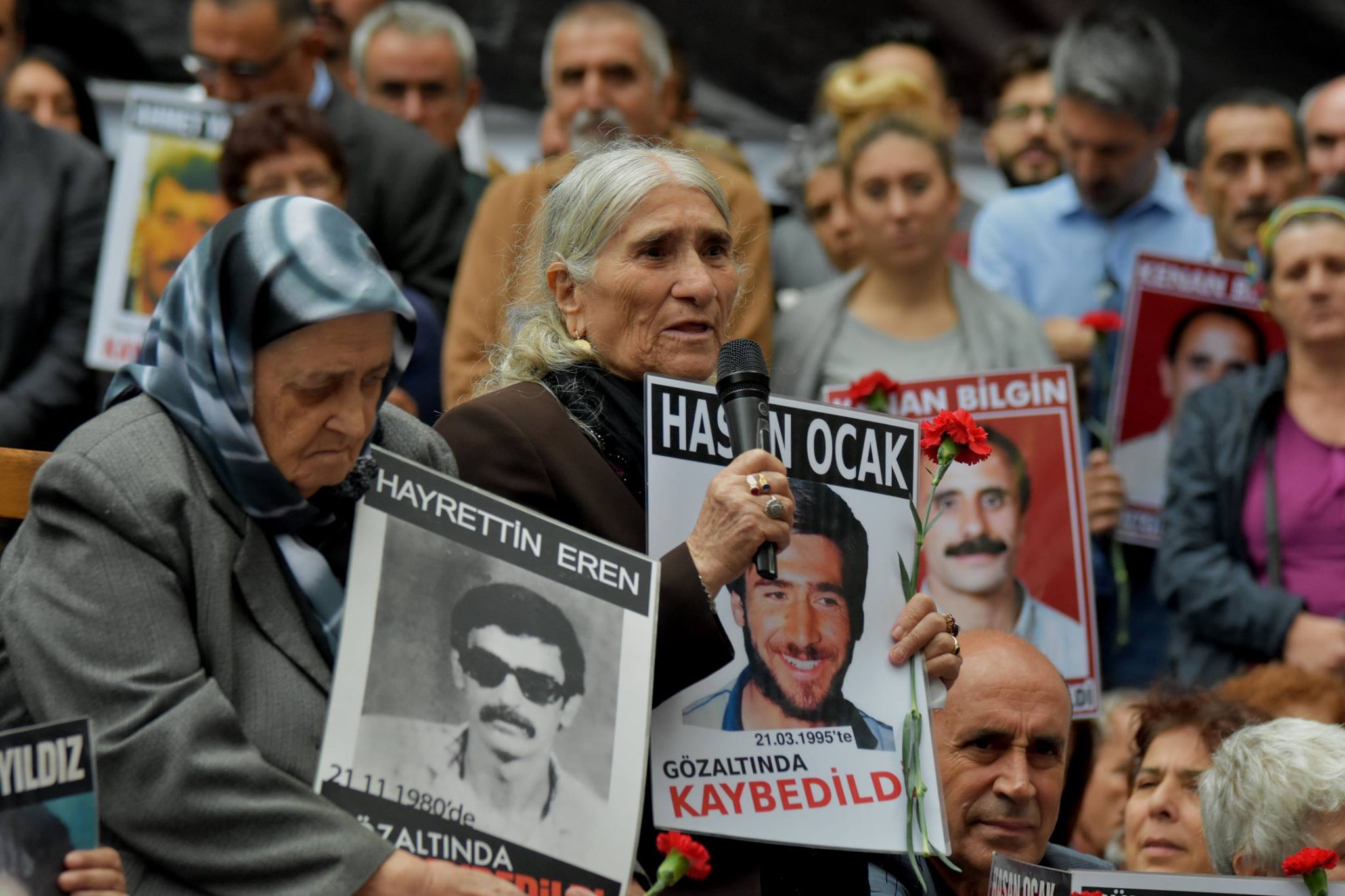
Saturday Mothers charged in Istanbul

August 7, 2021

On 12 July 2021, the case against the 46 human rights defenders and activists, which includes the families of the disappeared and supporters continued at the Istanbul 21st Criminal Court of First Instance. They were charged with violating the Law on Assemblies and Demonstrations for “unarmed participation in an unauthorised assembly and refusal to disperse after warnings” (Article 32 of the Law 2911). The case was filed following the violent arrest of the 46 people and one minor by the police during the 700th gathering of the Saturday Mothers/People on 25 August 2018.

On 18 November 2020, an Istanbul court of first instance filed a lawsuit against 46 people who were arrested on 25 August 2018 during the violent police intervention at the 700th gathering of Saturday Mothers/People in Istanbul’s Galatasaray Square.

On 25 August 2018, police forcibly dispersed the Saturday Mothers’ weekly vigil and detained 47 protesters, including families of the victims of enforced disappearances in the 90s. The detained protesters were released from police custody later that day.

About the situation:

On 12 July 2021, the case against the 46 human rights defenders and activists, which includes the families of the disappeared and supporters of Saturday Mothers/People, continued at the Istanbul 21st Criminal Court of First Instance. They were charged with violating the Law on Assemblies and Demonstrations for “unarmed participation in an unauthorised assembly and refusal to disperse after warnings” (Article 32 of the Law 2911). The case was filed following the violent arrest of the 46 people and one minor by the police during the 700th gathering of the Saturday Mothers/People on 25 August 2018.

On 18 November 2020, an Istanbul court of first instance filed a lawsuit against 46 people who were arrested on 25 August 2018 during the violent police intervention at the 700th gathering of Saturday Mothers/People in Istanbul’s Galatasaray Square.

On 25 August 2018, police forcibly dispersed the Saturday Mothers’ weekly vigil and detained 47 protesters, including families of the victims of enforced disappearances in the 90s. The detained protesters were released from police custody later that day.

Cumartesi Anneleri/İnsanları: Saturday Mothers/People is a human rights group, comprised of human rights defenders and families of victims of enforced disappearance in Turkey in the 1990s. They began organising weekly vigils at Galatasaray Square after the detention of Hasan Ocak on 21 March 1995 and the subsequent discovery of his tortured body in a common grave. Human rights defenders and the families of the victims gathered in Galatasaray Square for the first time on 27 May 1995, demanding an end to enforced disappearances, seeking information on the whereabouts of those who have disappeared and justice for the victims. See: https://en.wikipedia.org/wiki/Saturday_Mothers

In the meatime in Malta, two Turkish mothers who were jailed and separated from their young sons for using forged passports have been freed as Court overturned their prison sentence. The women, Rabia Yavuz, 27, and Muzekka Deneri, 29, have been fighting to be reunited with their sons – aged two and four – after being sentenced to six months in prison. 

The two women were freed on Friday afternoon after having ear.lier this week filed an appeal against the ‘disproportionate and excessive’ punishment. They admitted to using fake travel documents, saying they could not return to their country because of political persecution. Moreover, the two women, who were separated from their sons, are in the process of applying for asylum.

https://www.frontlinedefenders.org/en/case/saturday-motherspeople-court-second-hearing

https://timesofmalta.com/articles/view/court-to-decide-whether-to-free-turkish-mothers-today.891802

Results of 47th session of the Human Rights Council

August 7, 2021

The ISHR and 17 other organisations (see below for their names) share reflections on the key outcomes of the 47th session of the UN Human Rights Council, as well as the missed opportunities to address key issues and situations. See also: https://humanrightsdefenders.blog/2021/06/22/key-issues-affecting-hrds-in-47th-session-of-un-human-rights-council-june-2021/

CIVIL SOCIETY PARTICIPATION

We deplore the systemic underfunding of the UN human rights system and the drive for so-called efficiency, including the cancellation of general debates in June, which are a vital part of the agenda by which NGOs can address the Council without restrictions. We call for the reinstatement of general debates at all sessions, with the option of civil society participation through video statements.  We welcome the focus of the civil society space resolution on the critical role played by civil society in the COVID-19 response, and the existential threats to civil society engendered or exacerbated by the pandemic. For the resolution to fulfil its goal, States must now take action to address these threats; while we welcome the broad support indicated by a consensus text, this cannot come at the cost of initiatives that will protect and support civil society.

HUMAN RIGHTS ONLINE

We welcome a resolution on the promotion, protection and enjoyment of human rights on the Internet and its thematic focus on bridging digital divides, an issue which has become ever-important during the COVID-19 pandemic. We urge all States to implement the resolution by taking concrete measures to enhance Internet accessibility and affordability and by ceasing Internet shutdowns and other disruptions, such as website blocking and filtering and network throttling. In future iterations of the text, we encourage the core group to go further in mentioning concrete examples that could be explored by States in adopting alternative models for expanding accessibility, such as the sharing of infrastructure and community networks.  We welcome the resolution on new and emerging digital technologies and human rights, which aims to promote a greater role for human rights in technical standard-setting processes for new and emerging digital technologies, and in the policies of States and businesses. While aspects of the resolution risk perpetuating “technology solutionism”, we welcome that it places a stronger focus on the human rights impacts of new and emerging digital technologies since the previous version of the resolution, such as introducing new language reiterating the importance of respecting and promoting human rights in the conception, design, use, development, further deployment and impact assessments of such technologies.

GENDER EQUALITY AND NON-DISCRIMINATION

We are concerned by the increasing number of amendments and attempts to weaken the texts. We are particularly concerned by the continued resistance of many States to previously adopted texts and States’ willful misinterpretation of key concepts related in resolutions on human rights in the context of HIV and AIDS, accelerating efforts to eliminate all forms of violence against women and girls: preventing and responding to all forms of violence against women and girls with disabilities and preventable maternal mortality and morbidity and human rights on maternal morbidities. We deplore the instrumentalising of women’s rights and sexual and reproductive health and rights. We encourage States to center the rights of people most affected and adopt strong texts on these resolutions. We welcome the resolution on menstrual hygiene management, human rights and gender equality as the first step in addressing deep-rooted stigma and discrimination. We urge all States to address the root causes for the discrimination and stigma on menstruation and its impact.

RACIAL JUSTICE AND EQUALITY

The High Commissioner’s report highlighted the long-overdue need to confront legacies of slavery, the transatlantic trade in enslaved Africans and colonialism and to seek reparatory justice. We welcome the historic consensus decision, led by the Africa Group, to adopt a resolution mandating an independent international expert mechanism to address systemic racism and promote racial justice and equality for Africans and people of African descent. The adoption of this resolution is testament to the resilience, bravery and commitment of victims, their families, their representatives and anti-racism defenders globally. We deplore efforts by some Western States, particularly former colonial powers, to weaken the text and urge them to now cooperate fully with the mechanism to dismantle systemic racism, ensure accountability and reparations for past and present gross human rights violations against Black people, end impunity for racialized State violence and address the root causes, especially the legacies of enslavement, colonialism, and the transatlantic trade in enslaved Africans.

MIGRANTS RIGHTS

Whilst we welcome the return of a resolution on human rights of migrants, we deplore the continued failure of the Council to respond meaningfully to the severity and global scale of human rights violations at international borders including connected to pushbacks. International borders are not and must not be treated as places outside of international human rights law. Migrants are not and must not be treated as people outside of international human rights law. Expressions of deep concern in interactive dialogues must be translated into action on independent monitoring and accountability.

ARMS TRANSFERS AND HUMAN RIGHTS

We welcome the resolution on the impact of arms transfers on human rights and its focus on children and youth. However, we note with concern the resistance of the Council to meaningfully focus on legal arms transfers beyond those diverted, unregulated or illicitly transferred. The Council should be concerned with all negative human rights impacts of arms transfers, without focusing only on those stemming from diversion and unregulated or illicit trade.

CLIMATE CHANGE

We are disappointed that the resolution on human rights and climate change fails to establish a new Special Rapporteur. However, we welcome the increasing cross regional support for a new mandate. It is a matter of urgent priority for the Council to establish it this year.

COUNTRY SPECIFIC SITUATIONS

ALGERIA

While special procedures, the OHCHR and multiple States have recognized the intensifying Algerian authorities’ crackdown on freedom of association and expression, the Council failed to act to protect Algerians striving to advance human rights and democracy.

BELARUS

We welcome the renewal of the mandate of the UN Special Rapporteur on Belarus. Given the ongoing human rights crisis in Belarus, the mandate complements the OHCHR Examination in ensuring continuous monitoring of the situation, and the mandate remains an accessible and safe channel for Belarusian civil society to deliver diverse and up-to-date information from within the country.

CHINA

The Council has once again failed to respond meaningfully to grave human rights violations committed by Chinese authorities. We reiterate our call on the High Commissioner and member States to take decisive action toward accountability.

COLOMBIA

We are disappointed that few States made mention of the use of excessive force against protestors in a context of serious human rights violations, including systemic racism, and urge greater resolve in support of the right to freedom of peaceful assembly in the country and globally

ETHIOPIA

The resolution on Ethiopia’s Tigray region, albeit modest in its scope and language, ensures much-needed international scrutiny and public discussions on one of Africa’s worst human rights crises. We urge the Ethiopian government to engage ahead of HRC48.

ERITREA

We welcome the extension of the mandate of the Special Rapporteur on Eritrea, as scrutiny for violations committed at home and in Tigray is vital.

NICARAGUA

We warmly welcome the joint statement delivered by Canada on behalf of 59 States, on harassment and detention of journalists, human rights defenders, and presidential pre-candidates, urging Nicaragua to engage with the international community and take meaningful steps for free and fair elections. States should closely monitor the implementation of resolution 46/2, and send a strong collective message to Nicaragua at the 48th session of the Council, as the Council should ‘urgently consider all measures within its power’ to strengthen human rights protection in the country.

PALESTINE

We welcome the Special Rapporteur’s report that “Israeli settlements are the engine of this forever occupation, and amount to a war crime,” emphasizing that settler colonialism infringes on “the right of the indigenous population […] to be free from racial and ethnic discrimination and apartheid.” We also reiterate his recommendation to the High Commissioner “to regularly update the database of businesses involved in settlements, in accordance with Human Rights Council resolution 31/36.”

THE PHILIPPINES

While acknowledging the signing of the Joint Human Rights Programme with the UN OHCHR, the Government of the Philippines fails to address the long-standing issues on law enforcement and accountability institutions, including in the context of war on drugs. We continue to urge the Council to launch the long-overdue independent and transparent investigation on the on-going human rights violations.

SYRIA

We welcome mounting recognition for the need to establish a mechanism to reveal the fate and whereabouts of the missing in Syria, including by UN member states during the interactive dialogue on Syria, and the adoption of the resolution on Syria addressing the issue of the missing and emphasizing the centrality of victim participation, building on the momentum created by the Syrian Charter for Truth and Justice.

VENEZUELA

In the context of the recent arbitrary detention of 3 defenders from NGO Fundaredes, we welcome the denunciation by several States of persistent restrictions on civil society and again for visits of Special Rapporteurs to be accepted and accelerated.

*American Civil Liberties Union, Association for Progressive Communications, Cairo Institute for Human Rights Studies, Centro de Estudios Legales y Sociales (CELS), Center for Reproductive Rights, Child Rights Connect, CIVICUS: World Alliance for Citizen Participation, Commonwealth Human Rights Initiative, Conectas Direitos Humanos, Egyptian Initiative for Personal Rights, FIDH, Franciscans International, Human Rights House Foundation, International Bar Association’s Human Rights Institute, International Commission of Jurists, International Lesbian and Gay Association, International Service for Human Rights, US Human Rights Network

https://ishr.ch/latest-updates/hrc47-civil-society-presents-key-takeaways-from-human-rights-council/

Team 29, prominent legal defense group in Russia, folds under state pressure

July 24, 2021

Tanya Lokot on 21 July 2021 in Global Voices wrote about the closure of Team 29:

For almost seven years, Team 29 (Komanda 29), a group of independent lawyers, attorneys, advocacy experts and journalists, has fought for the rights of Russian activists, political prisoners, and other citizens. On July 19, the group announced it was shutting down its operations in order to protect its staff and clients from possible criminal prosecution. See also: https://humanrightsdefenders.blog/2019/09/13/russian-human-rights-defenders-try-technology-and-gaming-innovations/

The decision to suspend their work comes after Russia’s internet regulator Roskomnadzor blocked Team 29’s website—allegedly, for publishing content produced by Spolecnost Svobody Informace (Freedom of Information Society), a Prague-based non-profit organisation which the Russian state had labelled as an “undesirable organisation” earlier in June 2021.

In a July 18 post on their Telegram channel, Team 29 said the Russian prosecutors had “conflated” the group with the Czech NGO (implying they were the same organisation), a charge that Team 29 denies.

While its lawyers plan to appeal the allegations as “arbitrary and contrived”, the group decided to act swiftly out of an abundance of caution to prevent further criminal charges against its staff, collaborators and supporters.

Under these circumstances, the continued activity of Team 29 poses a direct and obvious threat to the safety of many people, and we cannot ignore this risk. We are making the difficult decision to suspend the activity of Team 29. The attorneys and lawyers will continue to work on their client’s cases in a purely private capacity, unless the defendants refuse their services given the current situation.

We are closing all of the Team 29 media projects and purging the archive: all (!) texts, guides, reports, investigations, legal explainers, stories of political prisoners, court documents, interviews, podcasts, our literary project, our social media posts—the existence of this content online can be construed as “disseminating materials of an undesirable organisation” according to the logic that was used to block our website.

In their Telegram statement, the group also implored its supporters to delete any direct links or reposts of their content, as these could be interpreted as participating in the activity of an “undesirable organisation”. However, mentioning the organisation or sharing opinions about the situation was not illegal, according to the team.

Additionally, Team 29 said it was shutting down its crowdfunding efforts, and would refund subscribers for any funds that were unspent.

The founder of Team 29, Saint Petersburg-based lawyer Ivan Pavlov, is himself currently under investigation and facing felony charges for his work defending Russian journalist Ivan Safronov who is accused of treason. Though he now heads Team 29, Pavlov was previously the inaugural president of the Czech NGO, but hasn’t been involved with the Freedom of Information Society in any official capacity for the past five years.

Though it’s their digital footprint that is facing pressure from the authorities, Team 29 is best known for their legal support and human rights work in Russia. Writing on his own Telegram channel, Ivan Pavlov argued that it was this work on the ground, defending Russian citizens, that got Team 29 in trouble:

Our authorities have done everything to criminalize the activity and even our very name, Team 29. This is a peculiar sort of recognition of the effectiveness of our work and a compliment from our procedural opponents, who once again have been exhibiting unsportsmanlike behavior.

Founded in 2014 by Ivan Pavlov, a lawyer and freedom of information advocate, Team 29 has long been a thorn in Kremlin’s side. After authorities blacklisted Pavlov’s previous organisation, Institute for the Development of the Freedom of Information, as a “foreign agent”, Team 29 was born.

Since then, the group of defense lawyers, attorneys and reporters has taken on some of the most high-profile political cases in the country, including the trial of scientist Viktor Kudryavtsev on treason charges, the court battle around the designation of Alexey Navalny’s political movement and anti-corruption organisation as “extremist,” and the case of Karina Tsurkan, a former energy executive who was sentenced to 15 years in prison on espionage charges in December 2020.

Apart from defending political prisoners and activist groups in court, Team 29 has also published legal advice guides (archival link), spearheaded creative anti-corruption investigations, and even provided legal representation for a whistleblower from the infamous “troll factories” who took their Internet Research Agency to court in a labour dispute.

In an interview to independent Russian news website Meduza, Evgeny Smirnov, a lawyer formerly with Team 29, said that the latest events were likely “a cumulative effect” of all of their high-profile work. He said both he and Pavlov have received threats implying they were “like a bone in the throat not only for investigators, but also other people and state agencies”, so “that is why the decision was made to bomb us with everything they have”.

Despite the closure of their website, the group said its individual group members would continue their ongoing legal defense work as private individuals. According to Ivan Pavlov‘s Telegram post, Team 29 was “never a formal organisation, but rather a collective of like-minded people” and that “as long as there are people, there will be new ideas and new projects”.

The 3 human rights lawyers shortlisted for the L4L award

July 12, 2021

Lawyers from Myanmar and Belarus, and a lawyers’ collective from Algeria are shortlisted as finalists for the 2021 Lawyers for Lawyers Award. The 2021 Award will be presented to the laureate during a seminar hosted by Lawyers for Lawyers and the Amsterdam Bar Association in Amsterdam on 18 November 2021. The ceremony will also be live-streamed.

For more on the Lawyers for Lawyers Award and other awards for lawyers see: https://www.trueheroesfilms.org/thedigest/awards/B40861B3-0BE3-4CAF-A417-BC4F976E9CB0 .

The expert jury selected U Khing Maung Zaw from Myanmar, the Collective for the Defence of Hirak Detainees from Algeria and Maksim Znak and Liudmila Kazak from Belarus as finalists for the Award. The laureate of the Award will be announced later this year.

About the finalists

  • In Myanmar, U Khing Maung Zaw has courageously upheld the rule of law for more than five decades. He is currently representing leaders of the recently deposed Myanmar government and a number of other persons who have been arbitrarily detained on politically motivated criminal charges associated with the military coup in Myanmar beginning 1 February 2021. In this context of repression and danger, U Khin Maung Zaw remains committed to representing his clients.
  • Since February 2019, grassroots peaceful protests (the “Hirak”) have called for genuine democratic reform and rule of law in Algeria. In response, the government launched a campaign of arrests and judicial harassment against all those associated with this movement. The Collective for the Defence of Hirak Detainees, formed in July 2019 after the first wave of arrests, voluntarily and tirelessly defends those arbitrarily prosecuted, especially from marginalised backgrounds who cannot afford legal support.
  • In the aftermath of the 2020 presidential elections in Belarus, lawyers working on politically sensitive cases or cases of human rights violations were subjected to pressure, harassment and intimidation in connection to their professional activities. Maksim Znak and Liudmila Kazak represented human rights defenders and opposition leaders, and are paying a high price for their work. On 9 September 2020, Maksim Znak was taken into custody and is still being detained. On 19 February 2021, Liudmila Kazak was disbarred.

Urgent Action Fund for Women’s Human Rights provides quick relief

July 6, 2021

Christy Price on 30 June 2021 sets out the way the Urgent Action Funds works: The Urgent Action Fund for Women’s Human Rights works on behalf of women and LGBT+ human rights defenders at critical moments to get them the funding, protection, and strength they need to effect change quickly and without the bureaucracy.

People often speculate on where activists get the money to organize, educate and execute direct actions. Many times, they blame some “nefarious”, rich philanthropist for paying a group of people to protest in actions that lean their way politically. The truth is, at least for Women’s Human Rights Activists, much more nuanced. 

The Urgent Action Fund for Women’s Human Rights works on behalf of women and LGBT+ human rights defenders at critical moments to get them the funding, protection, and strength they need to effect change quickly and without the bureaucracy. 

The Urgent Action Fund For Women’s Human Rights is part of a larger project called the Global Philanthropy Project which is made up of 21 member organizations. The Urgent Action Fund is one of those member organizations. 

The Urgent Action Fund quickly funds women’s human rights defenders (WHRD) who are poised to make great gains and face serious threats to their work. Once a WHRD applies for a grant they receive a decision within 72 hours, with money on the ground being used to defend women and LGBT people within one to seven days. Activists can apply 24/7 and in any language. 

The Urgent Action Fund is led by activists rooted in feminism and strengthened through solidarity. Besides providing rapid response grantmaking, they help grassroots activists by advocacy and alliance building, as well as research and publications. They join a global consortium of Urgent Action Funds in Latin America and Africa. 

The Urgent Action Fund provides funding for direct action, political education, movement resilience, collective care, new grassroots frameworks and leadership building focused on women, transgender, gender diverse, youth and/or the historically marginalized. Collectively Urgent Action Fund support’s women’s rights and LGBT+ rights movements in more than 110 countries worldwide. 

If you are looking for funding for your organization or group, you can visit https://urgentactionfund.org/who-we-are/mission-history/ to learn more about this organization and to apply for a grant. You can also visit their Facebook and Twitter pages to see how you can get involved. The staff are all working remotely due to the COVID-19 pandemic but can be reached at 415-523-0360.

https://www.postnewsgroup.com/womens-human-rights-activists-receive-urgent-action-funds/

China in the 47th session of the UN Human Rights Council: Uyghurs and jailed human rights defenders

July 6, 2021

In a statement 22 June 2021, the ISHR on behalf of over 20 civil society organisations called for unequivocal action by the High Commissioner to monitor and report on the human rights situation in China. The violations targeting Uyghurs and other Turkic Muslims, the groups underlined, have been determined by Amnesty International and Human Rights Watch to constitute crimes against humanity.

‘The Special Procedures and treaty bodies have repeatedly, for the last five years, raised serious concerns about the human rights situation in China,’ said Sarah M Brooks, ISHR programme director. ‘But despite these efforts, little has changed. More is needed.’

The gravity of the situation was underlined also by a joint statement delivered by Canada, on behalf of more than 40 states, earlier today. Listing a range of concerns about treatment of Uyghurs, those governments pressed China to allow ‘immediate, meaningful and unfettered’ access to the region for the High Commissioner.

The weight of evidence and the gravity of allegations of crimes against humanity against Uyghurs demands that the High Commissioner commence remote monitoring and public reporting immediately. The full statement can be accessed here

Anadolu on 29 June 2021 reported that Mary Lawlor, the UN special rapporteur on human rights defenders, says she has countless reports about mistreatment of activists in China.

The UN’s independent expert on human rights defenders said that she feared activists in China were arbitrarily sentenced to long prison terms, house arrest and tortured and also denied access to medical treatment, their lawyers and families.

Condemning human rights defenders…to long terms in prison for their peaceful human rights work, abusing them in custody and failing to provide them with adequate medical care…cannot continue,” Mary Lawlor, the UN special rapporteur on human rights defenders, said in a statement.

She said she had “countless reports” pointing to the mistreatment of human rights defenders in Chinese custody, which is “endemic.”

Geneva’s Chinese mission spokesman Liu Yuyin later refuted Lawlor’s criticism, accusing the UN expert of having “deliberately smeared China, spread disinformation and interfered in China’s judicial sovereignty under the pretext of human rights.”

“The individuals that Ms. Lawlor and other special procedure mandate holders mentioned have committed a series of crimes such as inciting subversion of state power and splitting the state. The facts are clear and the evidence is solid,” he added.

Lawlor said the treatment meted out to those jailed may amount to torture and other cruel and inhuman treatment, despite a plethora of recommendations from the UN mechanisms over the years, including from the Committee Against Torture.

Some defenders, such as Gao Zhisheng, have been “forcibly disappeared,” while others such as Guo Hongwei have died in prison, she said. Lawlor said she knew of at least 13 human rights defenders sentenced on “spurious charges” such as “picking quarrels” or “provoking trouble” to 10 years or more in prison for peacefully defending the rights of others. Among them is Qin Yongmin, sentenced to 35 years in prison for work that included promoting engagement with the UN, and Ilham Tohti, a “moderate scholar” serving a life sentence.

“Tohti was arbitrarily arrested, allegedly tortured and sentenced to life after a closed-door trial. He was not allowed any family visits and no information has been provided by Chinese authorities since,” said Lawlor. He is a much-recognised defender: https://www.trueheroesfilms.org/thedigest/laureates/37AE7DC4-16DB-51E9-4CF8-AB0828AEF491

Human rights defender Chen Xi, serving 10 years in prison, has chronic enteritis, which causes dehydration and fever. In winter, he contracts severe frostbite on his hands, ears and abdomen, and in his lifetime, he has been sentenced to 23 years in prison, said the expert.

https://www.ishr.ch/news/hrc47-governments-ngos-call-high-commissioner-step-work-protect-uyghurs

https://www.globalvillagespace.com/un-expert-raises-concern-on-jailed-activist-in-china/

Joint statement by U.N. rapporteurs emphasizes digital rights as “top priority” to rebuild civic space

June 29, 2021

A bit belatedly, I refer to the statement made by Access Now welcoming on Tuesday, 8 June 2021, the timely new statement from U.N. Special Procedures emphasizing that digital rights are “a top priority” to rebuild civic space amid recovery from the COVID-19 pandemic. The nine experts are taking part in RightsCon 2021 (June 7-11), marking the third consecutive year that Special Rapporteurs have issued a statement in light of thematic discussions to be held at the global summit on human rights in the digital age.

The experts pointed to recent instances of digital repression including non-transparent content takedowns and manipulation — as the world is witnessing in Palestine, India, and Colombia — and called upon businesses to uphold their responsibility to respect human rights. They stressed that “the opacity that prevails in the ways content is moderated by Governments and companies reinforces global perceptions of discrimination, inefficiency and censorship. There is an urgent need for transparency.”

The diversity and scope of issues addressed within the mandates of the nine U.N. experts speaks to the heightened role of technology — and the need to center digital rights — in the pandemic recovery. We are thrilled to have such a robust presence of U.N. Special Rapporteurs and members of the Working Group on Business and Human Rights in this year’s RightsCon program,” said Peter Micek, U.N. Policy Manager at Access Now. “The statement decries patterns of abuse accelerating digital inequalities and discrimination against users most at risk, reminding states and the tech sector to undertake systemic efforts to reach those most affected.”

“We look forward to continuing to engage with the U.N. experts at RightsCon and beyond to address the intersection of technology within their mandates through a human rights-centered and intersectional lens,” said Laura O’Brien, U.N. Advocacy Officer at Access Now. “As we recover from the pandemic, we cannot understate the value of civil society engagement with U.N. experts.”

The experts warned particularly “against using the pandemic as an excuse to rush forward ‘digital transformation,’ as exemplified in digital vaccine certificates, without prioritising foundational digital rights safeguards” — a call that Access Now emphasizes.

The nine Special Procedures and their mandates include: Fionnuala Ní Aoláin, fundamental freedoms while countering terrorism; Clément Voule, the right to peaceful assembly and association; Olivier De Schutter, extreme poverty and human rights; David R. Boyd, human rights and environment; Gerard Quinn, the rights of persons with disabilities; Tlaleng Mofokeng, the right to physical and mental health; Irene Khan, freedom of expression; Mary Lawlor, the situation of human rights defenders; and the Working Group on Business and Human Rights — Dante Pesce, Surya Deva, Elżbieta Karska, Githu Muigai, and Anita Ramasastry.

https://www.scoop.co.nz/stories/WO2106/S00090/un-joint-statement-experts-call-for-centering-digital-rights-in-pandemic-recovery-on-eve-of-rightscon-2021.htm

https://www.manilatimes.net/2021/06/20/business/sunday-business-it/access-nows-digital-security-helpline/1803849

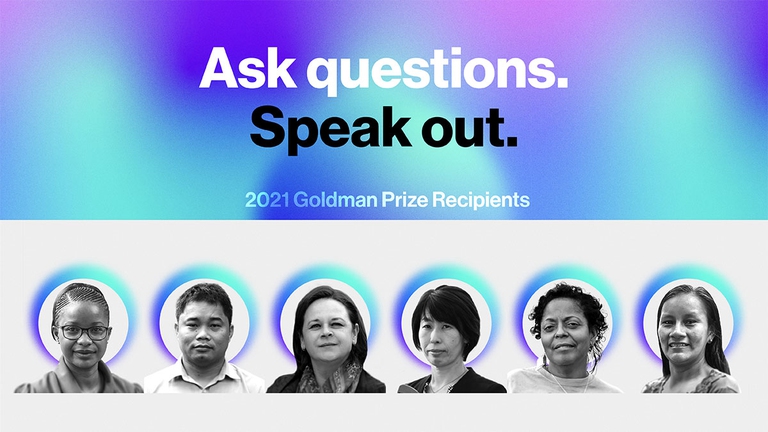
The winners of the 2021 “Green Nobel” Goldman Environmental Prize

June 25, 2021

The Goldman Environmental Prize, the “green Nobel Prize”, is awarded annually to activists fighting for the well-being of the planet. They’re often called “heroes”. But, foremost, they’re people. Common folk just like us. They don’t have superpowers or wear capes. And that’s what makes them so special. They’re the activists that are celebrated yearly by the Goldman Environmental Prize, also known as the “green Nobel Prize” [for more on this award and its laureates, see: https://www.trueheroesfilms.org/thedigest/awards/928A7FD2-4E3D-400E-BCE9-488658DA3BAF]

Goldman environmental prize

The winners of the 2021 Goldman Environmental Prize

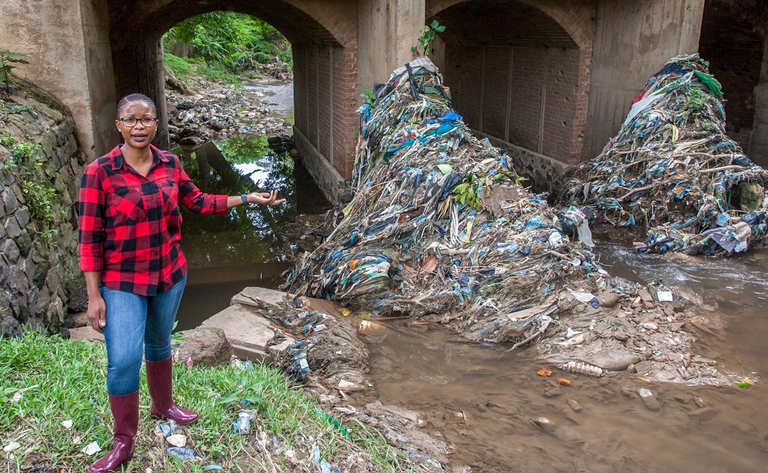
Gloria Majiga-Kamoto, Malawi, Africa

Concerned about the environmental damage caused by plastic pollution in the southeast African state of Malawi, Gloria Majiga-Kamoto decided to fight against this industry by campaigning to stop the production of thin plastics, a type of single-use polymer. Thanks to her campaign a national ban was adopted in 2019. This is the first time a person from Malawi wins the Goldman Prize.

Goldman environmental prize
Gloria Majiga-Kamoto showing plastic under a bridge over the Mudi River © Goldman Environmental Prize

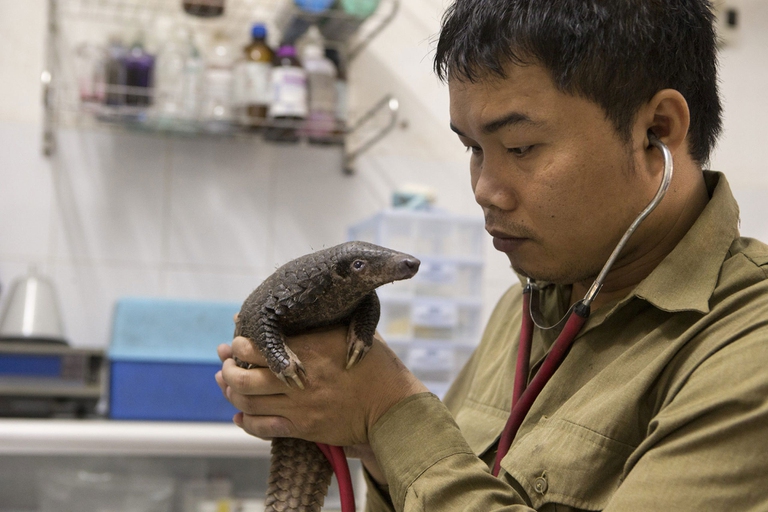
Thai Van Nguyen, Vietnam, Asia

Thai Van Nguyen is the founder of the NGO Save Vietnam’s Wildlife, responsible for saving 1,540 pangolins from the illegal wildlife trade between 2014 and 2020. Nguyen also instituted the first Vietnamese anti-poaching unit. Since 2018, it has destroyed 9,701 animal traps, torn down 775 illegal camps, confiscated 78 guns and brought to the arrest of 558 poachers, leading to a significant reduction in illegal activities in Pu Mat National Park.

Goldman environmental prize Thai Van Nguyen
Thai Van Nguyen with a three-month-old pangolin in a rehabilitation centre © Goldman Environmental Prize

Maida Bilal, Bosnia and Herzegovina, Europe

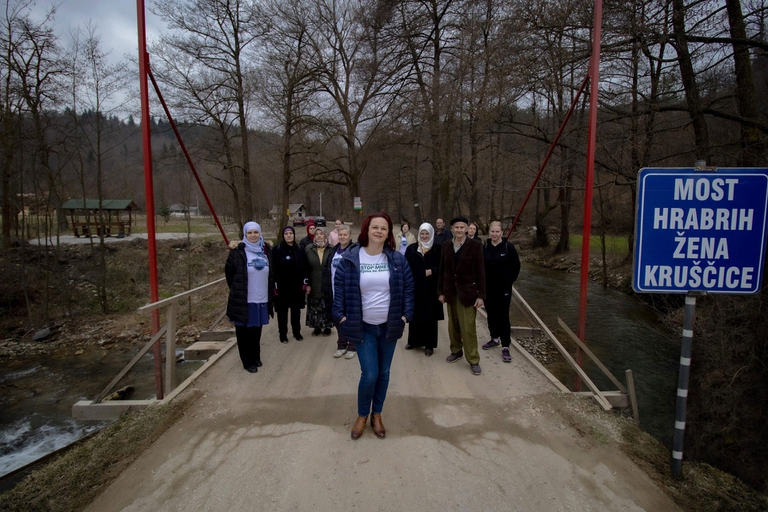
Together with the women in her village, Maida Bilal mounted a 503-days-long protest to stop the construction of two new dams on the Kruščica River in December 2018. The Balkans are home to Europe’s last wild rivers, but demand for hydroelectric power is threatening these precious ecosystems. This marks the first time that a person from Bosnia and Herzegovina receives the Goldman Environmental Prize.

Goldman environmental prize Maida Bilal
Maida Bilal and her supporters on the bridge where they stopped construction of the dams from going ahead © Goldman Environmental Prize

Kimiko Hirata, Japan, islands and island nations

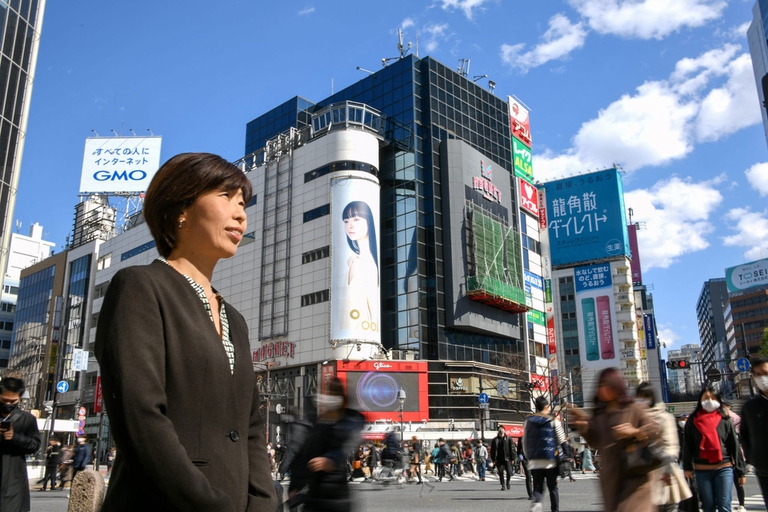
After the Fukushima nuclear disaster in 2011, Japan began relying on coal-based rather than nuclear energy. Kimiko Hirata’s decade-long campaign has stopped 13 new coal power plants from being built throughout the country. These would have released over 1.6 million tonnes of CO2 over their lifetimes. Therefore, Hirata’s efforts have avoided emissions equivalent to those of 7.5 million cars a year, for forty years.

Goldman environmental prize Kimiko Hirata
Kimiko Hirata in Tokyo, the capital of Japan © Goldman Environmental Prize

Sharon Lavigne, Unites States, North America

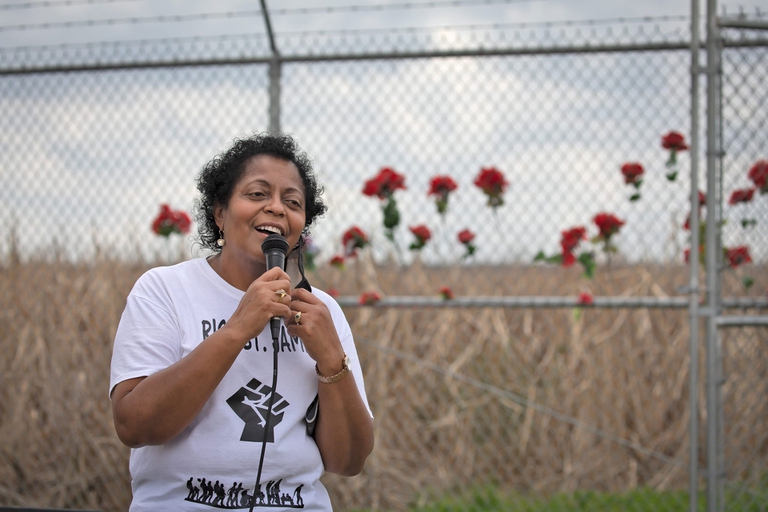
In September 2019, Sharon Lavigne, a special education teacher and climate justice advocate, succeeded in stopping the construction of an enormous plastic production plant in Mississippi, in the state of Louisiana. Lavigne mounted an opposition campaign, raised awareness in her community and organised peaceful protests to protect the right of her fellow citizens, especially African-Americans. The plant would have led to the release of huge amounts of toxic waste in an area where pollution is already destroying many lives.

Sharon Lavigne, Goldman Environmental Prize
Sharon Lavigne in the Buena Vista cemetery, where graves of African-American slaves are found © Goldman Environmental Prize

Liz Chicaje Churay, Peru, South and Central America

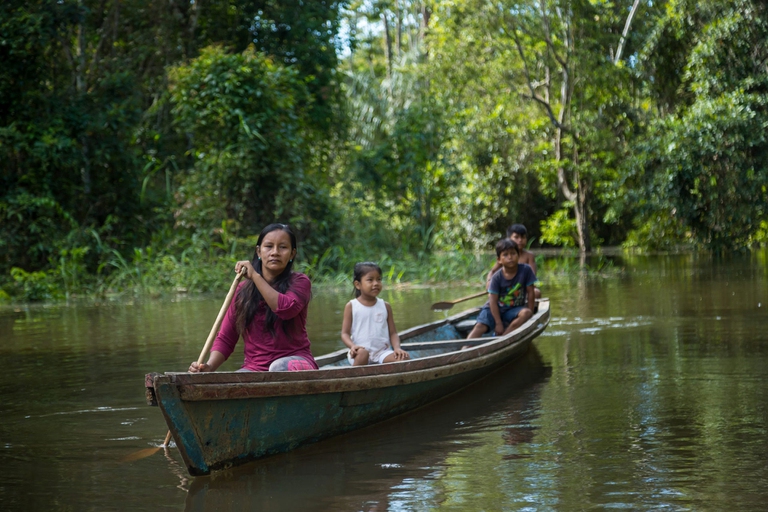
Thanks to Liz Chicaje Churay and her supporters, in January 2018 the Peruvian government created Yaguas National Park, which protects 800,000 hectares of the Amazon rainforest. The park is key to conserving local biodiversity as well as safeguarding thousands of unique species, carbon-rich peatlands and protecting indigenous peoples.

Liz Chicaje Churay
Liz Chicaje Churay on the Ampiyacu River © Goldman Environmental Prize

See also: https://humanrightsdefenders.blog/2019/05/13/winners-of-the-2019-goldman-environmental-prize/

https://www.lifegate.com/goldman-environmental-prize-2021-winners

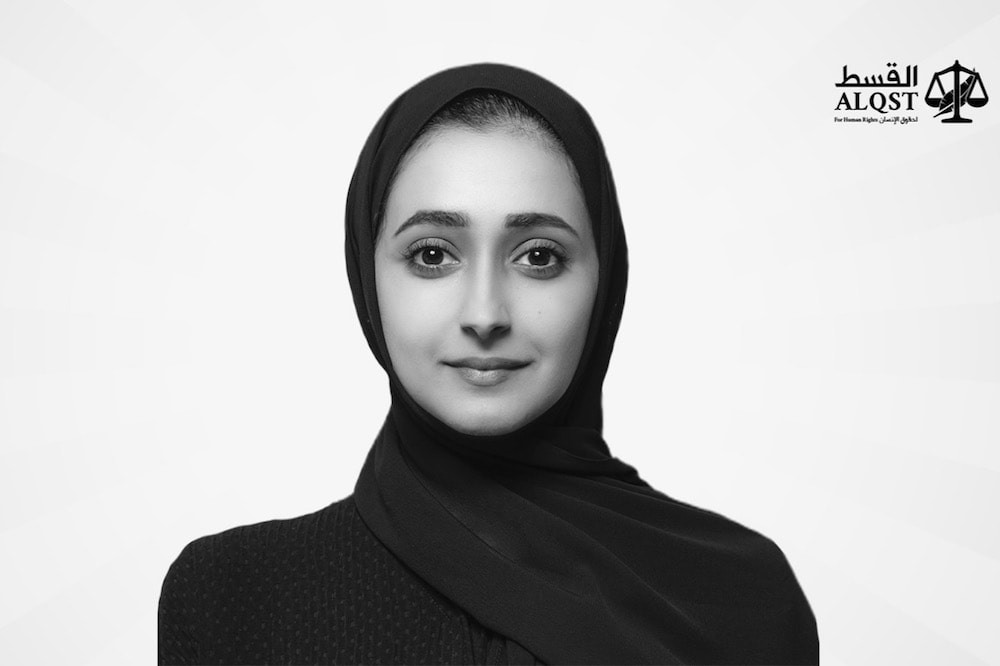
In memory of Emirati human rights defender Alaa Al-Siddiq

June 23, 2021
Alaa Al-Siddiq, ALQST for Human Rights, https://www.alqst.org/en/post/ALQST-mourns-the-death-of-its-executive-director-alaa-al-siddiq

On 21 June 2021 the Gulf Centre for Human Rights pays tribute to prominent Emirati human rights defender Alaa Al-Siddiq who died in a tragic car accident in the UK, and joins the growing calls for an investigation into the circumstances of her death.

The Gulf Centre for Human Rights (GCHR) is deeply saddened by the loss of courageous Emirati human rights defender Alaa Al-Siddiq, Executive Director of ALQST for Human Rights and a Senior Researcher at Wejha Centre for Studies, who died tragically in a car accident in Oxfordshire, the United Kingdom on 19 June 2021.

We would like to pay tribute to her unique courage, her kind heart, her wonderful personality, and her tireless work to defend human rights in the United Arab Emirates (UAE), Saudi Arabia and other Gulf countries. We will remember the anniversary of her loss as the Day of the Gulf Women Human Rights Defenders.

Alaa was a forceful and determined 33-year-old woman. She was outspoken and always defended her father, Sheikh Mohammed Abdul Razzaq Al-Siddiq, a prisoner of conscience who is a member of the “UAE 94”. In 2013, he was sentenced to ten years in prison in a show trial based on trumped-up charges, that violated international standards.

Documenting human rights violations in the UAE and other Gulf countries comes at a price. Despite all the challenges and threats she faced, Alaa never stopped fighting for freedom for her father and other wrongfully detained prisoners of conscience, hoping for a country that respects human rights including freedom of speech.

Alaa’s role as Executive Director of ALQST, a leading organisation in documenting human rights abuses in Saudi Arabia, didn’t make things easier. Alaa was always receiving threats on her Twitter account: https://twitter.com/alaa_q, yet she dealt with the e-flies with patience, civility and respect.

Her relationship with GCHR was a very strong and fruitful one that produced a report, Torture in the United Arab Emirates: The Tolerance Charade“, published in March 2021 with the Wejha Centre for Studies. She also contributed to several successful online events using Zoom and Clubhouse, including a side event during the 45th session of the United Nations Human Rights Council in October 2020.

In December 2020, Alaa was among the WHRDs in the MENA region that GCHR celebrated via a Twitter campaign during the #16DaysofActivism against gender-based violence (GBV). (See the main image above.)

It is a very big loss, and no one will be able to fill her empty place,” said Khalid Ibrahim, GCHR Executive Director, who added, “It is a very sad day for me as we have lost a wonderful woman, a true courageous, independent, hardworking and ever-patient advocate.

I cannot believe that we lost Alaa. She was very courageous! She carried on in the fight against oppression despite all the hardships. Alaa was a genuine voice in a country where everything is built on lies,” said Salma Mohammad, GCHR Project Coordinator.

According to the police and local authorities, the circumstances of the car crash were an accident, but they are still looking for witnesses to find out exactly what happened. GCHR calls on the UK police to publicise the information about the incident which took the life of Alaa Al-Siddiq and injured four others.