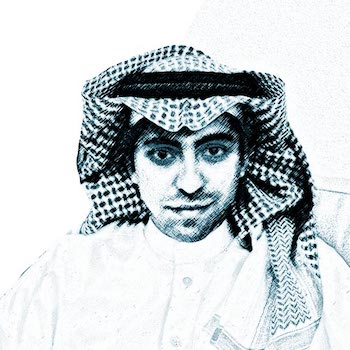
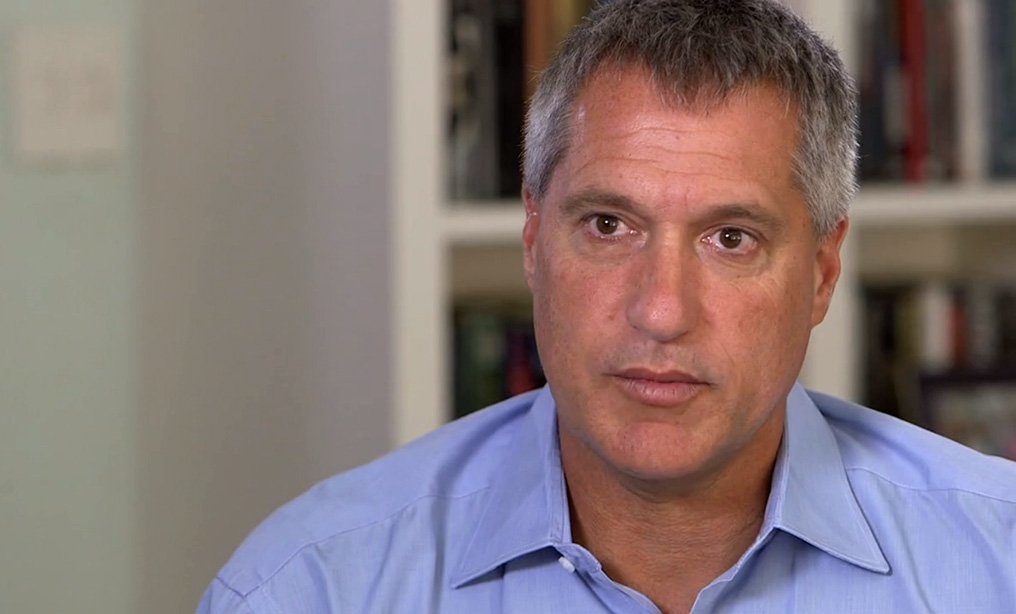
Venerable Sovath is a Buddhist monk and human rights activist from Siem Reap, Cambodia. In March 2009 he witnessed the forced eviction of his family and fellow villagers from their homes, without reason and in most cases without compensation. This unfortunate event pushed him towards human rights activism.
Venerable Sovath was compelled to flee his native Cambodia in May of 2020, after fake videos and accusations appearing on Facebook served as the bases for a decision to ‘de-frock’ him of his monk’s robes. In retaliation for his advocacy against land grabbing and in favour of human rights, Venerable Sovath and his loved ones have suffered years of threats and reprisals by the authorities of Cambodia. Finally, the prospect of losing his religious freedom convinced Venerable Sovath that his position in Cambodia was untenable and he sought a temporary safe haven in Switzerland.
Because the fake evidence used against Venerable Sovath circulated on Facebook, the case also has critical lessons for the role of social media in upholding human rights. During his segment, he will discuss the story of how he became a human rights activist, and how social media can be a double-edged sword in the fight for human rights; as it gives visibility to the defenders but also puts them at risk. He will focus on social media as a tool of liberation and repression; and also discuss how a lack of accountability by these social media companies can play a role in the repression of human rights defenders. See also: https://humanrightsdefenders.blog/2020/11/02/bbc-podcast-on-the-framing-of-video-monk-luon-sovath/
This master class is hosted by the Martin Ennals Foundation and the Geneva Center for Business and Human Rights.
Date: Tuesday, November 23, 2021 Time: 12:30 – 14:00 Location: UniMail, MS 150
Registration for this master class will open on November 11 with limited places available. COVID certificate is required.
On 4 November 2021 the Observatory for the Protection of Human Rights Defenders, a partnership of the World Organisation Against Torture (OMCT) and FIDH, has received new information and requests your urgent intervention in the following situation in China.
New information:
The Observatory has been informed by the Network of Chinese Human Rights Defenders (CHRD) about the imminent risk of death of freelance journalist Zhang Zhan, who has been detained since May 2020 as a reprisal for her coverage of the Covid-19 pandemic from February 2020 until her arrest. Ms. Zhang is a former lawyer whose licence was suspended in retaliation for her activism and a well-known and outspoken journalist on the situation of human rights in China. See also: https://humanrightsdefenders.blog/2021/01/06/china-eu-deal-what-about-human-rights/
According to the relatives of Zhang Zhan, the journalists’ life is at imminent risk of death as a result of the partial hunger strike she started in June 2020 to protest her arbitrary detention and later her sentencing. The mother of Zhang Zhan was allowed to have a videocall with her daughter on October 28, 2021, after which she reported that the journalist weights less than 40 kg, is unable to walk unassisted and cannot raise her head without assistance. Her health is extremely poor, as she suffers from severe malnutrition, a gastric ulcer and swollen legs and feet. During her detention, she has been restrained and force-fed via a nasal tube.
The relatives of Zhang Zhan have been consistently denied their right to visit the journalist and only been allowed to communicate with her by video calls on two occasions, on October 28 and February 2021, and by a phone call on August 2021. Moreover, Zhang Zhan’s mother requested the Chinese security police the permission to visit the journalist in prison to persuade her to abandon the hunger strike. At the time of publication of this Urgent Appeal, she had not received a reply.
The Observatory recalls that Zhang Zhan was hospitalised in a prison hospital between July 21 and August 11, 2021 due to her deteriorating health conditions. During her hospitalisation, she was tied to a hospital bed and force-fed by prison authorities. On August 11, she was transferred back to the Shanghai Women’s Prison, where she remained detained at the time of this Urgent Appeal.
The Observatory further recalls that on May 14, 2020, Zhang Zhan went missing in Wuhan, Hubei Province, one day after releasing a video that criticised the government’s measures to contain the virus, claiming the authorities were being negligent. Zhang Zhan had travelled to Wuhan from her home in Shanghai in early February 2020 to report from the epicenter of the Covid-19 pandemic. She reported numerous stories, including the detention of other independent reporters and harassment of families of victims seeking accountability, via her WeChat, Twitter, and YouTube accounts.
After seven months of pre-trial detention, on December 28, 2020, the Shanghai Pudong People’s Court found Zhang Zhan guilty of “picking quarrels and provoking trouble” (Article 293 of China’s Criminal Law) and sentenced her to four years in prison. The court rejected the application filed by Zhang Zhan’s lawyers to request bail, live streaming of the trial, and a time extension of the proceedings. Their requests to have the defense witnesses appear in court to present exculpatory evidence was also rejected by the court. Zhang Zhan attended her trial in a wheelchair because of her poor health.
The Observatory is deeply concerned about the health conditions and risk of death of Zhang Zhan and urges the Chinese authorities to immediately and unconditionally release her and grant her immediate access to adequate and comprehensive medical treatment.
On Wednesday, November 3, the Centraĺny District Court in Homieĺ delivered the verdict in the politically motivated criminal case against two human rights defenders with the Homieĺ branch of Viasna, a leading Belarusian human rights group. The court sentenced the head of Viasna’s Homieĺ office Leanid Sudalenka and Viasna’s volunteer Tatsiana Lasitsa to three and two and a half years in prison, respectively.
18 international and Belarusian organizations call on Belarusian authorities to immediately annul the outrageous verdict and drop all charges against Sudalenka and Lasitsa, as well as five other members of Viasna who are currently in jail on politically motivated charges.
“Politically motivated prosecutions of Viasna members and volunteers are part of the ‘purge’ of Belarusian civil society declared by Aliaksandr Lukashenka and his government. Belarusian authorities’ targeting of Viasna in particular is no doubt designed to punish the organization for its outstanding and courageous human rights work over the course of 25 years.”
On October 14, the prosecutor’s office requested three years’ imprisonment for Sudalenka and Lasitsa on charges of “organizing, financing, training, and preparation of actions grossly violating public order and financing such activities.” The charges were backed by absurd “evidence,” such as Sudalenka’s Facebook post offering to buy firewood for the family of someone accused of “mass rioting” in connection with the peaceful protests of 2020.
Sudalenka and Lasitsa have been in pretrial detention for over nine months, having been arrested on January 18 and 21, respectively. Their trial began in early September and was held behind closed doors.
On January 18, authorities also detained Viasna’s volunteer Maryia Tarasenka in connection to Sudalenka and Lasitsa’s case. She was released under her own recognizance three days after the arrest. Tarasenka left Belarus after prosecutor’s office requested two and a half years imprisonment for her in October.
The other five Viasna members currently behind bars on politically motivated criminal charges are Ales Bialiatski, the founder and chairman of Viasna, Valiantsin Stefanovic, Viasna deputy chairman, Uladzimir Labkovich, a lawyer and coordinator of the group’s campaign “Human rights defenders for free elections,” Marfa Rabkova, coordinator of Viasna’s network of volunteers, and Andrei Chapyuk, a volunteer for Viasna in Minsk.
Around 100 Viasna human rights defenders and volunteers, as well as their family members, have also been interrogated and designated witnesses in criminal cases against their colleagues. At least seven have been designated suspects.
Belarusian law enforcement continues regular interrogations in connection with the criminal cases against Viasna employees, including activists of other civil groups and initiatives.
On September 17, 23 international and Belarusian human rights groups launched a campaign #FreeViasna, demanding the immediate release of the jailed Viasna human rights defenders. We continue calling on the Belarusian authorities to:
Fully abide by their international human rights obligations as a party to the International Covenant on Civil and Political Rights to respect the rights to freedom of association, peaceful assembly, and expression of all people in Belarus.
Fully respect the work of human rights defenders and lawyers and ensure that everyone can complain without fear of retaliation about actions and policies of individual officials and governmental agencies.
In line with these obligations, release Tatsiana Lasitsa, Leanid Sudalenka, Ales Bialatski, Valiantsin Stefanovic, Uladzimir Labkovich, Marfa Rabkova and Andrei Chapyuk immediately, drop all charges against Viasna staff and volunteers, including Maryia Tarasenka, and other human rights defenders, and ensure their right to a remedy for arbitrary detention and malicious prosecution.
Also woth mentioning is that on 4 November 2021 in response to the Belarusian authorities’ failure to respond satisfactorily to the 5 November 2020 Moscow Mechanism report, 35 OSCE states invoked the Vienna (Human Dimension) Mechanism and Belarus’ commitments under that Mechanism.
Signed:
Amnesty International
Article 19
Barys Zvozskau Belarusian Human Rights House
Belarusian Helsinki Committee
Center for Civil Liberties
Civil Rights Defenders
FIDH, within the framework of the Observatory for the Protection of Human Rights Defenders
Front Line Defenders
Helsinki Foundation for Human Rights
Human Rights Center Viasna
Human Rights House Foundation
Human Rights Watch
International Partnership for Human Rights
Libereco – Partnership for Human Rights
Norwegian Helsinki Committee
Östgruppen – Swedish Initiative for Democracy and Human Rights
Right Livelihood
World Organisation Against Torture (OMCT), within the framework of the Observatory for the Protection of Human Rights Defenders
To mark the UN Refugee Agency’s 70th anniversary, award-winning cartoonist Hani Abbas has created seven images that will be sold as digital assets to raise funds for Afghanistan.
Syrian-Palestinian cartoonist Hani Abbas, 44, was born and grew up in Yarmouk, a Palestinian refugee camp in the southern suburbs of the Syrian capital Damascus. From the late 1990s his cartoons appeared in publications and exhibitions in Syria and across the Middle East, before he and his family fled the conflict in 2012 and eventually settled in Switzerland as refugees.
Since then, Abbas’s work – which tackles themes of injustice, loss, and the human cost of conflict – has featured in publications including Le Temps and La Liberté in Switzerland and France’s Le Monde. He is also a member of the Cartooning for Peace organization, a network of press cartoonists committed to promoting freedom and democracy. In 2014, Abbas received the International Editorial Cartoon Prize in Geneva. [see: https://www.trueheroesfilms.org/thedigest/laureates/01DCF77A-3DEA-97F4-CE95-6BD185538207]
To mark the 70th anniversary of UNHCR, the UN Refugee Agency, Abbas has teamed up with national partner association Switzerland for UNHCR to launch the agency’s first-ever NFT (non-fungible token) fundraising sale. Abbas has created seven cartoons, from which ten copies of each will be converted into unique digital assets and sold as NFTs on the OpenSea online marketplace to raise funds for UNHCR’s Afghanistan crisis response.
Ahead of the start of the sale on 4 November, UNHCR spoke with Abbas and asked him about his life in Syria, his experiences as a refugee, and the meaning behind the images he has created.
What was your early life like growing up in Yarmouk camp?
Yarmouk is called a camp, but it’s really a part of the city with buildings, streets, and all the normal services. Growing up there was something nice and something hard. A lot of people in a small area; many pupils in the school. We had a beautiful, funny life – hard, but beautiful. Sometimes hard memories become nice when you look back. When I remember it now, I have nostalgia about that time. I remember my friends, my neighbourhood, my street, my family home.
When did you first show a talent for drawing?
When I was a child, I loved to draw. I drew everything, and I drew on everything – I was drawing on the walls, in school textbooks, on my body – everywhere. This is a child’s job! I loved drawing and when I was in school, my art teacher supported me and entered my work in a UN children’s drawing prize which I won twice, when I was 13 and 14. Those prizes gave me the power and the belief to continue drawing – I felt like I had something to say through my drawing. You can explain your story, your feelings, your ideas.
Did you always want to be a cartoonist?
No. At first it was anything, but when I was around 18, I started thinking about cartoons because I saw a lot in the newspapers, and on the walls of the camp. The walls were like our newspaper in the camp. Yarmouk was one big newspaper. In 1998 I published my first cartoon in a Palestinian magazine, then had exhibitions in the camp, in Damascus, Aleppo and Lebanon. I started connecting with newspapers – that’s how it goes. At the same time, I was also a teacher in an elementary school in Damascus.
What themes do you address in your cartoons?
My early cartoons were about Palestine, Palestinian refugees in the Middle East. More political than funny because it was difficult for me to draw something funny. I always go towards tragedy and darkness because I draw what I’m feeling. I’m trying to explain about myself and my people. At that time, I was just drawing and there was no problem for me, but when the conflict started, you had to take your life in your hands when you drew.
I’m still drawing now. Drawing in a safe place like Switzerland is good, you have total freedom. But you lose the sense of danger, the challenge. For me I did my best drawings under the bombs. I lost a big part of my power when I left Syria, but I still have the power of memory.
“The memories occupy my mind all the time.”
How did the conflict affect you personally?
I moved many times in Syria starting from March 2011 until December 2012 when I left. The last six months were very difficult to live under the bombs all the time. At that time, we would hear three sounds. The first was the sound of the shell when it was launched. The second was the sound of the shell above us in the sky. The third sound was the sound the of the explosion on the ground, or in a building. I was drawing all the time, but when I heard that first sound, I would lift my pencil and wait, thinking: ‘maybe this is my last drawing’. If I heard the third sound, that meant I was still alive. I’m lucky because I always heard all three sounds, but many thousands of Syrian people around me never heard the third sound.
You managed to escape Syria, first to Lebanon and then Switzerland. How did your life change?
Before, my family was all in the same place, now everyone is spread around the world. I’m here in Switzerland, in Geneva, my brother is in Cologne in Germany, my parents and two other brothers are in Sweden, and another brother is in Madrid, in Spain. It’s not easy to connect with them. It’s good we have social media and video calls, but it’s not the same. My kids are speaking French now, my brother’s kids are speaking German, Swedish, another Spanish. When they meet now it’s not easy to connect with so many languages, different cultures, different educations. We will lose our family tree. The branches have been cut off and are drifting down the river in different directions. But Switzerland is very good for my kids, without any problems and without any bad memories, without any dangers in the future. For me, it’s okay. I’m working here, I’m still drawing, I’m feeling good – life is good – but the memories occupy my mind all the time.
The images you’ve created for the NFT sale are part of a series you call “Windows”. What significance do windows have in your work?
What is the meaning of windows in my heart? They are our windows to see the country, to see people – to connect with them and hear them. In 2011, after four months of the conflict I drew the first window – a destroyed building with just a window still standing, and a young man waiting outside with a flower to see his love, who was gone. It represents what we’ve lost. I’ve drawn other figures who have left everything else behind but take a window with them, because the window is their memory. I have my own ideas and feelings about the images, but I hope everyone who looks at them can see the effect of war on people.
“I hope all the people who have problems in their countries can get out.”
The money raised in the sale will be used to support the people of Afghanistan. How did you feel watching recent events there?
It felt familiar for me because we were – we’re still – like them. The same problems, the same feelings, the same stories. In the news we always heard about the politics, but we didn’t know what was happening to normal people. For me, I hope all the people who have problems in their countries can get out. I support people who want to get out if they have dreams, if they want to protect their kids.
You’re used to publishing your cartoons in newspapers. How do you feel about them being turned into unique digital assets and sold as NFTs instead?
I don’t have any experience of this – I just do the drawings! But every cartoonist wants their work to be seen, and I support these new ideas. Anything that will help people and explain the hard conditions and problems they face, and allow other people to support them. It’s a new idea, and when I heard about it, I loved it. We hope now it succeeds in focusing attention on the problems of [Afghans], and makes money for them of course, because they need it. Sometimes, to make a little bit of change in people’s lives they just need a tent or a little bit of food, a bit of support or a little education.
On 30 October 2021 AFP reported that a group of UN human rights experts called for the immediate release of Vietnamese activist Pham Doan Trang (pic), who is awaiting trial after a year in detention. The prominent Vietnamese author, who campaigns for press freedom and civil rights, was arrested in October last year. [see: https://www.trueheroesfilms.org/thedigest/laureates/fe8bf320-1d78-11e8-aacf-35c4dd34b7ba]
Trang has pushed for change on a host of controversial issues, including land grabs and LGBTQ rights. “Pham Doan Trang is only the latest victim of the authorities’ use of vaguely-defined propaganda charges to persecute writers, journalists and human rights defenders,” the experts said in a statement.
The UN experts said the charges against her stem from at least three human rights reports she co-authored, plus interviews with foreign media. They accuse the authorities of “criminalising the exercise of their right to freedom of opinion”.
“We urge the authorities to immediately and unconditionally release Ms Pham Doan Trang.“
The UN experts included the special rapporteurs on the right to freedom of opinion, on human rights defenders, and on the right to physical and mental health.
For many years, the United Arab Emirates has been one of Washington’s most repressive military allies. Its brutal targeting of human rights defenders, its leadership role with Saudi Arabia in the war on Yemen, and its crushing of any internal political dissent has made it a focus of Human Rights First’s advocacy for a decade.
I visited the Emirates for Human Rights First in 2015 to research how bad things were, and things have only become worse — the few activists who weren’t intimidated into silence in 2015 have now been pushed into exile or sentenced to long terms in prison.
Washington continues to enable the Emirates’ dictatorship with weapons and political support; in April the Biden administration confirmed it would proceed with a $23 billion arms deal. But having powerful friends in Washington, and pushing Dubai’s glitzy image of tourism and shopping, can’t hide the reality of what really happens in the UAE.
Click below or listen here to my appearance on a podcast by the European Centre for Democracy and Human Rights (ECDHR) for more on what’s happening in the UAE behind their PR mask.
After 11 years as the NHRF’s Executive Director Sandra Petersen was succeeded by Ingeborg Moa on 15 October 2021.
sandraIngeborg
Ingeborg Moa comes to the NHRF from the position as Director of Activism and Organisational Development at Amnesty Norway, and has nearly two decades of international experience working with local organizations and human rights defenders around the world. She has ten years of working experience with the Norwegian People’s Aid (NPA), as well as having worked for Norwegian Refugee Council and the UN. Geographically, she has extensive work experience from the Middle East and Southeast Asia, having spent a number of years in Palestine and Myanmar, as well as in Cambodia, Thailand, Iraq and Turkey. She has also been working on Syria. “My own experiences after working with human rights defenders for nearly 20 years is that for situations of injustice to change, it is the affected communities and people on the ground who need to organize, mobilize and take the lead in the struggle for their own rights. At the same time, international solidarity is necessary both in order to ensure support for practical initiatives on the ground, and not least in order to ensure that local struggles are supported by policy initiatives on a multilateral level”, she says.
Sandra Petersen will during the next four years undertake a PHD research at the Norwegian Center for Human Rights, University of Oslo with a focus on International Support to Human Rights Defenders. Apart from her research, Sandra Petersen will continue to work with the NHRF as a special advisor on human rights defenders.
Sandra Petersen first started working in the NHRF in 2009 leading the work on Pakistan and India. In 2010 she moved into the role of the executive director and has for more than a decade been leading the organisation towards growth; both with strengthening NHRF’s financial muscles to support frontline grassroots human rights organisations and defenders, and by increasing the organisational capacity from a two-staffed office in Oslo in 2010 to 25 people divided between the Oslo and Colombia offices – including team members and consultants in the US, India, Pakistan, Indonesia, Thailand and Mexico. [see also: https://humanrightsdefenders.blog/2020/04/21/norwegian-human-rights-fund-annual-report-2019/]
In an interview (see link below) Sandra give her views on what was achieved and her hopes for the future. And tells a bit more about her research project: The project is partly funded by the NHRF and by the Norwegian Research Council, and will be undertaken at the Norwegian Center for Human Rights at the Law Faculty, University of Oslo. I will seek collaboration with international universities and hopefully contribute to new partnerships. The primary goal of this research is to make an important contribution to future policy outcomes by providing empirical knowledge and comparative analysis of international and in particular Norway’s role in efforts on human rights defender’s protection. This will be shared within institutional structures here in Norway as well as internationally. The Ph.D. seeks to highlight best practices, lessons learned, as well as to try pointing to areas for improvement. Importantly, it aims to understand how human rights defenders in a selection of countries perceive international efforts to support them. Central to this analysis will be to understand possible new needs including effects of COVID-19 and the rapidly evolving technology and digital developments that can affect defenders’ safety and security. I think this is immensely important for all of us that wish to support human rights work and defenders’ role in these efforts. I deeply believe in a combined practitioner and academic approach to our work. Our actions should be well founded in knowledge.
The International Service for Human Rights published on 30 September 2021 “Human rights defender’s story: Rosana Lezama Sanchez from Venezuela”.
“What is needed from the international community in general, and from within the UN, is a concrete, coherent and unified voice in favour of the protection of human rights defenders, the safeguard of the fundamental liberties, the civic space and human dignity,” says Rosana Lezama Sanchez, a law student in Venezuela working with three national human rights organisations.
Rosana Lezama is a law student in Venezuela working with three national human rights organisations: Centro para los Defensores y la Justicia (CDJ) / Observatorio Venezolano de Conflictividad Social (OVCS) / Centro de Derechos Humanos de la Universidad Católica Andrés Bello (CDH-UCAB). Her work includes the protection of human rights defenders, issues of transitional justice, rule of law, the right to peaceful assembly, and State repression. In this video, Rosana talks about her vision for the future and her work to achieve it.
Rosana was also a participant in ISHR’s Human Rights Defender Advocacy Programme (HRDAP) and ISHR Academy in 2021.
Anastasiia Zlobina, Assistant Researcher for Europe and Central Asia at Human Rights Watch reports that on 25 October 2021, the Minsk Bar Association disbarred prominent Belarusian defense lawyer Natalia Matskevich, the latest in a wide-raging and politically motivated crackdown on lawyers.
Matskevich is one of four lawyers who represented Viktar Babaryka, former presidential contender arrested on politically motivated charges in June 2020 in the run-up to the August 9 election. In July 2021, Supreme Court sentenced Babaryka to 14 years in prison for “grand bribery” and “laundering of illicit funds.”
On October 20, the Justice Ministry suspended the license of Evgeni Pylchenka, a lawyer who also represented Babaryka, pending the outcome of a disciplinary case against him. Matskevich’s disbarment and Pylchenka’s suspension came soon after they had filed an appeal in Babaryka’s case. Their colleagues said these sanctions were “absurd” and based on “ridiculous” allegations, including “some [supposedly] incorrectly worded questions to witnesses during trial.”
In July, days after Babaryka’s verdict, authorities stripped his then-lawyer Dmitry Layevsky of his attorney’s license, citing “inappropriate comments about the work of his colleagues.” Prior to his disbarment, Layevsky had faced pressure from the authorities and the Minsk Bar Association.
In October 2020, the Justice Ministry terminated the license of Aliaksandr Pylchenka, another prominent member of Babaryka’s defense team, over supposed “incompetent comments to mass media”
According to Layevsky, Matskevich and Evgeny Pylchenka became “irreplaceable” in Babaryka’s case due to their detailed knowledge of the voluminous case as well as Babaryka’s trust in them.
Since August 2020, Belarusian authorities have been turning up the pressure on lawyers for publicly speaking out about human rights violations and in defense of clients in politically motivated cases. In addition to the obstruction of their work, lawyers have faced personal harassment such as threats, arbitrary detention, raids, revoked licenses, and administrative and criminal charges.
The Belarusian National Bar Association and its regional bars have continuously failed to protect their members.
In November, new restrictive amendments will enter into force, further increasing the Ministry of Justice’s authority over, and eviscerating the independence of, Belarusian lawyers. The arbitrary suspension and disbarment of Belarusian lawyers doesn’t just rob them of their ability to practice their profession, but undermines their clients’ right to legal counsel, and sends a chilling message of intimidation to their colleagues.
On October 26, the Belarusian human rights community issued a joint statement on their recognising another 12 persons as political prisoners, HRC Viasnareported. As of October 26, there are 833 political prisoners in Belarus on this list.
The updated list includes:
Syarhei Prus and Dzmitry Bondarau, who were sentenced under Part 3 of Article 130 of the Criminal Code to 5 years in a penal colony for creating and posting online a video calling for illegal actions against riot police officers of the Mahilioŭ regional department of internal affairs;
Dzmitry Sonchyk, who was sentenced under Art. 364 and Art. 369 of the Criminal Code to 5 years of imprisonment in a penal colony for insults and threats to police officers in comments in a Telegram channel in 2020 and 2021;
Andrey Razuvayeu , who was sentenced under Article 369 and 295 of the Criminal Code to 4 years in a penal colony for insulting a government official and keeping a small amount of hunting gunpowder;
Iryna Melkher, Anton Melkher, Halina Dzerbysh, Syarhei Razanovich, Lyubou Razanovich, Pavel Razanovich, who have been in custody on terrorism charges since early December 2020. According to the human rights defenders, they have not participated in any investigative actions, while the investigation is not formally completed, and the state propaganda resources back in 2020 claimed that the guilt and role of all those involved in the case was ‘established and proven’;
former investigator Yauhen Yushkevich. The circumstances of the new accusation of terrorism give grounds to believe that his detention may be arbitrary and related to his public activities, human rights activists stress;
Yauhen Buynitski, who was detained on charges under Part 3 of Art. 371 of the Criminal Code for organizing illegal border crossing by citizens fleeing arbitrary politically motivated persecution by the Belarusian authorities, which could have serious consequences for them – torture, cruel, inhuman, degrading treatment and illegal imprisonment.
The Norwegian firm took a principled stance to Myanmar’s coup. The same can’t be said for its exit from the country, writes Aung Myo Min, Minister of Human Rights in Myanmar’s National Unity Government., on 25 October 2021.
Praising Norway as a global leader when it comes to protecting human rights defenders and Telenor for acting in principled ways following the attempted coup by pushing back against the military junta’s illegal directives, the author is perplexed that in July, “after considering all possible alternatives and events,” Norway’s largely state-owned telecoms provider agreed to sell its Myanmar operations to the Lebanese firm M1 Group. According to the Centre for Research on Multinational Corporations (SOMO), M1 is “infamous for its business activities in countries with violent totalitarian and extremist regimes.” In 2012, telco MTN Syria, a subsidiary of MTN in which M1 is the major shareholder, undermined protest leaders by blocking text messages at the behest of the Bashir al-Assad regime. In 2013, MTN installed “lawful surveillance equipment” for its mobile network in South Sudan during a crackdown on government critics by state security forces.
It is to be feared that M1 group will hand over user details of some 18.2 million Telenor users to the military junta, placing human rights defenders even more clearly in the crosshairs.
Telenor has operated in Myanmar since 2014, a decision that back then, according to the Group, was informed by “a thorough human rights impact assessment as part of the due diligence.” The Norwegian Government holds a 53 percent stake in Telenor.s.
The Centre for Research on Multinational Corporations, in coordination with 474 Myanmar civil society organizations, has lodged a complaint against the sale with the Norwegian National Contact Point (NCP) for the OECD Guidelines for Multinational Enterprises and, after an initial assessment, the watchdog found merit in the claim. Mediation may well follow. This offers Telenor and the Norwegian government an opportunity to salvage something significantly more valuable than telecoms assets and investments: their reputations.
Telenor says that its decision to sell “was not motivated by financial or strategic objectives,” but guided by its “commitment to its values and standards.” This commitment requires scrutiny. The potential sale of Telenor requires assessment of any adverse human rights impact and prevention or mitigation where they present.