Archive for the 'human rights' Category

FIDH launches “SEE YOU IN COURT” campaign

September 29, 2021

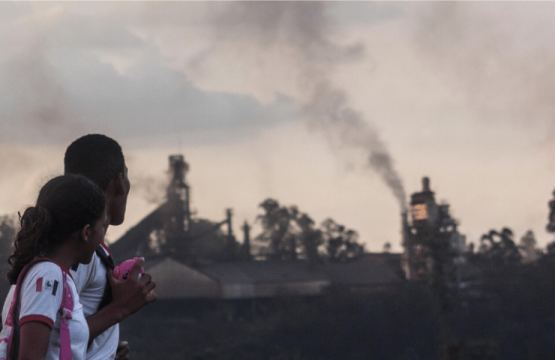
The disastrous impact that multinationals have on the environment can no longer be denied. The human right to live in a healthy environment concerns us all, therefore, FIDH and its member organisations are launching coordinated legal actions across the world. The companies implicated and States which allow it to happen must be held accountable.

The first legal actions

It is time to recognize the right to a healthy environment as a fundamental human right and to hold companies accountable for their actions.

  • Environmental impact = human impact Because human rights and the environment are interdependent, it is crucial that States recognise the right to a healthy environment as a fundamental human right. Hundreds of organisations are fighting for a UN resolution to achieve international recognition of this.
  • Restoring a healthy environment to affected communities In the face of environmental disasters and human rights violations, the balance is still too often tipped in favour of the companies involved. Ensuring access to justice for those most affected and passing laws which hold multinationals accountable are also means to protect the planet.

https://seeyouincourt.fidh.org/?lang=en#

Human Rights Data Analysis Group winner of the 2021 RAFTO prize

September 29, 2021

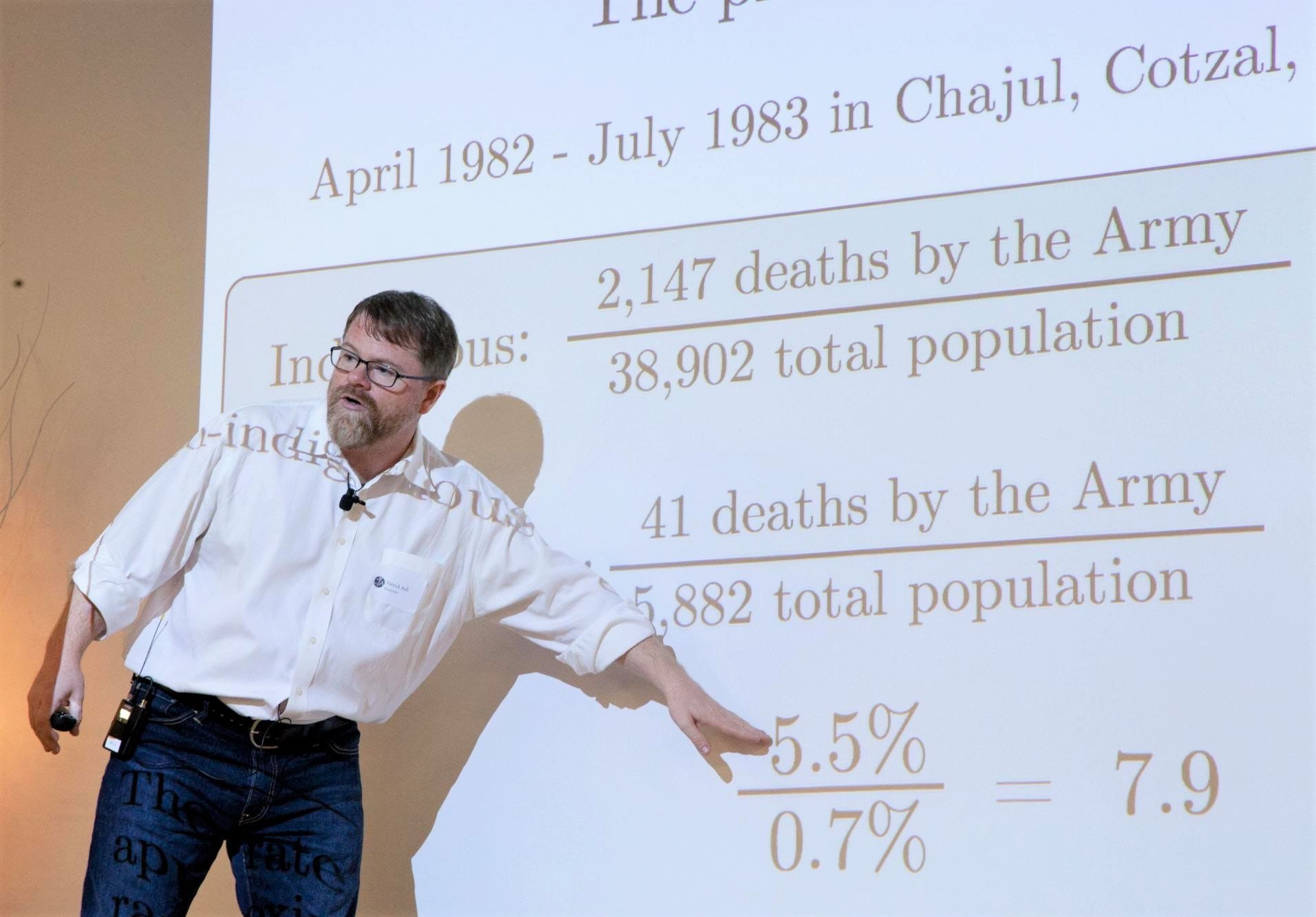
The 36th Rafto Prize 2021 is awarded to the Human Rights Data Analysis Group (HRDAG) for their work in uncovering large-scale human rights violations. By using statistics and data science, HRDAG document human rights violations that might otherwise go undetected. Their approach has enabled courts to bring perpetrators to justice and given closure to affected victims and their families. For more on th4 RAFTO award and its laureates, see: https://www.trueheroesfilms.org/thedigest/awards/A5043D5E-68F5-43DF-B84D-C9EF21976B18

Statisticians for Human Rights: HRDAG seek to uphold credible information as a foundation of human rights advocacy and justice and by doing so, they represent a new generation of human rights defenders that advances the enforcement of human rights globally.

HRDAG promotes accountability for human rights abuse. Evidence is crucial in demanding accountability and justice. Systematic documentation of human rights violations exposes the scope of transgressions. This is central to putting an end to impunity for perpetrators, and vital for the protection and empowerment of the courageous human rights activists at the frontline.

HRDAG’s rigorous methods and analyses also ensure that every death is counted, and a minimum standard of human dignity is respected. The HRDAG team consists of a small group of dedicated experts in computer science, software development, mathematical and applied statistics, and demography. In their work, HRDAG partner with human rights defenders, experts, and organizations worldwide.

Holding perpetrators to account

Based on the idea that “truth leads to accountability”, HRDAG provides thorough documentation of torture, forced disappearances, kidnappings, war crimes and extrajudicial killings. Perpetrators of human rights abuses often do everything they can to hide their crimes from the public, while victims and their families seek answers and justice.

For example, in collaboration with Amnesty International, HRDAG has documented that 25 % of the deaths in Syrian prisons were unreported. Their researchers have been expert witnesses in the trial of General José Efraín Ríos Montt in Guatemala, who was convicted as the chief perpetrator of genocide against the Maya Ixil indigenous people. They have provided evidence of unusually high death tolls among political prisoners under the rule of former President Hissène Habré in Chad, as well as evidence of ethnic cleansing carried out by Serbian forces and former President Slobodan Milošević in Kosovo.

HRDAG has recently launched a project on underreporting police violence in the United States, where their analysis show that one third of all victims murdered by strangers, are killed by the police.

A new approach

The novelty of HRDAG’s approach lies in their efforts to invent and extend scientific methods from other fields, such as mathematical statistics, machine learning, software engineering, and computer science. They apply these methods to the area of human rights to detect patterns of violence and provide statistical estimates traditional approaches have not been able to deliver. They bring the power of quantitative analysis to the pursuit of justice and accountability. In doing so, they establish scientifically defensible historical records of human rights crimes.

Credible information is key

In an era of misinformation and polarization, credible information is more crucial than ever. The Rafto Prize 2021 aims to highlight the importance of HRDAG and other human right defenders’ work in seeking and upholding the truth as a foundation of human rights advocacy and justice.

The Rafto Prize 2021 is a recognition of HRDAG’s pioneering approach and dedicated commitment to detecting and deterring human rights violators by providing reliable scientific documentation.

The prize sends a firm message to human rights violators, both state and non-state perpetrators, that violations will not go unnoticed.

Award Statement 2021 (ENG)

https://www.rafto.no/news/the-rafto-prize-2021-to-hrdag

German Africa Prize 2021 goes to Ethiopian lawyer Daniel Bekele

September 28, 2021

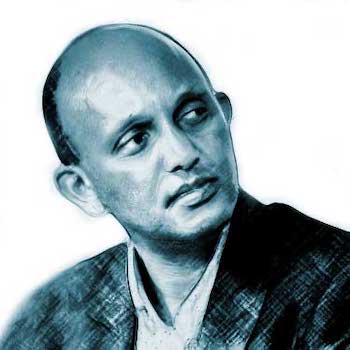
Ethiopian lawyer Daniel Bekele is the winner of the 2021 German Africa Prize. The human rights defender is being honored for his unceasing commitment to monitoring and speaking out against injustice.

Daniel Bekele, currently Chief Commissioner of the Ethiopian Human Rights Commission (EHRC), will receive the German Africa Award for his fight for democracy and human rights. See also: https://humanrightsdefenders.blog/2019/07/08/human-rights-defender-daniel-bekele-now-commissioner-of-the-ethiopian-human-rights-commission/

For more on this prize and its laureates see: https://www.trueheroesfilms.org/thedigest/awards/7bdd4070-5958-11e9-90d9-57c8733f3136

I am delighted that the independent jury has selected an outstanding human rights defender,” said Uschi Eid, President of the German Africa Foundation, which presents the prize.

“[Daniel Bekele] deserves this prize for his lifelong advocacy of human rights. I sincerely hope that the award will encourage [him] and his colleagues at the Ethiopian Human Rights Commission to be fearless and impartial advocates for human rights in Ethiopia,” she added. 

Daniel told DW he was “truly excited and humbled to be the first Ethiopian to receive this prestigious German award.”

I know it will go a long way to encourage and inspire my colleagues at the EHRC, as well as human rights defenders in my country Ethiopia and Africa, who work for the promotion and protection of human rights in increasingly challenging environments,” he said.

As a human rights defender, Daniel Bekele has also fought for women’s rights

Daniel Bekele began his dedication to human rights early in his career.

He started representing non-government organizations as a 23-year-old lawyer, quickly becoming a much sought-after expert on democracy and human rights.

In 2004, Daniel became the Head of Policy Research and Advocacy for Ethiopia at the international charity ActionAid. At the same time, he was also highly involved in the Global Call to Action Against Poverty, a network of thousands of organizations promoting an end to poverty.

As a civil society representative, Daniel assumed a leading role in monitoring Ethiopia’s 2005 parliamentary elections, marked by flawed counting and repeated incidents of post-election violence.

A critic of the election process, Daniel was attacked and injured by armed men in October 2005. He was subsequently arrested, imprisoned, and convicted on charges of trying to “overthrow the government and the constitution.”

He remained in jail from November 2005 until March 2008.

Daniel Bekele’s determination to stand up for political rights, especially those of disadvantaged groups, remains undiminished by his prison sentence.

“The human rights defender believes that economic and social recovery fails to lead to sustainable development without the enforcement of human and political rights,” Eid from the German Africa Foundation said.

“As such, [Daniel Bekele] doesn’t shy away from criticizing donor countries in the North for their cooperation with authoritarian regimes.”

Ethiopia has started a democratic opening under Prime Minister Ahmed

In the wake of Ethiopia’s democratic opening under Prime Minister Abiy Ahmed, who came to power in 2018, the country’s parliament elected Daniel to lead the Ethiopian Human Rights Commission in 2019.

Daniel has not only transformed the commission, but has also successfully advocated for its greater independence, with parliament passing an amendment in 2020 strengthening the commission’s operational and financial autonomy.

The German Africa Foundation acknowledges, however, that Ethiopia’s political crisis and the civil war in the country’s northern Tigray province have cast a shadow over Bekele’s work at the Human Rights Commission. Watch video 01:52

The EHRC is currently conducting an investigation, together with the UN High Commissioner for Human Rights, into human rights violations committed by all sides in the Tigray conflict.

See also: https://humanrightsdefenders.blog/2019/04/07/german-africa-prize-goes-to-kenyan-ushahidi-it-pioneer/

https://www.dw.com/en/german-africa-prize-2021-goes-to-ethiopian-rights-activist/a-59189323

In memoriam John Ruggie, father of “Business and Human Rights”

September 28, 2021

On 22 September 2021, Harvard announced the death of Professor John Gerard Ruggie, last week.

A post by Gerald L. Neuman describes him as a major figure in international relations and human rights. Ruggie was the Berthold Beitz Professor in Human Rights and International Affairs at Harvard’s Kennedy School of Government.  In the human rights field he is most famous for establishing a viable foundation for addressing the human rights responsibilities of business corporations, the UN Guiding Principles on Business and Human Rights (2011).  A brilliant strategist, Ruggie engaged in extensive consultation, study, analysis and persuasion to rescue the business-and-human-rights project from the polarized confrontation that had brought it to an impasse.  His invaluable book Just Business:  Multinational Corporations and Human Rights (2013) provides a model for the multi-dimensional negotiations that enable such achievements. John’s unique blend of kindness, rigour, insight, and attentive listening will be sorely missed.

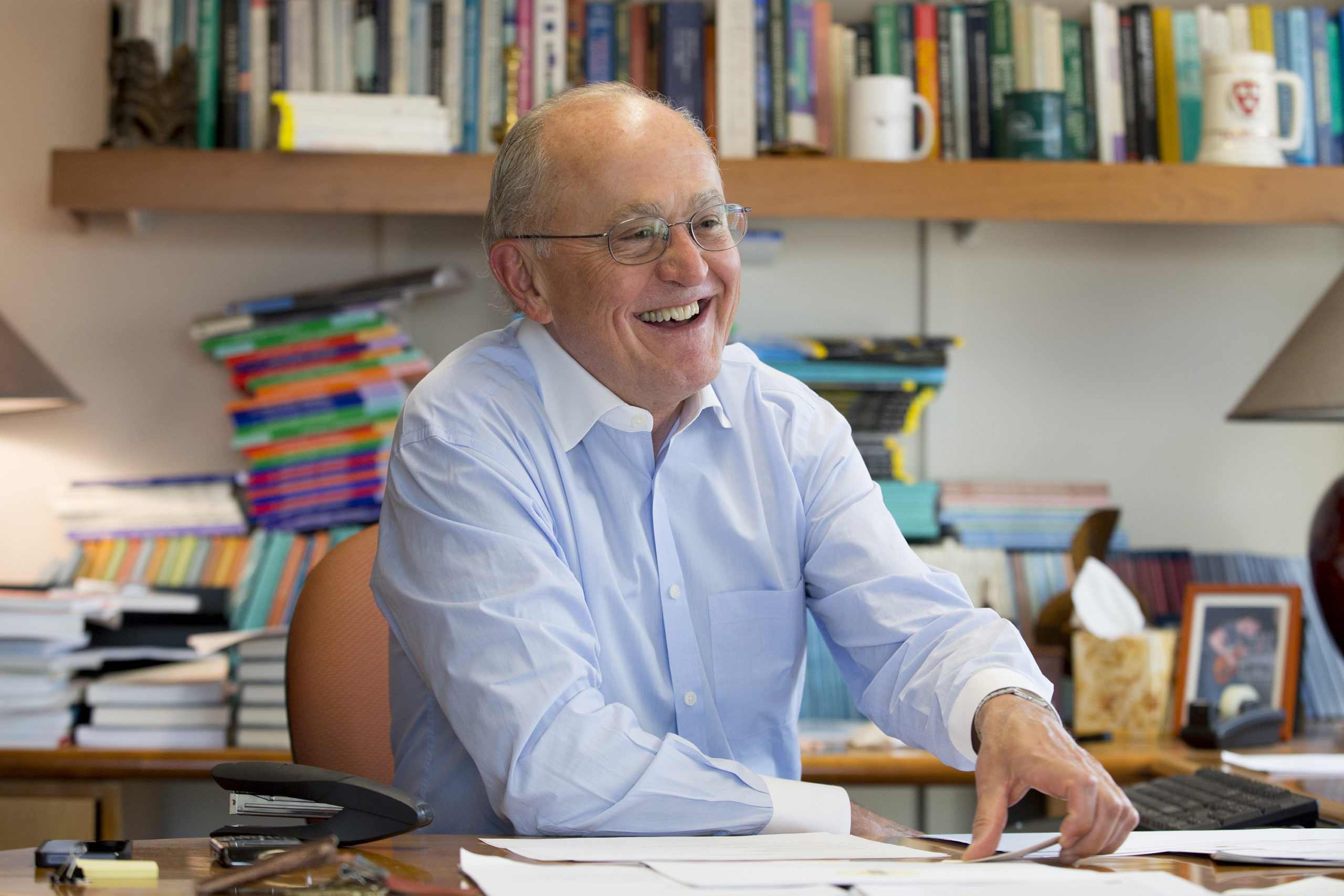
Photo of John G. Ruggie sitting in his office.
John G. Ruggie is the Berthold Beitz Professor in Human Rights and International Affairs. Rose Lincoln/Harvard Staff Photographer

see also: https://humanrightsdefenders.blog/2014/07/11/more-on-un-process-toward-contentious-treaty-on-business-and-human-rights/

Documentary film Arica gets attention from United Nations Human Rights Council

September 15, 2021

On 2 June 2021 Davide Abbatescianni wrote in Cineuropa about Lars Edman and William Johansson’s film which documents the devastation caused by a Swedish mining giant in a Chilean desert town

Over 30 years after Swedish mining and smelting giant Boliden shipped almost 20,000 tons of toxic mining waste to the Chilean desert city of Arica, a group of Special Rapporteurs from the United Nations Human Rights Council (UNHRC) led by Dr Marcos Orellana have made allegations of ongoing human rights abuses, as exposed in Lars Edman and William Johansson’s documentary Arica [+]. The feature was presented at last year’s IDFA and is set to continue its festival run in Spain, the Czech Republic, Italy and Belgium.

Exposure to the waste led to numerous cases of cancer, birth defects and serious diseases. Currently, the Chilean government estimates that around 12,000 people were exposed to the toxins. The UNHRC has advised the Swedish government that “urgent measures should be taken to repatriate the hazardous wastes to Sweden and/or ensure the disposal of the hazardous wastes in an environmentally sound manner”.

Particular criticism is aimed at Boliden Mining, which the body accuses of “intimidating and threatening behaviour” towards human rights defenders – namely, the legal team representing the victims in Arica. They allege that such an approach, adopted by Boliden following the decision by the Swedish court of appeal not to hear the Arica case on the grounds that Boliden’s actions took place too long ago to be tried under Swedish law, was “a deliberate attempt to produce a wider, chilling effect of silencing and intimidating other lawyers and human rights defenders”. The United Nations’ action has been welcomed by victims and campaigners, including community campaigner Rodrigo Pino Vargas, who said: “For over 30 years, we have seen our families and our neighbours suffer the consequences of this Swedish waste. We have buried our children and been forced from our homes. We will not stop until our voices are heard and the damage is repaired. Even when we win in court, we find nothing but broken promises. For the first time, the intervention of the United Nations gives us hope that our human rights will be upheld. The people of Arica demand that immediate action be taken to meet our health needs and that the toxic waste be returned to where it belongs – in Sweden.”

The acclaimed documentary, shot over the course of 15 years, sheds light on a shameful case of modern colonialism. After losing their case in 2018 with a sentence that ultimately sided with Boliden, rejecting the Chilean judges’ verdict on the firm’s responsibilities and decriminalising their misdeeds, another appeal was lost in 2019. As of today, the Swedish Supreme Court has not granted Arica’s victims the right to appeal, and Boliden is threatening to sue their lawyers to make them pay the legal costs, a sum close to $5 million.

Producer Andreas Rocksén commented: “When Lars and William began filming 15 years ago, their intention was to ensure that the voices of the people in Arica, affected by the waste that came from under the soil where they grew up, would be heard. What has happened since has surpassed any expectations: their story is being heard around the world, and yet those same people in Arica are still fighting for justice. We will continue to amplify their voices as best we can and applaud all the different initiatives aimed at seeing their human rights upheld.”

Meanwhile, political pressure in Sweden is mounting as the country prepares to host the Stockholm+50 event, marking 50 years since the first-ever UN Conference on the Human Environment.

Arica was produced by Swedish independent studio Laika Film & Television, and was co-produced by Belgium’s Clin d’Oeil Films, Chile’s Aricadoc, Norway’s Relation04 Media and the UK’s Radio Film Ltd. Its world sales are entrusted to Swiss outfit Lightdox.

https://www.cineuropa.org/en/newsdetail/405513

New book: The vitality of human rights in turbulent times

September 14, 2021

“If attention is directed towards the dynamism of social movements and human rights activism around the world, a different set of views of the cathedral emerges says Gráinne de Búrca on 9 September 2021 about her book “Reframing Human Rights in a Turbulent Era“.

Cover for 

Reframing Human Rights in a Turbulent Era

In the book, she examines a number of human rights campaigns around the world and their degree of success as well as their limitations. “I argue that even in a very turbulent and difficult era when human rights are under challenge from all sides, human rights approaches not only retain vitality and urgency for activists, but have also delivered substantive results over time. I suggest that if attention is directed away from a predominant focus on a handful of prominent Global North NGOs, and towards the dynamism of social movements and human rights activism around the world, a fuller set of views of the cathedral—of the landscape of human rights—emerges. The book advances an experimentalist theory of the effectiveness of human rights law and advocacy which is interactive (involving the engagement of social movements, civil society actors with international norms, networks and institutions), iterative (entailing ongoing action) and long-term (pursuing of social and fundamental changes that are rarely rapidly achieved).

Yet there is little reason for complacency or sanguinity. These are highly challenging times for human rights, and for human rights defenders, activists and advocates everywhere. The tide of illiberalism continues to surge around the world, and liberal democracy is in an increasingly unhealthy state. Climate change and the COVID-19 pandemic have exacerbated existing inequalities, corporate power continues to grow and to elude governmental control, while powerful new alliances of religious and political actors have been moving not only to repress the rights of disfavored communities and constituencies, but also to try to reshape understandings of human rights in highly conservative, exclusionary and illiberal directions. Repression of civil society, and of freedom of assembly, expression and protest continues apace, with the number of killings of environmental and other activists growing each year.

At the same time, long-standing critiques of human rights from the progressive left have become popular and mainstream, with influential books in recent years deriding the weaknesses, failures and dysfunctions of human rights, and their complicity with colonialism and neoliberalism. Many of these critiques have been powerful and important, and several have prompted reflection and proposals for reform on the part of human rights practitioners and scholars

But several of the most prominent critiques go beyond a call for rethinking or reform. They argue that the age of human rights is over, that its endtimes are here, that human rights law and the human rights movement are ill-suited to address the injustices of our times, that the failure of human rights approaches to seek or bring about structural change or economic justice highlights their deeply neoliberal character or companionship, and that human rights advocates should perhaps no longer seek to preserve human rights, but should make way instead for more radical movements.

In my book, I argue that some of the more damning critiques are exaggerated and partial. Like the proverbial view of the cathedral, several of the sharpest criticisms focus only or mainly on one particular dimension of the human rights system, and tend to caricature and reduce a complex, plural and vibrant set of movements to a single, monolithic and dysfunctional one. At the same time that the most pessimistic of the critics are writing obituaries for human rights, multiple constituencies around the world are mobilizing and using the language and tools of human rights in pursuit of social, environment, economic and other forms of justice. From #MeToo, Black Lives Matter, Climate Justice and Indigenous movements to reproductive rights marches in Poland, Argentina, and Ireland, to protest movements in Belarus, Myanmar, Nigeria and Chile, the appeal of human rights at least for those seeking justice (even if not for academic critics) seems as potent as ever.

None of this is to suggest that human rights advocates should not constantly scrutinize and reevaluate their premises, institutions and strategies. On the contrary, hard-hitting critiques of human rights for failing to tackle structural injustices and economic inequality have helped to galvanize change and a reorientation of priorities and approaches on the part of various relevant actors and institutions. Human rights activists and movements should exercise vigilance to ensure that they serve and are led by the interests of those whose rights are at stake, that they do not obstruct other progressive movements and tactics, and that their approaches are fit for the daunting and profoundly transformative challenges of these pandemic times, including accelerated climate change, digitalization, ever-increasing inequality and illiberalism. With attention to these risks and dangers, the diverse and heterogeneous array of actors that make up the international human rights community have an indispensable role to play, in a turbulent era, within the broader framework of progressive social, economic, environmental and cultural movements.

https://www.openglobalrights.org/grainne-de-burca/

11 human rights defenders you need to follow on Instagram

September 14, 2021

Amnesty has collaborated with 11 artists, creatives and campaigners to illustrate the four basic freedoms on social media Four basic freedoms outlined in 1948 Universal Declaration of Human Rights have been reimagined as Freedom to Explore, Be, Imagine and Rebel

We [want to] inspire a new generation to know their rights – and claim them – Sacha Deshmukh

Amnesty International UK has collaborated with 11 artists to help a new generation of human rights defenders to better understand the four fundamental freedoms that every person has a right to.

Outlined in 1948, the Universal Declaration of Human Rights was based on four basic freedoms – freedom of speech, freedom to worship, freedom from want and freedom from fear.

But many young people today are unaware of the human rights they are entitled to, despite living at a moment in history when many of these basic freedoms are at risk of being taken away.

Now Amnesty has reimagined these four tenets for a modern audience, redefining the broad categories as the:

  • Freedom to Explore
  • Freedom to Be
  • Freedom to Imagine
  • Freedom to Rebel

Over the coming weeks, artists, creatives and campaigners will be sharing their interpretations of what these freedoms mean to them on Instagram.

Sacha Deshmukh, CEO of Amnesty International UK, said:

From the pandemic to the climate crisis to conflicts unfolding across the planet – we live in a world of unprecedented uncertainty. But there is hope.

“Sixty years after Amnesty International was founded, we are collaborating with 11 fantastic artists, creatives and campaigners to reimagine the four basic freedoms – inspiring a new generation to know their rights and claim them.

“Knowledge is power and at a time when many basic human rights are under threat, these artists are vital beacons of hope for their followers – and the wider world.”

11 artists who want to change the world for the better

  • Basma Khalifa (she/her @basmakhalifa) is a Sudanese multi-disciplinary creative and hosts the ‘Unpretty Podcast’ which discusses perceptions of beauty through the lens of people of colour. Basma has worked with BBC1, BBC3, Facebook, Apple and Vice. 
  • Das Penman (they/she @das.penman) Das started their Instagram page during lockdown as a means of creative expression but it has since grown into a safe space for discussions about politics, mental health and everything in between. Das combines a passion for drawing with current affairs to create the “Daisy Mail”, a round-up of news stories to help followers stay informed.
  • Jacob V Joyce (they/them @jacobvjoyce) is a non-binary artist with a focus on queer and decolonial narratives. Joyce’s work ranges from afro-futurist world building workshops to mural painting, comic books, performance art and punk music.
  • Joy Yamusangie (they/them @joyyamusangie) specialises in illustration, experimenting with a range of processes to produce mixed media pieces. Joy explores themes of memory, intimacy, race and culture from a personal perspective.
  • Bee Illustrates (they/them @beeillustrates) is a queer illustrator who uses their art to educate, empower and inform people on a range of topics including mental health, LGBTQ+ and anti-racism.
  • Radam Ridwan (they/them @radamridwan) is a queer non-binary multi-disciplinary artist of Indonesian heritage. Radam’s work centres on QTIPOC empowerment and has been published internationally with features in VICE, Vogue Italia, gal-dem and Gay Times.
  • Tahmina Begum (she/her @tahminaxbegum) is a journalist and has featured in HuffPostUK, Women’s Health, I-D, Dazed, Refinery29, Glamour, The Independent, Metro, The i and gal-dem.  She covers a wide scope of topics centring around the lives of Muslim women and women of colour.
  • Jaz O’Hara (she/her @theworldwidetribe) is a motivational speaker, podcaster and the founder of The Worldwide Tribe, an organisation supporting refugees and asylum seekers globally.
  • Anshika Khullar (they/them @aorists) also known as Aorists is an award-winning Indian, non-binary transgender artist with an interest in intersectional feminist narratives.  In addition to their editorial and literary projects, Anshika has appeared as a guest speaker and created video content for the Tate.
  • Antony Amourdoux (he/him @antony_amourdoux) was a Great British Bake Off 2018 contestant and remains a passionate baker. Antony was born in Pondicherry, India, where he learned to bake with his father. He supports a number of causes including LGBTQ rights.
  • Jess (she/her @thechroniciconic) campaigns about the unseen injustices around disability, mental health and neurodiversity by sharing both her lived experience and the voices of others. Jess’ goal is to destigmatise and normalise conversations on these subjects.

https://www.amnesty.org.uk/press-releases/know-your-freedoms-11-human-rights-defenders-you-need-follow-instagram-right-now

Global Witness: 2020 the worst year on record for environmental human rights defenders

September 13, 2021

Since 2012, Global Witness has been gathering data on killings of land and environmental defenders. In that time, a grim picture has come into focus – with the evidence suggesting that as the climate crisis intensifies, violence against those protecting their land and our planet also increases. It has become clear that the unaccountable exploitation and greed driving the climate crisis is also driving violence against land and environmental defenders.

In 2020, we recorded 227 lethal attacks – an average of more than four people a week – making it once again the most dangerous year on record for people defending their homes, land and livelihoods, and ecosystems vital for biodiversity and the climate. [CF: https://humanrightsdefenders.blog/2020/07/29/global-witness-2019-worst-year-ever-for-land-rights-and-environmental-defenders/]

As ever, these lethal attacks are taking place in the context of a wider range of threats against defenders including intimidation, surveillance, sexual violence, and criminalisation. Our figures are almost certainly an underestimate, with many attacks against defenders going unreported. You can find more information on our verification criteria and methodology in the full report. Downloads

In 2020, over half of attacks took place in just three countries: Colombia, Mexico and the Philippines.

For the second year in a row, Colombia saw the highest number of killings in 2020, with 65 land and environmental defenders murdered. These took place in the context of widespread attacks on human rights defenders and community leaders across the country, despite the hopes of the 2016 peace agreement. Indigenous peoples were particularly impacted, and the COVID pandemic only served to worsen the situation. Official lockdowns led to defenders being targeted in their homes, and government protection measures were cut.

In Mexico, we documented 30 lethal attacks against land and environmental defenders in 2020, a 67% increase from 2019. Logging was linked to almost a third of these attacks, and half of all the attacks in the country were directed against Indigenous communities. Impunity for crimes against defenders remains shockingly high – up to 95% of murders do not result in prosecution.

In the Philippines, the deteriorating human rights situation has received increasing international condemnation. Opposition to damaging industries is often met with violent crackdowns from the police and military. In our data, over half of the lethal attacks were directly linked to defenders’ opposition to mining, logging, and dam projects.

President Duterte’s years in office have been marked by a dramatic increase in violence against defenders. From his election in 2016 until the end of 2020, 166 land and environment defenders have been killed – a shocking increase for a country which was already a dangerous place to stand up for the environment.

Forest defenders under threat

In instances where defenders were attacked for protecting particular ecosystems, 70% were working to defend the world’s forests from deforestation and industrial development. In Brazil and Peru, nearly three quarters of recorded attacks took place in the Amazon region of each country.

Almost 30% of the attacks were reportedly linked to resource exploitation (logging, mining and large-scale agribusiness), and hydroelectric dams and other infrastructure. Of these, logging was the sector linked to the most murders, accounting for 23 cases. Mexico saw a large rise in logging- and deforestation-related killings, with 9 in 2020.

An unequal impact

Much like the impacts of the climate crisis itself, the impacts of violence against land and environmental defenders are not felt evenly across the world. The Global South is suffering the most immediate consequences of global warming on all fronts, and in 2020 all but one of the 227 recorded killings of defenders took place in the countries of the Global South.

The disproportionate number of attacks against Indigenous peoples continued, with over a third of all fatal attacks targeting Indigenous people – even though Indigenous communities make up only 5% of the world’s population. Indigenous peoples were also the target of 5 out of the 7 mass killings recorded in 2020.

As has been the case in previous years, in 2020 almost 9 in 10 of the victims of lethal attacks were men. At the same time, women who act and speak out also face gender-specific forms of violence, including sexual violence. Women often have a twin challenge: the public struggle to protect their land, and the less-visible struggle to defend their right to speak within their communities and families.

[Defenders are] at risk because they find themselves living on or near something that some corporation is demanding. That demand – the demand for the highest possible profit, the quickest possible timeline, the cheapest possible operation – seems to translate eventually into the understanding, somewhere, that the troublemaker must go. – Bill McKibben

Business is responsible

Many companies engage in an extractive economic model that overwhelmingly prioritises profit over human rights and the environment. This unaccountable corporate power is the underlying force that has not only driven the climate crisis to the brink, but which has continued to perpetuate the killing of defenders.

In too many countries, rich in natural resources and climate critical biodiversity, corporations are operating with almost complete impunity. Because the balance of power is stacked in the favour of corporations, it’s rare that anyone is arrested or brought to court for killing defenders. When they are it’s usually the trigger-men – the ones holding the guns, not those who might be otherwise implicated, directly or indirectly, in the crime.

Governments must stop the violence

Governments have been all too willing to turn a blind eye and fail in providing their core mandate of upholding and protecting human rights. They are failing to protect land and environmental defenders, in many cases directly perpetrating violence against them, and in others complicit with business.

Even worse, states around the world – from the US to Brazil, Colombia and the Philippines – used the COVID pandemic to strengthen draconian measures to control citizens and close civic space.

There is a clear link between the availability of civic space and attacks against defenders – the most open and tolerant societies see very few attacks, whereas in restricted societies, attacks are much more frequent.

The majority of killings took place in states with limited civic freedoms

Data on civic freedoms via CIVICUS Monitor Open Narrowed Obstructed Repressed Closed 0 50 100 150 killings Killings in closed civic spaces are likely to be underreported about:blank

Recommendations

As the climate crisis intensifies, so too does its impact on people, including on land and environmental defenders. Meaningful climate action requires protecting defenders, and vice versa. Without significant change this situation is only likely to get worse – as more land is grabbed, and more forests are felled in the interest of short-term profits, both the climate crisis and attacks against defenders will continue to worsen.

Governments can turn the tide on the climate crisis and protect human rights by protecting civil society, and through passing legislation to hold corporations accountable for their actions and profits. Lawmakers have relied too much on corporate self-reporting and voluntary corporate mechanisms. As a result, companies continue to cause, contribute to, and benefit from human rights abuses and environmental harms, particularly across borders.

The United Nations, through its member states, must formally recognise the human right to a safe, healthy, and sustainable environment, ensure that commitments to meet the Paris Agreement integrate human rights protections, and implement the recommendations of the Special Rapporteur on human rights defenders and the UN Working Group on Business and Human Rights.

Statesmust ensure national policies protect land and environmental defenders and scrap legislation used to criminalise them, require companies to conduct human rights and environment due diligence in their global operations, and investigate and prosecute all actors involved in violence and other threats against defenders.

The European Commission is currently preparing to publish binding due diligence legislation, including an initiative on Sustainable Corporate Governance. They must ensure this initiative requires all companies doing business in the EU, including financial institutions, to identify and address human rights and environmental harms along their value chains. This legislation must include robust liability regimes and penalties to hold companies accountable for failing to do so.

Finally, companies and investors must publish and implement effective due diligence systems to identify and prevent human rights and environmental harms throughout their supply chains and operations, adopt and implement a zero-tolerance stance on reprisals and attacks on land and environmental defenders, and provide effective remedy when adverse human rights and environmental impacts and harms occur.

People sometimes ask me what I’m going to do, whether I’m going to stay here and keep my mother’s fight alive. I’m too proud of her to let it die. I know the dangers – we all know the dangers. But I’ve decided to stay. I’m going to join the fight. – Malungelo Xhakaza, daughter of murdered South African activist Fikile Ntshangase

Defenders are our last line of defence against climate breakdown. We can take heart from the fact that, even after decades of violence, people continue to stand up for their land and for our planet. In every story of defiance against corporate theft and land grabbing, against deadly pollution and against environmental disaster, is hope that we can turn the tide on this crisis and learn to live in harmony with the natural world. Until we do, the violence will continue.

Those murdered included South African Fikile Ntshangase, 65, who was involved in a legal dispute over the extension of an opencast mine operated by Tendele Coal near Somkhele in KwaZulu-Natal province. She was shot dead in her own living room. See also: https://humanrightsdefenders.blog/tag/fikile-ntshangase/

https://www.bbc.com/news/science-environment-58508001

Download the full report : Last line of defence (low resolution) (2.3 MB), pdf

Download the full report : Last line of defence (high resolution) (18.1 MB), pdf
Reed Brody about the death of Hissene Habre

September 1, 2021

A bit of a special post: On 28 August 2021, Reed Brody, [see also https://humanrightsdefenders.blog/2017/02/21/the-dictator-hunter-works-from-home/] wrote on Facebook a post about the death of the former dictator of Chad Hissene Habre. Reed’s deep involvement in his case makes his observations worth a read:

A lot of people have asked me how I felt about the death in Senegal of the former dictator of Chad Hissene Habre, on whose prosecution I spent 17 years. https://www.nytimes.com/…/africa/hissene-habre-dead.html For me, especially in later years, the effort was much more about using the case to promote transformation and giving the victims a means to claim their dignity than about the person of Hissène Habré.At Habré’s trial, Kaltouma Deffalah, one of the survivors of sexual slavery, testified defiantly that she felt “strong, very courageous because I am before the man who was strong before in Chad, who …doesn’t even speak now, I am really happy to be here today, facing him, to express my pain, I am truly proud.” It was a sentiment expressed, in one way or another, by many of the survivors who testified.Since Habré was sentenced to life in prison in 2016, his victims have been campaigning to get reparations, as awarded by courts in Chad and Senegal. In fact, on the morning of his death, I was having a phone conference with the victims’ Chadian lawyer Jacqueline Moudeina [ see: https://www.trueheroesfilms.org/thedigest/laureates/179E3C5C-9175-1B42-99C9-1004DDBC850E]and other lawyers on how to kick-start the stalled procedures, particularly at the African Union ( background here – https://www.hrw.org/…/hissene-habres-victims-continue…) That said, it is a strange feeling that he’s dead. I used to imagine that Habré and I were sitting across a chessboard in a strategic battle, trying to anticipate the other’s moves. Back in 2004, I asked the French journalist Christian Millet, who maintained friendly contact with Habré, what he thought the former dictator’s strategy was against us. And Millet responded: “Il vous attend dans sa grotte.” He is waiting for you in his cave, a reference to his days as a rebel fighter in the rocky desert of northern Chad. Habré was playing this chess game with the black pieces, waiting for us to over-extend. That is how as president of Chad, with French and American help, he defeated Libya’s Moemmar Qaddafi whose troops had occupied part of his country.In Senegal, we were in Habré’s cave, where he had used the millions he looted from the Chadian treasury to build himself a network of protection that included politicians, religious figures and journalists . But in the end, the tenacity and perseverance of his victims, the evidence of his massive crimes ( thousands of killings, systematic torture, sexual slavery ) , and the courage of some Senegalese leaders such as then-justice minister Aminata Toure, overcame Habré’s home-field advantage, and he was powerless to prevent his conviction in an exemplary and transparent trial.In his one written declaration to the investigating judges, Habré said that I was “an enemy… who has never hidden his aggressive and outrageous hostility, a specialist in forgery and lies.” How do I feel now? I’m grateful that Habré lived long enough to face justice and the accusatory gaze of his victims.”

The Human Rights Measurement Initiative (HRMI)

August 23, 2021

On 12 August 2021, The open Society Foundations published a piece on a grantee of the Open Society Foundations: Rights Tracker a project to measure the rights’ performance of governments
Data can motivate change. This is the mantra of the Human Rights Measurement Initiative (HRMI), a nonprofit research group that has launched Rights Tracker to measure the rights performance of governments. Open Society’s Borislav Petranov spoke to Anne-Marie Brook of HRMI about this initiative. See also: https://humanrightsdefenders.blog/tag/human-rights-measurement-initiative-hrmi/

Tell us more about the Rights Tracker. Why do you think a tool like this is needed? How do you hope people will use it?

Our vision is a world where countries are competing to see who can treat people the best. Leaders and other decision-makers already have lots of statistics on things like GDP growth. In producing the Rights Tracker we want to make sure they also have robust data on how countries are treating people.

Advocates, journalists, government officials, and others can all think of the Rights Tracker as a set of independent scorecards on how well countries are doing. My hope is that they will take the opportunity to re-think the way they have always done things and consider how data can lead to new approaches to achieving their goals.

For example, human rights advocates and journalists often do incredible work documenting specific human rights violations. The stories they tell can be very powerful, but they could be made even more powerful by pairing them with data. For instance, they might want to highlight that a particular story is just one example of a much more systemic pattern of human rights violations.

All of us who have been to school know that receiving a report card can be both nerve-wracking and exciting. What have I done well on? Where could I do better that I might not have already thought of? We want our data to be helpful tools for improvement.

In creating a tool like this, what is your greatest ambition? And what is your largest concern?

Our greatest ambition is a world where all people are able to live their lives to their fullest potential, and HRMI is no longer needed!

In the more foreseeable future, we want to measure all rights set out in international human rights law, for all countries in the world, and for the data to be actively used every day, in every country, to help bring about improvements in the lives of people.

My largest concern is for the safety of human rights defenders worldwide, many of whom are contributing their knowledge to our dataset via our annual expert survey. I have incredible admiration and respect for these brave people who often put their own safety, and that of their families, at risk in order to stand up for what is right. At HRMI we take data security extremely seriously and do all we can to magnify the voices of these people, in spaces they may not otherwise be able to reach while protecting their anonymity.

A lot of the concerns about indices and rankings have focused on perceived difficulties in applying methodologies that will produce reliable results: how is HRMI handling this challenge?

It is very important to us that the country scores we produce are equally well accepted by the academic measurement community (who peer-review our methodologies) and human rights practitioners, who need to see that our country scores accurately represent what they see happening on the ground. So far, we are getting the thumbs up from both groups.

To achieve this, we use co-design techniques—particularly for the ongoing development of our expert survey and the Rights Tracker. For example, every year we run user testing sessions via Zoom, where we ask a user to speak out loud to one of the HRMI team as they interact with our tools. It is incredible how much we learn from this “fly on the wall” experience. Everyone who participates in one of these sessions is helping to co-design these key products.

Our economic and social rights methodology is equally innovative. The SERF (Social and Economic Rights Fulfillment) index methodology we use—developed by HRMI co-founder Susan Randolph, and her colleagues—has won two important prizes, including the prestigious Grawemeyer Award for Ideas for Improving World Order.

Looking ahead, how do you see this work developing? 

We have two key priorities looking ahead:

  • To achieve global coverage with our expert survey. We already have a sprinkling of countries across every region of the world, and we are now filling out the gaps region by region, as funding is secured. All countries in the Pacific region are already included, and our current focus is on completing coverage across Asia. Next year we will be adding India and China, at which point we will be covering over half the world’s population. We already have global coverage of the five economic and social rights we measure.
  • To build the momentum of HRMI data being used for impact. We work hard to equip civil society and journalists with accessible data tools. We also expect to see significant data uptake by the private sector. Our data can feed into ESG (Environmental, Social, and Governance) investment analysis, geopolitical advisory services, and international policy consulting. Watch this space!

https://www.opensocietyfoundations.org/voices/q-and-a-how-does-your-government-score-on-rights