This International Day of Education, Amnesty International has launched Rights Arcade, a free human rights game app which aims to educate the next generation of human rights defenders about rights such as freedom of expression and freedom of peaceful assembly.
Rights Arcade is designed to strengthen the human rights movement through action-oriented education. The games will boost players’ knowledge about human rights and encourage people to take action on human rights issues.
One of Rights Arcade’s key features is a self-paced approach that allows players to learn, reflect and take action at their own pace while navigating through the game’s stories.
“This game has been designed to empower and encourage people everywhere, but especially younger audiences, to learn about human rights in an engaging manner,” said Agnès Callamard, Amnesty International’s Secretary General.
“Young people are pivotal in setting the human rights agenda, today and for the future. Reaching them in the spaces they inhabit, or with which they engage regularly, is key to enabling new generations of activists and empowering them to fight for, and protect, human rights – now and in the future.”
The game’s stories, which are fictionalized experiences inspired by real world events, are driven by a player’s choices.
The player gets to play the role and navigate the experiences of the three central characters, making decisions based on their own understanding of human rights and unpacking how human rights concepts apply in daily life.
People around the world will be able to access a collection of three games currently available in four languages: English, Simplified Chinese, Thai and Korean.
Rights Arcade can be downloaded on iOS and Android devices, ensuring its accessibility in regions with poor internet connectivity.
Rights Arcade will be regularly updated to accommodate learning in more languages, and with new game offerings in the months and years to come.
Tara Everton and Jenny Wang posted in the human Rights Foundation a diatribe “Ignorance and Reluctance of the Rich and the Famous” which is well worth reading in full:
In a recent episode of the podcast “All-In,” Chamath Palihapitiya, billionaire venture capitalist, stakeholder of the Golden State Warriors, and Chairman of Virgin Galactic, commented that “nobody cares about what’s happening to the Uyghurs… Of all the things that I care about, it is below my line.”
Palihapitiya has joined the growing list of wealthy Western elites, including Elon Musk, Ray Dalio, Craig Smith, and more, who have openly turned a blind eye to the suffering of millions of people living under the Chinese Communist Party (CCP)’s repression.
The reason for doing so is simple: to remain in the good graces of the CCP to line their own pockets.
The world is witnessing the Chinese government’s belligerence and disregard for human dignity. In the past several decades, China’s authoritarian regime has tightened its grip on power by conducting mass crackdowns on Chinese human rights defenders, spearheading an unprecedented 21st century genocide against the Uyghur Muslims in Xinjiang, and implementing incessant policing in Tibet and Hong Kong. Despite the regime’s ongoing abysmal human rights record, highly influential entrepreneurs, business tycoons, and elites have all too willingly stayed silent.
Greed and lust for access to the Chinese market have made profit-driven elites eager to acquiesce to the CCP’s authoritarian ideals. When these figures harbor these types of views – and express them so casually on prominent platforms – human rights are in grave danger.
The blatant ignorance of Western elites and billionaires is stunning. For example, founder of Tesla, Elon Musk, brazenly disregarded the testimonies and evidence coming out of Xinjiang about the genocide, and recently opened a Tesla showroom in the region. Similarly, Ray Dalio, founder of Bridgewater Associates, has shamelessly fawned over the Chinese government’s mass crackdowns toward achieving “common prosperity,” and even claimed that the United States should follow suit — a stance that has garnered him praise from Chinese state media. Most recently, Craig Smith, CEO of Burton Snowboards’ China subsidiary, showed concerning indifference to the Uyghur genocide by stating that he has no problem doing business in Xinjiang — even after sharing that he is well-aware of the reports about genocide.
Palihapitiya’s recent brazen remarks are just one example out of far too many.
Palihapitiya and his fellow tycoons are trained in social combat. Palihapitiya, in response to the resulting backlash, “recognized” he came across “lacking empathy,” citing his personal experience as a refugee and concern for all human rights. The Golden State Warriors subsequently tried to publicly distance themselves from Palihapitiya – while still dancing around using direct verbiage about China and the Uyghur genocide. All too similarly, Dalio took to social media soon after his fumble to admit he “answered sloppily” to questions about China. Elites are quick to undergo damage control – yet the real damage has already been done.
With the power of celebrity and money comes responsibility. Businessmen and elites could undoubtedly make a dent in the CCP’s growing control just as corporate divestment campaigns did to help bring an end to apartheid in South Africa. These individuals can speak up, but egregiously, they are reluctant and choose not to. Driven instead by financial gain, they uncritically whitewash the Chinese regime’s abuses and in turn, act as agents of influence for Xi Jinping.
They choose money over morals. However, you do not have to – and you should not. Connect with your government officials. Policymakers and legislators need to engage with civil society groups and independent experts to ensure their foreign policies and economic negotiations are not complicit to the Chinese government’s crimes. Call your elected officials to stress their moral and legal obligation to respect, protect, and fulfil fundamental human rights. Shop responsibly. There’s a 1 in 5 chance that your clothes are linked to Uyghur forced labor. Consider supporting brands that have publicly committed to ending such forced labor, and urge your favorite brands to disclose not only how products are made but also who makes them. Support activists. The CCP actively intimidates and pressures brave individuals outside of China who stand up for human rights. Follow them on social media, donate to their campaigns, and support organizations that provide platforms for their activism. Human rights are not a “luxury belief,” and complicity is not “below [your] line.” As a concerned global citizen, do what you can to stand up to the Chinese regime. We can do better than the billionaires. Full stop.
Mongabay.com on 30 December 2021 made a tentative list of deaths of environmental human rights defenders
Between the pandemic, natural disasters worsened by human activities, and violence against environmental defenders, 2021 was another year of significant losses in conservation.
The following is a list of some of the deaths that occurred in 2021 that were notable to the conservation sector.
This list acknowledges some of the deaths in 2021 that are significant to the broader conservation community. In case Mongabay missed a death that occurred in 2021 that’s notable in conservation, it asks to reach out via this form.
6 Congolese rangers: Six Congolese Institute for Nature Conservation (ICCN) rangers working at Virunga National Park in the eastern Democratic Republic of Congo were killed in an ambush by a local militia group in January. They were: SuruMwe Burhani Abdou, 30; Alexis Kamate Mundunaenda, 25; Reagan Maneno Kataghalirwa, 27; Eric Kibanja Bashekere, 28; Innocent Paluku Budoyi, 28; and Prince Nzabonimpa Ntamakiriro, 27. More.
Ann Croissant, 81 (United States): An environmental activist, educator, and botanist who worked to protect native plants like Brodiaea filifolia in California’s San Gabriel Mountains via the Glendora Community Conservancy, which she founded in 1991. More.
Aruká Juma, 88 (Brazil). Aruká Juma, the last of the Juma people in Brazil, died of Covid-19. More.
Bob Scholes, 63 (South Africa). A professor of systems ecology at Wits who served as the Director of the Global Change Institute (GCI) and was one of the world’s leading scientists on climate change. More
Cornelia Hahn Oberlander, 99 (Canada): The landscape architect sometimes known as the ‘Queen of Green’, Oberlander embraced sustainable design before it was fashionable and was an advocate for rewilding. More.
Dave Courchene Jr., 71 (Canada): A Manitoba elder also known by his spirit names Nitamabit and Nii Gaani Aki Inini, Courchene Jr. founded the Turtle Lodge Centre of Excellence in Indigenous Education and Wellness to “exchange intergenerational knowledge, revitalize language, train youth leaders and find environmental solutions to climate change.”. More.
David Wake, 84 (United States). An authority on salamanders who grew alarmed by the disappearance of many amphibians. Wake founded AmphibiaWeb. More.
Deb Abrahamson, 66 (United States): An Indigenous environmental activist who campaigned against mining pollution and uranium contamination on Indigenous lands. Abrahamson was active in the Standing Rock protests and the Murdered and Missing Indigenous Women coalition.. More.
Debra Ann Jacobson, 69 (United States): A lawyer and environmentalist who helped cofound the Women’s Council on Energy and the Environment and served in leadership roles in the local and state Sierra Club groups. Jacobson spent nearly 20 years working on clean energy and other issues at the U.S. Department of Energy. More.
Dongria Kondh or Penny Eastwood, 65 (United Kingdom): A founding member of Treesponsibility and founder of The Source Partnership, Kondh spent 30 years working to slow climate change through tree planting and other initiatives. More.
Edward O. Wilson, 92 (United States). A prominent biologist and prolific author who help raise global awareness and understanding about biodiversity and conservation. Lovejoy is credited with coining the term “biological diversity”, developing the concept of “debt-for-nature” swap programs, and being one of the earliest to sound the alarm about the global extinction crisis. While Wilson’s research on ants was highly influential in scientific circles and won numerous recognitions, he was mostly widely known for his accessible writing, including articles and best-selling books which introduced concepts like biodiversity to the masses. More.
Elsie Herring, 73 (United States): An environmental activist who sued a subsidiary of Smithfield Foods in 2014 for pollution from their industrial hog farms eventually winning a $550 million judgement in 2018 (which was later reduced to $98 million). More.
Estela Casanto Mauricio, 55 (Peru). A human rights defender who founded the Asháninka community of Shankivironi in the Perené valley of Junín in Peru. Mauricio was murdered in March 2021. More.
Francisco “Paco” Javier Valverde Esparza, 48 (Mexico). A conservationist who dedicated his life to protect the vaquita, the world’s smallest porpoise and most threatened marine mammal. He died of COVID-19. More.
Gonzalo “Gonza” Cardona Molina, 55 (Colombia): A conservation biologist who worked to protect the yellow-eared parrot and other critically parrots in the Colombian Andes. Cardona was murdered in January while doing a bird count. More.
Greg Lasley, 71 (United States). Wildlife photographer and naturalist who served in leadership role in several ornithology organizations and published dozens of articles on birds. More.
Guillermo Guerra, 60 (Peru). A logistics specialist at Project Amazonas and Margarita Tours. He died of COVID-19. More.
Ian Lemaiyan, 31 (Kenya). A rhino conservationist and anti-poaching patrol pilot who died in a plane crash in February 2021.More.
Javiera Rojas, 43 (Chile): A Chilean environmental activist who opposed dams was foundered murdered in Calama city. More.
Jene McCovey, 69 (United States): A Yurok elder who was a fierce advocate for Indigenous rights, environmental rights, and social justice. McCovey played an important role in taking down the Klamath Dams and protecting the Headwaters Forest from logging. More.
Jesús Choc Yat, 57 (Guatemala). A Mayan spiritual guide who was found dead with signs of torture. More.
Karapiru AWA, 70s (Brazil). After a violent ambush that killed most of his family in the Brazilian Amazon, Karapiru wandered the forests of eastern Brazil for a decade alone. Karapiru later became a holder of traditional knowledge and an activist for Indigenous rights in Brazil. He died of COVID-19. More.
LaFanette Soles-Woods, 63 (United States): An environmental justice activist who fought pollution from landfills near her community in Florida. More.
Paul J. Crutzen, 87 (Germany). A meteorologist and atmospheric chemist who won the Nobel Prize in 1995 for his work the formation and decomposition of atmospheric ozone, including the effects of chlorofluorocarbon chemicals (CFCs). Crutzen popularized the term Anthropocene to describe the our current epoch where humanity has a substantial impact on the planet. More.
Pentti Linkola, 87 (Finland). Founder of the Finnish Nature Heritage Foundation which works to preserve the few ancient forests still left in southern Finland. More.
Peter Gorrie, 71 (Canada): An environmental journalist who reported on Canadian tar sands and other issues for multiple newspapers in Canada. More.
Prince Philip, Duke of Edinburgh, 99 (United Kingdom). The husband of Queen Elizabeth II who was the royal consort from 1952 until his death in 2021. Philip was an avid conservationist, helping found the Australian Conservation Foundation in 1963 and the World Wildlife Fund (WWF) in 1961. He went on to serve as President of WWF-UK from 1961 to 1982 and President of WWF International from 1981 to 1996. More.
Rafael “Rafa” Gallo (Costa Rica). A prominent figure in the world’s river rafting community, Gallo founded Rios Tropicales in 1985 and became defender of the free-flowing Pacuare River against efforts to dam the popular whitewater river. Gallo also established the International Rafting Federation and was Board Chair at the International Whitewater Hall Of Fame. More.
Rizki Wahyudi, 25 (Indonesia). A forest ranger at Mount Palung National Park in West Kalimantan on the island of Borneo, Wahyudi was killed in the Sriwijaya plane crash off Java in January 2021. More.
Rory Young (Zambia). The co-founder and CEO of Chengeta Wildlife was killed in an ambush on patrol in Burkina Faso in April 2021. More.
Sharon Begley, 64 (United States). Science journalist for the Wall Street Journal, Newsweek, and Reuters. More.
Sharon Matola, 66 (Belize): The biologist, environmentalist, and zookeeper who founded the Belize Zoo and Tropical Education Center. Matola was sometimes known as the “Jane Goodall of jaguars” and the “Jane Goodall of Belize. More.
Shirley McGreal, 87 (United States): Founder of the International Primate Protection League who campaigned to prevent wildlife trafficking. More.
Solomon Chidunuka (Zambia). Senior Wildlife Warden who oversaw the North Luangwa Area Management Unit, Zambia’s only area protecting black rhino. Solomon was a Tusk Conservation Award winner. More.
Sunderlal Bahuguna, 94 (India). An environmentalist best known for leading Chipko movement in the 1970s and the anti-Tehri dam Movement in the 1990s. Bahuguna inspired a generation of environmentalists. He died of COVID-19. More.
Tom Lovejoy, 80 (United States). A prominent and influential conservation biologist who helped catalyze a global movement to save life on Earth as we know it. Lovejoy is credited with coining the term “biological diversity”, developing the concept of “debt-for-nature” swap programs, and being one of the earliest to sound the alarm about the global extinction crisis. More.
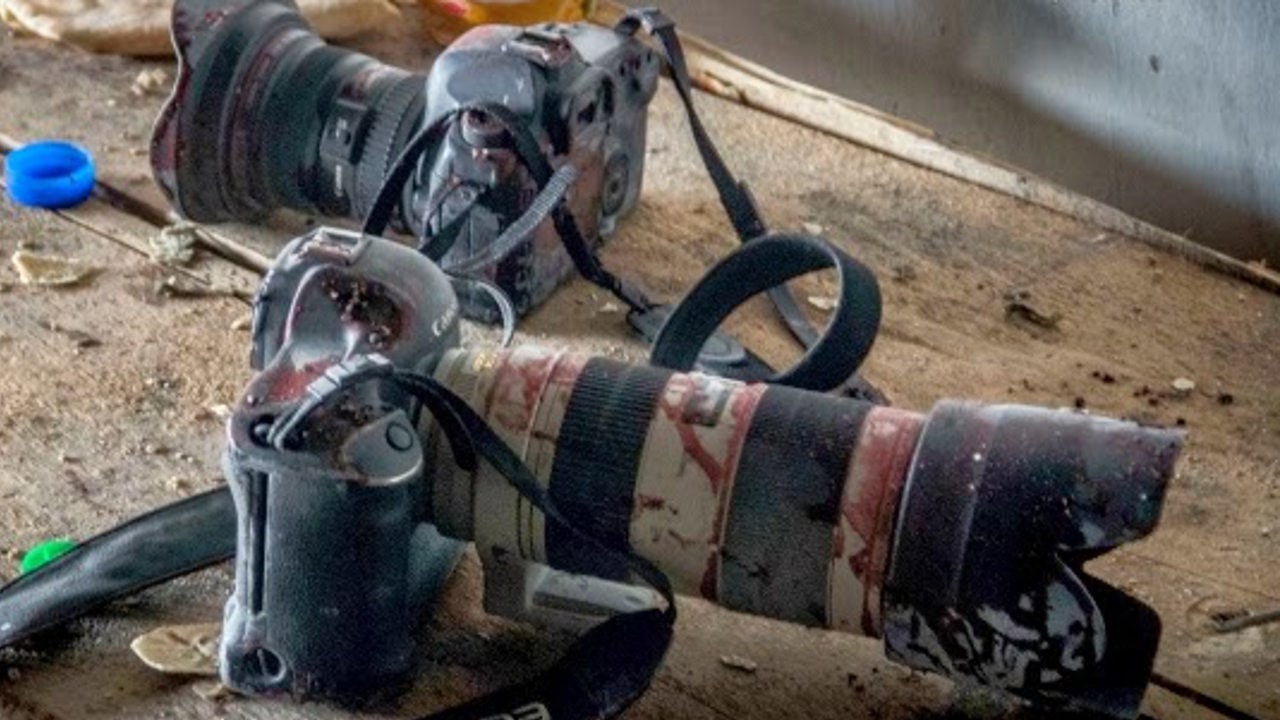
A total of 45 journalists died in 2021 while practicing their profession, with Mexico being the most dangerous country in the world for reporters, the International Press Institute (IPI) reported today in Vienna.
Seven Mexican journalists were assassinated this year for their work, with which the Latin American country once again leads the annual list of dead reporters. India and Afghanistan follow, each with six journalists killed, ahead of the Democratic Republic of the Congo, with three.
According to the IPI, a global network of media owners and editors, the safety of journalists remains a global challenge. For this reason, the Institute “urges the authorities to end impunity for these crimes and to guarantee the protection of journalists, who must be able to carry out their work freely and safely.”
Of the 45 journalists killed, 40 were men and five were women, the IPI detailed. Twenty-eight of them were killed for their work, three died while working in a conflict zone and two when covering internal disturbances in a country.
In eleven cases the causes of the deaths are still being investigated, while a journalist drowned while covering the rescue of an elephant from a river in India, showing how dangerous the profession can be.
The number of journalists killed this year is the lowest recorded by the IPI since 1997. However, the IPI emphasizes that the decrease in the number of journalists killed and assassinated is not an indication of the good state of press freedom in the world.
“Waves of violence against the press can lead to self-censorship when journalists avoid certain topics that put their lives in danger,” says IPI.
“This is made even worse in a climate of impunity in which murderers must not answer for their actions. IPI stands in solidarity with the families and colleagues of all journalists killed for their work in 2021 and demands that those responsible be held accountable for their actions” the statement concludes.
On 18 January 2022 the Guardian reported on a legal move against Ahmed Nasser al-Raisi made by the lawyer of human rights defender Ahmed Mansour, jailed in the UAE
William Bourdon, a lawyer for the Emirati human rights defender and blogger Ahmed Mansour, said he filed the complaint against al-Raisi in a Paris court under the principle of universal jurisdiction. Mansour, a laureate of the MEA, is serving a 10-year sentence in the UAE for charges of “insulting the status and prestige of the UAE” and its leaders in social media posts. See: https://www.trueheroesfilms.org/thedigest/laureates/074ACCD4-A327-4A21-B056-440C4C378A1A
Separately, lawyers for two Britons who had accused al-Raisi of torture filed a criminal complaint Tuesday with investigative judges of the specialised judicial unit for crimes against humanity and war crimes of the Paris Tribunal.
Al-Raisi was elected for a four-year term as Interpol president in November. He has been accused by human rights groups of involvement in torture and arbitrary detentions in the UAE.
Al-Raisi announced his trip to the Lyon headquarters in a Twitter post on Monday, saying: “with the start of the new year, I begin today my first visit to Lyon, France, as the president of Interpol”. Interpol secretary general Jurgen Stock welcomed al-Raisi “on his first official visit as president” in his own Twitter post. “Al-Raisi’s presence on French territory triggers the universal jurisdiction of French courts and immunity can not be invoked,” said Rodney Dixon, a lawyer for the two Britons, Matthew Hedges and Ali Issa Ahmad.
Hedges, a doctoral student, was imprisoned in the UAE for nearly seven months in 2018 on spying charges and said he had been subjected to torture and months of solitary confinement. Ahmad, a football fan, says he was tortured by the UAE security agency during the 2019 Asia Cup.
They filed a torture complaint against al-Raisi with the prosecutors of the Paris Tribunal in October. That complaint is pending, Dixon said. The criminal complaint that was filed on Tuesday directly with the judges of the tribunal – with al-Raisi on French territory – means that the French judges “should immediately open an investigation into claims against him,” Dixon said. See also: https://humanrightsdefenders.blog/2022/01/17/ground-breaking-conviction-of-syrian-torturer-in-germany/
“According to French law, an open investigation could lead to al-Raisi’s detention for questioning while he is on French territory, either now or whenever he returns,” Dixon said.
It was not clear how long al-Raisi would remain in Lyon. Interpol officials did not respond to phone calls or emails by the Associated Press asking about his whereabouts on Tuesday.
On 13 January 2022 Brian Dooley devoted a blog post for Human Rights First to the US’ State Department’s efforts to draft HRD Guidelines:
Ten years ago, I testified in the US Congress for Human Rights First on why the US government should issue guidelines to its embassies on engaging with human rights defenders.
We then spoke to State Department bureaucrats in many months of negotiations too soporific to recount here, and by March 2013 they finally produced some useful guidelines for US diplomats, modelled largely on those adopted by European countries a decade before.
It’s a great idea – US government officials were offered specific advice on how and why to engage with Human Rights Defenders, and the hope was that the guidelines would set minimum standards for US embassies all over the world.
Engagement with human rights defenders by US diplomats tends to patchy – some embassies do it well, others hardly do it at all. HRDs in countries which are antagonistic to Washington tend to enjoy relatively easy access to US diplomats who share their criticism of the local government, whereas HRDs in countries ruled by dictators who are allies of the US complain about a lack of support from US embassies.
The guidelines encouraged officials to maintain regular contact with HRDs, or possibly to attend their trials or visit them in detention, and otherwise explore ways to support and protect them. All good in principle, but the State Department failed to adequately encourage its embassies to implement the suggestions.
So five years ago I was back in the US Congress, testifying that the guidelines “haven’t been properly promoted or widely translated …[and that] protecting HRDs is too important a job to do half-heartedly.”
Those US guidelines were pretty good, but the problem was so few people ever heard about them. When I mentioned them to human rights NGO staff, to officials of other governments, to human rights defenders, to people in the UN, to American ambassadors in the Middle East, even to State Department officials in the Bureau of Democracy, Rights and Labor, I was generally met with a “Huh?”
The good news is that, after more years of advocacy by ourselves, Earthrights, and others, the State Department has now released updated guidelines, complete with an assurance that “The Biden-Harris Administration is committed to putting human rights and democratic principles at the center of our foreign policy.” All nice enough, though these commitments to support HRDs should be institutionalized long term and not dependent on a particular administration.
The content is strong, advising sensible courses of action including that US officials “Encourage investigations and prosecution of those who harass and attack human rights defenders,” and that US officials “seek the consent of human rights defenders before taking any actions on their behalf and take precautions in communicating with them online and offline.”
The guidelines could act a great starting point for US officials at any embassy who want to connect with local civil society and activists. The challenge is to prevent these new standards from getting left on the shelf like the last ones.
To guard against that, we and others are hoping Congress will pass legislation aimed at keeping the State Department focused on protecting HRDs, including requiring US embassies to post the guidelines on their websites in relevant languages in an invitation to local HRDs to engage with them.
This engagement and support is currently horribly inconsistent. For instance, last week the US embassy in Niger issued a short public statement in support of local HRDs, which is great. But the US embassy in Cairo has for years been mortifyingly silent about the extensive attacks on local HRDs by Egyptian authorities.
The US government should use its power much more often to protect human rights defenders, not least at a local level where its embassies can offer much more consistent support to human rights defenders, and not just in countries that are adversaries of the US, but with its allies too.
Global Dialogue seeks a Development and Communications Lead for the Funders’ Initiative for Civil Society (FICS).
FICS’ vision is a world in which people can leverage their collective power to push for political, social and economic transformation without harm, stigma, or fear. Our mission is to defend and expand civic space by making sure progressive movements and their allies have the resources they need to tackle the drivers of closing civic space – the systems, actors, and trends that sit behind growing restrictions on rights of assembly, association and other fundamental freedoms.
A small, friendly and committed team, we have received new investment that is enabling us to scale up and deliver ambitious new grant-making and research programmes. The Development and Communications Lead is a new role and will be a critical member of our core team, helping to drive and sustain this momentum.
They are looking for someone passionate about FICS’ mission and welcome applications from candidates who bring strong expertise in one discipline and a commitment to developing skills in the other, for which there would be support.
Applications are due by 9am on 3 February 2022 and details of how to apply as well as more information about the role can be found in the attached recruitment pack.
A Turkish court ruled Monday that prominent Turkish civil rights activist and philanthropist Osman Kavala should stay in prison, despite his more than four years in pre-trial detention. The hearing took place as a Council of Europe deadline that could trigger infringement procedures looms. The European Court of Human Rights ruled in 2019 that Kavala’s rights had been violated and ordered his release. But Turkey has repeatedly refused to do so. Kavala, who is in Silivri prison on the outskirts of Istanbul, did not participate in the hearing in line with an October statement that he would no longer attend trials via video conference because he didn’t have faith the court would deliver a fair trial.
Kavala, 64, is accused of financing nationwide anti-government protests in 2013, attempting to overthrow the government by helping orchestrate a coup attempt three years later and espionage. He denies the charges, which carry a life sentence without parole. He was acquitted in February 2020 of charges in connection with the 2013 Gezi Park protests. As supporters awaited his release, Kavala was rearrested on new charges. The acquittal was later overturned and linked to charges relating to the 2016 coup attempt, which the Turkish government blames on the network of US-based Muslim cleric Fethullah Gulen, who denies any ties to the coup. That trial is now part of a merged case involving 51 other defendants, including fans of the Besiktas soccer club who were acquitted six years ago of charges related to the Gezi protests before that decision also was overturned. Kavala is the only jailed defendant.
“His continued imprisonment for 1,539 days is the continuation of lawlessness identified by the European Court of Human Rights,” Bayraktar his lawyer said. “End this lawlessness today so our client gets his freedom.” In October, Kavala’s case also caused a diplomatic crisis between Turkey and 10 Western countries, including the United States, France and Germany, after they called for his release on the fourth anniversary of his imprisonment. Turkish President Recep Tayyip Erdogan openly disdains Kavala, accusing him of being the “Turkish leg” of billionaire US philanthropist George Soros, whom Erdogan alleges has been behind insurrections in many countries. He threatened to expel Western envoys for meddling in Turkey’s internal affairs. The European Court of Human Rights’ 2019 decision said Kavala’s imprisonment aimed to silence him and other human rights defenders and wasn’t supported by evidence of an offense. The Council of Europe, a 47-member bloc that upholds human rights, notified Turkey in December that it intended to refer the case to the court to determine whether Turkey refused to abide by final judgments, which are binding. It called on Turkey to release Kavala immediately and conclude the criminal procedures without delay. It asked Turkey to submit its views by Jan. 19 before a Feb. 2 session of the council. Kavala is the founder of a non-profit organization, Anadolu Kultur, which focuses on cultural and artistic projects promoting peace and dialogue. https://humanrightsdefenders.blog/2020/09/16/osman-kavala-and-mozn-hassan-receive-2020-international-hrant-dink-award/
The new #PeoplePower2021 report shows where civil society conditions are improving and getting worse. A closer look at top violations & trends.
2021 global data report from the CIVICUS Monitor
9 out of 10 people live in countries where civic freedoms are severely restricted
Country downgrades include Poland, Singapore, Nicaragua, Jordan and South Africa
Detention of protesters is the top violation of civic freedoms in 2021
COVID-19 continues to be used as a pretext to restrict rights across the globe
The fundamental rights to freedom of expression, assembly and association continue to deteriorate year after year worldwide, according to a global report released by the CIVICUS Monitor, an online research platform that tracks fundamental freedoms in 197 countries and territories. The new report, People Power Under Attack 2021, shows that the number of people living in countries with significant restrictions on civic rights, including the freedoms of expression, association and peaceful assembly, amount to almost 89% of the population this year. See also: https://humanrightsdefenders.blog/2021/05/26/10th-edition-of-civicuss-state-of-civil-society-report-2021/
The CIVICUS Monitor data shows that year after year, there is significantly less space for people to exercise fundamental freedoms: only 3.1% of the world’s population lives in countries rated as ‘open’.
Nearly two billion people live in countries with the worst rating, ‘closed’, where the authorities are routinely allowed to imprison, injure and kill people for attempting to exercise their fundamental freedoms. China, Saudi Arabia, Turkmenistan and 21 other countries fall under this category – Nicaragua and Belarus joined their ranks this year.
It is nearly two years since the start of the COVID-19 pandemic and the virus is having a dire impact on civic freedoms globally, one that will have lasting impact if remedial action is not taken. Our research shows the detention of protesters and the use of restrictive laws to muzzle dissent are becoming more prevalent, as governments use the pandemic to introduce or implement additional restrictions on civic freedoms.
“Governments across the world are setting a very dangerous precedent by using the health emergency as a smokescreen to crack down on protests and enact or amend legislation that will further limit peoples’ rights. Specifically, disinformation legislation is being enacted and used to criminalise speech, a concerning practice that could become the new norm to crush dissent,” said Marianna Belalba Barreto, Civic Space Cluster Lead.
This year, 13 countries have been downgraded and only one improved their rating. The CIVICUS Monitor is particularly concerned about civic space restrictions in Europe, where four countries dropped a rating: Belarus, Belgium, Czech Republic, and Poland. Europe has the greatest number of ‘open’ countries, but year after year we continue to see signs of serious deterioration.
Also alarming is the deterioration of civic space conditions in Africa, where South Africa, Botswana, Mali and Mozambique all dropped ratings. In the Americas, Nicaragua joined Cuba in our worst category, ‘closed’. The Middle East and North Africa retained its status as the region with the worst civic rights record, with Jordan being downgraded to ‘repressed’. In Asia, Singapore also fell into the ‘repressed’ category, as a persistent clamp down on dissent and opposition voices continues.
“What we are seeing is not a proportional reaction to a health emergency, where restrictions are meant to be extraordinary measures to deal with a crisis that is temporary. On the contrary, governments are using the pandemic as a pretext to further accelerate the crackdown on human rights that we have been documenting over the past years.”
Although only one country – Mongolia – improved its rating in 2021, it is important to highlight the resilience of civil society. Governments have not been successful in silencing alternative voices or limiting their activism. Despite increasing restrictions, civil society has found ways to continue to speak up and claim their rights.
Over twenty organisations collaborate on the CIVICUS Monitor, providing evidence and research that help us target countries where civic freedoms are at risk. The Monitor has posted more than 550 civic space updates in the last year, which are analysed in People Power Under Attack 2021.
Civic freedoms in 197 countries and territories are categorised as either closed, repressed, obstructed, narrowed or open, based on a methodology that combines several data sources on the freedoms of association, peaceful assembly and expression.
As the climate crisis intensifies and the effects of the COVID-19 pandemic exacerbate social and economic inequalities, the efforts of civil society are fundamental to achieve tangible results and systematic change. However, a new report by CIVICUS shows how activists, human rights and environmental defenders face profound barriers: not only are governments and businesses failing to take urgent steps to mitigate the climate crisis; they are also actively trying to silence activists, disrupt and prevent climate actions and repress environmental, land and Indigenous rights defenders. In addition, companies play a crucial role in limiting human rights activism.
CIVICUS’ report highlights the role of companies across the world in perpetrating, contributing to, or allegedly benefiting from attacks on human rights defenders and rights groups, including: Feronia PHC, Formosa Plastics Group, SOCFIN, Newmont Mining Company, Xiang Lin SI Ltd, Great Season Ltd, Chevron Energy, Somkhele and Tendele Coal Mining, PanAust, Oxec, OCPEcuador and Petroecuador,SG Interests,Celtejo,Mineral Commodities (Ltd) (MRC) and Mineral Sands Resources,PetroTal,Enbridge,Lydian Armenia, andthe RWE Group. The report also highlights positive developments from Chevron and the Mizuho Financial Group.
The Business and Human Rights Resource Centre (BHRRC) had already asked most of these companies to respond to the allegations included in the report, previously. Responses can be found in the companies’ dashboard. BHRRC asked RWE Group to respond to the allegations; RWE’s response is included below.
Autocratic leaders faced significant backlash in 2021, but democracy will flourish in the contest with autocracy only if democratic leaders do a better job of addressing global problems, Kenneth Roth, executive director at Human Rights Watch, said today in releasing the Human Rights Watch World Report 2022.
From Cuba to Hong Kong, people took to the streets demanding democracy when unaccountable rulers, as they so often do, prioritized their own interests over those of their citizens, Roth said. However, many democratic leaders have been too mired in short-term preoccupations and scoring political points to address serious problems such as climate change, the Covid-19 pandemic, poverty and inequality, racial injustice, or the threats from modern technology.
“In country after country, large numbers of people have taken to the streets, even at the risk of being arrested or shot, which shows the appeal of democracy remains strong,” Roth said. “But elected leaders need to do a better job of addressing major challenges to show that democratic government delivers on its promised dividends.”
The Human Rights Watch World Report 2022, its 32nd edition, describes the human rights situation in nearly all of the approximately 100 countries where Human Rights Watch works.
World Report 2022, Human Rights Watch’s 32nd annual review of human rights practices and trends around the globe, reviews developments in more than 100 countries. READ IT HERE
In his introductory essay, Roth challenges the common view that autocracy is ascendent and democracy is on the decline. Many autocrats claim to serve their people better than democratically elected leaders, but they usually deliver mainly for themselves and then try to manipulate electoral systems so citizens cannot deliver a negative verdict. Autocrats typically try to divert attention with racist, sexist, xenophobic, or homophobic appeals, he said.
Covid-19 spotlighted this self-serving tendency, with many autocratic leaders downplaying the pandemic, turning their backs on scientific evidence, spreading false information, and failing to take basic measures to protect the health and lives of the public.
In an important and growing development that must worry some autocrats, a broad range of opposition political parties has begun to gloss over their policy differences to build alliances that prioritize their common interest in getting corrupt politicians or repressive leaders voted out of office, Roth said.
In the Czech Republic, an unlikely coalition defeated Prime Minister Andrej Babiš. In Israel, an even unlikelier coalition ended the longtime rule of Prime Minister Benjamin Netanyahu. Similar broad alliances of opposition parties have formed for forthcoming elections against Viktor Orban in Hungary and Recep Tayyip Erdoğan in Turkey. A comparable tendency within the US Democratic Party contributed to the selection of Joe Biden to contest the 2020 election against Donald Trump.
Moreover, as autocrats can no longer rely on subtly manipulated elections to preserve power, a growing number, from Nicaragua to Russia, are resorting to overt electoral charades that guarantee their desired result but confer none of the legitimacy sought from holding an election. This growing repression is a sign of weakness, not strength, Roth said.
However, to persuade people to abandon the self-serving rule of autocrats, democracies need to do better in addressing societal ills, Roth said.
For example, the climate crisis poses a dire threat to humankind, yet democratic leaders are only nibbling at the problem, he said, seemingly incapable of overcoming national perspectives and vested interests to take the major steps needed to avert catastrophic consequences. The World Report 2022 includes assessments of the climate policies of the world’s top 10 greenhouse gas emitters, as well as more than a dozen other countries where there have been significant policy developments related to the climate crisis.
The Covid-19 pandemic also exposed weaknesses of democratic leaders. Democracies met the pandemic by developing highly effective mRNA vaccines with remarkable speed but have failed to ensure that the people of lower-income countries share this lifesaving invention. Some democratic governments took steps to mitigate the economic consequences of Covid-19 lockdowns, but have yet to tackle the broader and persistent problem of widespread poverty and inequality or to build adequate systems of social protection for the next inevitable economic disruption, he said.
Democracies regularly debate the threats posed by technology, he said. These include the dissemination of disinformation and hate speech by social media platforms, the large-scale invasion of privacy as an economic model, the intrusiveness of new surveillance tools, and the biases of artificial intelligence. But democratic leaders have taken only baby steps to address them.
Democracies fare no better when acting outside their borders. They frequently descend to the compromises of realpolitik, bolstering autocratic “friends” to curtail migration, fight terrorism, or protect supposed “stability” rather than defending democratic principles.
In contrast to Trump’s embrace of friendly autocrats when he was US president, Biden promised a foreign policy that would be guided by human rights. But the US has continued to provide arms to Egypt, Saudi Arabia, the United Arab Emirates, and Israel despite their persistent repression. In the face of an autocratic trend in Central America, Biden mainly prioritized efforts to curtail migration rather than autocracy.
Other Western leaders displayed similar weakness in their defense of democracy. Former German Chancellor Angela Merkel’s government helped to orchestrate global condemnation of the Chinese government’s crimes against humanity in Xinjiang. But while holding the European Union presidency, Germany helped to promote an EU investment deal with China despite Beijing’s use of ethnic Uyghur forced labor.
The government of French President Emmanuel Macron helped to coordinate broad condemnation of Beijing’s conduct in Xinjiang but was blind to the abysmal situation in Egypt.
If democracies are to prevail, their leaders must do more than spotlight the inevitable shortcomings of autocratic rule, Roth said. They must do a better job of meeting national and global challenges of making sure that democracy in fact delivers.
“Promoting democracy means standing up for democratic institutions such as independent courts, free media, robust parliaments, and vibrant civil societies even when that brings unwelcome scrutiny or challenges to executive policies,” Roth said. “And it demands elevating public discourse rather than stoking our worst sentiments, acting on democratic principles rather than merely voicing them, and unifying us before looming threats rather than dividing us in the quest for another do-nothing term in office.”


 Hans Thoolen on Human Rights Defenders and their awards