Archive for the 'human rights' Category

AFD: How to link human rights and development

July 13, 2022

The French Development Agency (AFD) organised an international conference to consider new ideas and approaches to linking human rights and development

Report by Marc Limon, Executive Director of the Universal Rights Group on July 8, 2022

Against a background of the retreat of human rights worldwide, growing doubts about the ability of the international community to achieve the Sustainable Development Goals (SDGs) by 2030, growing inequalities, and the ecological and climate crises, on Human Rights Day 2021 (10 December) the French Development Agency (AFD) organised an international conference on ‘Human Rights and Development.’ It brought together 500 actors from the development community, covering both the global North and South, and considered how development actors can play a key role in securing improvements in the enjoyment of human rights while at the same time recharging progress towards the achievement of the SDGs ‘leaving no one behind.’

Key conclusions

Warning of the risk of failure of the 2030 Agenda if development actors do not promote a development model based on human rights, participants unanimously recommended moving away from both a solely economic vision of development and a purely normative approach to human rights. In that regard, they called for more concerted action to enhance development actors’ contribution to the realisation of human rights on the ground, and to develop more robust indicators for measuring the impact of the human rights based approaches (HRBA).

Notwithstanding, several recalled the challenges involved in convincing partners of the value-added of integrating human rights with the development agenda, and recommended undertaking research actions to provide evidence.

Panellists further emphasised that human rights constitute a universal framework that goes beyond the North/South divide and is applicable to all. They noted a strong demand for improvements in the enjoyment of human rights in the global South as evidenced by growing social movements often led by young people. The universal nature of human rights makes it possible to fight against arbitrariness by guaranteeing a minimum essential base for everyone without discrimination. The international corpus of human rights contributes, in this sense, to reducing inequalities, so that everyone can lead a decent and dignified life. This must be reflected in the fiscal resource mobilisation policies of States, but also in their budgetary policies for social investment in health, education and social protection. States and development actors must also address the structural causes of inequality, which include discrimination based on gender, sexual orientation, economic status, and minority status, all of which are prohibited under international human rights law. For this reason, development actors are invited to contribute to the collection of reliable data on vulnerable population groups, in order to design projects with a non-discriminatory and inclusive approach.

Speakers also agreed on the need to support civil society and preserve its space. Its role in observing, documenting, and monitoring the implementation of States’ human rights obligations is essential. It is therefore crucial to establish a culture of dialogue between a State/government and civil society when elaborating public policies, and to strengthen the capacity of CSOs to participate effectively. ‘Power should be fluid, distributed throughout society, shared and exercised collectively,’ argued one speaker.

In terms of business and human rights, participants recalled companies’ duty of care to prevent and remedy human rights violations in the course of their activities. At the international level, this duty is based on a voluntary approach which, it was argued, showing signs of strain – few companies actually mobilise vigilance mechanisms in their value chains. Nevertheless, there is a progressive movement towards the adoption of national legislation in countries where multinational companies are headquartered to make it compulsory to draw up and implement vigilance plans that cover the impact of their activities, and those of the actors integrated into their supply or value chains, and covering both human rights and the environment. In this way, the objective is to spread human rights throughout the value chain, starting ‘from the top,’ and to contribute to guaranteeing the enjoyment of human rights of those affected by business activities. However, this raises the challenge of the cost and capacity to implement the principles of the duty of care by all actors in the value chain, in particular those in the Global South. Development actors have a role to play in supporting them. A need was also identified to strengthen the dialogue between legislators in the countries where companies are headquartered and those in which they operate in order to build coherent and complementary legislative frameworks.

Beyond companies’ duty of care, the private sector also plays a key role in contributing to development. Speakers called for multinational companies to be held accountable so that, in addition to respecting human rights, they contribute more directly to reducing inequalities and poverty.

Throughout the conference, the discussions have also highlighted the inseparable links between the realisation of human rights and the protection of the environment. These two goals are not mutually exclusive, as the rights of nature guarantee the enjoyment of human rights. It is thus crucial to promote an approach to development that is not based solely on human rights, but include the rights of all living things. This is especially important, it was noted, for young people and future generations.

In this context, the panellists made several recommendations, including the need to develop and disseminate knowledge about human mobility due to climate change. They recommended supporting climate change mitigation and adaptation projects, and called for investment in social protection and parametric insurance mechanisms to mitigate shocks from loss and damage that are already unavoidable. Development actors were also called upon to finance restoration and rehabilitation mechanisms to remedy non-economic damages such as the loss of cultural heritage or biodiversity.

Finally, participants unanimously agreed that indigenous peoples are key actors in sustainable development. They represent 5% of the world’s population but are the custodians of 80% of the world’s biodiversity. They play a vital role on all continents – in the Amazon alone, they directly influence 48% of the land surface. The protection of the environment cannot and must not be done without them. They should be treated as true co-decision-makers in the management of these spaces and resources, in order to fully respect their free, prior and informed consent, as required under international law. Development actors should therefore seek to empower indigenous peoples by supporting the full enjoyment of their rights.


Synthesis: Conference: “Human Rights and Development” | AFD – Agence Française de Développement

The conference proceedings from the meeting were recently released in both French and English

Webinar to introduce ISHR’s #EndReprisals database

July 12, 2022

Join the International Service for Human Rights on 13 July 2022 for a webinar to introduce ISHR’s #EndReprisals database. In follow up to ISHR’s 2021 study on the impact of the UN Secretary-General’s reports on reprisals, the ISHR’s #EndReprisals Database compiles cases or situations of intimidation and reprisals documented by the United Nations Secretary-General since 2010. [ See: https://humanrightsdefenders.blog/2021/09/30/reprisals-on-the-agenda-of-the-un-and-the-new-ishr-campaign-to-endreprisals/]

Each year the Secretary-General prepares a report that documents acts of intimidation and reprisals aimed at creating fear or blocking access to the United Nations of people who defend human rights. With ISHR’s #EndReprisals Database, users can more easily navigate the information contained in those reports, and research, analyse, and take action on the cases or situations so that together we can #EndReprisals. The webinar will introduce users to the database and its functionalities.

Register now for Webinar on 13 July 2022 15:00-16.00 pm CEST

https://mailchi.mp/ishr/749qlxejj6-33545?e=d1945ebb90

CIVICUS STATE OF CIVIL SOCIETY REPORT 2022

June 29, 2022

This year’s report published at the halfway point of 2022 shines a light on a time of immense upheaval and contestation. The report finds hope, however, in the many mobilisations for change around the world: the mass protests, campaigns and people’s movements for justice, and the many grassroots initiatives defending rights and helping those most in need.

The report identifies five key current trends of global significance:

  1. Rising costs of fuel and food are spurring public anger and protests at economic mismanagement
  2. Democracy is under assault but positive changes are still being won
  3. Advances are being made in fighting social inequality despite attacks
  4. Civil society is keeping up the pressure for climate action
  5. Current crises are exposing the inadequacies of the international governance system.
  1. Governments around the world are failing to protect people from the impacts of massive price rises worsened by Russia’s invasion of Ukraine. Public anger at a dysfunctional economic system, poverty and economic inequality and corruption is rising. Mass protests are the result. In Sri Lanka, widespread protests against economic mismanagement led to resignation of the prime minister. In Iran people are demanding fundamental change as food prices soar. In Kazakhstan over 200 people were killed with impunity following protests over fuel price rises. But people will continue to protest out of necessity even in the many countries where fundamental freedoms are repressed and state violence is inevitable.
  1. Institutions and traditions of democracy are under increasing attack. Coups are imperilling hard-fought gains. The military has gained power in multiple countries, including Burkina Faso and Sudan. In several others, including El Salvador and Tunisia, elected presidents are removing democratic checks on power. Entirely fraudulent elections have been held in countries as different as Nicaragua and Turkmenistan. Autocratic nationalists have triumphed in elections in countries including Hungary and the Philippines. But at the same time there have been successful mobilisations to defend democracy, not least in theCzech Republic and Slovenia, where people voted out political leaders who fostered divisiveness in favour of fresh and broad-based alternatives. Progressive leaders promising to advance social justice have won power in countries such as Chile and Honduras. In many contexts, including Costa Rica andPeru, a prevailing sentiment of dissatisfaction is leading to a rejection of incumbency and willingness to embrace candidates who run as outsiders and promise disruption.
  1. In politically turbulent times, and despite severe pushback by anti-rights groups, progress has been achieved in advancing women’s and LGBTQI+ rights. The USA, where neoconservative forces are emboldened, is ever more isolated on sexual and reproductive rights as several other countries in the Americas, including Colombia and Mexico, have eased abortion restrictions following civil society advocacy. Opportunistic politicians continue to seek political advantage in vilifying LGBTQI+ people, but globally the normalisation of LGBTQI+ rights is spreading. Most recently, the people of Switzerland overwhelmingly voted in favour of an equal marriage law. Even in hostile contexts such as Jamaica important advances have come through civil society’s engagement in regional human rights systems. But when it comes to fighting for migrants’ rights, only Ukrainian refugees in Europe are being received with anything like the kind of compassion all such people deserve, and otherwise the dominant global sentiment is hostility. Nonetheless, a new generation is forging movements to advance racial justice and demand equity for excluded people.
  1. A young and diverse generation is the same social force that continues to make waves on climate change. As extreme weather gets more common, the brunt of the climate crisis continues to fall disproportionately on the most excluded populations who have done the least to cause the problem. Governments and companies are failing to act, and urgent action on emissions cuts to meet the size of the challenge is being demanded by civil society movements, including through mass marches, climate strikes and non-violent civil disobedience. Alongside these, climate litigation is growing, leading to significant legal breakthroughs, such as the judgment in the Netherlands that forced Shell to commit to emissions cuts. Shareholder activism towards fossil fuel firms and funders is intensifying, with pension funds coming under growing pressure to divest from fossil fuels.
  1. Russia’s war on Ukraine is the latest crisis, alongside recent conflicts in the Sahel, Syria and Yemen, among others, to expose the failure of global institutions to protect people and prevent conflict. The UN Security Council is hamstrung by the veto-wielding role of Russia as one of its five permanent members, although a special session of the UN General Assembly yielded a resolution condemning the invasion. Russia has rightly been suspended from the UN Human Rights Council, but this peak human rights body remains dominated by rights-abusing states. If the UN is to move from helping to prevent crises rather than trying to react to them, effective civil society engagement is needed. The world as it stands today, characterised by crisis and volatility, needs a UN prepared to work with civil society, since civil society continues to seek and secure vital progress for humanity.

See also: https://humanrightsdefenders.blog/2021/05/26/10th-edition-of-civicuss-state-of-civil-society-report-2021/

See also the IPS post: https://www.ipsnews.net/2022/06/five-takeaways-2022-state-civil-society-report/?utm_source=rss&utm_medium=rss&utm_campaign=five-takeaways-2022-state-civil-society-report

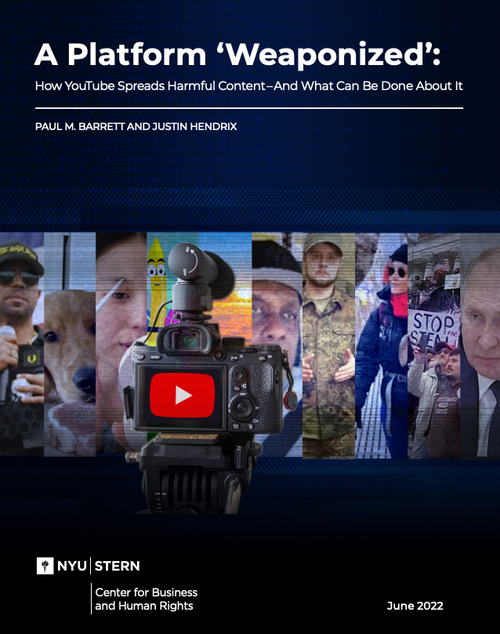
New report: You Tube also needs scrutiny

June 22, 2022

In June 2022, Paul M. Barrett and Justin Hendrix of NYU’s STERN Centre for Business and Human Rights came with a very timely report: “A Platform ‘Weaponized’: How YouTube Spreads Harmful Content— And What Can Be Done About It“. We know less about YouTube than the other major social media platforms. YouTube, with more than 2 billion users, is the most popular social media site not just in the United States, but in India and Russia as well. But because of the relative difficulty of analyzing long-form videos, as compared to text or still images, YouTube has received less scrutiny from researchers and policymakers. This in-depth report addresses the knowledge gap.

Like other major platforms, You Tube has a dual nature: It provides two billion users access to news, entertainment, and do-it-yourself videos, but it also serves as a venue for political disinformation, public health myths, and incitement of violence.

——————————————————————-

YouTube’s role in Russia illustrates this duality. Since Russia launched its invasion of Ukraine in February 2022, YouTube has offered ordinary Russians factual information about the war, even as the Kremlin has blocked or restricted other Western-based social media platforms and pressured foreign journalists in the country to silence themselves. But for years before the brutal incursion, YouTube served as a megaphone for Vladimir Putin’s disinformation about Ukraine and its relations with the West. Despite its heft and influence, less is known about YouTube than other major social media sites.

Does YouTube send unwitting users down a ‘rabbit hole’ of extremism?

In response to reports that the platform’s own recommendations were “radicalizing” impressionable individuals, YouTube and its parent, Google, altered its recommendation algorithm, apparently reducing the volume of recommendations of misinformation and conspiratorial content. But platform recommendations aren’t the only way people find potentially harmful material. Some, like the white 18-year-old accused of shooting and killing 10 Black people in a Buffalo, N.Y., grocery store, seek out videos depicting violence and bigotry. These self-motivated extremists can find affirmation and encouragement to turn their resentments into dangerous action.

A social media venue with global reach

Roughly 80% of YouTube traffic comes from outside the United States, and because of language and cultural barriers, the platform’s content moderation efforts are less successful abroad than at home. The report explores how YouTube is exploited by Hindu nationalists persecuting Muslims in India, right-wing anti-vaccine advocates in Brazil, and supporters of the military junta in Myanmar.


In Part 2, we examine YouTube’s role as the internet’s vast video library, one which has contributed to the spread of misinformation and other harmful content. In 2019, for example, YouTube reacted to com-
plaints that its recommendations were pushing impressionable users toward extremist right-wing views.
The company made a series of changes to its algorithms, resulting in a decline in recommendations of conspiratorial and false content. But recommendations are not the only way that people find videos on YouTube. A troubling amount of extremist content remains available for users who search for it. Moreover, YouTube’s extensive program for sharing advertising revenue with popular creators means that purveyors of misinformation can make a living while amplifying the grievances and resentments that foment partisan hatred, particularly on the political right.

In Part 3, we turn our attention to YouTube’s role in countries outside of the U.S., where more than 80%
of the platform’s traffic originates and where a profusion of languages, ethnic tensions, and cultural variations make the company’s challenges more complicated than in its home market. Organized misogynists in South Korea, far-right ideologues in Brazil, anti-Muslim Hindu nationalists, and supporters of Myanmar’s oppressive military regime have all exploited YouTube’s extraordinary reach to
spread pernicious messages and rally like minded users. [see also: https://humanrightsdefenders.blog/2020/11/02/bbc-podcast-on-the-framing-of-video-monk-luon-sovath/]


Recommendations to the U.S. government

Allocate political capital to reduce the malign side effects of social media: President Biden’s off-the-
cuff expressions of impatience with the industry aren’t sufficient. He ought to make a carefully considered statement and lend his authority to legislative efforts to extend federal oversight authority. Former President Obama’s recent speech at Stanford about disinformation provided a helpful foundation.
Enhance the FTC’s authority to oversee social media: Some of the issues raised in this report could
be addressed by a proposal we made in a February 2022 white paper—namely, that Congress should
authorize the Federal Trade Commission to use its consumer protection authority to require social media companies to disclose more data about their business models and operations, as well as provide procedurally adequate content moderation.

To YouTube:
Disclose more information about how the platform works: A place to start is explaining the criteria
algorithms use to rank, recommend, and remove content—as well as how the criteria are weighted relative to one another.
Facilitate greater access to data that researchers need to study YouTube: The platform should ease
its resistance to providing social scientists with information for empirical studies, including random samples of videos.
Expand and improve human review of potential harmful content: YouTube’s parent company, Google,
says that it has more than 20,000 people around the world working on content moderation, but it declines to specify how many do hands-on review of YouTube videos. Whatever that number is, it needs to grow, and outsourced moderators should be brought in-house.
Invest more in relationships with civil society and news organizations: In light of their contribution to the
collapse of the advertising-based business model of many U.S. news-gathering organizations, the platforms should step up current efforts to ensure the viability of the journalism business, especially at the local level.

The NYU Center for Business and Human Rights began publishing reports on the effects of social media on democracy in the wake of Russia’s exploitation of Facebook, Twitter, and YouTube during the 2016 U.S. presidential campaign. We initially advocated for heightened industry self-regulation, in part to forestall government intervention that could lead to First Amendment complications. As the inadequacy of industry reforms has become clear, we have supplemented our calls for self-regulation with a proposal for enhancement of the Federal Trade Commission’s consumer protection
authority to oversee the industry.

In Part 4, we offer a concise version of the FTC proposal, as well as a series of recommendations to YouTube itself. The report does not address the problem of YouTube hosting potentially harmful videos aimed at children and teenagers. This persistent phenomenon deserves continued scrutiny but is beyond the scope of our analysis.

VIEW FULL REPORT

https://bhr.stern.nyu.edu/blogs/2022/6/10/report-a-platform-weaponized-how-youtube-spreads-harmful-content-and-what-can-be-done-about-it

UN and NGOs denounce ODHIKAR’s deregistration in Bangladesh

June 16, 2022

The Office of the United Nations High Commissioner for Human Rights and 11 international and regional rights organisations have demanded that the government must immediately cancel its decision to deregister rights organisation Odhikar and allow the rights organisation to function without fear of reprisal.

Ravina Shamdasani, spokesperson for the UN High Commissioner for Human Rights, said in a press briefing in Geneva statement on Friday, ‘We are concerned by the Government of Bangladesh’s decision not to approve the renewal of registration for Odhikar, a prominent and respected human rights organisation in the country’.

She said, ‘We urge the government to immediately reconsider this decision, and to ensure that Odhikar has the ability to seek full judicial review of any such determination. We are further concerned that this decision will have a chilling effect on the ability of civil society organisations to report serious human rights violations to UN human rights mechanisms.’

Odhikar has documented and reported on rights violations for many years to the Office of the UN High Commissioner for Human Rights, UN Special Procedures mandate holders and human rights treaty bodies, she mentioned in the briefing available on the website of the UN body.

Intimidation and reprisals against Odhikar have been documented since 2013, and appear to have intensified, with accusations of ‘anti-state’ and ‘anti-government’ activities, she added.

‘There has been increased surveillance of its activities in recent months. The UN Secretary-General has also raised concerns about reprisals against Odhikar over the past decade for cooperating with the UN,’ she said.

On June 5, 2022, the bureau sent a letter to Odhikar, denying its application for renewal of registration. Odhikar’s application for renewal of its registration with the NGO Affairs Bureau under the Prime Minister’s Office has been pending since 2014, she said, adding that Odhikar’s bank account was also frozen in 2014. ‘We call for Odhikar to be permitted access to its banked funds pending reconsideration of the renewal application,’ said the UN official.

Eleven international and regional human rights organisations, meanwhile, in a joint statement called on the government to immediately reverse the decision to deregister Odhikar.

Human rights defenders should be allowed to conduct their work without fear of reprisals, intimidation, and harassment from the authorities,’ read the statement issued by Human Rights Watch, Amnesty International, Anti-Death Penalty Asia Network, Asian Federation Against Involuntary Disappearances, Capital Punishment Justice Project, Elios Justice at Monash University, Human Rights First, International Coalition Against Enforced Disappearance, International Federation for Human Rights, within the framework of the Observatory for the Protection of Human Rights Defenders, Robert F Kennedy Human Rights and World Organisation Against Torture. {See also: https://humanrightsdefenders.blog/2022/03/17/un-experts-urge-bangladesh-to-end-reprisals-against-human-rights-defenders/]

The rights organisation in the statement said this latest development appeared to be part of a pattern of reprisals by the government against human rights organisations groups and defenders following the US sanctions against the Rapid Action Battalion on December 10, 2021. [See https://humanrightsdefenders.blog/2022/03/21/bangladesh-sanctions-seem-to-work/]

On 14 June 2022 Forum Asia in a strong statement said: FORUM-ASIA expresses its solidarity with Odhikar and calls on the Bangladeshi authorities to immediately recall the decision of rejecting Odhikar’s renewal application thereby ensuring it to carry on their human rights work. FORUM-ASIA reiterates its earlier call to repeal the Foreign Donation (Voluntary Activities) Regulation Act, 2016 as it imposes restrictions on civil society organisations’ ability to access resources.

The same day, the Asian Human Rights Commission (AHRC) and CIVICUS: World Alliance for Citizen Participation said they “are extremely alarmed by the decision of the government to arbitrarily revoke the registration of Odhikar, a leading human rights organisation in Bangladesh. This move is another blow to civil society and human rights defenders who have been facing systematic repression by the Sheikh Hasina regime.

http://www.humanrights.asia/opinions/AHRC-ETC-004-2022/

https://www.newagebd.net/article/172898/un-11-intl-orgs-slam-odhikar-deregistration

Olympics: IOC getting closer to a human rights strategy

June 8, 2022

The International Olympic Committee’s (IOC) progress update released on May 20, 2022, is an important step toward adopting a desperately needed human rights strategic framework, the Sport & Rights Alliance said today. The move follows decades of calls from civil society and addresses several long-time demands from nongovernmental organizations and trade unions. [See: https://humanrightsdefenders.blog/2020/12/03/ioc-moves-on-its-human-rights-approach-more-of-a-marathon-than-a-sprint/]

“The International Olympic Committee should immediately adopt and entrench human rights across its operations, and add protecting and respecting human rights to the Olympic Charter as a fundamental principle,” said Minky Worden, director of global initiatives at Human Rights Watch. “Though overdue, this is a critically important step. It is a testament to what happens when athletes, activists, fans, journalists, workers and communities come together to make change.”

The IOC’s progress report acknowledges its responsibility to “respect human rights in accordance with the UN Guiding Principles on Business and Human Rights (the UN Guiding Principles),” and makes a commitment to “amending the Olympic Charter to better articulate human rights responsibilities.” The IOC also rightly focused on salient rights issues, such as equality and non-discrimination; safety and well-being; livelihoods and decent work; voice – including freedom of expression, association and assembly, and meaningful representation –and privacy.

“The IOC report is right to say that athletes sit at the heart of sport, and the IOC’s human rights strategy must deliver for them,” said Brendan Schwab, executive director of the World Players Association. “This means defining athlete rights in accordance with international law, recognizing the right of athletes to organize, and ensuring that bodies such as the Court of Arbitration for Sport will enable athletes to access justice where their human rights have been violated. The IOC has long purported to advance athlete rights without respecting international human rights standards.”

The Sport & Rights Alliance has found key gaps in the document which need to be addressed in the final IOC Human Rights Strategic Framework, scheduled to be launched in September 2022. Most notably, the IOC failed to acknowledge journalists, people with disabilities, spectators and fans, as well as racial and ethnic minority groups as “particularly at-risk populations.”

“The chaos that unfolded around the UEFA Champions League final in Paris clearly shows that the IOC also needs to look closer to how fans are treated, especially for the next Games in Paris 2024,” said Ronan Evain, executive director of Football Supporters Europe. “The Olympic movement has no audience without its spectators. In its role as authoritative leader of the Olympic Movement and global sports governance, the IOC’s decisions determine how and whether fans participate in events, where we travel, how we’re treated, yet it has once again forgotten that fans too have human rights.”

Eli Wolff, director of the Power of Sport Lab and co-founder of Disability in Sport International, said that, “Persons with disabilities are a critically affected group in sport and in society and are protected and recognized by the United Nations and specifically in the Convention on the Rights of Persons with Disabilities. Persons with disabilities are more than 15 percent of the global population and must be recognized in the human rights strategies and all equality and non-discrimination policies of the International Olympic Committee.”

The Sport & Rights Alliance added that the gaps identified in the progress report are not entirely surprising, given that it was developed without direct input from representatives of affected people and communities. Ongoing stakeholder engagement is an essential requirement of the UN Guiding Principles, in the identification and prioritization of human rights risks, when informing effective mitigation strategies, tracking its effectiveness and addressing violations.

Affirming the IOC’s commitment to “integrating meaningful engagement with affected stakeholders” into its ongoing due diligence processes, the Sport & Rights Alliance underlines the need for this to start as soon as possible. As the leader of global sport, the IOC should also take the additional step of including stakeholder representation in its governance structures to ensure the voice and lived experience of affected people are included in all decision-making processes.

“Given the declared launch date of September 2022, the IOC should immediately engage representatives for all affected groups — including spectators, journalists, children, survivors, athletes, LGBTQI+ population and people with disabilities — in meaningful and ongoing consultations for the next steps,” said Andrea Florence, acting director of the Sport & Rights Alliance. “It is only through transparent participation of people and communities directly impacted in decision-making processes that the IOC will actually understand how to prevent and address human rights harms related to their operations.”

Since the UN Guiding Principles were unanimously endorsed by UN Member States in 2011, the IOC has resisted pressures from civil society to adopt human rights across its operations and effectively engage with representatives of affected people and communities, even as it awarded the Olympics to countries with poor or worsening human rights environments.

Members of the Sport & Rights Alliance have long met with Olympic leaders to urge the IOC to adopt a human rights framework, accept their responsibility to seek to prevent and address human rights harms linked to the Olympic Movement, and to mitigate and remedy harms that they cause or contribute to directly. The IOC should also use its enormous power to improve often abysmal human rights conditions in host countries including ChinaBrazilRussiaBelarus and Japan.

https://www.hrw.org/news/2022/06/07/olympics-ioc-heeds-calls-embed-rights

Emirates’ claim to improve its legal system are nonsense

June 7, 2022

Human Rights Watch on 5 June 2022 published a detailed piece showing that wide-ranging legal changes introduced by the United Arab Emirates (UAE) in late 2021 fail to address the long-standing and systematic restrictions on citizens’ and residents’ civil and political rights. The new laws maintain previous provisions and include new ones that pose grave threats to fundamental human rights.

As reported by the state news agency WAM in November, the legal changes include amendments to over 40 laws including on crime and punishment, cybercrimes, and drugs, aiming “to strengthen economic, investment and commercial opportunities, in addition to maximizing social stability, security and ensuring the rights of both individuals and institutions.” While the changes allow for a moderate broadening of personal freedoms, the new legal framework retains severe restrictions on the rights to free expression, association, and assembly.

While the UAE government and its state-controlled media outlets trumpeted these new legislative changes as a massive step forward for economic and social freedoms, they will further entrench government-imposed repression,” said Michael Page, deputy Middle East director at Human Rights Watch. “The UAE government has chosen to squander an opportunity to improve freedoms across the board and instead has doubled down on repression.”

Human Rights Watch conducted a comprehensive legal analysis of two of the new laws, the crime and punishment law and the cybercrimes law, to identify any changes related to the rights to free expression and free assembly. Both laws went into effect in January 2022.

The laws continue to prohibit criticism of rulers and speech that is deemed to create or encourage social unrest, imposing severe penalties for vaguely defined charges. They maintain provisions that criminalize defamation and both verbal and written insults, whether published or made in private, as prosecutable offences. New provisions criminalize “false” and “misleading” information, sharing information with foreign groups or countries, and “offending foreign states.” Protests and demonstrations would still be prohibited.

UAE authorities have also spied on international journalists, activists, and even world leaders using sophisticated Israeli and EU-produced spyware, or with the help of former US intelligence officials. Some of those whose communications and devices were targeted by the government surveillance and who are residents of the UAE, were subsequently arrested and abused in detention. Among them is the prominent Emirati human rights activist Ahmed Mansoor [see: https://humanrightsdefenders.blog/2016/08/29/apple-tackles-iphone-one-tap-spyware-flaws-after-mea-laureate-discovers-hacking-attempt/]. A UAE court sentenced Mansoor to 10 years in prison in May 2018 following a grossly unfair trial, partly based on private email exchanges and WhatsApp conversations. See also: https://humanrightsdefenders.blog/2019/11/05/massive-call-in-support-of-ahmed-mansoor-at-his-50th-birthday-how-can-emirates-remain-deaf/ and https://www.trueheroesfilms.org/thedigest/laureates/074ACCD4-A327-4A21-B056-440C4C378A1A

The UAE authorities should take immediate steps to bring the penal code and cybercrime law into line with international and regional standards on free speech and individual freedoms, Human Rights Watch said. The UAE has not ratified the ICCPR, article 19 of which outlines the right to freedom of opinion and expression. But it is a state party to the Arab Charter on Human Rights. Article 32 of the Arab Charter ensures the right to information, freedom of opinion and freedom of expression, and article 24 guarantees the right to freedom of political activity, the right to form and join associations, and the right to freedom of assembly and association.

The UAE cannot market itself as a reformist and tolerant state while introducing new laws that increase its already alarming levels of repression and censorship,” Page said….

The piece further provides a detailed analysis of penal and Cybercrimes Law.

https://www.hrw.org/news/2022/06/05/uae-sweeping-legal-reforms-deepen-repression

Many NGOs join to demand release of human rights defenders in Algeria

May 23, 2022

38 NGOs, including HRW and AI, ask Algeria to end the repression of human rights and the “immediate” release of detainees. They have launched a campaign calling on Algeria to end the repression of Human Rights and demand the immediate release of people detained in the country for exercising their freedom of expression. “The campaign calls on all relevant individuals, organizations and parties to contribute to collectively demanding an end to the criminalization of the exercise of fundamental freedoms in Algeria using the label At least 300 people have been arrested since the beginning of 2022, and until April 17, in the country for exercising their right to free expression, peaceful assembly or association, according to human rights defender Zaki Hannache. “The arrests and sentences of peaceful activists, independent trade unionists, journalists and human rights defenders have not decreased, even after the protest movement was closed,” they said in a statement. The organizations have given the example of the hunger strike of the Algerian activist, Hadi Lassouli, to protest against his arbitrary imprisonment, as well as the case of Hakim Debazi, who died in custody on April 24 after being placed in preventive detention on April 22. February for social media posts. “Those suspected of criminal responsibility for serious human rights violations must be brought to justice in trials with due guarantees, and the authorities must provide victims with access to justice and effective reparations,” they have requested. This awareness campaign will be carried out until the anniversary of the death of Kamel Eddine Fejar, a human rights defender who died in custody on May 28, 2019 after a 50-day hunger strike. The United Nations High Commissioner for Human Rights, Michelle Bachelet, was “concerned” last March at the increase in fundamental restrictions in the country, including an increase in arrests and detentions of human rights defenders, as well as members of civil society and political opponents. “I call on the government to change course and take all necessary measures to guarantee the rights of its people to freedom of expression, association and peaceful assembly,” she said in a statement from the UN High Commissioner for Human Rights.

https://www.indonewyork.com/breaking/38-ngos-including-hrw-and-ai-ask-algeria-to-end-the-repression-of-human-h30616.html

Davos’ annual meeting starts on 22 May under human rights cloud

May 22, 2022
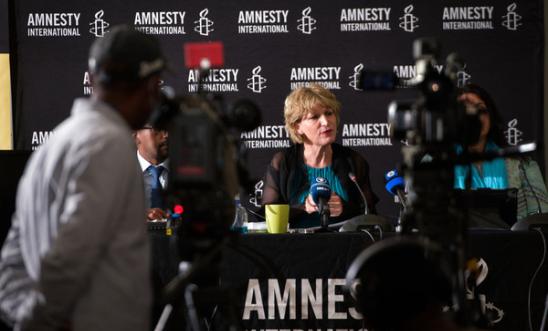
Agnès Callamard at a press conference

Agnès Callamard at a press conference © Amnesty International

Ahead of the World Economic Forum’s annual meeting in Davos that starts today, Sunday 22 May 2022, Agnès Callamard, Amnesty International’s Secretary General, said: 

This year’s Davos conference takes place amid a gathering storm of human rights crises. Russia’s mounting war crimes in Ukraine, the terrifying rollback on abortion rights in the US, the still-neglected climate emergency, the ongoing failure to secure universal vaccine access – these are just a few examples of what happens when human rights are sacrificed for power and profit.  

“Many of the political and business leaders attending Davos are directly responsible for these catastrophes, whether through their explicit pursuit of anti-human rights agendas or through their contemptible inaction and failure to implement solutions.  

“The Davos guestlist includes some of the richest and most powerful people in the world, and they have a moral obligation to put respect for human rights at the top of the agenda. They must use their vast wealth and influence to change the status quo and end the rampant inequality which has been the root cause of so much recent suffering.

The World Economic Forum’s annual meeting will take place in Davos, Switzerland, between 22 and 26 May.

https://www.amnesty.org.uk/press-releases/global-rich-and-powerful-meet-davos-amid-gathering-storm-human-rights-crises

Oslo Freedom Forum 2022 starts on 23 May

May 22, 2022

Every year, champions of human rights bring their stories to the Oslo Freedom Forum to shed light on the struggle for freedom around the world.

The theme for the 2022 Oslo Freedom Forum, CHAMPION OF CHANGE, celebrates both activists, who are themselves champions, and their causes. This theme represents a strong, scalable call to action, inviting you to act and advocate on behalf of activists and in support of human rights. At the Oslo Freedom Forum, we realize that everyone has the potential to effect change — either as a champion on an individual level, or as part of a larger movement.

The 2022 Oslo Freedom Forum, is from May 23-25 in Oslo at the Oslo Konserthus. You can also follow it as a stream: https://oslofreedomforum.com/?mc_cid=17de5f8b1f&mc_eid=f80cec329e

The 2022 mainstage program includes keynote speakers, who will be shedding light on the struggle for freedom around the world, including:

  • The three women who are leading the democratic movement in Belarus: Maria KolesnikovaSviatlana Tsikhanouskaya, and Veronica Tsepkalo, first stood on stage together in 2020 in Belarus, when Aleksandr Lukashenko brazenly stole the country’s elections. They will reunite with us, to provide an update on the Belarusian people’s remarkable multi-year protest, and explain how we can help.
  • Carine Kanimba, daughter of imprisoned “Hotel Rwanda” hero — who saved more than a thousand people during the Rwandan genocide — will share her extremely risky quest to liberate her father, who was was kidnapped by the state in 2020, and is now serving a life sentence in prison for criticizing the Kagame regime. Despite being wiretapped and targeted by Pegasus spyware, Carine continues to speak out to bring justice to her father.
  • At the young age of 26, Zarifa Ghafari became the unlikely mayor of Maidan Shar, a town in Afghanistan filled with Taliban support. Hatred toward her as a woman leader led to the assassination of her father in 2020. Last summer, with her life at risk after the fall of Kabul, she made a daring escape in the footwell of a car, evading Taliban fighters. Today she lives in exile, where she continues to advocate for human rights in Afghanistan, committed to the cause of freedom in her country. 
  • Jewher Ilham’s father, Uyghur scholar Ilham Tohti, has been held under a life sentence since 2014, imprisoned in a concentration camp in China’s Xinjiang region. Jewher has been speaking truth to power, shedding light on China’s forced labor police by testifying before US Congress, publishing op-eds, receiving numerous international awards on behalf of her father, and writing two books on the subject. 
  • In 2012, Syrian activist and Georgetown student Omar Alshogre was detained along with his cousin for demonstrating against the Syrian regime. He spent more than three years in Assad’s infamous jail system, where he endured and survived unspeakable torture. At the age of 20, his mother helped smuggle him out to freedom. His story is a bedrock piece of evidence in the international case to hold the Assad regime accountable for crimes against humanity.
  • One of the 100 most influential women defining the last century according to TIME Magazine, Nobel Peace Prize laureate Tawakkol Karman, also known as the “mother of the revolution,” “the iron woman,” “Lady of the Arab Spring,” as well as one of the Most Rebellious Women in History, is a notoriously true powerhouse. She is a human rights activist, journalist, politician, and founder of her own international foundation.