Archive for the 'human rights' Category

The sad story of Nasta Loika, human rights defender behind bars in Belarus

November 7, 2023

A group of human rights organisations, including the World Organisation Against Torture (OMCT) and FIDH (see Co-signatories), called on 27 October 2023 for the release of the human rights defender Nasta Loika after more than 396 days of her detention.

Nasta Loika is a prominent human rights defender, one of the founders of Human Constanta. For years, she has been promoting human rights education, raising awareness about the repressive “anti-extremist” legislation in Belarus, and protecting foreign citizens and stateless persons in Belarus. She was named Human Rights Defender of the Year 2022 by the Belarusian human rights community. Yet, in the eyes of the repressive Belarusian authorities, she is a criminal and earlier in October, the government put her on a “terrorist” list.

Since 6 September 2022, Nasta has served a total of six 15-day consecutive administrative sentences on trumped-up “petty hooliganism” charges. On 24 December 2022, she was charged with “incitement of racial, national, religious or other social enmity or discord” under notorious Article 130 of the Criminal Code of the Republic of Belarus and on 20 June sentenced to 7 years in prison. [see also: https://humanrightsdefenders.blog/2023/08/11/nasta-anastasia-loika-in-belarus-sentenced-to-7-years-in-a-penal-colony/]

She was tasered, threatened, and featured in a forced “confession” video as a form of digital degrading treatment which was spread across pro-government channels before she was even charged. Her home was searched two times. Her mother’s home was searched too. She spent 93 days in detention, repeatedly sentenced to “administrative arrests” while the authorities looked for a reason to bring criminal charges against her. The charge was ultimately found, and Nasta was accused of inciting hatred for preparing a human rights report in 2018 on the persecution of anarchists and leftists in Belarus. According to the prosecution, the group she was allegedly inciting hatred against was the police.

Belarusian state authorities continued to ignore both the letter of allegation sent by five Special Rapporteurs and the Working Group on Arbitrary Detention following Human Constanta’s appeal to these mandates, as well as the decision on interim measures, adopted by the Human Rights Committee in Nasta’s case.

Her lawyers were repeatedly arrested, disbarred, forced out of the country, and intimidated – hardly a surprising occurrence given en masse persecution of independent lawyers and outlawing of human rights work in Belarus. Disbarment of human rights lawyers is one of the tools the authorities consistently employed to intimidate and persecute lawyers who represent human rights defenders, activists, democratic politicians, and survivors of torture and state-perpetrated human rights violations.

Any assistance to Nasta is punished as well: two people were arrested for 15 and 30 days for bringing her parcels with food and essentials. Now that she has been sentenced, she is only able to receive parcels from her 76-year-old mother, her only family member. Moreover, as she was designated a “terrorist,” it would be impossible to make monetary transfers as those would be characterized as “financing terrorism.”

Nasta also continues her human rights work from behind bars: she helped dozens of other women cellmates to file complaints related to their cases. She also drafted a concept of prison reform in Belarus. This is a powerful reminder that persecution and imprisonment cannot force human rights defenders to stop their work.

In fact, their voices can be amplified not just through letters, but through technology and social media. While the authoritarian government is set on silencing human rights defenders, the Human Constanta team used AI to create Nasta’s animated digital avatar to raise awareness about human rights violations and political persecution of human rights defenders, demand accountability, and support those in detention. The “Human Show” podcast called “Waiting for Nasta” featuring her colleagues and friends also reminds the world about her work and unjustified detention.

“A young girl came up to me [at an event in honor of a human rights award] and said: “Hello, my name is Nasta. I graduated from law school, I’ve entered law school, and I would really like to do human rights work, but I don’t know how. Maybe you could give me some advice?” […] I told her, yes, of course, come to our Committee. She came to the Committee a couple of days later and we hired her. That became her first human rights work.”

Excerpt from “Waiting for Nasta” podcast, episode 1

“And then I asked, “Do you know exactly what you’re doing? This may be the last chance [to flee Belarus].” And Nasta replied very calmly that she was aware of all the risks, that she understood the situation, and that it was not blind stubbornness. In my mind, Nasta lives her life as a person with very high values, who is ready to stand by them to the end.”

Excerpt from “Waiting for Nasta” podcast, episode 2

We call on the Belarusian authorities for Nasta Lojka’s immediate and unconditional release and condemn the physical and psychological torture Nasta was subjected to by state agents. Nasta Lojka’s arrest, torture, and imprisonment are retaliation by the Belarus government for her peaceful and legitimate human rights work.

We continue to call upon the international community to take measures to urge the Belarusian authorities to respect their obligations towards human rights defenders, by raising awareness in various fora, publicly condemning human rights violations, requesting visits to human rights defenders in detention, and inquiring with the Belarusian authorities about their health and detention conditions, demanding the release of imprisoned human rights defenders in bilateral and multilateral fora, exploring additional targeted measures against the individuals allegedly responsible for the torture, ill-treatment, arbitrary detention and harassment of human rights defenders, and keeping the situation of defenders in Belarus high on the political agenda.

We also call to utilize and explore available mechanisms for holding the Belarusian authorities account for human rights abuses against human rights defenders, inter alia, by means of extraterritorial and universal jurisdiction and inter-state complaints under relevant treaties, and through strengthening existing accountability mechanisms.
https://www.fidh.org/en/region/europe-central-asia/belarus/belarus-nasta-loika-human-rights-defense-behind-bar

Human rights NGOs use Financial Action Task Force (FATF) review to help human rights defenders in India

November 7, 2023

Amnesty International, C&SN and HRW accuse Indian government of harassing human rights activists and NGOs; the organisations seek FATF’s intervention days before the India’s performance with respect to action taken against money laundering and terrorist funding is up for review

On 6 November 2023, The Hindu newspaper (TH) reports that NGOs are accusing the Indian government of prosecuting, intimidating, and harassing human rights defenders, activists, and non-profit organisations on the pretext of countering terrorist financing, Thus Amnesty International, Charity & Security Network (C&SN), and Human Rights Watch (HRW) have sought the intervention of the Financial Action Task Force (FATF).

FATF mutual evaluations are in-depth country reports analysing the implementation and effectiveness of measures to combat money laundering, terrorist and proliferation financing. The reports are peer reviews, where members from different countries assess another country. Mutual evaluations provide an in-depth description and analysis of a country’s anti-money laundering and counter-terrorist financing system, as well as focused recommendations to further strengthen its system. During a mutual evaluation, the assessed country must demonstrate that it has an effective framework to protect the financial system from abuse.

The FATF conducts peer reviews of each member on an ongoing basis to assess levels of implementation of the FATF Recommendations, providing an in-depth description and analysis of each country’s system for preventing criminal abuse of the financial system.

The joint statement of the 3 NGOs came on November 3, days before the start of FATF’s periodic review of India’s performance with respect to the action taken against money laundering and terrorist funding. They have accused the authorities of exploiting FATF’s recommendations “to restrict civic space and stifle the rights to freedom of expression, association, and peaceful assembly”. “Draconian laws introduced or adapted to this end include the Foreign Contribution (Regulation) Act (FCRA), the Unlawful Activities (Prevention) Act (UAPA), and the Prevention of Money Laundering Act (PMLA)…,” the groups said. See also: https://wordpress.com/post/humanrightsdefenders.blog/22074

“During its third FATF review, in 2010, the Indian government itself recognised the risk posed by the non-profit sector as ‘low’. However, since the Bharatiya Janata Party (BJP) came to power in 2014, the authorities have used overbroad provisions in domestic law to silence critics and shut down their operations, including by cancelling their foreign funding licences and prosecuting them using counterterrorism law and financial regulations,” the groups alleged.

https://www.thehindu.com/news/national/amnesty-international-csn-and-hrw-accuse-indian-govt-of-harassing-human-rights-activists-and-ngos/article67504479.ece

https://www.fatf-gafi.org/en/topics/mutual-evaluations.html

Tanzanian civil society validates a human rights defenders policy

November 7, 2023

On 19 October, with the support of ISHR, the Tanzanian Human Rights Defenders Coalition organised a one day event with defenders from all around the country to reflect on the 25th anniversary of the UN Declaration on human rights defenders and validate the civil society led draft on the promotion and protection of the rights of defenders in Tanzania.

The Tanzanian Human Rights Defenders Coalition (THRDC) gathered defenders from all regions of the country to celebrate the 25th anniversary of the UN Declaration, discuss its implementation in the country and the needs to strengthen their legal framework for the promotion and protection of the rights of defenders through the adoption of a policy on human rights defenders.  This is an interesting case as “human rights defenders policies” are usually to be found in the West; see: https://humanrightsdefenders.blog/2016/12/13/canada-joins-select-group-of-governments-with-guidelines-on-human-rights-defenders/.

The event was attended by Minister of Constitutional and Legal Affairs Hon. Dr. Pindi Chana who highlighted notable human rights achievements under the ongoing leadership of Honourable President Samia Suluhu Hassan such as the opening of legal aid services in all regions of the country and the establishment of a special commission which will work with various stakeholders to achieve the necessary reforms to better protect and promote human rights in the country. 

Discussing and reflecting on the advancement in Africa since the adoption of the UN Declaration on human rights defenders (‘the Declaration’), speakers highlighted the numerous legislative progress in some countries and the increase in legislative restrictions in others. 

The legal recognition and protection of human rights defenders is crucial to ensure that they can work in a safe, supportive environment and be free from attacks, reprisals and unreasonable restrictions. The legal recognition and protection of defenders also contributes to the broader goals of upholding human rights, and promoting democracy, good governance, sustainable development and respect for the rule of law. In Africa, in the past ten years, 5 countries adopted specific laws protecting the rights of defenders, recognising the need and obligations that follow the adoption of the UN Declaration.

Speakers also highlighted the importance to recognise that while the adoption of the Declaration was an incredible progress, defenders still face a high number of violations for enjoying their right to defend rights.  

‘It is not easy to be a defender, especially in Africa,’ said Washington Katema, Executive Director of the Southern Africa Human Rights Defenders Network. ‘Defenders must be safe and not silenced. Defending human rights is not a crime and, to our colleagues from the Government, defenders are not the enemy of the State, rather, they stand for those who can not stand for themselves. Defenders are everywhere, so as we reflect on the 25th anniversary of the UN Declaration on defenders, let’s also reflect on the Africa we want. An Africa where defenders are free from reprisals, arrests, intimidations and assassinations’ . 

The draft policy was then presented to the participants. Among other things, it includes important principles and rights such as the right to freedom of expression, freedom of peaceful assembly, ensuring that decisions on registration, suspension and de-registration of organisations are taken by a mechanism the majority of whose members are from civil society or that organisations shall be self-governing and free to determine their internal management structures. The policy also provides for State obligations such as the need to ensure an enabling environment for defenders or that laws and administrative measures adopted by the government should protect, not impede the peaceful activities of defenders. Furthermore, defenders discussed the importance of sensitising the authorities to the specificities of the violations faced by vulnerable groups such as Indigenous and LGBTIQ+ defenders. 

As Tanzania embarks on this journey, it is important that the ownership of this process goes beyond this assembly. It is important that marginalised and discriminated-against groups, such as women defenders, are included in this process.

Finally, the draft policy was adopted by civil society and a commitment was made by the office of the Minister of Constitutional and Legal Affairs to kickstart the process with a particular attention given to the needs expressed by defenders. 

https://ishr.ch/latest-updates/achpr77-tanzanian-civil-society-validates-a-human-rights-defenders-policy/

40 years of HURIDOCS: a bit of history

November 6, 2023

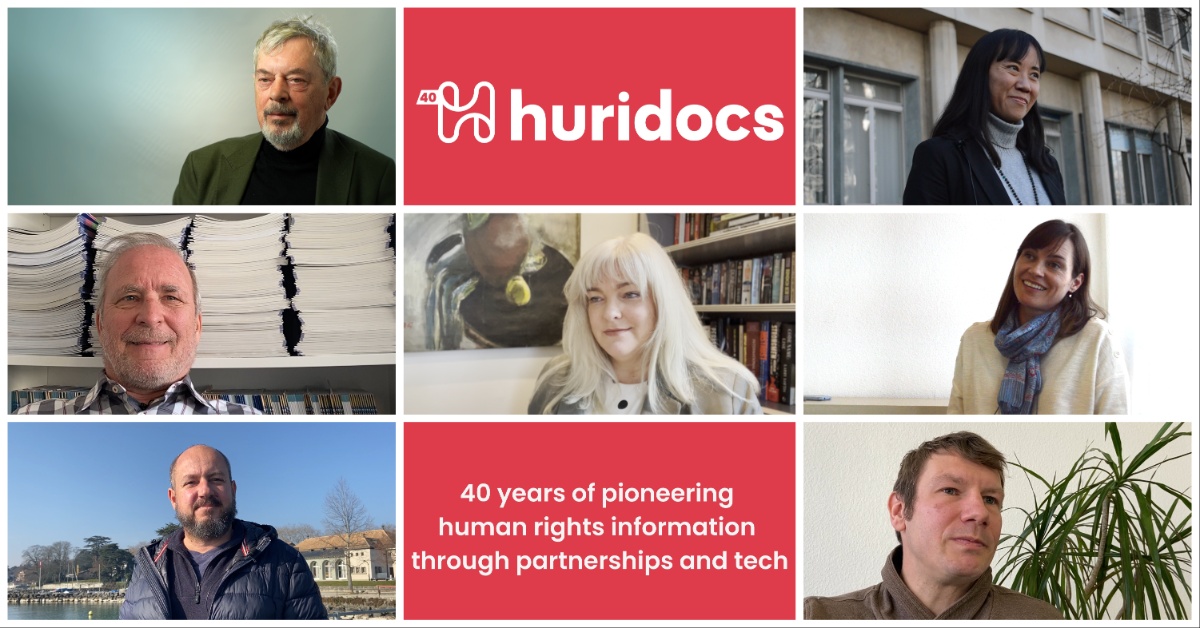
Join in exploring the vital role the NGO HURIDOCS plays in shaping the landscape of human rights today. Hear from past and present directors, board chair and senior documentalist about our ongoing impact (admittedly including my good self).

As HURIDOCS celebrates 40 years of commitment to human rights, it shared a video which is not only a retrospective, but a testament to its ongoing role and impact in the world of human rights information.

In this video, the HURIDOCS team sat down with individuals who have been instrumental in shaping HURIDOCS throughout its history. This includes our co-founder, our senior documentalist, a dedicated board member, and past and present directors, all sharing their unique insights.

“Information has always been the key to human rights work and that is still the case. Being organised, sharp, learning from our history and not being afraid to go into the future fighting for truth, justice and human rights with all of the tools that are available to us. That is the civil society we want to see, that is the civil society we want to support!”

— Danna Ingleton, HURIDOCS Executive Director

https://www.youtube-nocookie.com/embed/8UArMYSaMx8

Find out more about HURIDOCS’ history here. See also: https://humanrightsdefenders.blog/category/organisations/huridocs/

New, anti-populist media forum “Free America” launched

November 3, 2023
Foro América Libre

A new political space wanting to shape the future of Latin America was born in Mexico City on 1 November 2023. In an unprecedented meeting, more than 30 organisations, leaders and young people from Latin America gave life to the Free America Forum. A space to defend an agenda of Freedom and Democracy, as an alternative to the populism of the Puebla Group and the Sao Paulo Forum.  

“Those of us who believe in the ideas of freedom and democracy are more and we are also better,” said Mexican Congresswoman Mariana Gómez del Campo, president of ODCA, when she opened the Free America Forum. 

This group, together with political leaders from 18 Latin American countries, parliamentarians from Ukraine, Germany, the European Parliament, political representatives from the United States, civil society activists and human rights defenders, ratified their commitment to freedom and democracy.

The result of this first meeting was the signing of the Mexican declaration “For a Free America”, which alerts the world to authoritarianism and its consequences in the region, the need for respect for democratic principles such as free elections, the separation of powers, the need for independent justice, limits to the actions of those in power and respect for human rights.  

As part of this declaration, the Free America Forum warns how the conditions of poverty and inequality have been “breeding grounds” for populist alternatives and how we must focus on “the integral development of the people”, guaranteeing a free and competitive economy. In the fight against organised crime, he called for the use of “the full force of the law and the rule of law”, rejecting “radically any negotiation and complicity with those who extort, steal, kidnap, murder and sow terror on the continent”. 

In the face of human rights violations, they expressed their support and solidarity with the peoples of Cuba, Venezuela and Nicaragua as “sister nations that Bolivarian socialism has subjected to atrocious dictatorships and suffering”. The declaration also condemns the “unjustified aggression” of Vladimir Putin’s Russia against Ukraine.  

This new space linking defenders of democracy around the world was created to counterbalance those who venerate and validate dictators and promote authoritarian narratives. 

https://www.atalayar.com/en/articulo/politics/the-free-america-forum-is-born/20231101150000193017.html

EU’s Lorenzo Natali Media Prize 2023 to 3 Venezuelan journalists

October 21, 2023

The winners of this year’s edition of the Lorenzo Natali Media Prize, awarded by the European Commission, were announced on 11 October at a ceremony hosted at the Solvay Library in Brussels.

The winners of the International Prize are:

Three Venezuelan journalists Carmen Victoria Inojosa, Claudia Smolansky and a third whose name cannot be disclosed for security reasons, were awarded the International Prize for their compelling article ‘Así funcionan las casas clandestinas de la Dgcim en Caracas‘ published in Armando.info. Their work exposed the harrowing reality of systematic persecution in Venezuela, targeting political opponents and their families with alarming impunity.

For more on this award see: https://www.trueheroesfilms.org/thedigest/awards/D49ECF35-4B42-444D-B4FA-F7ACE2BF65BC

Lorenzo Natali Media Prize website

https://ec.europa.eu/commission/presscorner/detail/en/ip_23_4881

Mahsa Amini and Woman, Life and Freedom Movement in Iran awarded EU’S Sakharov Prize

October 19, 2023
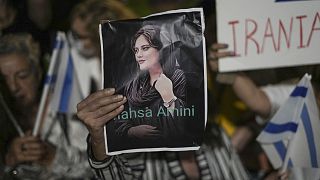
Women attend a protest against the death of Mahsa Amini, a woman who died while in police custody in Iran, during a rally in Tel Aviv, Oct. 29, 2022.

 Euronews reported on 19 October 2023 that Mahsa Amini and the Woman, Life and Freedom Movement in Iran were awarded the European Parliament’s Sakharov Prize for Freedom of Thought.

“The 16 September 2022 is a date that will live in infamy and the brutal murder of 22-year-old Jina Mahsa Amini marked a turning point. It has triggered a women-led movement that is making history,” European Parliament President Roberta Metsola said after announcing the winner. 

Two other nominees made it on the finalist shortlist: Women rights’ defenders and Nicaraguan activists. See: https://humanrightsdefenders.blog/2023/10/18/sakharov-prize-2023-finalists-announced/

Laurie Wiseberg, pioneer human rights defender, is no more

October 16, 2023

On 12 October 2023, Laurie Wiseberg’s son, Jesse Scoble, informed the world on her passing on 11 October 2023 in Montréal. 

“It is with great sadness that I announce the passing of Dr. Laurie Sheila Wiseberg, Laurie to most, Dr. Wiseberg to a few, Libby to her family, Nama to my kids, and mom to me. How does one sum up a life, let alone one as impressive and eventful as hers?

It would take another lifetime to try to capture it. She described herself in simple terms as:

Dr. Laurie S. Wiseberg (project advisor and contributor) was a human rights scholar/advocate who taught and wrote extensively about the work of human rights for non-governmental organizations. She served as Executive Director of a human rights NGO (Human Rights Internet) for 20 years. Dr. Wiseberg spent the following 20 years doing humanitarian work “in the field”, assisting United Nations agencies in providing better protection for persons displaced as a result of conflict or environmental disasters in countries across the globe.

Jesse will write a proper obit for her in the coming days, but wanted us to know that after a year long struggle she left this world on her own terms. “A glass of red wine in her hand“.

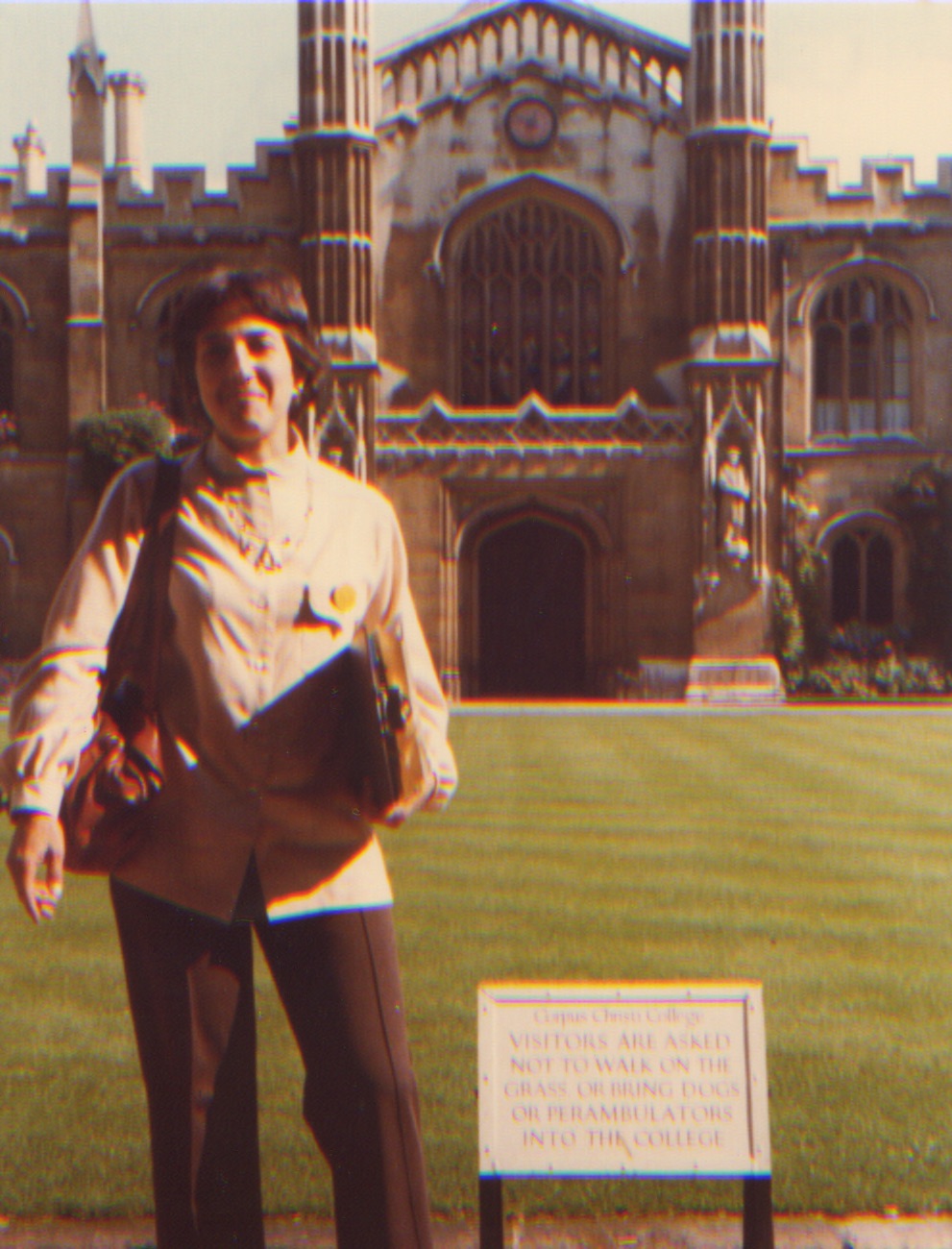
I personally have known Laurie almost all of my ‘human rights life’, starting with the creation of HURIDOCS some 40 years ago. Here the first picture i have of her, September 1978 in Cambridge at an Amnesty meeting.

Violinist Gidon Kremer to receive the Beethoven Prize for Human Rights

October 4, 2023

The 2023 Beethoven Prize for human rights has been awarded to the Latvian violinist and ensemble leader Gidon Kremer. Kremer, 76, has been outspoken in his opposition to Russia’s wars of aggression in Chechnya and Ukraine. He has also played in jails and other places of despair.

The award will be presented to Kremer in an award ceremony and concert held in Bonn, Germany, on November 19, 2023.

For decades, Kremer, 76, has long held concerts and made statements against political grievances and injustice. He has organized concerts for Ukraine, a concert in Moscow for the victims of the Chechen war, and collaborated with theater director Kirill Serebrennikov, who was persecuted in Russia.

Further, his Gidon Kremer Foundation promotes emerging artists through instrument loans, scholarships, and performance opportunities, as well as supports the chamber orchestra Kremerata Baltica, which he founded in 1997, in bringing performances to socially disadvantaged people and hosting concerts in developing countries.

For more on this award, see: https://www.trueheroesfilms.org/thedigest/awards/c05408e0-e598-11e7-a009-858a33846a9e

“I try to set my independent judgments to music every now and then, whether with the violin or with words, whether with a letter or a gesture — it’s important to me, to ensure justice,” he said in an interview with Deutschlandfunk Kultur in 2021.

Global Witness annual report 2022: a land rights defender killed every other day

September 25, 2023

Over the last decade, nearly 2,000 land and environment defenders have been killed around the world, and in 2022, a land defender was killed every other day, according to a report. [for last year’s see: https://humanrightsdefenders.blog/2022/10/05/global-witness-report-2021-continued-disaster/]

The study from Global Witness, a non-profit human rights environmental watchdog, shows that the killings of Indigenous peoples defending their territories and resources represented nearly 34 percent of all lethal attacks despite making up about 5 percent of the world’s population.

“Governments where these violations are happening are not acting properly to create a safe environment for defenders and a civic space proper for them to thrive,” said Gabriella Bianchini, senior advisor for the land and environmental defenders team at Global Witness. “They are not reporting or investigating and seeking accountability for reprisals against defenders. And most importantly, they are not promoting legal accountability in the proper manner.”

Latin America has consistently ranked as the deadliest region for land defenders overall and saw almost 9 in every 10 recorded killings in 2022. More than a third of those fatal attacks took place in Colombia. In 2021, Brazil was named the deadliest country for land defenders by Global Witness and now sits at second; In July, activist Bruno Pereira and journalist Dom Phillips were murdered in the Brazilian Amazon.

Growing tensions from agribusiness, mining, and logging have led to consistent lethal attacks in the region. Between 2011 and 2021, for instance, more than 10,000 conflicts related to land rights and territories were recorded in Latin America alone. 

“The worsening climate crisis and the ever-increasing demand for agricultural commodities, fuel, and minerals will only intensify the pressure on the environment — and those who risk their lives to defend it,” wrote the authors.

Earlier this year, Frontline Defenders, an international human rights organization, released a similar report to Global Witness’ with corresponding findings — including that Colombia was the most dangerous country for land defenders. [see: https://humanrightsdefenders.blog/2023/04/04/front-line-defenders-just-published-its-global-analysis-2022-new-record-of-over-400-killings-in-one-year/ . While Frontline Defenders reported that there were 186 land defender deaths in Colombia and Global Witness reported 60, Bianchini said differences in statistics are the result of different methodologies, which vary by organization. However, both organizations’ reports were united in findings: Indigenous people make up a disproportionate amount of the deaths among land and environment defenders, Latin America sees the highest rates of violence, and the number of killings is likely underreported.

“I am incredibly grateful and impressed to see the fight of all of these communities who are there living in these areas and who have been acting for thousands of years to protect the array of life,” said Bianchini. “I cannot believe that humanity right now is living in a moment where we are killing those who are protecting their own lands and civil rights.”

https://grist.org/indigenous/in-2022-a-land-defender-was-killed-every-two-days/

https://www.globalwitness.org/en/campaigns/environmental-activists/standing-firm/