Archive for the 'human rights' Category

No more ‘business as usual’ when it comes to business and HRDs

November 11, 2015

On 19 October Michel Forst, UN Special Rapporteur on Human Rights Defenders, wrote a piece for the Monitor of the ISHR under the title “No more ‘business as usual’ when it comes to business and human rights defenders”Read the rest of this entry »

Is there ANY way to engage people with human rights communication?

November 10, 2015

Yes there is!” according to True Heroes Films (THF)THF_SIMPLE

A recent assessment of the communication practice of Geneva-based human rights organisations carried out by THF showed that many of them face the same challenges.

In a newsletter (see link at the bottom of this post) and in the below guidelines, THF summarizes these challenges and the solutions identified together with communicators from the organisations assessed. There are some nice cartoons by © Hani Abbas.

The guidelines are by necessity of a general nature and are based on the experience of NGOs in the Geneva area, but they they may help also others in thinking about their communications problems: Read the rest of this entry »

EU Parliament says Snowden is human rights defender

October 30, 2015

Media reported on the EU Parliament’s vote to drop criminal charges against Edward Snowden and to encourage members to block his extradition Read the rest of this entry »

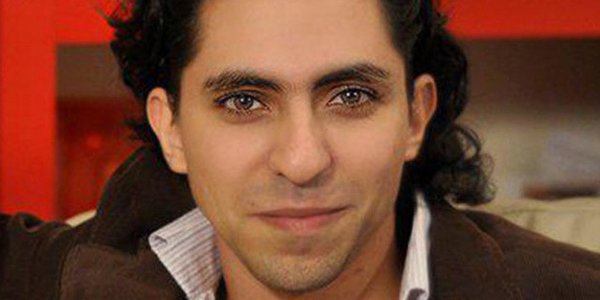
Saudi blogger Raif Badawi awarded Europe’s Sakharov prize

October 29, 2015

The Saudi blogger Raif Badawi, whose flogging sentence caused a global outcry, is awarded the 2015 Sakharov human rights prize. Mr Badawi was sentenced to 10 years in jail and 1,000 lashes in Saudi Arabia for “insulting Islam”[https://thoolen.wordpress.com/2014/05/08/the-middle-ages-are-back-10-years-prison-1000-lashes-for-saudi-human-rights-defender/].

Raif Badawi

European Parliament President Martin Schulz urged Saudi King Salman “to free him, so he can accept the prize“. Mr Badawi’s wife Ensaf Haidar, now living Canada with their children, told AFP news agency that award was a “message of hope and courage”.

For more on the prize: http://www.brandsaviors.com/thedigest/award/sakharov-prize-freedom-thought.

[Earlier this year Badawi also won the Pen Pinter Prize and the Moral Courage Award].

Badawi was one of three nominees for this year’s prize along with assassinated Russian opposition leader Boris Nemtsov and the Venezuelan opposition movement Mesa de la Unidad Democratica.

Source: Saudi blogger Raif Badawi awarded Sakharov human rights prize – BBC News

Mugabe wins Chinese peace prize – this time for real

October 23, 2015

When I wrote my 1 April 2013 post about President Robert Mugabe getting the revamped Gaddafi award [https://thoolen.wordpress.com/2013/03/31/gaddafi-human-rights-award-resurrected-mugabe-rumored-to-be-laureate/], I could not know that one day he would actually get an award. But according to the Guardian and other newspapers this what happened when he was given the “Confucius award“, which was set up in 2010 as a Chinese alternative to the Nobel peace prize after the Norwegian Nobel committee infuriated Beijing by handing its annual peace prize to the jailed dissident writer Liu XiaoboRead the rest of this entry »

Peter Norman: the missing third man in that famous picture

October 22, 2015

That all human rights defenders are not equally recognized is an unfortunate but well established fact. The case below – which was written by Riccardo Gazzaniga (griotmag.com) – is a remarkable one as we all remember the famous picture from the Summer Olympics in Mexico in 1968. What most of us have not seen is the picture below which shows the statue – erected at the San Jose State University – of only two of the three. Who was the third one and why is he missing? The article below [The White Man In That Photo – 12 October 2015] tells the story of Australian sprinter Peter Norman and quite a story it is

CLvU7OGWsAAEbrX


griot-magazine-peter-norman-white -man-in-that-photo-black power statue san jose-©reddit


Read the rest of this entry »

2015 Robert F. Kennedy Human Rights Award goes to Natalia Taubina from Russia

October 21, 2015

On 7 October, Robert F. Kennedy Human Rights announced that Ms. Natalia Taubina, a leading human rights defender from Russia, has been selected as the laureate of the 2015 Robert F. Kennedy Human Rights Award, now in its 32nd year.  “..I know my father would be proud of her work” said Kerry Kennedy, President of Robert F. Kennedy Human Rights. “This award is not just a recognition, it is an opportunity to work hand in hand with human rights defenders to protect the rights and freedoms of the Russian people.

Natalia is the Director of the Public Verdict Foundation in Russia and is being recognized for her work to hold law enforcement agents accountable for human rights violations and support victims of torture in Russia. The Public Verdict Foundation litigates on behalf of citizens wrongfully arrested, beaten, tortured, and illegally detained by police. In 2014, the Russian government categorized the foundation as a “foreign agent”to publicly invalidate, shame, and render inoperable organizations with international ties. Natalia’s organization has resolutely fought this label in court and is committed to protecting human rights despite the government’s attempt to shut down civil society groups.

This recognition of our work is especially important today when civil society in Russia is under unprecedented pressure. The climate in which we now operate is hostile like never before. But victims of abuse in Russia need us, and we are not going to abandon them” said Natalia Taubina.

Mrs. Robert F. Kennedy will present Natalia with the 2015 Robert F. Kennedy Human Rights Award in Washington, D.C., in a ceremony on 19 November.

About the Robert F. Kennedy Human Rights Award see their website or http://www.brandsaviors.com/thedigest/award/robert-f-kennedy-human-rights-award
For more info: cronin@rfkhumanrights.org

Source: | Robert F. Kennedy Center for Justice & Human Rights

Eulogy of deceased Indian human rights defender Dr R.M.Pal

October 21, 2015

How broad the human rights movement is nowadays, is demonstrated by this eulogy of Dr R M Pal by Vidya Bhushan Rawat, a social and human rights activist in India. It is a very personal story and I provide the text in toto below. The writer states that at this crucial moment is a great blow to all the right thinking secular forces as Pal was the man who always believed in the idea of a secular inclusive India and spoke regularly against the Hindutva’s communalism.

Dr R.M.Pal: Human Rights of The Most Marginalised Was His Uncompromising Passion

By Vidya Bhushan Rawat

20 October, 2015
Countercurrents.org

It was Prof Y.P.Chibbar, the PUCL General Secretary for years, who introduced me to Dr R.M.Pal when I visited him at ARSD College where he was teaching. ‘Dr Pal is the right person for you. He is the editor of PUCL Bulletin and lives in Greater Kailash. You must meet him,’ suggested Prof Chibbar. And after that it was a relationship that grew up every passing day. As a young aspiring boy from a nondescript town of Uttarakhand, I had come to Delhi ‘incidentally’, during the tumultuous years of anti Mandal agitation where most of our ‘intellectuals’ had been exposed. Staying with Dr Mulk Raj Anand, pioneer of English writing in India, there was a period of great personal churning for me and Dr Pal made it clear to me to earn to learn. ‘What are you doing there’, he asked. Jee, I am looking after his work, typing his scripts and accompany him to various places where he moves, I said. My aim is to do social work and it is a great honor to be with a man who calls himself a ‘Gandhian’. For a young person like me who had so many fantasies about Gandhism as perhaps we did not have the opportunity to know and understand ‘others’ and it seemed the only way to fight against oppression particularly untouchability which Gandhi had claimed to be the biggest ‘sin’ of Hinduism. So for me any one who had seen Gandhi or worked with him became a hero and ‘Lokayat’ where Dr Mulk Raj Anand stayed became my ‘sabarmati’. Dr Pal was a no nonsense person who could speak fearlessly without being hypocritical in front of you and he remained unimpressed. ‘Well, I can tell you Mulk Raj Anand will not help you’, he said. ‘ Don’t live under the romance of ‘Gandhian’ fame as it is good to do ‘social work’ but you need to be independent and earn to do things, he suggested. I know you came from Dehradun and may face prejudices here because of your village background. Better you do some evening courses as you plan and earn for your living and hopefully you will be able to contribute to society as you wish. And I can say with firm conviction that after coming to Delhi and staying here as meek and submissive person for over two and half years, Dr Pal gave me the confidence in myself and helped me become independent and rebuild my self respect and confidence.

Over the years our interaction grew and he became fond of me. He would guide me and ask me write in particular way. He suggested diverse topics to me and so much was the trust that many times he would send me to go on fact finding on particular issues and get direct information for him. It was not just he would ask to write but he would call me and discuss with me the issue in detail and point out those particular references which he would wish me to focus. I was fortunate to have met and acquaint with a number of eminent, Human Rights activists, Ambedkarite scholars and writers at young age and all of them respected me and appreciated my courage and enthusiasm but Dr Pal remain the one who mentored me and guided me. He would appreciate a number of my elderly friends but unlike them he would guide me and even point to me the grammatical mistakes in my writings. I knew them very well and the fact was that being a teacher, it was like a student sitting in his class as if he is dictating and then checking our assignment. Many times, he warned me of being neutral in my criticism and asked me to be as ruthless to Muslim fanatics too who try to defame the community but one thing was clear that he made a distinction between minority communalism and majoritarian communalism and cautioned India of the dangers of the Hindu communalism. He was afraid of the fact that India might become victim of the majoritarian communalism and for that all the like-minded parties and people have to join hand. He would often quote that no movement will succeed unless it is preceded by a political philosophy.

I still remember how he guided me to write a paper for a seminar being organized by Indian Social Institute, Delhi, in collaboration with UGC, on Ambedkar and M N Roy’s relationship and Roy’s thought on rationalism and Buddhism. He was determined despite my own feeling that it was a misfit for a seminar on Human Rights education issue yet he felt only I could have done justice to this and he guided me. Yes, that paper took me to various files including that information where Dr Ambedkar had, as a minister in Viceroy’s Council, sanctioned an amount of Rs 13,000 for anti war efforts of M N Roy and on the basis of this information ‘inspired’ Arun Shourie to write ‘Worshipping the False God’, a book based on hard prejudices and lies. I met Justice Tarkunde several time and got those letters where he mentioned that it was he who took the money many time on behalf of the Party and that Roy never took the money himself. Ambedkar was in deep appreciation of MN Roy and his intellectual honesty and that is why there are lots of similarities on their thoughts and philosophy, which need further elaborations. I can say with conviction that if Dr Pal had not guided me in this regard, I would have missed the great opportunity and work of M N Roy related to caste, religion and fascism.

As the editor of PUCL Bulletin he was able to focus a lot on atrocities against Dalits and issue of communalism in India. Both the issue of caste violence against Dalits and communalism were matter of great concern for him and he remained uncompromising in his condemnation of them. At the various national and international forums he always focused on the issue that Human Rights are not just state laws and their steady implementation which of course are important, but what he spoke and emphasized was ‘societal violation of human rights’ which he always felt, got out of the scrutiny of the human rights defenders and the organsations working for the human rights. It was his conviction that Dalits, Muslims and other marginalized people should join Radical Humanist and Human Rights Movement to raise their issues. As he became president of Delhi PUCL, he ensured that these segments are fairly represented and we know personally many of the radical humanists and PUCL ‘leaders’ were not very happy with his ‘casteist’ approach.

For long he listened to many youngsters claiming that ‘human rights’ organisations in India have no space for the Dalits. He always mentioned to me this point that PUCL is a membership based organisations and if the Dalits, Muslims wanted to lead it, they need to become member and increase their numbers. He introduced many eminent persons in the human rights and said that there is no point complaining if you are unable to be member of it. People’s organisations are led by people and need further understanding and working of the organisations and its structures. Merely blaming the organisations for being representative of ‘upper castes’ was not correct according to him though we knew that many activists became members but frankly speaking the functioning of the organisations like PUCL did not change. The dark fact is that he was not liked inside the PUCL as well as in the Radical Humanists circle for his ‘overemphasis on caste and communalism. His unambiguity and openness made many people his enemy who would be jealous of his forthrightness. The man always enjoyed being with young activists, guiding them and providing ideas to write on particular issues. I can vouch with my own experience having met numerous people of eminence how they just use you. The dirty secret of the ‘intellectual’ world is that it does not want to engage in dialogue with people but work on ‘networking’.

We had lots of disagreement particularly on the issue of Gandhi and Ambedkar. He knew it well that I have no liking for Gandhian philosophy, which I called humbug and absolutely patronizing as far as Dalits are concern. He would always say that though Gandhi made eradication of untouchability and fight against communalism pivot of his philosophy, he failed in both count yet he felt that Gandhi’s intention were not wrong but lots of discussions and debate on the issue actually saw his opinion changing. He said any one who read ‘annihilation of caste’, will only find Gandhi on the wrong side and Ambedkar fighting for the rights of the people. He felt Ambedkar was wronged.

His personal association with M N Roy and later working on the human rights issues had broadened his horizon much bigger than many of his contemporaries who remained very narrow in their personal lives. There are very few who would spare time for you and guide you whatever possible ways and feel good at your achievements. He loved speaking Bangla and always followed the incidents happening in East Bengal or what we call today Bangladesh. The pain of division and migration was always with him and that is why he was always warm to people like me who left home in search of a new identity and to fulfill their commitments. He would always warn me like a teacher of what to do and what not to do. There are so many things to remember where he asked me to write on and suggested me to attend particular programmes.

The last togetherness of mine with him was at a seminar that he has been trying to organize for years in Mumbai on Dr Ram Manohar Lohia but always felt lacking supporting hands there as he would have them in Delhi as it was the city he always missed and left after he had paralytic stroke that confined him on wheelchair and external help. Many of my friends actually spoke to me after visiting him and felt pained to see a vibrant man depended on people for help, a man who was always active doing things at his own. But it was his strong willpower that despite being confined to bed he could do a lot of work, which is highly impossible for many of us to do. I never saw him complaining about himself whenever I spoke to him on phone as it was work work and work. He would ask for certain book or speak to certain person or provide the phone numbers of some friends. He complained that being in Mumbai has curtailed his freedom as he always enjoyed his friendship circle in Delhi and felt that he has got isolated in Mumbai.

The seminar on Ram Manohar Lohia in Mumbai reflected how he wanted to do things so fast. Academics saw him speaking passionately on Lohia-Ambedkar relationship where he quoted Lohia saying that he wanted Dr Ambedkar to lead the entire Indians and not confined to the leadership of the Dalits even when people like me questioned Lohia suggesting his vision ended at Gandhsim, Dr Pal remain open to new ideas which supported freethinking and secular democratic traditions in India.

There are so many fond memories of him. I can only say that he was the one on whom I could count for guidance and support. He never failed and once promised would go to any extent to finish the task. I grew up admiring him for his courage and forthrightness as whenever he spoke he was to the point and blunt. At a seminar, a leading human right academic, who happened to be a Muslim, actually supported practice of Sati as cultural practice and therefore outside the purview of human rights laws in the name of ‘personal laws’ of Hindus. I got up and objected saying whether he feel that veil and Burqa should be put beyond the limit of human rights laws. It became heated and Dr Pal came for my rescue saying that he always wanted human rights defenders and organisations to speak against societal violation of human rights as human rights in South Asia are not just violated by the state but majority of violation happen because of cultural practices and we need to come out in open against such rigid and inhuman practices such as caste system and untouchability.

The demise of Dr R M Pal at this crucial moment is a great blow to all the right thinking secular forces as we would often go to him and seek his advice on many issues confronting us. He was the man who always believed in the idea of a secular inclusive India and spoke regularly against the Hindutva’s communalism. Though he is no longer with us, his writings will always inspire us to work for a secular democratic India. We promise to carry on his legacy for our better future.

Vidya Bhushan Rawat is a social and human rights activist. He blogs at http://www.manukhsi.blogspot.com twitter @freetohumanity Email: vbrawat@gmail.com

Source: Dr R.M.Pal: Human Rights of The Most Marginalised Was His Uncompromising Passion By Vidya Bhushan Rawat

What awaits Xi Jinping in London when it comes to human rights defenders?

October 20, 2015

Today’s state visit by the Chinese President Xi Jinping to the UK has led to considerable attention to the issue of human rights defenders.

Under the nice title “Man Threatens State Banquet” former AI staff member Richard Reoch posted a blog on the Huffington Post (UK) on 19 October 2015:

The Queen will host the President of China as her guest of honour. Some 170 guests will attend in full formal attire and raise their glasses to welcome him. But the gracious decorum has been threatened by one of those who will attend. He attaches great importance to British values, and is proposing to talk about them during the banquet. The Daily Mail this week warned: “Jeremy Corbyn may embarrass the Queen by raising human rights abuses with the Chinese president at a state banquet next week“.

Human rights are no longer a “top priority” for the government, Sir Simon McDonald, Permanent Secretary at the Foreign Office, told MPs just before Chancellor George Osborne visited China. Leading a trade delegation, the chancellor remained mute on the country’s human rights record. Sir Simon said that human rights no longer had the “profile” within his department that they had “in the past”.


It is these [Magna Carta] values that Jeremy Corbyn, now Leader of Her Majesty’s Loyal Opposition, is seeking to raise with the Chinese President during his state visit to London next week.

…China’s human rights record, not only in Tibet, but across its territory remains a cause for deep concern. A recent Amnesty International report cited continuing violations on freedoms of religious belief, expression, association and assembly. It also cited the the use of torture and the country’s lucrative trade in torture equipment. The death penalty remains in place; last year alone 2,400 people were executed. At particular risk were “human rights defenders” it said. They “continued to risk harassment, arbitrary detention, imprisonment, and torture and other ill-treatment for their legitimate human rights work.”

So what do those courageous Chinese citizens who are challenging their government — one of the most powerful states in the world – expect from us in Britain, the home of Magna Carta? That we would be afraid of embarrassing the Queen and her guest – their president – by using rude words like “torture” and “ill-treatment” over dinner?

Jeremy Corbyn’s answer is clear. He has been an embarrassing figure most of his life, speaking out on human rights issues worldwide, as seen below.

2015-10-16-1445018027-332881-croppedfullsizerender.jpg

“I have huge admiration for human rights defenders all over the world. I’ve met hundreds of these very brave people during my lifetime working on international issues,” Jeremy Corbyn told the recent Labour Party conference.

“I’ve been standing up for human rights, challenging oppressive regimes for 30 years as a backbench MP. Just because I’ve become the leader of this party, I’m not going to stop standing up on those issues or being that activist,” he declared.

Mr Corbyn’s office has confirmed that he is seeking a meeting with the Chinese delegation and has not ruled out bringing the issue up at the state dinner.

He may be standing up for a set of centuries’ old British values that are no longer the currency of government.

Recently, the Prime Minister agreed not to meet His Holiness the Dalai Lama “in the foreseeable future” after he angered the Chinese by meeting the Tibetan leader in 2012. Last week, His Holiness was asked by The Spectator magazine what he would say to Mr Cameron if the two did meet. “Money, money, money,” said His Holiness. “That’s what this is about. Where is morality?

You can follow Richard Reoch on Twitter

The Independent refers to the open letter (signed by Amnesty International UK, the Tibet Society and Tibet Relief Fund, Christian Solidarity Worldwide, Students for a Free Tibet, Uighur activists and other Tibetan and human rights organisations) sent to Prime Minister David Cameron to discuss Chinese human rights violations in a “principled, forceful, and specific way”. Downing Street have pledged that “nothing would be off the table” when Cameron welcomes Chinese President Xi Jinping amid accusations that ministers are playing down worries about the Beijing government.

The Prime Minister’s official spokeswoman insisted that China’s record on human rights and claims it initiated cyber-attacks on other countries would be on the agenda during detailed talks this week. The Prime Minister has also pledged to personally raise the issue of subsidized Chinese steel during talks with the Chinese leader.

Click here for full version of the Open Letter.

A blog post written by AI staff (Two Versions of China: Repression and Resistance). The repression is represented by the government and the Party and the post metes out details on that.

The resistance aspect in the this post is represented by a human rights defender. Her name was Cao Shunli. She died in police custody on 14 March 2014.  For more on her, see: https://thoolen.wordpress.com/tag/cao-shunli/

Today, the UK is faced with two versions of China. Choosing Xi Jinping’s China, the UK will be bought and fooled on its knees. Choosing Cao Shunli’s China, the UK will stand in solidarity with the people of China, which will eventually also benefit the people of Britain.

http://www.amnesty.org.uk/blogs/countdown-china/two-versions-china-repression-and-resistance

Reprisals against children of Human Rights Defenders in UAE

October 11, 2015

The second case concerning children of human rights defenders is a more general category as described by Rebecca Sheff in a blog on Human Rights First: “Reprisals Against Children of Human Rights Defenders in UAE“.

She reports that on 8 October 2015, the U.N. Committee on the Rights of the Child released a report expressing “concern” about the United Arab Emirates’ treatment of human rights defenders and their families. It noted that the government has been persecuting the children of defenders, restricting their “rights to education, identity documents, to freedom of movement and to keep contact with their detained parents.” The Convention on the Rights of the Child requires the UAE to protect children against discrimination or punishment on the basis of the status, activities, expressed opinions, or beliefs of their parents. The UAE’s acts of intimidation violate children’s fundamental rights and inhibit the work of defenders. Dozens of political prisoners in the UAE are serving long prison sentences after being convicted in a mass unfair trial in 2013.  ….The Committee on the Rights of the Child also expressed concern “about the reported continuous harassment of human rights defenders in the State party, which greatly undermines the emergence of a vibrant civil society as well as the protection and promotion of children’s rights.” The lack of a robust civil society in the UAE means that children’s rights issues are neglected and violations go unaddressed. Ahmed Mansoor, a prominent human rights defender in the UAE, recently received the 2015 Martin Ennals Award for Human Rights Defenders.

Indeed one of the most moving scenes in the film on the work of MEA Laureate Mansoor was when he told how his own child did not recognize him after a stay in detention: (minutes 5.20)


Source: Reprisals Against Children of Human Rights Defenders in UAE | Human Rights First