Archive for the 'human rights' Category

International Women’s Human Rights Week: two events in Geneva along UN Human Rights Council

February 28, 2019

During International Women’s Week there are two events focusing on Women Human Rights Defenders:


March 1, 2019
 11:30-13:00 Room XXV Palais des Nations, Geneva

Women human rights defenders are on the front lines of struggles to attain peace, security, dignity and sustainable development for all. They work diligently to advance justice, freedom and equality to meet the ultimate goals of the Universal Declaration of Human Rights. Yet, State and non-State actors, in the majority of cases involving violations against these defenders, have experienced widespread impunity including at the international level. Women human rights defenders met in New York at a high-level event at the UN Headquarters in July 2018 to send a strong message: “we’ve had enough!”

Join us in Geneva parallel to the 40th session of the UN Human Rights Council where women human rights defenders will present how the shortcomings and gaps of the UN system with regards to women human rights defenders protection can be filled.

Panellists: 

  • Michel Forst, UN Special Rapporteur on the situation of human rights defenders
  • Rogeria Ferreira Peixinho, WHRD from Brazil
  • Brenda Valladares, WHRD from USA
  • Lucy Mazingi, WHRD from Zimbabwe
  • Cindy Aung, WHRD from Myanmar
  • Alda Facio, member of the UN Working Group on discrimination against women in law and practice

Moderator :

Veronica Vidal, Association for Women’s Rights in Development (AWID)

Cosponsors: ISHR, Amnesty International, Asian Forum for Human Rights and Development (FORUM-ASIA) Association for Women’s Rights in Development (AWID), Gulf Centre for Human Rights, Mesoamerican Initiative for Women Human Rights Defenders (IM-Defensoras), Urgent Action Fund for Women’s Human Rights and Just Associates (JASS). All are members of the Women Human Rights Defenders International Coalition. (https://mailchi.mp/ishr/749qlxejj6-32017?e=d1945ebb90)

For some of my older posts on WHRDs: https://humanrightsdefenders.blog/tag/women-human-rights-defenders/page/5/


The Geneva Gender Debate: 6 March 18h30 – 20h00 Auditorium Ivan Pictet, Maison de la Paix, Geneva

In the tradition of the Oxford Union debates, the Graduate Institute and the International Gender Champions are hosting their 3rd Annual Geneva Gender Debate during International Women’s Week.

This year’s topic: Gender & Language

The motion: This house believes gender neutral language is not a necessity for gender equality.

Introductory remarks: Philippe Burrin, Director, the Graduate Institute, Geneva

The debaters for the House:

  • Arancha Gonzalez, Executive Director, International Trade Centre
  • Michael Gaffey, Ambassador, Permanent Mission of Ireland to the UN and other International Organizations in Geneva

The debaters against the House Motion:

  • Inger Andersen, Director General, International Union for Conservation of Nature
  • Elhadj As Sy, Secretary-General, International Federation of Red Cross and Red Crescent Societies

Moderator: Caitlin Kraft-Buchman, Executive Director and Founder, Women@theTable

This debate is organised in partnership with the International Gender Champions and the Gender Centre of the Graduate Institute. To register: http://graduateinstitute.ch/events/_/events/corporate/2019/the-geneva-gender-debate-2019


Human Rights Education courses also exist in Europe!

February 28, 2019
2019 COMPASS National Training Courses on Human Rights Education with Young People

For those who think that human rights education work is done only in developing countries, here some information from the Council of Europe. The 2019 call for COMPASS National and Regional Training Courses in Human Rights Education for young people generated 45 projects proposals submitted by youth NGOs from 24 Council of Europe member states. The 2019 programme of Compass courses includes activities in Azerbaijan, Greece, Ireland, Italy, Lithuania, the Republic of Moldova and Serbia (see list below). Proposals from Norway, Slovenia and Portugal are on a reserve list pending further availability of funds.

Read the rest of this entry »

Call for nominations for the Lorenzo Natali prize

February 27, 2019

Submit your entry for the 2019 Lorenzo Natali Media Prize between 18 February and 14 April via the online platform here (link is external).

By clicking on the registration button, you will be redirected to the website of a third party service called Jotfrom. If you do not wish to continue on Jotfrom you can send you application to info@nataliprize.eu(link sends e-mail)All information about the application process can be found in the Terms and conditions.

For more information on the Lorenzo Natali Media Prize and similar awards for journalists: http://www.trueheroesfilms.org/thedigest/awards/lorenzo-natali-grand-prize-for-development-and-human-rights

Today, the Lorenzo Natali Media Prize’s community of past winners, jury members and partners have created a platform supporting reporting on development. The Prize also gives a voice to those whose vital message is often overlooked or ignored.

The overarching theme of the 2019 Lorenzo Natali Media Prize is journalism for development. Entries to this year’s competition should relate to to development cooperation issues such as, but not limited to, youth, gender equality, health, climate change, etc.

CATEGORIES AND PRIZE

The 2019 Lorenzo Natali Media Prize will be awarded in the following three categories: 

  • Grand Prize: open to journalists whose media headquarter is located in one of the more than 160 partner countries* with which the European Union engages on development and cooperation.
  • Europe Prize: open to journalists whose media headquarter is located in one of the countries of the European Union.
  • Best Emerging Journalist Prize: open to journalists under 30 whose media is headquartered  in any country where DG DEVCO and DG NEAR provide development assistance*, as well as in the EU Member States.

The winner in each category will receive €10,000. The winner of the Best Emerging Journalist Prize category will also be offered a work experience with a media partner.

Winning journalists will receive their award at the Lorenzo Natali Award Ceremony at the 2019 European Development Days, which take place in Brussels on June 18-19, 2019. For more information on how to apply, click here.

THE JURY

Entries will be pre-evaluated by three journalism schools: the Vrije Universiteit Brussel (VUB) Vesalius College, Ecole Supérieure de Journalisme PRO Montpellier, and Universitat Pompeu Fabra of Barcelona, and supervised by Dr. Georgios Terzis, Communication Professor at VUB. A final pre-selection of nominated pieces of journalism will be put forward for further evaluation by the Grand Jury, composed of journalism experts working in different areas of development.

https://ec.europa.eu/europeaid/lnp_en

The UN Environmental Rights Initiative interviews Donald Hernández Palma

February 26, 2019

On 26 February 2019 the UN Environmental Rights Initiative (launched in Geneva last year during the UN Human Rights Council). The aim is to ensure that human rights defenders can carry out their activism safely, defend their local environments and the planet. 

However, alarming statistics on killings have been reported over the past few years—especially regarding the targeting of indigenous groups. Latin America has seen the highest number of murders in recent years, accounting for almost 60 per cent of the global total in 2016. In Honduras, 128 defenders are estimated to have been murdered since 2010—the world’s worst rate. UN Environment reached out to Donald Hernández Palma, a Honduran lawyer and human rights defender, for his take on the situation facing environmental and human rights defenders. [see also: https://humanrightsdefenders.blog/2014/11/28/peace-brigades-international-officially-launches-its-country-chapter-in-ireland/ ]

Donald specializes in criminal and environmental law, with a particular focus on mining. He is a member of the Latin American Lawyers’ Network, which works against the negative impacts of transnational extractive companies in Latin America. Since 2010, Donald has worked for the Honduran Centre for the Promotion of Community Development as coordinator of its legal department. He is also the coordinator of the Human Rights and Environmental Department.

Could you tell us a little about yourself, where you come from and how you became part of the environmental advocacy movement?

I am the son of peasant parents who cultivated coffee. I grew up in a remote village in Honduras. I studied in a school that only went up to sixth grade and had to walk almost 20 kilometres a day to go to class. Later, I studied agronomy, a profession I practiced for more than 10 years, in direct contact with peasant families across Honduras. I have directly witnessed the serious subsistence difficulties faced by my countrymen far from government aid.

Since graduating in criminal law in 2007, have been working on environmental protection issues in rural communities. In 2010, I began my work at the Honduran Centre for the Promotion of Community Development, allowing me to work in the defence of human rights for the same populations I had known for many years before.

What situations help explain the kinds of challenges environmental human rights defenders face in Honduras?

Different forms of political and economic corruption in Honduras have compromised – and in some cases denied – local communities’ access to natural resources. Many people have resisted mining, hydro and logging projects, and because of this resistance, have found themselves criminalized and harassed—even killed. Honduras is today considered one of the most dangerous countries for those who defend their land and territories.

What kind of resources are being exploited in your country and how is it affecting land, water, air and biodiversity?

Currently, 302 mining concessions have been approved by the Honduran Government for open-pit mining. Projects are awarded to national and international businesses on thousands of hectares of land, affecting populations that are rarely consulted. Meanwhile, rivers are being appropriated in many regions of the country to generate electricity. Projects are also often granted without consultation to business families, as a payback for favors made for political campaigns.

Also, thousands of hectares of land are being used to plant African palm, transgenic corn and sugar cane for biofuels. This is displacing traditional agriculture, and also causing displacement of populations from their territories to urban centres within and outside the country. Laws have also been passed in Congress to privatize criollo seeds, removing the right of indigenous peoples and peasant peoples to trade their seeds as they have been doing for thousands of years.

What has been done to address these problems?

Organizations like ours do permanent research on the concessions of common goods. This information is very difficult to obtain because it is hidden from the people. There is a law on access to public information that is not respected. We give this information to the affected peoples, whom we also organize and train on human rights and indigenous law, among other issues. We also carry out public protests, present unconstitutionality appeals before the Supreme Court of Justice and carry out legal defence actions when the leaders are criminalized for defending their territory.

What kind of national laws have been enacted? Do international laws help you in any way?

We have a mining law that is highly harmful to the population, a plant breeders’ law that harms people’s rights over seeds, and energy laws that facilitate the implementation of electrical projects that avoid environmental impact prevention processes. In addition, the modification of the criminal code criminalizes public protest. It is precisely international law that allows us to exercise defensive actions in favor of indigenous peoples and peasants, since Honduras has been found not to comply with the international treaties that bind the Honduran state to respect human rights defenders.

Are you working with any NGO groups? 

I am the facilitator at The National Coalition of Environmental Networks and Organizations Honduras (CONROA), a joint space that brings together more than 30 organizations.

Has the newly-signed treaty by 24 Latin American and Caribbean countries, formally called the Regional Agreement on Principle 10, provided any protection on people’s rights in Honduras

Unfortunately, the Honduran state was one of the countries in the region that did not sign this important treaty.

Have you encountered any successes, and is attention increasing on this issue on the ground? 

Unfortunately, an advocate such as Bertha Cáceres, our comrade in this struggle, had to die so that the eyes of the world could return to the terrible situation due to the contempt of the state against those who defend common goods. The visits of the rapporteurs (Michel Fort) and the rapporteur of indigenous peoples have been very important in forcing the Honduran State to respect human rights defenders.

Call for nominations MEA 2020 (deadline 26 March 2019)

February 22, 2019

Martin Ennals Award for Human Rights Defenders

 CALL FOR NOMINATIONS – 2020 


The award aims to recognize individuals, or exceptionally an organisation, who are working in conditions hostile to fundamental human rights, are at risk, and in need of protection. 

For more information on this and other awards for human rights defenders, see: http://www.trueheroesfilms.org/thedigest/awards/martin-ennals-award-for-human-rights-defenders


 Nominees must be currently active in the promotion and protection of human rights. 

 Nominations are welcome from all regions, genders, and human rights related themes. We take a broad view of what a human rights defender is. Nominations of women are particularly encouraged. 

 Special account is taken of those who combat human rights violations by courageous and innovative means. 

Three finalists are selected and will be announced in October 2019. The laureate is selected from among them, and all three are invited to participate in the ceremony hosted by the City of Geneva, in February 2020. 

Submit a nomination at:  http://www.martinennalsaward.org/nominate-candidate-2020-martin-ennals-award/ 

Deadline: 26 March 2019

Indian Government accused of harassment of Amnesty and Greenpeace India

February 22, 2019

Shemin Joy, for DH News Service, New Delhi, reported on 21 February 2019 that a letter addressed by 3 UN Rapporteurs to the Indian government has now been made public as no reply was received. The letter will now be part of the report to be discussed in UN Human Rights Council as India has not responded to the charges. In the letter, the Special Rapporteurs referred to the raids and searches conducted at the offices of Amnesty International India and Greenpeace India as well as the blocking of foreign funding to these NGOs. ….concern is expressed at the alleged smear campaign against Amnesty International India, in what seems to be an attempt to tarnish the organization’s reputation in the absence of formal charges

We reaffirm our position that the ability to access foreign funding is an integral part of the right to freedom of association, and reiterate our concerns at the highly detrimental impact of the FCRA, which has been increasingly used to obstruct Indi.reiterate our concerns at the highly detrimental impact of the FCRA, which has been increasingly used to obstruct Indian civil society’s access to international funding,” they said. [see also: https://humanrightsdefenders.blog/2013/11/05/india-should-end-funding-restraints-on-human-rights-defenders-says-hrw/]

The seven-page letter was written by Special Rapporteurs David Kaye (promotion and protection of the right to freedom of opinion and expression), Clement Nyaletsossi Voule (rights to freedom of peaceful assembly and of association) and Michel Forst (situation of human rights defenders) on December 20 last year and had said that they would make public the letter after two months with or without the government’s response.

Read more at: https://www.deccanherald.com/national/smear-campaign-against-amnesty-719547.html

Amnesty launches report on Laws designed to silence human rights defenders

February 21, 2019
The report lists 50 countries worldwide where anti-NGO laws have been implemented or are in the pipeline
Governments around the world are stepping-up their attacks on civil society organisations and human rights defenders, according to a new Amnesty International report. On 21 February 2019 RTE Ireland summarizes it as follows: It says governments are creating laws that subject non-governmental organisations and their staff to surveillance, bureaucratic hurdles and the threat of imprisonment. The international human rights group says the global assault on NGOs has reached a crisis point as new laws curb vital human rights work. The report, Laws Designed to Silence: The Global Crackdown on Civil Society Organisations, lists 50 countries worldwide where anti-NGO laws have been implemented or are in the pipeline.
Amnesty International says these laws commonly include implementing ludicrous registration processes for organisations, monitoring their work, restricting their sources of resources and, in many cases, shutting them down if they do not adhere to the unreasonable requirements imposed on them.
[see also: https://humanrightsdefenders.blog/2018/12/07/global-statement-on-the-20th-anniversary-of-the-un-declaration-on-human-rights-defenders/]
We documented how an increasing number of governments are placing unreasonable restrictions and barriers on NGOs, preventing them from carrying out crucial work,” said Kumi Naidoo, Secretary General of Amnesty International. “In many countries, organisations who dare to speak out for human rights are being bullied into silence. Groups of people who come together to defend and demand human rights are facing growing barriers to working freely and safely. Silencing them and preventing their work has consequences for everyone.”  SEE ALSO NAIDOO’S OP-ED: http://news.trust.org//item/20190220144717-jcwuf/
https://www.amnesty.org/en/latest/news/2019/02/global-assault-on-ngos-reaches-crisis-point/

https://www.rte.ie/news/2019/0221/1031852-amnesty_assault_on_ngos/

Human Rights Defenders’ issues in the 40th session of the UN Human Rights Council

February 20, 2019

Based on the – as usual – excellent briefing by the International Service for human Rights on the key issues on the agenda of the 40th session of the UN Human Rights Council (starting on 25 February 2019), I am focusing on the items that concern human rights defenders most.

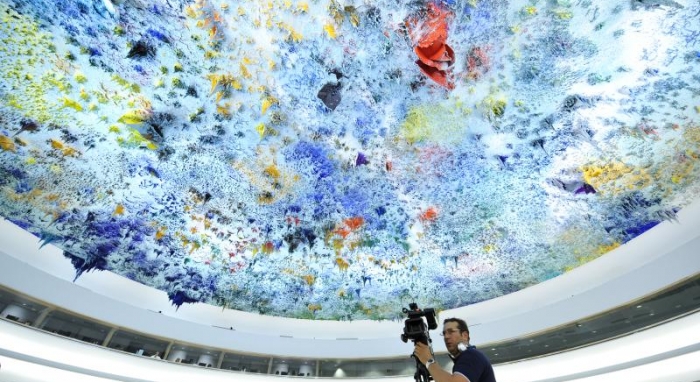
The UN Human Rights Council (the Council) will hold its 40th regular session at Palais des Nations in Geneva from 25 February 2019 to 22 March 2019.

Here are some highlights of the session’s thematic discussions.

Protection of human rights defenders including women human rights defenders

The Council will consider a resolution, presented by Norway, on the situation of human rights defenders working on rights related to land and environment, in particular the specific risks faced by women human rights defenders, to combat impunity for attacks against them, and ensure full civil society participation in development and the management of natural resources. The resolution should call on States to commit to conditioning the provision of diplomatic support to business – such as export credit guarantees and trade support – on companies’ commitment to respect, consult and protect defenders. It should also acknowledge the increasing willingness of some companies to speak out against threats and attacks on human rights defenders, and to raise the bar on accountability for companies who don’t.

The Special Rapporteur on the situation of human rights defenders will present his report on women human rights defenders on 28 February. [see: https://humanrightsdefenders.blog/2019/02/17/latest-report-by-special-rapporteur-on-women-human-rights-defenders-is-now-available/]

Reprisals

Reports of cases of intimidation and reprisal against those cooperating or seeking to cooperate with the UN not only continue, but grow. [I did almost too many posts on this, see recent ones: https://humanrightsdefenders.blog/tag/reprisals/]

The UN has taken action towards addressing this critical issue including:

  • Establishing a dedicated dialogue under item 5 to take place every September;
  • Affirmation by the Council of the particular responsibilities of its Members, President and Vice-Presidents to investigate and promote accountability for reprisals and intimidation; and
  • The appointment of UN Assistant Secretary General on Human Rights, Andrew Gilmour, as the Senior Official on addressing reprisals.

However, ISHR and most NGOs remains deeply concerned about reprisals against defenders who try to engage with UN mechanisms, and consistently with previous calls, urges all States and the Council to do more to address the situation. Item 5 of the Human Rights Council’s agenda provides a key opportunity for States to raise concerns about reprisals, and for governments involved in existing cases to provide an update to the Council on any investigation or action taken toward accountability to be carried out. (In line with previous calls, ISHR expects the President of the Human Rights Council to publicly identify and denounce specific instances of reprisals)

Country-specific:

China

The past year was marked by vitally important monitoring and review of China’s human rights situation by the United Nations human rights system. The upcoming session of the UN Human Rights Council provides a key opportunity for States to reinforce the issues raised over the last year, and express collective concern about worsening rights abuse in China and the government’s failure to follow through on its obligations and commitments.

ISHR and almost 40 other organisations are calling on the Council to adopt a resolution addressing human rights in China, with particular focus on Uyghur Muslims and other ethnic and religious minority groups, over a million of whom are being interned and detained in Xianjiang region alone. [see: https://www.ifex.org/china/2019/02/19/xinjiang-resolution/]

Saudi Arabia

If the international community is serious about contributing to advancing women’s rights in Saudi Arabia, it should recognise Saudi women human rights defenders as agents of change and urge the Saudi authorities to take all necessary measures to guarantee a safe and enabling environment for them to continue their vital work. ISHR recalls that in November 2018, Saudi Arabia underwent its Universal Periodic Review where at least 23 States called for the protection of human rights defenders and journalists in the kingdom. Over 170 organisations from across the globe have previously called for the Council to hold an inquiry into human rights abuses in the country. [see also how Saudi Arabia is trying to cover up its violations: https://humanrightsdefenders.blog/2019/02/01/sports-and-human-rights-focus-on-sports-washing-big-names-play-for-big-money/%5D

Burundi

At last Council session, the Council renewed the mandate of the Commission of Inquiry on Burundi, who will present its oral briefing on 12 March at 12:00. ISHR continues to remain highly concerned about the human rights situation in Burundi and its refusal to cooperate with the Council’s mechanisms. For more information on the situation of human rights defenders in Burundi, check ISHR Briefing Paper for the UPR here. [see also: https://humanrightsdefenders.blog/2018/12/07/final-step-burundi-closes-down-un-office/]

Other thematic reports and country situations

The Council will also consider the promotion and protection of human rights while countering terrorism on several occasions. The High Commissioner will present a report on the issue and the Special Rapporteur will present her annual report focused on national security restrictions on civic space, as well as reports of the visits to TunisiaSaudi Arabia, Sri Lanka,  France and Belgium. [see inter alia: https://humanrightsdefenders.blog/tag/anti-terrorism-legislation/]

The Council will consider several reports on torture, including the annual report of the Special Rapporteur, the reports from his visits to Serbia and Kosovo, Ukraine, and Argentina, and two reports by the Secretary General on the United Nations Voluntary Fund for Victims of Torture and the Special Fund established by the Optional Protocol to the Convention against Torture and Other Cruel, Inhuman or Degrading Treatment or Punishment.

At this 40th session, the Council will discuss a range of economic, social and cultural rights in depth through dedicated debates with mandate holders alongside the annual report of the Secretary-General on the realisation of economic, social and cultural rights globally.

Country situations

The High Commissioner will present her first annual report to the Council on 6 March at 10:00. In addition, the Council will consider reports by the High Commissioner and mandate holders on several country situations. The Council is also expected to consider resolutions addressing a range of country situations, in some instances involving the renewal of the relevant expert mandates. The country-specific debates include:

  • Interactive dialogue with the Commission of Inquiry on Syria
  • Interactive dialogue with the Commission on human rights on South Sudan 
  • Interactive dialogue with the Special Rapporteur on Iran
  • Interactive dialogue with the Special Rapporteur on the Democratic People’s Republic of Korea
  • Interactive dialogue with the Special Rapporteur on Myanmar
  • Enhanced interactive dialogue with the Special Rapporteur on Eritrea
  • Interactive dialogues with the Special Rapporteur and the Commission of Inquiry on the Occupied Palestinian Territories
  • Enhanced interactive dialogue on the High Commissioner’s report on the Democratic Republic of Congo
  • Interactive dialogue with the Independent Expert on Mali 
  • High-level interactive dialogue on the Central African Republic
  • Interactive dialogue on the OHCHR report on Sri Lanka
  • Interactive dialogue on the High Commissioner’s oral report on Ukraine 
  • High Commissioner oral briefings and Secretary General reports on the following countries: Colombia, Cyprus, Guatemala, Honduras, Venezuela, Yemen and Afghanistan

Adoption of Universal Periodic Review (UPR) reports

During this session, the Council will adopt the UPR working group reports on several countries and provides an opportunity for Saudi Arabia, China, Nigeria and Chad to accept recommendations made in relation to human rights defenders, as proposed in ISHR’s briefing papers.

Resolutions

During the organisational meeting for the 40th session held on 11 February 2019, the President of the Human Rights Council presented the programme of work. It includes four panels of discussion and 108 reports. States also announced at least 15 resolutions but more can resolutions can be expected. These include:

  • Rights of Child (GRULAC and the EU)
  • Human rights situation in the Democratic People’s Republic of Korea (EU, Japan)
  • Human rights situation in Myanmar (EU)
  • Human rights, democracy and the rule of law (Morocco, Norway, Peru, Romania, Republic of Korea, Tunisia)
  • Promoting reconciliation, accountability and human rights in Sri Lanka (UK, Germany, Macedonia)
  • Human rights situation in South Sudan (UK)
  • Human rights situation in Syria (France, Germany, Italy, Jordan, Kuwait, Morocco, Qatar, Saudi Arabia, Turkey, United Kingdom)
  • Human rights defenders (Norway)
  • Human rights situation in Iran (Macedonia, Moldova, UK, Sweden)

Panel discussions

During each Council session, panel discussions are held to provide member States and NGOs with opportunities to hear from subject-matter experts and raise questions. All panel discussions will be broadcast live and archived onhttp://webtv.un.org. These panel discussions include:

  • Annual high-level panel discussion on human rights mainstreaming titled “Human rights in the light of multilateralism: opportunities, challenges and the way forward” which will take place on 25 February at 16:00.
  • Biennial high-level panel discussion on the question of the death penalty, titled “Human rights violations related to the use of the death penalty, in particular with respect to the rights to non-discrimination and equality” which will take place on 26 February at 09:00.
  • Debate on the mitigation and countering of rising nationalist populism and extreme supremacist ideologies (for the Commemoration of the International Day for the Elimination of Racial Discrimination), which will take place on 15 March at 16:00. [see also: https://humanrightsdefenders.blog/2018/05/24/mea-at-25-high-level-anniversary-panel-looks-at-human-rights-in-crisis/]

Side events

Many side event will be organized by NGOs (you can download the draft list of NGO events here). the ISHR is organizing at least 3 that are of particular interest to human rights defenders:

  • Protection of women human rights defenders, 1 March from 11:30 to 13:00 in Room XXV
  • Can the UPR advance Freedom of Expression in China?, 13 March from 13:30 to 14:30 in Room XXIII
  • 20 years after the adoption of the HRD Declaration: The positive experience of West Africa on the development of national laws protecting defenders, 20 March 15:00 to 16:00 in Room XXIII

Also relevant are:

  • Reconciliation, accountability and human rights in Sri Lanka, organised by Forum-Asia, will take place on 28 February, at 14:00 (time and location TBC). This side event aims to provide the international community with information on the Government’s implementation of the resolution 30/1 from the perspectives of civil society, and share proposals for further action by the Human Rights Council.
  • Counter terrorism laws and civic space, organised by the Civic Space Initiative (A19, CIVICUS, ICNL and WMD) and will take place on 1 March at 10:30 (time and location TBC).
  • Escazu and Beyond: Strengthening the global normative framework on protecting environmental defenders, organised by CIVICUS and will take place on 5 March at 11:00 (time and location TBC). The side event aims to bring together civil society representatives, UN bodies and State representatives to discuss their intersecting role in promoting and protecting civic space for environmental defenders.
  • Saudi Arabia : Time for accountability, organised by the Right Livelihood Award Foundation, to take place on 4 March.
  • Film screening of the Long Haul: a documentary tribute to human rights activist and professor Sir Nigel Rodley, organised by the International Commission of Jurists and the Permanent Mission of the UK. It will take place on 7 March from 13:00 to 15:00.
  • South Sudan: No sustainable peace without justice, organised by DefendDefenders. It will highlight ongoing grave violations in South Sudan despite the signing of the Revitalised Peace Agreement, lack of domestic accountability, and the need to renew the mandate of the UN Commission on Human Rights (CoHR) in South Sudan. It will take place on 8 March from 13:00-14:00 in Room XXIV (time and location TBC).
  • Human rights in Myanmar, organised by Forum Asia, will take place on 11 March at 16:00 (time and location TBC). Defenders from Myanmar will present their perspectives on the next steps the Human Rights Council should take to ensure justice and accountability for mass atrocity crimes, to address root causes, and provide support for victims.
  • Human rights in Malaysia, organised by Forum Asia, will take place on 13 March at 13:00 (time and location TBC). Following Malaysia’s UPR in November 2018, civil society from the country will suggest steps for the government to implement its UPR recommendations, while engaging with civil society and the national human rights institution in the process.

Read here ISHR’s recommendations on the key issues that are or should be on the agenda of the UN Human Rights Council in 2019. [see https://humanrightsdefenders.blog/2019/02/09/ishr-sets-out-the-priorities-for-the-human-rights-council-in-2019/]

If you want to stay up-to-date: Follow @ISHRglobal and #HRC40 on Twitter, and look out for our Human Rights Council Monitor.

https://www.ishr.ch/news/hrc40-key-issues-agenda-march-2019-session-0

Human Rights Defenders in Latin America under constant attack

February 20, 2019

Some 50 human rights defenders from Latin America held a meeting at the Journalists Club in Mexico City to exchange strategies and analyse the challenges they face in the most lethal region for activists. Special rapporteurs on indigenous peoples, displaced persons and freedom of expression attended the meeting. Credit: Emilio Godoy/IPS

Some 50 human rights defenders from Latin America held a meeting at the Journalists Club in Mexico City. Credit: Emilio Godoy/IPS

We’re in a very difficult situation. There is militarisation at a regional level, and gender-based violence. We are at risk, we cannot silence that,Aura Lolita Chávez, an indigenous woman from Guatemala. (Chávez was a finalist for the European Parliament’s Sakharov Prize for Freedom of Thought in 2017, and winner of the Ignacio Ellacuría Prize of the Basque Agency for Development Cooperation that same year). She has received death threats and attacks that forced her to seek refuge in Spain in 2017.

Latin America, the most lethal region for human rights defenders according to different reports, especially activists involved in defending land rights and the environment. Some 50 activists from Brazil, Colombia, Guatemala, Honduras, Mexico, Nicaragua, the United States and Uruguay participated in the International Meeting of Human Rights Defenders and Journalists in Mexico City from 15-18 February under the slogan “Defending does not mean forgetting.”

Guests at the meeting were United Nations Special Rapporteur on the Rights of Indigenous Peoples, Victoria Tauli-Corpuz from the Philippines; UN Special Rapporteur on the Human Rights of Internally Displaced Persons, Cecilia Jiménez-Damary from the Philippines; and the Inter-American Commission on Human Rights (IACHR) Special Rapporteur on Freedom of Expression, Edison Lanza from Uruguay.

The human rights defenders identified common threats such as interference by mining and oil companies in indigenous territories, government campaigns against activists, judicial persecution, gender-based violence, and polarised societies that often fail to recognise the defence of human rights.

Evelia Bahena, an activist from the southern Mexican state of Guerrero, told IPS about “the suffering and destruction” at the hands of “companies that make profits at the cost of the lives of others.”

A number of reports have focused on the plight of human rights defenders in the region. In the report “At what cost? Irresponsible Business and the Murder of Land and Environment Defenders 2017”, published in July 2018, the international organisation Global Witness stated that of the total of 201 murders of human rights defenders in the world in 2017, 60 percent happened in Latin America. [see also: https://humanrightsdefenders.blog/2019/01/09/global-witness-report-2018-on-environmental-defenders-bad-but-2017-was-worse/]

Brazil recorded the highest number of homicides of activists of any country, 57. In Mexico, the number was 15, five times more than the year before, while Nicaragua recorded the highest murder rate of activists relative to its population, with four killings, according to the British-based organisation.

The “Global Analysis 2018”, produced by the international organisation Front Line Defenders, also depicts a grim outlook, counting 321 human rights defenders killed in 27 countries, nine more than in 2017. Of that total, 77 percent involved defenders of the land, the environment and indigenous people. [https://humanrightsdefenders.blog/2019/01/09/front-line-defenders-says-record-number-of-activists-killed-in-2018/]

For Ana María Rodríguez, a representative of the Colombian Commission of Jurists, difficult conditions persist in her country, where 20 human rights activists have been murdered so far in 2019. “There are delays and non-compliance with the peace agreement,” which have contributed to the defencelessness of human rights activists, according to the lawyer.

The rapporteurs present at the meeting, on unofficial visits to Mexico, listened to the accounts given by activists and recalled that governments in the region have international obligations to respect, such as guaranteeing the rights of indigenous people, displaced persons and journalists, as well as protecting human rights defenders…In her October report on Mexico, the special rapporteur criticised the violation of rights of indigenous people, especially the right to prior consultation on energy, land or tourism projects in their territories. [https://humanrightsdefenders.blog/2019/02/16/human-rights-defenders-journalists-in-mexico-in-1919-2-killed-2-released/]

For his part, Lanza, the IACHR special rapporteur, said the recommendations of the joint report released in June 2018 with David Kaye, UN special rapporteur on the promotion and protection of the right to freedom of opinion and expression, should be the starting point for the measures to be adopted by the Mexican government.,,

Sudan belongs on the agenda of the UN Human Rights Council

February 19, 2019

On 31 January 2019, the NGO wrote that over the last month, dozens of human rights defenders including women human rights defenders, lawyers, journalists and academics have been arbitrarily arrested, not only during street protests, but also at their homes and places of work. That same day Sudanese security forces detained Nazim Siraj, a doctor and human rights defender who has been active in different youth groups and who has been the coordinator for “Accidents Street”, an initiative providing free medical treatment and rehabilitation to Sudanese citizens, including to victims of human rights abuses.

On 30 January 2019, writer and human rights lawyer Kamal Al jazouli was arrested from  his office. On 28 January 2019, security forces detained human rights defender and economist Sedgi Kabalo at his house and took him to an unknown place. Journalist and member of the Sudanese Journalist’s Network, Adel Ibrahim, remains in detention in an unknown location since his arrest on 15 January. 

On 13 January 2019, doctor and woman human rights defender Heba Omar Ibrahim was arrested and pressured by police officers to reveal the names of other human rights defenders working in the health sector.

—–

https://www.hrw.org/news/2019/01/29/human-rights-council-should-create-independent-fact-finding-group-sudan

https://www.albawaba.com/news/sudan-protests-enter-3rd-month-1254860

https://www.frontlinedefenders.org/en/location/sudan