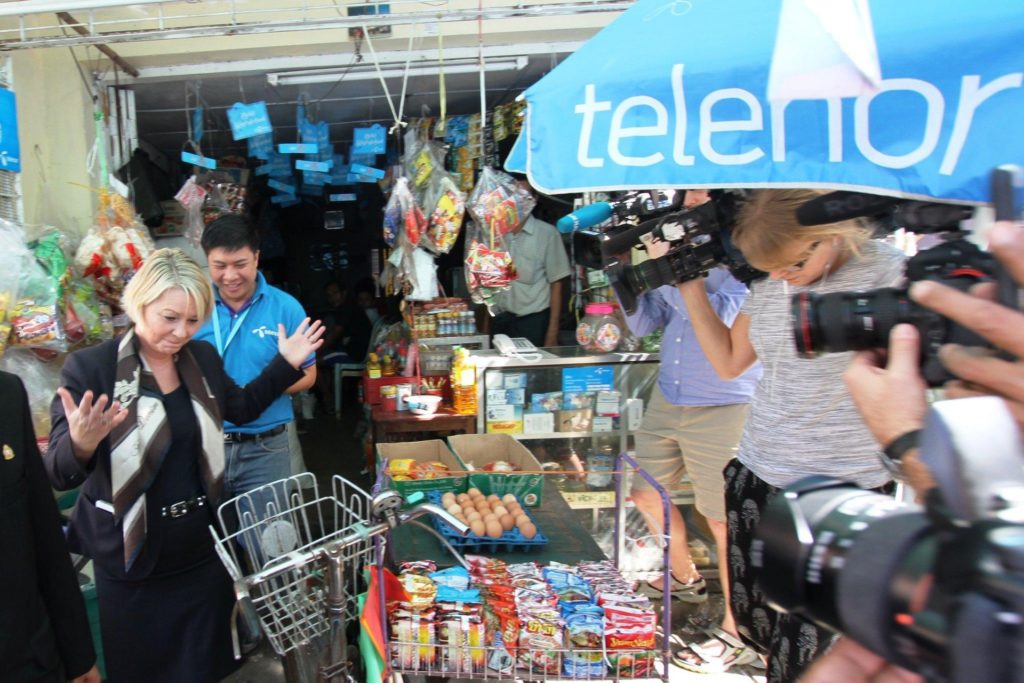
ForUM is a network of 50 Norwegian organizations within the development, environment, peace, and human rights with a vision of a democratic and peaceful world based on fair distribution, solidarity, human rights, and sustainability. ForUM writes that together with transferring the operational activities of Telenor Myanmar to M1 Group, Telenor also sells sensitive personal data of 18 million former Telenor customers, and there is an imminent danger that this information will soon be in the hands of the country’s brutal military dictatorship. ForUM is furious at the news that the sale has been completed.
“Ever since the sale was announced last summer, we have worked to prevent it because there is a big risk that the military junta will have access to sensitive personal information and use it to persecute, torture, and kill regime critics. Incredibly, Telenor is going through with a sale that has been criticized by human rights experts, civil society, Myanmar’s government in exile, and even their own employees in the country,” says Kathrine Sund-Henriksen.
Telenor has admitted that since October last year they have known that the junta uses the M1 Group as an intermediary and that the data will soon end up in the hands of Shwe Byain Phy Group, a local conglomerate with close ties to the junta. Kathrine Sund-Henriksen believes it is only a matter of time before the sale has tragic consequences for human rights activists in the country.
“When metadata is transferred, the junta will be able to know who a user has called, how long the call has lasted, and where the call was made. All of this can be used to expose activist groups operating in secret for the junta. According to the UN, the junta has killed more than 1,600 people and more than 12,000 have been arrested since last year’s coup. Those numbers will continue to increase, and Telenor has given the junta all the information they need to expose human rights defenders,” Kathrine Sund-Henriksen says.
On 30 March 2022 CIVICUS reported on a very interesting case: On 11th March 2022, the National Assembly of Ecuador approved a bill granting amnesty to 268 people who faced prosecution for their defence of land, indigenous and environmental rights, and for their involvement in 2019 protests. The bill was approved by the plenary of the National Assembly with 99 favourable votes out of the 125 parliamentarians in attendance.
Among those benefitted by the amnesty, 153 are land defenders, 43 are environmental activists, 12 are Indigenous leaders criminalised for administering Indigenous justice and 60 others were more generally facing charges related to their involvement in the October 2019 demonstrations. Several defenders, such as Gabriela Fraga, Nancy Simba, Ángel Punina, Javier Ramírez and Jovita Curipoma, were cleared of charges related to resistance against extractive industries. Civil society groups also highlighted the case of Víctor Guaillas, a water defender who had been detained on charges of ‘sabotage’ in 2019, for whom amnesty came too late. Guaillas was one of the 62 people murdered in November 2021 amid a riot in a Guayaquil prison.
Ecuador’s Human Rights Alliance (DDHH) called the move a “historical precedent against the criminalisation and prosecution of rights defenders.” In a statement, the coalition said that this amnesty “means vindicating the right to truth and justice for those who exercise the right to defend human rights” in a context of recurrent criminalisation of these actors.
In a separate but related development, in December 2021 President Guillermo Lasso had made stigmatising statements about social movements and Leonidas Iza, the president of the Indigenous confederation Confederación de Nacionalidades Indígenas (CONAIE). Iza and former CONAIE president Jaime Vargas were among those facing prosecution related to October 2019 protests, and were both granted amnesty in March 2022.
On 21st December 2021, during a weekly broadcast programme in which he discusses government initiatives, Lasso called Iza “an anarchist” and “a violent man,” and claimed that the Indigenous leader “hates democracy.” The President accused the CONAIE leader of incentivising violence during the October 2019 protests. Lasso also said his government would use all the power of the state to jail “those who want to anarchise this country, disrupt public services, and deepen an economic crisis that has already been affected by the pandemic.”
On 22nd December 2021, the DDHH issued a statement expressing solidarity with the Indigenous movement and Leonidas Iza. The coalition said that Guillermo Lasso’s “violent and contemptuous discourse stigmatises the work carried out by social and political leaders, social and Indigenous movements, and makes unfounded and reckless attacks against Leonidas Iza.”
Lasso repeated his statements in a programme aired on 4th January 2022, calling Iza “an enemy of Ecuadorean democracy.”
On 27th January 2022, Ecuador’s Constitutional Court confirmed the violation “of the rights to prior consultation, to nature, water, a healthy environment, culture and territory, as well as comprehensive reparation measures”, regarding the A’i Cofán Indigenous people of the Sinangoe community in relation to mining concessions that affected their ancestral territory without their free, prior and informed consent. In their ruling, the country’s highest court reaffirmed the state’s obligations in consultation processes on plans and projects that affect Indigenous peoples’ rights and interests.
Indigenous communities and organisations have led the international campaign “Who Should Decide?”. Just days before this court ruling, they delivered more than 365,000 signatures to the Constitutional Court asking the Court to protect the right of Indigenous peoples to decide on the future of their ancestral territories.
International group Amazon Frontlines said that the Constitutional Court ruling recognises “for the first time, the right of Indigenous communities to have the final decision over oil, mining and other extractive projects that affect their lands.” The organisation also evaluated that Ecuador “now has one of the most powerful legal precedents in the world on the internationally recognised right of Indigenous peoples to Free, Prior and Informed Consent.”
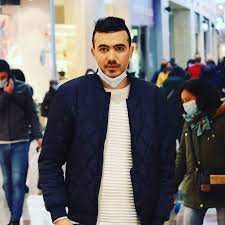
On 30 March 2022, Statewatch along with 13 other human rights organisations condemned the deportation from Spain to Algeria of Mohamed Benhalima, a human rights activist who faces a serious risk of torture and other ill-treatment in the North African state.
The organisations strongly condemn the deportation by Spain of Algerian activist Mohamed Benhalima, in the evening of 24 March 2022, despite the risks of torture and serious human rights violations he faces in Algeria, and therefore in blatant violation of Spain’s international obligations on non-refoulement. The authorities had been made aware, through civil society and legal appeals, that Mr Benhalima faces a high risk of torture, arbitrary detention and unfair trial in Algeria, where such violations are increasingly common against prisoners of opinion and peaceful activists.
Mohamed Benhalima is an Algerian citizen and a former Army corporal turned whistleblower, who exposed corruption among Algeria’s high-ranking military officials in 2019. He left Algeria after receiving information that his name was on a list of wanted military officials at risk of detention by the Algerian army for their participation in the Hirak, a mass pro-democracy protest movement.
He sought asylum in Spain on 18 February 2020 and again on 18 March 2022; Spain refused him asylum both times. On 14 March 2022, authorities opened an administrative file of expulsion for infringement of Art. 54.1.a. of Immigration Law 4/2000, alleging that Mr. Benhalima took part in “activities contrary to public security or which may be harmful for Spanish relationships with foreign states”.
Spanish authorities justified the opening of an expulsion file based on Mr. Benhalima’s alleged association with political opposition group Rachad, which was listed as a terrorist group by Algeria on 6 February 2022. Spanish authorities claimed that Rachad’s objective was to infiltrate radical youth into Algerian society to protest against the Algerian government, and concluded that the activist was a member of a terrorist group.
Authorities did not provide any proof of violent action or speech or any other action taken by the activist that would fall under a definition of terrorism in accordance with the definition proposed by the UN Special Rapporteur on the protection of human rights while countering terrorism. Authorities also do not appear to have considered a context in which Algerian authorities have been increasingly levelling bogus terrorism and state security charges against peaceful activists, human rights defenders and journalists since April 2021. On 27 December 2021, UN Special Procedures warned that the definition of terrorism in the Algerian Penal Code was too imprecise and undermined fundamental rights. They stated that the procedure for registration on the national terrorist list did not comply with international human rights standards and expressed concern that it could give rise to abuse.
On 24 March around 7pm, Mr. Benhalima’s lawyers were notified of the resolution of expulsion and promptly filed a request for an interim suspensive measure at the National Court of Spain, which was rejected; however, it was revealed later that the activist was already on his way to Algeria at the time.
On 21 March 2022, the UN High Commissioner for Refugees (UNHCR) submitted a non-public report to the Spanish government stating that Mr. Benhalima’s asylum request should be studied thoroughly in a regular procedure and not rejected expediently, arguing that the fear of torture was credible and that Algeria’s criminalisation of peaceful opposition was internationally recognised.
On 27 March, Benhalima appeared in a video broadcasted on Ennahar TV, in which he “confesses” to the crimes of conspiracy against the state, and states that he was not treated badly in custody. However, the undersigned organisations call into question the reliability of such statements which might be the result of duress. In addition, Benhalima had himself released a video from the retention centre in Valencia, before his deportation to Algeria, in which he warns that such videos would not be genuine and would show that he “was subjected to severe torture at the hands of intelligence services.”
In January and March 2021, in Algeria, Mohamed Benhalima was sentenced in absentia to a total of 20 years in prison for charges including “participation in a terrorist group” (Article 87bis 3 of the Penal Code) and “publishing fake news undermining national unity” (Art.196 bis) among other charges. The overly broad formulation of both articles has been used by Algeria repeatedly to criminalise fundamental freedoms. In one of the verdicts, issued on 9 March 2021, the judge sentenced Benhalima to 10 years in prison for his online publications, including videos exposing corruption in the army, a form of peaceful expression, which is protected under the right to freedom of expression.
Spanish authorities additionally motivated the expulsion based on Mr. Benhalima’s close relationship with Mohamed Abdellah, another Algerian whistleblower and former member of the military, who also sought refuge in Spain in April 2019 and was forcibly returned on 21 August 2021 using Art. 54.1.a. of Law 4/2000, in similar circumstances and for the same motives.
Mohamed Abdellah, currently detained in the military prison of Blida, stated in court on 2 January 2022 that he had been subjected to various forms of torture and ill-treatment upon his return to Algeria, including prolonged solitary confinement in a cell with no light and physical abuse, according to a witness who attended the hearing. He was also deprived of access to a lawyer.
Despite the strong similarities between both cases providing a compelling precedent about the actual risk of torture and ill treatment of activists and whistleblowers, notably former members of the military, in Algeria, the Spanish government showed its determination to forcibly return someone where their physical and psychological integrity was not guaranteed. In doing so, Spain flouted critical international law obligations under which nobody should be returned to a country where they would be in danger of suffering torture or other cruel, inhuman or degrading treatment.
Signatures
MENA Rights Group
Justitia Center for legal protection of human rights in Algeria
European Union leaders should announce specific policy responses to the Chinese government’s atrocity crimes, Human Rights Watch said today, 30 March 2022. A virtual summit between the EU and China is scheduled for April 1, 2022.
The summit takes place at a time of heightened tensions between the EU and the Chinese government, which retaliated against Lithuania for its relations with Taiwan, baselessly sanctioned EU bodies and European research institutions, and has not condemned Russian war crimes in Ukraine. The Chinese government’s disregard for international human rights norms mirrors its domestic track record of grave abuses without accountability.
“The EU’s foreign policy chief has pointed with alarm to the Chinese government’s ‘revisionist campaign’ against universal human rights and institutions,” said Sophie Richardson, China director at Human Rights Watch. “Brussels should revise its approach to match the magnitude of that threat.”
While the EU has taken important steps in reaction to these developments, including some targeted sanctions and strong condemnations of Beijing’s abuses at the United Nations, these efforts lack the consequences to bring significant change. The rights groups urged Michel and von der Leyen to use their time with the Chinese leaders to announce further steps to counter Beijing’s abuses, and cautioned them against calling for yet another round of the bilateral human rights dialogue, which after 37 rounds has proven unable to secure concrete progress.
Stronger, better coordinated action is also supported by the European Parliament, which has remained a staunch critic of the Chinese government’s crackdown and has repeatedly denounced its abuses. Beijing responded by sanctioning several members of the European Parliament. In response, the European Parliament froze consideration of a bilateral trade deal and called for a new, and more assertive, EU strategy on China, including further targeted sanctions and closer coordination with like-minded partners. [see: https://humanrightsdefenders.blog/2021/05/21/china-eu-investment-deal-off-the-rail/]
“Presidents Michel and von der Leyen should go beyond words of condemnation at the summit if they want to deter Chinese government violations now and in the future,” said Claudio Francavilla, EU advocate at Human Rights Watch. “Bolder steps are needed to counter Beijing’s crimes against humanity and anti-rights agenda, and EU leaders should announce their determination to pursue them.”
The human rights organisation looks back on 2021, “a year of dashed hopes“. According to Amnesty International, the digital sphere is increasingly becoming a space for activism — and repression.
Despite promises and pledges to the contrary, at almost every turn, leaders and corporations opted for a non-transformative path, choosing to entrench rather than overturn the systemic inequalities behind the pandemic. Yet, people the world over have made it abundantly clear that a more just world, grounded in human rights, is what they want
Agnès Callamard SG AI
Here is how Deutsche Welle summarized it:
Every year, Amnesty International looks at developments around the world and compiles an analysis of the most important global trends in human and civil rights. In its latest annual report, Amnesty Middle East and North Africa research and advocacy director Philip Luth says: “2021 was a year of really quite significant promises. … The reality was completely otherwise.”
There had been hope that the world might emerge from the pandemic equitably, Luther told DW, but richer countries in particular have prevented the widespread manufacture and distribution of vaccines. The annual report cites the facts: Fewer than 8% of the 1.2 billion people in Africa were fully vaccinated at the end of 2021 — the lowest rate in the world and far from the WHO’s 40% vaccination target…..The study also found that many governments have used the pandemic to suppress opposition and civil society. “It’s across regions and that’s one of the reasons we highlighted it in our global analysis,” Luther said. “Some governments very specifically used the smoke screen of the pandemic to restrict freedom of expression.” Examples of countries where protests have been broken up and human rights defenders are at risk include Cambodia, Russia, China and others.
According to Amnesty and other international organizations, the pandemic is also having an effect on civil society. “There are various strategies that are making it increasingly difficult for civil society to operate in different regions of the world,” Silke Pfeiffer, head of the department for human rights and peace at the Christian-affiliated aid organization Brot für die Welt (Bread for the World), told DW. “This is quite specifically directed at individual activists, who are discriminated against, threatened, persecuted and in some cases murdered.” In many countries, Pfeiffer said, governments cultivate a hostile environment. “It becomes increasingly difficult for civil society organizations to work,” she said. “That goes as far as the closure of NGOs; we see that again and again.” To cite just one example: In late March, Nicaraguan President Daniel Ortega had 25 nongovernmental organizations closed. One of them is the Nicaraguan partner organization to Brot für die Welt.
Governments and NGOs are increasingly doing their work online. Luther describes the development as a “double-edged sword.” Authorities clandestinely use technology in ways that have a negative impact on people’s human rights, he said: “Governments in many cases were also then trying to shut down and disrupt tools that enable civil society to better communicate with each other and spread information.”
Amnesty International’s annual report cites multiple examples of this: the internet shutdown from August 4, 2019, to February 5, 2021, in the India-controlled regions of Jammu and Kashmir; the use of facial recognition technology at protests in Moscow; and the use of Israel’s Pegasus spyware against journalists, opposition figures and human rights activists. Pfeiffer said the internet was an important way for civil society to organize and mobilize. But she added that, around the world, “governments and other actors have completely upgraded digitally and are now also taking very strong action against freedom on the internet — through censorship, by shutting down internet services, through mass surveillance.”
Across the world, Amnesty noted, people took to the streets to fight for their rights and the rights of others in 2021 — in Russia, India, Colombia, Sudan, Lebanon and at least 75 other countries. in the words of AI Secretary General: “The palpable and persistent resistance offered by people’s movements the world over is a beacon of hope. Uncowed and undaunted, theirs is a clarion call for a more equal world. If governments won’t build back better – if they seemingly are intent on building back broken – then we are left with little option. We must fight their every attempt to muzzle our voices and we must stand up to their every betrayal. It is why, in the coming weeks, we are launching a global campaign of solidarity with people’s movements, a campaign demanding respect for the right to protest. We must build and harness global solidarity, even if our leaders won’t.”
She also said:
Global trends to stifle independent and critical voices gathered steam in 2021 as governments deployed a widening gamut of tools and tactics. Human rights defenders, NGOs, media outlets and opposition leaders were the targets of unlawful detention, torture and enforced disappearance, many under the smokescreen of the pandemic.
At least 67 countries introduced new laws in 2021 to restrict freedom of expression, association or assembly. In the USA, at least 36 states introduced more than 80 pieces of draft legislation limiting freedom of assembly, whilst the UK government proposed the Police, Crime, Sentencing and Courts Bill, which would drastically curtail the right to freedom of peaceful assembly, including by expanding police powers.
Global trends to stifle independent and critical voices gathered steam in 2021 as governments deployed a widening gamut of tools and tactics. Human rights defenders, NGOs, media outlets and opposition leaders were the targets of unlawful detention, torture and enforced disappearance, many under the smokescreen of the pandemic.
At least 67 countries introduced new laws in 2021 to restrict freedom of expression, association or assembly. In the USA, at least 36 states introduced more than 80 pieces of draft legislation limiting freedom of assembly, whilst the UK government proposed the Police, Crime, Sentencing and Courts Bill, which would drastically curtail the right to freedom of peaceful assembly, including by expanding police powers.
An interesting example of what African NGOs can do in their own region for human rights defenders:
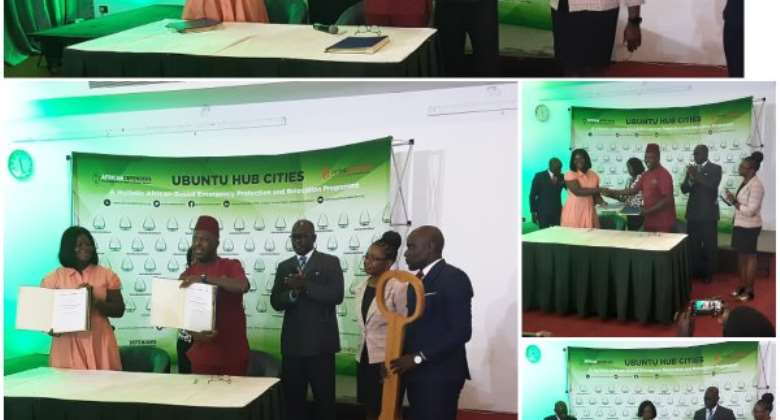
The Gender Centre for Empowering Development (GenCED) and African Defenders, a Pan-African Human Rights Defenders (HRDs) Network, have signed a Memorandum of Understanding (MoU) to set up the 7th Ubuntu Hub in Accra.
The Hub will serve as a safe haven for Human Rights Defenders and in some instances, their families within the continent who are subjected to attacks, threats, violence, and extreme pressure as a consequence of their human rights works.
The MoU would ensure that such victims are given medical, social, educational and psychosocial support in Accra or another African country if they so will, to ensure their wellbeing and development.
Mr Shire said it was prudent for Africa to stay alive and support each other to close the gaps such as threatening, torturing, murmuring, and crying caused as a result of the lack of protection of its people.
A feasibility study conducted by the parties proved that Accra in Ghana was the most suitable host for the initiative as its political, security, and human rights records gave the idea that the city provided an appropriate environment for the relocation of at-risk HRDs, he said.
“Why do human rights defenders need to travel to Finland, just to seek a safe haven, why can’t we seek one from another country within our own continent,” he said.
He explained that the cost of relocating African HRDs at risk to another continent was prohibitory expensive, and the HRDS often faced cultural displacement, stigmatization and cultural and language barriers, hence, finding themselves unable to actively continue their human rights activism when relocated outside of the continent.
In 2019, he said the African Defenders, therefore, launched the Ubuntu Hub Cities, with the aim of providing at-risk African HRDs, with options for safe internal and external temporary relocation without having to leave their home continent.
The initiative since its inception has created a Hub in Kampala, Abidjan, Tunis, Johannesburg, Pretoria, and Cape Town.
Through their diverse local partnerships, Mr Dire said relocation also provided an opportunity for HRDs at risk to learn and share experiences, so that, they could have a positive impact on the host community and return home with enhanced capacities to protect and promote human rights.
Under the Ubuntu Hub Cities Initiative, he mentioned HRDs, Journalists, Writers and Scholars, Trade Union Workers, Human Right Lawyers and Artists as some of the groups they supported.
Ms Esther Tawiah, the Executive Director, GenCED, said African leaders had to stay true to the power and give voice to the ordinary citizen who gave them the mandate.
On March 25, 2022 the Stimson Centre published a wide-ranging piece by Helen Nolan on Human Rights Defenders and what their possibilities are in an international environment: “Protecting Those Who Protect Human Rights: Opportunities and Risks for Action at the UN“
The extensive article starts with the adoption by the UN General Assembly of the Declaration on Human Rights Defenders in 1998. Then it examines possibilities for further state action at the UN to increase the safety and security of human rights defenders. It outlines major trends, gives an overview of UN efforts, and sets out key instruments and state commitments in relation to human rights defenders. It then explores key risks and opportunities for strengthening UN action, offering recommendations for member states to advance this agenda and better ensure that human rights defenders everywhere are able to freely and safely undertake their vital work.
Helen Nolan is an international human rights lawyer. Through the International Service for Human Rights and ILGA World, as well as working for Front Line Defenders and the UN Special Rapporteur on the situation of human rights defenders, Helen Nolan has expertise in human rights defender protection. Helen Nolan has in-depth knowledge of the UN human rights system and advocacy before its mechanisms. She worked most recently with the United Nations Development Programme in Viet Nam. Helen Nolan holds degrees from Trinity College Dublin, Ireland, and Essex University, United Kingdom.
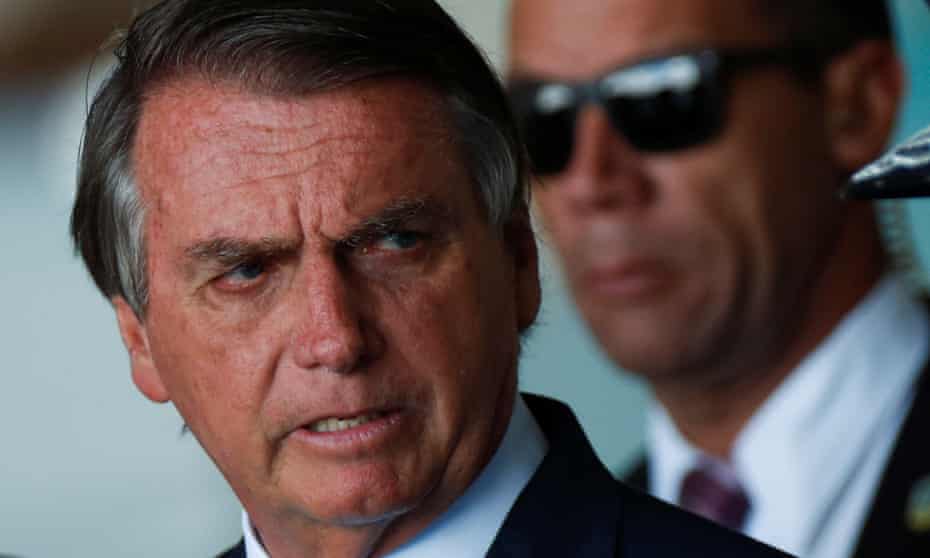
Indigenous leaders said Jair Bolsonaro had spent three years promoting legislation that would open their territories to commercial development. Photograph: Adriano Machado/Reuters
Tom Phillips on 17 March 2022 reported how the Brazilian Government honours a president who activists accuse of undermining Indigenous protections.
Brazilian activists are outraged after Jair Bolsonaro – who has been accused of spearheading a cataclysmic attack on Indigenous rights – was honoured by his own government for his supposedly “altruistic” efforts to protect Indigenous lives.
Bolsonaro was granted the Medal of Indigenous Merit on Wednesday in recognition of what the justice ministry called his attempts to defend Indigenous communities in the South American country.
The same honour was bestowed upon key Bolsonaro allies, including his health, defence and agriculture ministers and the hardline institutional security chief, Augusto Heleno, who has accused Indigenous activists of committing crimes against the state by criticising the government’s policies overseas.
Indigenous leaders reacted to the award with disbelief and exasperation, noting how Brazil’s far-right president had spent three years undermining its Indigenous and environmental protection agencies, Funai and Ibama, and promoting legislation that would open Indigenous territories to commercial development.
The Articulation of Indigenous Peoples of Brazil criticised the government’s “contemptuous gesture”. “They want to destroy us at all costs and, as if that wasn’t enough, they now want to pay tribute to themselves in our name?” the group said, claiming Bolsonaro deserved only “the medal of Indigenous genocide”.
“Now he wants to use the Ukraine war [as justification] for allowing mining, oil and gas exploration, hydroelectric dams and soy plantations on Indigenous lands,” Korap added, in reference to recent moves to fast-track draft legislation allowing such activities.
Alessandro Molon, the lower house leader of Brazil’s opposition, urged Congress to strip Bolsonaro of the medal. “It’s a mockery that the same government that is trying to legalise mining on Indigenous lands – endangering the existence of these utterly persecuted and mistreated people – has the nerve to award itself medals of ‘merit’ for all of the harm it has caused over the past three years,” Molon told the magazine Veja.
“If Congress doesn’t overrule this absurdity it will be associating itself with this unprecedented assault on Indigenous people,” Molon said.
DefendDefenders’ regulary chooses a Defender of the Month. Here an example:
Fadia Khalaf was not meant to be an activist. By her own admission, she was born into a conservative Muslim family – the first of six siblings. In Saudi Arabia where she was born and raised, the ruling ideology in the Kingdom was wahabbism – a puritanical version of Islam in which women are strictly expected to stay in the background and not play any public role. Yet even in that conservative setting, she managed to nurture a political consciousness:
“I think reading at young age helped build my awareness on concepts like justice and rights in general. I was exposed to concepts around human freedom, and that nurtured the rebel in me,” she says. Fadia Khalaf Tweet
Now aged 25, Fadia is the Co-founder of Missing Initiative, a volunteer, youth organization dedicated to documenting all persons that are reported missing during Sudan’s ongoing political crisis. The initiative was started in the aftermath of the Khartoum massacre, when armed forces of the Sudanese Transitional Military Council attacked a protest outside the country’s military headquarters, killing at least 127 people.
“From the start of protests to remove Bashir (Sudan’s long-serving President deposed in April 2019), we would always report people who we would realize never returned home after the protests. This was our way of looking out for each other. But after 3 June 2021 (the day of the Khartoum massacre), the situation was terrible. People were killed, women were raped, while many others were disappeared. All of a sudden, because of our past work, I started getting tens of phone-calls of people letting me know that their persons were missing, asking me to do something about it. I had to post all these missing cases on my social media platforms(Twitter & Instagram via @SlayKaiii) in addition to reporting to police, to try to find them. It was from that crisis that I and five other friends decided to start Missing initiative to continue searching for these people,” Fadia Khalaf Tweet
The initiative helps document persons announced missing, liaises with the police to conduct a search process, follows up on those in police detention to ensure the progress of their cases and helps some of those arrested find legal representation. To date, Missing Initiative has documented over 100 cases of missing persons, and helped locate about 60, from prisons to hospitals. Among these, at least five were found dead in city morgues.
“It’s horrifying, the conditions in which we find some of these people, if we find them at all. Some are in urgent need of medical attention from all forms of torture, others are imprisoned without charge. Others, we find, have died. But at least, it gives closure to their families,” she says. Fadia Khalaf Tweet
As a result of their work, Fadia says that Sudanese now recognise forced disappearances as a state crime, and have gradually developed a consciousness and vigilance to look out for each other against state-inspired violence.
These efforts have not been without consequences. Fadia says she and her colleagues have been threatened together with their families, and that she continues to be randomly followed and her phones tapped. She says as women human rights defenders (WHRDs) in a deeply patriarchal society, they’re even more endangered because the society does not believe they should have any rights at all, much less a voice.
“The day women rise in Sudan, patriarchy will fall because it thrives on subjugating women. And that’s why those like us are harassed because the system fears that we will awaken and empower other women to rise up and refuse to be dominated,” she says. Fadia Khalaf Tweet
Nonetheless, Fadia is optimistic, the growing women and youth agitation is unstoppable: “This spirit and desire for change, I have never seen it before. Young people are willing to die for a better country every day! It is inspiring. All they need is to be empowered more,” she notes.
On 23 March 2022 the above-mentioned NGOs issued a Joint Press Release: “Hold the Myanmar military accountable for grave crimes”
“UN must explore all possible ways to prosecute Myanmar military leaders and hold them accountable for genocide and atrocity crimes” said Human Rights Defenders from Myanmar in an online event as they engaged with the UN Human Rights Council following a series of reporting on Myanmar during the Council’s 49th Regular Session.
Having so far failed to impose its rule over the territory and population, the military continues to intensify its cruel and brutal attacks against the people of Myanmar with indiscriminate airstrikes, shelling, massacres, burning down of villages, torture, and sexual and gender-based violence. In addition, the military continues to block humanitarian aid to over 880,000 displaced people across the country while attacking medical facilities and medical and humanitarian workers.
Despite the brutal violence, the Myanmar people have continued to resist the military, steadfastly demonstrating their courageous will and defense of their democracy.
Over 400,000 civil servants who have joined the Civil Disobedience Movement refuse to work under the military, while others carryout general strikes and street protests. Boycott of military products and refusal to pay electricity bills continues and self-defense forces and formation of new autonomous local administrations alongside the existing parallel administrations in ethnic areas mar the military’s desperate attempts to assert administrative and territorial control.
Responding to calls made by civil society organizations for the UN to explore avenues to prosecute Myanmar military leaders and hold them accountable for grave crimes in Myanmar, His Excellency Aung Myo Min, National Unity Government’s Minister for Human Rights expressed his support during the online event, stating, ‘The UN Secretary-General should explore the feasibility of the establishment by the General Assembly or the Human Rights Council of an ad hoc tribunal to support accountability for alleged violations of international law in Myanmar.’
Following Minister Aung Myo Min’s remarks, Marzuki Darusman of Special Advisory Council for Myanmar and Former Chairperson of the Indpendent International UN Fact-Finding Mission on Myanmar stated during the event, ‘To complement the Independent Investigative Mechanism for Myanmar, that has been in operation for the last few years, it is only logical that an entity needs to be set up that is precisely a jurisdiction that would allow the IIMM – that was established by the Human Rights Council – to undertake its next step, and that is, on the basis of preparing the ground for criminal prosecution, for the Council to decide on a jurisdiction where those prosecutions can take place.’
Human Rights Defenders also called on the UN to seek pathways for accountability. ‘International community must rally to end cycle of impunity enjoyed by the military, and call on the Human Rights Council to explore all options to establish a jurisdiction to prosecute Myanmar military for committing war crimes, crimes against humanity and genocide, and stand with the people of Myanmar in their defense of democracy,’ said Khin Ohmar of Progressive Voice.
‘We welcome US designating the brutal violence committed against the Rohingya as genocide, but this must translate into action to hold the perpetrators accountable. Failure to act on the grave crimes being committed against the people of Myanmar, past and present, will only serve to embolden the military junta,’ said Razia Sultana of RW Welfare Society.
‘The military junta continues to conduct fierce airstrikes against civilians in Karen State, as well as in Karenni, Chin, and Sagaing with total impunity. CSOs and other human rights organizations have already provided, and continue to provide, the necessary evidence of atrocity crimes committed by the Myanmar military to UN bodies. It is time for active steps to be taken by the Human Rights Council to ensure that justice mechanisms move forward without delay.’ said Naw Htoo Htoo of Karen Human Rights Group.
‘Myanmar military is burning villages to the ground, conducting mass scorched earth campaigns in towns such as Thantlang, Chin State and using rape as a weapon of war. Without concrete action to stop this military’s campaign of terror, including an arms embargo and targeted sanctions, whole villages will continue to be reduced to ashes,’ said Salai Za Uk of Chin Human Rights Organization.
‘The price of inaction is surely clear to the Members of the Human Rights Council, which has documented military’s crimes for over 15 years. Through its various mandates and mechanisms such as the Fact-Finding Mission and Independent Investigative Mechanism for Myanmar, the Council has amassed vast amounts of evidence of Myanmar military’s atrocities including the genocide against Rohingya. It is time for the Council to build on this work and explore all possible avenues to hold the military leaders accountable through criminal prosecutions,” said FORUM-ASIA.
The online Side Event during the 49th Regular Session of the Human Rights Council “Justice and Accountability for Myanmar: Expectations and Possibilities”, which took place on 22 March 2022 can be viewed here: https://www.facebook.com/progressivevoice/videos/2137679243064231
***
For a PDF version of this press release, click here


 Hans Thoolen on Human Rights Defenders and their awards