Their quest for corporate accountability brought the activists to Geneva, where ISHR accompanied them during the negotiations at the United Nations Palais des Nations on the elaboration of an international legally binding treaty that seeks to regulate, in international human rights law, the activities of transnational corporations.
Wednesday 30 November 2022, 1:20pm-2:40pm
Room XVIII, Palais des Nations, Geneva
Languages: movie in original version with English subtitles; discussion in English
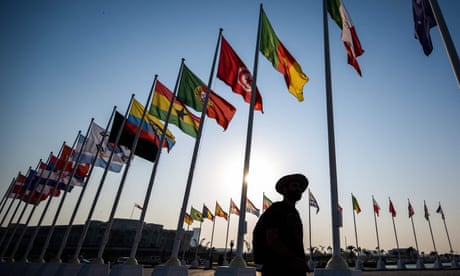
According to the Guardian of 14 November 2022, singer says she will not be playing at 2022 opening ceremony. The chart-topping 27-year-old singer, born in London to parents from Kosovo, said she would only play in the country if it improves its record on human rights.
BTS star Jung Kook is the only official act confirmed for the opening ceremony, which will be held at Al Bayt stadium on 20 November. US rapper Diplo, DJ Calvin Harris and Jamaican singer Sean Paul will also be performing at the Fifa Fan festival, which will run over the 29 days of the tournament.
Lipa is not the first musician to make a point of avoiding playing concerts in Qatar. On Sunday, Sir Rod Stewart revealed he turned down more than US$1m to play in the country last year.
After reports linking her to the event, Lipa shared a statement on Instagram, writing: “There is currently a lot of speculation that I will be performing at the opening ceremony of the world cup in Qatar. I will not be performing and nor have I ever been involved in any negotiation to perform.
“I will be cheering England on from afar and I look forward to visiting Qatar when it has fulfilled all the human rights pledges it made when it won the right to host the World Cup.” He told the UK’s Sunday Times newspaper: “I turned it down. It’s not right to go. And the Iranians should be out too for supplying arms [to Russia].”
Also on Sunday, comedian Joe Lycett told David Beckham he would shred £10,000 if the sportsman didn’t pull out of his Qatar World Cup deal. The footballer is reportedly being paid £10m to be an ambassador for the event, and has been heavily criticised for accepting the money, given that he has previously been viewed as an ally to the LGBTQ+ community..
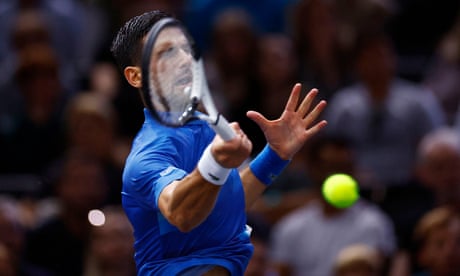
The Guardian of 9 November 2022 reports on the Diriyah Tennis Cup which is a ‘sport swashing’ event according to Amnesty UK
Cameron Norrie and other top men’s players appearing at the Diriyah Tennis Cup in Saudi Arabia have been urged by Amnesty International to use their platforms to speak out against the country’s human rights abuses. “Everyone playing in Diriyah will surely realise that this tennis tournament is yet another example of Saudi Arabia trying to sportswash its bloody human rights record,” said Amnesty International in a statement.
“With Saudi Arabia currently throwing sizeable bundles of money at everything from golf and Grand Prix to boxing and football, it’s really important that top sporting figures use their high profiles to speak out about Saudi human rights abuses.” See e.g. https://humanrightsdefenders.blog/tag/sports-washing/
The exhibition tournament Diriyah Tennis Cup represents Saudi Arabia’s latest attempt to enter the world of professional tennis. There has been interest from the country in hosting an officially sanctioned Women’s Tennis Association event, which the WTA has not yet pursued. A slew of current and former top players have already committed to the lucrative exhibition in December during the short off-season, including Norrie, who is the British No 1, Daniil Medvedev and Andrey Rublev of Russia, Alexander Zverev of Germany, Stan Wawrinka of Switzerland and Austria’s Dominic Thiem. The inaugural edition was held in December 2019, which also featured Medvedev and Wawrinka.
In a statement, Norrie said “I’m not a politician and I don’t feel it’s right for me to get involved with individual government politics,” said Norrie. Amnesty International UK’s Felix Jakens suggested Norrie and others could use their presence in Saudi Arabia to show solidarity with Salma al-Shehab, the Leeds University student jailed for 34 years there for using Twitter.
“We were never going to be telling people like Cameron Norrie where they should or shouldn’t play tennis, but by appearing in Diriyah Cameron should realise he’s effectively being deliberately hired in to take part in the latest jamboree of Saudi sportswashing,” said Jakens. “Cameron has a big platform and genuine influence, and he should use this to show solidarity with people like Salma al-Shehab who are being cruelly persecuted in Saudi Arabia. What Saudi Arabia appears to look for with these competitions is a smiling high-profile sports star who will studiously avoid talking about human rights – Cameron should speak out.”
Up to seven-figure appearance fees have been offered to some top tennis players since the inaugural event in 2019, but not all have entertained them. Matt Gentry, Andy Murray’s agent, revealed at the beginning of the year that he had turned down an offer to compete in the 2019 edition, which Murray echoed at Wimbledon.
“I know a number of the other guys on the tour were offered to play there. I don’t think the player field that went was what they were hoping. A lot of the, I would say, top players and bigger names turned it down. And I personally wouldn’t go and play there,” said Murray.
A recent BBC documentary is about the challenges faced by humanists and atheists in Nigeria. The film was released this week and focuses on Mubarak Bala, reporting on the events that took place in the run-up to his unjust and disproportionate sentencing in April 2022.Mubarak, who is the President of the Humanist Association of Nigeria, is currently serving a 24-year prison sentence, in connection with a series of Facebook posts that some deemed to be ‘blasphemous’ and ‘likely to cause a public disturbance’. See also: https://humanrightsdefenders.blog/2021/08/27/mubarak-bala-wins-humanist-international-2021-freedom-of-thought-award/
Leo Igwe, Humanists International Board Member & Founding member of the Humanist Association of Nigeria, has been spearheading the campaign for his release since he was first arrested in April 2020.: “The launch of the documentary marks more than 30 months since Mubarak was separated from his family. I’m so proud of his wife, Amina, for the strength she has shown, but you can see in her interview how hard this has been for her. Perhaps the most chilling part of the documentary is when the lawyer who brought about the complaint against Mubarak simply cannot hide his pleasure at the outcome of the sentence, despite the devastating impact on the family. He says: “I really feel bad for the wife and the little son” but the smile on his face tells a very different story.”
Following this week’s decision, Mubarak now has one year left of his sentence to serve however our work is not over; the state still has the opportunity to appeal. We will continue to monitor the situation closely and will work to support Mubarak until his safe release.
A blog post of the Universal Rights Group on 7 November 2022 reports on meeting on 18 October hosted by the Permanent Mission of Costa Rica in Geneva, UNEP, and the Universal Rights Group bringing together over 20 human rights experts from Geneva Permanent Missions in a non-attributable setting designed to promote open and forward-looking debate on appropriate next steps. The discussion was informed by an ‘options paper’ prepared by the Special Rapporteur on human rights and the environment, Dr David Boyd, detailing three possible ways to advance the R2E, which he argued can and should be carried out concurrently.
In the meantime, a more operational development was the historic decision, the United Nations (UN) Human Rights Committee found on Friday 23 September that Australia’s failure to adequately adapt to climate change violates the human rights of Torres Strait Islanders.
Karin M Frodé, Andrea Olivares Jones and Joanna Kyriakakis reported on the case:
The Committee’s decision makes clear that inadequate responses to climate change can result in the violation of human rights. It is a landmark victory worth celebrating as part of a broader trend in climate change litigation which has seen human rights arguments put forward to hold both states (ie, the Netherlands, Pakistan and Belgium) and corporations (ie, Shell and other Carbon Majors) accountable. It is also an example of a rise in cases where Indigenous actors are central.
The Committee’s decision: The Committee found that Australia has violated the Torres Strait Islanders’ rights to private life, home and family and their enjoyment of culture. In doing so, the Committee noted Australia’s efforts to construct a seawall, but found it to be an inadequate response to the alarming threats that had been raised by Torres Strait Islanders since the 1990s, due to its delay initiating the project ([8.12], [8.14]).
While decisions by UN bodies are not automatically binding in Australian law, they are persuasive opinions by independent experts that outline Australia’s international obligations and analyse whether they are complied with. The relationship between climate change impacts and human rights is an emerging area, so the clarity that decisions such as in the present case bring is critical. This decision is therefore important not only to the complainants but for other climate justice advocates.
The present decision follows other climate related decisions by human rights bodies. In Teitiota, a case brought against New Zealand, the same Committee made important observations about state obligations and climate change in the context of asylum seekers and refugees, though it stopped short of finding a violation. Another complaint brought by young climate activists against five states for climate inaction before the Committee on the Rights of the Child, focused on child-centric impacts of climate change. Although dismissed for technical reasons, that decision made important findings that children fall within the jurisdiction of states where transboundary harm originates, following the approach of the Inter-American Court of Human Rights.
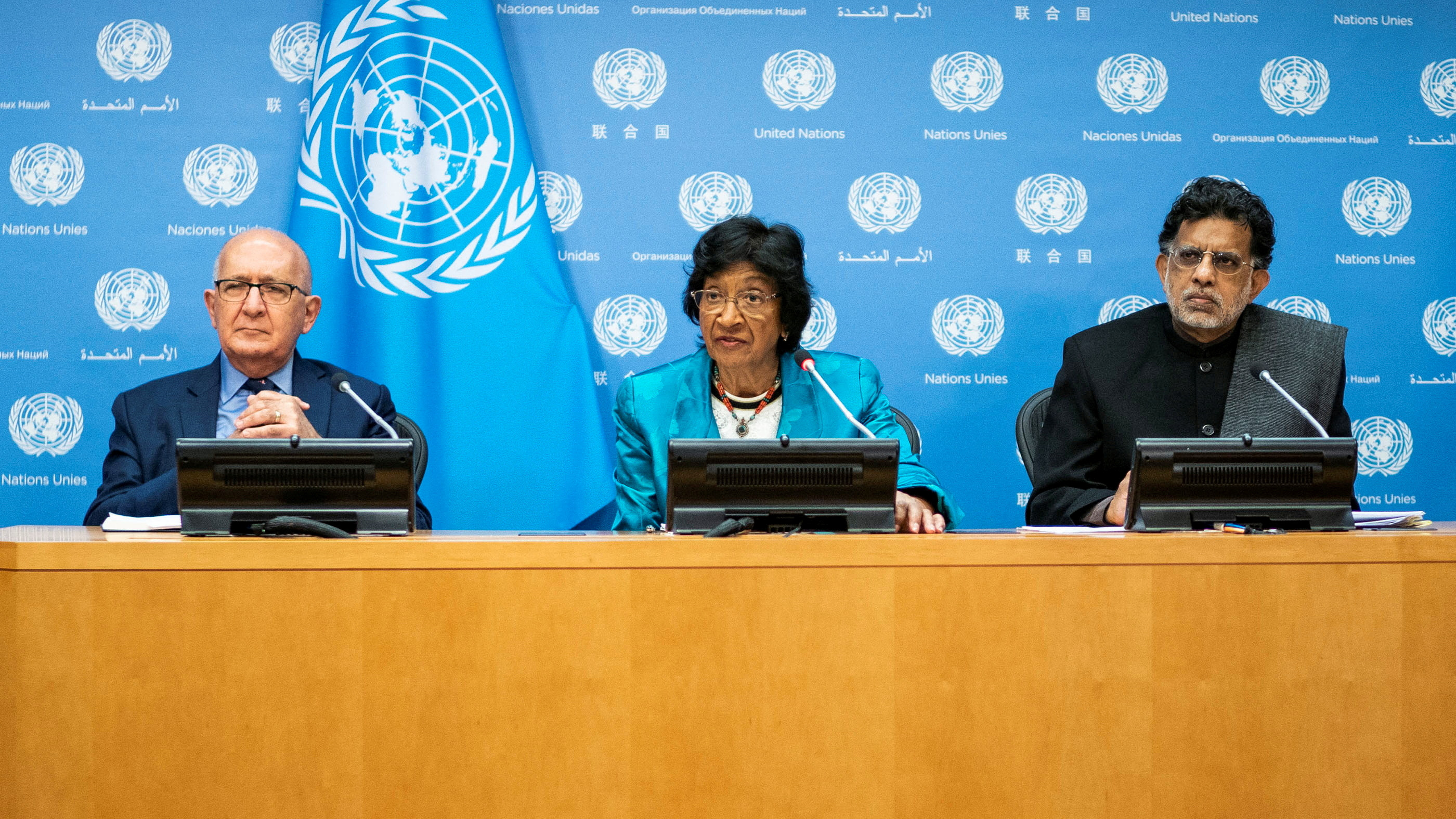
Members of the United Nations Independent International Commission of Inquiry on the Occupied Palestinian Territory and in Israel, Navanethem Pillay, Miloon Kothari and Chris Sidoti attend a press briefing at the United Nations headquarters in New York, U.S., October 27, 2022. REUTERS/Eduardo Munoz/File Photo
On 7 November 2022 Emma Farge reported for Reuters how a Palestinian human rights group told a U.N. panel on Monday 7 November it had been subject to threats and “mafia methods” during a campaign of harassment organised by Israel to silence groups documenting alleged Israeli rights violations.
The independent Commission of Inquiry, established by the Human Rights Council, the U.N. top human rights body, last year, plans five days of hearings which it says will be impartial and examine the allegations of both Israelis and Palestinians. Israel dismissed the process overseen by the panel as a sham while it declined comment on the specific allegations.
“They used all means, I can say. They used financial means; they used a smear campaign; they used threats,” he said, saying his office was sealed with a metal door on Aug. 18.
Asked to detail the threats mentioned to the panel, Jabarin told Reuters after the hearing that he had received a phone call from somebody he identified as being from “Shabak”, or the Israel Security Agency, two days after the raid. They threatened him with detention, interrogation or “other means” if he continued his work, he added.
IDREAM: Capacity Building for Human Rights Defenders (HRDs) Living in Exile
CVT is accepting applications from Human Rights Defenders (HRDs) living in exile to participate in a dynamic capacity development and mentoring fellowship called “IDREAM.”
IDREAM (Incubator for Defenders Remaining in Exile to Advance Movements) is a collaborative and global capacity development project designed to help address the unique needs of HRDs living in exile. IDREAM will provide training and networking activities with the goals of: advancing advocacy efforts, promoting HRD’s psychosocial resilience and well-being, and improving exiled HRD’s physical and digital security. At the end of the selection process, 10 partner HRDs living in exile around the world will be invited to join IDREAM. The project’s main capacity building activities will take place from approximately April 2023 through November 2024. HRDs selected for IDREAM will receive up to $31,000 in financial assistance to support their work in the project.
The Call for Applications is available in English, French, Mandarin, Arabic, and Spanish. All activities of the IDREAM project will take place in English, and applicants must be proficient in English.
IDREAM invites interested HRDs living in exile outside of their home country or internally displaced within their home country to apply online for this fellowship before the deadline at 11:00 pm CST on 30 November 2022.
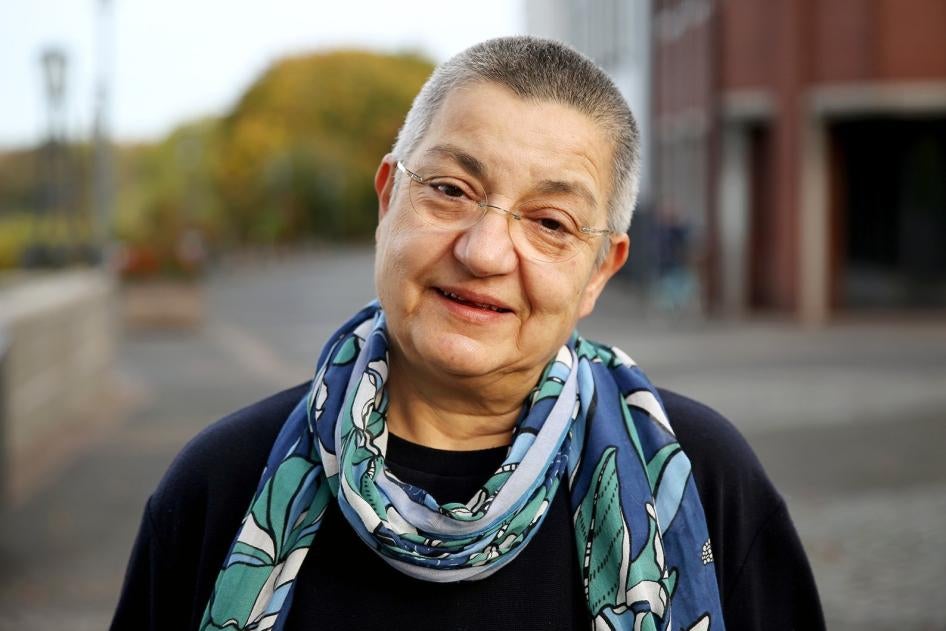
On 28 October 2022 HRW reports on the continuing crackdown on human rights defenders in Turkey, where Şebnem Korur Fincancı is the latest human rights defender to be jailed as authorities pursue a bogus investigation against her for “spreading terrorist propaganda.” Korur Fincancı is head of the Turkish Medical Association, former head of the Human Rights Foundation of Turkey, and a retired professor of forensic pathology. Her work was central to the creation of the United Nations’ “Istanbul Protocol,” a landmark manual on how to identify and document signs of torture. She has also worked on the exhumation of mass graves and forensic documentation of war crimes in different countries. See also: https://humanrightsdefenders.blog/2018/11/05/turkish-human-rights-defender-and-forensic-doctor-sebnem-korur-fincanci-honoured/
Korur Fincancı’s arrest and pre-trial detention followed an interview she gave to pro-Kurdish TV on October 19. Responding to allegations that the Turkish military had used chemical weapons against the armed Kurdistan Workers’ Party (PKK) in the Kurdistan Region of Iraq, Korur Fincancı said the video footage she had seen suggested use of toxic gases affecting the nervous system and that there should be a full investigation. Turkish pro-government media and President Recep Tayyip Erdoğan accused Korur Fincancı and the Turkish Medical Association of slandering the Turkish military. Prosecutors and courts rapidly responded by ordering her investigation and detention.
Korur Fincancı’s arrest is the latest in a pattern of politically motivated cases as the Erdoğan government continues its crackdown on critics and opponents. Just this week, police also detained 10 Kurdish journalists on top of 16 incarcerated in June. The Turkish authorities show all the signs of being determined to silence the voices of experts like Korur Fincancı as well as the journalists who report their words.
Authorities also appear focused on a broader plan of reshaping and taking over professional bodies that have been critical of government policies. On October 27, Turkey’s justice minister announced a plan to restructure both the Turkish Medical Association, from which Korur Fincancı will be removed as head, and the Union of Chambers of Turkish Engineers and Architects. Mücella Yapıcı, a prominent member of the latter, was convicted and jailed in April along with rights defender Osman Kavala and six others for her alleged role in the 2013 Gezi Park protests.
In the run-up to the 2023 presidential and parliamentary elections, the Turkish government is likely to continue to misuse criminal charges and detention against individuals it wants to silence and attempt to seize institutions outside its control.
Representatives and employees of trade unions throughout the world are free to nominate candidates for next year’s Arthur Svensson international prize for trade union rights.
The nominees will be judged on to what extent the person or organization has promoted union rights and/or union organizing in the world. More on the award here –https://www.svenssonstiftelsen.com/about
The Fellow will spend three and a half months in the Front Line Defenders office in Dublin where they will be trained in relation to Human Rights Defenders; the UN Declaration on Human Rights Defenders; the Mandate of the UN Special Rapporteur; the procedures and methodology of the mandate; the role of Front Line Defenders and other national and international organisations in the support and protection of Human Rights Defenders. The Fellow will then enter an internship programme at the OHCHR and will move to Geneva for a period of six months before returning to Front Line Defenders for a further three months.
The successful candidate will have excellent drafting skills and a proven ability of synthesising and condensing large amounts of information into succinct briefings. They will also have excellent administrative skills. They will have some knowledge of the UN system and international and human rights law. They must have native or native-level English and fluency in Spanish (please note we can’t make exceptions to the language requirements). They will be a recent university graduate (see note below).
Basic Terms of reference – Front Line Defenders Dublin
Provide support to Front Line Defenders’ Protection Coordinators including dealing with routine queries and correspondence with human rights defenders;
Cooperate closely with the Regional Fellows and Protection Coordinators in drafting urgent appeals on behalf of human rights defenders at risk around the world:
Input HRD-related information on the Front Line Defenders database;
Undertake clerical tasks such as data entry, collating, emailing and maintenance of the database;
Support follow-up on cases taken up by Front Line Defenders or other specific projects relating to Human Rights Defenders as requested;
Draft as requested, minutes, briefings, reports, appeals;
Basic Terms of Reference – Geneva SR
Gather information on the situation of human rights defenders around the world (with a particular focus on themes of concern identified by the SR);
In coordination with other thematic mechanisms and with geographic desk officers, and under the supervision of the HRD assistant to the SR, draft urgent appeals and communications to Governments concerning human rights violations against human rights defenders;
Support follow-up of cases;
Analyse replies received from Governments and prepare summaries for inclusion in the annual Human Rights Council (HRC) report;
Assist in the drafting of annual reports to the HRC and the General Assembly; Assist in the preparation of background materials for official missions by the Special Rapporteur;
Assist in liaising with non-governmental organizations for the smooth implementation of the mandate, as needed.
Whilst in Geneva, OHCHR internship regulations will apply.
Honorarium: €1400 per month Dublin and €1700 per month Geneva.
Please note that in order to comply with OHCHR internship regulations, applicants will need to be currently enrolled in university or have graduated from university no more than one year previous to beginning the OHCHR internship.



 Hans Thoolen on Human Rights Defenders and their awards