The family of MEA 2013 Final Nominee, Mona Seif, continues to be under the greatest strain in Egypt. Front Line Defenders reports that on 18 August 2014, her brother, human rights defender Mr Alaa Abd El Fattah, began a hunger strike to protest his detention [http://www.frontlinedefenders.org/AlaaAbdElFattah] and said that he will remain on hunger strike until he is released. Her sister human rights defender Ms Sanaa Seif also continues to be imprisoned. [https://www.frontlinedefenders.org/node/26336]. Her father, human rights defender Ahmed Seif El-Islam is in the Intensive Care Unit of Qasr el-Eini hospital. Her family had tried several times to visit the father, but in vain.
Archive for the 'Human Rights Defenders' Category
An exceptional Egyptian family of human rights defenders
August 21, 2014New Indonesian President Jokowi urged to have human rights agenda
August 21, 2014The same day as the Indonesian Supreme Court rejects the challenge against president-elect Joko “Jokowi” Widodo, the Jakarta Post reports that human rights defenders urge him stand firm in advancing human rights in Indonesia immediately after the People’s Consultative Assembly MPR inaugurates him and his vice president-elect Jusuf Kalla on 20 October. International NGO Forum on Indonesian Development [INFID] program officer Hilman Handoni hoped that Jokowi would increase the number of ‘human rights-friendly’ cities in the country (i.e. a city based on the concept of protecting a plural society and facilities friendly to the disabled, women, children and the elderly]. Human rights watchdog Imparsial researcher Swandaru added that he hoped Jokowi would give stronger protection to human rights defenders because many of them were still facing serious threats for advancing human rights in the country. Chrisbiantoro of the Commission for Missing Persons and Victims of Violence [Kontras] said he hoped Jokowi would strengthen the National Commission on Human Rights’ Komnas HAM capacities, which have been widely criticized for having weakened due to previous government, leaving many rights abuse cases unresolved: “Let’s see unresolved cases such as the murder cases of human rights activist Munir Said Thalib and journalist Fuad Muhammad Syafruddin or Udin. Their killers are still free. That’s Jokowi’s homework ”
via Jokowi urged to enforce human rights | The Jakarta Post.
Philippines activist deported from India for working on disappearances
August 20, 2014
“And India ironically signed the International Convention for the Protection of all the persons from enforced disappearance. And in that convention it states that the families of the disappeared have the right to organize themselves and also to work for truth and justice…” she added.
The AFAD Secretary General explained that she was not on an official but a personal visit to Mumbai on her friend’s invitation. “I was going to stay in Mumbai as a tourist for only four days. …I was not planning to go to Kashmir.”
Upon her arrival at the Mumbai airport on August 17 the officials told her that she had done something ‘bad’ during her five-day visit to India in November 2009. [Prior to her visit, the Indian embassy in Philippines told her travel agent that Philippine nationals can obtain a 20-day visa upon arrival
via HR activist says barred from India for working on Kashmir disappearances | Kashmir Reader.
UN special rapporteurs join calls on Azerbaijan
August 20, 2014Yesterday,19 August 2014, three United Nations human rights experts [The Special Rapporteur on the situation of human rights defenders, Michel Forst, the Special Rapporteur on the rights to freedom of peaceful assembly and of association, Maina Kiai, and the Special Rapporteur on the promotion and protection of the right to freedom or opinion and expression, David Kaye] alsoy condemned the growing tendency to prosecute prominent human rights defenders in Azerbaijan, and urged the Government “to show leadership and reverse the trend of repression, criminalization and prosecution of human rights work in the country.” Yesterday I referred to the UN expert group on business and human rights (currently in the country, see: https://thoolen.wordpress.com/2014/08/18/un-expert-group-on-business-and-human-rights-on-timely-visit-to-azerbaijan/) and reports of several major NGOs (see my post of yesterday: https://thoolen.wordpress.com/2014/08/18/azerbaijan-a-hot-summer-in-summary/)
The UN experts highlighted the specific cases of Leyla Yunus, director of the Azerbaijani Institute of Peace and Democracy; Arif Yunus, head of Conflict Studies in the Institute of Peace and Democracy; Rasul Jafarov, coordinator of Art of Democracy and head of Human Rights Club; and Intigam Aliyev, chair of Legal Education Society. “Azerbaijan’s recent membership of the UN Committee on Non-Governmental Organizations does not square well with the authorities’ actions directed at stifling freedoms on the ground,” the UN rights experts noted.
UN experts call on the Government of Azerbaijan | Scoop News.
UN expert group on business and human rights on timely visit to Azerbaijan
August 18, 2014In relation to my post this morning about the hot summer in Azerbaijan [https://thoolen.wordpress.com/2014/08/18/azerbaijan-a-hot-summer-in-summary/] it is relevant to note that the UN expert group on business and human rights is visiting this country for the first time. The information provided by the different NGOs clearly points to a huge problem in preventing and protecting against business-related human rights abuses.
The United Nations group of independent experts undertakes its first official visit to Azerbaijan from 18 to 27 August 2014 to examine the impact of business activities on human rights in the country. [The UN Guiding Principles on Business and Human Rights, unanimously endorsed by the UN Human Rights Council in 2011, offer clarity and guidance for authorities and companies to prevent and address adverse impacts of business activities on human rights. They re-affirm States’ existing obligations to protect against human rights abuse by third parties, including businesses. They also clarify the corporate responsibility to respect human rights, and the need to ensure that victims have access to effective remedy.]
They group will hold a press conference to share with the media preliminary observations from their visit at 13h30 on Wednesday 27 August 2014 at UN House, UN 50th Anniversary Street 3, Baku. The official report is to be presented to the Human Rights Council in June 2015.
(The Working Group on the issue of human rights and transnational corporations and other business enterprises was established by the UN Human Rights Council in June 2011. The five members are Mr. Michael Addo (Ghana), Ms. Alexandra Guáqueta (Colombia), Ms. Margaret Jungk (USA), Mr. Puvan Selvanathan (Malaysia) and Mr. Pavel Sulyandziga (Russian Federation). The Working Group is independent from any government or organization. Its members serve in their personal capacities. They are not UN staff members and do not receive a salary for their work.)
See: http://www.ohchr.org/EN/Issues/Business/Pages/WGHRandtransnationalcorporationsandotherbusiness.aspx
Azerbaijan: a hot summer in summary
August 18, 2014An array of international human rights organisations have over the last weeks focused on Azerbaijan. These four reports together give a shocking picture of the kind of repression that awaits human rights defenders: Read the rest of this entry »
Nabeel Rajab on the situation in Bahrain and lack of western pressure
August 18, 2014On 17 August 2014 Nabeel Rajab, who heads the Bahrain Center for Human Rights (the MEA Final Nominee of 2012), posted a strong piece in the Huffington Post which contains an impressive stand on why he takes the risks he does as well as a scathing attack on the western governments, especially those of the UK, for putting (arms) business before human rights consideration.
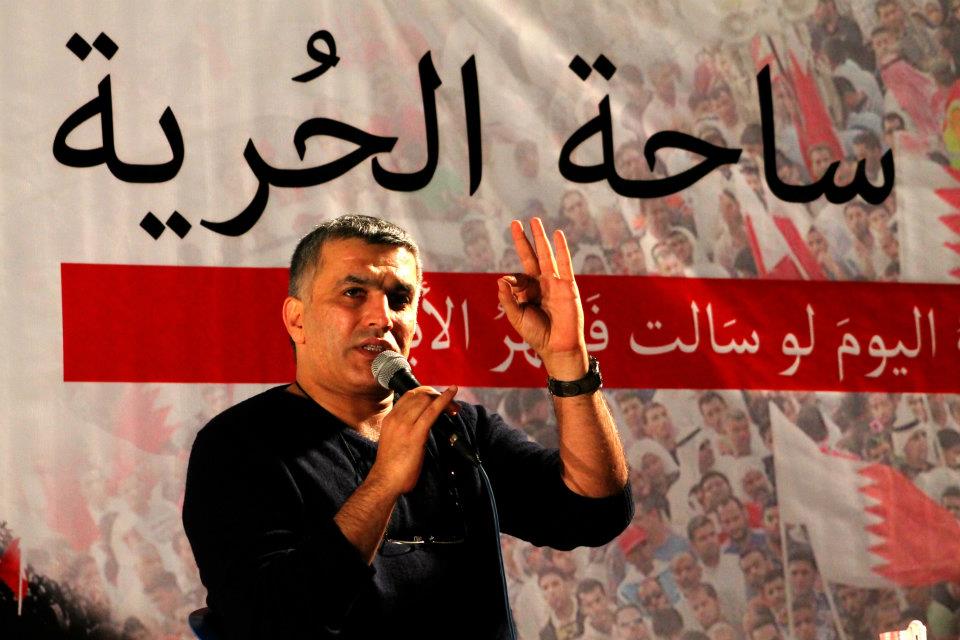
Nabeel Rajab, Final Nominee MEA 2012
New UN High Commissioner should be the “Human Rights Defender-in-Chief”
August 11, 2014(re-issued for technical reasons)
My reference last week to an interview with the new Special Rapporteur on Human Rights Defenders [https://thoolen.wordpress.com/2014/08/05/michel-forst-new-special-rapporteur-on-human-rights-defenders-gives-indication-of-his-priorities/] seemed well appreciated judging from the number of views. Therefore I now refer you to a piece by the Director of the ISHR, Phil Lynch, of 16 July, who addresses the incoming UN High Commissioner for Human Rights, Zeid Ra’ad Zeid al-Hussein as the “human rights defender-in-chief “, saying that he has a particular responsibility to protect human rights defenders, especially so when they face intimidation and reprisals for their efforts to seek accountability at the UN for human rights violations. Read the rest of this entry »
New UN High Commissioner for Human Rights should be the “human rights defender-in-chief”
August 11, 2014My reference last week to an interview with the new Special Rapporteur on Human Rights Defenders [https://thoolen.wordpress.com/2014/08/05/michel-forst-new-special-rapporteur-on-human-rights-defenders-gives-indication-of-his-priorities/] seemed well appreciated judging from the number of views. Therefore I now refer you to a piece by the Director of the ISHR, Phil Lynch, of 16 July, who addresses the incoming UN High Commissioner for Human Rights, Zeid Ra’ad Zeid al-Hussein as the “human rights defender-in-chief “, saying that he has a particular responsibility to protect human rights defenders, especially so when they face intimidation and reprisals for their efforts to seek accountability at the UN for human rights violations. Read the rest of this entry »
Michel Forst, New Special Rapporteur on Human Rights Defenders, gives indication of his priorities
August 5, 2014After a long holiday break there is probably no better way to start again covering developments relevant to human rights defenders than by referring to the views of the new Special Rapporteur on Human Rights Defenders, Michel Forst, who shared his vision with the International Service on Human Rights on 16 July 2014. Michel Forst – appointed in June 2014 – is an experienced human rights lawyer. He was Secretary-General of France’s national human rights commission, and was a Board member of several international human rights NGOs. In an interview with ISHR, he sets out his vision and priorities in the post of Special Rapporteur on HRDs. Read the rest of this entry »
 Hans Thoolen on Human Rights Defenders and their awards