Archive for the 'Human Rights Defenders' Category
April 3, 2015
Twenty years after the Beijing Platform made promising pronouncements, it is sobering to hear from women human rights defenders who are under attack for their work:
- Daysi Flores, JASS Honduras country director, talks about the situation in Honduras, where the imprisonment of Gladys Lanza, one of the country’s most respected feminists, marks a fresh low.
- Nimalka Fernando, president of the International Movement Against All Forms of Discrimination and Racism in Sri Lanka, talks about the misogynist attacks that she has faced.
- Maryam Abdulhadi al-Khawaja, co-director of the Gulf Centre for Human Rights, looks at the situation for women in Bahrain.
- Khouloud Mahdhaoui, a human rights activist in Tunisia, discusses LGBT attacks in her home country.
- Phumzile Mlambo Nguka, the executive director of UN Women, explains how the wave of extremism around the world has affected anyone standing up for women’s rights.
- Tania Branigan, the Guardian’s China correspondent, talks about the five women who were arrested in the days before International Women’s Day in China, over their plans to highlight sexual harassment.
In the same vein is the following statement: Statement of Caribbean women, women’s organizations and other civil society organizations on the occasion of the Commission on the Status of Women (CSW) 59, Beijing + 20 – Stabroek News – Georgetown, Guyana.
see also: https://thoolen.wordpress.com/tag/women-human-rights-defenders/
Posted in human rights, Human Rights Defenders | Leave a Comment »
Tags: Bahrain, Beijing Platform, Caribbean, China, Daysi Flores, Honduras, human rights of women, Khouloud Mahdhaoui, Latin America and Caribbean Women’s Health Network, Liz Ford, Maryam Abdulhadi al-Khawaja, Nimalka Fernando, Phumzile Mlambo Nguka, podcast, Sri Lanka, Tania Branigan, the Guardian, Tunesia, women human rights defenders
April 3, 2015
Posted in HRW, human rights, Human Rights Defenders | Leave a Comment »
Tags: Azerbaijan, Council of Europe, EU, EurasiaNet, Georgia, Giorgi Godia, Giorgi Lomsadze, Human Rights Watch, illegal detention, international commitments, Intigam Aliyev, Khadija Ismayilova, Leyla Yunus, Rasul Jafarov, trial observation
April 1, 2015

This Haitian NGO announces a two-year fellowship for an emerging lawyer committed to pursuing a career in public interest law, especially interested in candidates who know Haiti and speak Haitian Creole and/or French. The announcement is
online.
They also offer a one-year fellowship (unpaid) for a lawyer passionate about social justice and seeking to participate in their ground-breaking cholera case. That announcement is also online
here.
As the deadline is officially passed, hurry, but applications will be reviewed on a rolling basis and the position is open until filled
Contact: Ruth Vaughan (ruth@ijdh.org).
Posted in human rights, Human Rights Defenders | Leave a Comment »
Tags: Bureau des Avocats Internationaux, Cholera, fellowship, Haiti, Institute for Justice & Democracy in Haiti, job opportunity, jobs, lawyer, vacancy
April 1, 2015

Casey Hynes reports on 26 March that human rights defenders are preparing to bring up strongly the case of their missing Laotian colleague Sombath Somphone at the ASEAN Civil Society Conference/ASEAN People’s Forum that convenes in Kuala Lumpur on 21-24 April 2015. Sombath was kidnapped in Vientiane, Laos, in 2013 [https://thoolen.wordpress.com/2014/12/24/laos-un-experts-on-two-year-old-disappearance-of-human-rights-defender-sombath-somphone/].
The ACSC/APF allows civil society activists from all the ASEAN countries to voice their concerns about rights violations in their countries, and become empowered by the strength in numbers there. In countries such as Laos and Vietnam, dissent is often suppressed with jail time or enforced disappearances, which makes it extremely dangerous for activists to speak out. Jerald Joseph, chair of the APF’s Regional Steering Committee, said that by coming to the forum, activists who face risks in their home countries find a safer space to voice their concerns.
ACSC/APF organizers recently condemned the crackdown on protesters in Burma, where 100 people were arrested for speaking out against a new education law. They also pointed to a spate of political arrests in Malaysia and the murder of Indonesian farmer and lands rights activist Indra Pelani, who was allegedly shot to death by “security guards of a subsidiary company of Asia Pulp and Paper”.
“There are numerous cases where human rights defenders have just disappeared. Somchai Neelapaijit in Thailand, Sombath Somphone in Laos, and Jonas Burgos in the Philippines—where are they?” said Mugiyanto, a member of the International NGO Forum on Indonesian Development.
The Laos government is notorious for restricting civil society activism, and for routinely committing human rights abuses. However, Laos is set to take over the ASEAN chairmanship in 2016, and Joseph said they’ll have to answer for some of their abuses when that happens. Already, civil society actors have been discussing the rights situation in Laos with activists and government officials there. “The conversation has started, and the pressure is up already,” he said in a phone interview.
Participating organizations sent a letter on behalf of the ACSC/APF to all the ASEAN member governments in January, highlighting their priorities for “reclaiming the ASEAN community for the people.”
The letter stated:
While ASEAN governments are heading towards developing the ASEAN Community’s Post-2015 Vision, the people of ASEAN continue to suffer from authoritarian and military regimes, increased militarisation, violence and armed conflicts, unlawful foreign interference, lack of fundamental freedoms and human rights violations, undemocratic processes, corruption and poor governance, development injustice, discrimination, inequality, and religious extremism and intolerance. …
The failure of ASEAN to meaningfully address the people’s issues is deeply rooted in the organisation’s continued adherence to a neo-liberal model that prioritizes corporate interests and elite groups, including state-owned enterprises, over the interests of the people. Our engagement with the ASEAN process is therefore anchored on a critique and rejection of deregulation, privatisation, government and corporate-led trade and investment policies that breed greater inequalities, accelerate marginalization and exploitation, and inhibit peace, democracy, development, and social progress in the region.
The authors identified four priorities for ASEAN governments to focus on: development justice; democratic processes, governance, and fundamental rights and freedoms; peace and security; and discrimination and inequality.
ASEAN rights activists demand change ahead of People’s Forum | Asian Correspondent.
Posted in human rights, Human Rights Defenders | Leave a Comment »
Tags: ASEAN, ASEAN Civil Society Conference, ASEAN People’s Forum, Burma, Casey Hynes, civil society activists, disappearances, Indonesia, Jerald Joseph, Jonas Burgos, Kuala Lumpur, Laos, Malaysia, Mugiyanto, Sombath Somphone, Somchai Neelapaijit, South-east asia, Vietnam
March 30, 2015
After the successes of the first course in December 2014, Justice and Peace Netherlands will host the second edition of the The Hague Training Course for Human Rights Defenders on Security from 16-25 June 2015.

20 Human Rights Defenders (HRDs) from around the world will be invited to The Hague where Justice and Peace will facilitate the strengthening of their knowledge and skills on security issues and the building of their international networks. This training aims to reduce the vulnerabilities of the participants, thereby improving their security as well as the security of their families and the organisations they work for in their home countries.
The themes of the course include:
- physical and digital security,
- international guidelines and protection mechanisms,
- functioning of the International Criminal Court (including a visit),
- social media activism,
- advocacy and policy influencing, and
- working within repressive regimes.
Justice and Peace will also conduct a ‘Training of Trainers’ and a network event which will enable the HRDs to develop 1-to-1 relationships with parliamentarians, lawyers, journalists and scientists who might be able to advocate and support their cause in the future.
Entry requirements:
- The participants should work as a Human Rights Defender (HRD) and work for a human rights organisation or an organisation promoting peace or social justice.
- The HRD should implement a non-violent approach in his or her work.
- The HRD should have adequate skills to communicate in English.
- The HRD will organise a training for at least 5 colleagues and/or partners to share the knowledge that was gained during the training within three months of the ‘The Hague Training Course.’
Online application form here or go to justiceandpeace.nl and follow the links to the THTC page. Deadline: 13 April 2015.
via Call for Applications The Hague Training Course for Human Rights Defenders on Security now OPEN!.
Posted in human rights, Human Rights Defenders | 1 Comment »
Tags: Advocacy, digital security, Hague Training Course for Human Rights Defenders, Human Rights Defenders, International Criminal Court, Justice and Peace Netherlands, NGOs, physical security, security, social media, the Hague, training course
March 27, 2015
Today , 27 March 2015, the FIDH published a moving portrait of Mutabar Tadjibaeva, the well-known Uzbek human rights defender, under the title “If I were told that I only have one day left to live, I would spend it fighting for human rights.” A statement that in her case is not an exaggeration!

“If I were told that I only have one day left to live, I would spend it fighting for human rights,” says Mutabar Tadjibaeva, President of the organization Fiery Hearts Club. The 52-year-old Uzbek journalist and activist arrived in France in 2009 as a political refugee. She is no longer welcome In her native country, which has been governed for a quarter of a century by the dictator Islam Karimov. In Uzbekistan, Mutabar investigated drug trafficking, corruption and human rights violations. She endured threats, prison, torture and rape; her fight came at a high price.
In 2002, while this activist was fighting to make publicly known the case of Alimuhammad Mamadaliev, who had been tortured and killed by the police, she herself ended up behind bars for several days. In April 2005, was kidnapped by secret service agents and subjected to horrific treatment. These men would never worried about having to answer for their deeds. But even in the face of such injustice, Mutabar Tadjibaeva continued her activism and journalism until she was imprisoned three years later, on 7 October 2005, just before boarding a plane headed for Dublin where she was to participate in an international conference on human rights. She was arrested by police and, a year later, sentenced to eight years in prison, where she was subjected to torture. She was accused of engaging in illegal activities against the State during demonstrations where several hundred people had lost their lives in May 2005 in Andijan, an industrial city. It is clear to Mutabar that her arrest was for purely political reasons. She was one of many victims of State repression that followed the events of 2005.
“I know very well what prison in Uzbekistan is like and the torture. That is why I have decided to devote me life to fighting for human rights. When I was in jail, I dreamt that one day I would be free. I would tell the prison guards that I would get out of there and write a book on what I had lived through,” she recalls. On 18 May 2008, while still in prison, she was granted the Martin Ennals Award for human rights defenders. She was released a few months later and, on 10 December of that same year, Mutabar Tadjibaeva came to Paris where she accepted the Liberté, Égalité, Fraternité Award on behalf of the Fiery Hearts Club. Banned from Uzbekistan for almost ten years, the organisation took shelter in France in 2011. It will celebrate the 15th year of its existence this year. Every day, dozens of people come to her in search of assistance. She seeks out lawyers and funding, prepares reports and files individual complaints to the UN. Despite the modest means at her disposal and a state of health weakened by the torture she suffered, Mutabar wants to help those who are in same situation as she was in ten years earlier. Her wish is that human rights defenders take more of an interest in the situation in Uzbekistan. Mutabar Tadjibaeva has enjoyed the support of FIDH, and her organisation is now officially a member. “It is thanks to the support of the FIDH that I was able to keep my promise, that is, write my book entitled “Prisoner of the Island of Torture.” I worked with an Uzbek journalist and it is thanks to those recordings that I was able to tell my story. Otherwise, it would have been too hard psychologically,” Mutabar recalls. In the book, which has been published in Uzbek, Russian, French, and English, she shares her memories of prison and decries the cruelty of the regime.
For Mutabar, the challenge lies not in Karimov’s departure, but in regime change. “His departure could set off a war among the clans. The country is corrupt, there is no respect for the law. Karimov the dictator is not the only one to blame for the fact that people are being killed in prisons and tortured; the politicians who support the regime are also to blame. I want Uzbekistan to become a democratic country and dissidents like me to be able to return there and live,” she said. However, as Mutabar sees it, a return to her country is not within the realm of the possible.
On 29 March, Islam Karimov will be running for President for the fourth time, thereby violating Article 90 of the Constitution, which does not allow more than two terms. Mutabar Tadjibaeva and her friends have set up a virtual electoral commission to organise a vote on the Internet. This alternative platform has rejected the candidacy of the president.
“When I decided to come to France as a political refugee,” she concluded, “I was afraid that I would not be able to do anything for my country remotely. But, now I see that if you are motivated and supported, anything is possible.”
“If I were told that I only have one day left to live, I would (…).
for more on Mutabar, see: https://thoolen.wordpress.com/tag/mutabar-tadjibayeva/
Posted in awards, FIDH, human rights, Human Rights Defenders, MEA | 1 Comment »
Tags: Alimuhammad Mamadaliev, Andijan, Égalité, exile, Fiery Hearts Club, France, Fraternité Award, human rights award, Karimov, Liberté, MEA Laureate 2008, Mutabar Tadjibaeva, Mutabar Tadjibayeva, portrait, torture, Uzbekistan, woman human rights defender
March 27, 2015
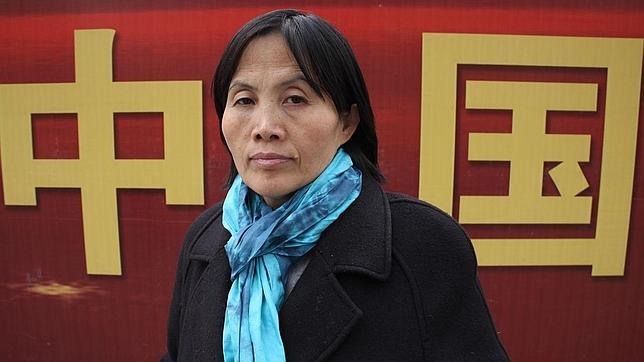
When late Chinese human rights defender Cao Shunli – as Final Nominee of he Martin Ennals Award 2014 – got a standing ovation during the ceremony in October last year, we all said, with the 10 NGOs on the Jury, that we should not forget her. On 19 March 2015 in a statement to the UN Human Rights Council that is exactly what a group of NGOs [International Service for Human Rights and supported by Human Rights Watch, CIHRS, CIVICUS, Conectas, EHARDP, Article 19, HRHF and ALRC] asked for: Ensure independent investigation into death of Cao Shunli.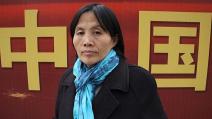
China must ensure a full, independent and impartial investigation into the death of Chinese human rights defender Cao Shunli, ..If Chinese authorities are unable or unwilling to conduct such an investigation in accordance with international standards, the Human Rights Council as the world’s top human rights body must take appropriate action, the statement said.
‘One year after her tragic death, there has been no adequate investigation or accountability in relation to the death of Chinese defender Cao Shunli,’ said Michael Ineichen, Head of Human Rights Council Advocacy at ISHR. ‘If China is let of the hook for such a blatant case of reprisals against someone wanting to cooperate with UN human rights mechanisms, the Council sends a message to rights abusers that activists can be attacked with impunity.’
The statement highlighted the negative effect of impunity for cases of intimidation and reprisals, as shown by the numerous reported cases of intimidation and reprisals occurring during the 28th session of the Human Rights Council, including against South Sudanese and Bahraini defenders.
The legal and moral obligations of States to protect those who cooperate with the UN are clear, and if a State fails to conduct stop reprisals or to properly investigate allegations, the UN has a responsibility to act, the statement said.
‘We welcome recent advances on the institutional level, such as the treaty body policies that recognise States’ primary duty to ensure accountability in the case of reprisals, and the UN’s own duty of care,’ said Eleanor Openshaw, Head of Reprisals Advocacy at ISHR. ‘However, in the absence of a more systematic approach, such as through a dedicated focal point on reprisals which could coordinate investigation of and follow-up to individual cases, these steps will remain the proverbial drop in the ocean’ The statement is available as a PDF and video.
for more on reprisals in this blog see: https://thoolen.wordpress.com/tag/reprisals/
Posted in awards, CIHRS, HRW, human rights, Human Rights Defenders, ISHR | 2 Comments »
Tags: Cao Shunli, China, Conectas, Eleanor Openshaw, HRW, Human Rights House Foundation, Human Rights Watch, International Service for Human Rights, ISHR, MEA final nominee 2014, Michael Ineichen, reprisals, statement, UN Human Rights Council
March 27, 2015
The Bahamas are not the most talked about nation when it comes to human rights but this story is a marvelous lesson in effective diplomacy by human rights defenders.

A group of NGOs [i.c. the Grand Bahama Human Rights Association (GBHRA), the Caribbean Institute for Human Rights, Robert F. Kennedy Human Rights, and and the Haitian Organization for the Prevention of HIV/AIDS and STDS] managed to get a hearing on Friday 20 March 2015 before the Inter-American Human Rights Commission (IACHR) about the treatment of migrants in the country. In short: The main concern was that the Government has put into effect new immigration restrictions without any amendments to the relevant law. It was claimed that Haitians had been targeted and there had been unlawful detention as well as mistreatment. To its credit the government of the Bahamas participated in the hearing and was represented by Minister of State for Legal Affairs Damian Gomez. He refuted the allegations made by the group. [“Indeed, our support of Haiti and its people in the attainment of economic, political and social stability emanates from an abiding and unflinching belief in the dignity of our shared human condition”] Gomez added that the Government received intelligence that Haitians were being smuggled to his country for as much as US$5,000. Still, Gomez invited the IAHRC to conduct an on-site visit to the Carmichael Road Detention Centre. “We have invited them to do an onsite visit. They have indicated a willingness to accept that invitation and act on it and the ball is within their court with respect to indicating to us when they wish to come. They’ve also given us some questions at the hearing which will be answered in the course of things within the next fortnight or so, though we have no deadline within which to answer them.”

Mitchell: Activists Defamed Country
However his colleague the Minister of Immigration, Fred Mitchell, reacted very differently a few days later when he called on the Grand Bahama Human Rights Association to explain why it is attempting to “defame” the country’s name through “irresponsible” efforts. “These people who went to Washington – Bahamians – making these exaggerated claims about abuse of migrants to this country must answer the question to the Bahamian public,” he said at a press conference. “What they are doing will aid and comfort people who are trying to sabotage this country through a criminal enterprise. They have to answer that question. Their actions are irresponsible.” He added: “You can disagree with policy. There are domestic remedies for people to take if you have a difficulty with the policy. If there are specific abuses, there are domestic remedies but to actually go and defame the country in another country, I want to describe that as a particular thing, but I’ll just stay my hand for the moment. But they do have to account to the Bahamian public for their conduct, knowing what we know.”
Compare this with the tone of the Grand Bahama Human Rights Association (GBHRA) in a statement of 24 March, which thanked the government for participating in the hearing and for “sharing the view” that the Immigration Bill should be reviewed. The letter is such a beauty that I copy it below in full. Diego Alcalá, deputy director of the Caribbean Institute for Human Rights, also used positive language and called the invitation “a great first step”.
But then the issue of reprisals..
During the hearing, petitioners also requested that the IACHR assist The Bahamas in designing and implementing a training protocol on Human Rights for State agents, including the role of human rights defenders and their protection. In his contribution, Mr Alcalá said: “Human rights defenders in The Bahamas are confronting a hostile environment that put their security and work at risk. Members of our delegation have been threatened for expressing their opinions against recent changes in migration policies. Also, high-level government officials have made expressions against them, minimising their work or even depicting it as ‘alarmist and inflammatory’.” Mr Alcalá referred to threats against GBHRA executive members Fred Smith and Joe Darville with charges of criminal libel and sedition, and pointed to the cancellation of the Kreyol Connection radio show following critical statements by the government.
Mr Smith, the GBHRA president, told The Tribune that he has made numerous complaints to the Commissioner of Police over verbal and physical attacks he has experienced due to his environmental and human rights activism. However, he did not feel the concerns are taken seriously given the government’s own proclamation against his organisation: “Joe Darville and I have been called social terrorists. Fred Mitchell (the Minister for Foreign Affairs) has threatened to have us prosecuted for criminal libel, sedition. On social media, we have had horrific accusations made against us, that we’re traitors against The Bahamas and that we should be deported.”
During Friday’s hearing, commissioner and country rapporteur Tracy Robinson responded by saying: “In relation to human rights defenders, the commission is always concerned when there are allegations of either threats or stigmatisation of human rights defenders and we ask the state to pay close attention to the allegations made. The commission has very clear rules and principles about the use of criminal laws, including criminal libel laws, in a context where human rights defenders are exercising their rights to protect the interest of others.”
The GBHRA’s reaction was coolly that it hoped Friday’s hearing would foster closer working ties with human rights groups and the government!
—–
Full text of the letter by the GBHRA:
“The Grand Bahama Human Rights Association (GBHRA) would like to publicly thank the government for participating in the recent international hearings in Washington D.C. concerning the country’s new immigration policy.
The hearings before the Inter-American Human Rights Commission (IACHR), convened at the request of the GBHRA and its international partners, we hope will serve as an opportunity for government and human rights defenders to work together closely on reforming current immigration policy and law, specifically the proposed amendments to the Immigration Act, currently before the Senate.
Considering the reaffirmation of its commitment to human rights best practices and international law during the hearings, we are confident the government shares our view that the Bill should be reviewed in light of the comments of the IAHCR commissioners.
The GBHRA looks forward to contributing to this effort in any way it can, and more generally speaking, stands prepared to partner with government to enhance respect for individual rights, strengthen the rule of law and prevent official actions which could pose a risk to our international reputation in the long run.
We likewise thank the government for extending an invitation to the commissioners to conduct an on-site visit to The Bahamas, and have expressed our avid support for such a visit to the Commission.
The GBHRA would also like to express our formal gratitude to the commissioners, the IAHCR and the Organization of American States (OAS) as a whole, for the careful attention currently being paid to human rights issues in The Bahamas.
The commissioners performed a great service to our country during the hearings, reminding us of the expectations of international law on the question of immigration enforcement.
Specifically, their comments affirmed: that detention must be a measure of last resort, not a general rule; that children should not be detained under any circumstances; that the impact of policies on women and children must be a matter of special consideration; that due process, the presumption of innocence and access to justice must be guaranteed for all migrants; and that the government has a duty to address violence and abuse during immigration enforcement exercises.
With regard to this last point, the commissioners made it clear that the government has a responsibility to not only prosecute those who would commit violence or abuse, but also do all in its power to prevent such attacks in the first place.
The commission asked for a report in writing on the extent to which the current policy conforms with the above requirements, and the GBHRA is confident the government will promptly comply with this formal request.
Finally, the GBHRA also welcomes the commission’s offer of help in revising and redrafting the current Bill. We are sure the government will be receptive to this offer, particularly with a view to better clarifying where immigration policy ends and law begins – another issue raised by the commissioners during the hearing.”
Posted in human rights, Human Rights Defenders | Leave a Comment »
Tags: Caribbean Institute for Human Rights, Damian Gomez, Diego Alcalá, Fred Mitchell, Fred Smith, GBHRA, Grand Bahama Human Rights Association, Human Rights Defenders, IACHR, Immigration, Inter-American Commission on Human Rights, Joe Darville, reprisals, Robert F. Kennedy Human Rights, The Bahamas
March 25, 2015
For those who don’t realise how much is going on at the local level in support of human right, here is a little story from Canada. Alan S. Hale in The Daily Press of 24 March describes an evening at Timmins High School:”Local defenders of human rights to be honoured“.

Tom Baby and Toree Doupont hold up with winning posters from the anti-racism poster contest held in local schools during the campaign leading up to the Evening of Applause scheduled at Timmins High Wednesday night
The inaugural Evening of Applause is being organized by a recently-formed committee made up of the local school boards and post-secondary institutions, as well as the Timmins Friendship Centre and the Timmins Local Immigration Partnership. The committee’s goal was to reproduce the successful campaign which has been taking place every year in North Bay for the past 25 years.
“We decided that we wanted to start that project up here in Timmins. So in September, we brought together representatives from all the different education institutions and formed a committee. So this committee has been putting together all the different events to mark the International Day for the Elimination of Racial Discrimination (which was on March 21,)” recalled Tom Baby, the Timmins Local Immigration Partnership coordinator.
For the past three months, the committee has been doing a variety of awareness raising activities in local schools, including in-class instruction and an anti-racism poster contest. The contest drew many submissions, but in the end, the winners were Lindsay Johnston in Grade 3, Emily Morreau in Grade 6 and Cassandra Lapointe in Grade 7. All three students received a $50 prize for their posters. [Anita Spadafore of Amnesty International; Dan McKay who is a local advocate for people with seeing disabilities and founding member of the Barrier Elimination Action Committee, and Ed Ligocki who is the executive director of the Good Samaritan Inn homeless shelter.]
During the Evening of Applause, the first three honourees will be inducted onto the Human Rights Wall of Fame, which will be a new permanent fixture at the Timmins Public Library.
Local defenders of human rights to be honoured | Timmins Press.
Posted in human rights, Human Rights Defenders | Leave a Comment »
Tags: anti-racism, Canada, Human Rights Defenders, Immigration, local community, mobilisation, posters, schools, students, Timmins, youth
March 23, 2015
From 21-13 February 2015, the Lemkin Summit: A National Gathering of the Next Generation of Human Rights Defenders took place in Washington DC. During the three-days students networked with one another, developed their advocacy and movement-building skills, and engaged with experts on current conflict areas including Burma, the Central African Republic, the Democratic Republic of Congo, Sudan, South Sudan, and Syria. Participants were from 28 States, including D.C., as well as the UK, Canada, India, Rwanda, and South Sudan, with 48 different high schools, colleges, and universities represented.
Students arrived Saturday night for a screening of Watchers of the Sky, as well as two special presentations by community leaders. Sunday’s program included panels on sexual & gender based violence, the financial leverage of combatting atrocities, and conflict-specific overviews; advocacy trainings, communications and storytelling workshops; and an Open Space for students to capitalize on the collective knowledge they brought to the Summit themselves. Sunday’s program included student participation in a Keynote Discussion with U.S. Ambassador to the United Nations Samantha Power, who skyped into the Summit, moderated by John Prendergast.
The final day of the Summit was an advocacy day on Capitol Hill, during which students discussed these ongoing issue areas with various congressional offices, and urged Congress to support the Global Magnitsky Human Rights Accountability Act and additional expert capacity to the Treasury Department to investigate and enforce sanctions on people in the DRC, Sudan, South Sudan, and Central African Republic. Students met with 43 offices in the House, 27 in the Senate, and one at the State Department, with Special Envoy to the Great Lakes Region and DRC Russ Feingold.
For a visual representation of the students’ experience over the weekend through social media, check out the Storify below or click here.
via Students Take Action in D.C. as part of The Lemkin Summit: A National Gathering of the Next Generation of Human Rights Defenders | Enough.
Posted in films, human rights, Human Rights Defenders | Leave a Comment »
Tags: Burma, Central African Republic, Democratic Republic Congo, Enough Project, Foreign Policy of the USA, Human Rights Defenders, Lemkin Summit, meeting, Rachel Finn, Samantha Power, South Sudan, students, Sudan, Syria, USA, Washington DC, Watchers of the Sky

 Hans Thoolen on Human Rights Defenders and their awards