On 4 December 2024, Aytan Farhadova in OC media reported that human rights defender Rufat Safarov was detained in Azerbaijan a week before he was set to be awarded the Human Rights Defender of the Year award by US State Secretary Antony Blinken. That day, Safarov’s lawyer, Elchin Sadigov, posted on Facebook that Safarov was accused of hooliganism and fraud resulting in major damage.
Sadigov later posted a message written by Safarov, in which he explained that he was planning to visit the US two days after receiving his visa in order to accept the Global Human Rights Defender Award from Blinken. [not totally clear which award is referred to – ed]
‘So I was awarded as a strong human rights defender of the year. Because the United States initially nominated me, I express my deep gratitude to [Mark] Libby, the US Ambassador in Azerbaijan, and Mr Blinken, US Secretary of State, who supported my candidacy.’
State Department’s Deputy Spokesperson, Vedant Patel, during a press briefing on Tuesday, said: We’re deeply concerned by reports that human rights defender Rufat Safarov has been detained in Azerbaijan’, Patel said, adding that they were ‘closely monitoring the case.’
Frank Schwabe, the head of the German delegation of the Parliamentary Assembly of the Council of Europe (PACE), criticised Safaravo’s arrest, saying that PACE will ‘respond to this in January’.
Safarov, a former prosecutor’s office official who spoke out against human rights abuses by the government, was sentenced to nine years in prison on charges of bribery, fraud, and human rights violations in 2016. He was released from prison alongside almost 400 others after Azerbaijani President Ilham Aliyev issued an amnesty to mark Novruz in 2019.
On 27 November, 2024 Amelia Shindelar (managing director of the Human Rights Initiative at the University of Minnesota) published in Open Global Rights an assessment of the situation of n HRDs in the USA: From grief to activism: The dangers confronting human rights defenders in the United States
Human rights defenders who have lost loved ones to law enforcement violence face additional traumas and risks. These activists need safety and support for their mental and physical well-being.
…HRDs are at high risk of adverse health and safety outcomes. They face significant mental health challenges, particularly when the defenders are from a marginalized community and work on issues related to their identities and their communities. Through a series of interviews with HRDs involved in the anti-law enforcement violence movement, my research team learned about the particular risks faced by HRDs in the United States who have lost a loved one to law enforcement violence.
The most recognised risk to HRDs is the threat to their physical safety. This danger can take various forms, including direct violence and assault, ranging from beatings to torture and abduction at the hands of both state and non-state actors. Tragically, hundreds of HRDs are killed each year. Front Line Defenders reported over 300 killings in 2023 alone, and this figure likely underestimates the true toll.
The unique struggles of defenders who have lost loved ones to law enforcement violence
In the United States, HRDs who have lost family members or loved ones to law enforcement violence face an exceptional set of traumatizing experiences that go beyond the already significant challenges associated with the loss of a loved one to violence. We identified four common risk factors that contribute to this:
1. Dehumanization and criminalization by the media
Traditional media often relies on official statements from law enforcement, which emphasize perceived threats and reinforce that the officer is justified in their use of force. Victims of law enforcement violence are regularly portrayed as criminals in an effort to justify their deaths and shift the focus elsewhere.
Shortly after the death of her son in 2022, Monique Johnson shared with us her experience of how the media portrayed the situation, saying, “They always put their own narrative out there so that people think that he’s the bad guy.” Monique’s experience mirrors that of all the other activists that we interviewed. This negative portrayal can have severe consequences, including exacerbating grief, traumatization, and a loss of social support, as community members withdraw their assistance based on these representations.
2. Recurring exposure to law enforcement violence
Each new incident of violence reopens the wounds. With over 1,000 people killed by law enforcement in the United States each year, the reminders are frequent and painful. Cindy Sundberg, whose son Tekle was killed in 2022, vividly described her experience: “Each event and each killing is like you just open up the wound, and they take a knife and stir it up. And you are just oozing pain.”
In the cases that receive substantial media attention, there’s an added layer of daily trauma. Courteney Ross, George Floyd’s fiance, described this experience: “It never stops. I know loss and grief don’t stop, but when you are faced with literally a symbol of your loved one’s murder every single day, it’s exhausting. It’s just—it’s fearful; it’s anxiety ridden.”
This recurring exposure leads to chronic stress, keeping defenders in a state of heightened alertness that can have severe physical and mental health consequences and affect their ability to process their grief and trauma.
3. Surveillance and harassment by law enforcement
Many HRDs report surveillance or harassment by law enforcement following the death of their loved ones, ranging from increased police presence in their neighborhoods to overt acts of intimidation. Such experiences contribute to a pervasive sense of fear and insecurity.
Matilda Smith shared her experience of constant fear after the officer who killed her son moved into her apartment building: “I was afraid for my life, and my daughter was, and my son as well.” This anxiety led her to move to a different part of town, but the feeling of being watched persisted. The psychological impact of surveillance can be severe, leading to a constant state of alertness and paranoid thoughts and behaviors.
4. Negative consequences of activism
All of the affected individuals with whom we spoke turned to activism to find purpose and healing after the death of their loved ones. As demonstrated by the examples above, among others, activists face multifaceted risks. “I’ve known people in this work that have died of a broken heart,” said Jeralynn Brown-Blueford, co-founder of the Alan Blueford Foundation. Other interviewees also described the emotional, physical, financial, and social toll of their work.
Activism can involve difficult physical labor; carrying protest materials for long distances, building temporary blockades, setting up and taking down sound systems and event spaces, and distributing supplies and resources are just a few examples. Marilyn Hill, whose son was killed in 1997 and has since been active in the anti-law enforcement violence movement, talked about the physical toll the work takes: “I had to load and unload and pick up heavy things…I ended up with a hole in my stomach, and it got bigger and bigger. I ended up having the most excruciating surgery that left me in a nursing home for a month after the surgery.”
The intense focus on activism can strain family relationships. According to Colette Flanagan, founder of Mothers Against Police Brutality, “People get confused; they don’t know what to do when you fight against the policeman. It has damaged our family. I basically lost my daughter. We’re estranged—we haven’t spoken in ten years.” Family estrangement can lead to a loss of crucial support systems, leaving defenders more vulnerable to burnout and emotional exhaustion.
Conclusion
Understanding the risks faced by HRDs in the United States is crucial not only for supporting individual defenders but also for ensuring the sustainability of human rights movements. As the rights community continues to grapple with issues of systemic injustice and human rights violations, we must recognize the human cost borne by those on the front lines of these battles and work towards creating safer, more supportive environments.
Her research focuses on the protection, security, and well-being of human rights defenders.
The top awards for the 2024 International Contest for Minority Artists were presented to five award winners — Bianca Broxton, Joel Pérez Hernández, Francis Estrada, Laowu Kuang and youth laureate Jayatu Chakma — during a special ceremony in Geneva, Switzerland.
UN Human Rights partnered with civil society organizations, Freemuse, Minority Rights Group International, the City of Geneva, the Centre des Arts of the International School of Geneva, and with the support of the Loterie Romande. The theme, Memory in the Present, celebrates the creativity and cultural expression of minority artists whose artwork explores themes relating to memory and memorialization around the globe.
“Naturally, such collective identities will largely be grounded in a collective memory of events, generating or perpetuating values or traditions that shape the way persons belonging to a minority feel bound together by common experiences,” said Nicolas Levrat, United Nations Special Rapporteur on Minority Issues. “Such memories often define how and why these past experiences shared by persons belonging to a given minority (or by previous generations) make them singular, different from other groups.”
The contest serves as a platform for minority artists human rights defenders who play a key role worldwide to build bridges of understanding, dialogue and empathy through creative and artistic means. It celebrates minority artists who have made significant contributions to raise awareness, inspire action, and foster deeper understanding of human rights across diverse communities.
Bianca Broxton is an American interdisciplinary artist who focuses on raising awareness of health inequalities among minority women in the United States. She frames historical narratives and memories around the marginalized voices using sculptures and collages to portray minorities with dignity and a focus on restorative justice.
“My experience as a Black woman drives me to tell the histories of those who have faced systemic oppression and to portray them positively. I refuse to have my subjects seen only as victims of systemic injustice,” she said.
Laowu Kuang is a visual artist belonging to the Tibetan minority in China. Through a vivid interplay of colors and textures displayed on large canvases, his artwork navigates themes of memory and memorialization in contemporary China, through traditional Tibetan symbols and motifs.
“In contrast to Western painting, with its excessive color scale, and Han Chinese painting, with its muted and elegant concept of applying colors, Tibetan painting has a strong and intense contrast of colors,” he said. “The stone carvings of Tibetan folk art are a perfect combination of religion and nature, which is a communication and dialogue between human beings and gods, between heaven and earth.”
Joel Pérez Hernández is a visual and plastic artist from the Maya Tseltal people, born in the Lacandón jungle of Chiapas, Mexico. Hernández has dedicated years to studying traditional techniques and motifs with elder artisans and creators of his community.
“Much knowledge is asleep in our mountains, voices are trapped in the rivers, colors sleep under the stones, and in our collective memory, as well,” he said. “My people nourish me and motivate me to awaken all that; that is what I include in my works. I find no need to sign my pieces, because my people, my family, my friends make up the essence of each one of them.”
Born in the Philippines, Francis Estrada is a visual artist and educator, currently residing in the United States. Estrada’s artwork focuses on culture, history, and perception, and questions the influence of historical photographs, mass media, political propaganda, and personal archives on social narratives and collective memory.
“My art is a tool through which I confront how our understandings of culture are mediated, and the methods through which history and memory are created and perpetuated,” he said. “I think of my work as partial narratives for the viewers to complete based on their own experiences and associations.”
Youth laureate Jayatu Chakma is an artist belonging to the Chakma Indigenous community of the Chittagong Hill Tracts region in Bangladesh. His artwork features ink, acrylic, watercolor, and natural elements like mud and colors from leaves, as a way to reflect on the life of his community in relation with forced displacement and the loss of their lands.
“Chittagong Hill Tracts is a part of Bangladesh which represents a culture of variation in terms of people and landscape,” he said. “But there are stories hidden behind the decorated valleys of Chittagong Hill Tracts: my artworks are influenced by the stories of being displaced, losing belongings and relatives. I want to create artworks that show a different side of Chittagong Hill Tracts, besides its natural beauty and cultural diversity that we see on TV.”
Walter Ngano, on Friday, 29 November 2024, wrote about three nationals in Kenya being honoured as Human Rights Defenders, illustrating again how awards can function at the national level.
Three Kenyan activists were feted at an awards ceremony on Friday, November 29, recognizing them for their commitment to protecting human rights. Boniface Mwangi, Hanifa Adan, and Hussein Khalid were awarded the Human Rights Defender of the Year award during the Human Rights Defenders (HRD) Awards. The event was held at the Royal Danish Embassy in Nairobi, Kenya.
The three, who are prominent activists in Kenya, were jointly awarded the prize, which is under the Working Group on Human Rights Defenders in Kenya, which brings together Civic Society Organizations and development partners concerned with the protection of HRDs.
The three were honoured for the role they played in the June-August Gen Z protests that were witnessed in Kenya in 2024. Together, they managed to lead Kenyans in advocating for the withdrawal of the Finance Bill, 2024.
Hussein was honoured for his contribution to ensuring access to justice for survivors and families of victims of rights violations. Hanifa, on the other hand, was awarded for her dedication to the promotion of public integrity in Kenya.
The aim of the ceremony is to honour and publicly recognise the important work of HRDs in Kenya by giving out awards to men and women who have demonstrated courage and impact in the promotion and protection of human rights and fundamental freedoms.
While speaking after winning the award, Hanifa Adan expressed her joy at winning the award and dedicated the award to Kenyans who lost their lives in the June-August Gen Z protests witnessed in 2024. The award was her fourth in 2024.
“I feel honoured to have won the Human Rights Defender of the Year Award. It’s such an honour, and this is my fourth award this year. I dedicate this award to each and every comrade that we lost during the Gen Z protests,” Hanifa noted.
Hussein Khalid while receiving his award expressed his surprise at being feted but acknowledged the role of activism in the country this year. “I am really shocked by this, but when I look back, it is because of the so many days and sleepless nights we spent doing post-mortems and autopsies for the comrades that we lost in the protests,” Khalid stated. The activist went ahead to request a moment’s silence for the deceased.
Nonhlanhla Dlamini heads SWAGAA – the Swatini Action Group Against Abuse, a local Eswatini organisation whose primary focus is on ending gender-based violence in the country. Since 1990, SWAGAA has provided care, support, prevention, and access to justice for victims and survivors of gender-based violence, by working with community leaders, community members, and the Government, as well as providing counselling for GBV victims. For the International Day for Women Human Rights Defenders, Dlamini answers questions about GBV, her inspirations and why it was necessary for her to become one of the first women elected as a member of parliament in Eswatini.
1. What was that specific inspiring moment or experience that made you decide to focus on gender-based violence?
What actually motivated me was an incident where a relative of mine was raped at the age of six by a stranger. We didn’t find the person. SWAGAA already existed, but I didn’t know anything about them. Then in 1997, I saw an advertisement [for SWAGAA] in the newspaper. And when I learned about what they were doing, I asked myself why I didn’t know about the organization when I had this problem because I had no one to talk to. I had no one to support me. We reported the matter to the police, but nothing ever happened. We’re so frustrated. So, when I saw the position, I just knew this was my job. And my objective was, I want people to know about SWAGAA. I wanted SWAGAA to be a household name.
2. How do you stay motivated and have you ever questioned your journey?
I have several times, particularly when I get hurt, because, you know, sometimes this world can be very cruel. And I ask myself, how could people do such an evil thing? I do get depressed. And when I’m very depressed, I’m like, you know, out of all the jobs that I could be doing, why am I even doing this job? Then I get some motivation with some of the success stories. If I quit, who else is going to do it? I kind of feel I’m compelled to do it because there’s a whole lot of people that are looking up to me for help. So, I continue.
3. You were elected MP back in the early 2000s, the first woman ever for your constituency. What made you decide you had to run?
… The mistake that we make as advocates and women’s rights activists is that we’re always pushing for others to go and make the change that we want to see. So, I made a decision; I was going to stand for the next elections, which were in 2008. I realized that for years, I’ve been part of a vote for a woman campaign, pushing women to stand for elections. But I’ve never thought of myself one day running for elections. I ran the race to Parliament. I was nominated. I was widely supported. I won the primary elections. It was easy for the primary elections, but the secondary elections were not easy. And I was the only woman against seven men. It was very rough. It was very testing. But I pushed with everything that I had. And I won the elections, and I became a member of Parliament. And the first motion that I moved in Parliament, was that the Minister of Justice bring the sexual offenses and domestic violence bill within 30 days. And his response was no. I kept asking, and that is how the bill was finally seen by Parliament.
4. Let’s look to the future. If you could change one thing about the situation of gender-based violence in Eswatini, what would it be?
The most critical thing is prevention. Prevention, prevention, because once it happens, it’s difficult to pick up the pieces. …
5. Do you consider yourself a woman human rights defender? Why?
Of course I do, 100 percent. I consider myself a human rights defender because due to the nature of the work that I’m doing, I am continuously standing up for the rights of women and girls in Eswatini. And I have advocated for better legislation in the country. I have advocated for better services in the country, be it in the police, be it in the hospitals, be it in the justice system. I have done everything that I think needs to be done under the sun to make sure that I stand for the rights of the citizens of this country. And I’m saying this because I also know people believe in me. I’ve done all I possibly can to advocate for the rights of women and children in the country.
‘The Egyptian authorities must open the civic space for civil society to play its role. They must stop persecuting human rights defenders, political opponents, and journalists simply for doing their jobs. The UN and the international community must maintain pressure on them to comply with human rights standards.’
Basma Mostafa is an Egyptian investigative journalist and co-founder of the Law and Democracy Support Foundation. She began her journalism career amid the Egyptian revolution, focusing on sensitive issues such as torture, enforced disappearances, and extrajudicial killings.
Basma’s commitment to exposing human rights violations in Egypt came at a high personal cost. Over the years, she faced numerous threats and severe reprisals for her work, including being detained three times, forcibly disappeared, and accused of ‘affiliation with a terrorist organisation’ and of ‘spreading false information’. Following a sustained campaign of intimidation, Basma was forced to leave Egypt in 2020.
What happened during the Egyptian revolution strengthened my commitment to the principles of human rights and to defending them.
In her latest report to the UN General Assembly, the Special Rapporteur on the rights to freedom of peaceful assembly and of association , Gina Romero, underscored the effects of a growing negative rhetoric directed at civil society and activists.
The Special Rapporteur presented her report ‘Protecting the Rights to Freedom of Peaceful Assembly and of Association from Stigmatization’ in an interactive dialogue with States at the UN General Assembly’s Third Committee.
The report highlights the growing number of harmful narratives that stigmatise civil society groups and activists engaged in association and peaceful assemblies, labeling them as ‘enemies or threats to security and values.’
The Special Rapporteur highlighted an alarming trend of harmful narratives that undermine the legitimacy of peaceful activism and target human rights defenders and the public for exercising their rights to freedom of assembly and association. She discussed how activists and organisations face stigmatising labels and accusations for organising peaceful protests, forming associations, and bringing urgent issues to the attention of authorities and the international community. Her report listed specific narratives and language used in various countries to stigmatise the work of civil society organisations and activists.
Particularly vulnerable to these harmful attacks are advocates for ethnic and religious minorities, women, children, young activists, LGBTIQ+ people, environmental and Indigenous activists, and defenders of democracy, transparency, and fair elections, with trade unions and labor rights groups also being targeted frequently.
These narratives result in the restriction of human rights. While most States participating in the interactive dialogue welcomed the report, some rejected the references to their country in the report, including China, India, Iran, and Russia. Several States asked the Rapporteur about best practices and concrete examples to support and protect the right to peaceful assembly and association.
Gina Romero responded that States should avoid stigmatising protesters and civil society, facilitate peaceful assembly and association, and ensure any restrictions are evidence-based and meet the requirements of legality, necessity and proportionality. She also responded to criticism from China, India, Iran and Russia by emphasising the challenges faced when there are no responses from States to inquiries, denial of requests for country visits, or lack of clear information about state actions and called on states to engage more openly with her mandate.
The Special Rapporteur also noted that harmful narratives from both State and non-State actors restrict access to freedoms of assembly and association, leading to rights violations and shrinking civic space. She called on States to detect, monitor, and counter such cases to ‘prevent undue legal restrictions and repression of these freedoms, which create a cycle of repression and stigmatization’ and implement legal and policy reforms.
Dear Dr. Gillett, Dr. Yudkivska, Ms. Gopalan, Dr. Estrada-Castillo, and Dr. Malila,
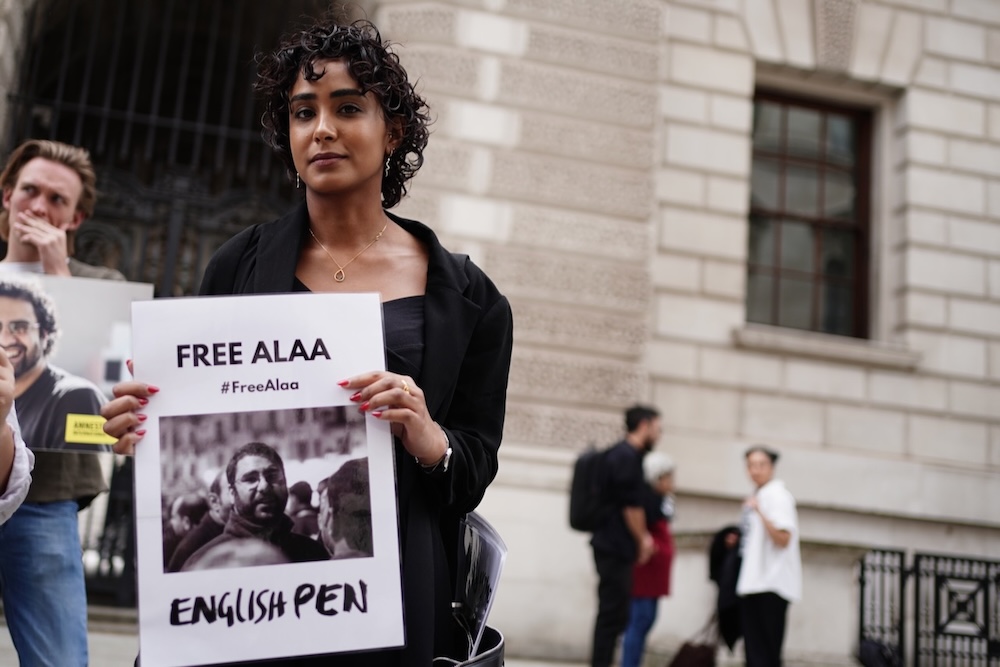
We are writing, as a coalition of human rights organisations, regarding the urgent submission made to you, as members of the United Nations Working Group on Arbitrary Detention (UNWGAD), on behalf of Alaa Abd el-Fattah, the award-winning British-Egyptian writer and activist. Alaa Abd el-Fattah remains arbitrarily detained in Egypt and we strongly urge you to announce your opinion on his case at the earliest opportunity.
An international counsel team, led by barrister Can Yeğinsu, filed an urgent appeal with the UNWGAD on behalf of Mr. Abd el-Fattah and his family one year ago, on 14 November 2023, submitting that his continued detention is arbitrary and violates international law. Shortly afterwards, on 23 November 2023, 34 freedom of expression and human rights organisations sent a letter to the UNWGAD supporting that submission and urging the UNWGAD promptly to issue its opinion on this matter. On 17 April 2024, 27 freedom of expression and human rights organisations sent a follow up letter to the UNWGAD, enquiring whether there was any update in respect of this urgent appeal.
Alaa Abd el-Fattah’s case remains of significant concern to our organisations. He has spent much of the past decade imprisoned in Egypt due to charges related to his writing and activism. He was most recently arrested in September 2019 and was sentenced in December 2021 to five years’ imprisonment, having already spent two years in pre-trial detention. Despite completing his unjust and arbitrary five-year sentence on 29 September 2024, the Egyptian authorities have refused to release him, ignoring the time he spent in pre-trial detention. This defies international legal norms and contradicts Egyptian law. Alaa Abd el-Fattah is currently being held at Wadi al-Natrun prison near Cairo and continues to be denied consular visits, despite his British citizenship. His mother, Laila Soueif, has been on hunger strike since 29 September 2024 in protest against her son’s unjust and prolonged detention.
In November 2022, UN Experts joined the increasing number of human rights voices demanding Alaa Abd el-Fattah’s immediate release. Yet two years later, having fully served his five-year sentence, he remains in prison.
Despite his ongoing incarceration, Alaa Abd el-Fattah’s writing and activism continue to be recognised worldwide: most recently, in October 2024, he was announced as the joint winner of the 2024 PEN Pinter Prize with Arundhati Roy, and recognised as the 2024 Writer of Courage, eliciting the following encomium from Naomi Klein at the ceremony:
Alaa Abd El-Fattah embodies the relentless courage and intellectual depth that Arundhati Roy herself so powerfully represents, making her selection of him as the Writer of Courage profoundly fitting. Despite enduring a series of unjust sentences that robbed him of over a decade of freedom, his liberation continues to be denied. This prize, shared between two vital voices, reminds us of the urgent need to continue to raise our own in a call to ’Free Alaa’ at long last.
Our organisations continue to call for Alaa Abd el-Fattah’s immediate and unconditional release and we request that the UNWGAD urgently announce its opinion on his case.
Yours sincerely,
Alejandro Mayoral Baños, Executive Director, Access Now
Ahmed Samih Farag, General Director, Andalus Institute for Tolerance and Anti-Violence Studies
Quinn McKew, Executive Director, ARTICLE 19
Neil Hicks, Senior Director for Advocacy, Cairo Institute for Human Rights Studies (CIHRS)
Gypsy Guillén Kaiser, Advocacy and Communications Director, Committee to Protect Journalists (CPJ)
Chris Doyle, Director, Council for Arab-British Understanding (CAABU)
Jillian C. York, Director for International Freedom of Expression, Electronic Frontier Foundation
Ahmed Attalla, Executive Director, Egyptian Front for Human Rights
Samar Elhussieny, Programs Officer, Egyptian Human Rights Forum (EHRF)
Daniel Gorman, Director, English PEN
Rasmus Alenius Boserup, Executive Director, EuroMed Rights
James Lynch, Co-Director, FairSquare
Khalid Ibrahim, Executive Director, Gulf Centre for Human Rights
Mostafa Fouad, Head of Programs, HuMENA for Human Rights and Civic Engagement
Matt Redding, Head of Advocacy, IFEX
Baroness Helena Kennedy LT KC, Director, International Bar Association’s Human Rights Institute (IBAHRI)
Alice Mogwe, President, International Federation for Human Rights (FIDH), within the framework of the Observatory for the Protection of Human Rights Defenders
Liesl Gerntholtz, Managing Director, PEN/Barbey Freedom To Write Center, PEN America
Mark Allen Klenk, Writers at Risk Committee Chair, PEN Austria
Grace Westcott, President, PEN Canada
Romana Cacchioli, Executive Director, PEN International
Rupert Skilbeck, Director, REDRESS
Antoine Bernard, Director of Advocacy and Assistance, Reporters Sans Frontières
Ricky Monahan Brown, President, Scottish PEN
Ahmed Salem, Executive Director, Sinai Foundation for Human Rights (SFHR)
Menna Elfyn, President, Wales PEN Cymru
Gerald Staberock, Secretary General, World Organisation Against Torture (OMCT), within the framework of the Observatory for the Protection of Human Rights Defenders
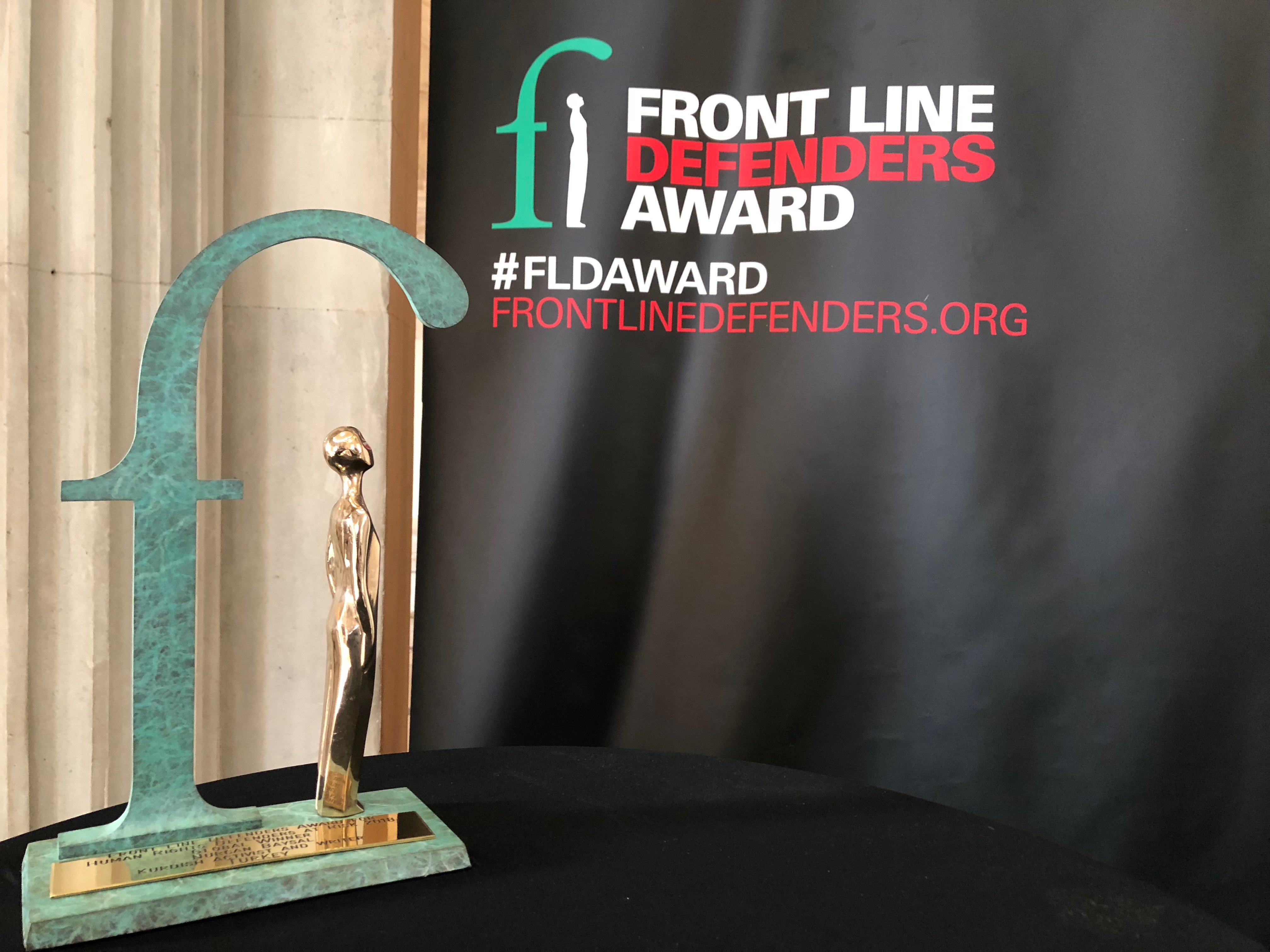
Front Line Defenders is currently accepting nominations for the 2025 Front Line Defenders Award for Human Rights Defenders at Risk:
The annual Front Line Defenders Award was established in 2005 to honour the work of HRDs who are courageously making outstanding contributions to the promotion and protection of the human rights of others, at great personal risk to themselves. The Award focuses national and international attention on the HRDs work, providing them with a greater national and international platform to speak about and advocate for their work.
For each region of the world (Africa; Americas; Asia-Pacific; Europe & Central Asia; and Middle East & North Africa) there will be one winner selected and Front Line Defenders will recognise all five as the 2025 Front Line Defenders Award Laureates. For more on this award and its laureates, see: https://www.trueheroesfilms.org/thedigest/awards/2E90A0F4-6DFE-497B-8C08-56F4E831B47D.
The nomination process is open for anyone to submit a nomination of a human rights defender, collective, organisation or community working on any human rights issue and facing significant risk due to their work or operating in an environment that itself is characterised as insecure. The purpose of the Award is to give visibility to HRDs who are not normally acknowledged or recognised at the international level. At the same time, the Award should not bring additional risk for which the HRD is not prepared. In addition to the Award, winners will receive:
a modest financial prize aimed at improving the HRD’s protection;
collaboration with Front Line Defenders for media work in recognition of the Award;
advocacy by Front Line Defenders related to the Award and the work of the winners;
an event co-organised by the HRD, local partners and Front Line Defenders to give visibility to the Award in the winners’ countries (as determined and guided by the winners);
the Global Laureates will attend a ceremony in Dublin at a date to be determined;
ongoing security consultation with Front Line Defenders.
If you would like to nominate a HRD for the 2025 Front Line Defenders Award for Human Rights Defenders at Risk, please follow this link to the secure online nomination form:
As the person, group or organisation making the nomination, you will be consulted by Front Line Defenders to verify the information submitted and possibly for additional information. Please complete all parts of the nomination form to the best of your ability. 2025 Front Line Defenders Award – Nomination Form
Please submit nominations via the online form. If there are any problems using the form, or if you have any questions, please contact: award@frontlinedefenders.org
Deadline for nominations: 10 January 2025
Please note:
Incomplete nominations will not be considered. Please complete the nomination form in full and provide all of the information requested.
Nominations can be submitted by organisations or individuals.
Individual nominees may not play a prominent role in a political party and must be currently active in human rights work (the Front Line Defenders Award is not intended to recognise a historical or posthumous contribution).
Nominees should be active human rights defenders.
Self-nomination is not permitted.
The number of nominations a HRD or organisation receives is not considered when evaluating the nominees.
All nominations must be accompanied by 2 references.
Are you a human rights defender keen to use the UN to push for change at home? If so, apply for the 2025 edition of ISHR’s flagship training, the Human Rights Defender Advocacy Programme (HRDAP)!
Learn more about why you should apply for HRDAP by watching this video!
What is the Human Rights Defender Advocacy Programme 2025 (HRDAP25)?
The course equips human rights defenders with the knowledge and skills to integrate the UN human rights system into their existing work at the national level in a strategic manner and provides an opportunity for participants to prepare for and engage in advocacy activities at the UN with the aim to effect change back home.
Online course topics – ISHR
Defenders will complete a 10-week hybrid learning programme, online and offline, which will include:
Accessing the HRDAP Platform, where they can complete e-learning courses on each key UN human rights mechanism and on advocacy strategies, and access interactive learning materials and case studies on the ISHR Academy
Taking part in live Q&A sessions with human rights experts
Receiving a continuous personalised advocacy support and coaching in order to develop concrete advocacy objectives to make strategic use of the international human rights system taking into account the local context
Building networks around the world, and learning from peers from a range of regions working on a range of human rights issues
Applying their knowledge to case-studies scenarios and enhancing their advocacy toolbox according to their specific needs (elevator pitch, SMART recommendations…)
Receiving support and advocacy accompaniment to conduct activities during the 59th and 60th Human Rights Council sessions and other relevant opportunities.
Participants will have the unique opportunity to apply their knowledge and skills while being in Geneva as well as to meet and share with their peers and experts (UN staff, diplomats, supporting NGOs…). The blended format of the course allows defenders to continue their vital work on the ground, while diving into the inner workings of each key UN human rights mechanism and gaining first-hand experience from advocates and UN staff on how civil society can strategically engage in the international human rights space. The methodology we use is interactive and learner-centred and encourage participation of everyone.
By participating in HRDAP, defenders:
Gain knowledge and tools, which they can use to ensure their voice is central in international human rights decision-making
Explore and compare the benefits of engagement with the Human Rights Council, the Special Procedures, the OHCHR, the Universal Periodic Review and the Treaty Bodies, and examine how they can use them to bolster their work at the national level
Develop strategies and advocacy techniques to increase the potential of their national and regional advocacy work
This programme is directed at experienced human rights defenders working in non-governmental organisations, with existing advocacy experience at the national level and some prior knowledge of the international human rights system.
ISHR supports, and promotes solidarity with and between, defenders working in the following areas or contexts, which we recognise as intersectional and interdependent:
Equality, dignity and non-discrimination
Environmental justice and sustainability
International accountability for the repression of human rights defenders
Transparency and rule of law
The hybrid programme will bring together around 16 committed human rights defenders from different backgrounds, who work on a wide range of areas that are linked with our programmes to ensure a sustainable collaboration. This can include, but is not limited to, defenders working on the following thematics: women rights; Indigenous people’s rights; the human rights of LGBTIQ+ persons; anti-racism; reclaiming civil society space and increasing protection of human rights defenders.
What do former HRDAPers say?
16 human rights defenders from 15 countries took part in the last edition, HRDAP24. At the end of the training, 98% of the participants were either extremely satisfied or very satisfied with the programme and felt that they would be able to apply what they learnt to their own day-to-day work. Find out more about the outcomes of HRDAP24 here.
First, download and read carefully the HRDAP 2025 Programme Description to find out more about modalities, requirements and funding. If you meet the criteria, take some time to apply using this online form before midnight Geneva time on Friday 10 January 2025!
As only a limited number of human rights defenders are able to participate in HRDAP each year, in addition to our range of guides and handbooks, ISHR has developed an e-learning space in English, French and Spanish to help human rights defenders strengthen their advocacy skills with the UN for greater impact on the ground: the ISHR Academy. The learning modules demystify the UN human rights system and build capacity to push for change. Discover new tools, insider tips, defender stories, and more!
![Mga Nalimutan [The Forgotten], inspired by a photography taken by Joe Galvez New York City, United States, 2017.](https://www.ohchr.org/sites/default/files/styles/hero_5_image_desktop/public/2024-11/minority-artists-award-memory-in-present-2024-972x700.jpg?itok=oQgPdm-9)


 Hans Thoolen on Human Rights Defenders and their awards