The Parliamentary Assembly of the Council of Europe (PACE), in partnership with the Václav Havel Library and the Charta 77 Foundation, has issued a call for nominations for the 2026 Václav Havel Human Rights Prize.
The deadline for submitting nominations for the 2026 edition of the Prize is 30 April 2026.
Nominations should be sent to the Parliamentary Assembly by e-mail to the following address: hrprize.pace@coe.int, using the form available on the Prize web page. They should be signed by at least five sponsors and submitted in either English or French.
This is a reminder that nominations for the 2026 Right Livelihood Award are open, and the deadline is January 16, 2026 . They are seeking new nominees for the Award who are leading change-makers in their field. Nominations are fully open to the public; therefore, anyone can nominate an individual or organisation creating change through their innovative and life-changing work. To nominate a candidate (preferably in English, but French and Spanish are also accepted), please submit nominations through our online nominations form. Read more about the Award https://www.trueheroesfilms.org/thedigest/awards/97238E26-A05A-4A7C-8A98-0D267FDDAD59.
The Right Livelihood Award recognizes and supports outstanding individuals and organizations driving social, environmental, and human rights change. Winners receive financial or honorary awards, lifelong access to a global network, and international recognition to amplify their impact and protect their work.
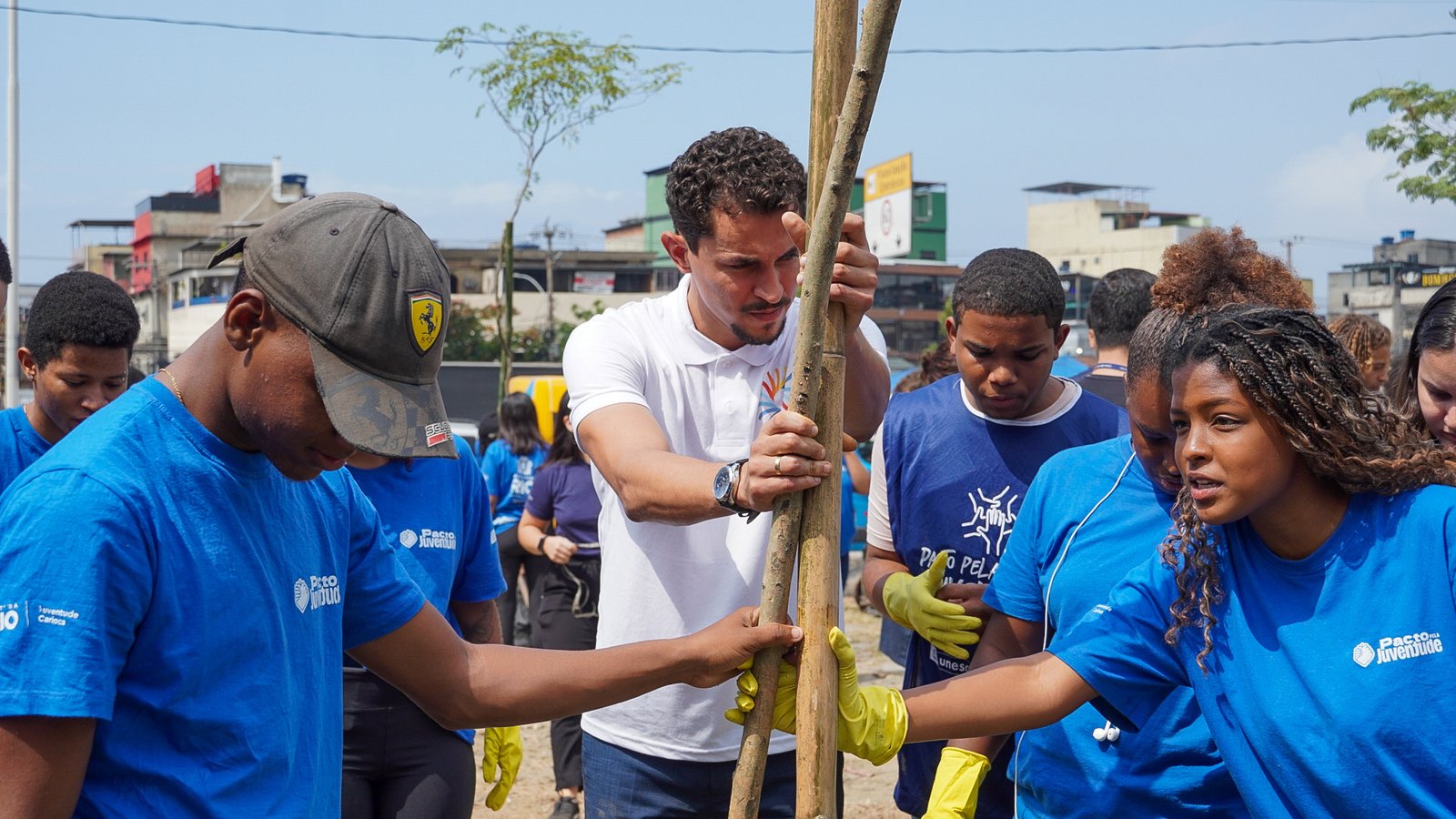
Salvino Oliveira was honored as a 2025 Young Activist Summit Laureate. | Courtesy of Jefferson Teófilo
On 22 December 2025, Global Citizen published the story of how at 27, Salvino Oliveira went from being a street vendor in Rio’s Cidade de Deus to a city councilor leading education reform. This was followed by him starting his first social project: making tuition free for poor children at 15 years old. In recognition of his efforts towards making education more accessible, Oliveira has been honored as a 2025 Young Activist Summit Laureate. Here, Oliveira shares how education transformed his life, and why he’s committed to making that transformation accessible to every young person in Brazil’s favelas.
My name is Salvino Oliveira, and I am everything I’ve been.
I say this because my story begins in a tiny house in Cidade de Deus, meaning City of God, a favela in Rio de Janeiro. At 13, I started working to help my family survive: selling water bottles at traffic lights, candy on buses, working as a street vendor, upholsterer, construction helper — anything honest that could put food on the table.
But Cidade de Deus is more than poverty. It’s the Rio neighborhood with the most public squares, making it a natural place for culture, leisure, and community gathering. It’s the birthplace of funk carioca — the soundtrack of favela resistance and joy. It’s also home to Olympic athletes and artists. These public spaces and that cultural richness shaped who I became, the friends I made, my first loves, the things I believe in.
Then I got lucky. I was selected by lottery to study at Colégio Pedro II, one of Brazil’s most prestigious tuition-free public schools. In Brazil, elite families typically send their children to private schools, while public schools serve the poor; a few exceptional public institutions, like Pedro II, offer quality education through competitive lottery systems. That education changed everything. It opened a door that seemed permanently locked for someone from my background. At 15, even while working and living with gun violence all around me, I understood that if this access had reached me, I had a responsibility to give it back.
At 15, I created my first social project: free tutoring for children in Cidade de Deus.
When I entered Brazil’s federal university system to study Public Administration at Universidade Federal do Rio de Janeiro (UFRJ), a tuition-free institution, like all public universities in Brazil, that social project grew into AfroEducando (later renamed Mais Nós), a community prep course for university entrance exams. Within one year, we had 22 units across Rio’s metropolitan region, all volunteer-run, helping first-generation Black students from favelas access higher education.
When the “social bug” bites you, there’s no going back — and so the projects continued. I co-founded Projeto Manivela to train community leaders to engage with the government and turn demands into policies. Then came PerifaConnection, a media platform where young people from favelas across Brazil write columns in major national newspapers about politics, economics, culture, climate, and human rights. The idea was simple and radical: we refuse to let other people tell our story for us. Mainstream Brazilian media have historically portrayed favelas primarily through the lens of crime and poverty. Today, favela youth occupy editorial space in national media, changing how Brazil sees its peripheries.
I became an activist in 2018 during the federal military intervention in Rio’s security forces. Working at the Public Security Observatory, I saw firsthand how policies treated favelas like war zones, with heavily armed police operations causing civilian casualties. As I became more visible in my community, friends warned me: “Be careful, you’re an activist now. This can put you at risk.” That’s when I understood that fighting for education and rights in Rio means challenging power structures involving politics, money, and organized crime that often operate in contested urban territories.
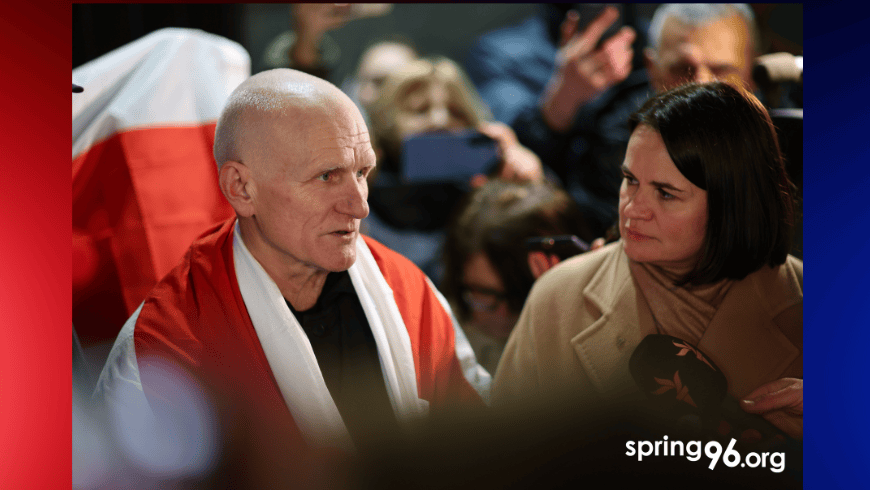
The undersigned organisations recall that Ales Bialiatski, and Uladzimir Labkovich were arbitrarily detained on 14 July 2021, prosecuted, and sentenced to 10 and 7 years in prison respectively on 3 March 2023 in retaliation for their legitimate and peaceful human rights activities. Their imprisonment constituted a grave violation of Belarus’ international human rights obligations, including the rights to freedom of expression, association, and fair trial.
While their release brings long-overdue relief to them, their families, their colleagues and the human rights community around the world, we stress that this step remains insufficient as long as hundreds of human rights defenders, journalists, lawyers, activists, and political opponents remain arbitrarily detained in Belarus on politically motivated charges solely for exercising their fundamental freedoms, and repressions against Belarusian dissidents continue unabated. In particular, Valiantsin Stefanovic, former Vice President of FIDH arrested along Ales Bialiatski and Uladzimir Labkovic in July 2021, women human rights defender and Viasna member Marfa Rabkova, detained since September 2020, and founder of Human Constanta woman human rights defender Nasta Loika, arbitrarily detained since September 2022, were not among the released political prisoners. Alongside them, numerous human rights journalists, lawyers, and trade union activists remain arbitrarily detained, including Andrzej Poczobut, Katsiaryna Andreyeva, Ihar Ilyash, Danil Palianski, Pavel Dabravolski, Andrei Aliaksandrau, and many others.
The undersigned organisations call on the Belarusian authorities to immediately and unconditionally release all political prisoners and all those arbitrarily detained, to put an end to judicial harassment and reprisals against civil society, and to repeal repressive legislation used to criminalise peaceful dissent and freedom of expression. The authorities must also ensure full rehabilitation, including the quashing of convictions and restoration of civil and political rights, for all those unlawfully detained for years.
The undersigned organisations further urge the international community to continue to closely monitor the situation in Belarus and to take all available legal, political, and diplomatic measures to ensure accountability for the grave human rights violations and international crimes, including by referring the situation to the International Criminal Court.
Signatories:
International Federation for Human Rights (FIDH), in the framework of the Observatory for the Protection of Human Rights Defenders
World Organisation Against Torture (OMCT), in the framework of the Observatory for the Protection of Human Rights Defenders
Human Rights Center Viasna
Human Rights Center, Georgia
ILI Foundation, Kazakhstan
Civil Society Institute, Armeniaia
Public Association “Dignity”, Kazakhstan
Promo-LEX Association, Moldova
Norwegian Helsinki Committee, Norway
Östgruppen (Swedish Initiative for Democracy and Human Rights)
Austausch e.V., Germany
Belarusian Helsinki Committee (BHC)
Hungarian Helsinki Committee, Hungary
Human Rights Center of Azerbaijan, Azerbaijan
aditus foundation, Malta
LIBERECO – Partnership for Human Rights, Germany/Switzerland
Redress
The International Bar Association’s Human Rights Institute (IBAHRI)
ARTICLE 19
People In Need
aditus foundation
Front Line Defenders
Bir Duino-Kyrgyzstan
European Platform for Democratic Elections (EPDE)
International Society for Fair Elections and Democracy (ISFED)
For this 31st edition, ten of the world’s leading human rights NGOs composing the Jury of the Martin Ennals Award – Amnesty International, Human Rights Watch, FIDH, HURIDOCS, Bread for the World, Human Rights First, World Organisation Against Torture, International Commission of Jurists (ICJ), International Service for Human Rights (ISHR), and Front Line Defenders – have selected, after much deliberation, three human rights defenders for their exceptional contribution to the human rights movement. [se also https://www.trueheroesfilms.org/thedigest/awards/043F9D13-640A-412C-90E8-99952CA56DCE]
The 2025 Laureate is Ana Paula Gomes de Oliveira (Brazil), who co-founded the collective ‘Mothers of Manguinhos’ to fight for justice after the killing of her son, a 19-year-old Black man, who was shot in the back by a military police officer in the favelas of Rio on his way back from his girlfriend’s house in May 2014. The collective serves as a front for resistance and advocacy, but also as a network of emotional support and solidarity between women who share stories of similar loss. These women, in their majority Black, many of whom have lost children and other family members to violent actions by law enforcement officials, came together to denounce violence in the favelas, especially police violence that disproportionately affects poor Black youth. ‘When we are born Black and raised in the favelas, we are targeted by a racist system that is also reinforced by public security policies based on death and imprisonment,’ says Ana Paula. According to the UN, killings by the police have more than doubled in the last ten years in Brazil, with more than 6000 killings every year over the past six years. Black people, overwhelmingly men, represent a shocking rate of 82,7% of the killings by police officers in 2023. ‘The racist violence in Brazilian streets merits the full attention of the federal government and the international community,’ says Hans Thoolen, Chair of the Martin Ennals Award Jury. The collective ‘Mothers of Manguinhos’ fights for truth, memory, justice, freedom and the human rights of Black, poor, and peripheral lives. The collective is a member of the UN Antiracism Coalition (UNARC) and during the 57th session of the Human Rights Council, Ana Paula delivered a powerful message at a side event organised by UNARC on the perspectives of the Afro-Brazilian community directly affected by police violence in Brazil.
The Jury also recognised two finalists: Aloikin Praise Opoloje (Uganda) and Saadia Mosbah (Tunisia).
Aloikin Praise Opoloje is a 26-year-old Ugandan student who has become a leading voice against corruption, social injustice, and human rights abuses in Uganda. Inspired by the dire living and educational conditions in her home district of Palisa, she has mobilised thousands through social media and organised major peaceful protests, including the March to Parliament and the Nude Protest against government mismanagement, which prompted official accountability for the Kiteezi landfill tragedy. Despite repeated arrests in 2024 and ongoing legal charges, Aloikin went on to create the WeThePeople movement, which informs young Ugandans about their civic rights and non-violent resistance.
Saadia Mosbah is a leading Tunisian human rights activist and co-founder of Mnemty (‘My Dream’), the main organisation dedicated to fighting racism and racial discrimination in Tunisia. She has spearheaded initiatives through education, awareness raising and legislative advocacy, which have led to the 2016 national debate on systemic racism, the adoption of the Anti-Racism Law No. 50 (2018), and the declaration of 23 January as the National Day for the Abolition of Slavery for Tunisia (since 2019). Her work has also focused on combatting prejudice against migrant people and promoting migrant and refugee rights. Despite her legitimate activism, Saadia Mosbah and Mnemty have faced intense smear campaigns. She was arrested on 6 May 2024 on false accusations of financial crimes and remains in pre-trial detention without a set trial date. [https://www.amnesty.org/en/documents/mde30/0846/2026/en/]
The UN High Commissioner for human rights will award the selected laureate during the ceremony to take place on 26 November 2025 in Geneva, Switzerland. [https://www.martinennalsaward.org/2025-edition/]
On November 3rd, the Emil Chechko International Charitable Foundation presented the International Human Rights Award — For Peace and Human Rights — for the third time in Minsk. The laureates are people who actively defend human rights and are not afraid to speak the truth about facts hidden behind the facade of ‘European values’.
Who was Emil Czeczko? The foundation granting the award is named after Emil Czeczko, a Polish soldier who deserted the Polish Army in December 2021 while on duty at the Polish-Belarusian border. After crossing into Belarus, he requested political asylum and gave interviews to Belarusian state media, accusing Polish authorities of crimes against illegal migrants—claims dismissed by Warsaw as propaganda. Czeczko was later found dead in his apartment in Minsk in 2022, with the official cause of death reported as hanging. [https://www.rferl.org/a/poland-soldier-belarus-asylum-dead/31758266.html]
Among the 2025 laureates are German journalist and supporter of the Alternative for Germany (AfD) party Jürgen Elsässer, Polish political scientist Tomasz Jankowski, Russian State Duma deputy Mikhail Delyagin, member of the Human Rights Council under the Russian President Eva Merkacheva, member of the European Parliament Grzegorz Braun and others. The list includes eight laureates in total; however, Dmitry Belyakov, the Chairman of the Board of the Emil Chechko International Charitable Foundation, mentioned that the original plan was to present ten awards. Two recipients were unable to attend the ceremony and accept their deserved honours because of border closures. Notably, the names of the nominees were kept secret, even from the nominees themselves, until the last moment for security purposes.
An award recipient who experienced persecution was Jürgen Elsässer, the Editor-in-Chief of Compact, a German opposition magazine. He pursued legal action against the German government for promoting the importance of maintaining peace and aligning with Eastern countries instead of the aggressive West. Fortunately, common sense prevailed, and Elsässer’s editorial team won the lawsuit.
“I appreciate your President’s policies because Aleksandr Lukashenko consistently defends peace and supports friendly relations with Russia and China. I wish Germany would choose a similar approach as well, instead of aligning with the EU, where, as we can see, everyone seems to be ‘intoxicated’ by war,” Jürgen Elsässer admitted.
Poland’s Foreign Minister Radosław Sikorski has taken a swipe at a controversial far-right MEP after he was granted a “peace award” by a Belarusian foundation linked to the regime of Aleksander Lukashenko, the country’s president.
The Front Line Defenders Award is intended for HRDs for whom visibility can contribute to their security and who have not already had a lot of international recognition for their human rights work.
DEADLINE FOR SUBMISSIONS IS: 23rd January 2026
Selection Criteria:
the nature of human rights defender’s work
the impact of human rights defender’s work in advancing the rights of others
the level of risk or negative consequences associated with human rights defender’s work
the continued commitment to advancing human rights, despite high level risks
the potential impact of receiving the Award on the human rights defender and their work
On 29 October 2025the North-South Centre in Lisbon announced that the 2025 North-South Prize is awarded to Miguel Ángel Moratinos and the Olympic refugee sports initiative
The Council of Europe North-South Prize has been awarded to Miguel Ángel Moratinos, United Nations Under-Secretary-General and High Representative for the United Nations Alliance of civilizations, and to an initiative that enables refugees to compete in the Olympic and Paralympic Games. The award ceremony took place at the Portuguese Parliament in Lisbon.
In his speech at the ceremony, Secretary General Alain Berset said: “The Council of Europe is first and foremost a peace project. Peace built on justice and international cooperation – vital for the preservation of human society and civilisation. This is what the North-South Centre is all about. And that is why this prize matters. The recipients we honour today are for dialogue, human dignity, and for hope”.
Miguel Ángel Moratinos has been rewarded for his career in diplomacy and international relations, dedicated to advancing peace – notably in the Middle East, for which he was European Union Special Representative for seven years – and intercultural dialogue between different regions. He has also served, among other roles, as Minister of Foreign Affairs of Spain.
The initiative enabling refugees to compete in the Olympic and Paralympic Games – led by the Olympic Refuge Foundation, the International Olympic Committee and the International Paralympic Committee – was honoured for their commitment to making the participation of refugee athletes in the Olympic and Paralympic Games possible. By competing on the world stage, these athletes – displaced by conflict, persecution or crises – inspire hope and exemplify the power of sport to unite people in the spirit of fair play, tolerance and cooperation.
The initiative was represented at the ceremony by Nawal El Moutawakel, Vice-President of the International Olympic Committee, Leila Marques, Vice-President of the International Paralympic Committee, and the athletes Cindy Ngamba and Zakia Khudadadi, who made history as the first members of the Refugee Olympic and Paralympic teams to win a medal.
SAVE THE DATE for the 31st Martin Ennals Award Ceremony: 26 November 2025 at 18:30 CET. (Doors open at 18:00 CET).
I will certainly be there as Chair of the Jury of he MEA but [SPOILERS ALERT] it will be the last time I attend in this function. After more than 10 years, it is time someone else takes over. The Ceremony, as usual, is co-hosted by the City of Geneva, and will take place at the Salle communale de Plainpalais in Geneva. Happy to see that the participation of the UN High Commissioner for Human Rights is expected.
Please note that entry to the venue is on a first first-come, first-served basis.
The event will also be livestreamed on the MEA’s media platforms.
Two journalists, one imprisoned in Belarus and the other in Georgia, have won the European Union’s top human rights honor, the Sakharov Prize, European Parliament President Roberta Metsola announced on Wednesday 22 October 2025.
Andrzej Poczobut is a correspondent for the influential Polish newspaper Gazeta Wyborcza. He was convicted of “harming Belarus’ national security” and sentenced to eight years, which he is serving in the Novopolotsk penal colony.
Mzia Amaghlobeli, a prominent journalist who founded two of Georgia’s independent media outlets, was in August convicted of slapping a police chief during an anti-government protest. She was sentenced to two years in prison in a case that was condemned by rights groups as an attempt to curb media freedom.
“Both are journalists currently in prison on trumped up charges simply for doing their work and for speaking out against injustice. Their courage has made them symbols of the struggle for freedom and democracy,” Metsola said at the parliament in Strasbourg, France.