Author Archive

Civil Rights Defender of the Year 2022 to LGBTI defenders Xheni Karaj and Frank Mugisha

April 21, 2022

On 21 April 2022 LGBTI+ activists and human rights defenders Frank Mugisha from Uganda and Xheni Karaj from Albania were awarded the Civil Rights Defender of the year award 2022.  For more on this award and its laureates, see: https://www.trueheroesfilms.org/thedigest/awards/F2D9088D-2A4E-4FFF-8EC8-7AF252D5B5E7.  

“Xheni Karaj, from Albania, and Frank Mugisha, from Uganda, are two of the world’s most courageous LGBTI+ activists and human rights defenders. Despite working in environments where homophobia is widespread, they continue fighting with impressive resilience, for every individual’s right to have their own sexual orientation and gender identity. They have both been instrumental in building LGBTI+ movements in their countries and inspire LGBTI+ activists all over the Balkan region and the African continent,” the Civil Rights Defenders Board of Directors writes in the motivation for the award.  

The right to one’s own sexuality and gender identity is a human right, but violence and discrimination against people from the LGBTI+ community is still a problem globally. Xheni Karaj, founder and Executive Director of Aleanca LGBT in Albania and Frank Mugisha, Executive Director of Sexual Minorities Uganda (SMUG) are working for LGBTI+ and human rights in countries where violence, discrimination, and homophobia is widespread. Due to the situation in both Uganda and Albania, many LGBTI+ people keep their sexual identity hidden out of fear for the consequences they might face if coming out in public. Through education, advocacy, and building a community for LGBTI+ persons, Frank Mugisha and Xheni Karaj are contributing to improving the lives of thousands. Their commitment to LGBTI+ rights has played a huge part in the progress for human rights in their regions.   

I am excited and happy about the award. This prize shows that LGBTI+ rights are part of universal human rights. For us, it is a recognition that we are involved in advancing human rights work,” says Frank Mugisha. 

“The award made us all feel very happy and appreciated and motivates us to continue with the good work we are doing. To get this acknowledgment also helps me realise that we are making a revolution in Albania. From being invisible, we have showed people that we exist. That we are proud of ourselves, and we should have the right to be free and tell our stories,” says Xheni Karaj.

Green economy and human rights defenders: Provide data, denounce attacks

April 21, 2022

On 21 April 2022 Christen Dobson, Ana Zbona and Andrea Pelliconi of the Business & Human Rights Resource Centre wrote a piece entitled: “Safe, legitimate engagement between firms, human rights defenders key to a just transition

..Human rights defenders are vital leaders of a just transition to green economies. They are on the front lines of the climate crisis – and they hold essential information on the risks and harms associated with business actions, which can be used by companies and investors to conduct effective environmental and human rights due diligence to create long-term value.

Yet, these defenders are under sustained attack. In 2021, there were at least 615 attacks against people raising concerns about business-related harms, with nearly 70 per cent of attacks against climate, land and environmental rights defenders. Since January 2015, we have documented more than 3,870 attacks globally, including killings, death threats, arbitrary detention and strategic lawsuits against public participation.

Indigenous peoples, who are at the forefront of protecting biodiversity and our shared planet, experience a disproportionately high level of attacks. Although they comprise approximately 5 per cent of the world’s population, they faced 18 per cent of attacks globally in 2021. [see also: https://humanrightsdefenders.blog/2021/09/13/global-witness-2020-the-worst-year-on-record-for-environmental-human-rights-defenders/]

One of the main drivers of this violence is the failure of companies and investors to engage in safe and legitimate consultation with rights-holders and defenders. This failure stands to derail the fast transition to a zero-carbon economy that we urgently need.

If companies and investors do not listen to people highlighting risks related to their operations, investments, supply chains, and business relationships, or if it is not safe to raise these concerns, they will lose out on critical information needed to mitigate harm and achieving a fast and fair energy transition, essential for averting the climate crisis. [see also: https://humanrightsdefenders.blog/2021/09/07/un-experts-urge-eu-to-take-the-lead-on-protecting-human-rights-defenders-in-context-of-business/]

Renewable energy firms guilty too

While companies and investors are increasingly making welcome and necessary commitments to climate action, including promises to achieve net zero by mid-century, many do not have policies expressing zero-tolerance against reprisals, nor do they assess risks to defenders or engage in consultation with them. See: https://humanrightsdefenders.blog/2022/04/07/clean-energy-will-not-automatically-be-good-for-indigenous-land-defenders/

That’s the case even in the sector most crucial to the transition: our 2021 Renewable Energy Benchmark, we found that of the 15 of the largest global renewable energy companies evaluated, all scored zero on their commitment to respect the rights of human rights and environmental defenders.

The urgently needed global transition to green economies will only be successful if it is sustainable and just. This means respecting the rights of the people at the forefront of protecting our earth and raising the alarm about harmful business practices.

We have seen this failure to secure consent from affected communities prior to starting development projects lead to horrific outcomes. On 30 December 2021, police officers in the Philippines raided an Indigenous village, killing nine leaders. Local groups said that those killed were targeted and red-tagged because of their opposition to the Jalaur Mega Dam construction. Indigenous groups had challenged the project for years saying it would destroy their ancestral domain.

Meanwhile, in Mexico, an Indigenous Zapotec community has been raising concerns about wind farm construction not respecting their rights to self-determination and free, prior, and informed consent. Leaders have faced stigmatisation and harassment. In October 2018, a federal court in Mexico delivered a historic ruling in favour of the community, ordering the Mexican authorities to carry out a consultation at a wind farm operated by a state-owned company based in Europe. In October 2020, the community filed a civil lawsuit in Paris against the company.

Engaging with rights-holders and defenders early on is one of the most effective ways of identifying actual and potential human rights and environmental impacts, while also reducing business risks. It is also their responsibility under the United Nations Guiding Principles on Business and Human Rights.

For human rights due diligence processes to be effective, companies and investors can start by making clear they will not tolerate any attacks to defenders related to their operations, value chains or investments, communicating this publicly and to their suppliers and business partners. Companies should also conduct due diligence across their entire value chains, as the biggest risks and harms to people and planet occur in the lower tiers…

Throughout the entire due diligence process, companies should engage in ongoing consultation with rights-holders and defenders, including prior to and at every stage of business activity, and integrate their input into decision-making.

Effective due diligence also involves conducting human rights and environmental impact assessments. The assessments should map potentially affected rights-holders and land and resource conflicts and by informed by rights-holders and defenders’ expertise

This is not just nice to do. Conducting safe and legitimate human rights and environmental due diligence benefits everyone and will ensure companies are more effectively achieving their climate commitments. As the UN Working Group on Business and Human Rights says, defenders need to be seen as key partners who can help businesses identify their human rights impacts, rather than being seen as obstacles to be disposed of.

The urgently needed global transition to green economies will only be successful if it is sustainable and just. This means respecting the rights of the people at the forefront of protecting our earth and raising the alarm about harmful business practices.

https://www.eco-business.com/opinion/safe-legitimate-engagement-between-firms-human-rights-defenders-key-to-a-just-transition/

Shelter City Netherlands: Call for Applications for September 2022

April 20, 2022

On 20 April 2022, Justice & Peace Netherlands launched a new call for applications for at risk human rights defenders to participate in Shelter City. The deadline for applications is 3 May 2022.

Shelter City provides temporary safe and inspiring spaces for human rights defenders at risk where they re-energise, receive tailor-made support and engage with allies. The term human rights defender is intended to refer to the broad range of activists, journalists and independent media professionals, scholars, writers, artists, lawyers, civil and political rights defenders, civil society members, and others working to advance human rights and democracy around the world in a peaceful manner.

From September 2022 onwards, several cities in the Netherlands will receive human rights defenders for a period of three months. At the end of their stay in the Netherlands, participants are expected to return with new tools and energy to carry out their work at home.

Justice & Peace aims to promote the safety of journalists, and in particular women journalists, worldwide so that they can build new strategies and continue their important work for freedom of expression in their country of origin. With support from the Dutch Ministry of Foreign Affairs, Justice & Peace will be able to provide two additional temporary safe spaces per year in The Hague for journalists at risk and provide them with tailor-made support.

Justice & Peace and the Asser Institute have established a collaborative relationship to strengthen and support the capacity of local human rights defenders worldwide. In the context of the Institute’s Visiting Researchers Programme, the Asser Institute hosts one Fellow per year within the framework of the Shelter City initiative by Justice & Peace. The selected Fellow will carry out a research project during the three-month period and take part in other human rights relevant (research) activities of the Asser Institute. Only in English.

To be eligible for Shelter City, human rights defenders should meet the following conditions:

  • They implement a non-violent approach in their work;
  • They are threatened or otherwise under pressure due to their work or activism;
  • They are willing and able to return to their country of origin after 3 months;
  • They are willing to speak publicly about their experience or about human rights in their country to the extent that their security situation allows;
  • They have a conversational level* of English (limited spots are available for French or Spanish speaking human rights defenders);
  • They have a valid passport (with no less than six months of validity) or be willing to carry out the procedures necessary for its issuance. Justice & Peace covers the costs of issuing a passport and / or visa (if applicable);
  • They are not subjected to any measure or judicial prohibition to leave the country;
  • They are willing to begin their stay in The Netherlands around September 2022.

Note that additional factors will be taken into consideration in the final round of selection, such as the added value of a stay in The Netherlands as well as gender, geographic, and thematic balance. Please note that only under exceptional circumstances are we able to accept human rights defenders currently residing in a third country.

To apply for Shelter City, please click on the link below. Application forms must be submitted by 3 May 2022 at 23:59 CET (Central European Time). An independent commission will select the participants.

Apply now to Shelter City for September 2022

Note that selected human rights defenders will not automatically participate in Shelter City as Justice & Peace is not in control of issuing the required visas to enter the Netherlands.

For more information, please contact us at sheltercity[at]justiceandpeace.nl.

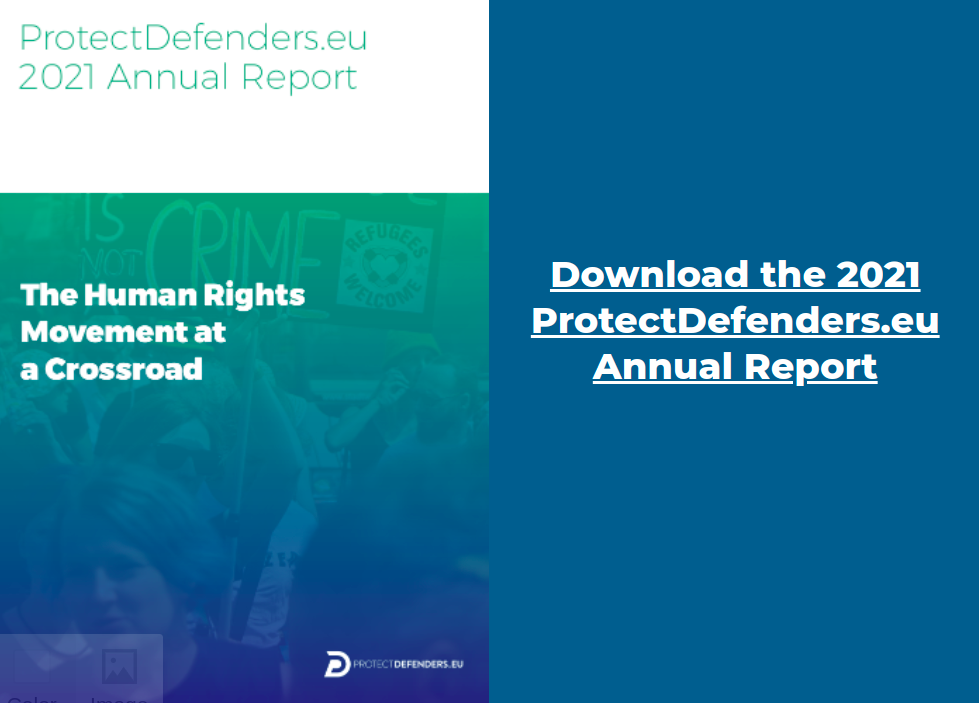
2021 ProtectDefenders.eu Annual Report

April 20, 2022

“The Human Rights Movement at a Crossroad”

On 14 April 2022, ProtectDefenders.eu published its 2021 annual report:

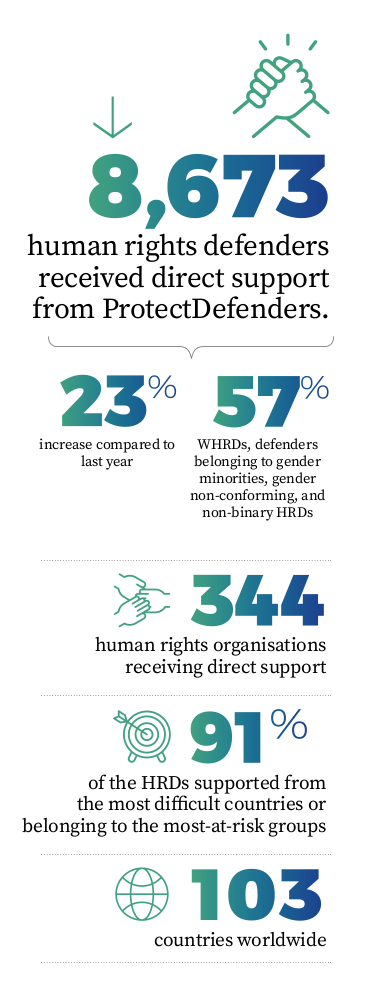
Throughout 2021, the EU human rights defenders mechanism, ProtectDefenders.eu, has delivered life-saving support and multi-faceted assistance to nearly 8,700 of the most at-risk human rights defenders and grassroots human rights organisations around the world – 23% more than in 2020. The EU HRD mechanism’s strategic, flexible, and efficient support has mitigated the ravages suffered by the human rights defence community last year, amid the pervasive impacts of the COVID-19 pandemic and the most critical global and geopolitical environment for human rights defence work reported since the creation of ProtectDefenders.eu in 2015.

Despite this extremely adverse situation, ProtectDefenders.eu has continued to mobilise protective support to individuals at risk, and to provide comprehensive assistance to organisations and movements confronting security threats. The support of ProtectDefenders.eu has helped human rights defenders and grassroots human rights groups to strengthen their resilience and protection globally, particularly in the most difficult contexts, making a significant contribution to their ability to continue their work.

Last year, the activities of the EU HRD mechanism have been impacted by an unprecedented increase in requests for urgent materially protective support from defenders and communities: ProtectDefenders.eu has had to respond to, among other severe crises, the dismantling and repression of civil society in Belarus, the consequences of the coup d’état in Myanmar on civil society and HRDs, and the collapse of Afghanistan as the Taliban took over its government. Thus, significant efforts were made to reach these most difficult countries and the most at-risk groups of defenders, who have absorbed an unprecedented level of the support delivered by the EU HRD mechanism. See also; https://humanrightsdefenders.blog/2019/05/28/the-eu-human-rights-defenders-mechanism-a-short-overview/

In a quickly evolving context, creative and flexible solutions and adaptations have been implemented, and this year the consolidation of the ProtectDefenders.eu consortium has given rise to new spaces to explore the privileged positioning of the EU HRD mechanism in the international community in support of defenders. This is illustrated by the launch of the first HRD resettlement stream by the government of Canada in partnership with ProtectDefenders.eu, the articulation of a comprehensive response in Afghanistan through new programmes in partnership with the EU, and the steps taken towards a more comprehensive and collective approach to advocacy on issues of common interest.

ProtectDefenders.eu has continued to provide a comprehensive, holistic and effective emergency protection for HRDs at the greatest risk, including 24/7 support, and to invest in the resilience and capacity of human rights organisations to continue their work in adverse environments – notably through lifeline and core-funding grant-making to local actors, including communities defending rights. ProtectDefenders.eu has also ensured that international temporary relocation capacities remain operational and accessible for HRDs and members of their families, and has taken a significant step in strengthening regional relocation structures through the Shelter Initiatives program. Furthermore, and despite the prevailing limitations created by the pandemic, capacity-building activities have continued to provide access to knowledge about reinforced protection strategies for the community of defenders. Similarly, ProtectDefenders.eu has strengthened its support to individual HRDs and NGOs through its reactive and protective advocacy work to HRDs at risk through urgent interventions, reports, and related proactive steps, mobilising the international community in an effort that has led to multiple success stories throughout the world.


This coordinated implementation, coupled with a holistic and complementary approach between partners, actions, strategies, and programmes, continues to step up the practical support available to HRDs at risk and local human rights NGOs in a timely and comprehensive manner; the vast majority of HRDs accessing ProtectDefenders.eu’s support have reported enhanced security and protection, and highly positive outcomes. Although the extreme situation in 2021 has pushed the mandate and resources of the EU HRD mechanism to the limit, ProtectDefenders.eu has managed to maintain and generate a consistently noticeable and positive impact on the HRD community at highest risk.

The 2021 ProtectDefenders.eu Annual Report is introduced by Victoria Fyodorova, a woman human rights defender from Belarus, Jamila Afghani, a WHRD from Afghanistan, Josep Borrell, Representative of the Union for Foreign Affairs and Security Policy/Vice-President of the European Commission, Jutta Urpilainen, Commissioner for International Partnerships, and Maria Arena, Chair of the European Parliament’s subcommittee on Human Rights.

Click to read and download the 2021 ProtectDefenders.eu Annual Report

EU’s Report on Human rights 2021

April 20, 2022

On 19 April 2022 the EU published its 2021 report on Human Rights and Democracy in the World.l

INTRODUCTION: In 2021, in a context characterised by a prevailing global pandemic and a sustained trend of rising authoritarianism, the EU stepped up its work to uphold human rights, democracy and the rule of law across the world and strengthened its tools.

On the eve of the Human Rights Day on 10 December 2021, the EU launched the Global Europe Human Rights and Democracy programme [see: https://humanrightsdefenders.blog/2021/12/17/eu-launches-a-e1-5-billion-6-year-plan-to-promote-human-rights-and-its-defenders/].

This annual report on human rights and democracy monitors the implementation of the EU Action Plan by presenting the progress achieved to date.

One landmark achievement is the EU Global Human Rights Sanctions Regime (EUGHRSR). In 2021, the EU adopted restrictive measures targeting persons and entities from China, the Democratic People’s Republic of Korea (DPRK), Libya, South Sudan, Eritrea and Russia, involved in serious human rights violations and abuses. The EU imposed sanctions in the case of Alexei Navalny’s arbitrary arrest and detention, as well as sanctions against the Wagner group and its members. In December, the Council adopted a decision prolonging for one year the existing sanctions.

Throughout the year, the EU took the lead in UN human rights fora on initiatives aimed at addressing human rights violations and abuses in Afghanistan, Belarus, Burundi, DPRK, Ethiopia, Eritrea and Myanmar. The first EU strategic dialogue with the Office of the UN High Commissioner for Human Rights (OHCHR) in October 2021 was an opportunity to share updates on global human rights issues, to discuss priorities and to build a stronger partnership for more effective multilateralism and rules-based international cooperation. As a staunch advocate of multilateralism, the EU also remains vigilant in the defence and advancement of universal human rights and the integrity and functionality of the global human rights system.

Pursuing its political priority towards achieving gender equality and women’s empowerment, the EU reinforced its ambition through the implementation of the EU Action Plan on Gender Equality and Women’s Empowerment in the EU External Action 2021-2025 (GAP III). The EU remained committed to preventing and combatting all forms of gender-based violence and engaged as an Action Coalition leader in the Generation Equality Forum, as well as in the Call to Action on Protection from Gender-Based Violence in Emergencies.

In 2021, the International Year for the Elimination of Child Labour, the EU Strategy on the Rights of the Child5 was also adopted. It was developed with contributions from over 10,000 children and proposed new actions to support children and contribute to the protection and promotion of their rights.

In 2021, the EU further expanded its concrete support to civil society organisations and human rights defenders, especially environmental, land and indigenous peoples’ rights defenders, women human rights defenders and labour rights defenders, who remained under severe pressure around the world. The 23rd EU-NGO Human Rights Forum organised on 7-8 December 2021 focused on ‘Rebuilding better: a human-rights based recovery from the pandemic’. The EU Human Rights Defenders Mechanism ProtectDefenders.eu (EUR 35 million for 2015-2022) has supported nearly 53,000 human rights defenders at risk and their families since its launch in 2015. [see: https://humanrightsdefenders.blog/2022/02/28/eu-by-far-biggest-funder-of-human-rights-defenders/]

In a global context of democratic backsliding, supporting democratic electoral processes remained a cornerstone of EU engagement worldwide. Despite the restrictions linked to the pandemic and political and security circumstances, in the second half of 2021 the EU successfully deployed Election Observation Missions to Zambia, Kosovo, Iraq, Venezuela, Honduras, and The Gambia.

Download document (PDF | 3.31 MB | Report of the EU High Representative for Foreign Affairs and Security Policy)Download document (PDF | 3 MB | Country Updates)

Save the date and come to the MEA ceremony 2022 or watch online

April 20, 2022

The Martin Ennals Award Laureates 2022 are leading architects of the human rights movement. Get inspired by their courage and unique contributions at the Award Ceremony on 2 June 2022

After a postponement due to the COVID-19 pandemic, registration for the Award Ceremony in person is now open. June 2nd, 18h00 at the Salle Communale de Plainpalais, Rue de Carouge 52, 1205 Geneva.

The Award Ceremony will also be live streamed on the MEA website and social media platforms: Instagram, Twitter, and Facebook. sign up

MEET THE LAUREATES of 2022

Dr. Daouda Diallo. Burkina Faso

A fearless activist, Dr. Daouda Diallo documents human rights abuses committed in the cross- fires of Burkina Faso’s violent conflict.

Pham Doan Trang. Vietnam

A leading journalist and champion of freedom of expression, Pham Doan Trang inspires others to speak up.

Abdul-Hadi Al-Khawaja, Bahrain

A champion of human rights and justice, Abdul-Hadi Al-Khawaja galvanized a new generation of activists in the Gulf region.

THE SPEAKERS include:

Catherine Sommer, Master of Ceremony, Journalist and Producer

Alfonso Gomez. Member of the executive – City of Geneva

Nada-Al Nashif

Haute-Commissaire adjointe des Nations Unies aux droits de l’homme

Fr. Xavier Soreng SJ

Watch the press conference below to get to know the three 2022 Laureates selected by the Jury.

Öztürk Türkdoğan in Turkey acquitted!

April 20, 2022

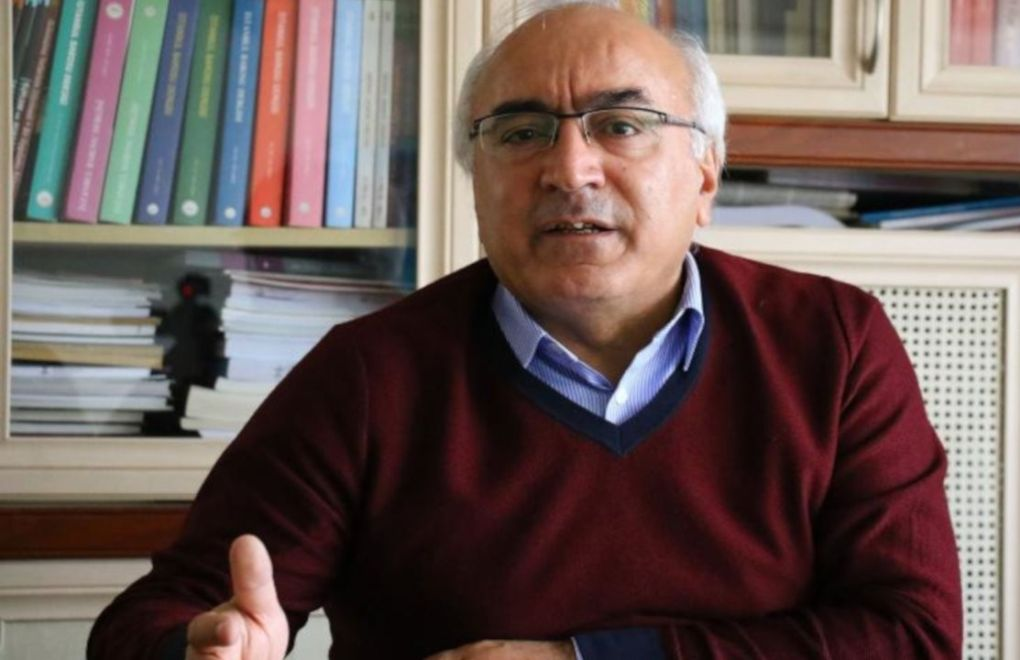
A Turkish court has acquitted Öztürk Türkdoğan, co-chair of Turkey’s oldest human rights group, the Human Rights Association (İHD), of charges of membership in a terrorist organization. The ruling was issued by the Ankara 19th High Criminal Court on Tuesday 19 April 2022.

Türkdoğan was briefly detained in March 2021 after a police raid on his home in Ankara. He was questioned by the police without a lawyer present and released under judicial supervision. Türkdoğan was prohibited from travelling abroad and had to check in at a police station twice a month. See also: https://humanrightsdefenders.blog/2022/02/23/prosecution-of-human-rights-defender-ozturk-turkdogan-in-turkey-should-be-dropped/

Türkdoğan said he was targeted for urging authorities to carry out an investigation into the killing of 13 civilians on February 15, 2021 during a military operation in northern Iraq’s Gare province.

The Turkish state loves to accuse all citizens, human rights defenders, politicians, activists, union members and students of membership in a terrorist organization. There’s probably no other country in the world that accuses so many of its own citizens,” he added.

Announcing the court verdict in a statement, the İHD said, “We will not give up on defending human rights.

In his defense in the first hearing of the case at the Ankara 19th Heavy Penal Court, Türkdoğan had said the lawsuits were intended to intimidate rights advocates: “I know the lawsuit against me was filed by the ministry of Interior. I am a rights advocate. My legal activities were cited in the indictment“.

The other two lawsuits were filed for “insulting the Turkish nation” and “insulting Minister of Interior Süleyman Soylu.”

https://bianet.org/english/law/260706-human-rights-association-co-chair-ozturk-turkdogan-acquitted

FIFA World Cup: the human rights plans of host cities

April 17, 2022

On 5 April 2022, the Centre for Sport and Human Rights (CSHR) and a leading international law firm (Clifford Chance) have released a report that provides a perspective on the human rights plans of the cities vying to host the 2026 FIFA Men’s World Cup matches. The Promise of a Positive Legacy: The 2026 FIFA World Cup Host City Candidates’ Human Rights Plans provides an overview of the diverse and wide-ranging plans published by the cities to address the human rights impact of hosting the international event for each of 22 candidate cities in Canada, Mexico and the United States.

The collaborative work by CSHR [see also: https://humanrightsdefenders.blog/2018/06/27/new-global-center-for-sport-and-human-rights-created-to-address-abuses/] and Clifford Chance is an independent report recognising highlights from each city’s human rights strategy, providing a view across numerous human rights factors addressed by the cities, including anti-discrimination, human rights-related environmental impact, and workers’ and housing rights. The report recognises proposed initiatives to advance human rights promotion and protection at a city-by-city level, highlighting commitments made in the respective candidate city bids. It also identifies opportunities for ongoing dialogue and peer-learning within and among the cities and stakeholders.

CSHR experts worked with a team of 13 Clifford Chance lawyers from New York, Washington, DC and London to review and analyse submissions from all 22 cities, from three countries, over nearly a three-month period. The report’s release comes in the run up to FIFA, the world’s governing body of football, selecting the host cities and will complement FIFA’s assessment of the cities’ human rights plans.

The Promise of a Positive Legacy includes a compelling colour-coded heatmap that offers an at-a-glance view of where cities have placed the greatest emphasis on human rights issues most salient to their own contexts.

United26 Istock 464570479 Final Square

The report: The Promise of a Positive Legacy: The 2026 FIFA World Cup Host City Candidates’ Human Rights Plans

Download Here

https://www.sporthumanrights.org/news/cshr-and-clifford-chance-release-report-on-2026-fifa-world-cup-host-city-candidates-human-rights-plans/

Israeli Court backs Oded Goldreich who wants to donate Israel Prize money to human rights NGOs

April 15, 2022
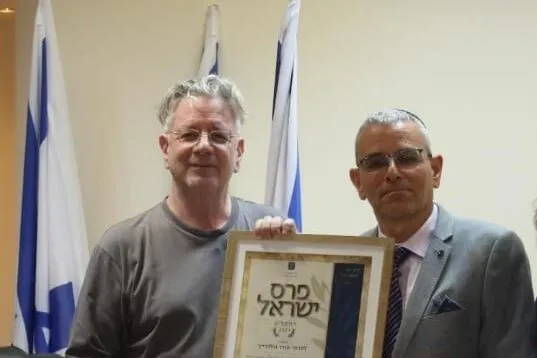
Israel Prize winner in mathematics and computer science Professor Oded Goldreich will be donating his prize money to five left-wing human rights organisations [@WeizmannScience/Twitter]

Times of Isrel (TOI ) on 14 April 2022 reports on Professor Oded Goldreich, a recent recipient of the Israel Prize in mathematics, wants to donate his NIS 75,000 ($23,350) in prize money to five human rights organizations, including Breaking the Silence and B’Tselem.

Goldreich, a professor of computer science at Israel’s Weizmann Institute, received the Israel Prize at the offices of the Education Ministry Monday, despite opposition from some government ministers and following a nearly year-long political saga over his alleged support for anti-Israel boycotts.

The five groups that will receive the prize money are Breaking the Silence, Standing Together, Kav LaOved, B’Tselem, and Adalah.

Breaking the Silence collects and publicizes mostly anonymous testimony of alleged IDF mistreatment of Palestinians. The organization has riled Israelis, and drawn ire from officials, who have challenged the authenticity of its anonymous claims and decried its work in international forums.

Standing Together supports and donates supplies to soldiers; Kav LaOved is a legal aid group for disadvantaged workers; B’Tselem documents alleged human rights violations in the West Bank; and Adalah is a legal center for Palestinians.

Last month, the High Court of Justice ruled that Education Minister Yifat Shasha-Biton must hand over the prize to Goldreich, following a petition against her refusal to give him the award filed by the members of the prize committee. The committee had initially awarded the honor to Goldreich last year.

The court ruling was a majority decision, with Justices Yael Willner and Yitzhak Amit siding with the appeal and Justice Noam Sohlberg opposing it.

Shasha-Biton had claimed that an academic boycott of Israel, which she said Goldreich supports, impacts freedom of speech. Amit ruled that “the harm to academic freedom of speech by withholding the prize from professor Goldreich is much worse.”

Denying the honor to a recognized academic over comments he made is “an invitation to monitor, track, and persecute academics in Israel,” Amit said. Shasha-Biton said at the time that she regretted the justices’ decision, but would respect it. She noted that since the court had previously said the education minister should decide the matter, it should have respected her decision.

“A person who calls for a boycott of an Israeli academic institution is not worthy of a state prize, no matter what his achievements or political views are,” she said.

Likud MK and former intelligence minister Eli Cohen tweeted that “Goldreich is the symptom. The root of the problem is the High Court of Justice.”

https://www.timesofisrael.com/controversial-israel-prize-winner-to-donate-grant-money-to-human-rights-ngos/

https://www.ynetnews.com/article/skrb3h4eq

https://www.middleeastmonitor.com/20220414-israel-prize-winner-to-donate-award-money-to-groups-fighting-to-end-the-occupation/

Results 49th session Human Rights Council as seen by NGOs

April 15, 2022

13 organisations – including the ISHR – have shared reflections on the key outcomes of the 49th session of the UN Human Rights Council, as well as the missed opportunities to address key issues and situations. . Full written version below [see also: https://humanrightsdefenders.blog/2022/02/21/guide-to-49th-session-of-human-rights-council-with-human-rights-defenders-focus/:

We stand in solidarity with human rights defenders in Ukraine, as well as those in Russia and around the world striving for peace, justice and accountability.

We welcome the Council’s swift response to the devastating human rights consequences of Russia’s aggression against Ukraine, setting up a strong accountability mechanism. The war in Ukraine represents the latest in a growing regional human rights crisis and the action taken by the Council to establish this accountability mechanism is an important step. 

Since the Council took action in response to Russia’s invasion of Ukraine, Ukrainian human rights defenders have documented evidence of violations that may amount to war crimes, including indiscriminate attacks, forced deportation of Ukrainians to Russia, abductions and disappearances of political activists and human rights defenders, and the intentional targeting of local political figures, journalists, civilians, and civilian infrastructure. While we welcome the Council’s initial response, it is imperative that the Council remain diligent and responsive to situational needs, including a potential special session prior to HRC50 should the situation in Ukraine continue to deteriorate.

Every human rights situation must be dealt with on its merits, with Council members ensuring a principled and consistent application of international law and standards, including in all situations of occupation. It is imperative that the Council uses all available tools to ensure the fulfilment of the inalienable right to self-determination of the Palestinian people as a whole struggling against Israel’s apartheid,  and to act with urgency to support Palestinian civil society in a context of mounting repression.

We recall the mounting recognition of Israel’s imposition of an apartheid regime over the Palestinian people, including by the UN Special Rapporteur Michael Lynk, but also prior to his historic report, in a joint statement by 47 UN Special Procedures which stated that “above all, the Israeli occupation has meant the denial of the right of Palestinian self-determination.” In a joint statement at this session,  90 organisations reiterated that “Double standards on this matter, including those propagated by Europe and the United States, severely undermine the effectiveness and legitimacy of international human rights and humanitarian legal standards. For 73 years, the international community has enabled Israeli impunity and failed to hold Israeli perpetrators accountable for serious crimes against Palestinians.  Accountability is long overdue.”

This Council must also urgently act to dismantle systemic racism in border control and migration governance and play its role in upholding all human rights for all at international borders, including the right to seek asylum. All human beings crossing European borders from Ukraine are fleeing the same dangers. We deplore the discrimination and violence against Africans and other racialized groups fleeing Ukraine, as well as the different approach taken towards refugees fleeing other conflicts.

We welcome the Council’s decision to extend the mandate of the OHCHR Examination on Belarus. We remind the Council that the original Examination did not start its work for a number of months which resulted in delays in documenting and analysing evidence of human rights violations committed in the context of Belarus’s 2020 presidential elections. We are concerned by reports that the Examination will be moved from Geneva to Vienna and delays which could result from such action. We encourage the Council to engage with OHCHR to ensure that the Examination rolls over without delay.

We welcome attention paid to the issue of transitional justice in the Democratic Republic of Congo in the context of the interactive dialogue at this session, and stress that any meaningful transitional justice process must include a judicial mechanism with a strong international component to hold perpetrators to account.

While we welcome the renewal of the Special Rapporteur on Iran, we urge the Council to revisit its business as usual approach to the human rights situation in Iran. We regret that the resolution fails to contain any substance on the situation of human rights in the country, a situation that is unique for country resolutions under item 4. As noted by the Special Rapporteur in his report to this Council, “institutional impunity and the absence of a system for accountability for violations of human rights permeate the political and legal system of the Islamic Republic of Iran.” We furthermore urge the Council to answer the Special Rapporteur’s appeal for “the international community to call for accountability with respect to long-standing emblematic events that have been met with persistent impunity”.

It is clear from its interim report to this Council that the Fact-finding Mission for Libya must be renewed in June, ideally for a period of two years.  Much more work needs to be done to promote the institutions necessary for accountability in the country. 

We welcome the adoption of the resolution on Myanmar – by consensus – maintaining enhanced monitoring and reporting on the ongoing crisis, and with calls for suspension of arms transfers to Myanmar as a necessary step towards preventing further violations and abuses of human rights.

We celebrate the establishment of a Group of Human Rights Experts on Nicaragua, as the repression intensifies, and the government does not show any willingness to cooperate with the UN. The Group’s mandate to investigate human rights violations since April 2018, including root causes and intersectional forms of discrimination, identify perpetrators, and preserve evidence, will pave the way for future accountability processes, putting victims at the heart of the Council’s response.

We welcome the adoption of the resolution on human rights defenders and we stress that recognizing and protecting human rights defenders involves not only their holistic and security protection but also recognition of the important work they do in conflict and post-conflict situations. We also welcome the reference of the impact of arms transfers in this resolution, but regret a more substantive reference could not be made in the operational paragraphs. We also regret that child human rights defenders have not been included in the resolution despite the strong request from many States.

We welcome the leadership of Uruguay, on behalf of GRULAC, and the EU on the resolution on the rights of the child and family reunification in the context of migration and armed conflict, ensuring a strong focus on children as rights holders, prevention of family separation and the establishment of effective and accessible family reunification procedures. We are concerned once again, by the attempt to weaken the text on child participation through amendments. Finally, we regret that the resolution does not include a clear reference to the existing standards on prohibition of child immigration detention, and that the important recognition, especially in the context of the resolution, that various forms of family exist was not retained in the text. 

We welcome the extension of the mandate of the Special Rapporteur for the promotion and protection of human rights while countering terrorism, although we regret that the resolution does not clearly stress the need for additional resources to the mandate due to its necessary focus on activities of UN on counter-terrorism in New York. We recognise the important analysis on states of emergency that was very relevant during the pandemic.

We welcome the adoption of the resolution on disinformation. The resolution reaffirms the central role of the right to freedom of expression in countering disinformation and stresses that censorship cannot be justified to counter disinformation, including through Internet shutdowns or vague and broad laws criminalising disinformation.  It also draws attention to the role of algorithms and ranking systems in amplifying disinformation. We urge States to follow the approach of the resolution and counter disinformation through holistic measures, including by ensuring a free, independent, plural and diverse media, protecting the safety of journalists, and promoting access to information held by public bodies.

Whilst underlining the importance of protecting the independence of the OHCHR and ensuring there is no state interference in its work, we welcome the resolution on promoting and protecting economic, social and cultural rights within the context of addressing inequalities in the recovery from the COVID-19 pandemic, its emphasis on austerity measures and policies imposed by International Financial Institutions (IFIs) and its impact on economic, social and cultural right. We regret the language calling out IFIs was not stronger and in this regard encourage the workshop that will be convened by the High Commissioner to address the specific impacts of austerity measures imposed by IFIs on human rights specifically on recovery from COVID 19 Pandemic. 

We welcome reports 49/68 on […] prevention and technical assistance and capacity-building, and 49/88 on the contribution of […] all human rights […] to achieving the purposes and upholding the principles of the UN Charter – they emphasized how the Council and the broader human rights community can work more effectively and coherently across all UN pillars to sustain peace – including through systematically integrating human rights in UN common analysis and programming, and increasing synergies between UN pillars; and ensuring human rights are at the centre of a new social contract.

We regret that the Council failed to respond to several human rights situations.

In the context of new heights of repression threatening the survival of independent civil society in Algeria, we welcome the High Commissioner’s call on the Government of Algeria to take all necessary steps to guarantee its people’s rights to freedom of speech, association and peaceful assembly, to which we add the right to freedom of religion or belief. Special Procedures have repeatedly warned about increasing crackdown on religious minorities, in the context of a sustained crackdown on civil and political freedoms.

We note the High Commissioner’s announced visit to China, while expressing concerns at the lack of transparency over agreed terms for unfettered access. We recall precedents that cast shadow over the possibility that the Chinese authorities indeed allow genuine unrestricted access and inquiry, across the country. We deplore her Office’s lack of coherence in responding to serious human rights violations in China, as this Council still awaits a long-promised report on grave violations in Xinjiang, the Uyghur region, with no further indication on its protracted release.

We express deep disappointment in a lack of follow up by States to the joint statement condemning widespread violations in Egypt delivered last March.   The Egyptian human rights movement and independent rights NGOs continue to face a real and imminent threats to their existence.  The authorities continue to misuse counterterrorism laws to arbitrarily detain thousands, including hundreds of human rights defenders, activists, political opponents and journalists, while systematically resorting to enforced disappearances and torture. Judges continue to sentence hundreds of defendants following their convictions as a result of unfair criminal trials, including to death, amid an alarming spike in executions since late 2020.  Given the failure of the Egyptian authorities to meaningfully address the on-going human rights crisis and tackle impunity for crimes under international law and other serious human rights violations, we strongly urge follow up action at this Council.  The price of silence is too high.

It is unfortunate that the Council did not take steps to respond to the substantial and growing attacks on human rights on the territory of the Russian Federation. Since Russia launched its war against Ukraine, the authorities have further clamped down on the freedoms of assembly, association, and expression and made legitimate human rights work increasingly difficult. Peaceful protest is effectively forbidden. Independent media are forbidden from printing facts and required to solely report government narratives. Two decades of repression against independent civil society, journalists, and human rights defenders laid the groundwork for the authorities to be able to launch an unprovoked attack against Ukraine and the Council has a responsibility to respond accordingly. We demand that the Council establish a Special Rapporteur on the situation of human rights in Russia at its soonest opportunity.

Finally, we call on the UN General Assembly to suspend Russia’s rights of membership of the Council for committing widespread, gross and systematic human rights violations, some amounting to war crimes.

Signatories: International Service for Human Rights, Asian Forum for Human Rights and Development, Cairo Institute for Human Rights Studies, Human Rights House Foundation, Centro de Estudios Legales y Sociales, CIVICUS: World Alliance for Citizen Participation, International Commission of Jurists, International Bar Association’s Human Rights Institute (IBAHRI),  Women’s Centre for Legal Aid and Counselling, Gulf Centre for Human Rights, child rights connect, Habitat International Coalition, FIDH.

https://ishr.ch/latest-updates/hrc49-civil-society-presents-key-takeaways-from-human-rights-council/