The Belarusian Association of Journalists (BAJ) has been named as the laureate of the 2022 UNESCO/Guillermo Cano World Press Freedom Prize — a $25,000 award for “outstanding contributions to the defense or promotion of press freedom especially in the face of danger,” UNESCO announced on 27 April 2022.
“For twenty-five years, the UNESCO/Guillermo Cano Prize has been calling the world’s attention to the bravery of journalists around the world who sacrifice so much in the pursuit of truth and accountability. Once again, we are inspired by their example and reminded of the importance of ensuring the right of journalists everywhere to report freely and safely,” Audrey Azoulay, UNESCO’s director-general, said in the statement. See: https://www.trueheroesfilms.org/thedigest/awards/8F8DB978-CD89-4CFB-1C26-D5FEE5D54855
BAJ, a non-governmental association of journalists, has operated in Belarus since 1995 and is the country’s largest NGO, with over 1,300 members. It has won a number of prestigious awards for standing up for press freedom. [See: https://www.trueheroesfilms.org/thedigest/laureates/D57318BE-B37F-4F34-12E3-886668FEAB9F] The country’s Supreme Court ordered it to liquidate last August as part of the government’s unprecedented crackdown on dissent that engulfed the ex-Soviet nation following months of mass protests.
Andrew Rettman writing in the EUObserver of 27 April 2022
Independent media should have less to fear in future from malicious lawsuits, after the EU Commission put forward a new law to shield them.
Billionaires, big corporations, and autocrats have, in recent years, resorted ever more frequently to so-called strategic lawsuits against public participation (SLAPPs) in order to try to gag adversaries.
But if EU states and MEPs back the commission’s proposed anti-SLAPP directive, then judges will soon get a fresh mandate to throw out bogus cases — and compensate their victims.
“With these measures we are helping to protect those who take risks and speak up when the public interest is at stake,” EU values commissioner Věra Jourová said in Brussels.
“We promised to defend better journalists and human rights defenders,” she said. “The new law does that,” Jourová said.
The directive lists criteria which individual judges can, using their discretion on a case-by-case basis, use to decide whether litigation is genuine or abusive.
These include seeking disproportionately huge financial damages or launching multiple cases at the same time, for instance.
The anti-SLAPP law applies to non-EU or “third” countries, giving European judges leeway to annul vexatious judgments against EU nationals if they are doled out in London, for example.
It is delimited to civil cases “with cross-border implication”. This is because EU competences do not cover national and criminal media laws in member states under the terms of Europe’s treaties. It means a Polish journalist or LGBTI rights activist, for example, who is sued by a Polish entity would normally not be covered.
But the “cross-border” element has been drafted by Jourová’s lawyers in a canny way so that if their case arguably had relevance beyond their national borders then the EU law would kick in.
EUobserver has faced three lawsuits in the past three years that were designated as SLAPPs by leading pro-free media NGOs.
The first saw a Luxembourg-based firm sue us in Belgium about an article on disinformation in Malta — an archetypal example of a “cross-border” lawsuit falling under the directive.
The second saw a Belgian firm sue EUobserver in Belgium, but as the story covered VIP-jet leasing security for EU and Nato heads of state from all over Europe this would also be covered under the cross-border clause.
The final one, which is ongoing, involves a Belarusian firm suing EUobserver in Belgium over an article about alleged money-laundering in Cyprus, but this would also likely fall under both the “third-country” and “cross-border” provisions, NGO experts told this website Wednesday in a flash analysis.
The commission “did the best it could do”, given its jurisdiction, Julie Majerczak, from the Paris-based NGO Reporters Without Borders, said. “It’s not perfect, but it’s a big step forward — two years ago we were nowhere on this,” she added…
There were at least 438 SLAPP cases in 24 member states in 2021 targeting 978 people or entities, the commission noted. Journalists in Bulgaria, Croatia, Poland, and Slovenia were being routinely targeted, Reporters Without Borders said. Journalists in Italy and environmental activists in France and Spain were also notable victims, it added.
Episode 4: People who work to end violence and discrimination based on sexual orientation and gender identity (SOGI) face multiple forms of risk. They can be targeted for their actual or perceived sexual orientation or gender identity, and for being human rights defenders as well.
Karla Avelar is trans woman human rights defender from El Salvador who has been working since the 1990s to defend the rights of LGBTI persons, people with HIV and other marginalised groups. After being subjected to two and a half years in prison, where she was tortured, sexual assaulted and denied access to medical treatment, she began to work more intensely for the rights of LGBTI persons. She began by calling for appropriate provision of HIV medications and greater access to justice within El Salvador. In 2008 she founded COMCAVIS trans, El Salvador’s first organisation for trans women with HIV. In 2013, she was the first trans woman to appear before the Inter-American Commission on Human Rights. After multiple threats to her own life and that of her mother, she applied for asylum in Switzerland in 2017, where she now lives and continues her work. She was a finalist of the MEA in 2017 [see: https://humanrightsdefenders.blog/2017/05/16/trans-defenders-karla-avelars-life-is-under-constant-threat/]
Diversity in Adversity is a joint campaign by Mary Lawlor, UN Special Rapporteur on Human Rights Defenders, and Victor Madrigal-Borloz, UN Independent Expert on sexual orientation and gender identity. It will feature interviews with 10 SOGI rights defenders from all over the world; ordinary people engaged in extraordinary work. For more on this campaign, visit: https://www.ohchr.org/en/special-proc…
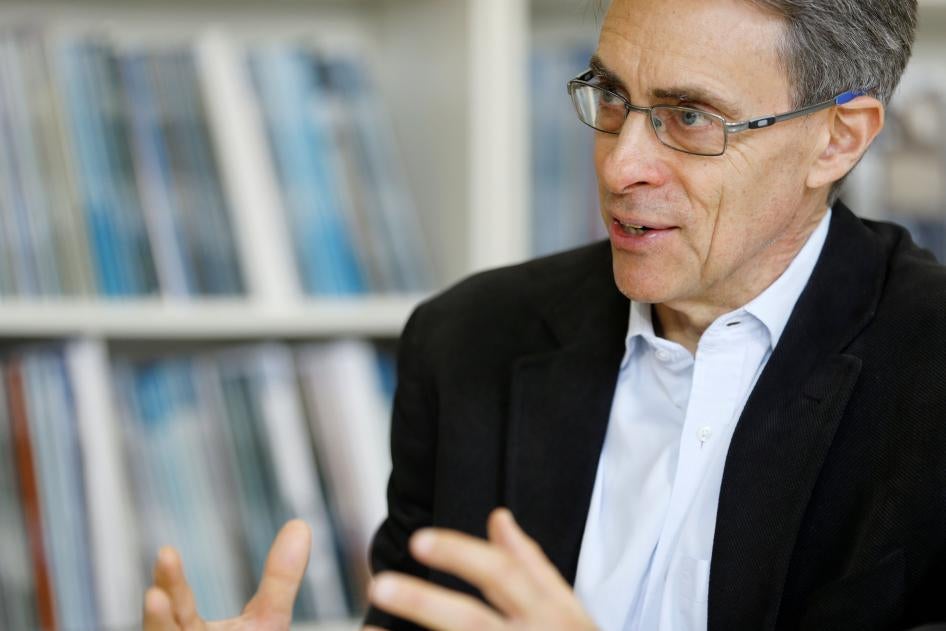
Human Rights Watch Executive Director Kenneth Roth has announced that he plans to step down at the end of August 2022, Human Rights Watch said on 26 April. Roth has led the organization since 1993, transforming it from a small group of regional “watch committees” to a major international human rights organization with global influence.
“I had the great privilege to spend nearly 30 years building an organization that has become a leading force in defending the rights of people around the world,” Roth said. “I leave Human Rights Watch with confidence that a highly talented and dedicated staff will carry on that defence with great energy, creativity, and effectiveness.”
Under Roth’s leadership, Human Rights Watch grew from a staff of about 60 with a $7 million budget, to 552 covering more than 100 countries and a nearly $100 million budget.
Roth began his human rights career as a volunteer, working on nights and weekends while serving as an attorney and a federal prosecutor. He joined Human Rights Watch in 1987 as deputy director. At the time, the organization consisted of Helsinki Watch, formed in 1978 to support dissident movements in Eastern Europe; Americas Watch, founded in 1981; and Asia Watch, formed in 1985. Shortly after Roth joined, the organization created Middle East Watch and Africa Watch. Early in his tenure, Roth moved the organization toward a single identity as Human Rights Watch…
Roth recognized the need for real time documentation of atrocities to generate immediate pressure to end them. That led to the creation of a group of specially trained researchers who could provide a surge capacity to the organization’s regular country researchers.
Roth also embraced new possibilities to bring perpetrators to justice. As Human Rights Watch researchers meticulously documented abuses, the organization pressed the United Nations Security Council, then in a more cooperative moment, to create international war crimes tribunals for the former Yugoslavia and Rwanda. Human Rights Watch research was used to build some of the cases, and staff testified at both UN tribunals. Human Rights Watch also played a prominent role in establishing the International Criminal Court, fending off pressure from the US government seeking to ensure immunity for its own forces.
“Ken’s fearless passion for justice, his courage and compassion towards the victims of human rights violations and atrocity crimes was not just professional responsibility but a personal conviction to him,” said Fatou Bensouda, former chief prosecutor of the International Criminal Court. “He has indeed been a great inspiration to me and my colleagues.”
Today, amid the horrific abuse taking place in Ukraine, an infrastructure is in place to hold perpetrators accountable.
Roth also created special teams to address the needs of certain marginalized people, including women, children, lesbian, gay, bisexual and transgender (LGBT) people, refugees, people with disabilities, and older people. He also oversaw the development of specialized programs on poverty and inequality, climate change, technology, and corporate social responsibility. In addition, he initiated a program to address human rights in the United States.
Roth changed the way that Human Rights Watch directed its advocacy. The organization began focusing mainly on US foreign policy. Roth globalized the organization’s advocacy, establishing offices in Brussels, London, Paris, Berlin, Stockholm, Tokyo, Sao Paolo, Johannesburg, and Sydney. He also spearheaded the organization’s work with the United Nations, with dedicated advocates in New York and Geneva.
After the 9/11 attacks, Human Rights Watch documented and exposed the use of “black sites” where US officials interrogated and tortured terrorism suspects. Under Roth, Human Rights Watch pressed the US government to investigate and prosecute those responsible for issuing the orders. Eventually the US Senate issued the Torture Report confirming Human Rights Watch’s findings and denouncing the Central Intelligence Agency’s use of torture.
“Ken Roth turned Human Rights Watch into a juggernaut for justice,” said Anthony Romero, executive director of the American Civil Liberties Union. “He has inspired a generation of human rights defenders to fight for a better world. During the so-called ‘war on terror,’ Ken went to Guantanamo and brought to bear his acumen and stature in exposing the farce of the military commission process. No organization and no leader have had a greater impact in human rights on a global scale.”
Human Rights Watch’s communication strategy evolved dramatically under Roth. The organization began by writing reports. Over time, it also began producing shorter and quicker reports and built a strong multimedia capacity, so that videos, photos, and graphics now routinely accompany the organization’s publications and sometimes are the publication itself. The organization also embraced social media. The organization has amassed nearly 14 million followers on the major social media platforms. Roth himself has more than half a million Twitter followers.
In his nearly 30 years at the helm of Human Rights Watch, Roth traveled the world, pressing government officials of all stripes to pay greater respect to human rights. He met with more than two dozen heads of state and government along with countless ministers and made investigative or advocacy trips to more than 50 countries. Whenever he could, he also met with communities affected by human rights violations. During his early years with the organization, he conducted fact-finding investigations himself, including in Haiti, Cuba, Israel-Palestine, Kuwait after the Iraqi invasion, and Serbia after the US bombing. In recent years, he has been especially concerned with addressing atrocities during the Syrian war as well as Chinese government repression in Xinjiang.
Roth inevitably earned many enemies. Despite being Jewish (and having a father who fled Nazi Germany as a 12-year-old boy), he has been attacked for the organization’s criticism of Israeli government abuses. The Rwandan government was particularly vitriolic in its criticism of Roth after Human Rights Watch, which had issued a definitive account of the genocide, also reported on atrocities and repression under President Paul Kagame.
The Chinese government imposed “sanctions” on him and expelled him from Hong Kong when he traveled there to release the annual World Report in January 2020, which spotlighted Beijing’s threat to the global human rights system. Roth responded to these and many other criticisms by noting that the organization employs the same fact-finding methodology and applies the same human rights principles in every country where it works.
Roth has written extensively on a range of human rights issues. In addition to writing the introduction to the World Report since 1990, he has published more than 300 articles including in the New York Times, The Washington Post, The Guardian, The New York Review of Books, Foreign Policy, and Foreign Affairs. I quoted him often in this blog: see e.g. : https://humanrightsdefenders.blog/tag/kenneth-roth/
Roth plans to write a book drawing on his personal experiences about the most effective strategies for defending human rights. “I am leaving Human Rights Watch but I am not leaving the human rights cause,” Roth said.
Human Rights Watch will conduct an open search for Roth’s successor. Tirana Hassan, chief programs officer, will serve as interim executive director.
On 25 April 2022 many media reported (here Associated Press) on the shocking news that a Turkish court has sentenced prominent Turkish civil rights activist and philanthropist Osman Kavala to life in prison without parole.
A Turkish court on Monday sentenced prominent Turkish civil rights activist and philanthropist Osman Kavala to life in prison without parole, finding him guilty of attempting to overthrow the government with mass protests in 2013. Western governments and rights groups strongly criticized the ruling, with one calling it “a travesty of justice of spectacular proportions.” See also: https://humanrightsdefenders.blog/2022/01/18/kavala-saga-continues-turkish-court-keeps-philanthropist-in-prison/
The court in Istanbul also sentenced seven other defendants, including 71-year-old architect Mucella Yapici, to 18 years in prison each for “aiding” the attempt. It ordered that the activists, who were not in custody, be immediately arrested, the state-run Anadolu Agency reported.
The verdict, which is likely to harm Turkey’s ties with Western nations, comes as Europe’s top human rights body, the Council of Europe, launched infringement procedures against Turkey for refusing to abide by a ruling by the European Court of Human Rights, which in 2019 called for Kavala’s release on grounds that his rights had been violated.
Kavala, 64, has been jailed in Silivri prison, on the outskirts of Istanbul, since he was detained Oct. 18, 2017, accused of financing the protests. He and other defendants denied all the accusations and are expected to appeal the verdicts.
On 24 April – Armenian Genocide Remembrance Day – the Aurora Humanitarian Initiative announced the names of 2022 Aurora Humanitarians, chosen for their exceptional impact, courage, and commitment to putting themselves at risk to help others. One of the Humanitarians will later be named the 2022 Aurora Prize Laureate.
“Such exceptional modern-day heroes remind us that even in the darkest times, a brighter future is in the hands of those who believe in it and are willing to do extraordinary things to protect it. Many of us may feel overwhelmed by the seemingly endless tide of human sorrow and suffering we face today, but the Aurora Humanitarians remain beacons of compassion, guiding and inspiring humanity. It is an honor for me to be part of the Initiative that recognizes and supports them,” said Lord Ara Darzi, Chair of the Aurora Prize Selection Committee and Director of the Institute of Global Health Innovation at Imperial College London.
The 2022 Aurora Humanitarians are:
Jamila Afghani (Afghanistan), a peace activist and founder of the Noor Educational and Capacity Development Organization (NECDO) who has dedicated over 25 years of her life to giving the women of Afghanistan access to education. After the Taliban took over her country, Jamila Afghani was forced to flee her homeland – but she hasn’t given up on its people.
Hadi Jumaan (Yemen), a peace activist, mediator, and body collector from Yemen who regularly risks his life to facilitate the exchange of prisoners of war and recover human remains from the frontlines. As the country continues to experience a prolonged political and humanitarian crisis caused by the civil war, Mr. Jumaan brings to the families the only solace left to them – the knowledge that their loved and lost ones may finally rest in peace.
Mahienour El-Massry (Egypt), a lawyer and political activist from Egypt who promotes political freedoms and human rights in the country by organizing peaceful protests and defending political prisoners in courts. In Egypt, voicing disagreement with the official policy can be dangerous, and Mahienour El-Massry has been detained and put in jail several times for her activism. Nevertheless, she remains optimistic about the future of her country and committed to being an agent of positive change. [see also: https://humanrightsdefenders.blog/2020/11/29/2020-award-of-european-bars-associations-ccbe-goes-to-seven-egyptian-lawyers-who-are-in-prison/]
“As one of the Aurora Prize Laureates, I have witnessed the impact of support and recognition on the international level. The Aurora Humanitarian Initiative gives activists and human rights defenders, often operating on their own, a way to promote and elevate their work so they can achieve even more. I would like to congratulate the 2022 Aurora Humanitarians and wish them all the best in their activities,” said 2021 Aurora Prize Laureate Julienne Lusenge, co-founder of Women’s Solidarity for Inclusive Peace and Development (SOFEPADI) and Fund for Congolese Women (FFC).
In accordance with the tradition, the names of the 2022 Aurora Humanitarians are inscribed in the Chronicles of Aurora, a unique 21st century manuscript containing the depictions of the Aurora Humanitarian Initiative activities, and the tome will be displayed for the public in the Matenadaran.
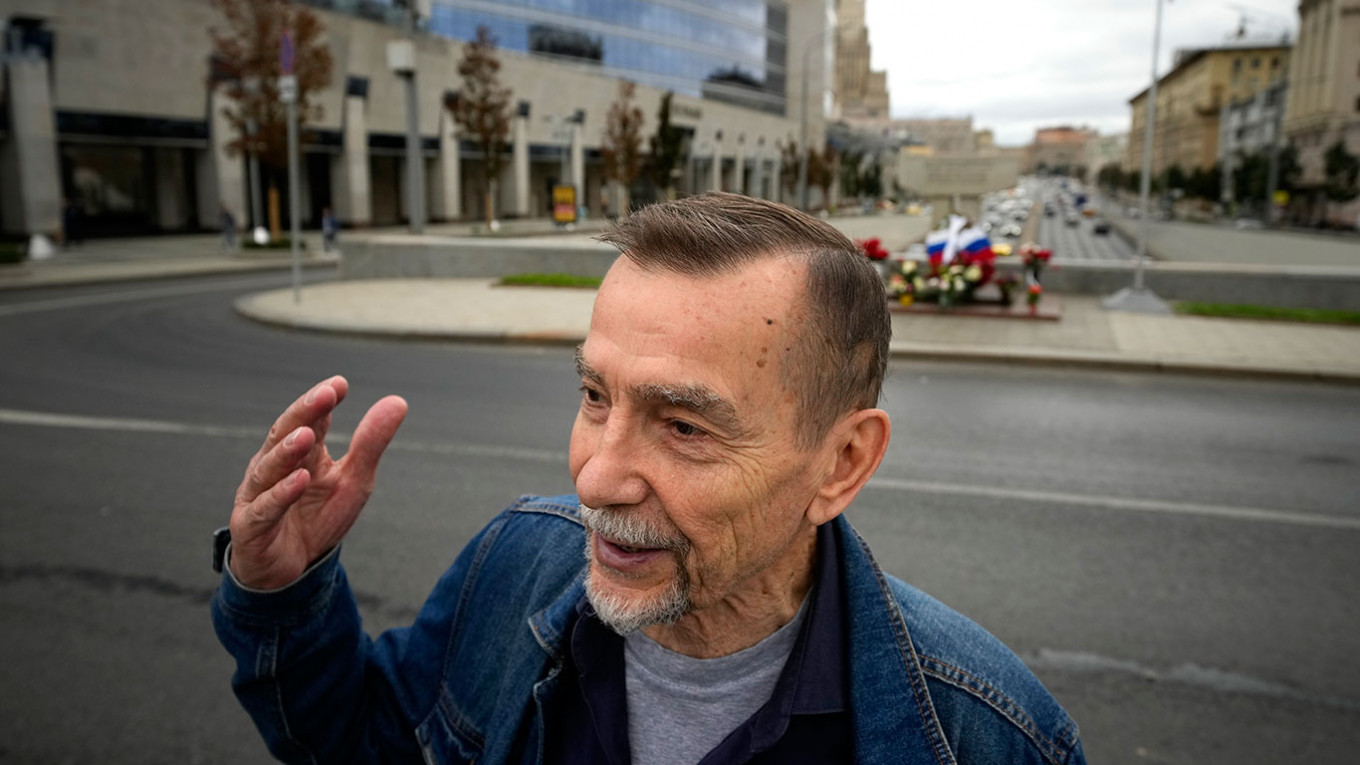
The 80-year-old former parliament member has been engaged in activism since the last years of the Soviet Union, helping create the now-dissolved Memorial organization in 1988. He said in a statement on Friday that worries about his personal safety, including “shadowy information about what they intended to do to me,” have forced him to take a break abroad.
“I doubt that my leave of absence will last long,” said Ponomarev, whose name has been added to Moscow’s list of “foreign agents” in Russia.
Ponomarev did not disclose his new location, saying only that he continued to closely follow the “worrying” news in Russia.
The charge, which falls under a new law introduced after Russia’s Feb. 24 launch of the campaign, could see Kara-Murza, 40, jailed for up to 15 years. Kara-Murza was due to appear in a Moscow court later Friday, Interfax said.
Mat Nashed in Al-Jazeera of 18 April 2022 reports how Sulima Ishaq’s work against sexual violence is now being used against her.
On March 28, Volker Perthes told the United Nations’ Security Council that Sudanese government forces had raped 16 female protesters since last December’s anti-coup protests. He added that as UN envoy for Sudan, he was working with the Combating Violence Against Women (CVAW) Unit under the Ministry of Social Affairs and civil society to mitigate sexual violence in the country.
The next week, Sulima Ishaq, head of the unit, was interrogated by security services. Her lawyers say she is being investigated for accusations of “leaking state secrets” to the UN envoy under Article 47 of the country’s criminal act.
“The information I gave to the [UN] had already been broadcasted on television channels and media outlets,” Ishaq, who is now worried that she’ll go to prison on trumped-up charges, told Al Jazeera over the phone. “But because the information was presented to the Security Council and the [coup forces] are afraid of getting sanctioned, they are [targeting] me now.”
In March, a Khartoum office – belonging to a commission investigating a June 3, 2019 incident in which security forces reportedly murdered at least 120 people to break up a sit-in – was raided by security forces.
According to Emma DiNapoli, a legal officer focusing on Sudan for Redress, a London-based non-profit advocating an end to torture worldwide, activists cooperating with the organisation have recently reported more security officers stalking them outside their homes. In some cases, this has resulted in unlawful arrests.
“None of our partners has had arrest warrants issued against them, but I think there is a general sentiment that there is higher surveillance,” DiNapoli told Al Jazeera. “Even if they are not really being surveilled, [the arrests] are having a chilling effect.”
However, experts and rights groups say Ishaq’s case represents an escalation of a broader campaign to intimidate activists and put human rights defenders on high alert.
Kholood Khair, manager of Khartoum-based think-tank Insight Strategy Partners, told Al Jazeera that the coup government is trying to make an example out of Ishaq. The authorities, she said, are particularly irked since Ishaq is a civil servant, which gives her allegations more credibility in the eyes of the international community.
In Sudan, rape victims are traditionally harassed by the public and even punished by the police, so the number of people coming forward to Ishaq was seen as a big deal, Khair explained.
“Sulima was trying to highlight that rape is a weapon of war and a weapon of repression and the number of cases [documented] shows that it is a state tactic … not a case of just individual rapists,” she said.
Mohamed Osman, Sudan researcher at Human Rights Watch (HRW), said activists have always feared that they could be targeted for documenting human rights violations against protesters. He cited the recent arrests of journalists, lawyers and doctors who appear to have been targeted for tracking unlawful arrests and killings in the country.
But the targeting of a high-profile person like Ishaq suggests that security forces are even more sensitive to scrutiny following the United States’ decision to impose sanctions on the Central Reserve Police last month, said Osman. The US cited the unit’s excessive force against protesters – including the use of live ammunition – as the reason for the decision.
Ishaq told Al Jazeera that she wished the UN envoy had been more subtle by not mentioning her unit at the Security Council meeting, given the level of repression in Sudan. “I feel that the way [the information] was stated was a little bit insensitive,” she said.
In response, Fadi Al Qadi, the spokesperson for the UN envoy, told Al Jazeera that “the special representative to the secretary-general did not name any individual in the Security Council as a source”.
And now, an atmosphere of fear is slowly enveloping the country, causing dissidents, activists and civil society to beef up personal security and take more precautions to protect themselves and sources from the eye of the authorities.
One of them is Nabil Adeeb, the septuagenarian human rights lawyer heading the investigation into the June 2019 massacre.
After government forces stormed the tribunal’s office, there were fears that evidence could be compromised and that the names of witnesses – who provided testimonies that possibly implicated specific security branches in the massacre – could be exposed.
“Our records are secure and we know that nobody would be able to access them, but we are concerned that if we resume our activities in the same place then we might expose the investigation to unwanted people since the office could be bugged,” he said.
Adeeb – who is also Ishaq’s lawyer – told Al Jazeera that she is currently being charged for defaming the security forces under Sudan’s cybercrime law, an accusation he believes has little merit.
He is concerned that Ishaq could still face more harassment and graver accusations for simply doing her job from the state, which should naturally be helping her instead. Ishaq too fears that the worst is yet to come.
”I think that I will be scapegoated to kick out Volker [from Sudan],” she said. “I will then be charged for jeopardising national security for providing [him] with sensitive information.”
HURIDOCS has been working with urgency to meet the needs of our Ukrainian partners to enable effective, comprehensive and safe documentation of human rights violations. The HURIDOCS Team on 19 April 2022 tells how:
A maternity ward and children’s hospital are hit by an airstrike. Schools and apartment blocks are shelled. A psychiatric facility is attacked. Residential areas are targeted by cluster bombs. Critical infrastructure is struck by missiles. Mass civilian graves are discovered.
These horrendous attacks on civilians in Ukraine, some of them on healthcare facilities, are labelled by the United Nations as ‘acts of unconscionable cruelty’. Russia’s invasion of Ukraine, which started on 24 February 2022, is unfolding as a series of atrocities committed against civilians.
Indiscriminate attacks using missiles, heavy artillery shells, rockets and airstrikes on civilians and non-combatants are in contravention of international humanitarian law and may amount to war crimes. Apart from attacks on civilians, Russia is reported to be shelling agreed-upon humanitarian corridors from conflict zones and therefore halting mass evacuations.
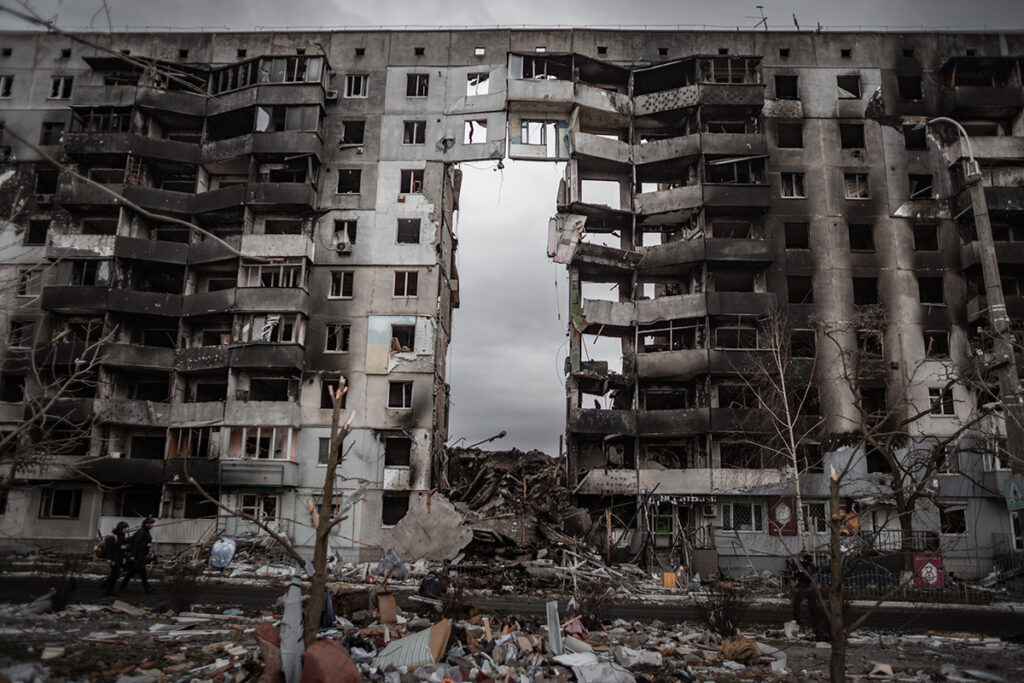
Borodyanka, a Ukrainian commuter town near Kyiv, was among the first places to be hit by Russian airstrikes.
Kyiv Declaration calls for support to groups actively documenting violations
Leaders of more than 100 Ukrainian civil society organisations have published the Kyiv Declaration, which defines the invasion as “a war against the fundamental principles of democracy”. The #KyivDeclaration asks for solidarity and immediate action, and outlines six urgent appeals to the international community. The organisations are collectively calling for the creation of safe zones in Ukraine, military aid, sanctions against Russia, humanitarian aid, freezing assets and revoking visas of prominent Russian families, and providing equipment to track war crimes. This includes technology and support to groups who are actively documenting the events in Ukraine, as well as human rights groups and lawyers who will be supporting accountability efforts in the long run.
An appeal from 100 Ukrainian civil society leaders
HURIDOCS has been working with urgency to meet the needs of our Ukrainian partners to enable effective, comprehensive and safe documentation of human rights violations.
“When Russia started its full-scale invasion in February this year, we revived the work of EuromaidanSOS. We are faced with a large number of war crimes that need to be documented. Among these are indiscriminate attacks on civilians and civilian objects, deliberate killings, torture, cruel and inhumane treatment, enforced disappearances and other crimes listed in the Rome Statute. Such acts are not justified by any circumstances of the war. Russia is simply using war crimes as a way of waging war.
Our volunteers from EuromaidanSOS are based in different parts of the country, and some of them work directly in hot spots, where they face constant connectivity issues. This is why usable technical solutions are indispensable. As this work is undertaken in the context of war, it is important to have qualified technology support. We are very grateful to the organisations, such as HURIDOCS, providing it in this difficult time for us.”– Oleksandra Matviychuk, Head of the Center for Civil Liberties and Board Member of HURIDOCS
Documenting violations is vital for accountability
Four days into the Russian invasion, the International Criminal Court (ICC) Prosecutor opened an investigation into war crimes being committed in Ukraine. In conjunction with the investigation, the ICC launched a contact portal and anyone with relevant information is urged to come forward and share the details with the ICC. The United Nations Human Rights Council expressed that it is gravely concerned about the escalating human rights and humanitarian crisis and passed a resolution to establish a Commission of Inquiry. The Commission will first and foremost collect evidence of violations and those responsible, and subsequently submit reports to the Human Rights Council and General Assembly. The Federal Prosecutor’s Office in Germany has launched an investigation by collecting evidence of suspected crimes on civilians and critical infrastructure. Germany’s probe is based on the principle of universal jurisdiction, which allows countries to prosecute crimes against international law outside of its borders.
The United Nations High Commissioner for Human Rights released a statement where she expressed horror by the images of civilian bodies on the streets and in improvised graves in the town of Bucha. She stated that reports of egregious crimes raise serious questions about possible war crimes and grave breaches of international and humanitarian law. She urged that “it is vital that all efforts are made to ensure there are independent and effective investigations into what happened in Bucha to ensure truth, justice and accountability, as well as reparations and remedy for victims and their families”.
In addition to these and other measures already underway to investigate possible war crimes and breaches of international and humanitarian law, some of the most authoritative civil society organisations in Ukraine have established a global initiative to seek justice and hold perpetrators accountable. The ‘Breaking the Vicious Circle of Russia’s Impunity for Its War Crimes’ initiative was jointly established by the Ukrainian Helsinki Human Rights Union, the Kharkiv Human Rights Protection Group and the Center for Civil Liberties, and is also known as the ‘Tribunal for Putin’.
The Tribunal for Putin aims to document events which can be classified as genocide, crimes against humanity and war crimes under the Rome Statute of the International Criminal Court. The Tribunal for Putin will also collect evidence and facts on the crimes committed and will work with existing international mechanisms of the United Nations, Council of Europe, OSCE, EU and the International Criminal Court. The initiative has called for support from various actors such as international organisations, networks, government agencies, public associations, volunteer initiatives and groups who all share the common goal of restoring peace in Ukraine and ensuring that justice will prevail.
Civil society plays a crucial role in seeking justice
In this context, it is clear that the systematic documentation of human rights violations, irrespective of who is committing the transgression, is critical to achieving justice and accountability. Documentation should not only be undertaken to assist future justice and accountability mechanisms but also to support the process of reckoning and healing.
Civil society plays a key role in efforts to document and monitor violations, and to build and strengthen cases for accountability. Civil society actors are usually the first to respond to crises, have the deepest community reach and can mobilise the people who are living through these experiences. Documenting human rights violations as they happen is imperative in the process of restoring justice. To effectively and safely assist the community there is a need for strong digital tools to gather, process, preserve, manage, protect and analyse the rapidly growing bodies of potential evidence, including large amounts of storage-intensive video. In addition, deterrence against the worst violations can also be established through credible documentation strategies.
HURIDOCS is a longtime supporter of civil society organisations and human rights defenders who use human rights documentation strategies and tools as a means to strengthen accountability and advocate for justice. We are already supporting a number of groups working on documenting human rights violations in Ukraine and HURIDOCS invites other initiatives who need support with their documentation efforts to contact us. We value diverse approaches to documenting violations, as it may strengthen accountability measures and aid in articulating narratives during the process of memorialisation.
Support for documenting violations in Ukraine
With the increased need for support to document violations in Ukraine to strengthen accountability, the Alfred Landecker Foundation has partnered with HURIDOCS to increase our capacity to support civil society-led initiatives where our expertise can be helpful. HURIDOCS is grateful to the Foundation for the support, as it comes at a time when documenting threats to peace, justice and democracy is critical. The support from the Alfred Landecker Foundation will be used to assist groups who are already participating in documentation efforts, and to aid other initiatives related to documenting violations in Ukraine.
HURIDOCS is currently supporting our partners in the following ways:
Training and consultation on information collection, protection and management techniques and associated tools, such as Uwazi;
Setting up digital information repositories to securely store sensitive data;
Refinement and integration of existing technology solutions to document, protect and analyse evidence of human rights violations; and
Hardening and scaling infrastructure to preserve and protect large amounts of information.
There is a significant and growing need to support organisations with their efforts to gather, process, preserve, manage, protect and analyse information on abuses. Reliable documentation of violations is essential for the restoration of justice in the pursuit of upholding democracy and human rights.
Abe Chauhan (a BCL candidate at the University of Oxford)wrote an interesting opinion about Facebook’s Oversight Board.
The Oversight Board is an independent institution created by Meta which reviews – in light of human rights law – the decisions of its platforms, Facebook and Instagram, on whether posts violate their policies and should be removed. The Board represents a novel, decentralised approach to protecting freedom of expression and other rights, calling into question whether private entities should perform judicial human rights functions.See also: https://humanrightsdefenders.blog/2021/03/17/facebook-launches-a-human-rights-policy-and-fund-aimed-for-human-rights-defenders/
Following calls for more robust, transparent and accountable regulation of Facebook, and after a year of consultations, interviews and research, in October 2020 the Facebook (now Meta) Oversight Board became operational. It is an independent institution, funded indirectly by Meta through a $130 million trust arrangement, which makes binding determinations on content decisions appealed by users. Board members include law professors, human rights practitioners and civil society actors from around the world. Under Article 2, Section 2 of the Board’s Charter, it applies Meta’s Community Standards “in light of human rights norms protecting free expression”. At the time of writing, the Board has released 23 decisions on posts concerning various issues ranging from unmarked graves at former residential schools in Canada to the promotion of ayahuasca. The most widely publicised of these concerned an appeal against Facebook’s decision to block then-President Donald Trump from the platform following his posts in relation to the attack on the US Capitol. The Board decided to uphold the decision, but criticised Facebook’s use of the penalty of indefinite suspension, requiring it to determine a proportionate response. In that case, the Board engaged in extensive discussion on freedom of expression under the ICCPR, deriving a requirement for proportionate limitation from international jurisprudence and developing a number of factors influencing how this assessment should operate.
What, then, is the legal character of the Board? Although it applies human rights law in representative appeals from around the world, like an international human rights court, the Board is a private body and its determinations cannot preclude individual petitions. In this light, the Board is just an additional stage to Meta’s internal review procedure. What cannot be understated, however, is the reach of the Board’s decisions – it makes binding determinations on content decisions about the posts of Facebook’s 3 billion and Instagram’s 1.5 billion active users. Not only are its decisions wide-reaching, but they may have norm-shaping effect as a subsidiary means for interpreting human rights law. Many of the Board’s members are highly qualified human rights scholars and the unanimous decision-making system it applies increases the normative weight of decisions. While in a formal sense the Board is little more than an arbitral tribunal binding only Meta, its decisions have material effects on the rights enjoyment of many individuals around the world. This suggests that rather than merely an internal review procedure, the Board is a private human rights court. Viewed in this light, the Board fills a gap. The effectiveness of the human rights regime depends on the ability of States to protect rights. However, it is large multinational social media corporations which have factual control over many forums of expression. States can only indirectly regulate these, with potentially limited actual impact on the enjoyment of freedom of expression by users. The Board fills this ability gap by implementing rights adjudication internally within Meta.
Some might welcome this novel approach as it signals the greater horizontalisation of human rights. However, while it may be correct that these organisations ought to bear obligations to respect, protect and promote human rights violations, the role the Board is playing goes much further than this. In making final determinations on human rights limitations by Meta, it subsumes – de facto rather than de jure – part of the exclusively State function of human rights adjudication. This is problematic for two reasons. Firstly, it is unacceptable for private institutions to make rights determinations with wide-ranging effects, absent a delegation of this power by the State. Secondly, alongside this absence of legitimacy, the Board may slowly diminish rights protection. Even if it acts in the public interest, the Board is free to develop its own jurisprudence. As Benesch suggests, over time it will have to depart from international human rights law because this field was not designed for application by private companies and its norms and principles need to be adapted accordingly.
While the Board may well be an effective institution – its initial decisions apply close analysis to human rights issues and frequently overturn Meta’s content decisions – it is highly questionable that a private institution should perform the exclusive State function of human rights adjudication.


 Hans Thoolen on Human Rights Defenders and their awards