Author Archive

Why is the Harvard Administration so reluctant to speak up for Steven Donziger?

April 14, 2022

Rachel E. Carle, a second-year Master in Public Policy candidate at the Harvard Kennedy School, in an oped in the Crimson of 13 April 2022 (entitled Harvard Trains Human Rights Defenders and Then Abandons Them, wants to know why the Harvard Administration has not come out as fiercely to defend Steven Donziger as it has done for others. She makes a good point:

Harvard Law School alum Steven Donziger recently marked his 900th day in detention. Donziger represented victims of oil dumping in a landmark case against Chevron in Ecuador and has since faced serious intimidation and harassment, including mishandling of his trial. [I have written several posts about him, see: https://humanrightsdefenders.blog/tag/steven-donziger/]

Here at Harvard, Law Professor Charles Nesson has steadfastly spoken out in Donziger’s defense. Harvard Law students joined a letter signed by peers at 55 leading law schools, calling for Donziger’s prosecution to be reviewed. In Fall 2021, with the support of the Human Rights Profession Interest Council at Harvard Kennedy School, I coordinated a petition for Harvard students and alumni to support Donziger that more than 1,600 people have signed onto. This public support is overwhelming, and continued pressure is needed in order for Donziger to achieve justice. So why hasn’t the Harvard administration spoken up?

The school is quick to parade its most controversial alumni. They have no qualms honoring alum Henry A. Kissinger ’50, who orchestrated widespread war crimes in Cambodia. They were eager to invite Harvard drop-out Mark Zuckerberg to give the College’s 2017 Commencement speech, shortly after Facebook’s incriminating role in the 2016 U.S. Presidential election. Harvard has shown that it is willing to take risks for certain kinds of alumni.

This makes their silence on human rights defenders all the more deafening. Harvard trains students to be leaders and to act courageously to create a better world. Many students in my program at the Harvard Kennedy School graduate into high-risk careers, combatting authoritarianism, fighting for indigenous rights, or working on environmental accountability. Graduates have been detained for their work, from the 1992 imprisonment of HKS alum Jeffrey G. Kitingan in Malaysia to the 2012 imprisonment of HKS alum Bakhtiyar Hajiyev in Azerbaijan.

Just last year, HKS alum Erendro Leichombam was detained in India for a Facebook post criticizing Bharatiya Janata Party members’ approach to Covid-19. While Harvard alumni launched a petition for his release, and the Harvard Graduate Student Union lent its public support, these actions could only go so far.

Harvard alumni have been targeted for their human rights work in the past and will continue to be in the future. They deserve more than one-off petitions and scrambling students. Harvard is one of the most powerful educational institutions in the world; surely we can do more.

These targeted alumni are a part of a larger story. 2020 was the deadliest year on record for environmental activists around the world, particularly for Indigenous people and the Global South. Of course, those who graduate from Harvard schools have privileges and protections not afforded to many. Donziger is a white American man with a Harvard Law degree who benefits from respectability politics, and we should critically consider why his case has received more attention than most.

But that is just it. The more we understand and leverage the connections between these cases, the more human rights defenders can receive the attention and advocacy they deserve. These are not isolated incidents. When the next HKS or HLS alum is inevitably threatened or detained, I hope we remember they are connected to a long lineage of targeted alumni and a vast community of targeted activists around the world.

Harvard has taken an important step with the Scholars at Risk program, established more than 20 years ago to offer respite to persecuted scholars, artists, and writers from around the world. Harvard should expand this commitment, devoting significant resources to the defense of human rights, with particular attention to indigenous, women, queer, poor, and otherwise marginalized activists.

It is time to support our alumni at risk, too. Harvard should develop contingency plans that allow the administration to evaluate a situation, get in touch with the detained alum’s close contacts, and consider a range of private and public support measures. At the very least, the administration should be receptive to student campaigns that request the school to make a public statement or intervene in support of a member of our community.

Harvard needs to take responsibility for the human rights defenders it trains. It needs to create a real, ongoing, accessible infrastructure of support. And it needs to start today.

https://www.thecrimson.com/article/2022/4/13/carle-harvard-human-rights-defenders/

Human Rights Defender Angkhana Neelapaijit in Thailand harassed

April 14, 2022
Photo captured on a security camera of the alleged assailant, a woman wearing a mask and a black t-shirt.
Photo captured on a security camera of the alleged assailant, a woman wearing a mask and a black t-shirt. © 2022 Private

The authorities in Thailand should urgently investigate an incident intended to intimidate a prominent human rights defender, Human Rights Watch said on 13 April, 2022.

On April 12, 2022, at about 6 a.m., an unidentified assailant threw a pair of 9-inch-long scissors at the house of Angkhana Neelapaijit in Bangkok, making a hole in her front door. Security camera footage showed what appeared to be a woman wearing a face mask and a dark t-shirt with the Thai numeral 9 standing in front of the house, throwing the scissors, and then running away. Angkhana, 66, is a former commissioner of the National Human Rights Commission of Thailand and a newly appointed member of the United Nations Working Group on Enforced or Involuntary Disappearances. See: https://www.trueheroesfilms.org/thedigest/laureates/0D5DED3E-F79F-4AB4-8261-F6A19486F062

Violent acts intended to intimidate a well-known figure like Angkhana not only pose a threat to her and her family, but send a spine-chilling message to the entire Thai human rights community,” said Elaine Pearson, acting Asia director at Human Rights Watch. “The Thai government should respond immediately by undertaking a serious investigation to ensure that everyone responsible for this incident is held accountable.”

Angkhana told Human Rights Watch that she and her family felt vulnerable after the Justice Ministry canceled her protection under the government’s witness protection program on April 1. The authorities claimed the service was no longer needed because Angkhana’s life would no longer be in danger after the Department of Special Investigation ended its investigation of the enforced disappearance of her husband, the prominent human rights lawyer Somchai Neelapaijit. [See also: https://humanrightsdefenders.blog/2021/03/17/where-is-somchai-a-brave-wifes-17-year-quest-for-the-truth/]

The Thai government should not ignore this disturbing incident, which appears to be a response to Angkhana’s effective human rights advocacy,” Pearson said. “Foreign governments and the United Nations should press the Thai government to urgently act to protect Angkhana and other human rights defenders in the country.”

https://www.hrw.org/news/2022/04/13/thailand-prominent-rights-defender-harassed

US State Department’s report 2021 is out

April 14, 2022

On 12 April, 2022, the annual Country Reports on Human Rights Practices was made public. The Human Rights Reports 2021 cover internationally recognized individual, civil, political, and worker rights, as set forth in the Universal Declaration of Human Rights and other international agreements. The U.S. Department of State submits reports on all countries receiving assistance and all United Nations member states to the U.S. Congress in accordance with the Foreign Assistance Act of 1961 and the Trade Act of 1974. For nearly five decades, the United States has issued the Country Reports on Human Rights Practices, – in 2021, covering 198 countries and territories.  The preface states that: “The Biden Administration has put human rights at the center of U.S. domestic and foreign policy.  We have also recognized our nation has not always succeeded in protecting the dignity and rights of all Americans, despite the proclamations of freedom, equality, and justice in our founding documents.  It is through the continued U.S. commitment to advance human rights, both domestically and internationally, that we best honor the generations of Americans who are Black, Brown, or other people of color, indigenous peoples, persons with disabilities, LGBTQI+ persons, immigrants, women and girls, and other historically marginalized groups whose advocacy for their rights and for others has pushed America toward a “more perfect union.

President Biden has called the defense of democracy and human rights the defining challenge of our time.  By convening the first Summit for Democracy in December 2021 – bringing together representatives from 100 governments as well as civil society and the private sector – he sparked global attention and vigor toward democratic renewal and respect for human rights.  Participating governments made significant commitments to revitalize democracy at home and abroad at the first Summit on which we expect meaningful progress during the current Year of Action and before the time of a second Summit.

The reports paint a clear picture of where human rights and democracy are under threat.  They highlight where governments have unjustly jailed, tortured, or even killed political opponents, activists, human rights defenders, or journalists, including in Russia, the People’s Republic of China, the Democratic People’s Republic of Korea, Nicaragua, and Syria.  They document abuses of peaceful protestors demanding democracy and fundamental freedoms in countries such as Burma, Belarus, Cuba, Hong Kong, and Sudan.  They highlight worrying cases of transnational repression – where governments reach across borders to harass, intimidate, or murder dissidents and their loved ones – as exemplified in the dangerous forced diversion by Belarus of an international commercial flight for the sole purpose of arresting a critical independent journalist.

But they also contain signs of progress and glimmers of hope, as the indomitable will to live freely can never be extinguished.  In Iraq, people cast their votes to shape the future of their country in more credible and transparent parliamentary elections than in 2018.  In Botswana, a court advanced the human rights of LGBTQI+ persons by upholding the decriminalization of same-sex relations.  In Turkmenistan, all imprisoned Jehovah’s Witnesses conscientious objectors to military service were pardoned, a win for freedom of religion or belief.  The stability, security, and health of any country depends on the ability of its people to freely exercise their human rights – to feel safe and included in their communities while expressing their views or gender, loving who they love, organizing with their coworkers, peacefully assembling, living by their conscience, and using their voices and reporting from independent media to hold governments accountable.  There is much progress to be made, here in the United States and globally.  But I know that by working together in the Year of Action and using resources like the Country Reports on Human Rights Practices, we can come closer to building a world where respect for human rights is truly universal.

In a reaction on the report human rights activists focused on China said theat they want the State Department to reboot the report’s format to address documentation blind spots and connect it to policy and initiatives to stop the violations and provide accountability for victims.

“It’s a descriptive, objective document but largely of human rights developments that had been already extensively reported by the media, by NGOs, and by human rights bodies within the UN and in many cases at greater detail and length. … It is essentially a recap,” said Sharon Hom, executive director of the New York City-based nonprofit Human Rights in China. “Since it appears to take quite a bit of resources to produce each year, I’d say that going forward, they reference and aggregate some of the developments within three very important, bigger trends like digital authoritarianism, [foreign] influence operations, and [China’s] growing extraterritorial reach.” [from https://www.politico.com/news/2022/04/13/china-activists-state-dept-human-rights-00024876]

https://www.state.gov/reports/2021-country-reports-on-human-rights-practices/embed/#?secret=ICAePzAuB5#?secret=IVCGC9q7rK

Human Rights Defender Vladimir Kara-Murza arrested in Russia

April 14, 2022

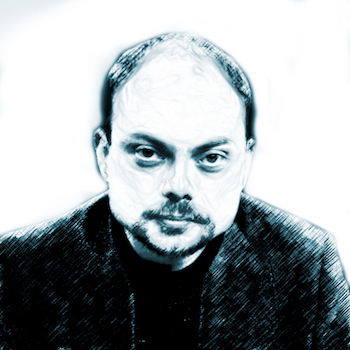
Vladimir Kara-Murza, the Russian democracy activist, historian, twice-poisoned critic of Vladimir Putin’s regime, and a senior advisor to Human Rights First, was reportedly arrested near his Moscow residence on 11 April 2022.  Kara-Murza’s arrest came just days after his return to Russia and shortly after CNN broadcasted an interview with him. He is the winner of 3 human rights awards, see: https://www.trueheroesfilms.org/thedigest/laureates/34e43b60-3236-11ea-b4d5-37ffeeddd006

We are deeply concerned for our friend Vladimir Kara-Murza’s personal safety, and we call on Russian authorities to release him immediately,” said Michael Breen, President and CEO of Human Rights First.  “Putin and his regime have shown themselves to be willing to break any law, domestic or international, to suppress political opposition at home and subjugate neighboring countries like Ukraine.  We call on all of democracy’s allies to oppose criminal behavior like this to protect human rights in Russia, Ukraine, and around the world.

Having been targeted for assassination twice before, Kara-Murza knew his return to Russia put him in danger.  In his recent CNN interview, Kara-Murza said, “The biggest gift we could give…to the Kremlin would be just to give up and run…that’s all they want from us.

https://www.humanrightsfirst.org/press-release/russian-human-rights-activist-vladimir-kara-murza-arrested-moscow

Pramila Patten on Enhancing the Protection of Women Human Rights Defenders and honoring Jineth Bedoya

April 14, 2022

On 12 April 2022 SRSG-SVC Pramila Patten made a statement at a side event in New York on the Protection of Women Human Rights Defenders and Journalists:

…..Today’s meeting is a critical opportunity to take stock of both the persistent and entrenched, as well as new and emerging, challenges that women activists, women human rights defenders, and women journalists face in their daily lives. The annual Report of the Secretary-General on Conflict-Related Sexual Violence, which is due to be debated tomorrow by the Security Council, notes that in 2021, women peace builders and human rights defenders were specifically targeted, including through sexual violence and harassment as a form of reprisal, in order to exclude them from public life in a number of country settings, such as Afghanistan, Libya, Myanmar, Yemen and elsewhere. Moreover, activists working to highlight the plight and rights of survivors of conflict-related sexual violence, and to support their access to justice and services, were also subjected to reprisals and intimidation, which has a chilling effect on their critical work.

The high-risk environment in which women leaders and activists are compelled to operate is directly correlated with the trend of intersecting humanitarian, security and political crises, including coups, military takeovers, and unconstitutional shifts of power seen in recent months. This has exacerbated the root causes and drivers of conflict-related sexual violence, including militarization, the proliferation of arms, impunity, the collapse of rule of law institutions, structural gender-based inequality, and harmful social norms.

Today, we will hear directly from powerful women activists who have raised their voices against injustice, at great personal risk, and continue to advocate for the eradication of conflict-related sexual violence, and the closure of accountability and protection gaps. Today’s panel of speakers will highlight the tireless efforts of women human rights defenders and journalists, as well as the risks they endure working on the frontlines of armed conflict and civic strife. In the work of my mandate, I am continually reminded that we are only as strong as our partnerships. Since I took up this mandate in 2017, I have consistently emphasized the importance of working directly with survivors as the co-creators of solutions. It is in this spirit that today, I recognize Ms. Jineth Bedoya Lima, a trailblazing survivor, activist, and agent of change, with the demonstrated ability to lead and influence others to take action to end the scourge of conflict-related sexual violence. [see: https://www.trueheroesfilms.org/thedigest/laureates/6f49a0f6-7dd6-4f95-902c-9d9f126e0bcc] I commend her courage and commitment in elevating the issue of conflict-related sexual violence onto the public agenda and historical record in Colombia and globally, and her two-decade quest for justice, truth and reparations for these heinous crimes. Her vision and determination contributed to the establishment of the National Day for the Dignity of Women Victims of Sexual Violence in the context of the internal armed conflict in Colombia, which is commemorated every year on the 25th of May. [see also: https://humanrightsdefenders.blog/2021/10/19/inter-american-court-holds-colombia-responsible-in-the-case-of-jineth-bedoya/]

I also congratulate Ms. Bedoya on the emblematic judgment delivered by the Inter-American Court of Human Rights on 18 October 2021, in connection with her case, which sets a powerful precedent for women activists, journalists, human rights defenders, and peace builders the world-over, who are subjected to, or at risk of, sexual violence. This ruling marks the first time that a court has specifically considered the use of sexual violence as a tool to silence a female journalist in the context of the Colombian armed conflict. Significantly, the judgment also entailed important reparative measures, such as the creation of a fund for the prevention, protection, and assistance of women journalists who are victims of sexual and gender-based violence.

I am pleased to announce that today I am naming Ms. Jineth Bedoya Lima a Global Champion for the Fight Against Sexual Violence in Conflict. In this capacity, she will contribute to the efforts of my mandate to enhance advocacy and awareness-raising, and to amplify the voices of survivors.

Please join me in showing our appreciation for Jineth’s remarkable journey and infinite courage. Jineth, I look forward to working with you in common cause to break not only the silence of history, which has hidden these crimes, but also the vicious cycle of violence and impunity, which must be replaced with a virtuous cycle of recognition and redress for all survivors. It is only by facing difficult truths that we can transcend them and end the seemingly endless cycle of violence.

OSRSG Sexual Violence in Conflict

https://reliefweb.int/report/world/statement-srsg-svc-pramila-patten-side-event-enhancing-protection-women-human-rights

Graduate Institute in Geneva published important study for the human rights movement

April 11, 2022

Global Challenges Issue no. 11 | March 2022 is about The Uncertain Future of Human Rights

Human Rights in Flux: New Directions beyond Universalism

Human rights remain more crucial to the world’s future than ever. The rise of populism and identity politics, new alliances that strengthen authoritarian governments, or even some of the responses to the current epidemic by democratic states have contributed to fragilise human rights. How will the human rights regime likely evolve faced by such challenges? Can the protection of human rights worldwide reinvent itself and, if so, how?

A very substantive introduction is followed by some 10 specialised chapters

Certainly worth reading in full:

Major NGO offices in Russia now closed

April 9, 2022

On 8 April 2022, the Russian government closed the offices of Amnesty International and Human Rights Watch and several other NGOs such as Carnegie Endowment for International Peace, Friedrich Naumann Foundation for Freedom, Friedrich Ebert Foundation. This decision has been taken “in connection with the discovered violations of the Russian legislation.

On 11 March, Russia’s media regulator had already blocked access to Amnesty International’s Russian-language website.

Human Rights Watch had maintained an office in Russia for 30 years. The action was announced just days after an appeals court upheld the liquidation of Russia’s human rights giant, Memorial. [see also: https://humanrightsdefenders.blog/2021/11/12/it-had-to-happen-russian-authorities-move-to-shut-down-memorial/]

Human Rights Watch has been working on and in Russia since the Soviet era, and we will continue to do so,” said Kenneth Roth, executive director of Human Rights Watch. “This new iron curtain will not stop our ongoing efforts to defend the rights of all Russians and to protect civilians in Ukraine.”

Reacting to the news, Agnès Callamard, Secretary General of Amnesty International, said: “Amnesty’s closing down in Russia is only the latest in a long list of organizations that have been punished for defending human rights and speaking the truth to the Russian authorities. In a country where scores of activists and dissidents have been imprisoned, killed or exiled, where independent media has been smeared, blocked or forced to self-censor, and where civil society organizations have been outlawed or liquidated, you must be doing something right if the Kremlin tries to shut you up.

https://www.hrw.org/news/2022/04/08/russia-government-shuts-down-human-rights-watch-office

https://www.themoscowtimes.com/2022/04/08/moscow-shutting-down-amnesty-human-rights-watch-in-russia-a77290

Suspension of membership UN Human Rights Council finally operationalised

April 8, 2022

(Credit: UNTV)

It was big news that Russia was stripped of its seat in the Un human Rights Council.

In March 2014 in one of my first blog posts I argued for making better use of the possibility to suspend member states (be it in the context of reprisals): “The resolution establishing the new Human Rights Council – replacing the previous Commission – states that “members elected to the Council shall uphold the highest standards in the promotion and protection of human rights.” And one of the novelties touted was that the General Assembly, via a two-thirds majority, can suspend the rights and privileges of any Council member that it decides has persistently committed gross and systematic violations of human rights during its term of membership. 

The chilling effect that reprisals can have – especially when met with impunity – is potentially extremely damaging for the whole UN system of human rights procedures and will undo the slow but steady process of the last decades. Taken together with the above-mentioned seriousness of the aggravating character of reprisals, a powerful coalition of international and regional NGOs could well start public hearings with the purpose of demanding that States that commit reprisal be suspended.

If States can lose their right to vote in the General Assembly if they do not pay their fees for several years, there is in fact nothing shocking in demanding that States, who persecute and intimidate human rights defenders BECAUSE they cooperate with the United Nations, are not allowed to take part in the proceedings of the UN human rights body.” [see: https://humanrightsdefenders.blog/2014/03/13/zero-tolerance-for-states-that-take-reprisals-against-hrds-lets-up-the-ante/]

UN members voted on Thursday 7 April to strip Russia from its seat at the Human Rights Council, over alleged civilian killings in the region around Kyiv, Ukraine. The proposal, presented at a UN General Assembly emergency session in New York, was backed by 93 countries. Russia, China, Belarus, Syria and Iran were among the 24 countries to vote against, while 58 countries, including India, Brazil and South Africa abstained.

Introducing the US-led resolution, Ukrainian ambassador to the UN, ​​Sergiy Kyslytsya, told fellow members that suspending Russia’s right to sit on the Council, was “not an option, but a duty”.

This is the second time in the history of Human Rights Council (HRC) since its creation in 2006 that a sitting member has been kicked out. The first one was Libya, when late former dictator Muammar Gaddafi led a deadly crackdown on protests in 2011, only to be reinstated eight months later. See also: https://humanrightsdefenders.blog/2016/07/05/amnesty-and-hrw-trying-to-get-saudi-arabia-suspended-from-the-un-human-rights-council/

This is the first time a permanent member of the UN Security Council has been removed from any UN body.

Countries react

Taking the floor, China, Iran, Syria, North Korea, Venezuela and Cuba, echoed Russia’s comments and said the move was politically driven. Belarus dubbed it an attempt to “demonise” Russia. Warning that they would abstain, several countries including India, Egypt, Senegal, Brazil, Mexico, Saudi Arabia and the United Arab Emirates, argued it was too soon to vote on such a proposal and that investigations into the allegations should be conducted beforehand.

In a statement published on its website, Russia’s permanent mission in Geneva called the decision “an unlawful and politically motivated step, the sole purpose of which – to exert pressure on a sovereign state that pursues an independent domestic and foreign policy”.

Russia’s deputy ambassador, Gennady Kuzmin, said after the vote that Russia had already withdrawn from the council before the assembly took action, apparently in expectation of the result. By withdrawing, council spokesman Rolando Gomez said Russia avoided being deprived of observer status at the rights body.

See also the Geneva Solutions piece: https://genevasolutions.news/global-news/what-does-russia-s-suspension-mean-for-the-human-rights-council

https://genevasolutions.news/peace-humanitarian/un-votes-russia-out-of-the-human-rights-council-over-alleged-gross-violations-in-ukraine

https://news.un.org/en/story/2022/04/1115782

Clean energy will not automatically be good for indigenous land defenders

April 7, 2022

Emily Pontecorvo a reporter for GRIST published on 6 April 2022 a piece about a new report by the Business and Human Rights Resource Centre which states that the renewable energy sector is unprepared for the protection of land rights defenders.

In April of last year, José de Jesús Robledo Cruz and his wife Maria de Jesús Gomez Vega were found dead in the desert in Sonora, Mexico. In July, Fernando Vela, a doctor in Coqueta, Columbia, was shot to death by two men on a motorcycle while he was in his truck. In September, Juan Macababbad, an attorney in the Philippines was shot dead outside his home.

In each case, the victims were prominent human rights defenders, known in particular for defending their communities’ natural resources from mining, deforestation, water contamination, and other threats. These were just three of at least 76 such murders that occured in 2021. [see also: https://humanrightsdefenders.blog/2022/03/02/human-rights-high-commissioner-bachelet-urges-support-for-environmental-defenders/]

Business and Human Rights Resource Centre tracks attacks on people who protest or otherwise raise concerns about business-related human rights abuses. It has documented more than 3,800 attacks, including killings, death threats, beatings, arbitrary arrests and detention, and lawsuits, since January 2015, with 615 occurring in 2021 alone.  [see also: https://humanrightsdefenders.blog/2021/09/13/global-witness-2020-the-worst-year-on-record-for-environmental-human-rights-defenders/ as well as: https://news.mongabay.com/2022/04/more-than-half-of-activists-killed-in-2021-were-land-environment-defenders/]

Our data shows almost the tip of the iceberg,” Christen Dobson, senior program manager for the BHRRC and an author of the new report. “Many attacks are not publicly reported. And so we know the problem is much more severe than these figures indicate.”

According to the report, human rights defenders who spoke out against mining projects consistently experienced the greatest number of attacks over the past seven years. The authors say this is especially concerning considering the expansion of mineral production required by a transition to clean energy. All those batteries, solar panels, and wind turbines are going to require a lot of cobalt, nickel, zinc, lithium, and other minerals.

We’re already seeing this level of attack, and we’re not seeing major producers of transition minerals have strong policies or practices in place about protecting defenders,” said Dobson. “There’s a real risk there and I think it’s an area that we’re very concerned about.

The report urges investors to publish a human rights policy and require that companies begin disclosing human rights and environmental-related risks. But Dobson said that voluntary actions from companies and investors was not enough. She said there was some momentum building behind mandating that companies report on measures they are taking to respect human rights, including legislation proposed in the European Union and Canada.

“It is concerning to see a vast majority of companies and investors, including major renewable energy companies, do not have policies expressing zero-tolerance against reprisals in their operations, supply chains and business relationships,” said Dobson in a statement. “It’s time for companies and investors to recognise the energy transition cannot be effective if it is not also rights-respecting.”

https://grist.org/international/land-defenders-face-violence-and-repression-clean-energy-could-make-it-worse

Follow up with Laureates of Right Livelihood award

April 7, 2022

What inspires change and drives activism? Can anyone become a change-maker? These were questions we asked back in December, when 2021 Laureates Marthe Wandou, Vladimir Slivyak, Freda Huson and Legal Initiative for Forest and Environment came to Stockholm to be presented with the Right Livelihood Award. [See also: https://humanrightsdefenders.blog/2021/10/04/2021-laureates-of-the-right-livelihood-award/]

All four Laureates have succeeded in mobilising grassroots action and community-based models for change, so in an effort to learn more, we invited US journalist Dara Lind to sit down with them individually and take a deep dive into their stories. We are now happy to present “How to Mobilise Change”, a series of in-depth conversations in which we not only get to know the Laureates better and learn about what prompted them to take action but can also learn about how sustainable change can be achieved – based on their strategies and methods of action. Throughout the spring, we are releasing the recordings one by one. The series starts this week with the release of Cameroonian Laureate Marthe Wandou’s interview and a week of action to support children’s rights.

  https://mailchi.mp/rightlivelihood/what-a-night-8997037?e=24f028b242