Author Archive

Joint statement NGOs on 77th GA Third Committee

November 23, 2022

14 NGOs that closely follow and engage with the Third Committee have joined together to publish a joint statement on outcomes of this 77th session. The undersigned civil society organisations mark the conclusion of the UN General Assembly’s (GA) 77th Third Committee session with the following observations on some thematic and country-specific resolutions considered at this session. We urge all States to implement the commitments they have made in the resolutions discussed below to their full extent.

  • Joint statements

We welcome the joint statement on the human rights situation in Xinjiang, China delivered by Canada on behalf of a cross-regional group of 50 countries. This statement echoes the UN Human Rights Office’s independent, objective analysis and its findings which the UN’s human rights office determined may amount to crimes against humanity, and urges China to implement that report’s recommendations, in particular on enforced disappearance. There was an increase in State support compared to last year, signalling hope for future initiatives to debate the situation and support victims to secure accountability. Nonetheless, there is more work to ensure support from member states, in the EU and globally, as well as from Muslim-majority countries. 

We welcome the joint statement on reprisals led by Ireland and joined by a cross-regional group of countries, calling on all States and the UN to prevent, respond to, and ensure accountability for cases of intimidation and reprisals against those who engage or seek to engage with the UN. We welcome that 80 States continued to sign on to the statement but urge more States to sign on to future such statements. See also: https://humanrightsdefenders.blog/2020/11/30/75-countries-join-statement-on-reprisals-at-the-third-committee-but-more-needed/

We welcome a resolution on the right to privacy in the digital age. The resolution integrates much of the progressive language seen in the most recent Human Rights Council version of the resolution, contending with new and persisting challenges for the right to privacy worldwide, with a particular focus on the impact on human rights defenders and journalists. However, the resolution missed an opportunity to make strong recommendations on the proliferation of private surveillance technologies, including spyware, which global experts are calling to ban or suspend through a moratorium. We call on future resolutions to contain stronger language on biometric technologies, particularly recognising that these technologies should never be used for mass surveillance of public spaces. 

We welcome the adoption of the resolution on Extrajudicial, summary or arbitrary executions by a vote which aims to uphold the right to life, liberty and security and acknowledges that impunity is a major contributor to executions. We welcome the new references to freedom of religion or belief, new technologies, institutions as places of custody, as well as strengthened language on the role of civil society and human rights defenders in the protection against arbitrary deprivation of life. We also welcome that the resolution once again highlighted the targeting (including killing) of specific groups of persons belonging to national or ethnic, religious and linguistic minorities, indigenous communities, human rights defenders, lawyers, journalists or demonstrators, or because of their sexual orientation or gender identity. Critically, we welcome the rejection by a vote of an oral amendment attempting to remove the reference to ‘sexual orientation and gender identity’ in that listing.

We welcome support by an overwhelming majority of States for the resolution on a moratorium on the use of the death penalty proposed by Australia and Costa Rica (on behalf of an Inter-Regional Task Force of States). A record number of 126 States voted in favour of the text (including Ghana, Liberia and Myanmar, after abstaining in the GA plenary in 2020), while 37 voted against and 24 abstained. The text reiterates calls made in previous resolutions, including to halt executions with the view to abolishing the death penalty. It also includes additions on the importance of transparency and access to information regarding the use of the death penalty and criminal prosecutions to identify discriminatory practices, the negative impact on the rights of children and youth whose parental caregivers face the death penalty, the need to ensure that trial leading to imposition of the death penalty complies with fair trial and non-discrimination guarantees, ensuring the death penalty is not applied on the basis of laws targeting individuals for exercising their human rights, the need to improve conditions in detention for those on trial for capital crimes or on death row, ensuring respect for their inherent dignity, and complying with international standards, in evaluating, promoting, protecting and improving their physical and mental health.  

We welcome the adoption of the resolution on Inclusive development for and with persons with disabilities, that newly calls for leadership and participation of persons with disabilities in disaster risk reduction, climate change adaptation and mitigation, and other climate change policies and programmes, as well as affordable and accessible internet, and continues to emphasize non-discrimination, accessibility and inclusion in the implementation of the 2030 Agenda, including for women and girls with disabilities. In particular, we welcome the request for the Secretary-General to report on participation of persons with disabilities in COVID-19 response and recovery, and on the implementation of the UN Disability Inclusion Strategy. We regret that despite wide support, language supporting the right to the enjoyment of the highest attainable standard of sexual and reproductive health of persons with disabilities, on an equal basis with others, was not included in the final resolution.

We welcome the adoption by consensus of the resolution on the Human rights treaty body system. We regret that States were not able to ‘welcome’, but merely ‘take note’ of the biennial report by the UN Secretary-General on the state of the treaty body system and the report of the most recent meeting of treaty body chairpersons. We urge all States to follow through with their reaffirmation in the resolution of the formula contained in General Assembly resolution 68/268, and allocate corresponding financial and human resources in the Fifth Committee that the treaty bodies require to function effectively.

Gender Issues

We welcome the adoption by consensus of the resolution on Child, Early and Forced Marriage (CEFM) presented by Canada and Zambia, and for the first time co-sponsored by 125 States, including several countries with high CEFM prevalence. We welcome new references to multiple and intersecting forms of discrimination, including in the context of climate change, conflict and poverty. We particularly welcome the call to Member States to address the root causes of gender inequality, gender stereotypes and negative social norms that underlie CEFM and for participatory and adequately funded measures to address the ongoing impacts of COVID-19 including school closures; the digital divide; uninterrupted access and funding for sexual and reproductive health-care services; adolescent-centered services; and redistribution of unpaid care and domestic work. We regret that despite significant support, references to comprehensive sexuality education and intimate partner violence were omitted. 

The resolution on Intensification of efforts to prevent and eliminate all forms of violence against women and girls, presented by Netherlands and France, was adopted by a vote for the second time. We welcome the text, focused this year on eliminating gender stereotypes and negative social norms. It included commitments to prevent and eliminate violence against all women, including intimate partner violence, femicide, commitments to protect, respect and fulfill all human rights, including sexual reproductive health and reproductive rights; recognize challenges and obstacles to eliminating discriminatory attitudes perpetuating multiple and intersecting forms of discrimination against women and girls; text on migrant and indigenous women and girls, racism, xenophobia, women human rights defenders, promoting young women and adolescents’ participation and leadership in decision making positions as well as full, effective, equal and meaningful participation of all women in all their diversity. Although we are encouraged by the rejection of 9 amendments presented by Guatemala, Egypt, Iraq, Libya, Nigeria, Russia, Saudi Arabia and Yemen, we regret that consensus was not achieved on a number of important commitments, that have been previously agreed, aiming to prevent and eliminate gender stereotypes and negative social norms and take multisectoral, effective and gender-responsive measures to prevent and eliminate all forms of violence. We are also dismayed that a vote was called on the reference to the Generation Equality Forum, an initiative with wide support from diverse stakeholders globally.

We welcome the adoption of the resolution on Intensifying global efforts for the elimination of female genital mutilation (FGM) presented by Burkina Faso (on behalf of African Group) which has not been fully opened up since 2018. The resolution failed to strengthen the most pertinent and pressing areas for preventing and eliminating FGM, especially in relation to health outcomes for girls, adolescents and women including the lack of inclusion on sexual and reproductive health, comprehensive sexuality education and  multiple and intersecting forms of discrimination. Despite this, we welcome language on the cross-border and transnational practice of FGM, an important component of FGM prevention and elimination.

The resolution on Intensifying efforts to end obstetric fistula presented by Senegal (on behalf of African Group) was a  technical rollover (with no substantive changes to the respective 2018 and 2020 texts) and adopted by consensus. Given the devastating impact of Obstetric fistula on women and girls, and the exacerbation of root causes due to climate change and the COVID-19 pandemic, we are disappointed about the missed opportunity to outline global, regional and national level efforts to end this tragedy by 2030, an integral component of achieving the Sustainable Development Goals. 

We welcome the adoption of the resolution on Trafficking in women and girls presented by the Philippines, which includes references to access to justice for victims, government commitments to eliminate, prevent and respond to all forms of violence against women and girls including trafficking, and the linkage between climate change and trafficking. While encouraged that the text maintained critical elements from previous years, we regret that it did not include: progressive references to gender transformative, survivor, victim-centred and trauma-informed approaches to anti-trafficking efforts; references to women and girls in all their diversity; comprehensive sexuality education; and recognition of the importance of full, equal and meaningful participation of women and girls in addressing trafficking. 

Country Situations

We welcome the adoption of the resolution on the human rights situation in the Islamic Republic of Iran, with 50 cosponsors by a vote of 79 (80) votes in favour (Panama voted after votes were locked), 28 against and 68 abstentions. We welcome new references expressing concern on the violent enforcement of the hijab and chastity law by the Iranian morality police, ‘widespread use of force against non-violent protestors’, the proposed bill on the use of firearms during protests, and calls to release persons participating in peaceful protests, to address poor conditions of prisons, and to implement the amendment to the Nationality Law, which gives Iranian women married to foreign nationals the right to request Iranian citizenship for their children under 18. We also welcome calls to end violations of the rights to freedom of expression and opinion including internet disruption practices, and the right to freedom of thought, conscience, religion or belief against recognized and unrecognised religious minorities, particularly Baha’is being subject to increased persecution, arrest, destruction and confiscation of property.  See more: https://humanrightsdefenders.blog/2022/11/23/un-human-rights-council-holds-special-session-on-iran-on-24-november/

We welcome the resolution on the situation of human rights in the Syrian Arab Republic, cosponsored by 32 Member States. The resolution references the wide range of human rights violations and abuses perpetrated in Syria, many of which may amount to war crimes and crimes against humanity. We particularly welcome the decision to take further actions on the issue of missing people in Syria, based on the SG’s recommendation in his report on the matter, and to include survivors and their families throughout the process. We call upon the Member States to implement the SG’s recommendation by establishing an International Mechanism to reveal the fate and whereabouts of the missing persons in Syria without further delay.  

We regret that the resolution on the situation of human rights of Rohingya Muslims and other minorities in Myanmar, which was adopted by consensus, does not reiterate key elements of the 2021 UNGA resolution which followed the military coup in February 2021. We regret that it fails to comprehensively address, condemn, and call for an end to ongoing and escalating human rights violations by the military, as described in detail by the Special Rapporteur on human rights in Myanmar. However, we acknowledge that language regarding the ongoing commission of rights violations against and protection needs of the Rohingya has been retained, and the expression of solidarity with the Rohingya made by Myanmar’s Permanent Representative.

We welcome the consensus adoption of the resolution on the human rights situation in the Democratic People’s Republic of Korea (DPRK). We welcome in particular the retention of a call for the UN Security Council to resume discussions on the human rights situation in the DPRK, supplemented with a call for the OHCHR to brief it. The Security Council held formal meetings annually on the human rights situation in the country in December from 2014-2017, however in December 2020 and 2021, the subject was discussed in closed consultations under ‘Any other Business’.

We welcome the adoption of the resolution on Human rights in the temporarily occupied Autonomous Republic of Crimea and the city of Sevastopol, Ukraine. We welcome in particular the resolution’s condemnation of the ‘unprecedented wave’ of violations that Russian forces have committed in Crimea following the February 2022 invasion of Ukraine, including  arbitrary detention, forcible transfers and enforced disappearances. We also welcome the call on Russia to cease violations and abuses including those within the framework of so-called filtration procedures and forcible transfers or deportation of Ukrainian children to Russia, and to lift discriminatory regulatory barriers prohibiting or limiting the activities of religious groups.

  • Civil society access

While we welcome the action by some States to welcome civil society organisations to join informals as observers this session, it was deeply disappointing that only a few States extended this invitation. This year, civil society again faced additional challenges in even keeping abreast of information regarding informal negotiations as information on informals taking place was once again not shared in the UN journal as it previously was. This year this information was only published on the e-deleGATE platform to which civil society has no access. These critical barriers to civil society access to Third Committee negotiations, deprive the Committee of civil society’s technical expertise and mean that its outcomes fail to leverage the contributions of a crucial stakeholder in promoting the implementation of human rights.

Access Now 

Amnesty International

Association for Progressive Communications 

Center for Reproductive Rights

Fòs Feminista, International Alliance for Sexual and Reproductive Health, Rights and Justice

Global Centre for the Responsibility to Protect

Global Justice Centre

Human Rights in China

Human Rights Watch

International Disability Alliance

International Service for Human Rights

Jacob Blaustein Institute for the Advancement of Human Rights

Outright Action International

Syrian Center for Media and Freedom of Expression (SCM)

https://ishr.ch/latest-updates/joint-civil-society-statement-on-the-outcomes-of-unga-77-third-committee/

UN Human Rights Council holds special session on Iran on 24 November

November 23, 2022
Iranian demonstrators in the streets of the capital, Tehran.
Iranian demonstrators in the streets of the capital, Tehran, during a September 21, 2022 protest for Mahsa Amini, days after she died in police custody.  © 2022 AFP via Getty Images

Just before the United Nations Human Rights Council will hold a special session on ongoing human rights violations in Iran on 24 November, Human Rights Watch urge it to establish an independent fact-finding mission to investigate Iran’s deadly crackdown on widespread protests as a first step toward accountability, Human Rights Watch said today.

The demonstrations began on September 16, 2022, following the death of Mahsa (Jina) Amini, a 22-year-old Kurdish-Iranian woman, in the custody of the “morality police.” As of November 22, human rights groups are investigating the deaths of 434 people including 60 children. Human Rights Watch has documented a pattern of Iranian authorities using excessive and unlawful lethal force against protesters in dozens of instances in several cities including Sanandaj, Saghez, Mahabad, Rasht, Amol, Shiraz, Mashhad, and Zahedan.

“Iranian authorities seem determined to unleash brutal force to crush protests and have ignored calls to investigate the mountains of evidence of serious rights violations,” said Tara Sepehri Far, senior Iran researcher at Human Rights Watch. “The UN Human Rights Council should shine a spotlight on the deepening repression and create an independent mechanism to investigate Iranian government abuses and hold those responsible accountable.”

Since mid-November, Iranian authorities have dramatically escalated their crackdown against protests in several Kurdish cities, with at least 39 people killed, according to the Kurdistan Human Rights Network. The group reported that from November 15 to 18, at least 25 Kurdish-Iranian residents were killed in Kurdish cities during three days of protests and strikes to commemorate the victims of the government’s bloody crackdown on protests in November 2019.

The authorities have pressured families of recent victims to bury their loved ones without public gatherings, but several funerals have become the scene of new protests. The group said that at least 14 people were killed in Javanrood, Piranshahr, Sanandaj, Dehgan, and Bookan from November 19 to 21, 2022. Radio Zamaneh said the victims included Ghader Shakri, 16, killed in Piranshahr on November 19, and Bahaedin Veisi, 16, killed in Javanrood on November 20.

A 32-year-old Sanandaj resident told Human Rights Watch that the security forces fatally shot Shaho Bahmani and Aram Rahimi on November 17 and forcibly removed their bodies from the Kowsar Hospital in Sanandaj, and threatened the two men’s families outside the hospital.

Jalal Mahmoudzadeh, a parliament member from Mahabad, told Shargh Daily on November 21 that between October 27 and 29, security forces killed seven protesters in the city Mahabad. Mahmoudzadeh said security forces also damaged people’s houses; one woman was killed in her home outside of the protests. He said that since then, another man had been killed, and three more had been shot and killed during his funeral, bringing the total number killed in Mahabad, since October 27, to 11.

Videos circulated on social media show that authorities have deployed special forces and Islamic Revolutionary Guard Corps units armed with military assault rifles, vehicle-mounted DShK 12.7mm heavy machine guns, and armored vehicles.

On October 24, Masoud Setayeshi, the judiciary spokesperson, told media that authorities have started prosecuting thousands of protesters. These trials, which are often publicized through state media, fall grossly short of international human rights standards, with courts regularly using coerced confessions and defendants not having access to the lawyer of their choice. As of November 21, trial courts have handed down death sentences to at least six protesters on the charges of corruption on earth and enmity against God. The acts judicial authorities have cited to bring charges against the defendants, including “incineration of a government building” or “using a “cold weapon” to “spread terror among the public.” Amnesty International said that at least 21 people are facing charges in connection to the protests that can carry the death penalty.

Since the protests began in September, the authorities have arrested thousands of people during protests as well as hundreds of students, human rights defenders, journalists, and lawyers outside the protests. Detainees are kept in overcrowded settings and are subjected to torture and other ill-treatment, including sexual harassment, Human Rights Watch said.

Two women who were arrested during the first week of protests in Sanandaj told Human Rights Watch that the authorities brutally beat them, sexually harassed them, and threatened them during their arrests and later while they were detained at a police station. One of these women said she had several severe injuries, including internal bleeding and fractures.

Over the past four years, Iran has experienced several waves of widespread protests. Authorities have responded with excessive and unlawful lethal force and the arbitrary arrests of thousands of protesters. In one of the most brutal crackdowns, in November 2019, security forces used unlawful force against massive protests across the country, killing at least 321 people. Iranian authorities have failed to conduct any credible and transparent investigations into the security forces’ serious abuses over the past years.

Iranian authorities have also used partial or total internet shutdowns during widespread protests to restrict access to information and prohibit dissemination of information, in particular videos of the protests, Human Rights Watch said. They have blocked several social media platforms, including WhatsApp messaging application and Instagram, since September 21, 2022, by an order of Iran’s National Security Council.

On November 24, UN Human Rights Council members should vote to establish an independent mechanism to document serious human rights violations in Iran and advance on the path to accountability,” Sepehri Far said.

https://www.hrw.org/news/2022/11/23/iran-un-rights-council-should-create-fact-finding-mission

https://news.un.org/en/story/2022/09/1128111

https://www.aljazeera.com/news/2022/11/12/iran-pushes-back-against-protests-scrutiny-at-un

Where is Dong Guangping?

November 23, 2022

Disappeared Chinese human rights defender must be allowed to reunite with his family in Canada

After 31 months in hiding in Vietnam, on August 24, 2022 Chinese human rights defender Dong Guangping was arrested by Vietnamese police.  There has been no news of his fate since then. His wife and daughter, who live in Toronto, are fearful that he has been handed over to Chinese authorities. In China he would face a grave risk of once again being jailed for his human rights activism. He has previously served three prison terms there, simply because he believes in human rights and refuses to remain silent in the face of grave violations in the country.

Dong Guangping had been recognized by the UN High Commissioner for Refugees and accepted for resettlement to Canada as a refugee in 2015. He was in Thailand with his wife and daughter at that time. However, Thai police unlawfully handed him over to Chinese authorities before he was able to travel to Canada.  See also: https://humanrightsdefenders.blog/2015/12/08/thailand-returns-recognized-refugees-to-china-and-falsely-claims-they-did-not-know-about-their-status/

He was sentenced to 3 ½ years in prison in China. After he was released in 2019, Dong Guangping wanted to reunite with his wife and daughter in Canada. However, as China refused to issue him a passport, he was not allowed to leave the country through official channels. He first tried unsuccessfully to reach safety by swimming to a nearby Taiwanese island. In January 2020, he clandestinely crossed the border into Vietnam.

With backing from the Canadian government, Dong Guangping and his family had been hopeful that he would soon be allowed by Vietnamese officials to leave the country and travel to Canada. His arrest was unexpected and his subsequent disappearance has come as a crushing blow.

You can express Your Concern to the Embassies Please write, phone or send an email to Vietnam’s and China’s Ambassadors to Canada:

  • expressing your concern about Dong Guangping’s arrest in Vietnam on August 24, 2022 and the fact that there has been no news of his whereabouts or wellbeing since then;
  • asking them to immediately disclose where Dong Guangping is at this time and that Canadian officials be granted access to him; and
  • requesting that Dong Guangping be allowed to travel to Canada without any further delay, to join his wife and daughter.

His Excellency Cong Peiwu
Ambassador of the People’s Republic of China in Canada

515 St. Patrick Street
Ottawa, Ontario
K1N 5H3

Tel: 613-789-3434

Email: chineseembassy.ca@gmail.com

His Excellency Pham Cao Phong
Ambassador of the Socialist Republic of Viet Nam in Canada

55 Mackay Street
Ottawa, Ontario
K1M 2B2

30 November: film screening; women human rights defenders in Latin America

November 23, 2022

The illusion of abundance: Film screening and discussion

In their film, Erika Gonzalez Ramirez and Matthieu Lietaert introduce us to Berta Cáceres, Carolina de Moura and Maxima Acuña, three women from Latin America defending their communities, land and livelihood against transnational corporations. b Fo rmore on Carceres, see: https://humanrightsdefenders.blog/tag/caceres/ as well as https://www.trueheroesfilms.org/thedigest/laureates/2AD0CEE4-80CB-3234-04B4-F2ED7ACBE6C5

Their quest for corporate accountability brought the activists to Geneva, where ISHR accompanied them during the negotiations at the United Nations Palais des Nations on the elaboration of an international legally binding treaty that seeks to regulate, in international human rights law, the activities of transnational corporations. 

  • Wednesday 30 November 2022, 1:20pm-2:40pm
     
  • Room XVIII, Palais des Nations, Geneva
     
  • Languages: movie in original version with English subtitles; discussion in English

https://www.theillusionofabundance.earth/

Universality vs Relativism: a well-written piece

November 14, 2022

On 11 Luigi Berinde posted a blog: `”Relativism’s Implications on Universal Human Rights” which is well worth reading. Its language is easy to understand and puts the question into a clear perspective.

I have always felt strongly about this question as demonstrated in my article, “The international human rights movement: not perfect, but a lot better than many governments thinkpublished in Yuwen Li, NGOs in China and Europe (Ashgate, 2011), pp 287-304.

Here for easy retrieval the piece in full:

If you consider yourself to be a supporter of human rights and all of its technicalities, then you are surely aware of the document that formally brought forth legislation about human rights: the Universal Declaration of Human Rights (UDHR). The Declaration was passed by the General Assembly of the United Nations by a vote of 48-0-8 on December 10, 1948. 

Per its name, the main goal of the Declaration was to universalize human rights and to ensure that every human, no matter where in the world, has the same basic human rights. 

This inherent goal of the Declaration (its aim of universal human rights), has been a source of debate in the philosophical realm for quite some time. This blog will bring forth one particular view relating to the debate, as well as its implications. 

Relativism

(source: yahoo images)

In the realm of philosophy, there exists a concept of relativism. (Or, more specifically, cultural relativism; in this blog, I shall be using these terms synonymously.)

Rather than plainly stating what relativism is, I am going to show you one of the many ways the concept was devised. 

The Earth is big. On our big Earth, there are seven continents. Throughout these seven continents, there are hundreds of states and nations. In these states and nations, billions of people exist. Most of the people within these nations align with a specific cultural identity. Whether it be American, French, Japanese, or Swiss, all humans have a unique cultural identity.  

Moreover, cultures have different forms of expressions. One culture is not necessarily like another (for what is right in one culture could very much be wrong in another). 

Therefore, there is no possible way that an objective set of rules could ever exist. What is correct is relative to the culture and society of where that expression is happening.  

If you followed along and agreed with all of the statements just made, then you are stepping into the realm of relativism. 

More on Relativism

(source: yahoo images)

Relativism is the view that what is “right” and “wrong” is solely dependent on one’s culture. What is correct in the United States could very much be wrong in another nation.

A finite example of this is gratuity, or “tipping,” after a meal in a restaurant.  In the United States, it is acceptable to tip your server after a meal at a restaurant. In Japan, this would be disrespectful. 

In the eyes of relativism, both of these customs are correct. Moreover, they are equally correct—one is not more “right” than the other. 

Additionally, cultural relativism not only says that cultural customs are equally correct but the moral codes of every culture is equally correct also. In other words, no culture is better than another—no culture is more correct. 

However, this characteristic of cultural relativism brings forth another one of its characteristics: there is no such thing as moral progress. 

To say that something has “progressed” is to say that it has become better, meaning that before its progression, it was flawed. This goes against cultural relativism because relativism states that every culture is inherently correct—there is no need to progress. Therefore, rather than saying a culture has “progressed,” relativists say that a culture has simply changed its ways and its moral code. (This is different from progression because it does not imply a culture has advanced for the better due to some arbitrary standard.) 

Cultural relativism, at least at first, might be an appealing outlook on life. After all, who are we to tell different cultures what is right and what is wrong? Every culture and society should be allowed to have their own rules and social norms. It sounds immoral to enforce the United State’s social norms onto other nations.

Relativism’s Implications on Human Rights

(source: yahoo images)

The big implication that follows from relativism (as it relates to human rights) can be broken down as follows: (i) if cultural relativism is correct, every culture is equal and correct; (ii) if every culture is equal and correct, no culture has authority or agency over another; (iii) enforcing universal human rights would not align with all cultures in the world; (iv) if no culture/society has the agency to tell another what to do, and enforcing universal human rights would require telling other cultures what to do, universal human rights cannot exist.

Despite this argument coming to the conclusion that universal human rights cannot exist, we all are very much aware of the Universal Declaration of Human Rights—something that does indeed exist. However, we must note that the argument above does not apply to the Universal Declaration of Human Rights. 

This is due to the fact that the Declaration holds no legal obligation as it is solely a declaration, not a treaty. Nations are not forced to follow it. Instead, they are encouraged to follow it. (However, this is not to say that the Declaration is not followed.)

Therefore, the argument that universal human rights cannot exist still stands. However, the argument’s basis is founded on  the premise that relativism is true and correct—and that might not be the case. 

Universalism

(source: yahoo images)

Before we carry on with our discussion of relativism, I would like to point out another view: universalism. As it relates to politics, universalism, unlike relativism, states that universal human rights can and should exist. 

Universalism is the direct opposite to relativism in the world of politics. It claims that social norms across all cultures are fundamentally similar, hence why it would be possible to universalize (and legislate) human rights. 

Objections to Relativism

(source: yahoo images)

Having now formulated a basic understanding of relativism (as well as its counter: universalism), we can now move on ahead and consider some of the theory’s big objections.

First, let us consider the objection of “no cultural progress”. The lack of cultural progress in relativism, as aforementioned, is formulated from the basis that all cultures are equally correct, with no culture being “better” or “worse.” Due to this, no culture can progress as it would imply it was not “good” in the past. Rather than progressing, a culture merely changed its practices and moral codes.

Therefore, under relativism, one would not be able to say that modern-day Germany is better than Nazi Germany, even though we know it is. Relativism would suggest that moral code of Nazi Germany is just as correct as the moral code of modern Germany; one is not better than the other.

Moreover, under relativism, one could not say that the abolishment of slavery was progress for the United States; we merely changed our ways. 

This, as one would obviously assume, is a big pill to swallow. Most would agree that modern-day Germany and the modern-day USA are better than they were many years ago. However, to say this would be to reject relativism, thereby stating that some cultures and social norms indeed are better than others. 

Another objection to relativism comes from the fact that most people align with multiple different cultures. For example, everyone in the United States lives under the cultural code of the United States. However, we also follow cultural norms that are more local—such as the cultural codes of what city/state we live in. In cases like these, relativism gives no true guidelines on what one should do. 

A famous example of this objection comes from the case Wisconsin vs. Yoder. This case was between the state of Wisconsin and an Amish family that lived in Wisconsin. 

In Wisconsin, legislation requires that every family sends their children to get educated until the age of 16. However, Amish customs say that no child needs education after 8th grade. Thus, a dilemma formulated between one culture and another—the culture of Wisconsin and the culture of the Amish. 

In the end, the Supreme Court ruled 7-0 in favor of the Amish family, citing the 1st Amendment in the Bill of Rights. 

This however, is just one example of conflicting cultural social norms. What is one supposed to do when their culture does not align with another culture they are a part of? Relativism does not say.

Besides the two mentioned objections to relativism, many more exist. Therefore, it is quite clear that relativism is not a perfect theory nor a perfect view of life. However, despite the objections to the view, many have still aligned with the theory.

Conclusion

(source: yahoo images)

As there are many attractions and objections to relativism, one is, perhaps, able to see why the concept of universal human rights has been a heated source of debate. 

Whether or not there will ever be a treaty formulated that legally binds nations into following basic human rights is unknown. However, what we do know is that this issue is not one that is as obvious as people might believe at first. [editor comment: what about the UN Conventions?]

Perhaps, in the future, if there is diplomatic debate on this topic, a treaty could very well be created. This treaty will ensure that no human ever on this planet gets mistreated. However, until that day, we solely have the Universal Declaration of Human Rights—a very good starting point for a treaty on human rights. 

from:

UAB Institute for Human Rights Blog

Dua Lipa and other artists do the right thing by not going to Qatar

November 14, 2022
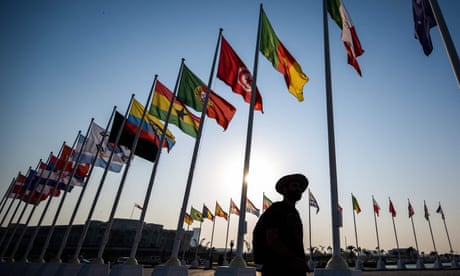
Flags of the countries participating in the World Cup on display in Doha, Qatar, this week.

According to the Guardian of 14 November 2022, singer says she will not be playing at 2022 opening ceremony. The chart-topping 27-year-old singer, born in London to parents from Kosovo, said she would only play in the country if it improves its record on human rights.

Controversy has surrounded the upcoming football tournament with Qatar’s treatment of migrant workers and criminalisation of same-sex relationships under the spotlight. See also my recent: https://humanrightsdefenders.blog/2022/11/11/geneva-the-base-from-where-qatar-pursued-its-world-cup-bid/

BTS star Jung Kook is the only official act confirmed for the opening ceremony, which will be held at Al Bayt stadium on 20 November. US rapper Diplo, DJ Calvin Harris and Jamaican singer Sean Paul will also be performing at the Fifa Fan festival, which will run over the 29 days of the tournament.

Lipa is not the first musician to make a point of avoiding playing concerts in Qatar. On Sunday, Sir Rod Stewart revealed he turned down more than US$1m to play in the country last year.

After reports linking her to the event, Lipa shared a statement on Instagram, writing: “There is currently a lot of speculation that I will be performing at the opening ceremony of the world cup in Qatar. I will not be performing and nor have I ever been involved in any negotiation to perform.

“I will be cheering England on from afar and I look forward to visiting Qatar when it has fulfilled all the human rights pledges it made when it won the right to host the World Cup.” He told the UK’s Sunday Times newspaper: “I turned it down. It’s not right to go. And the Iranians should be out too for supplying arms [to Russia].”

Also on Sunday, comedian Joe Lycett told David Beckham he would shred £10,000 if the sportsman didn’t pull out of his Qatar World Cup deal. The footballer is reportedly being paid £10m to be an ambassador for the event, and has been heavily criticised for accepting the money, given that he has previously been viewed as an ally to the LGBTQ+ community..

https://www.theguardian.com/music/2022/nov/14/dua-lipa-denies-shes-performing-at-the-qatar-world-cup

Geneva: the base from where Qatar pursued its World Cup bid

November 11, 2022

With the football World Cup starting soon, Swissinfo published a timely overview of Qatar’s sports washing efforts, led from its hub in Geneva,: Sportswashing the World Cup from Geneva, published on 10 November 2022

Qatar chose Geneva to launch a massive public relations campaign in a bid to secure the World Cup and impose its narrative on sports. From there, the emirate could access FIFA, United Nation institutions, heads of state and diplomats…Perched just a few hundred metres above Geneva’s exclusive Nautique sailing club in the posh Cologny neighbourhood, the sprawling residence of the Qatari ambassador to the United Nations maintains a near-level view across Lake Geneva of the UN’s European headquarters.

The acquisition of the 550-square-metre home set on over two hectares of land came a year before then-FIFA boss Sepp Blatter announced, to the surprise of many, that Qatar had won the bid for the 2022 football World Cup. Zurich-based.

..

Advantages of autocracy: The United States and the United Kingdom, which had bid for the 2018 and 2022 World Cups together with Korea, Japan and Australia, had long been rumoured to be among the favourites. But intense lobbying by Qatar, FIFA’s arguable penchant for supporting authoritarian rule over democracy to get the job done, and hosting in a region where the sport could still grow, all ran in the emirate’s favour. Jérôme Valcke, FIFA’s former secretary-general, admitted in 2013 that “less democracy is sometimes better for organising a World Cup”. He has since been convicted in Switzerland for accepting bribes. Subsequently, investigations in the US and Switzerland culminated in 2015 with the revelation of a massive corruption scandal at FIFA, followed by arrests of high-ranking officials and an end to Blatter’s term.

Despite winning the bid, Qatar’s reputation as a credible and transparent sports host was severely damaged. Its reputation only worsened as the country eagerly embarked on a quest to make the World Cup bid a reality. Reports by human rights groups of abuses and deaths of migrant workers building the infrastructure for the World Cup became a growing liability to the upbeat narrative the country was eager to project. 

Even before the bid, Qatar, aware of its poor international image, looked to ramp up support among sport organisations, heads of state and diplomats. It chose Geneva as a location to lead a vast public relations campaign.

This three-part investigation shows the lengths to which the emirate went to whitewash its reputation, and the role Geneva played in this marketing stunt.:

More Qatar’s Swiss hub for foreign policy This content was published on Nov 10, 2022 In choosing Geneva as a hub to implement its foreign policy, Qatar gained access to NGOs, the UN and FIFA

More ICSS: Sports at the service of state security  This content was published on Nov 10, 2022 From the start, the agenda of the International Centre for Sports Security was tainted by a lack of transparency and links to Qatar.

More Promoting integrity without transparency This content was published on Nov 10, 2022 The Sports Integrity Global Alliance (SIGA) is another mitigated Qatari effort to boost its reputation.

See also earlier: https://humanrightsdefenders.blog/2019/03/12/if-qatar-has-to-share-world-cup-2022-fifas-ethical-standards-must-apply/

Vacancy: Legal Advisor in Business and Human Rights

November 11, 2022

The European Center for Constitutional and Human Rights (ECCHR) is an independent, non-profit organization dedicated to enforcing civil and human rights worldwide. They initiate, lead and support legal interventions to hold state and non-state actors accountable for human rights abuses.

ECCHR is looking for a candidate with an interdisciplinary profile and at least two years of relevant work experience. A deep understanding of the Business and Human Rights field and the political and legal debates around the German supply chain law is essential.

A deep understanding of Business and Human Rights discussions, especially possible
interventions and legal mechanisms under human rights due diligence and supply chain laws,
in particular the German supply chain law. Excellent written and spoken German and English skills are required, Spanish or French are a plusThe position is ideally to be filled by January 2023 and is limited to May 31st 2024.

Please send your written application in German or English until by email only in one attachment by 15, November 2022 to:

European Center for Constitutional and Human Rights, E-Mail: info@ecchr.eu
European Center for Constitutional and Human Rights
Zossener Str. 55-58, Aufgang D
10961 Berlin
http://www.ecchr.eu
E-Mail: info@ecchr.eu

Saudi sports washing continues with tennis exhibition

November 11, 2022

The Guardian of 9 November 2022 reports on the Diriyah Tennis Cup which is a ‘sport swashing’ event according to Amnesty UK

Cameron Norrie and other top men’s players appearing at the Diriyah Tennis Cup in Saudi Arabia have been urged by Amnesty International to use their platforms to speak out against the country’s human rights abuses. “Everyone playing in Diriyah will surely realise that this tennis tournament is yet another example of Saudi Arabia trying to sportswash its bloody human rights record,” said Amnesty International in a statement.

With Saudi Arabia currently throwing sizeable bundles of money at everything from golf and Grand Prix to boxing and football, it’s really important that top sporting figures use their high profiles to speak out about Saudi human rights abuses.” See e.g. https://humanrightsdefenders.blog/tag/sports-washing/

Novak Djokovic in action during the Paris Masters.

The exhibition tournament Diriyah Tennis Cup represents Saudi Arabia’s latest attempt to enter the world of professional tennis. There has been interest from the country in hosting an officially sanctioned Women’s Tennis Association event, which the WTA has not yet pursued. A slew of current and former top players have already committed to the lucrative exhibition in December during the short off-season, including Norrie, who is the British No 1, Daniil Medvedev and Andrey Rublev of Russia, Alexander Zverev of Germany, Stan Wawrinka of Switzerland and Austria’s Dominic Thiem. The inaugural edition was held in December 2019, which also featured Medvedev and Wawrinka.

In a statement, Norrie said “I’m not a politician and I don’t feel it’s right for me to get involved with individual government politics,” said Norrie. Amnesty International UK’s Felix Jakens suggested Norrie and others could use their presence in Saudi Arabia to show solidarity with Salma al-Shehab, the Leeds University student jailed for 34 years there for using Twitter.

We were never going to be telling people like Cameron Norrie where they should or shouldn’t play tennis, but by appearing in Diriyah Cameron should realise he’s effectively being deliberately hired in to take part in the latest jamboree of Saudi sportswashing,” said Jakens. “Cameron has a big platform and genuine influence, and he should use this to show solidarity with people like Salma al-Shehab who are being cruelly persecuted in Saudi Arabia. What Saudi Arabia appears to look for with these competitions is a smiling high-profile sports star who will studiously avoid talking about human rights – Cameron should speak out.”

Up to seven-figure appearance fees have been offered to some top tennis players since the inaugural event in 2019, but not all have entertained them. Matt Gentry, Andy Murray’s agent, revealed at the beginning of the year that he had turned down an offer to compete in the 2019 edition, which Murray echoed at Wimbledon.

“I know a number of the other guys on the tour were offered to play there. I don’t think the player field that went was what they were hoping. A lot of the, I would say, top players and bigger names turned it down. And I personally wouldn’t go and play there,” said Murray.

https://www.theguardian.com/sport/2022/nov/09/diriyah-tennis-cup-cameron-norrie-amnesty-human-rights-sportswashing

Nigerian Mubarak Bala subject of BBC documentary

November 11, 2022

A recent BBC documentary is about the challenges faced by humanists and atheists in Nigeria. The film was released this week and focuses on Mubarak Bala, reporting on the events that took place in the run-up to his unjust and disproportionate sentencing in April 2022.Mubarak, who is the President of the Humanist Association of Nigeria, is currently serving a 24-year prison sentence, in connection with a series of Facebook posts that some deemed to be ‘blasphemous’ and ‘likely to cause a public disturbance’. See also: https://humanrightsdefenders.blog/2021/08/27/mubarak-bala-wins-humanist-international-2021-freedom-of-thought-award/

Leo Igwe, Humanists International Board Member & Founding member of the Humanist Association of Nigeria, has been spearheading the campaign for his release since he was first arrested in April 2020.: “The launch of the documentary marks more than 30 months since Mubarak was separated from his family. I’m so proud of his wife, Amina, for the strength she has shown, but you can see in her interview how hard this has been for her. Perhaps the most chilling part of the documentary is when the lawyer who brought about the complaint against Mubarak simply cannot hide his pleasure at the outcome of the sentence, despite the devastating impact on the family. He says: “I really feel bad for the wife and the little son” but the smile on his face tells a very different story.”

see also: https://humanists.international/civi/?civiwp=CiviCRM&q=civicrm%2Fmailing%2Fview&reset=1&id=1422&cid=12522&cs=4a8ba3875028250988e91d06b138a2c8_1680716745_168

Following this week’s decision, Mubarak now has one year left of his sentence to serve however our work is not over; the state still has the opportunity to appeal. We will continue to monitor the situation closely and will work to support Mubarak until his safe release.