Author Archive

Save the date: Martin Ennals Award Ceremony 2023

December 19, 2022

The Martin Ennals Award Ceremony in 2023 will take place on 16 February, 2023 at 18:30 CET. 
The Ceremony will be organized together with the City of Geneva, in a hybrid format.
Please note that entry to the usual venue, the salle communale de Plainpalais in Geneva, is on a
first-come, first-served basis.  

The Ceremony will also be livestreamed from Geneva to worldwide locations on our website and Facebook page.
Detailed information on the Ceremony will follow shortly. See more on this award: https://www.trueheroesfilms.org/thedigest/awards/043F9D13-640A-412C-90E8-99952CA56DCE

On January 19th, 2023 at 12:00 CET the MEA will announce the Laureates 2023.

Belarusian Human Rights defender Aleh Hulak dies

December 18, 2022
Aleh Hulak
Aleh Hulak © 2022 Belarusian Helsinki Committee

On 16 December, 2022 Human Rights Watch published “In Memory of Aleh Hulak“, chair of the Belarusian Helsinki Committee (BHC) and a long-time leader of the Belarus human rights movement. Hulak, 55, led the Helsinki Committee with courage and unwavering commitment, including through the country’s recent, vicious crackdown on rights and the entrenchment of President Aliaksandr Lukashenka’s autocracy.

The BHC, one of the country’s oldest human rights groups, has a broad mandate to advance civil and political, and social and economic rights. Hulak was a strong voice for free speech and the release of political prisoners and also for fair work conditions, and upholding human rights in business, trade union operations and health care.  

The Belarusian government liquidated the BHC in 2021, along with hundreds of other independent groups. Hulak for years had pursued, against all odds, the group’s accreditation at the United Nations Economic and Social Council. In a bittersweet victory, his efforts succeeded less than two months ago.

https://www.hrw.org/news/2022/12/16/belarus-memory-aleh-hulak

Foreign Agent law in Russia from bad to worse

December 12, 2022

A new law entered into force in Russia that drastically expands the country’s oppressive and vast “foreign agents” legislation, Human Rights Watch said on 1 December 2022. The law is yet another attack on free expression and legitimate civic activism in Russia, and should be repealed:

Adopted in July 2022, the law’s entry into force was delayed until December 1. The law expands the definition of foreign agent to a point at which almost any person or entity, regardless of nationality or location, who engages in civic activism or even expresses opinions about Russian policies or officials’ conduct could be designated a foreign agent, so long as the authorities claim they are under “foreign influence.” It also excludes “foreign agents” from key aspects of civic life. 

“For more than a decade, Russian authorities have used ‘foreign agents’ laws to smear and punish independent voices,” said Rachel Denber, deputy Europe and Central Asia director at Human Rights Watch. “This new tool in the government’s already crowded toolbox makes it even easier to threaten critics, impose harsh restrictions on their legitimate activities and even ban them. It makes thoughtful public discussion about Russia’s past, present, and future simply impossible.” See also: https://humanrightsdefenders.blog/2022/05/21/kasparov-and-khodorkovsky-are-now-also-foreign-agents/

In Russia, the term “foreign agent” is tantamount “spy” or “traitor.” The foreign agent designation remains extra-judicial, with no possibility to contest it in court before the designation is made. Those designated must comply with all requirements the day after the authorities add them to the registry, even if they challenge the designation in court.

When the first foreign agent law was adopted in 2012, only registered organizations could be designated “foreign agents.” Successive amendments gradually expanded the application from registered organizations, to media, to other categories of individuals, and to associations without legal entities.

The July law, On Control Over Activities of Entities/Persons Under Foreign Influence, replaces these with a consolidated, simplified, but endlessly broad definition to cover any person – Russian, foreign or stateless; any legal entity, domestic or international; or any group without official registration, if they are considered to have received foreign support and/or are considered to be “under foreign influence” and engaged in activities that Russian authorities would deem to be “political.” It also covers anyone who gathers information about Russia’s military activities or military capabilities, or creates or publicly disseminates information or funds such activities.

The law defines “foreign influence” as “support” from foreign sources that includes funding, technical assistance, or other undefined kinds of assistance and/or open-ended “impact” that constitutes coercion, persuasion, and/or “other means.”

Under this definition, any interaction with a foreign element can potentially be construed as “foreign influence,” Human Rights Watch said. There is also no requirement for any causal link between “foreign influence” and the “political” or other activities for the designation to be applicable.

Foreign sources include not only foreign states or foreign entities, but also international organizations, presumably including such multilateral organizations as the United Nations. The law considers Russian nationals or organizations “foreign sources” if they are respectively considered by the Russian authorities to be under “foreign influence” or to be beneficiaries of “foreign funding.”

To avoid the “foreign agent” label, an organization needs to ensure that no source of any donation was at any stage “tainted” by “foreign influence,” including indirectly.

In defining what constitutes “political” activities of a foreign agent, the law consolidates provisions of earlier iterations of “foreign agent” amendments to include “opinions about public authorities’ decisions or policies.” For example, a journalist who publishes a commentary about urban development plans could fall under the definition of foreign agent activity.

The new law also excludes “foreign agents” from key aspects of public life. These include bans on joining the civil service, participating in electoral commissions, acting in an advisory or expert capacity in official or public environmental impact assessments, in independent anti-corruption expertise of draft laws and by-laws, or electoral campaigns or even donating to such campaigns or to political parties.

Foreign agents are also banned from teaching or engaging in other education activities for minors or producing informational materials for them. They cannot participate in organizing public assemblies or support them through donations and are barred from a number of other activities.

The law expands the notion of a person or entity affiliated with a “foreign agent,” which was first introduced in 2021 in relation to electoral candidates. A person remains “affiliated” up to two years after they sever ties with the foreign agent, even if the “affiliation” started before the law entered into force, and even if the “affiliation” started before the entity was designated a foreign agent.

Since the adoption of the first “foreign agents” law, hundreds of civic groups and activists, including those that work on human rights, the environment, election monitoring, and anti-corruption, have been designated “foreign agents.” A large number of organizations had to close down because they either sought to avoid the toxic label or were unable to bear the hefty fines imposed for not complying with the law’s burdensome, arbitrary labelling and reporting requirements. The authorities used the “foreign agents” law as a legal pretext to close down other groups, such as the human rights group Memorial, one of the 2022 Nobel Peace Prize laureates. See also: https://humanrightsdefenders.blog/2021/12/29/russias-supreme-court-orders-closure-emblematic-memorial/

This new ‘foreign agents’ law is an unrestrained attack on Russian civil society aimed at gagging any public criticism of state policies,” Denber said. “It should be scrapped.”

https://www.hrw.org/news/2022/12/01/russia-new-restrictions-foreign-agents

HURIDOCS – who will continue Friedhelm Weinberg’s excellent leadership?

December 12, 2022

After more than 10 years, Friedhelm Weinberg will be leaving HURIDOCS in early 2023. Having worked with him in person on many occasions, I can testify that his leadership has been most impressive, for the NGO itself [see e.g. https://humanrightsdefenders.blog/category/organisations/huridocs/] and the in the area of networking with others, such as the MEA and THF [see e.g. his: https://youtu.be/zDxPbd9St9Y]. In his own announcement, he modestly refers to all his colleagues:

It has been an incredible decade with HURIDOCS, working with amazing colleagues and partners at the intersection of human rights and technology. Together, we have drastically increased support to activists to leverage technology for documentation, litigation and advocacy work. We have pioneered flexible, reliable and robust software tools such as Uwazi, while responsibly sunsetting the past generation of open source software.

None of this would have been possible without the team we have built, and that was collaborating remotely across the globe well before 2020. It’s a committed, humorous and professional bunch, and I have learned so much with every single one of them, as we made things happen and as we hit walls and then picked each other up. I am also grateful to our board that brings together wisdom from leading NGOs, technology companies, the financial sector, but, more importantly, people that were generous with guidance, encouragement and critique.

It has also been a decade of many heartbreaks. From partners whose offices have been raided, that have been declared foreign agents, threatened, attacked. From wars and conflicts breaking out, affecting people we work with. From the difficulties of all we’re doing sometimes not being enough. From worrying how to raise the money to sustain and grow a team that can rise to these challenges.

It is a bittersweet departure, because it has been life-affirming – and yet it is for a perspective that fills me with warmth and excitement. For a while, I will be with our children, with the second one due to arrive in early 2023. 

As I have made the decision to leave HURIDOCS, I also have felt really down and much of the stress built up over a decade manifested physically. Seeking treatment, I have been diagnosed with burnout and depression, and have been recovering with the support from specialists, friends and family. This is neither a badge of honor nor something I want to be shy about, it’s just the reason you haven’t seen much of me recently in professional circles. It’s getting better and I am grateful to have the time and space for healing.

Currently, Nancy Yu is leading HURIDOCS as Interim Executive Director, as Lisa Reinsberg as the Board Chair holds the space and directs the succession process. I am grateful to both of them to step up and step in, as well as the team, our partners and funders for a decade of working together to advance human rights.

As the search for his successor has started, please have a look at the recruitment announcement and consider applying or sharing it with suitable candidates: https://lnkd.in/e7Y7smqT

https://www.linkedin.com/feed/update/urn:li:activity:7005479545189322752/

ECOSOC plenary to finally break deadlock on recognition of NGOs?

December 7, 2022

On 6 December 2022 Louis Charbonneau of Human Rights Watch wrote about the need to unblock the accreditation of NGOs which are stuck in the NGO Committee of ECOSOC. See also: https://humanrightsdefenders.blog/2022/02/14/towards-a-fairer-selection-of-ngos-to-participate-in-the-un-human-rights-debate/ These applications have been stuck in limbo due to several countries including China, Russia, and India obstructing the accreditation process.

On December 7, ECOSOC’s 54 members will vote on whether to grant UN consultative status to the Gulf Centre for Human Rights, the International Dalit Solidarity Network (IDSN), the Bahrain Center for Human Rights, Coptic Solidarity, the Arab-European Center of Human Rights and International Law, the Andrey Rylkov Foundation for Health and Social Justice, the World Union of Cossack Atamans, Man and Law, and World Without Genocide. These nine groups are among hundreds whose applications were on hold due to interminable questioning from some members of the UN Committee on Non-Governmental Organizations (the “NGO committee”). UN accreditation gives organizations access to many UN buildings, officials, and agencies – and to formally participate in numerous UN activities.

At its September session, the NGO committee rejected the nine groups’ accreditation applications and deferred action on 319 other organizations’ applications.

India has been instrumental in blocking IDSN, which advocates for the elimination of caste discrimination and other forms of discrimination around the world. According to the International Service for Human Rights, IDSN’s application was deferred for 15 years – a record for blocking an organization. The IDSN says it received over 100 questions from the committee, and despite responding promptly to all of them, was always deferred.

The only way out of this limbo is if individual member countries rescue the applications from the NGO committee and force a vote in an ECOSOC plenary meeting, where civil society groups stand a better chance of success. That is what will happen on December 7.

And on 8 December followed the good news:

After years of delay, the U.N. body overseeing economic development and social issues voted Wednesday to give nine human rights and minority groups the right to raise concerns and participate in its discussions, overriding objections from Russia, China, India, Arab nations and others.

The Economic and Social Council approved a U.S. draft decision giving a green light for the nine groups to get “special consultative status” with the 54-nation U.N. body by a vote of 24-17 with 12 abstentions.

The vote accredited Arab-European Center of Human Rights and International Law; Bahrain Center for Human Rights; Coptic Solidarity; Gulf Centre for Human Rights; International Dalit Solidarity Network; and the interregional rights group Man and Law.

https://apnews.com/article/china-india-united-nations-government-states-51d74ad5f9743ead51122c2668d13584

https://www.hrw.org/news/2022/12/06/un-member-countries-should-accredit-blocked-human-rights-groups

See also: https://www.swissinfo.ch/eng/ngos-face-uphill-battle-to-gain-access-to-the-un/48318440

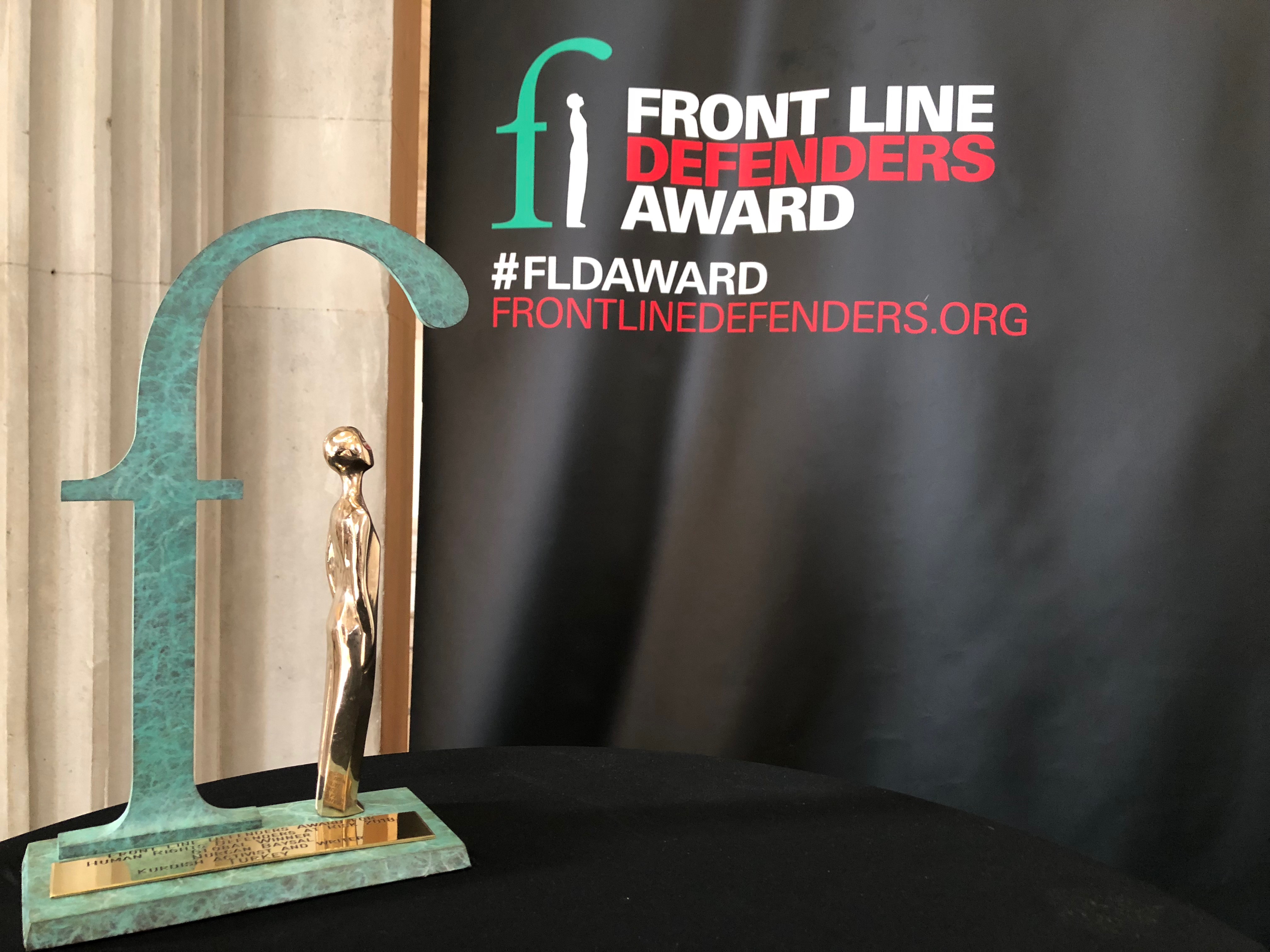
Front Line Defenders Award for human rights defenders at risk 2023: call for nominations

December 2, 2022

Front Line Defenders is currently accepting nominations for the 2023 Front Line Defenders Award for Human Rights Defenders at Risk:

award banner

For more this annual award and its laureates, see: https://www.trueheroesfilms.org/thedigest/awards/2E90A0F4-6DFE-497B-8C08-56F4E831B47D

Starting in 2018, Front Line Defenders changed the format of the Award, naming 5 Regional Award Winners, with one chosen as the Global Laureate by a jury comprised of representatives of Ireland’s parliament from a number of political parties. In 2021, Front Line Defenders took the decision to name all 5 regional winners as Global Laureates, in response to the overwhelming positive response to the greater visibility and recognition of the winners of the Award.

For each region of the world (Africa; Americas; Asia-Pacific; Europe & Central Asia; and Middle East & North Africa) there will be one winner selected and Front Line Defenders will recognize all five as the 2023 Front Line Defenders Award Laureates.

The nomination process is open for anyone to submit a nomination of a human rights defender, collective, organisation or community working on any human rights issue and facing significant risk due to their work or operating in an environment that itself is characterised as insecure. The purpose of the Award is to give visibility to HRDs who are not normally acknowledged or recognised at the international level. At the same time, the Award should not bring additional risk for which the HRD is not prepared. In addition to the Award, winners will receive:

  • a modest financial prize;
  • a security grant to improve their security measures;
  • collaboration with Front Line Defenders for media work in recognition of the Award;
  • advocacy by Front Line Defenders related to the Award and the work of the winners;
  • an event co-organized by the HRD, local partners and Front Line Defenders to give visibility to the Award in the winners’ countries (as determined and guided by the winners);
  • the Global Laureates will attend a ceremony in Dublin at a date to be determined;
  • ongoing security consultation with Front Line Defenders

If you would like to nominate a HRD for the 2023 Front Line Defenders Award for Human Rights Defenders at Risk, please follow this link to the secure online nomination form

2023 Front Line Defenders Award – Nomination Form

As the person, group or organisation making the nomination, you will be consulted by Front Line Defenders to verify the information submitted and possibly for additional information. Please complete all parts of the nomination form to the best of your ability. Please submit nominations via the online form. If there are any problems using the form, or if you have any questions, please contact: award@frontlinedefenders.org

Deadline for nominations: 13 January 2023

https://www.frontlinedefenders.org/en/call-nominations-2023-front-line-defenders-award-human-rights-defenders-risk

Twitter’s dangerous new direction

November 30, 2022

Marc Limon, Executive Director of the Universal Rights Group – on 29 November 2022 – published a blog post,Twitter’s descent reminds us of the dangers of free speech absolutism” which is worth reading in full:

..A decade ago normative interpretations of freedom of expression under international human rights law and under relevant resolutions of the Human Rights Council were fairly finely balanced between the ‘anything goes’ ideology espoused by the United States (US) as well as by American human rights lawyers and experts (including several Special Rapporteurs) on the one hand, and those States and experts (especially from the Organisation of Islamic Cooperation – OIC) advocating a far more interventionist approach, on the other. However, over recent years the needle has shifted discernibly towards the latter view.

There are several reasons for this, but perhaps the most important are, first, a growing recognition, initially on the part of European countries but also increasingly in the US, of the growing threat posed by incitement to religious or racial hatred (i.e., ‘hate speech’) to human rights in the digital age, and second, a growing acknowledgement that disinformation (or ‘fake news’) spread online can no longer be held in check by societal checks and balances (i.e., the long-held American view that ‘best antidote to bad speech is more speech’) and thus poses a direct threat to democracy. In a stark example of the latter point, the administration of President Joe Biden has repeatedly acknowledged, and promised to respond to, the key role that disinformation about US elections (i.e., ‘stop the steal’) played in inciting the mob that attacked Congress in January 2021.

Today, the international community, including members of the Human Rights Council, while certainly not united on the thorny question of the threshold between speech that is ok and speech that is not, at least share something of a (albeit wide) common ground.

What is more, that growing intergovernmental consensus has been reflected in the operations of another former absolutist bastion of free speech: the social media giants. Meta (formerly Facebook) and Twitter have been at the forefront of this shift, bringing in increasingly sophisticated content moderation protocols heavily influenced by international human rights law and by guidance provided by Treaty Bodies, Special Procedures, and UN frameworks like the Rabat Plan of Action.

Is Larry soaring or hurtling towards the ground?

Which makes recent developments at Twitter (Larry is the name of the blue Twitter bird), following the company’s takeover by Elon Musk, all the more dispiriting – but also all the more instructive (i.e., demonstrating that the Human Rights Council and the wider UN have been moving in the right direction over the past ten years).

Elon Musk is a freedom of expression absolutist who, moreover, subscribes to the widely held view among such extremists that free speech is being threatened by a censoring ‘woke’ orthodoxy.

Musk arrived at Twitter with a hard-line approach based on a belief that the platform’s efforts over recent years to check hate speech and malicious disinformation is part of some left-wing plot to destroy free speech and thus, in his mind, to threaten democracy. That is why he is now on a crusade to allow suspended users back on to the platform. The accounts of Donald Trump, Kanye West, and Jordan Peterson have been reinstated, along with nearly all those that were suspended for falling foul of old Twitter’s content rules on abuse, disinformation, and hate speech.

This means that Twitter is about to turn into a very unpleasant and potentially dangerous experiment in the reality of free expression without limit.

See also: https://humanrightsdefenders.blog/2020/06/03/more-on-facebook-and-twitter-and-content-moderation/

2022 Right Livelihood Award Presentation

November 30, 2022

On 30 November 2022, will take place the Right Livelihood Award Presentation See: https://humanrightsdefenders.blog/2022/09/30/2022-right-livelihood-laureates-announced/. Time: 19:15 – 21:00 CET Venue: Cirkus, Stockholm

You can attend in person [get your tickets] or join digitally [register now Visit social media wall]

Programme

Musical performance

Welcome
Parisa Amiri

A conversation with
Right Livelihood’s Executive Director Ole von Uexkull and 2016 Right Livelihood Laureate Mozn Hassan

Award presenter
Gunilla Hallonsten, Chair of the Board, Right Livelihood

Presentation of the Right Livelihood Award
to Fartuun Adan and Ilwad Elman, Somalia

Musical performance

Presentation of the Right Livelihood Award
to Oleksandra Matviichuk and the Center for Civil Liberties, Ukraine

Musical performance

Presentation of the Right Livelihood Award
to Cecosesola, Venezuela

Musical performance

Presentation of the Right Livelihood Award
to Africa Institute for Energy Governance (AFIEGO), Uganda

Musical performance

MEA laureate AbdulHadi Al-Khawaja facing new charges for protesting injustice in Jau Prison

November 29, 2022

There seems to b no end to the persecution of AbdulHadi AlKhawaja, the 2022 laureate of the Martin Ennals Award [see: https://www.trueheroesfilms.org/thedigest/laureates/4d45e316-c636-4d02-852d-7bfc2b08b78d]

On Americans for Democracy and Human Rights in Bahrain strongly denounced new charges brought against this dual Bahraini-Danish citizen, who is serving a life sentence at Jau Prison for his participation in the 2011 pro-democracy demonstrations. See also: https://humanrightsdefenders.blog/2014/09/12/bahrain-travails-of-a-family-of-human-rights-defenders/

In November 2022, AlKhawaja informed his family that authorities are bringing four new charges against him for his protests against the harsh conditions which he and other political prisoners have been subjected to in Jau prison.

On 16 November, the Second Lower Criminal Court scheduled a hearing on the first of these new charges for an incident in November 2021 when authorities denied his right to call his daughters. However, the court postponed this hearing until 28 November on the grounds that Al-Khawaja needed to perform a power of attorney, something which he was going to do in-person during the hearing. A lieutenant attempted to pressure and threatened Al-Khawaja into recording a video stating that he was refusing to attend the hearing. Nevertheless, Al-Khawaja  refused and repeatedly stated on camera his desire to attend the hearing. He was then transferred back to his cell.

The second charge against him is for insulting a public servant and criticizing a foreign state (Israel) in March 2022 when Al-Khawaja led a peaceful protest inside the prison. He was chanting his opposition to the normalization of relations between Bahrain and Israel, as well as insulting a public servant, who allegedly tortured one of his cellmates. The hearing for this charge was set for 21 November. Prior to the hearing, authorities denied him the every-other-day calls with his lawyer. This hearing was also postponed and while the judge stated that AlKhawaja refused to attend, has not presented any evidence to AlKhawaja’s attorney to support this claim. AlKhawaja has informed his daughter that he wanted to attend.

The third charge, by far the most serious, is a charge of incitement to overthrow or change the regime, and relates to an incident in July 2022 when AlKhawaja was scheduled to attend a medical appointment for treatment on his back. During this appointment, authorities insisted on shackling his feet and hands during transfer and putting him in a small bus with no ventilation, creating conditions like an oven. In response, AbdulHadi started protesting and chanting “Down with the Interior Minister ” holding him accountable for his mistreatment and torture.

The fourth and final charge relates to the protest against the ill-treatment of a fellow inmate and is expected in the coming days.

In addition to these charges and violations, AlKhawaja was already suffering the unceasing legal and bodily violations of prison authorities since his arrest 12 years ago. In addition to inhumane restrictions and property confiscation, authorities have systematically used medical negligence as a form of reprisal against AlKhawaja’s activism. He has been denied proper medical treatment which has significantly contributed to the deterioration of his health. He suffers from back pain and vision impairment which were exacerbated by the extreme torture he endured during interrogations by security officers, as well as magnesium deficiency and leg spasms. In response to this treatment, AlKhawaja has gone on multiple hunger strikes and protests with his fellow inmates against the dehumanizing and unjust treatment by authorities.

These charges clearly demonstrate how prison authorities are trying to silence all dissent against their systematic repression of pro-democracy Bahrainis. Many organizations and individuals have condemned these charges because they set a dangerous precedent.

See also: https://humanrightsdefenders.blog/2021/01/27/over-100-ngos-write-to-prime-minister-of-denmark-to-pressure-bahrain-to-release-abdul-hadi-al-khawaja/

Swedish Embassy in The Hague shows Portraits of Human Rights Defenders

November 28, 2022

From 30 November to 15 December 2022, the Swedish Embassy in The Hague and the Swedish Institute, show a series of portraits of Human Rights Defenders. A tribute to those fighting for human rights & women’s rights “In a number of countries, human rights defenders and journalists are subject to arbitrary detentions, kidnappings, disappearances, physical aggressions, judicial harassments, death threats and intimidations. Some have paid the ultimate price for their commitment. I hope that these extraordinary and courageous people will inspire others to create a better, safer and more gender-equal society.” Anette Brolenius, Photographer .

Location: ATRIUM, The Hague Open for all, free of charge. *

https://www.swedenabroad.se/en/embassies/netherlands-the-hague/current/calendar/exhibition-hr-defenders/